Breathing Life into Fantasy: Creating a Believable Setting

The appeal of fantasy lies in its ability to transform the impossible into reality and make extraordinary things seem commonplace. But for a fantasy world to captivate readers, it must feel believable and immersive. Crafting a world that feels genuine is crucial, not just a writing exercise. In this article, I’ll delve into how to make your fantasy world feel authentic, emphasizing the importance of historical context, geography, and climate. Additionally, I’ll examine how history and setting interconnect and how including logical rules enhances the believability of your world.
The Importance of Believable Fantasy Worlds
One of the primary reasons to make your fantasy world believable is to engage your readers. A well-crafted world draws readers in, allowing them to suspend disbelief and immerse themselves in the story. When readers feel like they’re walking through your world’s landscapes, they become emotionally invested in the story.
Believable worlds create emotional resonance. Readers form a stronger bond with the story when they can connect with the characters’ struggles and successes.
A coherent world with logical rules and a realistic backdrop enhances your reader’s experience. Inconsistencies can jar readers from the narrative and disrupt the suspension of disbelief. It also gives you the ability as a writer to set up situations where your readers will recognize what is going on without having to spell it out.

Building a Believable History
One way to make your fantasy world feel real is to craft a history that is vivid, textured, and interconnected with the narrative. A rich history adds depth and context to your world. Consider these strategies:
Pivotal Events – Integrate pivotal historical events into your narrative. These events shaped the societies, politics, and cultures of your world. Think of them as the historical equivalent of plot points in your story.
Example: In J.R.R. Tolkien’s Middle-earth, the War of the Ring is a major historical event that impacts the characters and the political landscape.
Legendary Figures – Create legendary figures whose stories you weave into the fabric of your world. These figures can be heroes, kings, or even tragic anti-heroes whose legacies continue to affect the present.
Example: Arthurian legends influence countless fantasy worlds, from Camelot to the sword in the stone, reflecting the enduring power of historical stories.
Cultural Evolution – Show how your cultures have developed. Consider how historical events, technological advancements, or invasions have shaped the customs, traditions, and belief systems of your world’s inhabitants. This can also be as simple as showing evolving fashion trends.
Example: In George R.R. Martin’s “A Song of Ice and Fire” series, the history of Westeros plays a significant role in the complex web of political intrigue and power struggles.

The Role of Geography and Climate
Geography and climate play a vital role in shaping the identity and atmosphere of your fantasy world.
Landscape Diversity – Diverse landscapes can offer a range of settings for your story. From lush forests and towering mountains to desolate deserts and rolling plains, each environment can play different roles in your narrative.
Example: The diverse regions of Narnia, created by C.S. Lewis, each have their own unique geography and climate, contributing to the sense of wonder and adventure.
Climate as a Character – Consider how climate affects the lives of your characters. Seasonal changes, unusual weather patterns, and natural disasters can add depth and conflict to your world.
Example: In Anne McCaffrey’s Dragonriders of Pern series, Threadfall greatly influences culture, architecture, and people’s way of life. It also grants a high social status to the dragonriders.
Geopolitical Significance – Geography can have geopolitical significance. Reflect on how the positioning of mountains, rivers, or oceans can affect trade routes, border conflicts, and regional power dynamics.
Example: The desert landscape of Arrakis in Frank Herbert’s “Dune” plays a central role as the only known source of the valuable spice melange, fueling political intrigue and conflict.

Drawing from Real World History
The history of the real world is a rich source of inspiration when crafting your fantasy world. By grounding your world in familiar historical contexts, you can create a sense of authenticity. Here are a few ways to accomplish this:
Analogous Civilizations – Use real-world civilizations as models for your fantasy world’s cultures, societies, and political structures. For instance, you could draw inspiration from ancient Rome, feudal Japan, or medieval Africa. Also consider mixing and matching elements from various cultures to create something new.
Example: The “Wheel of Time” series by Robert Jordan draws heavily from various real-world cultures, infusing each with unique traits and characteristics.
Historical Events – Adapt historical events into your world’s narrative. This can give readers a sense of familiarity and connect them to your story’s larger themes.
Example: “Game of Thrones” by George R.R. Martin draws from real historical events, particularly the Wars of the Roses, to craft a complex and politically driven narrative.
Incorporate Myths and Legends – You can infuse your world with elements from real world myths, legends, and folklore. These components can add depth and resonate with readers who recognize the source material.
Example: Neil Gaiman’s “American Gods” blends ancient mythological figures with modern America, creating a rich tapestry of old and new.
The Connection Between History and Setting
The connection between history and setting is the backbone of a believable fantasy world. History shapes your world, while the setting provides context for the events of the past. Here’s how to strengthen this connection:
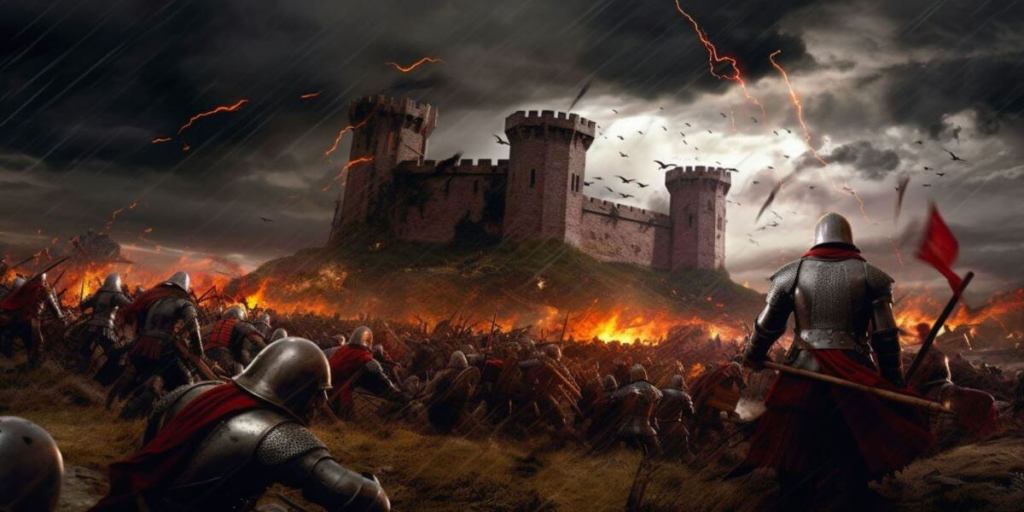
Echoes of the Past – Create echoes of historical events in your world’s setting. Ruined castles, ancient battlefields, looming monuments, or enigmatic artifacts can serve as reminders of the past, sparking curiosity and intrigue. They can also play a part in the plot.
Example: The ancient city of Anor Londo in Hidetaka Miyazaki’s “Dark Souls” series is a haunting reminder of the past, now decaying with secrets of its own.
Cultural Traditions – Show how historical events have influenced cultural traditions and rituals. The customs and celebrations of your world can be rooted in significant historical moments.
Example: In Patrick Rothfuss’ “The Name of the Wind,” the characters celebrate the autumn festival of “Mae Midsummer,” which is based on a legendary event.
Political Intrigue – The political landscape of your world should be deeply connected to its history. Show how past conflicts, alliances, and betrayals have reverberated through time to influence contemporary power struggles.
Example: In the “Mistborn” series by Brandon Sanderson, the world’s political system is shaped by a history of revolutions and magical conflicts.

Logical Rules and Internal Consistency
To ensure your fantasy world feels real, you must establish logical rules and maintain internal consistency. Readers must feel that your world operates according to its own set of laws and principles.
Magic Systems – If your world features magic and you have decided to use a hard magic system, define its rules and limitations. Hard magic systems should have a consistent set of principles that govern their use. Readers should understand what magic can and cannot do within the context of your world. If you decide to go with a soft magic system, it is still a good idea to understand the rules of your magic even if you never detail them to your readers.
Example: Brandon Sanderson’s “Laws of Magic” in his “Cosmere” universe create clear boundaries for magic, ensuring a logical and consistent system.
World Laws – Establish natural laws within your world, such as the behavior of physics, chemistry, and biology. Even if your world has magical elements, adhering to these laws creates a sense of realism.
Example: Terry Pratchett’s “Discworld” series has its own unique laws of physics and magic, which, while whimsical, are internally consistent.
Character Behavior – Characters should act in ways that align with the world’s rules and customs. They should behave in a way that is consistent with their cultural and historical context.
Example: In “The Hobbit” by J. R. R. Tolkien, Bilbo’s character arc aligns with the cultural values and historical events of Middle-earth.
Worldbuilding creates fantasy realms where readers can lose themselves. To make your world feel real, you must invest in its history, geography, and climate, and connect these elements seamlessly. By using actual history and logical rules, you can make your world feel authentic and captivating. Remember that the magic of fantasy lies not in the impossible, but in the art of making it feel utterly believable. Happy worldbuilding!
I hope this was helpful. Let me know if you have questions or suggestions by using the Contact Me form on my website or by writing a comment. I post every Friday and would be grateful if you would share my content.
If you want my blog delivered straight to your inbox every month along with exclusive content and giveaways, please sign up for my email list here.
Let’s get writing!
Copyright © 2024 Rebecca Shedd. All rights reserved.
 Rebecca Shedd - Author