The Worldbuilder’s Toolkit: Flora & Fauna
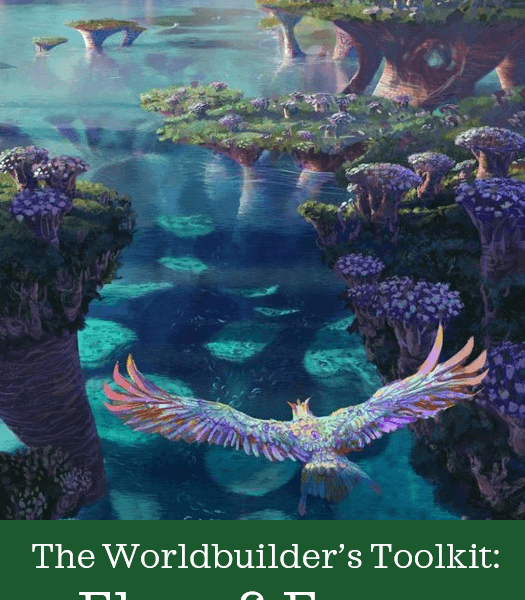

In the realms of fantasy and science fiction, worldbuilding goes beyond landscapes and civilizations—it extends to the very fabric of life itself. Flora and fauna, the plants and animals that populate your world, add depth, wonder, and authenticity to the narrative tapestry. In this comprehensive guide, I’ll provide information to create unique and captivating flora and fauna for your fictional worlds. Drawing inspiration from the intricacies of the real world, I’ll explore the nuances of crafting both plants and animals, offering practical tips and illustrative examples to breathe life into your imaginative creations.
Crafting Unique Flora: The Fantasy of Botanical Wonders
Flora encompasses the diverse world of plants and vegetation. Drawing inspiration from our world, you can create captivating and unique flora.
Observe real-world plants and their remarkable adaptations to diverse environments. Adaptation mechanisms like succulence, bioluminescence, or symbiotic relationships with animals can inspire your fantastical creations.
Think about how your plants adapt to specific climates or terrains, such as desert succulents, bioluminescent forest flora, or subterranean fungi.
Explore distinctive methods of reproduction, such as seed pods that explode with tiny projectiles or plants that release intoxicating scents to attract pollinators.
Develop symbiotic relationships between your flora and fauna, like carnivorous plants that form partnerships with insects for mutual benefit.
In J. R. R. Tolkien’s Middle-earth, the towering Ents are sentient tree-like creatures that guard the ancient forests. These unique beings are deeply connected to the flora of their world, representing a rich fusion of plants and creatures in a single concept.
Crafting Unique Fauna: The Science of Imaginary Creatures
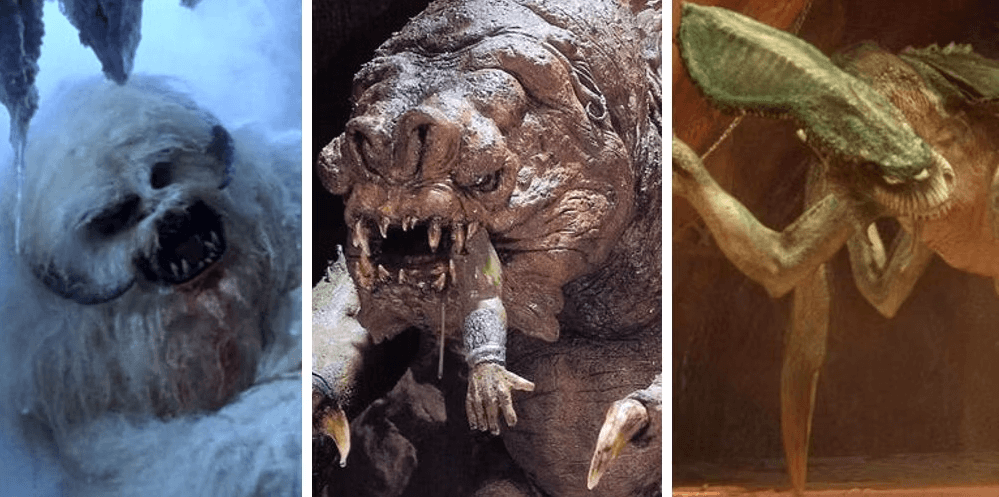
Fauna encompasses the realm of animals and creatures that inhabit your world. To craft unique and intriguing fauna, you can draw inspiration from real-world biology and ecology.
Study real-world animals and their evolutionary adaptations. Concepts like mimicry, bioluminescence, or convergent evolution can spark your imagination.
Design animals that perfectly fit their environments, such as flying reptiles in sky cities or burrowing mammals in subterranean realms.
Explore unique sensory adaptations, like creatures with echolocation or those sensitive to electromagnetic fields.
Combine traits from different species to create hybrids with unique abilities and appearances.
In Isaac Asimov’s “Foundation” series, the Mule is a genetically engineered character with telepathic abilities. These unique individuals challenge the societal norms of the Galactic Empire, showcasing how sci-fi authors can explore unconventional adaptations.
Mythological Flora and Fauna
The real world has a rich menagerie of mythic flora and fauna from around the globe and throughout history. Incorporating existing mythological plants and animals into your worldbuilding can infuse your narrative with a sense of familiarity and mystique, tapping into the rich tapestry of human folklore and imagination. These creatures and plants often come with their own set of stories, symbolism, and cultural significance, adding depth to your world.
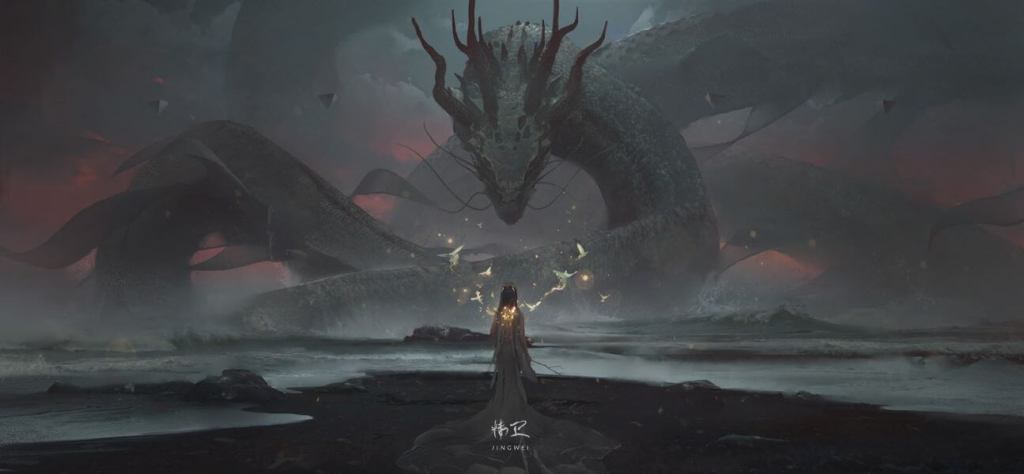
Mythological Creatures – Many cultures boast a treasure trove of legendary beasts, from the majestic Phoenix of ancient Egypt and Greece, symbolizing rebirth and immortality, to the cunning Kitsune of Japanese folklore, shape-shifting fox spirits known for their trickery. By weaving these creatures into your world, you can introduce a layer of cultural resonance and intrigue. For example, incorporating a Roc, a gigantic bird of prey from Middle Eastern and Persian mythology, as a guardian of mountaintop temples, could imbue your world with a sense of grandeur and reverence. Of course, there is also the ever-popular dragon.
Mythological Plants – Mythological plants have their own allure, from the sacred Lotus in Hinduism and Buddhism, symbolizing purity and enlightenment, to the magical Yggdrasil in Norse mythology, the World Tree connecting the realms. Integrating these plants into your world can enrich the symbolism and mysticism of your narrative. Imagine a colossal, ancient tree akin to Yggdrasil serving as the epicenter of your world, joining various dimensions or realms, and embodying the essence of interconnectedness.
Be mindful of the cultural significance and interpretations associated with mythological creatures and plants. While you can adapt and reinterpret them to suit your world, honoring their essence and symbolism can deepen their impact on your narrative.
Mythological beings and plants often carry symbolic weight. Consider how their presence in your world can serve as allegorical elements, representing themes, conflicts, or moral lessons in your story.
The Writer’s Toolkit
Ecosystem Dynamics – Consider the ecological roles of your flora and fauna. How do they interact with each other and their environment? Think about predator-prey relationships, symbiosis, and food chains.
Evolutionary History – Develop a backstory for the evolution of your species. How did they adapt to their environment over time? What selective pressures influenced their development?
Cultural Significance – Explore how your flora and fauna influence the cultures and societies within your world. Are they revered, feared, or integrated into daily life and traditions?
Naming Conventions – Pay attention to the names you assign to your creations. Names should reflect the essence of the species and their role in the world. Consider linguistic elements that add depth to your world.
Consistency – Maintain consistency in the behaviors, characteristics, and adaptations of your flora and fauna. This consistency helps create a believable and immersive world.
Symbolism – Use your creations symbolically to represent themes, ideas, or conflicts in your narrative. The symbolism of a species can add depth to your story.
Fictional Example: The Enchanted Sylvan Realm of Eldertree
In the realm of Eldertree, the unique flora and fauna have profoundly shaped both the environment and the culture of the sentient Sylvan beings who call it home. Eldertree is characterized by ancient forests, towering flora, and enigmatic creatures.
Towering colossal trees, known as Eldertrees, form the backbone of the realm. These ancient giants house entire communities within their colossal trunks and branches, complete with its unique ecosystem and inhabitants.
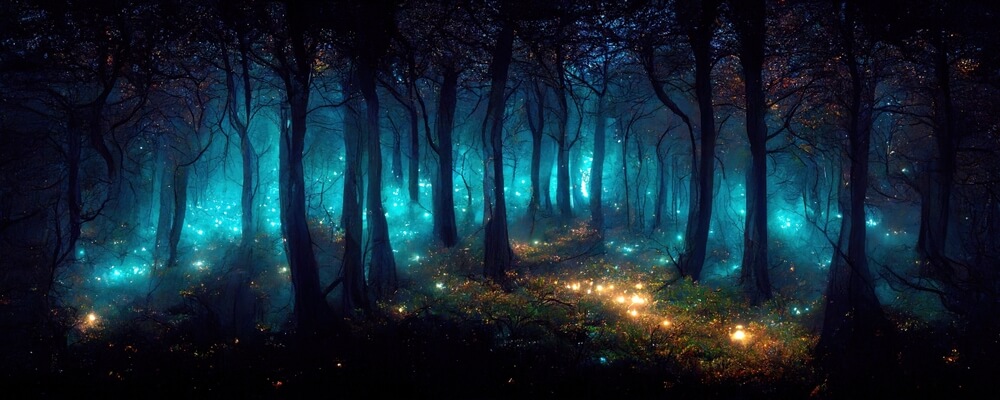
Most of the plant life in Eldertree possesses bioluminescent properties, casting a soft, ethereal glow across the land during the night. This unique feature serves both as a source of light and as a means of communication for the Sylvans.
The wildlife in Eldertree is as unique as the flora. Creatures such as the luminescent Firefliers, who emit radiant light and have a symbiotic relationship with the flora, serve as guardians and companions to the Sylvans.
The Sylvans, sentient tree-dwelling beings, have formed deep symbiotic relationships with Eldertrees and the creatures of the realm, holding immense cultural significance. They feature prominently in Sylvan rituals, art, and storytelling, serving as symbols of unity, protection, and the interconnectedness of all life. The Sylvans are known as the Guardians of Eldertree, and their way of life revolves around protecting their enchanted homeland. Rituals are held under the radiant canopy of the bioluminescent forest, where they commune with nature and celebrate the cycles of life. The unique flora and fauna have gifted the Sylvans with an innate magical affinity. They have mastered the art of harnessing natural magic, using it to commune with nature, heal, and protect their realm. Eldertree’s distinctive ecosystem has, over the ages, isolated the Sylvans from the outside world and they guard it fiercely from outsiders.
Crafting unique flora and fauna is akin to cultivating a garden of imagination, where every plant and creature adds a layer of wonder to your world. By drawing inspiration from nature’s intricacies, crafting distinctive adaptations, and exploring practical worldbuilding tips, you can breathe life into your fictional ecosystems. As your readers immerse themselves in the lush tapestry of your world, they’ll encounter the marvels of your imagination, where flora and fauna become more than mere background—they become living elements of the narrative. So, let your worlds flourish with botanical wonders and captivating creatures, inviting readers to explore the rich landscapes of your imagination. Happy worldbuilding!
I hope this was helpful. Let me know if you have questions or suggestions by using the Contact Me form on my website or by writing a comment. I post every Friday and would be grateful if you would share my content.
If you want my blog delivered straight to your inbox every month along with exclusive content and giveaways, please sign up for my email list here.
Let’s get writing!
Copyright © 2024 Rebecca Shedd. All rights reserved.
 Rebecca Shedd - Author
Pingback: The Worldbuilder’s Toolkit: Culture | Rebecca Shedd - Author
Pingback: The Creatures of Middle-earth