The Worldbuilder’s Toolkit: History & Lore

In the realm of fantasy and science fiction, crafting an immersive and believable world hinges not only on the intricacies of geography and culture, but also on the rich tapestry of history and lore. These elements breathe life into the narrative, providing depth, context, and resonance for both characters and readers. This guide explores the art of constructing history and lore, drawing inspiration from the annals of our own world and offering practical advice to help writers create captivating and convincing backstories for their fictional realms.
Drawing Inspiration from History
The pages of history books are replete with tales of empires rising and falling, heroic figures, and momentous events that have shaped the course of civilizations. Drawing inspiration from real-world historical events and individuals can serve as a wellspring of creativity for your fictional world.
Identify historical periods and locations that have a similar feel as that of your book. One beauty of fantasy and science fiction is that we do not need to be completely historically accurate, and we can pull elements from throughout history. Identify historical events that parallel the themes or conflicts in your narrative. For example, the fall of the Roman Empire might inspire a tale of a once-mighty kingdom in decline, grappling with internal strife and external threats. Another example is drawing on the Golden Age of Piracy because you specifically want naval cannon battles in your story.
Real-world historical figures can be the muse for your characters. Adapt their qualities, achievements, or dilemmas to craft compelling and multidimensional personas in your story. Be willing to dive deeper into historical figures to see what truly made them tick. You may discover that a famous general battled crushing self-doubt and had failed at everything else in life. You can use these details as inspiration in your own characters to create emotional depth.
Delve into the cultures, customs, and societies of different historical periods. Integrating elements from various cultures can create a rich and diverse backdrop for your world. Draw on other worldbuilding elements, such as climate, to provide inspiration for your culture’s clothing, food, and other customs.
Historical events often center around moral dilemmas and choices. Use these dilemmas to develop complex characters and thought-provoking narratives.

Crafting Major Historical Events and Figures: The Architect of Lore
To construct convincing history and lore, you must first create the pivotal moments and influential figures that have shaped your world. Consider these steps.
Brainstorm major historical events that have left a lasting imprint on your world. These could be wars, revolutions, natural disasters, or cultural shifts. Think about how these events ripple through time and affect your narrative. Consider how these events are remembered by the people and the leaders. Do they look back on them with a sense of pride or shame?
Craft prominent historical figures who played pivotal roles in your world’s past. Develop their personalities, motivations, and legacies. These figures can serve as symbols of change, heroes, or antagonists in your lore. Decide if history has remembered them correctly or if they have a hidden side, maybe even one that could shake the culture.
Explore how these historical events and figures have transformed the culture, values, and trajectory of your fictional societies. Think about how they have influenced art, religion, politics, and daily life. Does your culture have festivals that celebrate these historical events and figures, or are they portrayed in plays and literature as villains?

The Writer’s Toolkit
Consistency – Maintain consistency in your world’s history and lore. Create a timeline or historical records to keep track of events, figures, and their impact on the world.
Symbolism and Themes – Infuse your lore with symbolism and themes that resonate with your narrative. Consider how historical events and figures can embody or challenge these themes.
Cultural Diversity – Diversify your world’s history by including multiple cultures, each with its own set of events, figures, and perspectives. This adds richness and depth to your world.
Legends and Myths – Develop legends and myths surrounding historical events and figures. These stories passed down through generations can add layers of intrigue and mystique.
Evolution Over Time – Show how history and lore evolve over time. Explore how the passage of centuries can alter perceptions of past events and figures.
Reader Engagement – Allow readers to uncover the layers of history and lore gradually. Use flashbacks, historical documents, or character revelations to unveil the hidden truths of your world’s past.
Fictional Example: The History and Lore of the Kingdom of Eldoria
In the fantasy realm of Eldoria, a major historical event known as the Eclipse War serves as a turning point in the kingdom’s history. A dispute over the control of a powerful artifact triggered this war, known as the Solarian Eclipse Crystal. This ancient crystal, said to hold the essence of both the sun and the moon, possessed immense magical properties.
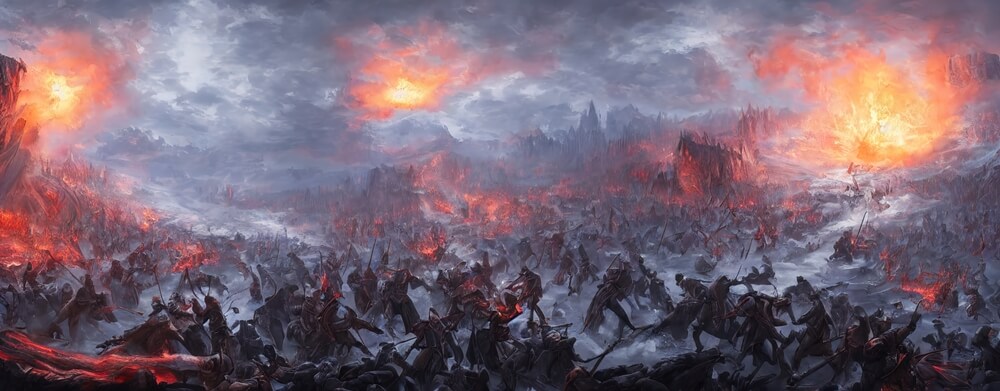
Two prominent noble houses: House Solari, based in the lowlands, and House Lunara, residing in the highlands, each coveted the Solarian Eclipse Crystal, believing it would grant them unparalleled dominance over Eldoria. The Eclipse War endured for decades, marked by a series of battles, skirmishes, and shifting alliances. The conflict tested the endurance and resources of both houses, plunging Eldoria into a state of turmoil and upheaval.
The monarchy weakened and ultimately dissolved as the royal family struggled to maintain control among the warring factions. This event marked a significant shift in Eldoria’s political structure. In the war’s aftermath, a council composed of representatives from various noble houses emerged as the ruling authority in Eldoria. This council was established to prevent further internal strife and to distribute power more equitably among the highlands and lowlands. The Eclipse War not only reshaped the political landscape but also fostered a culture of cautious diplomacy and alliance-building, as the kingdom sought to avoid further conflicts.
One of Eldoria’s iconic historical figures is Lady Seraphina, a brilliant strategist who played a pivotal role in ending the Eclipse War. Her legacy as a peacemaker and advocate for diplomacy still resonates in Eldorian society. The council’s rule, established in the war’s aftermath, has led to a decentralized system of governance, where noble houses wield significant influence over their respective regions.
The conflict became a source of legends, stories, and songs, often depicted as a tragic chapter in the kingdom’s history. It serves as a reminder of the consequences of unchecked ambition and the importance of unity in the face of adversity.
Creating immersive and believable history and lore is an art that requires careful consideration, creativity, and attention to detail. By drawing inspiration from real-world history, crafting significant events and influential figures, and following practical guidelines, writers can weave a rich tapestry of narrative depth, cultural resonance, and compelling storytelling. So, embark on the journey of world-building, where history and lore are the keystones to a world as vivid and captivating as your imagination can conjure. Happy worldbuilding!
I hope this was helpful. Let me know if you have questions or suggestions by using the Contact Me form on my website or by writing a comment. I post every Friday and would be grateful if you would share my content.
If you want my blog delivered straight to your inbox every month along with exclusive content and giveaways, please sign up for my email list here.
Let’s get writing!
Copyright © 2024 Rebecca Shedd. All rights reserved.
 Rebecca Shedd - Author
Pingback: The Worldbuilder’s Toolkit: Culture | Rebecca Shedd - Author