The Worldbuilder’s Toolkit: World-building for Science Fiction


World-building is a foundational aspect of science fiction, allowing writers to create immersive, believable settings that transport readers into future societies, alien worlds, or alternate realities. Science fiction explores themes of technology, society, and the human experience, and effective world-building enhances these themes, making them more relatable and impactful. In this article, I will offer insights and practical tips on how to craft an interesting science fiction world.
Understanding Science Fiction
Science fiction is a genre that often explores futuristic technology, space exploration, time travel, and speculative societies. It delves into the potential implications of scientific advancements and the complexities of human nature in various contexts. A well-crafted science fiction world not only provides a backdrop for the story but also informs character development and plot progression.
Defining the Setting
Decide if your story is set in the present, the near future, the distant future, or an alternate timeline. Consider how advancements in technology, society, and culture have shaped the world.
Develop the physical landscape, including planets, cities, and environments. Consider how these elements affect society and influence the narrative.
In Isaac Asimov’s Foundation series, the setting spans a galaxy-wide empire, influencing political dynamics and cultural exchanges.
Establishing Technology
Define the technological advancements in your world. Consider how they affect daily life, communication, transportation, and warfare.
Create clear rules for how technology functions and its limitations. This adds depth and realism to your world.
In Arthur C. Clarke’s 2001: A Space Odyssey presents technology as both wondrous and potentially dangerous, prompting profound questions about humanity’s relationship with machines.
Exploring Societal Structures
Develop the political landscape, including forms of government, power dynamics, and social hierarchies. Consider how these structures impact daily life and character motivations.
Explore cultural practices, belief systems, and societal values. Consider how these elements shape interactions among characters and influence conflicts.
In Frank Herbert’s Dune, the intricate political intrigue and feudal structure of the desert planet Arrakis drive the story and highlight the significance of resources.
Creating Alien Races & Species
If your world includes alien species, develop their unique cultures, languages, and physical characteristics. Consider how they interact with humans and their place in the world.
Explore the relationships between different races, including cooperation, conflict, and cultural exchange.
In the Star Trek universe, diverse alien species coexist, each with distinct cultures and histories, contributing to the narrative’s richness.
Incorporating Science & Realism
Ground your world in scientific principles, whether through established theories or speculative advancements. Research relevant scientific concepts to lend credibility to your world.
Consider the consequences of scientific advancements on society, environment, and human behavior. This adds depth and authenticity to your world.
Kim Stanley Robinson’s Mars Trilogy meticulously explores the science of terraforming Mars, examining the environmental and societal affects of colonization.
Developing a Unique History
Craft a rich history that informs the present state of your world. Include major events, conflicts, and breakthroughs that have shaped society.
Incorporate legends or myths that reflect cultural values and beliefs. These elements can provide a context for characters’ motivations and conflicts.
In The Left Hand of Darkness by Ursula K. Le Guin, the history of the planet Gethen shapes its culture and societal norms, influencing the protagonist’s interactions.
Using World-Building to Enhance the Plot
Intertwine character backgrounds with the world’s history and culture. Characters should grow and change as they navigate their environments, facing challenges that reflect the world’s complexities.
Use the world’s dynamics to create conflict. This could involve political intrigue, environmental disasters, or clashes between species. The setting can serve as a catalyst for plot developments.
Use sensory details to bring the setting to life. Describe sights, sounds, and smells to create an immersive experience for readers, helping them feel connected to the world.
Unique World-Building Details in the Science Fiction Genre
Science fiction is a genre that often challenges the boundaries of imagination, exploring futuristic technologies, alien cultures, and speculative scientific advancements. To create a captivating and believable science fiction world, consider the following unique world-building details that define the genre.
Advanced Technology
Science fiction settings often feature advanced technologies that do not exist in the present. This includes artificial intelligence, space travel, advanced robotics, and biotechnology. Consider how these technologies affect daily life, the economy, and social structures.
Explore the implications of these technologies on human behavior and society. For example, how does AI influence job markets, or how does space colonization change human relationships and identity?
Space Exploration & Alien Worlds
Science fiction frequently involves the exploration of alien planets, each with unique ecosystems, climates, and inhabitants. Consider how the physical characteristics of these worlds affect their societies and cultures.
Create a variety of alien life forms with distinct biological, social, and cultural traits. Think about how they interact with each other and humans, and the potential for conflict or collaboration.
Scientific Concepts & Theories
Base your world on current scientific theories, such as quantum mechanics, relativity, or genetic engineering. Incorporating genuine science lends credibility to your narrative and allows for speculative advancements that feel plausible.
Use existing scientific concepts as a foundation to speculate on future advancements. For instance, explore the potential of nanotechnology, time travel, or virtual reality, and their societal affects.
Alternative Histories & Timelines
Science fiction often explores alternative histories, examining how different technological developments or events could change the course of humanity. This can include timelines where historical figures succeed in different ways or where significant events unfold differently.
Consider the existence of parallel universes or alternate realities, allowing for complex narratives that explore the consequences of choices made in different timelines.
Unique Societal Structures
Create governments that reflect the advancements in technology and society. This could include technocracies, authoritarian regimes powered by surveillance, or decentralized systems enabled by technology.
Examine how societies adapt to technological changes. For example, in a world where space travel is common, there may be cultures that prioritize cosmic exploration over terrestrial concerns.
Ethics & Morality in Science
Science fiction frequently explores ethical questions surrounding scientific advancements. Characters might grapple with the implications of cloning, artificial intelligence rights, or the consequences of genetic engineering.
These moral dilemmas can create tensions within societies, leading to conflicts between factions that advocate for or against specific technologies or ethical standards.
Futuristic Language & Communication
Consider how language might develop in response to technological advancements. This can include slang derived from technological jargon or entirely novel forms of communication, such as telepathy or virtual language systems.
Explore how different cultures in your world communicate. Introducing alien languages or dialects can add depth to your narrative and create opportunities for miscommunication and conflict.
Environmental Changes
Science fiction often examines the consequences of environmental degradation, leading to dystopian or post-apocalyptic settings. Consider how climate change, nuclear fallout, or resource scarcity have reshaped the world.
Explore futuristic solutions to environmental challenges, such as terraforming alien worlds or advanced ecological restoration technologies.
Interstellar Politics & Diplomacy
Develop systems of governance that extend beyond Earth, incorporating multiple planets or civilizations. This can involve complex diplomatic relations, trade agreements, and conflicts between species or factions.
Examine how cultural differences impact interstellar relations, leading to alliances, trade disputes, or wars.

Image source.
What Sets Science Fiction Apart from Fantasy?
While both science fiction and fantasy offer rich opportunities for imaginative storytelling, they are different in their approaches, themes, and underlying principles. Science fiction grounds its narratives in scientific possibilities and explores the implications of technological advancements, while fantasy relies on magical elements and mythological constructs to create immersive and enchanting worlds. Understanding these differences can help writers effectively craft stories that resonate within their chosen genre, providing readers with interesting narratives that inspire wonder and provoke thought.
Foundational Concepts
Science fiction writers ground their work in scientific principles and theories and often explore the potential consequences of scientific advancements, technological innovations, and the exploration of the universe. It is usually grounded in real or plausible science and aims to explain its fantastical elements rationally. Examples of foundational concepts in science fiction include space travel, artificial intelligence, genetic engineering, and time travel.
Writers build fantasy on magical elements, mythological beings, and supernatural occurrences. It creates its own set of rules that often defy the laws of nature. While fantasy may draw on real-world cultures and history, its core elements are typically fantastical and unbound by scientific rationale. Examples of foundational concepts in fantasy include magic systems, mythical creatures (like dragons or fairies), and enchanted artifacts.
Settings & Worlds
Science fiction settings can vary from futuristic cities to distant planets, often featuring advanced technology and alien civilizations. Scientific principles usually inform the world-building and seek to explore what the future may hold based on current trends in technology and society. The environments may reflect societal issues or potential consequences of technological advancement, such as dystopian futures or utopian societies.
Fantasy settings are often based in imaginary realms that feature medieval landscapes, enchanted forests, or mythological worlds. These settings prioritize magic and may include elements that don’t adhere to the physical laws of the real world. Folklore and myth frequently steep the landscapes, creating rich, immersive environments that evoke a sense of wonder.
Themes & Motifs
Themes in science fiction often center on the implications of technology, the nature of humanity, and the exploration of the unknown. Common motifs include space exploration, contact with alien species, and the ethical dilemmas posed by scientific advancements. Science fiction frequently examines societal issues, such as the impact of technology on human relationships, environmental challenges, and the consequences of war.
Fantasy themes typically focus on the battle between good and evil, heroism, destiny, and the exploration of morality. Common motifs include quests, magical artifacts, and the coming-of-age journey. Fantasy often emphasizes personal growth, the importance of friendship, and the struggle against oppressive forces, all set against a backdrop of magic and myth.
Character Archetypes & Development
Characters in science fiction may be scientists, engineers, or explorers, often navigating complex ethical dilemmas and technological challenges. Their development may involve adapting to new realities or facing the consequences of their scientific pursuits.Characters can also include aliens or sentient machines, exploring themes of identity and consciousness.
Fantasy characters often include wizards, knights, mythical creatures, and heroes on quests. Writers typically link their development to their journey, emphasizing personal growth, loyalty, and courage. The archetypes in fantasy often align with traditional folklore, such as the hero’s journey or the mentor-mentee dynamic.
Plot Structure & Conflict
Science fiction plots often revolve around scientific discoveries, technological advancements, or the exploration of new worlds. Conflicts may arise from the consequences of these advancements, whether through societal upheaval, ethical dilemmas, or interactions with alien civilizations. The pacing can vary from action-driven plots to more contemplative narratives that examine philosophical questions.
Fantasy plots often follow traditional quest structures, with heroes embarking on journeys to defeat dark forces, recover lost artifacts, or fulfill prophecies. Conflicts are frequently personal and involve the struggle between good and evil. Authors may also weave intricate political intrigues into fantasy narratives, but they usually place these within the context of magical realms and epic struggles.
Reader Expectations
Readers of science fiction often expect scientific accuracy, plausible extrapolations, and thoughtful examinations of technology’s impact on society. Science fiction invites readers to consider the future and the ethical implications of scientific advancements.
Readers of fantasy expect magical elements, fantastical creatures, and a sense of wonder. Fantasy invites readers to escape into imaginative realms where anything is possible, often embracing the idealistic notions of heroism and adventure.

The Writers Toolkit
Creating an interesting science fiction setting and plot requires a blend of imagination, scientific principles, and thoughtful world-building. Here are practical tips to help you develop a rich and engaging science fiction narrative.
Define Your Core Concept – Identify the foundational concept of your science fiction world. This could be based on a technological advancement, a scientific theory, or a societal change. Your core concept will guide the rest of your world-building and plot development. Example: Consider a future where humanity has colonized other planets but faces a crisis because of resource depletion on Earth.
Establish the Setting – Decide whether your story will take place on Earth, in a distant future, or on an alien planet. Design the geography, climate, and ecosystems that reflect the technological and societal changes. Create detailed maps and descriptions of key locations, such as cities, spaceports, and unique landscapes. Consider how these environments affect the inhabitants and their cultures.
Develop Technology & Science – Create advanced technologies that shape your world. Define how they work, their purpose, and their impact on society. Consider both beneficial technologies and those that might have unintended consequences.While your world can include speculative elements, base your technologies on real scientific principles to enhance credibility. Research relevant scientific concepts to inform your technological advancements.
Create Unique Societies & Cultures – Consider how technology and scientific advancements influence social hierarchies, governance, and cultural practices. Explore various political systems, such as technocracies, dystopias, or post-apocalyptic communities.Develop the customs, languages, and belief systems of different groups within your world. Reflect on how technological advancements shape these cultures and their interactions with others.
Introduce Alien Species & Life Forms – If your story includes extraterrestrial species, design their biology, cultures, and social structures. Consider how these beings differ from humans and how they interact with the environment and each other.Explore the physical and mental characteristics of your alien species. Think about their communication methods, technology use, and societal norms.
Craft Engaging Conflicts – Develop conflicts that arise from your world’s technology, politics, or environmental challenges. These conflicts can be personal, societal, or intergalactic, adding depth to the narrative.Make sure that the characters’ goals and motivations tie in with the world’s conflicts. Personal stakes can enhance the emotional impact of the plot.
Incorporate Ethical Dilemmas – Explore the ethical implications of technological advancements and scientific discoveries. Characters may face dilemmas regarding artificial intelligence, genetic manipulation, or environmental destruction.Consider how different groups within your world respond to these dilemmas. This can lead to internal and external conflicts that drive the plot.
Use Sensory Details – Use vivid sensory details to create an immersive experience for readers. Describe the sights, sounds, and smells of your world, helping readers feel present within the setting.Showcase how technology affects daily life, from transportation methods to communication tools. This adds realism and depth to your world.
Weave in Themes & Motifs – Identify themes you want to explore, such as the impact of technology on humanity, the nature of identity, or the consequences of exploration. You should weave these themes throughout the plot and character arcs.Consider using recurring symbols or motifs that reinforce your themes. This can create a sense of cohesion and depth within your narrative.
Maintain Consistency & Plausibility – Ensure that the rules governing your world, including technology and societal structures, remain consistent throughout the narrative. Inconsistencies can disrupt immersion and confuse readers.While science fiction allows for speculation, try to ground your scenarios in realistic consequences of scientific advancements. This enhances credibility and encourages readers to engage with your world.

Fictional Example: The City of Nexus Prime
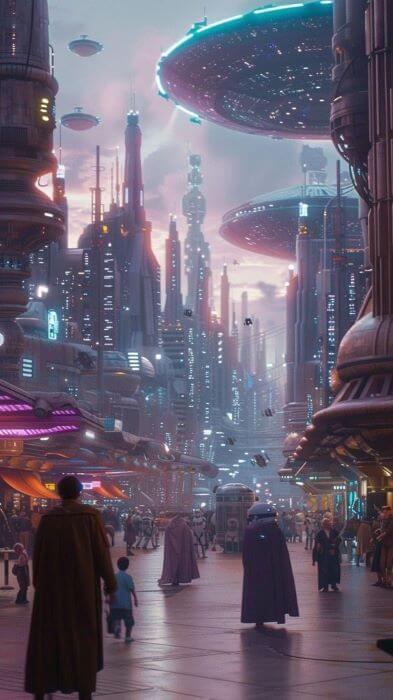
Nexus Prime is a sprawling megacity on the terraformed planet of Elysium, in the Trion Nebula. It is a hub of advanced technology, diverse cultures, and interstellar commerce, characterized by its towering skyscrapers, floating transport systems, and a complex network of artificial intelligence that governs daily life.
Nexus Prime features a vertical design, with multiple levels stacked high above the surface. Each level serves different functions—residential areas, commercial districts, industrial zones, and green parks that use advanced hydroponics for food production. A network of skyways—elevated pathways for personal transport pods connects the city and hover vehicles. A high-speed maglev train system runs between the various sectors, providing swift travel for residents and visitors.
A central AI oversees the city named Astra, which manages everything from traffic flow to energy distribution. Astra uses predictive algorithms that optimize daily operations and enhance safety. Nexus Prime boasts advanced biotechnological innovations, including genetically modified crops, bio-engineered pets, and health-enhancing implants for citizens, all designed to improve quality of life.
Nexus Prime is home to a melting pot of species from various planets. Humans, cyborgs, and alien races coexist, bringing their unique cultures, traditions, and languages to the city. The city hosts annual festivals celebrating the diverse cultures of its inhabitants, such as the Festival of Lights, where different races showcase their traditional music, food, and art.
A consortium of mega-corporations that holds significant power in political decisions governs Nexus Prime. Citizens can take part in a democratic process, but corporate influence often skews elections and policy-making.
Stark class divisions mark the city, with wealthier residents living in the upper tiers, enjoying luxury amenities and green spaces, while lower-income individuals inhabit the industrial sectors with limited resources and opportunities.

Creating a captivating science fiction world involves a careful balance of imagination, research, and storytelling. By focusing on the key components of world-building, drawing from real-world inspirations, and integrating characters deeply into the setting, you can craft a rich and engaging narrative that captivates readers. Embrace the possibilities of science fiction, and let your creativity shape a future that is both thrilling and thought-provoking. Happy world building!
I hope this was helpful. Let me know if you have questions or suggestions by using the Contact Me form on my website or by writing a comment. I post every Friday and would be grateful if you would share my content.
If you want my blog delivered straight to your inbox every month along with exclusive content and giveaways, please sign up for my email list here.
Let’s get writing!
Copyright © 2024 Rebecca Shedd. All rights reserved.
 Rebecca Shedd - Author