
The Writer’s Guide to 1800-1810 Men’s Fashion
Posted on May 14, 2021 5 Comments

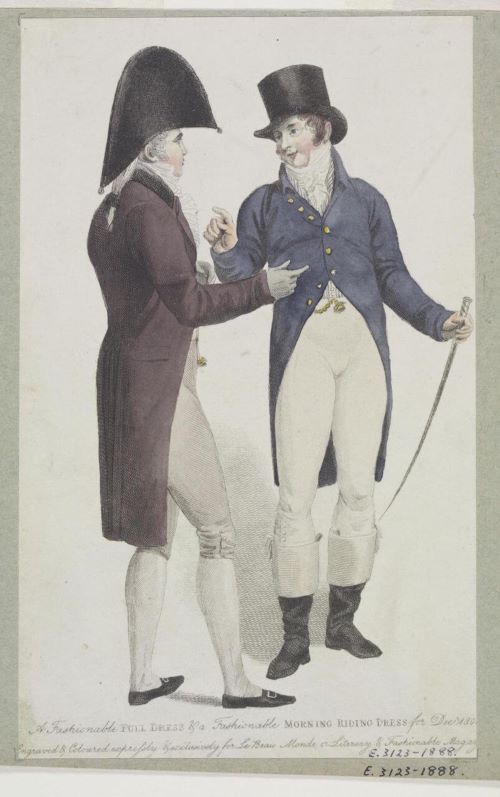
Men’s fashions of the first decade of the 19th century were buffeted by the same winds of change that influenced women’s styles. The French Revolution had an outsized impact although the revolutions in Britain’s American colonies and Haiti influenced fashion as well. The Napoleonic War also had a large effect with various elements of military uniform seeping into civilian wear.
For an overview of fashion for the entire 19th century, please read my Writer’s Guide to 19th Century Fashion.
Influences
A distancing from the elaborate styles of the 18th century was due in large part to the shock of the French Revolution. Nobody wanted to look like an aristocrat after that. However, a move towards a more sober style was already underway, starting as early as the 1790’s.
The rise of the dandy in this period set the tone for men’s fashions throughout the century and still holds sway over men’s styles to this day. George Bryan “Beau” Brummel is considered the father of dandyism. The son of a minor noble, he rose to prominence with his exquisitely tailored coats, crisp perfectly tied cravats, and immaculate linen shirts. [1] The impression he made was so lasting that fifty years after his death, the English essayist Max Beerbohm wrote: “In certain congruities of dark cloth, in the rigid perfection of his linen, in the symmetry of his glove with his hand, lay the secret of Mr. Brummell’s miracles.” [2]
The restrained clothing of the English country gentleman had been gaining popularity in Britain and on the Continent. It was a rebellion against the ostentatious styles of the older generation as well as becoming the new standard for the professional man. [3]

Underwear
The shirt was the standard first layer and was made of either linen or cotton with a standing collar that skimmed the jawline. Ruffles decorated the front, giving way to pleats as the decade progressed. [4] Some men had begun to discretely wear a male version of the corset to achieve the flat-bellied fashionable silhouette.
The Suit
The suit continued to be the mainstay of men’s fashion although it underwent several changes from the elaborate and heavily embellished suits of the 18th century. Under the influence of the dandy, the decorations disappeared and sober colors such as black, navy, brown, red, and green became the standard. [5]
The coat could either be a formal dress coat or an informal riding coat. The dress coat either cut straight across at the waist or in the shape of an inverted U before flowing into the tails at the back. The high collar featured an M shape at the back which is unique to this period. [6] The riding coat sloped gently from the waist into the tails. Unlike the coats of the previous century, both styles were meant to be worn buttoned.
Waistcoats were either single or double breasted. They were also the only piece of a man’s wardrobe where he could indulge in color and pattern. [7] They were cut straight across with only a bit of them peeking out from under the bottom of the coat. They had tall collars and wide lapels.
Pantaloons extended to the calf or ankle where they fastened with ties or buttons and were cut on the bias to hug the body. They still had the fall front of the previous century. White or cream breeches were worn for formal affairs while dark colors were favored for daytime. [8] Beau Brummel is credited with inventing the instep strap to keep his pantaloons taut and straight. [9] During this period, trousers became acceptable as an informal option.
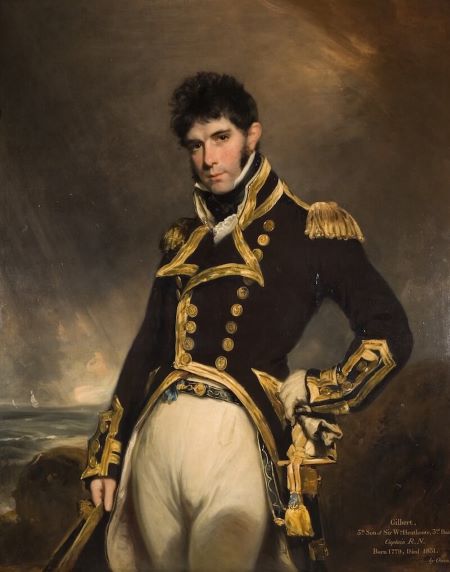
Captain Gilbert Heathcote painted by William Owen. Photo source.
Outerwear
For outdoors, greatcoats were popular, often sporting contrasting collars of velvet or fur. A style of coachman’s coat called a garrick with three to five short capes attached at the collar was also worn. [10]
Accessories
The cravat was an essential accessory and was usually made of fine muslin or silk. Dandies were overly concerned by the proper wrapping and tying of their cravats and there were several instruction manuals that advised on the correct methods. [11]
Watch fobs or a decorated strip of ribbon or metal were still popular from the previous century. [12]
Hairstyles and Headwear
The wig fell out of fashion except among older men and specific professions such as lawyers, judges, and physicians. In fact, you will still see judges in the UK wearing white wigs to this day. The Duty on Hair Powder Act of 1795 introduced a tax that radically decreased the demand for hair powder. The abandonment of the wig was also championed by Beau Brummel. Hair was instead cut short and naturally tousled, a look known as à la Titus or Brutus in keeping with the classical influences of the decade. [13]
The top hat had replaced the tricorn as the dominate hat, coming in a variety of heights and shapes. It was originally made of felt, but silk began to be used around 1803. [14] The 18th century bicorn was still worn, especially as part of military uniforms. It was fashionable at formal evening events where it was carried under the arm. [15]

Footwear
Boots were the most popular footwear and took after the military fashions of the day. Hessian boots, named after the German soldiers, had heart-shaped tops with tassels. The jockey boot, which had previously only been used for riding, also came into style. They were dark colored with a turned-down cuff of lighter colored leather. [16] Low shoes were worn at court.
Court Dress
Just like with the women’s styles, the court dress for men stayed old-fashioned and was the last holdout of the embellished and elaborate suits of the 18th century. This was true for the English as well as Napoleon’s court that returned to the styles of the ancien régime that had been wiped out by the French Revolution.

I hope this was helpful. Let me know if you have any questions or suggestions by using the Contact Me form on my website or writing a comment. I post every Friday and would be grateful if you would share my content.
If you want my blog delivered straight to your inbox every month along with exclusive content and giveaways, please sign up for my email list here.
Let’s get writing!
Copyright © 2021 Rebecca Shedd. All rights reserved.
[1] Payne 1865, pp. 452–455
[2] https://en.wikipedia.org/wiki/1795%E2%80%931820_in_Western_fashion#Men's_fashion
[3] https://fashionhistory.fitnyc.edu/1800-1809/
[4] Tortora, Phyllis G. and Keith Eubank. Survey of Historic Costume, 5th ed. New York: Fairchild Books, 2010. http://www.worldcat.org/oclc/865480300 pg 319. Byrde, Penelope. Nineteenth Century Fashion. London: Batsford, 1992. http://www.worldcat.org/oclc/26300526 pg 94.
[5] Byrde, Penelope. Nineteenth Century Fashion. London: Batsford, 1992. http://www.worldcat.org/oclc/26300526 pg 91.
[6] Payne 1865, pp. 452–455
[7] Tortora, Phyllis G. and Keith Eubank. Survey of Historic Costume, 5th ed. New York: Fairchild Books, 2010. http://www.worldcat.org/oclc/865480300 pg 321. Davidson, Hilary. Dress in the Age of Jane Austen: Regency Fashion. New Haven: Yale University Press, 2019. http://www.worldcat.org/oclc/1115106379 pg 28-29.
[8] Byrde, Penelope. Nineteenth Century Fashion. London: Batsford, 1992. http://www.worldcat.org/oclc/26300526 pg 93. Johnston, Lucy, Marion Kite, Helen Persson, Richard Davis, and Leonie Davis. Nineteenth Century Fashion in Detail. London: V&A Publications, 2005. http://www.worldcat.org/oclc/61302743 pg 14
[9] Byrde, Penelope. Nineteenth Century Fashion. London: Batsford, 1992. http://www.worldcat.org/oclc/26300526 pg 94
[10] Payne 1865, pp. 452–455
[11] Byrde, Penelope. Nineteenth Century Fashion. London: Batsford, 1992. http://www.worldcat.org/oclc/26300526
[12] Ashelford, Jane. The Art of Dress: Clothes and Society, 1500-1914. London: National Trust, 1996. http://www.worldcat.org/oclc/243850605. Cumming, Valerie ed., The Dictionary of Fashion History. New York: Berg, 2010. http://www.worldcat.org/oclc/1003643284.
[13] Davidson, Hilary. Dress in the Age of Jane Austen: Regency Fashion. New Haven: Yale University Press, 2019. http://www.worldcat.org/oclc/1115106379 pg 57. Laver, James. Costume and Fashion: A Concise History, 5th ed. London: Thames & Hudson, Ltd, 2012. http://www.worldcat.org/oclc/966352776 pg 153.
[14] Ginsburg, Madeliene. The Hat: Trends and Traditions. London: Studio Editions, 1990 pg. 85-86. le Bourhis, Katell, ed. The Age of Napoleon: Costume from Revolution to Empire 1789-1815. New York: The Metropolitan Museum of Art, 1989 pg. 112-113.
[15] Tortora, Phyllis G. and Keith Eubank. Survey of Historic Costume, 5th ed. New York: Fairchild Books, 2010 pg. 322. Davidson, Hilary. Dress in the Age of Jane Austen: Regency Fashion. New Haven: Yale University Press, 2019 pg. 200, 226.
[16] Payne, p. 456.
The Writer’s Guide to 1800-1810 Women’s Fashion
Posted on May 7, 2021 35 Comments
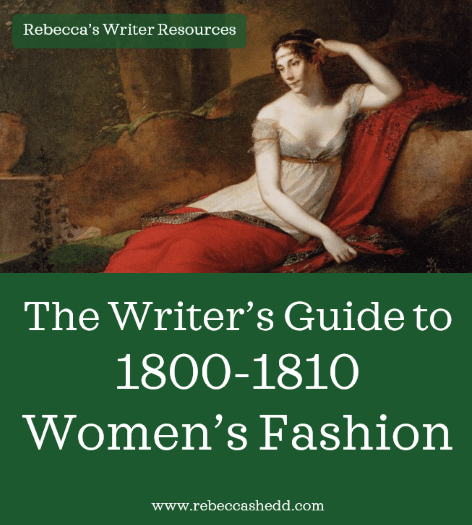
The first decade of the 19th century is known as the Empire period, named after Napoleon’s First French Empire. It is also sometimes referred to as the Napoleonic era. Women’s clothing of this period is often called Jane Austen dress, since many of the author’s books were written and set during this decade.
For an overview of fashion for the entire 19th century, please read my Writer’s Guide to 19th Century Fashion. Over the next couple of weeks I will be looking into each decade with greater depth.
Influences
As I mentioned in my blogs about the last decade of the 18th century, the French Revolution had a large impact on fashion and the stylish silhouette. The wide-hipped, tightly laced trends of the French court quickly disappeared in its aftermath in favor of a more natural figure. The new fashions reflected the desire for freedom and personal expression.
There was also increased interest in the classical Greek and Roman styles, leading to a revival not only in clothing but architecture, interior design, and the arts. This was due in large part to the discovery and excavation of Pompeii and Herculaneum. The styles of the ancient democracies fit in well with the values of the revolution and Napoleon’s empire. They were also championed by his wife, Josephine. [1] The performances of Emma Hamilton, which pulled heavily from classical imagery, also increased the popularity of the style. [2]
Underwear
Just as for centuries, the base layer for all classes of women was the chemise or shift. However, cotton was becoming increasingly more common, and linen was falling out of favor. The chemise had a low neckline and tight short sleeves to accommodate the styles of the day. It was always white, which helped to withstand rough laundering practices.
Stays were worn over the chemise, but they became shorter than those from the previous century, usually only extending a short distance below the bust. In fact, they look a lot like a laced-up modern sports bra. [3]
A petticoat was worn over the chemise. Since most of the dresses of this period were made of shear fabric, a petticoat was essential for modesty. They could be decorated with pintucks, lace, or ruffles.
Drawers were worn by few women but were gaining in popularity. They often had a split crotch for convenience visiting the bathroom.
Stockings were made of silk or cotton and secured by garters as they were in the previous century. They were often white or nude colored. [4]

Gowns
Dresses had a slim silhouette and drew heavily on classical Greek and Roman imagery. White was a common color since most ancient statues were white marble, having lost their coat of paint over the centuries. Other pastel colors were also popular and recommended for young ladies with jewel tones suggested for mature women. Gone were the wide skirt supports of the previous centuries. The change was so dramatic that it was heavily satirized in the publications of the day.
Lightweight fabrics that draped well such as muslin were used and were sometimes so flimsy to the point of being shear. It was essential to wear a petticoat for modesty. The fullness of the fabric was usually gathered at the back of the waistline, allowing the front to be smooth. The sleeves could be short, like a cap sleeves, or long, extending to the wrists.
Different classifications of dress appeared during this period, signaling a measured returned to formality after the expulsion of everything formal during the revolutions at the end of the previous century. Morning dress was casual at-home wear. Half dress for casual outings or meeting with guests. For both, it was recommended that the dress be long-sleeved and high-necked. Full dress was for formal occasions and evening dress for nighttime events, with plunging necklines and short sleeves being appropriate. [5] Other nuances appeared such as dinner dress, walking dress, etc., heralding the strict requirements of clothing based on occasion and time of day that the Victorian era is known for.
The styles of Spain began to deviate from the rest of Europe and North America. Black became a popular color again just as it was in the 16th century. Lace veils and large combs in the hair completed the look.


Outerwear
The shawl was an essential element as well as being needed for warmth. Patterns were fashionable with the Indian shawl being favored. [6] Variations of the shawl, including mantels and capes, were also popular.
Various styles of coats such as the redingote, and short jackets called spencers were in vogue. [7]
Gloves were worn when outside the house and only removed for dinning.
Accessories
Due to the slim shear styles of the day, the separate pockets worn during the previous century were abandoned. Instead, small purses or reticules were used to carry items. They usually hung from the wrist.
Fans were carried for cooling and over this period, an entire language made up of fan movements and placement was developed. [8]
Parasols were used outdoors to protect a lady’s pale skin.
Hairstyles and Headwear
Hairstyles were also influenced by ancient Greece and Rome, with a style known as a Psyche knot being popular. Daring women chopped their hair short and wore it “à la Titus”, a layered look with some pieces hanging down.
Bonnets were commonly worn outdoors although adventurous ladies began forgoing them in public. A variety of other headwear was popular including turbans and hats inspired by Asia and China. Conservative married women continued to wear linen caps.

Footwear
Flat slippers made of fabric or leather were the most common. High heels had gone out of fashion. When venturing out on the muddy streets, tall pattens were worn to raise a lady’s slippers up out of the muck.
Court Dress
Although the French court of Louis had fallen, the English court remained. Just as in the previous century, the styles of court were decidedly old-fashioned and harkened back to the 18th century. Skirt supports were still worn under court dresses. During this period, the English court tried to combine the wide-hipped styles of the late 18th century with the high-waisted trend. The result was rather absurd and probably not flattering on anyone.

I hope this was helpful. Let me know if you have any questions or suggestions by using the Contact Me form on my website or writing a comment. I post every Friday and would be grateful if you would share my content.
If you want my blog delivered straight to your inbox every month along with exclusive content and giveaways please sign up for my email list here.
Let’s get writing!
Copyright © 2021 Rebecca Shedd. All rights reserved.
[1] https://fashionhistory.fitnyc.edu/1800-1809/
[2] Hornsby, Clare (2000). "7". The Impact of Italy: The Grand Tour and Beyond. The British School at Rome. pp. 123–146.
[3] "Stays | V&A Search the Collections". V and A Collections. 2021-01-12. Retrieved 2021-01-12.
[4] "The Costume Book, Nesfield, Cookson. 1935:New York.
[5] "Mirror of Graces; or the English Lady's Costume". p. 95. Retrieved 4 July 2009.
[6] Payne 1965, p. 447–449
[7] Payne 1965, p. 447–449
[8] Cheltenham Art Gallery & Museum
The Writer’s Guide to 19th Century Fashion
Posted on April 30, 2021 39 Comments

The 19th century saw fundamental changes to society and technology as well as fashion. In previous centuries, the fashions of Europe only impacted that continent and perhaps their few colonies. But with the advent of better means of travel and communication, the styles of Europe spread around the world. In several ways, 19th century Western trends still impact us now.
Today I will be introducing the basics of 19th century fashion and will be diving deeper over the coming weeks.
Once the world returns to normal, I highly encourage you to attend a Victorian or American Civil War reenactment event near you. Most of the participants have extensive knowledge of the clothing of the period and are often happy to share it.
A Changing World
There were several major upheavals that impacted fashion in the 19th century.
Probably one of the biggest was the Industrial Revolution, a period of extreme technological growth and innovation. Modern production methods and new machinery were introduced, and the textile industry was one of the first to jump on the bandwagon. Spinning and weaving that had been done by hand before was now being done by machine, leading to increased productivity. [1] The first widely used sewing machine was invented in 1830. The earliest machines were operated using a foot-powered treadle or a hand crank. Although this limited their speed, they were still faster than sewing by hand. The first electric machines were introduced in 1889 by the Singer Sewing Co. [2] The introduction of the heavily regimented factory also increased output and lowered prices.
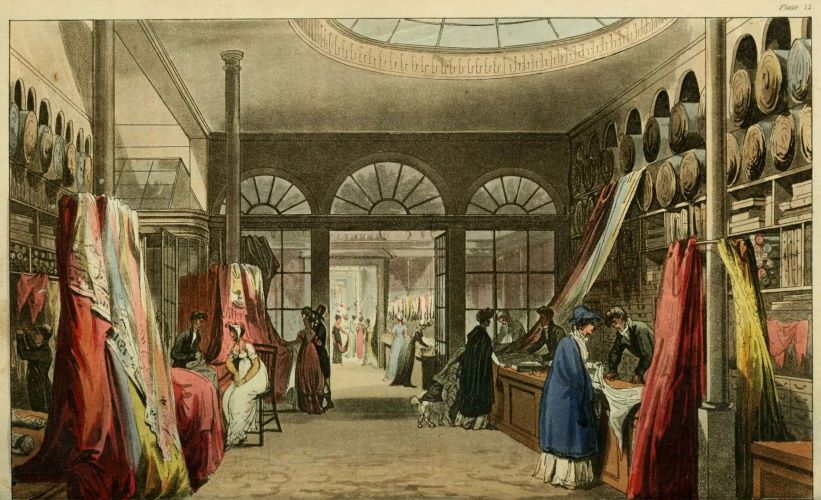
The beginning of globalization, spurred on by capitalism and colonialism, connected suppliers and consumers from around the world like never before. The British Empire is one example. Due to its reach, shoppers in London could purchase Indian cotton, Chinese silk, and other global fabrics and styles, often at affordable prices from the new department stores.
Queen Victoria of Britain, who ruled from 1838 to 1901, had an enormous impact on fashion. She put special effort in supporting the British textile industry and made style choices that were emulated around the globe.
Women’s Fashion
Women’s fashions changed dramatically through the century. The pace of style increased and shifted from decade to decade. This section will just be brief overview and I will be looking at each decade in depth in future posts.
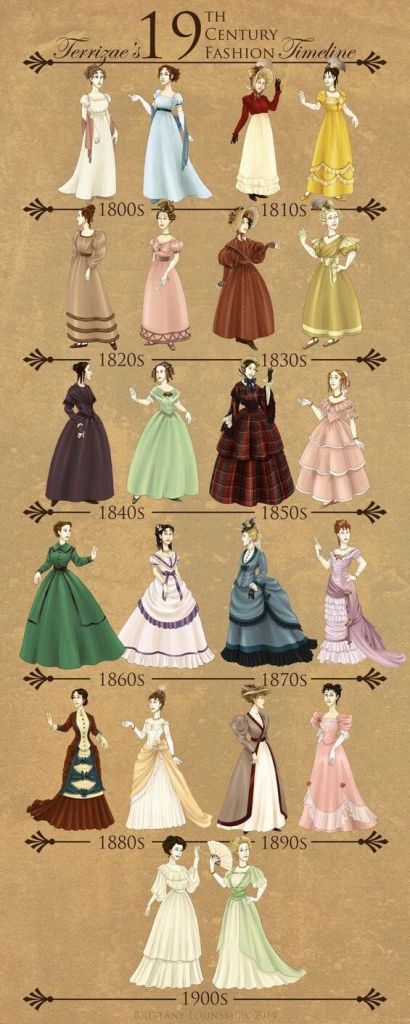
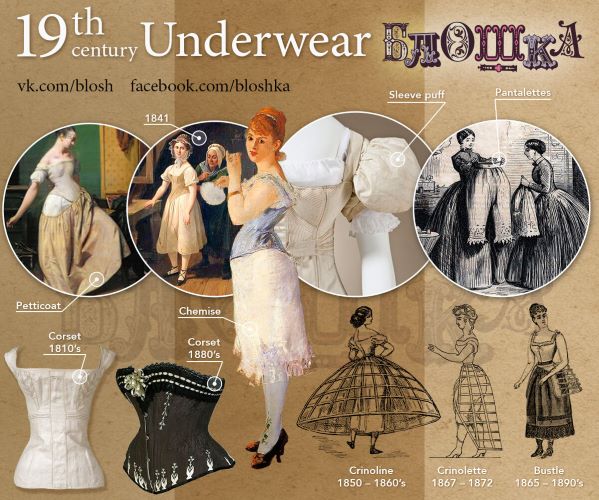
The Empire period (1799-1815), named after Napoleon’s First French Empire, was still influenced by the classical styles of the end of the 18th century. Dresses were slim and columnar with short sleeves and empire waistlines. Stays became shorter. These styles are also called Jane Austen dress after the English author, whose most well-known books such as Pride and Prejudice are set in this period.
The Regency period, named for George, the Prince Regent of Britain, stretched from 1811-1820. Waistlines began to drop, fabrics became more substantial, and skirts began to widen with the use of flounced or corded petticoats. Wigs were no longer worn, and hair was not powdered; bonnets were common. Hairstyles were kept low with ringlets (sometimes called “spaniel curls”) over the ears. [4]
In the 1820’s, waistlines continued to drop, and bright colors and patterns became popular, as opposed to the solid pastels of the last 18th century. [5] Sleeves and skirts continued to widen with an increase in embellishment at the hems. Hair was pulled up in loops at the back with curls in front and covered by a bonnet when outside. Shoes were flat slippers.
The 1830’s saw the widening of both skirts and sleeves with the waist cinched in with a corset. [7] Hair retained the front curls but became taller in the back. [8]
In the 1840’s, sleeves narrowed once more but the width of skirts increased with the use of many, many petticoats. Later into the decade, sleeves that flared below the elbow became popular. The fashionable hairstyle still included “spaniel curls” with the remainder of the hair pinned up in the back. Caps and bonnets were common.
The hoop skirt or crinoline was introduced in the 1850’s, allowing women’s skirts to expand to even greater widths. This decade also saw the rise of bell-shaped pagoda sleeves. Hair became simpler and indoor caps and outdoor bonnets were common.
Women’s skirts reached their widest in the 1860’s and the decade also saw the introduction of the first chemical dyes. [10] Wide pagoda sleeves were still the rage. Hair was styled simply, usually pulled back and caps and bonnets were common.
The 1870’s, known as the first bustle period, saw the volume of women’s skirts move to the back with the help of tapes and a bustle. Two skirts became popular. The bustle craze was short-lived and was replaced by a long-line bodice known as a cuirass.
The 1880’s saw the second bustle period with the volume of skirts rising from the bottom to just below the waist. Corseting was essential for achieving the dramatic and fashionable S-shaped silhouette.
The silhouette of the 1890’s slimmed from the previous decade with a hip pad being the only skirt support. The large “leg of mutton” sleeves of the 1830’s made a comeback. The corset became longer, producing a slight S-bend silhouette.
Men’s Fashion
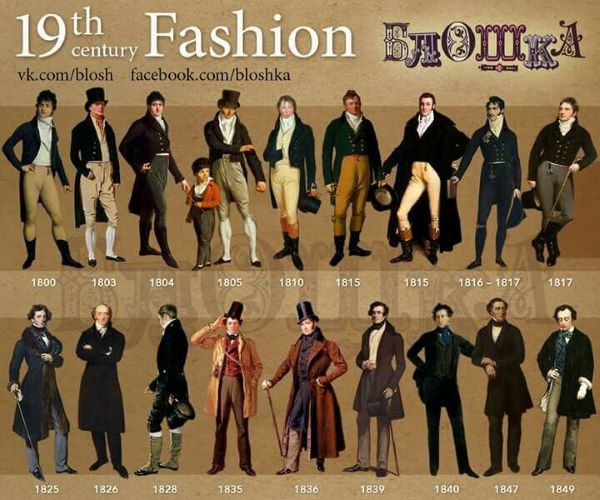
Men’s styles were still dominated by the three-piece suit although it changed from its elaborately embellished 18th century origins. Under the influence of the dandy, colors became darker and more sober with an emphasis on impeccable tailoring and fit. [3]
During the Empire period, pantaloons, which reached to the calf, were worn along with breeches. They both began to fade in popularity and were almost completely replaced by trousers by the Regency period. Wigs had been abandoned altogether. Hair became shorter and facial hair made a reappearance with sideburns being popular.
In the 1820’s, the influence of the dandy led to an emphasis on tailoring and a slim figure. Men’s corsets became more widely used. The construction of coats changed, with the addition of a waist seam that improved the fit. Trousers became looser and the top hat reappeared. [6] Curly hair with sideburns was popular.
Men’s fashions of the 1830’s also put an emphasis on wide shoulders and a small waist, the same as the women. [9] Frock coats became more common, and waistcoats were single or double breasted. The modern fly-front closure for trousers was replacing the fall-front. Moustaches came into fashion.
The fashionable style for the men in the 1840’s was like the previous decade. Ascots and cravats were common. Different styles of coats were required for varying social occasions. Prince Albert, the husband of Queen Victoria, emerged as a trendsetter.
The 1850’s saw little change in men’s fashions although a new style of coat, the sack coat, became popular. It fitted loosely and came to mid-thigh and was popular for outdoor pursuits. Facial hair of all styles became incredibly trendy.
In the 1860’s the sack coat almost completely displaced the frock coat for informal occasions. Top hats became taller and straighter. The bowler hat became popular as casual headwear.
Patterned shirts became accepted in the 1870’s and neckties were replaced with ascots. Collars were pressed down instead of standing up. Blue jeans were introduced by Levi Strauss in 1873 in San Francisco. [11]
The 1880’s saw a return of the popularity of the “ditto suit,” coat, waistcoat, and trousers made of the same fabric, today known as a three piece. The middle of the decade also saw the introduction of the tuxedo, a more relaxed formal style.
Men’s silhouettes also became leaner and simpler in the 1890’s. The sack coat gradually replaced the frock coat for most social occasions. The informal blazer was also introduced. The necktie and bowtie were popular. Top hat and bowlers were still stylish but straw boaters became fashionable for outdoor activities.
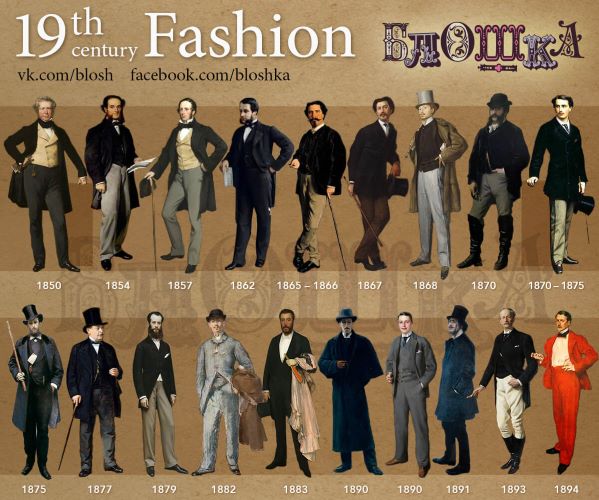
I hope this was helpful. Let me know if you have any questions or suggestions by using the Contact Me form on my website or writing a comment. I post every Friday and would be grateful if you would share my content.
If you want my blog delivered straight to your inbox every month along with exclusive content and giveaways please sign up for my email list here.
Let’s get writing!
Copyright © 2021 Rebecca Shedd. All rights reserved.
[1] Landes, D.S. (1969). The Unbound Prometheus: technological change and industrial development in Western Europe from 1750 to present. Cambridge, UK: Cambridge University Press.
[2] "Sewing Machine History – Invention of the Sewing Machine". Archived from the original on 2010-11-24. Retrieved 2010-09-12.
[3] Payne 1865, pp. 452–455
[4] Thomas, Pauline. "Regency & Romantic Hairstyles and Hats 1800–1840 Fashion History".
[5] Tozer and Levitt (1983), p. 29
[6] Kohler, Carl (1963). A History of Costume. New York, NY: Dover Publications. pp. 372–373.
[7] Tortora and Eubank 1994, p. 278
[8] Payne 1969, p. 505
[9] Payne 1969, p. 458
[10] Travis, Anthony S., "Perkin’s Mauve: Ancestor of the Organic Chemical Industry", Technology and Culture 31 (1), 1990 pp. 51–82
[11] http://www.uri.edu/personal/svon6141/history.htm Archived 2011-07-20 at the Wayback Machine The History of Jeans
The Writer’s Guide to 1750-1800 Men’s Fashion
Posted on April 23, 2021 21 Comments
Men’s clothing in the second half of the 18th century followed the trajectory of women’s fashion. The trends moved away from the elaborate and formal rococo styles, instead adopting a more informal mode known as “undress.” The half century also saw an expression of individuality become more important as well as the macaroni and dandy fads. The trendsetters of this period transitioned from the elites to the middle class. The Enlightenment revolutions of France, America, and Haiti also had a large impact on fashion.
Underwear and Casual Wear
Just as during the first half of the century, the main undergarment worn by all classes of men was the shirt. It was often made from linen although expensive cotton was becoming more common. It had full sleeves that gathered into a cuff that was either plain or sported ruffles. The neck slit and cuffs fastened with buttons and a stock was worn around the neck. The shirt usually extended to mid-thigh and the tails were tucked around the crotch in place of underwear. [1]
The banyan was still popular for wearing casually around the house. It became fashionable for men who styled themselves as intellectuals to have their portraits painted in their banyans, often with their own hair instead of a wig. [2]

1750-1775
The gap between formal and informal or “undress” styles became more pronounced. Informal fashions were better suited to the outdoor pursuits that had become popular. There was also a growing desire to appear effortlessly fashionable and composed.
The suit, made of a coat, waistcoat, and breeches, was still king through most of this half century. Over the decades some changes were made. The wide coat cuffs of the 1750s gradually shrank and the skirts became narrower as the gores were removed. Waistcoats became shorter, breeches became tighter. A new style, the frock coat, became fashionable in Britain and America for outdoor activities such as hunting. [3] Common footwear was still low buckle shoes worn with clocked stockings although boots were worn for riding.
Hair was becoming shorter as were wigs although both were usually still clubbed (tied at the nape) with a black ribbon. Powder and pomade were increasingly only worn for formal occasions. The cocked or tricorn hat was still the most popular.
The rise of Macaroni fashion began in the 1760s. Young elite men would travel across Europe, especially to Italy, in what became known as the Grand Tour. The tour was supposed to expose them to other cultures but usually was just an excuse to drink, party, and chase women. Young men returned wearing foreign fashions and often behaved in an extravagant and gender ambiguous manner. [4] The macaroni favored large wigs with small hats, delicate shoes, and short, tight breeches. By the 1770’s, men who had never been on the Grand Tour were imitating the fashion. The style was roundly criticized for being pretentious and inauthentic and satirized in the press. [5]

1775-1789
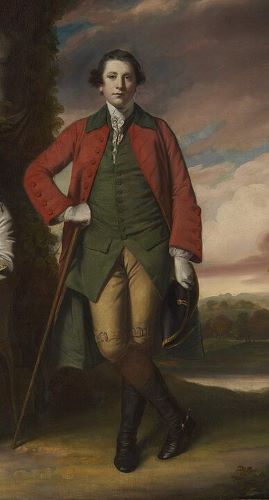
This period saw the continued prevalence of casual styles of “undress,” especially in Europe’s colonies around the world. Dark, more muted colors became more prevalent and embroidery and fancy fabrics such as silk and velvet began to disappear. [6] Benjamin Franklin shocked the French court during his visit by wearing his plain Quaker outfit and no wig.
Suits were still the standard. Coats began to cutaway and had less full skirts. Waistcoats became shorter until they were waist-length and cut straight across the bottom. Breeches became tighter since they were more visible. Shoes were the same as the previous period as were hairstyles. The tricorn hat still enjoyed popularity although a new style of cocked hat known as the bicorn emerged, which was turned up only at the front and back. Narrow brimmed, tall, conical hats, the forerunner of the top hat, also came into fashion at the end of this period.

1789-1800
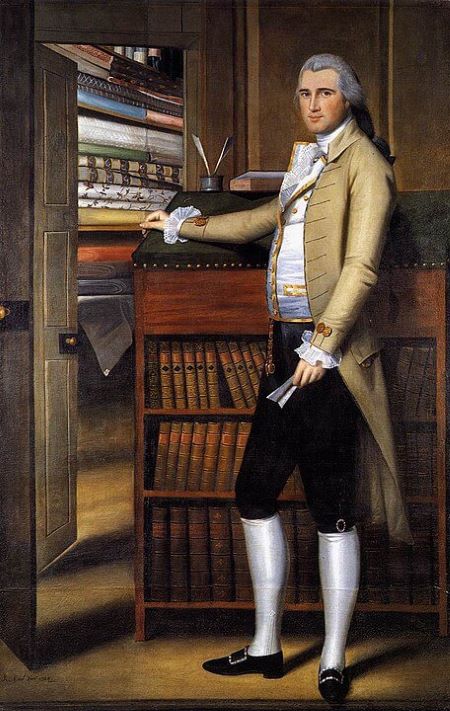
Just like women’s trends, the French and American revolutions and a renewed interest in the classical aesthetic had a huge impact on men’s fashion. Darker, more somber colors became the standard. Overall, clothing became simpler with an increased emphasis on tailoring. The cutaway coats and waist-length waistcoats of 1775-1789 continued to be worn.
Breeches lengthened, first reaching to the top of the boot, then gave way to ankle-length trousers. Breeches became associated with the nobility, which nobody wanted to be part of in the aftermath of the French Revolution. In fact, the French rebels were known as sans-culottes or “the people without breeches.” [7] French citizens were pressured to incorporate the red, white, and blue of the flag into their clothing with the cockade being a popular way of doing this.
Overcoats, also known as greatcoats, became stylish. They often had several caplets attached at the collar, which was often a contrasting fabric such as fur or velvet. Boots replaced buckle shoes.
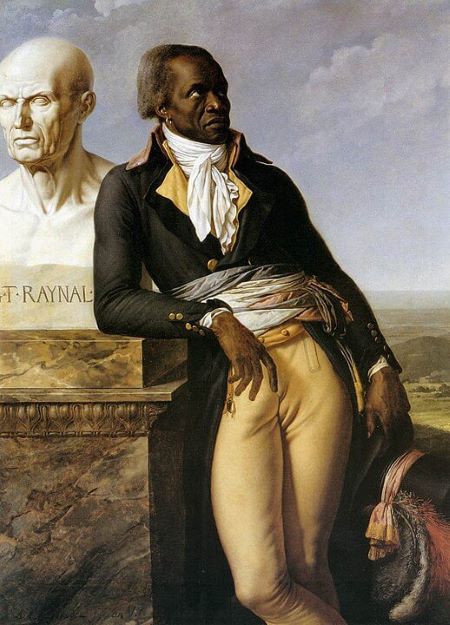
This period also saw the rise of the dandy, a man who placed great importance on style, impeccable tailoring, and immaculate outfits. [8] The father of dandyism was Beau Brummell, a middleclass Englishman. He pioneered the replacement of breeches with trousers, short hair, and the reintroduction of facial hair.

Working Class Clothing
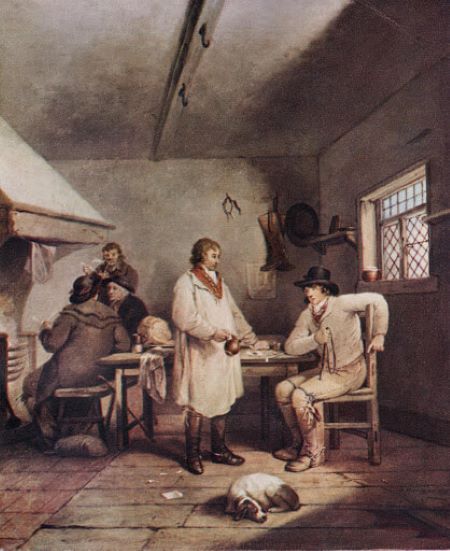
Lower class men wore the suit the same as the upper classes but made of sturdier and plainer fabric. Working men would often wear long trousers instead of breeches and short jackets. This was especially common among sailors. Smock-frocks were worn over a man’s clothes to protect them and were popular with shepherds. They were often embellished with decorative gathering known as smocking. Broad brimmed hats were worn without the sides cocked up. Shoes were sturdy and closed with plain buckles, if they could be afforded, and boots were worn when working with livestock.

I hope this was helpful. Let me know if you have any questions or suggestions by using the Contact Me form on my website or writing a comment. I post every Friday and would be grateful if you would share my content.
If you want my blog delivered straight to your inbox every month along with exclusive content and giveaways please sign up for my email list here. https://rebeccashedd.com/contact-me/
Let’s get writing!
Copyright © 2021 Rebecca Shedd. All rights reserved.
[1] Ribeiro, Aileen: The Art of Dress: Fashion in England and France 1750–1820, Yale University Press, 1995, ISBN 0300062877.
[2] "Franklin and Friends". Retrieved 2006-03-19.
[3] Ribeiro, Aileen: The Art of Dress: Fashion in England and France 1750–1820, Yale University Press, 1995, ISBN 0300062877
[4] S. West, The Darly Macaroni Prints and the Politics of the Private Man, Duke University Press
[5] Chenoune, Farid (1993). A History of Men's Fashion. Paris: Flammarion. ISBN 9782080135360.
[6] Ribeiro, Aileen: The Art of Dress: Fashion in England and France 1750–1820, Yale University Press, 1995, ISBN 0-300-06287-7
[7] Perl, Lila (1990). From Top Hats to Baseball Caps, From Bustles to Blue Jeans. New York: Clarion Books. p. 33. ISBN 0899198724.
[8] Payne 1865, pp. 452–455
The Writer’s Guide to 1750-1800 Women’s Fashion
Posted on April 16, 2021 20 Comments

In today’s article, I will be explaining late 18th century women’s styles in more depth. The fashions at the beginning of the second half of the decade was similar to those of the previous half century and were typified, especially in France, by opulence, excess, and flamboyance, although the English styles were generally simpler and more practical.
Then Britain’s American colonies exploded into revolution in 1775 followed by the French Revolution beginning in 1789. Both events had an enormous and lasting impact on fashion.
Underwear
The linen chemise was still the first layer worn by all classes of women. The sleeves narrowed from the previous half century, becoming snug and elbow length.
Stays were also worn by all classes and offered back support for working women. By the 1760’s, stays had lost their straps and were cut higher into the armpit to encourage the wearer to put her shoulders back into the fashionable silhouette.
Pockets, which were tied around the waist and accessed through slits in the skirts, persisted.
Women would wear several layers of petticoats for warmth and structural support of the outer skirt.
Stockings held up by tied ribbon or woven garters were worn by all classes. Those sported by the rich would be made of silk with a design at the ankle known as clocks. Working women wore flat shoes with buckles if they could afford them while those of the middle and upper classes had a thick curved “louis heel” and were made of fabric or leather with separate decorated buckles. [2]
1750-1775
Many of the styles from the previous half century continued to be popular such as the robe à la française, the robe à l’anglaise and the riding habit. Engageantes, the flounces and ruffles at the end of sleeves, stayed popular although they increasingly became a separate piece tacked in place. [1] The fichu continued to be worn to fill in the low neckline of gowns during the day.
Shortgowns, a front-closing thigh-length garment, were common loungewear over the petticoats and shift. Over time, they became a staple garment for the British and American working class. [5]
The Brunswick dress came into fashion during this period. It was a German traveling costume consisting of a skirt, a thigh-length jacket with a hood and elbow length sleeves, and separate narrow sleeves that covered the forearms. It was usually worn over a high-necked blouse.
Court dress or grand habit de cour lagged increasingly behind the fashions of the day, retaining the 1670’s silhouette with a low wide neckline that bared the shoulders and back-lacing heavily boned bodices. [3]
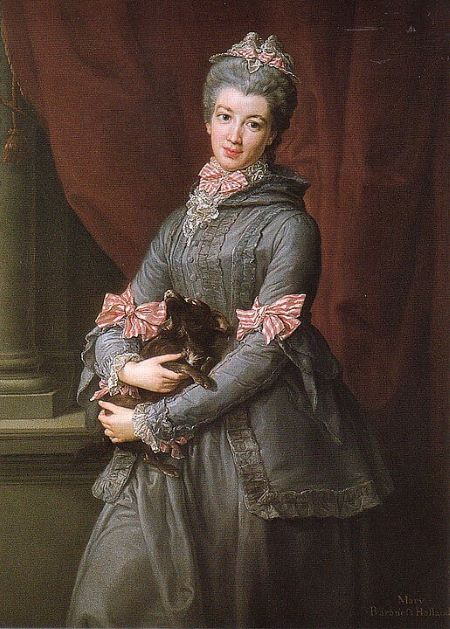
This period saw the extremes of hair with styles reaching incredible heights and decorated with small curls known as buckles, plumes, ribbons, caps, and jewelry. Both hard and soft pomatum or pomade as well as powder was essential to achieving these hairstyles. Wigs were popular among the nobility. [4]

1775-1789
While the fashions of 1750-1775 remained popular, several other styles such as the Italian gown, the caraco, the redingote, and the gaulle or chemise á la Reine came into vogue.
The Italian gown had a smooth fitted back that came to a point. The skirt was open, and the bodice could be either closed or open and filled in with a stomacher. [6]
The caraco was a style of thigh-length jacket with elbow-length sleeves worn over a petticoat.
The word redingote is the French mispronunciation of riding coat. It was an informal style of jacket with a long skirt that was based on a working-class fashion.
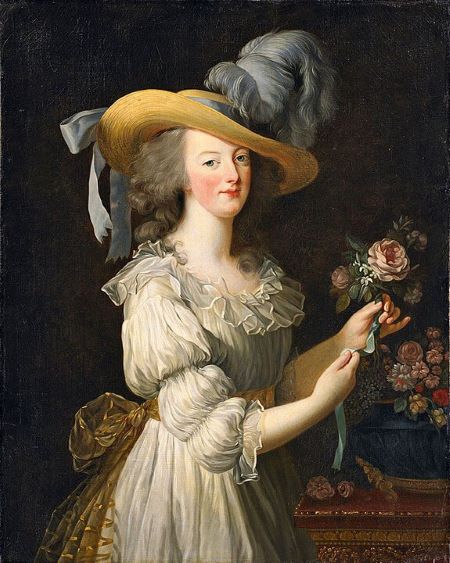
The chemise á la Reine was a style developed by Marie Antoinette. To escape her crappy marriage and the stress of her children’s illness and court life, she would play peasant with her most trusted friends in a rustic retreat. She designed a loose gauzy muslin dress with drawstrings at the waist and neck. The style shocked society and led to hatred for the queen who looked like she was only wearing her underwear. [7]
Panniers dropped out of fashion for everything but the most formal dress and were replaced by false rumps also known as bum rolls. These were pillows that were tied around the waist and padded out the skirts in the back, essentially putting some “junk in your trunk.” Some styles had two separate pads and were known as split rumps. The back point of the Italian gown would fit between them, producing a rather suggestive shape.
Hair was still styled high and elaborately in the 1770’s often with a lot of decoration. These styles were frequently satirized in the publications of the day. By the 1780’s, hats and caps had become all the rage especially country styles like the mop cap and the low-brimmed straw hat. Unpowdered natural hair was also becoming more popular, usually dressed in a mass of curls.
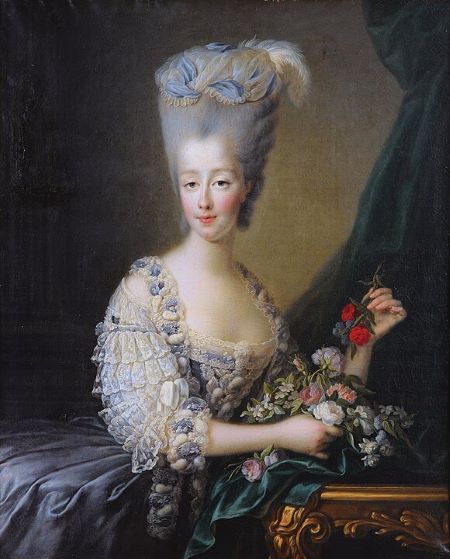
1789-1800
Starting in the 1780’s and early 1790’s, the fashionable silhouette began to slim out and the waistline started to rise. The French Revolution in 1789 had an enormous impact on fashion. It became dangerous to dress as upper class. Informal and neo-classical styles came to dominate and saw the expulsion of skirt supports, rich fabrics, and heavy boning, becoming known as the “Directoire style” in reference to the Directory government of the last half of the 1790’s. [9] However even after the fall of the monarchy and aristocracy, France continued to set the trends.
The ancient Greek and Roman styles captured the public’s imagination thanks to the discoveries of Herculaneum in 1738 and Pompeii in 1763. [10] The performances of Emma Hamilton in the 1790’s also boasted their popularity. The beginning of the Industrial Revolution saw the availability of cheaper fabrics and the introduction of the sewing machine in 1790. [8]
Dresses became slim with an empire waist often with short puffy sleeves or sometimes no sleeves. This style continued into the 19th century. The fabrics used were lightweight and sometimes sheer, often in pastel colors. Shawls and short-waisted jackets such as the redingote were worn over the dresses for warmth. The long-waisted heavily boned stays were tossed out in favor of short stays. In revolutionary France, wearing no stays or even exposing the breasts were popular due to the iconography of the Revolution and the push to have women nurse their own children. [11]
Hair was natural and shaped in Classical styles. Blonde was a popular color. Hats and turbans were fashionable. Make up was kept discrete and natural.

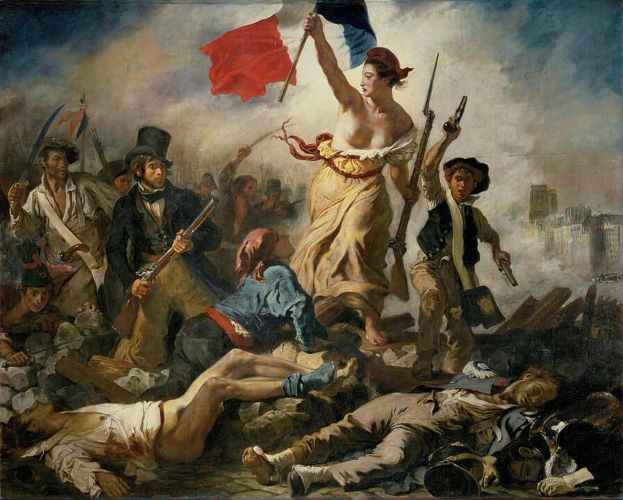
Working Class Fashion
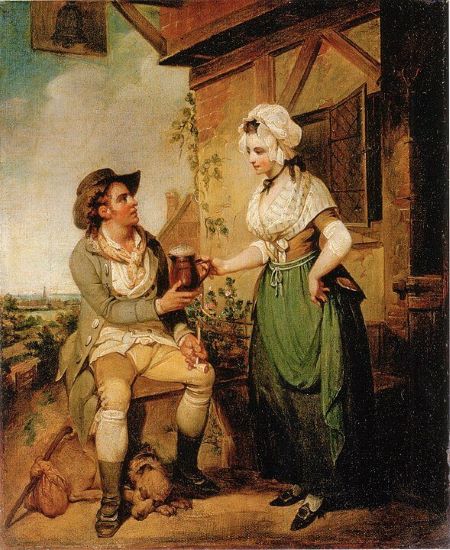
The working class kept up with the fashions of the day the best they could. Thanks to fashion magazines and more availability of cloth, they could mimic the popular silhouette. With the explosion of the French revolution, it became trendy to dress as a peasant. Partly this was in support of the revolution and partly because looking like nobility was hazardous to your health.
A working woman would wear petticoats and dresses or jackets. However, her hair would be plainly styled without pomatum or powder and often topped with a cap to keep it clean and out of the way. If she were outside, she would often wear a broad-brimmed straw hat. Bedgowns, a front-closing thigh-length shortgown, became popular with working women in both Britain and America. She would also always wear a neckerchief.
Her shoes were flat but would still close with a buckle if she could afford them.
Short, hooded cloaks made from red fabric were common in England and are probably the origin of Little Red Riding Hood. They were also the closest England came to have a national dress.
I hope this was helpful. Let me know if you have any questions or suggestions by using the Contact Me form on my website or writing a comment. I post every Friday and would be grateful if you would share my content.
If you want my blog delivered straight to your inbox every month along with exclusive content and giveaways please sign up for my email list here.
Let’s get writing!
Copyright © 2021 Rebecca Shedd. All rights reserved.
[1] "Mrs. Richard Skinner :: John Singleton Copley - 4 women's portraits 18th century hall". www.fineartlib.info. Retrieved 2018-03-13.
[2] Tortora & Eubank 1995, p. 272. https://en.wikipedia.org/wiki/1750%E2%80%931775_in_Western_fashion
[3] Waugh, Norah (1968). The Cut of Women's Clothes: 1600–1930. New York: Routledge. pp. 66–67, 69. ISBN 0878300260.
[4] Courtais, Georgine de (2006). Women's hats, headdresses, and hairstyles: with 453 illustrations, medieval to modern. Mineola, N.Y.: Dover Publications. p. 76. ISBN 0486448509.
[5] Baumgarten, What Clothes Reveal, pp. 116–119.
[6] Stowell, Lauren and Abby Cox (2019), The American Duchess Guide to 18th Century Beauty. Salem, MA: Page Street Publishing, Co.
[7] Werlin, Katy. "The Chemise a la Reine". The Fashion Historian. Retrieved 27 March 2010.
[8] Ashelford, J. The art of dress: Clothes and society, 1500–1914. National Trust. pp. 195–197. https://en.wikipedia.org/wiki/1795%E2%80%931820_in_Western_fashion
[9] Betty-Bright P. Low, "Of Muslins and Merveilleuses," Winterthur Portfolio, vol 9 (1974), 29–75.
[10] Cage, E. Claire (2009). "The Sartorial Self: Neoclassical Fashion and Gender Identity in France, 1797–1804". Eighteenth-Century Studies. 42 (2): 193–215. doi:10.1353/ecs.0.0039.
[11] Yalom, Marilyn. A History of the Breast. New York: Alfred A. Knopf, 1997. Print.
The Writer’s Guide to 1700-1750 Men’s Fashion
Posted on April 9, 2021 10 Comments

Today I will be diving into the men’s fashions of the first half of the 18th century. Just like with the ladies, the styles during this period were extravagant, over-the-top, and heavily influenced by the French Court. Louis XIV of France, also known as the Sun King, dominated fashion until his death in 1715.
If you just need a basic run down of 18th century fashions, I encourage you to read my previous article.
Underwear & Casual Wear
The shirt was the only “underwear” worn during this period. It had a slit in the front to provide enough room to pull it over the head and was closed with ties or buttons. Sometimes ruffles were used to disguise the slit. A stock or cravat would be worn around the neck of the shirt. The cuffs were closed with either thread buttons or two metal buttons connected by a short light chain. They could either be a plain band or embellished with lace and ruffles. It was often made of linen although cotton was becoming more common although expensive.
Smallclothes or brais had fallen out of fashion in the 15th century and men would tuck the tails of their shirts between their legs.
A loose dressing gown known as a banyan was worn casually around the house either over the nightshirt or the shirt and breeches.
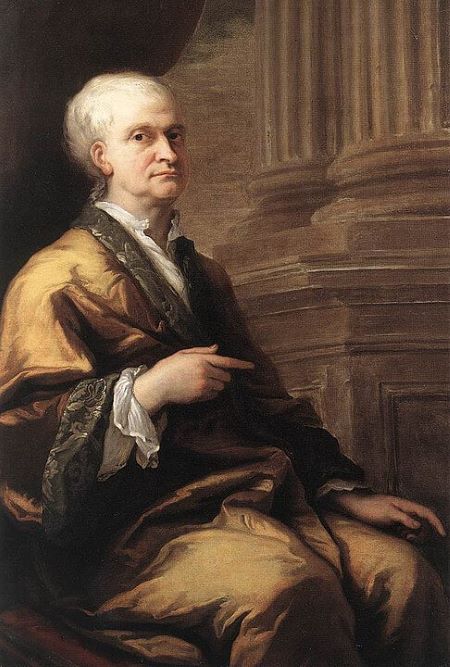
The Suit
The suit was the standard in men’s wear by this century and consisted of breeches, a waistcoat, and a coat. The suit could be made of matching fabric, called a ditto suit, or of different fabrics although the coat and breeches were often of the same fabric. Silk, velvet, and brocades were commonly used for suits among the well-to-do. The less wealthy would use wool and linen. [3] Embroidery was a common form of embellishment, usually on the edges, cuffs, and pockets of coats and the edges and pockets of waistcoats. The embroidery could be incredibly detailed and cover a large area of the garment.
The breeches were knee length with a front fall flap. They buttoned at the waistband with the fly buttoning over that. Button fly breeches did exist, but they were an older less-popular style. Most breeches had at least one pocket, most commonly two side pockets as well as a small watch pocket on the waistband. They were cut full in the back and gathered at the waist to provide enough room to sit and ride. The legs were narrow with a slit on the outside of each knee that was closed with buttons. The knee band fastened with either buttons or buckles and helped keep the stockings up.
The waistcoat started the century long, coming almost to the knee, per the style of the 17th century but over time it began to shorten. The bottom edge often had the corners cut off producing a V-shape at the front. The waistcoat was normally straight and fitted. Although it buttoned up to the neck the top 3-4 buttons were usually left undone to display the shirt ruffle and cravat. Most had pockets with large, decorated flaps. It was common for waistcoats to be made of the fanciest fabric and correspond but not match the rest of the suit.
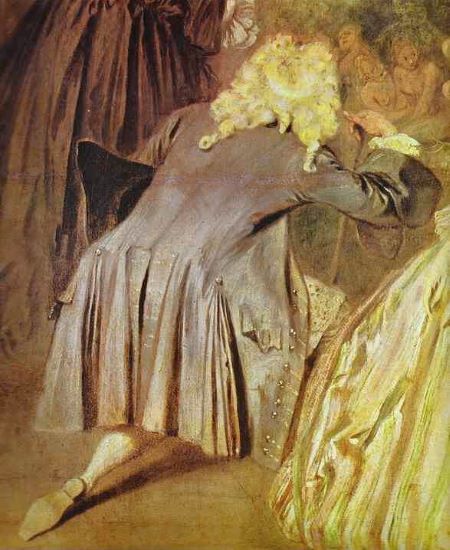
The coat, also known as a justaucorps, was worn over the waistcoat. It was long, usually reaching to the knees with the front edge curving to the back. The back had a long vent running from the waist to the hem at the center back and two side-back pleats to achieve more volume. They were often stiffened with buckram or horsehair. [2] Although they had buttons they were usually not meant to be closed and the buttonholes were often fake. The armholes were tight, and the sleeves narrow, ending in a wide turned-back cuff. The coat also had pockets with large flaps that closed with three buttons.

Shoes
Men’s shoes were square-toed and closed with a buckle. Some were flat while others had a low square heel. It became customary in England for a gentleman to paint his heels red if he had been to court and had an audience with the king. The most common color was black, but shoes were made in a variety of other colors and pastels were prevalent in the French court. Buckles could be plain or heavily embellished with jewels. [1]
Stockings were silk, wool, or cotton and came in a wide variety of colors. A decorative design at the ankle known as clocks was popular.

Accessories
A variety of accessories were carried by men including handkerchiefs, canes, and snuffboxes. Watches were popular because they were still a novelty. They were usually attached to a decorated strip of ribbon or leather called a watch fob that would hang over the top of the watch pocket.
Hairstyles & Headwear
The wig was common across most social classes except the poorest. They were styled with hard and soft pomatums or pomades and powder. White was the most popular powder color, but other pastels were used. A series of horizontal tight curls above the ears known as buckles were a popular style. Later into the half century, wigs and a man’s natural hair were pulled back into a low ponytail called a club with a black ribbon. Starting in the 1720’s, a black silk bag covered the club.
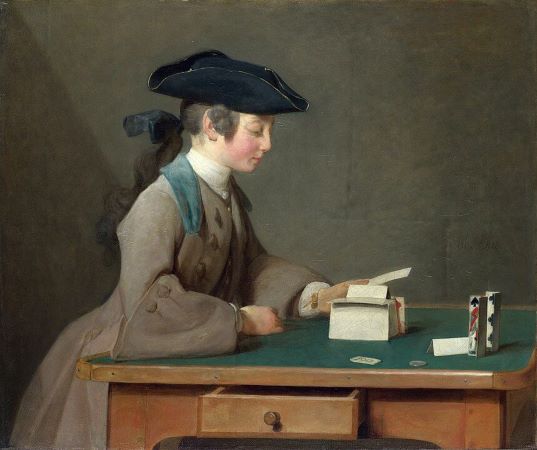
Tricorns or black felt hats with the brim turned up or cocked on three sides was the most popular headwear for all classes.
Working Class Fashion
Thanks to the new fashion magazines, the lower classes could follow the latest styles. They were limited however by the quality of fabric and embellishment they could afford. Although knee-length breeches were the popular style most working men wore more practical ankle-length trousers. They also favored short jackets which stayed out of the way better than the long coat. Boots were worn by those working with livestock with simple sturdy low shoes worn by the rest.
I hope this was helpful. Let me know if you have any questions or suggestions by using the Contact Me form on my website or writing a comment. I post every Friday and would be grateful if you would share my content.
If you want my blog delivered straight to your inbox every month along with exclusive content and giveaways please sign up for my email list here.
Let’s get writing!
Copyright © 2021 Rebecca Shedd. All rights reserved.
[1] Warren, Geoffrey (1987). Fashion Accessories Since 1500. New York: Drama Book Publishers. pp. 62, 67.
[2] Byrde 1979
[3] Russell, Douglas A. (1983). Costume History and Style. Englewood Cliffs, New Jersey: Prentice-Hall, Inc. p. 281. ISBN 0-13-181214-9.
The Writer’s Guide to 1700-1750 Women’s Fashion
Posted on April 2, 2021 4 Comments

Today I will be doing a deeper dive into the details of women’s fashions in the first half of the 18th century. The styles of this period were heavily influenced by the French court at Versailles and by French fashion divas such as Marie Antoinette and Madam de Pompadour.
If you just need a basic run down of 18th century fashions, I encourage you to read my previous article here.
Underwear
Just as for centuries before, the first layer worn by all classes of women was the linen chemise or shift. Early in the century they had full sleeves, but they gradually shortened to elbow length and became tight fitted.
Stays were also worn by all classes. Some had lacing in the front and back, meaning the woman could lace them herself. Others laced only in the back and required a maid. Depending on the boning material used they could be quite rigid or flexible. A type of stays known as jumps only had flexible cording and were quite comfortable. Upper class stays were usually boned with baleen from whales. This type of boning is more flexible than the Victorian metal boning and conformed to the wearer’s shape with body heat and time. Some back-lacing stays had a pocket for a busk in front, a piece of wood that provided a stiff line. Some styles had shoulder straps while others were strapless. The straps were used to pull the shoulders back.
Petticoats were worn to support the outer skirt and fill out the silhouette as well as providing warmth. Quilted petticoats were worn in winter.
A style of hoop skirt was worn during this period but rather than being round as in previous centuries it was oblong, flat in the front and back with all the width at the hips. It was a staple of court dress because it was required to pull off the wide-hipped fashions as well as preventing the wearer from sitting in the presence of royalty. Panniers were a simpler style of skirt support worn by the nobility and upper classes during this period and are distinctively French. Worn in pairs and tied around the waist, they padded out the hips and spread out the skirt for display. They had the benefit of allowing the wearer to sit. Under Marie Antoinette they became as wide as three feet (0.9 m) on either side. [1]
Pockets, which were an independent item, were tied around the waist over the stays but under the petticoats and skirts and were accessed through slits in the sides of those garments. They were sizable and could easily hold a modern smartphone. They were often embroidered and personalized.


Dress Fashions
At the beginning of the century, formal dresses were known as mantuas. Mantua making continued through the century to describe dress making and was dominated by women. A closed or round dress was one with a solid skirt while an open gown had a split skirt that displayed the matching or contrasting petticoat underneath. Open gowns could also have an open bodice that was filled in with a stomacher. Soft pastels in cotton and silk were popular with those who could afford them as well as chintz, block-printed Indian cotton. Embellishments of trim or lace were common as were robings, a strip of gathered fabric.
Sleeves started the century full and were caught up at the elbow to show off the chemise’s lace-trimmed edges. Over time, the sleeves became shorter and tighter until they ended at the elbow. As the half century progressed, engageantes or sleeve flounces of lace and fabric were added at the ends.
A band of lace known as a tucker was tacked to the inside of the neckline of dresses for added embellishment. It became popular around 1730. [2] Fichus or neckerchiefs were often worn to fill in the low open necklines for warmth or to protect against the sun.
Most women’s clothing was pinned closed or into place, attaching them to the stays. The pins were usually inserted above a bone, so the woman didn’t stab herself. Stomachers were pinned to the stays and the dress pinned to the edge of the stomacher.
The robe à la française or sacque-back gown was one popular style. It had pleats that flowed from the shoulder into the skirt as well as a tight-fitted bodice with a low square neckline. A less formal version, known as a sacque, was loose in the front and back.
The robe à l’anglaise, also known as a closed-bodied gown, was a more informal style. It had a fitted bodice, lacking the sacque back.
Riding habits or costumes were also popular and consisted of a full skirt and a tight-fitted thigh-length coat similar to men’s fashions. Ladies would often pair them with tricorns or other masculine hats. Wool was the most popular fabric for these garments.


Footwear
The popular shoe of this period was one with a thick heel that was closed with a decorative buckle. Backless mules were also worn at home. Stockings came up above the knee and were held in place by ribbon or woven garters tied below the knee.

Jewelry
Earrings, rings, and bracelets were popular during this time. Necklaces were often worn high on the neck and closed with a ribbon.
Chatelaines were a piece of jewelry either clipped or pinned to the skirt with a series chains ending in clips hanging from it. Various useful items such as needle cases, scissors, mirrors, pencils, thimble cages, and watches were suspended from them.
Make Up
This time period is known for its make up although it wasn’t as clownish as it’s often depicted. In fact, if you look at portraits from the period, women have a beautiful and natural look. Just as in previous centuries, pale skin was prized among the upper and middle classes because it proved a woman wasn’t laboring out in the sun. There were several recipes for foundations, some of which contained harmful ingredients although many did not. Powder was often used over the foundation. Dark eyebrows were popular and burnt cloves were used like a modern eyebrow pencil. Rogue was used on the cheeks and lips. [3]
Hairstyles and Headwear
Hairstyles were still low during the first half of the century. Rolls and buckles, small horizontal rolls commonly seen right above the ears, were popular. For all but the lowest classes, hair was styled using pomatum also known as pomade. Soft pomades provided gentle hold and made hair more manageable. They often had a rendered lard or tallow base. I’ve used soft pomades myself and they are not greasy or smelly. Hard pomades were used when a strong hold was needed and were often solid bars with a beeswax base. The upper classes would also powder their hair to give it the fashionable white or pastel hue. The powder also acted as a dry shampoo.
A variety of headwear was worn although caps were by far the most popular. The working classes would wear plain sturdy versions while the wealthy would flaunt gauzy embellished styles.
Working Class Women
Thanks to fashion magazines, the working classes could follow the styles like never before although they were limited to cheaper fabrics and had to suit their clothing to their work. Their fashions were often simplified versions that dispensed with the impractical panniers and embellishments. The short dress or bedgown, a loose thigh-length garment, was popular. Stays were still an important part of their wardrobe, providing a base to pin their clothing to and acting as a back brace.
I hope this was helpful. Let me know if you have any questions or suggestions by using the Contact Me form on my website or writing a comment. I post every Friday and would be grateful if you would share my content.
If you want my blog delivered straight to your inbox every month along with exclusive content and giveaways, please sign up for my email list here.
Let’s get writing!
Copyright © 2021 Rebecca Shedd. All rights reserved.
[1] https://en.wikipedia.org/wiki/1700%E2%80%931750_in_Western_fashion
[2] B. Payne, "Women's Costume of the Fifteenth Century", History of Costume: From the Ancient Egyptians to the Twentieth Century (1965)
[3] Stowell, Lauren and Abby Cox (2019), The American Duchness Guide to 18th Century Beauty. Salem, MA: Page Street Publishing, Co.
The Writer’s Guide to 18th Century Fashion
Posted on March 26, 2021 10 Comments

The 18th century was one of change in society as well as fashion. Dramatic upheavals such as revolutions in France, Haiti, and Britain’s American colonies, all fueled by the Enlightenment, shook up and in some cases shattered the established order. The elaborate court fashions of the early part of the century made way for more informal styles. Fashion magazines made their debut, featuring full-color illustrations and the latest style news.
In this article, I will be providing an overview of the fashions and trends of the century to be followed by more in-depth dives into men’s and women’s fashions.
Once the world goes back to normal, I encourage you to see if there are any 18th century or American Revolutionary War events happening near you. It helps to see these styles “in action” to grasp how they’re worn and the popular silhouettes. Most of the participants have done a large amount of research and make their own garb and would probably be delighted to speak with you.
Baroque and Rococo Style
Baroque was a design aesthetic that flourished in Europe from the early 17th century until the 1740s. It emphasized grandeur, detail, rich color, and contrast to elicit a feel of awe. Besides fashion, it impacted architecture, painting, sculpture, dance, and music. It was a response to the severe and austere styles that typified the tail end of the Renaissance.
Rococo evolved from baroque and took it to new levels of flamboyancy, especially in France and Central Europe. This style lasted into the mid to late 18th century when it ran afoul of the Enlightenment revolutions sweeping the world. [1]
Silhouette
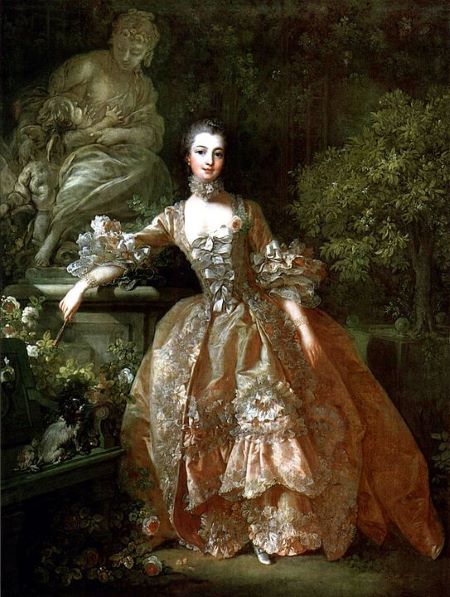
The fashionable silhouette began widening for both men and women from the narrower styles that were in vogue at the end of the previous century. Sleeves and armholes became smaller and more fitted and clothing was designed to pull the shoulders back.
For women, the skirts became wider using bum rolls and false rumps. Panniers, a boned undergarment, created width at the hips and displayed the fabric at the front of the skirt. The width of these paniers increased, especially in the French court under the influence of Marie Antionette, reaching up to three feet (0.9 m) on each side. [2] Stays were an essential support garment for all classes of women and helped to shape the torso into the fashionable V-shaped conical silhouette. [3] They were boned with cane, baleen, or cording and had softer structure than their Victorian descent, the corset. It was common for sleeves to stop at the elbow. If a covering was needed for the forearm, mitts or gloves were worn.
For men, the suit became uniform. It consisted of a coat, waistcoat, and breeches. The styles of suit would vary in fabric and length throughout the century. [4] The tricorn was the most common type of headwear worn during this period. The middle of the century saw the rise of the macaroni, men who took fashion to outrageous and excessive heights and who spoke and acted in an exaggerated and effeminate manner.
The tail end of the century saw the dispensing of the structured formal styles in favor of more informal fashions. Wigs, powder, brocades, and lace were dispensed of. This was directly in response to the French Revolution, after which no one wanted to look like an aristocrat. [5]


John Singleton Copley, 1764, Museum of Fine Arts, Boston. Photo source.
Court Dress
For the upper class and nobility, there became a distinct difference between the styles worn at court (full dress) and those casual styles worn every day (undress). [6] The level of richness in clothing was also determined not only by social class but by nationality. The French preferred excessive ornamentation and over-the-top fashions while the English aimed for a more down-to-earth aesthetic. [7]

Hair Styles and Headwear
Probably one of the most iconic fashion elements of this century, the wig was worn by both men and women. They were powdered, often white although pastel colors such as pink and pale blue were used on ladies’ wigs. They were used mostly out of convenience because it was easier to have your servant style your wig into the tall and sometimes outlandish fashions of the day rather than get your hair done every morning. However, there were plenty of people who didn’t wear wigs and just styled their natural hair with pomade and powder. This was especially true of the lower class.
Beginning around 1720, men began wearing their natural hair long and gathered in a club at the nape. Over the century, wigs began to fall out of fashion and then vanished altogether after the French Revolution, never to return. [8]
Men were almost always clean-shaven. It was believed that a hairy face was hiding something and was a relic of the ignorant past.
Women wore a variety of hats throughout the century, including caps, straw hats, bonnets, toques, and lappets. A woman could display her hair fully or hide it almost completely depending on her wish.
Working Class Clothing
More than ever before, the working class was able to keep up with the fashions thanks to magazines and cheaper fabric. Although their clothes were plainer than their upper-class contemporaries. Working class men also tended to wear short jackets and sailors opted for trousers instead of breeches. Wide hats without the brims turned up were also worn.
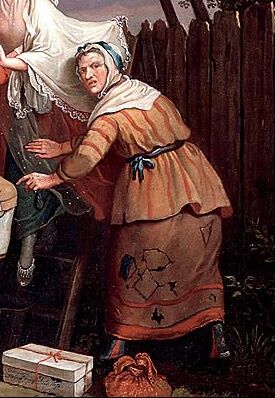
Working class women favored the short dress or bedgown, a loose-fitting thigh-length garment. Most wore caps to protect their hair from dirt and keep it out of the way, usually topped with a straw hat to shield them from the sun.
I hope this was helpful. Let me know if you have any questions or suggestions by using the Contact Me form on my website or writing a comment. I post every Friday and would be grateful if you would share my content.
If you want my blog delivered straight to your inbox every month along with exclusive content and giveaways please sign up for my email list here.
Let’s get writing!
Copyright © 2021 Rebecca Shedd. All rights reserved.
 [1] https://en.wikipedia.org/wiki/Baroque
 [2] "Panniers [British] (1973.65.2)". In Heilbrunn Timeline of Art History. New York: The Metropolitan Museum of Art, 2000–. http://www.metmuseum.org/toah/works-of-art/1973.65.2 (October 2006).
 [3] https://en.wikipedia.org/wiki/1750%E2%80%931775_in_Western_fashion
 [4] Bigelow, Marybelle S. (1979). Fashion in History: Western Dress, Prehistoric to Present. Minneapolis, Minnesota: Burgess Publishing Company. pp. 196.
 [5] Aaslestad, Katherine B.: "Sitten und Mode: Fashion, Gender, and Public Identities in Hamburg at the Turn of the Nineteenth Century, Gender in Transition: Discourse and Practice in German-Speaking Europe, University of Michigan Press, 2006.
 [6] https://en.wikipedia.org/wiki/1700%E2%80%931750_in_Western_fashion
 [7] Ribeiro. The Art of Dress. p. 35.
 [8] https://en.wikipedia.org/wiki/1700%E2%80%931750_in_Western_fashion#Hairstyles_and_headgear.
The Writer’s Guide to 1550-1600 Men’s Fashion
Posted on March 19, 2021 3 Comments

Although the fashions of the second half of the 16th century were dominated by England’s Elizabeth I, the men of this period were not about to fade into the background. Middle- and upper-class men were peacocks in their own right and dressed to impress and show off their social status and wealth.
Underwear
Just as the previous half of the century, a linen shirt was the base layer worn by every class of men. Of course, the higher up the social ladder a man was the finer the linen and the more elaborate the embroidery.
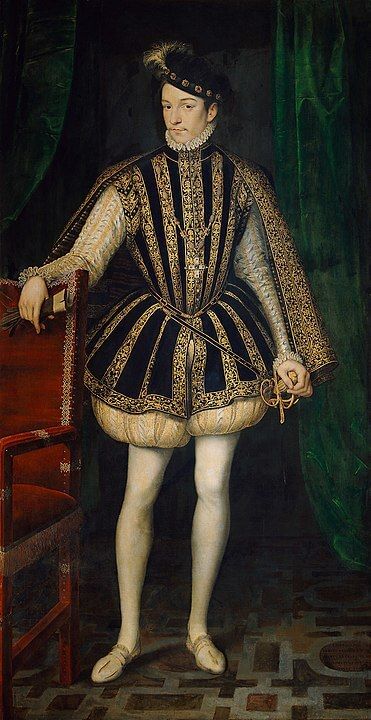
Hose was still worn on the legs but it was becoming more like stockings than pants. It became more common for hose to not be joined at the crotch or even to come up that far. Almost all men worn some variation of breeches from the rugged and plain ones sported by peasants to the impractical and heavily embellished slops, Venetians and canions worn by the middle and upper classes. [1] Only in Italy did it remain fashionable to wear only hose on the lower body, with the two legs fully sewn together. This style is why actors in productions set in Renaissance Italy, such as Shakespeare’s Romeo and Juliet, wear tights.
Outerwear
The doublet and jerkin were still the standard items worn over the shirt. The fashionable silhouette had moved away from the wide shouldered look of the previous half century, becoming leaner with a V shaped waist.
Middle- and upper-class men took to boning their doublets or wearing a male version of pairs of bodies to suck in the gut and achieve the fashionable flat belly. [2] Although, around 1570, a padded look known as a peascod belly came briefly into fashion. [3] Over time the cod piece shrank back into a convenience flap. Those with wealth used the best fabrics they could afford and lavished an incredible amount of decoration on their clothing. Older men still wore the gown for additional warmth but it was an outdated look and became tied to specific occupations, such as scholars.
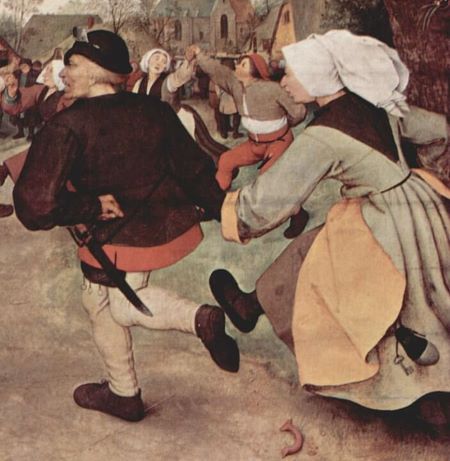
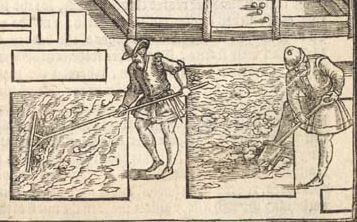
Lower class men normally wore their own more practical version of the doublet that was less tailored and often made of homespun fabric. This garment could be sleeveless or have sleeves, which were often laced in and thus removable.
All social classes wore long cloaks with hoods in bad weather. Upper class men would also wear short capes, often richly trimmed or lined in fur.
Shoes were low and flat with boots being worn for hunting and riding.
Ruffs
Men also jumped on the ruff fashion and delighted in embellishing them as much as the ladies. Starting as a modest ruffle at the neckband of a chemise or partlet, the ruff became a separate garment and eventually grew to an enormous circumference that needed wire and starch to keep its shape.
Hair and Headwear
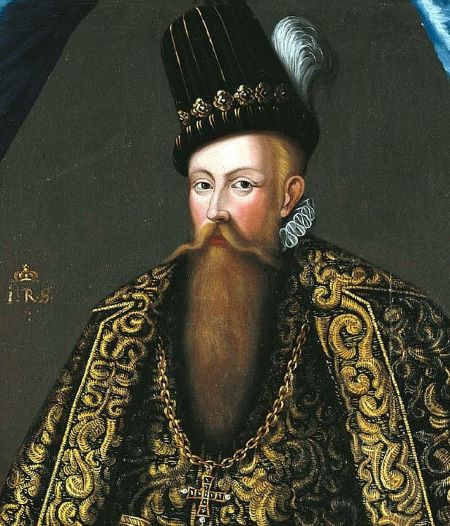
Hair was mostly short during this period although longer styles became popular in the 1580’s. In the 1590’s, the fashion among young men was a lovelock, one long section of hair hanging over the shoulder.
Where men really went crazy was with beards. All shapes and sizes were popular with the fashions changing often. [4]
A variety of hats were worn. The flat cap was still in style for all social classes. Tall hats and riding hats became popular among the middle and upper classes and were usually highly decorated and bejeweled. [5]
Jewelry
A variety of jewelry was still extremely popular including pins, rings, earrings, and brooches. It became the style during the second half of the century to cut slits in the knuckles of gloves so the rings underneath could be seen. [6]
I hope this was helpful. Let me know if you have any questions or suggestions by using the Contact Me form on my website or writing a comment. I post every Friday and would be grateful if you would share my content.
If you want my blog delivered straight to your inbox every month along with exclusive content and giveaways please sign up for my email list here.
Let’s get writing!
Copyright © 2021 Rebecca Shedd. All rights reserved.
 [1] Winter, Janet & Cayolyn Savoy: Elizabethan Costuming for the Years 1550-1580, Other Times Publications, 1979.
 [2] Vincent, Susan (2009). The Anatomy of Fashion: Dressing the Body from the Renaissance to Today. Berg. p. 49. ISBN 9781845207632.
 [3] Arnold, Janet: Patterns of Fashion: the cut and construction of clothes for men and women 1560–1620, Macmillan 1985. Revised edition 1986. (ISBN 0-89676-083-9)
 [4] Cunnington, C. Willett; Phillis Cunnington; Charles Beard (1960). A Dictionary of English Costume. London: Adam & Charles Black LTD.
 [5] Tortora (1994), p. 167
 [6] Cunnington, C. Willett; Phillis Cunnington and Charles Beard (1960). A Dictionary of English Costume. London: Adam & Charles Black.
The Writer’s Guide to 1500-1550 Men’s Fashion
Posted on March 12, 2021 9 Comments

As I mentioned in my article on early 16th century women’s clothing, fashion of the first half of the period was dominated by male trend-setters including Henry VIII, Francis I and Holy Roman Emperor Charles V. Almost everyone can picture the famous portrait of Henry VIII wearing a slashed and embroidered doublet and a fur-lined overgown. Today we will be diving into this fashions in greater depth.
Once the world goes back to normal, I highly recommend visiting your local Renaissance faire and asking the participants about their clothing. Most have done an incredible amount of research and many make their garb themselves.

Underwear
A linen shirt with full sleeves was the base layer worn by all social classes, the quality of the fabric determined by what the wearer could afford. The full body of the shirt was often gathered into the neck with upper classes having ruffles or box pleats at neck and wrist. Occasionally, the shirts would be embroidered. The main job of the shirt was act as a barrier between the body with its sweat, oils, and dirt and the outer clothing.
The braies worn in earlier periods disappeared. Instead, men would tuck the ends of their shirts around their crotch. Underwear (briefs, drawers, smallclothes, etc.) would not reappear until the 19th century.
Outerwear
Over the shirt was worn a doublet and over that was worn a jerkin, which was cut low to show off the doublet. Hose was worn on the legs and could be two separate pieces usually held up with garters or joined at the crotch. Over the hose was sometimes worn breeches, fitted pants that ended just below the knee. An overgown could be worn on top of the jerkin for extra warmth. Originally ankle-length, this garment gradually shorted to knee-length. Shoes were normally low and flat although boots were worn for riding and hunting.
Starting in the 1530’s, the fashionable silhouette began to narrow under the Spanish influence, doing away with the shoulder padding and adopting higher tighter collars, jerkins that buttoned to the neck with shorter skirts, and fuller doublet sleeves. [1]
Lower-class men were still wearing the cotehardie or cotte of the previous century. If they could afford to follow the fashions, they would wear a doublet made of cheaper fabric with fewer embellishments. They would also have a bagger simpler version of breeches and hose or long pants known as trews.
In bad weather, a cloak would be worn over everything.


Codpiece
The codpiece is a historical fashion oddity and one that leads to stares if seen in portraits or at the local Renaissance faire. Starting off as a convenient crotch flap, it evolved into a padded phallic fashion statement. Basically, think of it as the men’s equivalent of the padded bra.
National Dress
There were variations in men’s fashions from country to country that mirrored those in women’s clothing. The Spanish style was somber and mostly black. The German style was colorful, flamboyant, and usually had a lot of slashing, a trend that was inspired by the mended clothing of soldiers after the 1477 Swiss victory over the Duke of Burgundy. [2]

Headwear and Hair
Hair was usually kept short and men were either clean-shaven or had trimmed facial hair.
Several styles of hats were popular through the first half of the century including the German barett and its variations. Later the flat hat or cap came into style.
I hope this was helpful. Let me know if you have any questions or suggestions by using the Contact Me form on my website or writing a comment. I post every Friday and would be grateful if you would share my content.
If you want my blog delivered straight to your inbox every month along with exclusive content and giveaways please sign up for my email list here.
Let’s get writing!
Copyright © 2021 Rebecca Shedd. All rights reserved.
 [1] Kybalová, et al.: Pictorial Encyclopedia of Fashion
 [2] Wilcox, R. Turner (1958). The Mode in Costume. New York, NY: Charles Scribner's Sons. p. 77. https://en.wikipedia.org/wiki/1500%E2%80%931550_in_Western_European_fashion#Men's_fashion
 Rebecca Shedd - Author
