The Writer’s Guide to Sailing Ships of the 18th & 19th Centuries
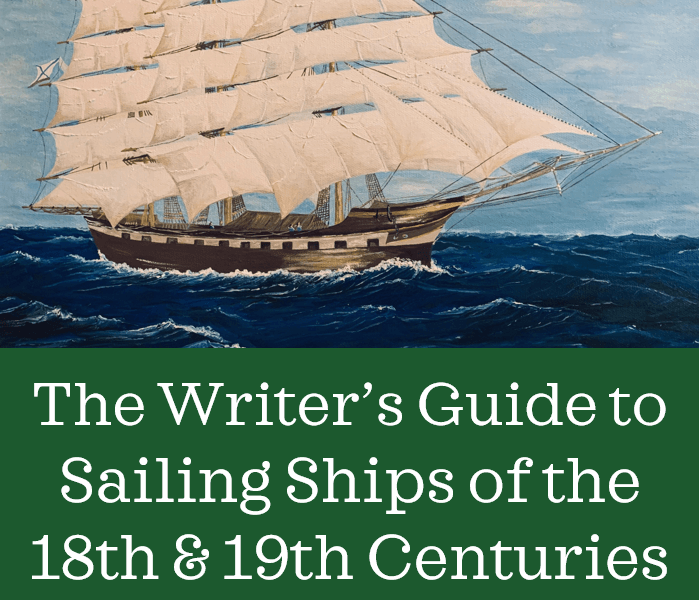

The advancements in sailing ships that occurred during the Age of Exploration from the 15th to the 17th centuries continued into the 18th and 19th centuries. We also known this period as the Age of Sail. Ships became faster, better armed, and more complex in their construction. It was during this time that iconic ships such as the schooner and the clipper came onto the scene. The Age of Sail would end with the introduction of steamships.
As always, magic is the exception to the rule. Because magic.
Brigantine
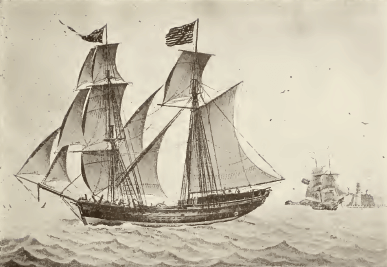
The brigantine is a two-masted ship that developed in the Mediterranean and Northern Europe. Their defining feature is a gaff sail on the second mast, which is usually taller than the first. There are records of this type of vessel going back to the 16th century. Several nations adopted this style of ship in the Atlantic in the 17th century. It was especially popular in the British colonies in North America before 1775. It was fast and maneuverable, which made it popular for piracy, espionage, and reconnaissance. Brigantines ranged in size from 30 to 150 tons.
Brig
The brig developed as a variation of the brigantine. It has two square rig masts instead of one. This improves its sailing, power, and maneuverability. The brig, which originated in the second half of the 18th century, served as small merchant vessels and warships into the latter part of the 19th century. Eventually, schooners replaced them. Although they were fast and maneuverable, they required a large crew to manage their sails, although fewer than the brigantine. [1] James Cook’s ship, HMS Grenfell, started as a schooner but was later converted into a brigantine. Another famous brig was the HMS Beagle, which was used as a survey vessel by Charles Darwin.

Schooner
Although there is evidence of the schooner from the early 17th century, they came into their own as ocean-crossing ships in the 18th century. This design has a fast hull and a good ability to windward. They were popular among privateers, blockade runners, slavers, and opium dealers. They were also used as packet boats because of their speed in carrying passengers and goods. People often used them for oceanic voyages besides their use in coastal waters. They required a smaller crew than most ships their size. [2]

Clipper
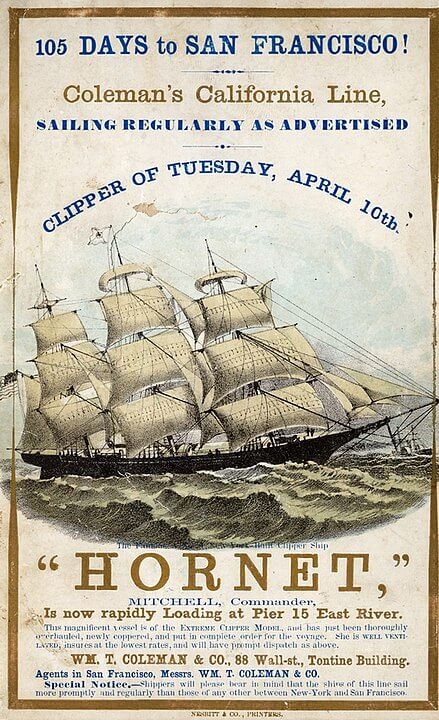
The clipper ship was designed for speed. They were not limited to any specific sail plan and could be rigged as schooners, brigs, or brigantines. At their height, clippers sailed all over the world but were primarily used to carry tea and opium between the United Kingdom and China, in the transatlantic trade, and in the New York to San Francisco route during the California Gold Rush. The height of the clipper era began in 1843 when there was a need for fast passage to the gold fields in California and Australia. They do not have a large capacity for carrying cargo but were designed to carry their cargo or passengers quickly. They were also used to quickly carry perishable goods such as fruit.[3] They are often narrow for their length and small by 19th century standards. The first clippers were built in Baltimore before the American Revolution. They were small, usually less than 200 tons.[4] The popularity of the clipper ship began to fade in late 1853 due to a slump in trade. The only intact clipper ship today is the Cutty Sark.
Windjammers
Windjammers were iron-hulled sailing ships that bridged the gap between the Age of Sail and the Age of Steam. They carried bulk cargo long distances in the 19th and early 20th centuries. They were the largest merchant ships ever built. The first windjammers were built in the 1870s and they were attractive because they kept their schedules regardless of the wind. They also did not need a large crew and could have as few as 14 men. Commercial use of iron-hulled sailing ships continued until the 1950s, although they began disappearing in the 1920s. They carried cargo from remote ports where fuel and water were unavailable and did not have to take up space with coal or fresh water. The tallest sailing ship ever built was the five-masted Prussian, which was a windjammer.

I hope this was helpful. Let me know if you have questions or suggestions by using the Contact Me form on my website or by writing a comment. I post every Friday and would be grateful if you would share my content.
If you want my blog delivered straight to your inbox every month along with exclusive content and giveaways, please sign up for my email list here.
May you always find the right words.
Copyright © 2023 Rebecca Shedd. All rights reserved.
[1] R.M. Ballantyne. "Man on the Ocean". Archived from the original on 2006-10-11. Retrieved 2007-01-12.
[2] "Schooner" . Encyclopædia Britannica (11th ed.). 1911.
[3] MacGregor, David R (1988). Fast Sailing Ships, their design and construction, 1775–1875 (2nd ed.). London: Conway Maritime Press. ISBN 0-87021895-6.
[4] Clark, Arthur Hamilton (1912). The Clipper Ship Era: An Epitome of Famous American and British Clipper Ships, Their Owners, Builders, Commanders, and Crews, 1843–1869. G.P. Putnam's Sons. The Clipper Ship Era.
 Rebecca Shedd - Author


