The Writer’s Guide to Puncture Wounds


Puncture wounds are dramatic, high-stakes injuries that can add tension and danger to your story. Whether it’s a dagger through a knight’s side, a nail through a construction worker’s foot, or an alien claw piercing a space traveler’s suit, puncture wounds can create immediate peril and lasting consequences. Writing these injuries realistically requires understanding their types, symptoms, severity, and recovery process.
Types of Puncture Wounds
Puncture wounds occur when a sharp object pierces the skin and underlying tissues. The nature of the wound depends on the object and the depth of penetration. Here are several common types of puncture wounds.
Superficial Wounds
Shallow injuries caused by small or blunt objects (e.g., splinters, shallow nail punctures). Low risk but may still lead to infection if untreated.
Deep Wounds
Penetrate through skin, muscle, and possibly into organs or bone (e.g., knife stabs, arrow wounds). High risk of infection, bleeding, and internal damage.
Clean Wounds
Caused by sharp, smooth objects (e.g., surgical tools, needles). Easier to clean and treat, with lower infection risk.
Dirty or Contaminated Wounds
Caused by objects carrying dirt, rust, or bacteria (e.g., rusty nails, animal bites). Higher risk of infection, including tetanus.
Impaled Objects
The object remains embedded in the wound (e.g., a shard of glass or spear). Removal risks worsening bleeding or damage.
Symptoms of Puncture Wounds
Realistic descriptions of symptoms help bring the injury to life. Consider how symptoms evolve over time, from the moment of injury to days later.
Immediate Symptoms
Sharp, localized pain at the site of the injury.
Bleeding (may be minimal for small wounds or severe for deep ones).
Swelling and redness around the wound.
Possible foreign object embedded in the wound.
Delayed Symptoms (Hours to Days Later)
Increasing pain or tenderness.
Swelling or warmth around the wound, indicating infection.
Red streaks radiating from the wound, a sign of spreading infection.
Fever, chills, or fatigue in severe cases.

Severity Levels
The severity of a puncture wound can range from minor to life-threatening, depending on the object, location, and depth.
Mild Puncture Wounds
Shallow and clean, affecting only the skin and surface tissues.
Low risk of infection if properly cleaned.
Recovery: A few days to a week.
Moderate Puncture Wounds
Deeper penetration, potentially damaging muscles or blood vessels.
Higher risk of infection or complications if not treated promptly.
Recovery: 1–4 weeks, depending on the location and care provided.
Severe Puncture Wounds
Penetrate vital organs, arteries, or bones.
Risk of internal bleeding, organ damage, or septic shock from infection.
Recovery: Weeks to months, potentially requiring surgery or long-term care.
Treating Puncture Wounds
Treatment depends on the resources and knowledge available in your story’s world.
Stop the Bleeding: Apply direct pressure with a clean cloth or bandage.
Clean the Wound: Rinse with clean water or antiseptic if available. Avoid removing impaled objects without medical assistance.
Dress the Wound: Cover with a sterile bandage to prevent contamination.
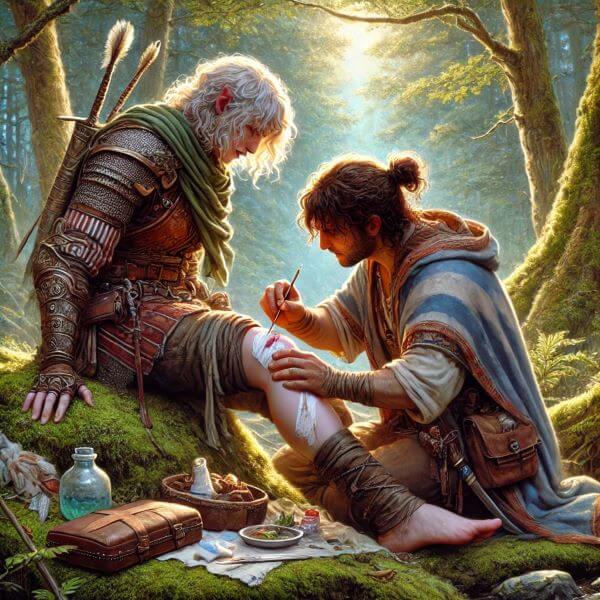
Recovery Process
The recovery timeline for a puncture wound depends on its severity and the quality of care received.
Initial Healing (1–3 Days)
Scab formation to protect the wound.
Swelling and redness begin to subside if there’s no infection.
Tissue Repair (1–2 Weeks)
New tissue grows to close the wound.
Stiffness or soreness may linger in the affected area.
Full Recovery (2–6 Weeks or Longer)
Deeper wounds take longer to heal and may leave scars.
Lingering pain, stiffness, or weakness is possible in severe cases.
Example: “Though the wound had closed, the scar tissue pulled tight whenever he moved his arm. He flexed his fingers slowly, wincing at the lingering stiffness.”
Long-Term Effects
Puncture wounds can leave lasting consequences, especially if complications arise.
Scarring: Deep wounds often leave visible scars, which can carry emotional weight.
Chronic Pain or Weakness: Nerve or muscle damage may cause persistent pain or reduced mobility.
Infections and Complications: Untreated infections can lead to abscesses, sepsis, or even amputations in severe cases.
Psychological Impact: The trauma of a near-fatal wound may cause anxiety, nightmares, or PTSD.
Example: “The sight of the dagger scar on her side always sent a shiver down her spine. It was a reminder of how close she’d come to death—and how much she still had to fight for.”

Depicting Puncture Wounds Across Genres
The way puncture wounds are portrayed varies greatly depending on the genre. The tools used to inflict the injury, the available medical treatments, and the cultural or technological context all shape how such wounds are described and treated. Below, I’ll explore how these depictions differ in contemporary, fantasy, science fiction, and historical genres, focusing on elements like armor, advanced medicine, and unique world-building considerations.
Contemporary Genre
In a modern setting, the portrayal puncture wounds are typically focuses on realism, with the injury’s severity often driving the plot or adding tension.
Causes: Knife attacks, construction accidents, gunshot wounds (bullet holes are a type of puncture), animal bites, etc.
Description: Focus on sharp, immediate pain, minimal external bleeding (depending on the depth), and visible entry points.
Treatment: First aid (cleaning, bandaging, applying pressure), followed by hospital care like antibiotics, stitches, or surgery.
Role of Armor: Modern armor such as Kevlar exists, although it is normally only used by military and police.
Impact on Characters: Characters will have access to modern medical care, but infections, complications or chronic pain can still create tension. Psychological impacts, such as trauma or fear, may play a significant role in the aftermath of the injury.
Example: “The knife slid between his ribs with horrifying ease. Pain bloomed in his side as blood seeped through his shirt, but adrenaline kept him moving. He’d have to make it to the hospital before shock set in.”
Fantasy Genre
Elements like enchanted weapons, armor, and magical healing methods add unique dimensions to how these injuries are portrayed.
Causes: Sword thrusts, arrow shots, enchanted spikes, monster claws, etc.
Description: Emphasis on the dramatic (e.g., the gleaming arrowhead protruding from the flesh) and the injury’s immediate impact on the character’s ability to fight or cast spells.
Treatment: Herbal poultices, salves, or magical healing. Wounds inflicted by cursed or poisoned weapons may require specific countermeasures or rare ingredients.
Role of Armor: Armor may deflect or reduce the severity of a puncture wound, but a well-placed strike can bypass protection (e.g., through a joint or visor). Descriptions might highlight the clash of steel on steel or the sound of a blade piercing chainmail.
Impact on Characters: Wounds often carry symbolic or narrative weight (e.g., a hero’s scar becomes a mark of honor). Wounds may also extend beyond the physical and involve magical scars or curses. Characters might undertake quests to find healers or rare remedies, turning the injury into a plot-driving element.
Example: “The arrow buried itself deep in her thigh, just above the leather greave. Pain flared as she snapped the shaft, the jagged edges grinding against bone. The healer’s face paled as she examined the cursed black fletching. ‘This will take more than herbs to cure.’”

Science Fiction Genre
In science fiction, the focus is often on the technological and futuristic aspects of treatment.
Cause: Energy-based weapons, high-tech projectiles, alien biology (e.g., acidic stingers), debris from space accidents, etc.
Description: Futuristic elements like glowing wounds from plasma burns or organic, self-repairing skin pierced by biomechanical implants. The lack of gravity in space might also influence the flow of blood.
Treatment: Regenerative gels, nanobot-assisted tissue repair, or med-bay pods that diagnose and heal punctures within minutes.
Impact of Advanced Medicine: Quick or near-instant recovery may reduce physical limitations but could come with ethical or emotional consequences (e.g., trauma from reliving the injury during neural regrowth). Scarless healing could contrast with the character’s psychological scars, providing opportunities for deeper storytelling.
Role of Armor: Power suits and energy shields may exist in your sci-fi world that provide some protection.
Example: “The alien claw had punched clean through his armor, leaving a jagged hole in his side. He gritted his teeth as the med-bot injected nanobots into the wound. The pain subsided as they worked, but the strange tingling left him wondering what else they were fixing beneath his skin.”
Historical Genre
Historical depictions of puncture wounds often stem from battles, duels, or accidents involving tools and weapons. Treatment reflects the limited medical knowledge of the time, creating a rich source of tension and conflict.
Cause: Arrow shots, sword thrusts, bayonets, agricultural tools (e.g., pitchforks), etc.
Description: Realistic accounts of pain, bleeding, and the risk of infection. Writers may highlight the limited nature of treatment, including unsanitary conditions and the use of rudimentary tools.
Treatment: Wounds were often cauterized with hot metal, treated with poultices, or stitched without anesthesia. Tetanus and sepsis were common and often fatal.
Role of Armor: Chainmail, plate armor, or leather could reduce the risk of deep punctures but wouldn’t prevent all injuries. Descriptions might focus on the sound of metal being pierced or the character’s surprise when armor fails.
Impact on Characters: Characters might deal with long-term complications, such as chronic pain, sepsis, limited mobility, or lasting infections. Social or political repercussions could arise if the injury marks them as weak or unfit for leadership.
Example: “The spear pierced his mail and bit deep into his shoulder. His vision swam as blood trickled down his arm, soaking into the padded gambeson beneath. The surgeon worked quickly, his tools clanging ominously. ‘We’ll need to cauterize,’ he said grimly, heating the iron in the brazier.”
Treating Puncture Wounds Across Time
The treatment of puncture wounds has evolved dramatically over time, from rudimentary practices in the ancient world to modern surgical techniques. In speculative genres like fantasy and science fiction, healing methods can be further enriched by world-building, introducing magical or futuristic solutions. Let’s explore how treatments differ across historical periods and how they might be imagined in fantasy and sci-fi contexts.
Ancient World Treatments
In ancient times, medical knowledge was limited, and treatments often relied on natural remedies, trial-and-error, and cultural or religious practices.
Typical Treatments
Cleaning the Wound: Water, wine, or vinegar was used to cleanse wounds, as these were believed to have antiseptic properties.
Herbal Poultices: Herbs like garlic, honey, and yarrow were applied to prevent infection and promote healing.
Stitching and Bandaging: Wounds were sewn using animal sinew or plant fibers and covered with linen or animal hides.
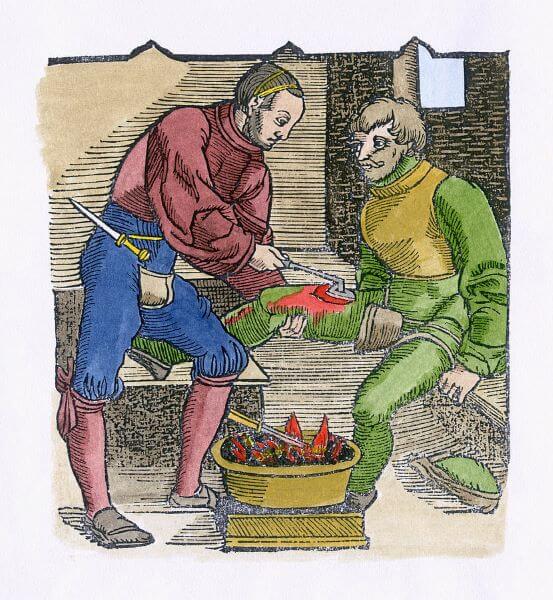
Cauterization: For deeper wounds, hot iron or boiling oil was used to seal the injury and stop bleeding, though this often caused severe tissue damage.
Challenges
Limited knowledge of germ theory meant infections were common, and many patients succumbed to sepsis or tetanus.
Example: An ancient healer might cleanse a warrior’s arrow wound with wine before applying a poultice of crushed yarrow and honey, chanting prayers to appease the gods of healing.
Medieval World Treatments
The medieval period saw incremental advances in wound care, influenced by religious practices and early surgical techniques. However, treatments were still crude by modern standards.
Typical Treatments
Antiseptic Poultices: Ingredients like comfrey, mugwort, or aloe vera were used to reduce inflammation and fight infection.
Bloodletting and Balancing Humors: Doctors believed in balancing the body’s humors and might perform bloodletting to “purge” toxins.
Cauterization and Stitching: Deep puncture wounds were either sewn shut or cauterized with heated metal.
Honey and Vinegar: Applied to wounds to create a protective barrier and reduce bacterial growth.
Amputation: For infected or gangrenous wounds, amputation was often the last resort.
Challenges
Unsanitary tools and poor understanding of infection made recovery difficult. Death from tetanus or blood poisoning was common.
Example: After being struck by a spear, a knight might be taken to a monastic healer who stitches the wound with rough twine, applies a paste of comfrey, and prays over the patient’s fevered body.
Contemporary Medicine
Modern medicine offers a variety of effective, evidence-based treatments that drastically improve outcomes for puncture wound patients.
Typical Treatments
Cleaning and Debriding the Wound: The wound is flushed with sterile saline or antiseptics to remove dirt, debris, and bacteria.
Antibiotics: Prescribed to prevent or treat infections, especially for deep or contaminated wounds.
Tetanus Shot: Administered if the patient’s vaccination is outdated or the wound is at high risk for tetanus.
Stitches or Surgical Repair: Deep wounds may require sutures or surgical intervention to close and repair damaged tissue.
Pain Management: Over-the-counter pain relievers or prescription medication for severe cases.
Challenges
Even with modern care, delayed treatment can lead to infections or complications like abscesses and sepsis.
Example: A character injured in an industrial accident might rush to an emergency room, where doctors clean the puncture wound with antiseptics, administer a tetanus shot, and prescribe antibiotics to ensure a smooth recovery.
Treatments in Fantasy Settings
In fantasy worlds, puncture wounds can be treated using herbal remedies, magical healing, or a combination of both. These treatments often align with the level of technology and the presence of mystical elements in the world.
Typical Treatments
Herbal Elixirs and Poultices: Herbs like goldenroot or silverleaf could be used for their magical antiseptic properties.
Magical Healing: Healing spells or enchanted artifacts might instantly close wounds, though these methods may have limits (e.g., cannot reverse internal damage).
Sacrificial Healing: A healer might transfer the wound’s pain or damage to themselves, creating moral and emotional dilemmas.
Rituals and Blessings: Religious figures could invoke the favor of healing deities to cure wounds, though success might depend on the character’s faith or the alignment of mystical forces.
Fantasy Challenges
Magical treatments could have side effects, such as lingering pain, scarring, or the transfer of curses. Additionally, some remedies may be rare or require dangerous quests to obtain.
Example: The elven healer murmured an incantation, and her hands glowed faintly as she passed them over the puncture wound. The bleeding stopped, but the warrior felt a strange chill settle in his bones, a reminder that magic always left its mark.
Treatments in Science Fiction Settings
In science fiction, medical advancements allow for innovative and highly effective treatments of puncture wounds, often blending biology with technology.
Typical Treatments
Regenerative Gel: A bio-engineered gel that seals wounds instantly and promotes rapid cell regeneration.
Nanobot Surgery: Microscopic robots repair internal damage, sterilize the wound, and prevent infection at a cellular level.
Tissue Cloning and Replacement: Damaged organs or muscles are replaced with 3D-printed or lab-grown tissue, ensuring a full recovery.
Cryo-Healing Pods: The patient is placed in a suspended animation pod that uses advanced techniques to heal wounds and restore health over time.
Energy Shields and Armor: Advanced protective gear may reduce the likelihood or severity of puncture wounds by deflecting projectiles or absorbing impact.
Sci-Fi Challenges
Over-reliance on technology might lead to malfunctions, delays, or ethical dilemmas (e.g., using alien-derived tech with unpredictable side effects).
Example: The med-bay hissed as the healing pod sealed shut, immersing her in a regenerative suspension fluid. Tiny lights flickered along the edges of her wound, where nanobots worked tirelessly to repair tissue and flush out alien toxins.

Plot and Character Ideas Revolving Around Puncture Wounds
Puncture wounds are versatile plot devices, adding immediate physical peril, emotional depth, or even long-term consequences. In science fiction and fantasy, where non-human physiologies or advanced technologies come into play, these injuries can take on unique forms and implications. Below are plot and character ideas centered around puncture wounds, with specific examples for speculative genres.
The Poisoned Wound
Genre: Fantasy / Science Fiction
Plot Idea: A character suffers a puncture wound from a poisoned weapon or creature. The poison spreads rapidly, forcing them to seek an antidote while battling the physical and mental effects of the toxin.
Character Angle: The character must face their fears of vulnerability or mortality, all while navigating dangerous terrain or negotiating with hostile factions to obtain the cure.
Fantasy Twist: The poison can only be neutralized by an ingredient found in a forbidden forest guarded by ancient creatures.
Sci-Fi Twist: The venom comes from an alien predator, and its antidote is synthesized from the creature’s DNA, requiring the team to capture a live specimen.
Example: “The barbed arrow lodged deep in his thigh, its edges slick with a dark green poison. Already, his vision blurred, and his heart raced uncontrollably. ‘The antidote,’ the healer said grimly, ‘lies beyond the Shadow Rift.’”
The Cursed Puncture
Genre: Fantasy
Plot Idea: A character is stabbed by a cursed weapon, and the wound refuses to heal. The curse manifests as physical pain or hallucinations, gradually consuming their mind unless the weapon’s curse is lifted.
Character Angle: The character wrestles with growing paranoia or despair as the curse eats away at their body and soul, testing their mental and emotional resilience.
Fantasy Twist: The curse spreads like a dark, magical infection, and the character must confront a forgotten deity to break it.
Example: “The blade had barely nicked her, but already the black veins of the curse crawled up her arm. The priest shook his head. ‘You have seven days before it reaches your heart.’”
The Armor Piercer
Genre: Fantasy / Science Fiction
Plot Idea: A specialized weapon or projectile penetrates what was thought to be impenetrable armor, leaving a critical injury that changes the course of battle. The event forces the character to question their reliance on their gear and adapt their strategies.
Character Angle: The injury humbles a previously overconfident warrior, pushing them to rely more on wits, teamwork, or unconventional tactics.
Fantasy Twist: A dragon-scale armor is pierced by a rare metal that negates magical protection, leading the character to seek an ancient blacksmith to repair it.
Sci-Fi Twist: The puncture compromises a high-tech power suit, and the character must repair it in the middle of a hostile environment while evading further attacks.
Example: “The plasma bolt burned through the titanium plating, searing flesh beneath. Gasping, she tore off the ruined chest plate. ‘If they’ve figured out how to pierce our armor, none of us are safe.’”
The Self-Inflicted Wound
Genre: Any
Plot Idea: A character intentionally causes a puncture wound to save themselves or others, such as by cutting their palm for a blood ritual or removing an embedded tracker.
Character Angle: The act of self-harm demonstrates the character’s determination and willingness to sacrifice for the greater good, creating an opportunity for introspection or bonding with others.
Fantasy Twist: The character’s blood activates a magical artifact needed to save their village, but the artifact demands more blood each time it’s used.
Sci-Fi Twist: Removing a high-tech tracking device causes a chain reaction in the character’s cybernetic implants, endangering their life.
Example: “With a grimace, he drove the knife into his palm, letting the blood drip onto the runestone. ‘You won’t take them,’ he growled. ‘I’ll pay the price.’”
The Unhealable Wound
Genre: Fantasy / Science Fiction
Plot Idea: A character’s puncture wound fails to heal due to their unique physiology or external factors, such as magic interference or a biochemical anomaly. The persistent injury limits their abilities and forces them to seek unconventional solutions.
Character Angle: The character grapples with feelings of inadequacy as the unhealing wound becomes a physical and psychological burden, driving them to explore their heritage or embrace their weaknesses.
Fantasy Twist: The wound disrupts the character’s ability to channel magic, requiring a quest to find a legendary healer.
Sci-Fi Twist: The wound exposes the character’s hybrid alien DNA, forcing them to confront their identity and seek an off-world specialist for treatment.
Example: “The puncture wound beneath his ribs bled endlessly, no matter how many bandages they applied. ‘It’s not a normal wound,’ the medic whispered. ‘It’s rejecting our treatments. You need to find the Exarch.’”
The Betrayer’s Strike
Genre: Fantasy / Science Fiction
Plot Idea: A trusted ally inflicts a puncture wound on the protagonist during a moment of betrayal, throwing their plans into chaos and forcing them to rethink their alliances.
Character Angle: The betrayal creates emotional conflict, as the character must decide whether to seek vengeance or uncover the betrayer’s motives.
Fantasy Twist: The weapon used in the betrayal is enchanted, and its injury reveals the true nature of the betrayer’s allegiance to a hidden enemy.
Sci-Fi Twist: The betrayal involves a high-tech weapon that embeds a tracking device in the protagonist’s wound, endangering the entire team.
Example: “The dagger slid between his ribs, and he staggered back, eyes wide with disbelief. ‘Why?’ he rasped, clutching his side as his friend turned and disappeared into the shadows.”
The Healer’s Guilt
Genre: Fantasy / Science Fiction
Plot Idea: A healer is unable to properly treat a puncture wound due to magical interference, alien physiology, or insufficient resources. The failure haunts them, driving their arc as they seek redemption.
Character Angle: The healer’s guilt pushes them to train harder, take greater risks, or confront their own limitations, ultimately transforming them into a more capable or empathetic person.
Fantasy Twist: The healer must travel to a distant land to learn forbidden healing techniques to save future patients.
Sci-Fi Twist: The healer experiments with risky alien technology to develop better treatments, risking their career or life.
Example: “She pressed her hands over the wound, willing her magic to flow, but the dark energy that surrounded the injury repelled her power. ‘I’m sorry,’ she whispered, tears mixing with the blood on her hands.”
The Blood Debt
Genre: Fantasy
Plot Idea: A puncture wound is inflicted as part of an ancient blood pact or ritual, binding the character to a powerful entity. The wound remains as a mark of their servitude or as a source of power.
Character Angle: The character must grapple with the ethical implications of their newfound abilities and decide whether to uphold or break the pact.
Example: “The dagger sliced into his palm, and the ancient runes flared to life. A voice echoed in his mind, promising power in exchange for loyalty. The wound would never heal—a permanent reminder of the debt he now owed.”
The Alien Anatomy Dilemma
Genre: Science Fiction
Plot Idea: A non-human character suffers a puncture wound that behaves differently from human injuries. Their unique biology complicates treatment and reveals critical information about their species or physiology.
Character Angle: The injury forces the character to confront their alien nature, creating tension with human companions or revealing hidden abilities.
Example: “The spike had pierced her carapace, leaking a glowing blue fluid. ‘That’s not blood,’ the medic muttered, scanning the wound. ‘Whatever you are, you’re not entirely human.’”
The Scar That Speaks
Genre: Fantasy
Plot Idea: A puncture wound leaves a scar that carries magical properties, such as showing visions, speaking in cryptic whispers, or warning of danger.
Character Angle: The scar becomes both a tool and a burden, as the character must decipher its messages while dealing with the physical and emotional toll of their injury.
Example: “The scar on her shoulder pulsed with a faint glow, and the whispers returned, urging her to take the hidden path through the mountains. ‘This wound will never let me rest,’ she muttered, pulling her cloak tight.”

Puncture wounds offer a rich opportunity to add tension, vulnerability, and stakes to your story. By depicting realistic symptoms, treatments, and recovery processes, you can create compelling injury arcs that resonate with readers and deepen your characters. Whether you’re writing a gritty survival tale, a sweeping fantasy epic, or a futuristic sci-fi adventure, these tips will help you write puncture wounds that feel authentic and impactful.
I hope this was helpful. Let me know if you have questions or suggestions by using the Contact Me form on my website or by writing a comment. I post every Friday and would be grateful if you would share my content.
If you want my blog delivered straight to your inbox every month along with exclusive content and giveaways, please sign up for my email list here.
Let’s get writing!
Copyright © 2025 Rebecca Shedd. All rights reserved.
 Rebecca Shedd - Author