The Writer’s Guide to Eye Injuries

Eye injuries in fiction are uniquely visceral. They invoke immediate vulnerability, suggest loss of perception or awareness, and dramatically affect a character’s abilities and psychology. From minor irritations to permanent blindness, these injuries can serve as powerful narrative turning points, but only when handled with realism and respect.
In this blog post, I will explore how to depict eye injuries realistically, including types, treatments, and the long-term impact on vision. I’ll also discuss how writers can use these injuries effectively in fiction without slipping into melodrama or misinformation.
Types of Eye Injuries
Not all eye injuries are the same. Here’s a breakdown of common types that may appear in your story, ranging from minor to catastrophic.
Corneal Abrasion
Cause: Scratches from foreign bodies like dust, claws, or a fingernail.
Symptoms: Pain, tearing, sensitivity to light, blurred vision.
Treatment: Usually heals within a few days with antibiotic eye drops.
Foreign Body
Cause: Metal, sand, glass, or other debris embedded in or on the eye.
Symptoms: Feeling like something is stuck in the eye, redness, tearing.
Treatment: Removal under sterile conditions; potential for infection or scarring.
Chemical Burns
Cause: Acids, alkalis, or even household cleaners splashed into the eye.
Symptoms: Immediate pain, blurry vision, redness.
Treatment: Immediate irrigation with water; alkali burns are often worse and may cause permanent damage.
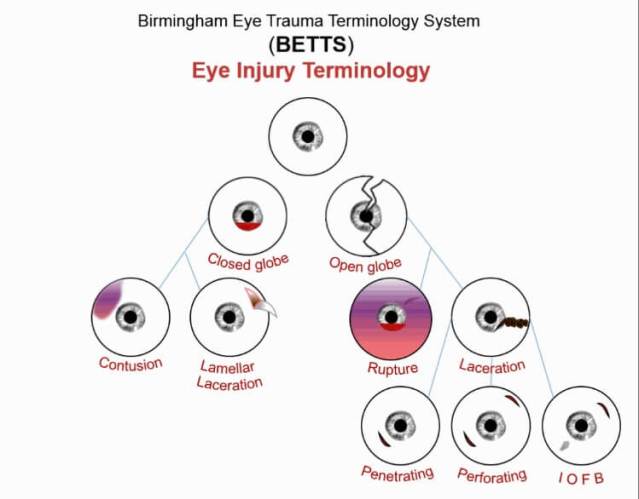
Blunt Force Trauma
Cause: Punches, kicks, flying debris.
Injuries: Orbital fractures (broken eye socket), retinal detachment, hyphema (bleeding inside the eye).
Treatment: May require surgery, immobilization, and long recovery time. Risk of permanent damage.
Penetrating Injury
Cause: Knives, arrows, shards of glass, claws.
Symptoms: Blood, pain, partial or total vision loss, protrusion of eye contents in severe cases.
Treatment: Emergency surgery. Often results in vision loss or removal of the eye (enucleation).
Retinal Detachment
Cause: Trauma, disease, or aging.
Symptoms: Flashing lights, floaters, shadow over vision.
Treatment: Laser or surgical repair; time sensitive. Delayed treatment leads to permanent blindness.
Long-Term Effects on Characters
Eye injuries aren’t just a moment of pain. They carry lasting consequences, especially if vision is permanently altered or lost.
Physical Impact
Depth perception loss (especially if vision remains in only one eye)
Photophobia (light sensitivity)
Migraines and eye strain
Balance or coordination difficulties
Psychological Impact
Fear, vulnerability, and self-consciousness
Loss of career or independence (especially in jobs requiring fine visual control)
Trauma-related anxiety or PTSD
Heightened reliance on other senses
Tip: If your character adapts to partial or full blindness, don’t just portray it as a weakness. Explore how they develop new skills, emotional depth, or perspectives.

Writing Tips for Realism
Know your anatomy. The eye is delicate. Minor damage can have major consequences.
Respect recovery time. Even “healed” eyes may never return to full function.
Use sensory shifts. Show how your character adjusts to vision changes through other senses.
Avoid clichés. A missing eye doesn’t always need a dramatic eye patch or glowing orb.
Don’t skip the trauma. Eye injuries are frightening: emotional impact matters.
How Genre Shapes the Depiction of Eye Injuries
Eye injuries are deeply personal and symbolic. They often suggest vulnerability, loss of insight (literal and metaphorical), or transformation. But how writers portray these injuries – how they happen, how they’re treated, and what they mean – varies depending on the genre and world-building logic.
Contemporary Fiction
Common Causes
Car accidents, workplace mishaps, sports injuries, fights, chemical splashes, or accidents involving sharp objects or fireworks.
Domestic abuse or assaults can cause eye trauma with long-term emotional ramifications.
Depiction Notes
Readers expect modern medical realism. Readers may have firsthand knowledge of how these injuries work.
Treatments may include emergency surgery, antibiotics, prosthetic eyes, or vision therapy.
The character may acquire a seeing eye dog or learn to read Braille.
Emphasis often falls on the psychological impact, such as depression, PTSD, or career changes (e.g., a photographer going blind).
Focus on emotional realism, personal recovery, and the adjustment to partial or full blindness.
Eye injuries can be metaphorical, “seeing the truth” through loss, or gaining new clarity after trauma.
Tip: Use contemporary resources such as medical case studies, survivor memoirs, and support group forums to inform believable healing and adaptation arcs.

Historical Fiction
Common Causes
Sword fights, duels, war injuries (including arrows, shrapnel, or bayonets), or animal attacks.
Occupation-based risks. Blacksmiths, soldiers, sailors, and miners all faced high chances of facial injuries.
Punishment or torture. Some historical cultures used eye gouging (e.g., Byzantine or Persian empires).
Depiction Notes
The treatments were limited. There were no antibiotics, little understanding of hygiene, and eye injuries often led to blindness or death via infection.
Loss of an eye often carried social stigma, seen as a loss of usefulness or divine punishment.
Some characters might wear crude glass or wooden eyes for appearance’s sake.
Tone and focus are often gritty, brutal, and focused on survival in the face of suffering.
A disfigured soldier or duelist might find themselves shunned or romanticized, depending on social class.
Braille was developed in 1824, becoming widespread by the end of the 19th century.
Tip: Show how characters navigate life in a world where people misunderstood disability or viewed it as a curse or a sign of divine intervention.
Fantasy Fiction
Common Causes
Magical duels, dragon fire, cursed blades, enchanted traps, or beast attacks.
Divine punishment or rituals of initiation.
Accidents with magical artifacts, potions, or prophecies gone wrong.
Depiction Notes
Healing options may vary: healing potions, divine clerics, or arcane regeneration spells.
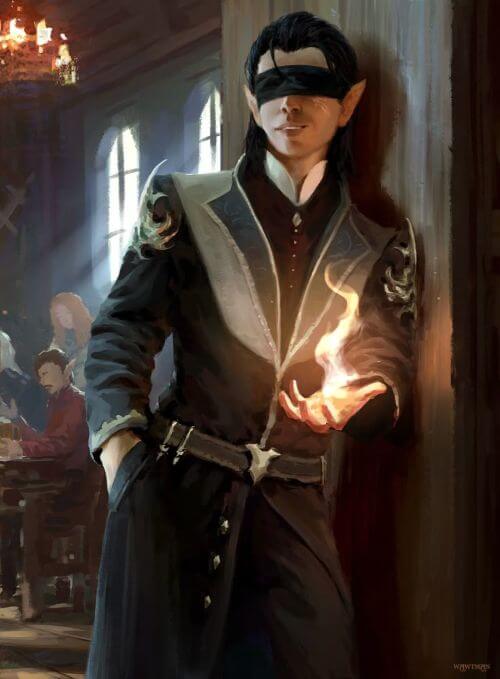
Magical prosthetics: a crystal eye that sees the unseen, an eye with fae or infernal power, or a third eye opened by sorcery.
Injury could be a rite of passage, a transformation, or even a source of power (e.g., an “oracle” blinded to gain second sight).
Tone and focus are highly symbolic. Eye injuries may represent a loss or gain of spiritual vision.
The injury can mark a character as chosen, damned, or dangerous.
Tip: Ground even magical healing in rules. Is eye restoration rare, painful, or dependent on the favor of a capricious god? Magic should feel earned, not convenient.
Science Fiction
Common Causes
High-velocity impacts, radiation exposure, alien toxins, surgical mishaps, or weaponized energy beams.
Cybernetic overloads or sabotage of ocular implants.
Evolutionary incompatibility: exposure to alien light spectrums or biotech viruses.
Depiction Notes
Doctors might treat injuries immediately with nanobots, synthetic tissue, or vision-enhancing implants.
Cybernetic eyes could offer enhanced sight (infrared, telescopic, network interface) or become hacked or weaponized.
In more dystopian stories, the elite could receive advanced ocular tech, while others remain blind or use outdated gear.
Tone and focus usually raise ethical questions: what happens when a person sees too much, or not enough? Is vision enhancement a step toward post-human evolution?
Characters may struggle with identity, surveillance, or loss of biological senses.
Tip: Sci-fi offers opportunities for metaphor. Your character might “see through” lies, corporate control, or time itself. Consider how technological enhancement affects humanity.
Alien and Non-Human Eye Injuries
Fantasy and science fiction allow for non-human creatures with different sensory systems. This opens creative, genre-specific depictions:
Alien Eye Anatomy
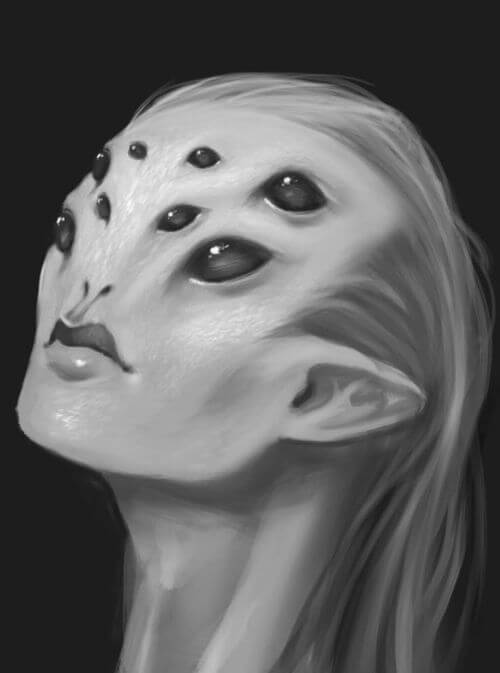
Multiple eyes, compound lenses, light-sensitive scales.
Eyes that perceive heat, sound vibrations, or interdimensional energies.
Regenerative or photosynthetic ocular systems.
Unique Injuries
A creature who loses echolocation or infrared vision, not just visible sight.
A fae creature whose eye is a magical focus. Damage severs their power.
An alien soldier whose eye-to-brain neural link is damaged, creating hallucinations or disorientation.
Treatments Through History
Treatments for eye injuries have evolved from superstition and crude tools to microsurgery and regenerative medicine. In fiction, these variations can highlight everything from a character’s social status to the ingenuity (or limitations) of their world.
Ancient World (Pre-500 AD)
Common Practices
People typically treated eye injuries with herbal remedies, poultices, and ointments made from plant resins, honey, or animal fats.
Egyptians used copper salts and kohl mixtures for infections and irritations.
Greek and Roman physicians (like Galen) recommended warm compresses and animal-based salves.
Magic and ritual were also part of the healing process, especially in Mesopotamia or Egypt.
Limitations
No understanding of infection or sterility.
Severe trauma often led to blindness or eye removal with no replacement.
Instruments for eye surgery were crude and mostly ineffective.
In fiction: Ancient eye treatments might involve divine rituals, animal sacrifices, or “sacred ointments” passed down by healers or priests.
Middle Ages (500–1500 AD)
Common Practices
Medicine was heavily influenced by the humoral theory and religious beliefs.
They used leeches, bloodletting, and fumigations for eye swelling.
Herbal poultices with ingredients like chamomile, rue, or poppy extract were common.
Ointments were applied to the eyelid or the inner eye socket, sometimes containing mercury or crushed minerals.
Limitations
Eye injuries were often misunderstood. Spiritual explanations (e.g., “evil eye”) could be invoked.
Lack of hygiene led to infection and blindness.
Surgery was rare, and anesthesia was nonexistent. Pain was expected.
A medieval healer might treat a scratched cornea with a poultice and prayer or cauterize a severely injured eye with a hot iron.
18th and 19th Centuries
Common Practices
Introduction of basic surgical instruments and eye-specific procedures.
Eye removal (enucleation) was performed more safely, often to stop spreading infections.
Glass eyes became available as cosmetic replacements.
Magnification tools and lamps allowed for more detailed surgeries.
Limitations
While chloroform and ether made surgery more tolerable, sterile technique was still developing.
Treatments remained largely reactive rather than preventive.
Antibiotics were not yet available. Eye infections were life-altering or fatal.
In fiction: The loss of an eye could be cosmetically hidden but not restored. Characters might wear monocles or custom masks to hide disfigurement.
Contemporary Medicine
Common Practices
Antibiotics and anti-inflammatory eye drops for minor injuries or infections.
Laser surgery, microsurgery, and retinal reattachment procedures.
Eye patches or shields for physical protection and healing.
Corneal transplants and ocular implants in extreme cases.
For lost eyes: high-quality prosthetic eyes and vision rehabilitation training.
A cane or seeing eye dog to navigate.
Advantages
Focus on preserving vision and aesthetics, as well as managing trauma-related anxiety.
Preventative treatments include safety goggles, vaccines, and quick response protocols.
In fiction: Modern stories can realistically explore recovery journeys, career limitations (e.g., pilots or surgeons losing sight), or legal/insurance complications.

Fantasy Treatments
Options
Clerical healing, divine intervention, or enchanted potions might restore sight entirely.
Cursed injuries may resist natural healing or worsen under moonlight or with certain emotions.
Prosthetic magical eyes may allow the bearer to see ghosts, through walls, or into memories.
Healers may draw on rare ingredients like basilisk tears or unicorn marrow to treat severe trauma.
Limitations and Opportunities
Healing might be costly, forbidden, or reserved for royalty or heroes.
Magic may fix the injury, but leave a magical imprint, such as glowing eyes or hallucinations.
In fiction: Fantasy offers great narrative leverage. Will your character pay a personal price to restore sight? What does a magical prosthetic cost, not just in gold, but in soul?
Science Fiction Treatments
Options
Ocular implants: cybernetic eyes with recording, zoom, or visual overlays.
Regenerative medicine: nanobot-infused gel to repair ocular tissue.
AI-assisted surgery with zero margin for error.
Full neural interface replacements that bypass the damaged eye entirely.
Advanced Possibilities
Alien species may have multiple vision types. Regrowing or repairing an eye may alter their perception.
Hacked prosthetics could display false visuals or record private data.
Vision-enhancing tech might create overstimulation or moral dilemmas (e.g., constantly seeing someone’s vital signs or lies).
In fiction: Sci-fi allows characters to redefine identity through sight, whether through enhancement, loss, or augmentation.

Plot and Character Ideas
Here are a variety of plot and character ideas that revolve around eye injuries, tailored to different genres. These ideas explore not just the physical consequences, but also the emotional, social, and symbolic dimensions of vision loss or transformation.
Contemporary
The Witness Who Can’t See
A woman survives an attempted murder, but a blow to the head leaves her with partial blindness. She’s the only witness who can identify the assailant but now struggles to trust what she saw and what she still sees in her dreams.
The Visionary Photographer
After a chemical burn robs him of sight in one eye, a world-renowned photographer must relearn how to create art through a new visual lens or risk losing his identity and career.
The Teacher’s Shadow
A beloved elementary school teacher slowly loses vision in one eye due to a retinal disorder. Fearing judgment and job loss, she hides it, but a troubled student with his own secret forces her to confront the cost of silence.
Historical
The Duelist’s Mark
A French noble loses an eye in a duel defending his sister’s honor. Now forced into political negotiations instead of combat, he must learn the art of diplomacy while planning one final, lethal rematch.
The One-Eyed Sailor
Cannon shrapnel blinded one eye of a naval officer during the Napoleonic Wars. Declared unfit for command, he’s sent to a remote post where he uncovers a plot to sell war secrets to the enemy and must act alone to stop it.
The Healer’s Folly
A medieval village healer loses her sight in one eye while trying to cure a plague with forbidden alchemy. Shunned by her peers and haunted by visions, she sets out to find the true origin of the illness and redemption.
Fantasy
The Seer’s Curse
A young oracle is born with one silver eye that sees the present and one shadowed eye that sees only death. After an injury forces her to lose the “normal” eye, she must confront what it means to live entirely with foresight and no escape.
The Knight of the Hollow Helm
A paladin loses both eyes in battle against a demonic creature. Granted magical sight by a fae bargain, she sees truth but cannot lie, even to save a kingdom. Now her honesty becomes both a weapon and a curse.
The Dragon’s Ember
A dragon-slayer survived a battle, but the beast’s flame blinded him in one eye. Years later, the dragon’s power awakens inside him through that very wound, turning him into the creature he once swore to destroy.
Science Fiction
Cybernetic Glitch
A cyber-soldier’s implanted visual interface malfunctions during a mission, replacing reality with manipulated images. As he hunts a rogue AI, he questions what he’s really seeing and whether he’s still human.
The Blind Pilot
A starship pilot with degenerative eye disease is grounded from duty until an alien race offers her a biomechanical graft that lets her see not just space, but possibility itself. But using it may unravel her mind.
Optic Rebellion
A factory worker in a dystopian surveillance state receives an illegal prosthetic eye to replace the one he lost in an accident. But it’s not just an upgrade, it’s a spy tool for the resistance, and now he’s forced to join a rebellion he never wanted.
Cross-Genre & Symbolic Ideas
The Eye Collector
Across centuries and worlds, legends tell of a being who takes the eyes of the wicked and replaces them with ones that can only see the consequences of their actions. A new generation is being marked, and one young thief is next.
The Artist’s Revelation
A painter begins losing her sight but starts seeing glowing symbols in the world around her, clues that lead to an ancient artifact buried beneath her city. Her injury may be the key to unlocking a forgotten truth.
The Twin Vision
In a multiverse-spanning sci-fi/fantasy hybrid, two characters – one blind in the left eye, the other in the right – share a psychic link through an ancient relic. When one is wounded, the other feels it. Together, they must stop a world-ending convergence only they can see from opposite sides.
Whether your character loses an eye in battle, to disease, or through a laboratory accident gone wrong, the resulting journey is rich with opportunity. Written well, eye injuries offer more than physical consequences—they open the door to themes of loss, perception, adaptation, and insight.
An injury to the eye can change how a character sees the world or how the world sees them.
I hope this was helpful. Let me know if you have questions or suggestions by using the Contact Me form on my website or by writing a comment. I post every Friday and would be grateful if you would share my content.
If you want my blog delivered straight to your inbox every month along with exclusive content and giveaways, please sign up for my email list here.
Let’s get writing!
Copyright © 2025 Rebecca Shedd. All rights reserved.
 Rebecca Shedd - Author
