The Writer’s Guide to Internal Bleeding
Internal bleeding doesn’t always look dramatic on the outside, which is exactly why it can be so dangerous. Unlike cuts or visible wounds, internal bleeding often happens quietly, only revealing itself through subtle symptoms until it becomes life-threatening.
For fiction writers, it’s a powerful device for tension and realism, the hidden injury that escalates when it’s too late to help. But to portray it effectively, you’ll need to understand what causes internal bleeding, how it presents, and why it can kill.
What is Internal Bleeding?
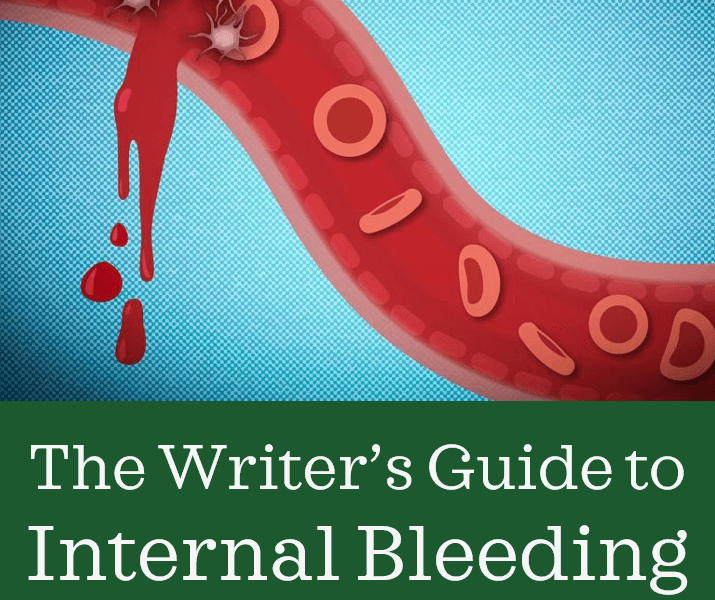
Internal bleeding means blood is leaking from blood vessels inside the body, into tissues, spaces, or cavities where it doesn’t belong. Because it’s hidden, it can progress unnoticed until shock, organ failure, or death occur.
Unlike external bleeding, it can’t be staunched with pressure or bandages, and the only treatment in serious cases is surgical intervention.
Common Causes of Internal Bleeding
Different scenarios produce different types of internal bleeding. Here are the most frequent causes you might see in fiction.
Blunt Trauma
Car accidents (seatbelt injuries, dashboard impacts)
Falls from height
Punches, kicks, or crush injuries
Sports collisions
Example: A boxer takes a blow to the abdomen, rupturing the spleen.
Penetrating Trauma
Stab wounds
Gunshot wounds
Shrapnel injuries
Arrow or spear wounds (historical and fantasy)
Example: A knife wound pierces the liver, causing slow but severe bleeding.
Aneurysms and Ruptures
Weak spots in blood vessels (especially the brain or aorta) can burst spontaneously.
Often present as sudden severe pain.
Example: An elderly character collapses from a ruptured abdominal aortic aneurysm.
Medical Conditions
Bleeding ulcers in the stomach or intestines
Ectopic pregnancy ruptures
Bleeding disorders (hemophilia)
Certain medications (anticoagulants)
Example: A character on blood thinners slips and hits their head, developing a brain bleed.

Signs and Symptoms
Because internal bleeding is invisible, your character won’t always know something is wrong right away. Symptoms depend on where the bleeding occurs and how much blood is lost.
General Signs of Significant Internal Bleeding
Weak, rapid pulse
Pale or ashen skin
Cold, clammy skin
Dizziness, confusion, or fainting
Rapid breathing
Severe thirst
Abdominal swelling or tightness
Unexplained bruising (especially around the flanks or belly)
Specific Clues by Location
Abdominal bleeding: Severe pain or tenderness. Distended (swollen) abdomen. Bruising around the navel or flanks (Cullen’s or Grey Turner’s sign).
Chest bleeding: Difficulty breathing. Coughing up blood. Shock symptoms.
Brain bleeding: Sudden headache. Slurred speech. Uneven pupils. Weakness or paralysis on one side.
Tip: Small internal bleeds may show no symptoms at first, only progressing over minutes or hours.

Why Internal Bleeding is Dangerous
Hidden Progression: Bleeding can continue undetected.
Blood Loss: Severe internal bleeding can lead to hypovolemic shock.
Pressure Damage: Bleeding into the brain or abdomen can compress vital structures.
Organ Failure: Blood flow loss deprives tissues of oxygen.
Without immediate treatment, especially in the abdomen or head, internal bleeding can be quickly fatal.
Writing Internal Bleeding Realistically
Timing: It rarely causes instant collapse unless it’s massive (like a ruptured aorta). Most bleeds worsen over minutes to hours.
Subtlety: Characters often try to keep moving, only to deteriorate. This creates tension as others fail to realize how serious it is.
Real Symptoms: Instead of “he turned pale and died,” show increasing confusion, cold sweat, weakness, and labored breathing

Depicting Internal Bleeding by Genre
Internal bleeding is an injury that works differently depending on the world you build around it. Let’s break it down by genre so you can see how causes, treatments, and narrative tone all shift, whether you’re writing a gritty thriller or an epic space opera.
Contemporary Fiction
Common Causes
Car crashes (especially seatbelt or dashboard injuries to the abdomen or chest)
Workplace accidents (falls, crush injuries, industrial machinery)
Stabbings or gunshot wounds
Sports impacts (e.g., ruptured spleen in football)
Domestic violence
Complications of untreated ulcers or aneurysms
Depiction Notes
Readers expect realistic symptoms and consequences.
Internal bleeding is often invisible at first, creating tension as characters (and bystanders) underestimate it.
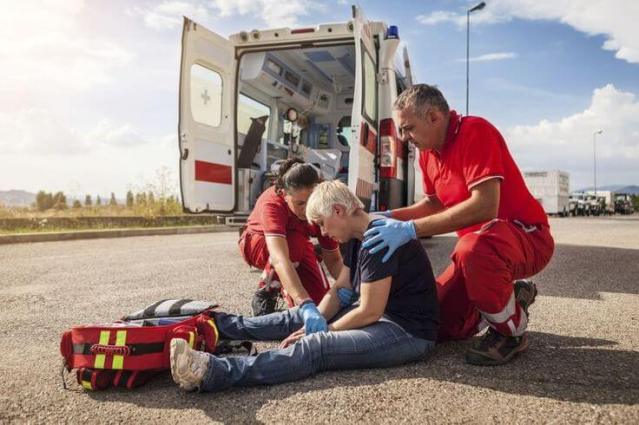
Emphasis will fall on rapid deterioration, paramedic intervention, and surgical treatment.
Common narrative use: showing vulnerability in a stoic character who insists, “I’m fine.”
Tone and Focus
Gritty realism: medical detail, emotional fallout.
Legal or systemic angles: insurance, workplace negligence.
Personal stakes: the character’s sense of mortality and loss of control.
Example: A detective shot in the lower chest seems okay until he collapses from blood pooling in the pleural cavity.
Historical Fiction
Common Causes
Sword, spear, or arrow wounds.
Horse falls or cart accidents crushing the torso.
Blunt trauma from siege weapons or shields.
Internal bleeding from untreated infections, rupturing organs.
Depiction Notes
Diagnosis is rudimentary or nonexistent. Characters may just be called “stricken” or “dying.”
Treatment is limited to rest, poultices, prayer, or bleeding, none of which helps.
Survival is rare if bleeding is significant.
Culturally, some injuries could be viewed as divine punishment or omens.
Tone and Focus
Stark fatalism: sometimes no one can help.
Honor and shame around survival or death.
Family, faith, and legacy become central as the end approaches.
Example: A knight with a deep lance wound fights on for hours before shock overtakes him.
Fantasy
Common Causes
Monster attacks (claws crushing the ribcage, dragon tail impacts).
Magical weapons or spells causing internal rupture (e.g., force blasts).
Cursed wounds that bleed inside but never heal.
Ritual combat with enchanted blades.
Depiction Notes
Internal bleeding might not be recognized by characters who lack modern understanding.
Herbal or magical treatments could stabilize or reverse damage, but often with limits (cost, availability, side effects).
Healing might be a narrative test. Who will pay the price for saving them?
Could also symbolize moral or spiritual wounds.
Tone and Focus
High drama and symbolism.
The injury as an obstacle to fulfilling prophecy.
Possible transformation or magical consequences if left untreated.
Example: A sorceress hit by a cursed spear feels fine until hours later, her magic drains away as blood pools invisibly around her heart.

Science Fiction
Common Causes
High-velocity impacts during spaceship maneuvers (g-forces rupturing vessels).
Plasma weapon burns causing internal hemorrhage.
Nanobot sabotage (microscopic damage to internal organs).
Alien parasites feeding on internal tissues.
Depiction Notes
Advanced medicine may detect and stabilize injuries quickly but possibly at a social or ethical cost.
Medical technology could include: Regenerative gel packs that seal ruptured vessels. Biofoam to fill cavities and stop bleeding. Emergency stasis fields.
Injuries could have unexpected side effects (memory disruption, genetic damage).
Internal bleeding might be used as a plot twist: a hidden sabotage or alien infection.
Tone and Focus
Blends high-stakes survival with speculative wonder.
Ethical dilemmas (who gets the last stasis pod?).
The line between body and machine blurs. Can you survive if 90% of your organs are replaced?
Example: A pilot injured in a crash refuses treatment to stay conscious—until a hidden rupture in her abdomen forces her to decide between mission success and her life.
Treatments Through History
Internal bleeding has always been one of the most dangerous injuries because you can’t see it. Throughout history, medicine evolved from guesswork to life-saving surgery but even today, it remains a major cause of trauma deaths.
Below is an overview of how treatments have changed, so you can match your depiction to your setting.
Ancient World (Pre-500 AD)
Internal bleeding wasn’t understood as a concept. People recognized severe belly or chest injuries were often fatal, but had no way to stop internal hemorrhage. Practitioners might see swelling and bruising but attribute it to “bad humors,” spirits, or curses.
Typical Treatments
Poultices and compresses: Herbal mixtures applied to bruised areas to “draw out” the injury.
Warm infusions: Wine, vinegar, or honey-based drinks believed to ease internal pain.
Immobilization and rest: A wounded person was kept still in hopes the body would “rebalance.”
Prayer and ritual: Appealing to gods or ancestors to save the injured.
Outcome
Severe internal bleeding from trauma (like a ruptured spleen) was nearly always fatal.
Example in fiction: A Roman soldier crushed in battle is treated with poultices, then left to fate as priests chant for his recovery.
Middle Ages (500–1500 AD)
There was little improvement over ancient understanding. Surgeons could treat obvious wounds but had no surgical technique to access the abdomen or chest safely.
Typical Treatments
Bloodletting: Ironically, removing blood was often prescribed, which worsened shock.
Leeches or cupping: Used to “balance humors.”
Herbal preparations: Poppy-based pain relief (early opioids).
Poultices and plasters: Applied externally.
Fasting and purging: To rid the body of “corruption.”
Outcome
Without surgical intervention, most internal bleeds were hopeless cases.
Occasional recoveries likely involved minor bleeds that clotted naturally.
Example in fiction: A knight with a crushing blow to the belly receives laudanum to dull pain but inevitably succumbs days later.

18th and 19th Centuries
Gradual advances in anatomy and surgery improved understanding. By the late 19th century, surgeons began attempting abdominal operations for trauma but infection was a constant killer.
Typical Treatments
Exploratory laparotomy: Opening the abdomen to find and stop bleeding (still extremely risky).
Use of ether or chloroform anesthesia in surgery.
Surgical ligation: Tying off bleeding vessels.
Quinine, opiates, and brandy: To ease pain and support circulation.
Elevation and immobilization: To limit movement and preserve blood volume.
Outcome
Success rates were low but improving.
Survival required immediate surgery and luck avoiding infection.
Example in fiction: A Civil War field surgeon operates on a belly wound by lamplight, fully aware he has only hours before sepsis sets in.
Contemporary Medicine
Today internal bleeding is recognized immediately in trauma protocols.
Typical Treatments
Diagnostic tools: Ultrasound (FAST scans), CT scans, blood tests.
Advanced surgical techniques: Rapid control of bleeding vessels, damage control surgery.
Blood transfusions and IV fluids to treat shock.
Interventional radiology: Catheter-based procedures to block bleeding vessels.
Massive transfusion protocols for severe blood loss.
ICU care: Ventilation, clotting support, monitoring.
Outcome
Survival rates have vastly improved with rapid intervention.
Long-term recovery depends on the injury severity and time before treatment.
Example in fiction: A modern paramedic team stabilizes a crash victim in the field, alerting trauma surgeons en route to the hospital.
Fantasy
Fantasy settings let you invent alternative medical paradigms while grounding them in recognizable consequences.
Possible Treatments
Potions and Herbs: Coagulant elixirs brewed from rare plants to stop internal bleeding. Blood-binding spells that knit vessels shut. Alchemy-infused poultices that accelerate clotting.
Magic and Healing: Clerics or healers who can sense bleeding with spiritual sight, lay hands on wounds to close vessels, sacrifice life force or rare reagents for healing, and use magic to stop bleeding but drain the patient’s strength or lifespan.
Limitations
Spells might be:
Unreliable on cursed or enchanted wounds.
Restricted by class, race, or belief system.
Limited to one use per day, forcing hard choices.
Example: A wounded warrior is saved by an elven healer but the magic leaves a scar that glows when danger is near.

Science Fiction
Sci-fi settings open the door to futuristic trauma care.
Possible Treatments
Nanobots: Injected to find and seal bleeds at the microscopic level.
Biofoam injectors: Fill the cavity and stop hemorrhage temporarily.
Auto-surgeon pods: AI-controlled machines that perform trauma surgery instantly.
Synthetic blood products: Replacing lost volume without cross-matching.
Alien or Biotech Approaches: Symbiotic organisms that repair damage from within. Gene editing to activate clotting factors in seconds. Holographic imaging overlays to guide surgeons in real time.
Narrative Possibilities
Medical technology could fail, be sabotaged, or be rationed.
Characters might face ethical dilemmas: Use a prototype treatment or risk death?
Example: A soldier is wounded by plasma fire. His squad deploys a med-drone that injects nanobots, but the bots also start rewriting his DNA.
Plot and Character Ideas
Here are plot and character ideas centered on internal bleeding, tailored to different genres. These scenarios highlight not only the physical danger but also the emotional stakes, hidden tension, and life-or-death choices that internal bleeding can bring to a story.
Contemporary
The Marathon Collapse
A dedicated runner ignores nagging abdominal pain during a marathon. Near the finish line, she collapses. Her spleen ruptured from a fall she brushed off days earlier. As she fights for her life, her estranged sister must decide whether to authorize a risky surgery.
The Rookie Cop
A young police officer is shot during a raid but insists it’s just a graze. As adrenaline fades, he realizes he’s bleeding internally. Alone in a warehouse, he must use his training and his willpower to survive long enough to call for help.
The Domestic Secret
A woman in an abusive relationship finally escapes, but her ex punches her in the stomach before she flees. Hours later, in the safe house, she begins to feel faint. Her advocate, herself a survivor, must overcome her own fears to save her.
Historical
The Duelist’s Price
In 18th-century France, a nobleman wins a duel but takes a rapier thrust to the lower chest. Though he seems victorious, he slowly deteriorates. As his rival flees, the nobleman wrestles with regret and pride, unable to admit he’s dying from hidden wounds.
Siege of the Citadel
A medieval squire is struck by a battering ram beam while defending the castle gate. Though he insists on continuing the fight, internal bleeding worsens. His mentor, a hardened knight, must decide whether to save the boy or hold the line.
The Railroad Baron
An industrial magnate in the 19th century falls under a collapsed bridge during inspection. Trapped beneath rubble with a rival, he confesses secrets as internal bleeding slowly claims him, transforming their enmity into an uneasy respect.
Fantasy
The Mage’s Burden
A battle mage takes a crushing blow from an ogre’s club. Though she manages to teleport her companions to safety, she conceals her internal injuries. As they journey to find a healer, her fading strength threatens to expose her sacrifice.
The Cursed Spear
A prince is pierced by a cursed spear in ritual combat. The wound seals magically, hiding relentless internal bleeding. Only the rival he defeated knows the antidote and she offers it only if he agrees to a marriage alliance.
The Griffin Rider
A knight falls from his griffin mid-flight, landing with a shattering impact. Though he survives, he feels a cold bloom in his side. As his squire searches for help, the knight faces visions of the ancestors, deciding whether to cling to life or pass the torch.
Science Fiction
The Colony Sabotage
On a terraformed moon, a miner is crushed by machinery sabotaged by a rival faction. The medic drones diagnose slow internal bleeding but the colony has no surgeon. His crewmates must improvise treatment, forcing alliances among enemies.
The Genetic Time Bomb
A spy with bioengineered tissues is shot during extraction. The bleeding triggers an embedded fail-safe designed to self-destruct his organs if captured. As he flees, he must decide whether to let his partner save him or activate the kill switch to protect their secrets.
The Exoplanet Rescue
A xenobiologist studying alien fauna is attacked by a creature whose toxin causes delayed vessel rupture. Though she escapes to her ship, symptoms manifest hours later. She must rely on an AI medic that may or may not understand human anatomy.
Cross-Genre and Symbolic
The Prophet’s Sacrifice
A visionary leader is wounded in an uprising. Though he continues to inspire his followers, internal bleeding slowly takes his life. His death becomes a martyrdom legend, fueling rebellion even as it breaks those closest to him.
The Hidden Assassin
A noblewoman poisons her rival with a compound that causes slow internal bleeding mimicking natural illness. The detective investigating her death must see past appearances to unravel the crime before the next victim is targeted.
The Last Performance
A famous tightrope walker takes a fall but insists on finishing his final show. As his act reaches its climax, he realizes he’s fading and must decide whether to descend or die in flight.

Internal bleeding is silent, deadly, and easy to overlook, making it perfect for tension and realism in fiction. If you write it with care – avoiding instant, convenient recoveries – it can be a compelling way to show vulnerability, grit, and the high stakes of violence or trauma.
Sometimes the most dangerous wounds are the ones no one can see.
I hope this was helpful. Let me know if you have questions or suggestions by using the Contact Me form on my website or by writing a comment. I post every Friday and would be grateful if you would share my content.
If you want my blog delivered straight to your inbox every month along with exclusive content and giveaways, please sign up for my email list here.
Let’s get writing!
Copyright © 2025 Rebecca Shedd. All rights reserved.
 Rebecca Shedd - Author