The Worldbuilder’s Toolkit: Swamps and Marshlands
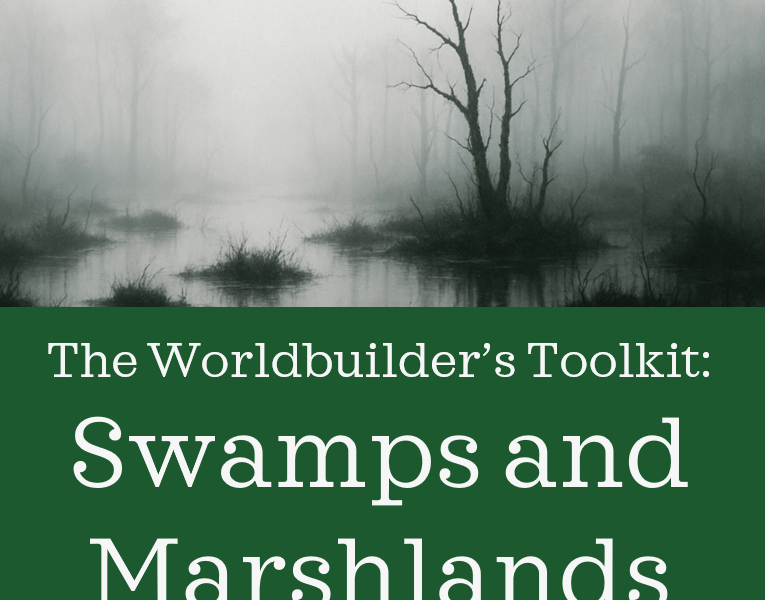
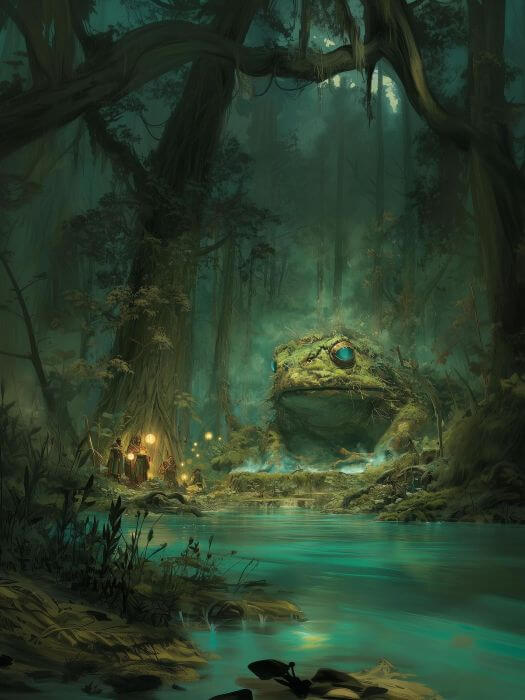
Fog drapes the ground like a veil. Roots twist like skeletal fingers beneath shallow waters. Every step squelches underfoot. Whether you call it a swamp, bog, marsh, or fen, this landscape pulses with mystery, danger, and life. In fantasy and science fiction, swamps are more than soggy terrain: they’re rich storytelling environments that test characters, obscure truth, and reveal the hidden.
If you’re building a speculative world, don’t overlook the murky magic of the marsh. In this article, I’ll explore how to use swamps and wetlands effectively in your fiction, from geography and survival to culture, conflict, and myth.
Swamps as Mysterious and Treacherous Terrain
Swamps are liminal spaces, neither fully land nor water. They resist easy mapping and control. Visibility is low. Travel is slow. The rules are different.
Geographic Challenge: Paths vanish. Fog rolls in. Roots snag. Sinkholes open. A swamp doesn’t want you to pass through.
Symbolic Power: Swamps often represent mystery, decay, transformation, or even madness. They’re perfect for scenes involving uncertainty, inner darkness, or forbidden knowledge.
Biological Danger: Leeches, snakes, biting insects, quicksand, and disease. Insects carry plagues. Fungi release spores. It’s nature, red in tooth, claw, and fungus cap.
Writing Tip: Use sensory overload – slippery steps, buzzing insects, damp clothes, the constant feeling of being watched – to build tension and immersion.
What Makes a Fantasy or Sci-Fi Swamp Unique?
A well-built swamp setting in speculative fiction should feel distinctive, not generic. Consider adding the following.
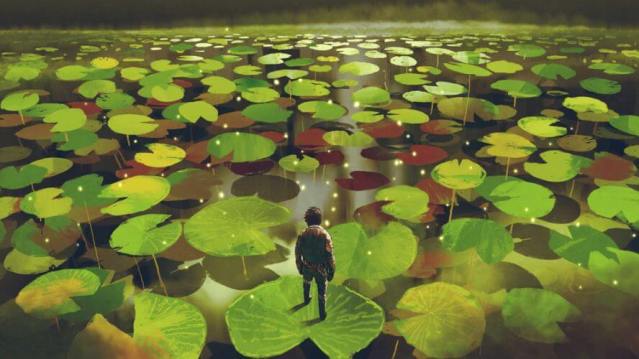
Magical Flora/Fauna: Carnivorous lily pads. Floating fungal colonies. Trees that bleed when cut. Sentient vines.
Environmental Anomalies: Floating islands that drift on their own. A swamp that moves each night. Air that induces hallucinations.
Techno-Marshlands (Sci-Fi Twist): A terraformed swamp on an alien planet. Bio-engineered wetlands used to clean planetary toxins. Drones that get lost in magnetic interference.
Writing Tip: Lean into worldbuilding with how your swamp works. What’s natural, what’s supernatural, and how have locals adapted to survive?
Culture in the Swamps: The People of the Mire
Swamps may seem inhospitable, but in reality, they are ecosystems teeming with life, and that includes human life. Entire cultures have historically adapted to wetlands, and in your story, swamp folk can be resilient, cunning, deeply in tune with their environment, and misjudged by outsiders.
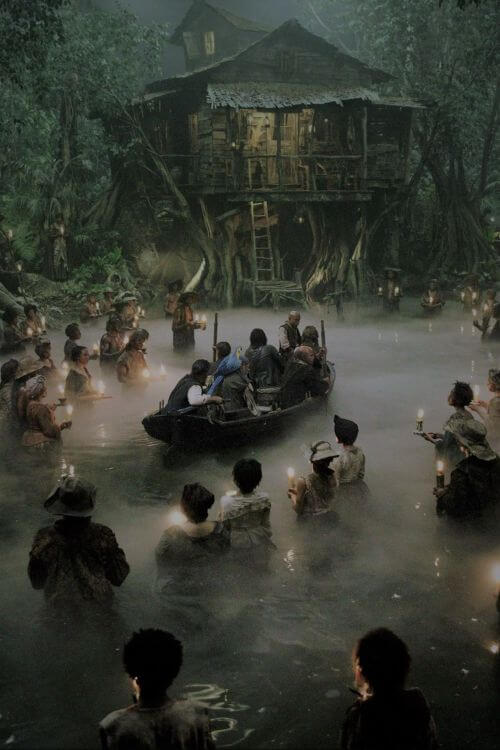
Architecture: Stilted homes, floating barges, hammocks in mangroves, or grown huts shaped from living trees.
Economy: Fishing, trapping, foraging, alchemy, reed craft, poisons, and rare herbs.
Social Structure: Decentralized clans, druidic elders, matriarchal healers, or hermit traditions.
Conflict: Tension with upland rulers, land developers, or encroaching settlers. Uplanders might unfairly label swamp people as “backward” or “witches.”
Character Prompt: A swamp-dwelling herbalist who’s the only one who knows how to cure a magical plague but refuses to share the knowledge without a price.
Myth, Legend, and the Magic of the Marsh
Swamps are natural homes for ghost stories, ancient secrets, and primal magic. In many cultures, wetlands are the threshold between the world of the living and the dead.
Mythological Echoes
The Celtic bog of sorrows, where voices call lost souls.
African and Caribbean traditions with swamp spirits or water-dwelling tricksters.
The Lady of the Lake, emerging from still water.
Fantasy Elements
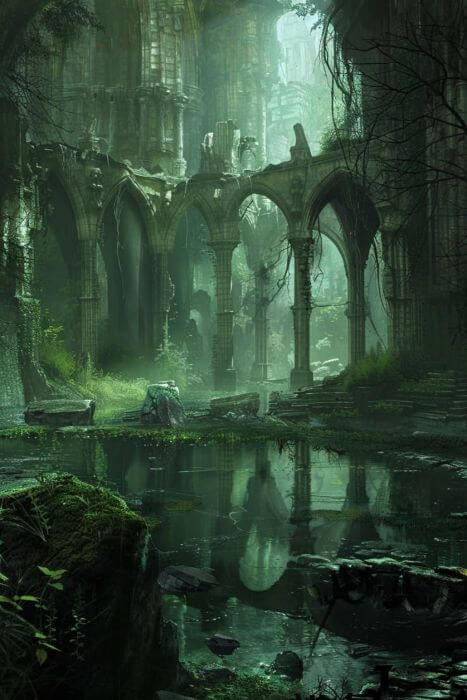
Forgotten ruins buried in muck.
Spirits bound to trees.
Curses that rise with the mist.
Sci-Fi Equivalents
A crashed spacecraft slowly consumed by alien swamp growth.
Bioluminescent spore fields that record memories.
A lost wetland AI whose drones now act like a hive-mind predator.
Plot Hook: A character must venture into the swamp to retrieve a relic only to learn the swamp remembers everyone who enters.
Plot and Conflict Opportunities in Swamp Settings
Swamps naturally introduce tension. They isolate. They obscure. They change. Here are ways to use them.
Quarantine Zones: Magical blight or alien virus contained by a swamp’s boundaries.
Territorial Disputes: Uplanders want to drain the marsh for farmland; swamp folk resist.
Hidden Strongholds: Rebels, outlaws, or witches hide where others fear to tread.
Living Hazards: The swamp itself resists intruders, sending floods, illusions, or creatures.
Character Development Tip: A swamp journey can test endurance, patience, and humility and show whether your character adapts or breaks under pressure.
Swamp Cultures in History: Real-World Inspiration for Fictional People
Though often dismissed as uninhabitable, swamps and marshlands have been home to resilient and resourceful cultures throughout history. These real-world communities provide valuable insight for crafting believable, richly developed fictional people who thrive in the wetlands both in fantasy and science fiction settings.
Below are a few interesting examples of swamp-based or marsh-adjacent cultures and how their stories can inspire your own characters and civilizations.
The Seminole People – The Florida Everglades
The Seminole Nation formed in the 18th century from a blend of Indigenous peoples and escaped African slaves who found refuge in the Florida swamps.
Adaptation: They used dugout canoes for transport, built raised chickee huts, and thrived on fish, wild plants, and game.
Inspiration for Fiction: A fugitive society hiding in vast wetlands, blending cultural traditions and resisting colonial powers. A character who knows hidden riverways no map records, and whose loyalty lies with their people, not the empire above the waterline.
Twist: The swamp shields them from enemies but also cuts them off from another, larger rebel group who could be allies.
The Marsh Arabs (Ma’dan) – Southern Iraq
For centuries, the Ma’dan lived in the Mesopotamian marshes, building reed houses, herding water buffalo, and fishing from long canoes.
Adaptation: Entire floating communities existed on water, their culture closely tied to the life cycle of the marsh.
Inspiration for Fiction: A water-herding people with a deep oral tradition and river-glyph script that only appears during the flood season. A floating city migrates with the tides, and people measure power by how many reed-islands they command.
Twist: After years of persecution and ecological destruction, their elders claim the marsh spirits are awakening and they want vengeance.
The Bog Bodies and Northern Europe’s Peatlands
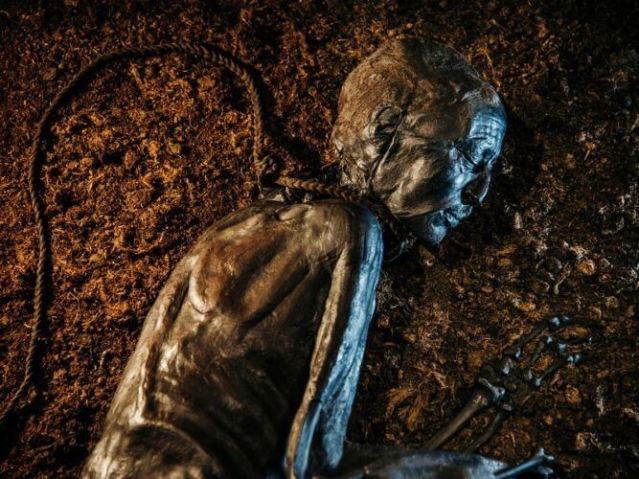
Archaeologists have unearthed thousands of ancient remains, called “bog bodies,” in peat bogs across Northern Europe. Many show signs of ritual sacrifice or violent death, astonishingly preserved by the acidic, oxygen-poor environment.
Cultural Implication: These may reflect a religious reverence for wetlands as liminal spaces between life and death.
Inspiration for Fiction: A culture where people must bury the dead in sacred wetlands to avoid becoming restless spirits. A priestess who communes with the preserved dead, drawing knowledge from their bones.
Twist: One body awakens, not as undead, but as a prophetic figure bearing knowledge from an era no one remembers.
The Ciénaga Peoples – Colombia’s Magdalena River Basin
The communities around Colombia’s ciénagas (marshy floodplains) developed unique adaptations to cyclical floods, building stilted villages and relying on fishing and waterborne trade.
Inspiration for Fiction: A marshland merchant guild that uses shifting river routes to evade taxes and ferry forbidden goods. A culture with no written language, but whose fishing songs encode generations of history and law.
Twist: When a foreign power tries to build a dam, ancient forces tied to the seasonal floods awaken, and they’re listening to the songs.
The Dutch – Masters of the Marsh
Much of the Netherlands is land reclaimed from marshes and the sea. The Dutch developed extensive dike and canal systems and became renowned for water management.
Inspiration for Fiction: A civilization that keeps rising waters at bay through ancient, sacred machinery or magic that is slowly failing. A character who serves as a “lockwarden,” guarding the balance between land and water, and haunted by dreams of drowning cities.
Sci-Fi Twist: In a future where Earth has drowned, descendants of ancient engineers maintain floating cities, treating forgotten flood protocols like sacred texts.
Tips for Using These Cultures in Fiction
Blend Traditions: Avoid copying one culture wholesale. Instead, take architectural, spiritual, or social traits and recombine them with your own world’s logic.
Avoid Stereotypes: Don’t reduce swamp-dwellers to caricatures of “primitive” or “superstitious.” Portray complexity, innovation, and pride in adaptation.
Infuse Ecology: Show how their values and beliefs are shaped by their environment: cycles of flooding, elusive paths, camouflage, resourcefulness.
Respect Lineage: If borrowing from marginalized or Indigenous cultures, take time to research deeply and engage with sources written by members of those communities.
How Swamps Shape the People and Creatures Within
Swamps don’t just change landscapes – they change lives. The people who grow up in wetlands are shaped by their rhythms: the floods and droughts, the isolation, the danger, the silence, and the creatures that thrive in these habitats are some of the most bizarre, beautiful, and fearsome on Earth. In fantasy and science fiction, these real-world elements become fuel for imaginative and immersive storytelling.
Let’s explore how swamp environments influence the people and creatures who call them home and how you can translate those ideas into your worldbuilding.
How Swamps Shape People: Adaptation, Identity, and Survival
Inhabitants of swamps and marshes often live in a close, complex relationship with their environment. Their identities are not separate from the land, they are of it.
Cultural Traits Often Shaped by Swamps
Adaptability: Swamp dwellers must be resourceful. From navigating unstable terrain to finding food in murky waters, they adapt to what others avoid.
Isolation and Independence: Many swamp cultures are cut off: by geography, by flooding, by stigma. This fosters a strong sense of self-reliance, as well as suspicion of outsiders.
Attunement to Nature: Knowledge of seasonal changes, tides, animals, and plant behavior is crucial for survival. This may cause deep animist beliefs or respect for the swamp as a living entity.
Oral Tradition and Memory: In places where writing materials decay and cities fail to endure, people preserve memory through story, song, and ritual.
Subtlety and Secrecy: In places where dangers lurk unseen, subtlety becomes a virtue. Swamp folk may value quiet strength, camouflage, and knowing when not to speak.
Character Inspiration: A marshland spy who learned to move soundlessly through bulrushes as a child. A healer who brews medicine from stinging algae and venomous frog glands. A wandering bard who trades in songs that decode the swamp’s ever-changing paths.
Creatures of the Real-World Wetlands
Swamps and marshes are home to some of the most unusual, otherworldly, and deadly creatures on Earth, perfect inspiration for fantastical beasts or alien fauna. Here are just a few examples:
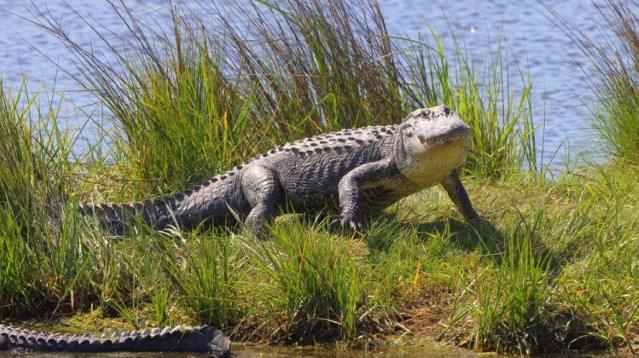
Alligator / Crocodile
Traits: Apex predators. Patient ambush hunters. Often associated with ancient power and death.
Fictional Twist: A moss-covered beast the size of a house that slumbers for centuries before awakening to guard a sacred grove.
Mata Mata Turtle
Traits: Flat, leaf-shaped head; still as a rock; vacuum-feeds prey underwater.
Fictional Twist: A cryptid with camouflage so perfect it’s indistinguishable from the swamp floor until it blinks.
Herons and Egrets
Traits: Elegant, silent hunters. Symbolize grace and patience.
Fictional Twist: Spirits of the swamp that take the form of pale birds and offer riddles or warnings at twilight.
Mangrove Killifish
Traits: Can live both in and out of water. Breathes through its skin. Survives in extreme conditions.
Fictional Twist: Amphibious beings that thrive in acidic, magical bogs, shifting between forms as tides change.
Bullfrogs
Traits: Loud, territorial, and surprisingly aggressive.
Fictional Twist: A chorus of frogs whose croaking induces hallucinations, worshipped as oracles by the swamp’s reclusive monks.
Lungfish
Traits: Can breathe air and survive years of drought by burrowing and encasing themselves in mud.
Fictional Twist: Mythic beasts that reawaken when the swamp floods, carrying the memories of ancient eras within their song.
Fireflies and Bioluminescence
Traits: Glowing insects used for communication or mating.
Fictional Twist: Swamp lights that aren’t insects at all, but sentient plasma lures from a hive-mind creature just beneath the surface.
Worldbuilding Tip: For each fictional swamp creature, ask: How do the locals interact with it? Do they hunt it, avoid it, revere it or deny it exists?
Social Structures and Mythologies Born from the Mire
The people of the marsh don’t just adapt physically. Their beliefs, values, and hierarchies may differ drastically from upland societies.
Swamp Elders: Knowledge of safe paths, hidden currents, and venomous creatures makes elders essential leaders.
Seasonal Rites: Rituals tied to floodwaters, frog migrations, or the first bioluminescent blooms of the season.
Shapeshifter Legends: In ambiguous terrain, boundaries blur. Tales of people who turn into will-o’-wisps, frogs, or vines at dusk may abound.
Spiritual Intermediaries: Shamans or witches who commune with the swamp, reading ripples, listening to the chorus of frogs, or drinking from the cursed spring.
Plot Hook: Members of a swamp-dwelling culture vanish one by one. Outsiders suspect plague. The locals believe the swamp is reclaiming its children.
Plot and Character Ideas
The Silt Road
Genres: Historical Fantasy, Epic Journey
Plot Idea: A merchant’s guild sends a caravan through the Silt Road, an ancient trade route buried in seasonal swamp, but only one trader returns each time.
Character Angle: A widowed mapmaker disguises herself as a trader to follow her missing husband’s path and trace the truth.
Twist(s): The route doesn’t just change physically, it shifts through time, and her husband’s footprints are now centuries old.
Floodline
Genres: Post-Apocalyptic Sci-Fi, Eco-Thriller
Plot Idea: Rising sea levels have turned most of the world into marshland. The remnants of humanity survive on floating settlements, trading secrets for clean water.
Character Angle: A scavenger who salvages drowned tech discovers a submerged AI with access to pre-flood history and a message about how to fix the world.
Twist(s): The AI isn’t trying to save humanity, it’s trying to evolve it into a form better suited to the swamp.
Mire-Bound
Genres: Dark Fantasy, Mystery
Plot Idea: A noble is cursed and sent into the haunted swamps to atone for his war crimes. He has one month to find the “heart of the mire” or die trying.
Character Angle: Once proud and cruel, he begins to understand the damage he caused through the eyes of swamp spirits he can’t escape.
Twist(s): The “heart” isn’t an object – it’s a person, a child born from the pain he caused, now the swamp’s guardian.
Ghostroot
Genres: Fantasy, Medical Adventure
Plot Idea: A deadly illness sweeps the empire, and only one plant – ghostroot – can cure it. But it grows only in a dangerous, shifting swamp protected by an ancient order.
Character Angle: A desperate physician and a disgraced exile must team up to brave the marsh.
Twist(s): The plant isn’t just medicine. It grants visions of the past, and both characters are running from what they did.
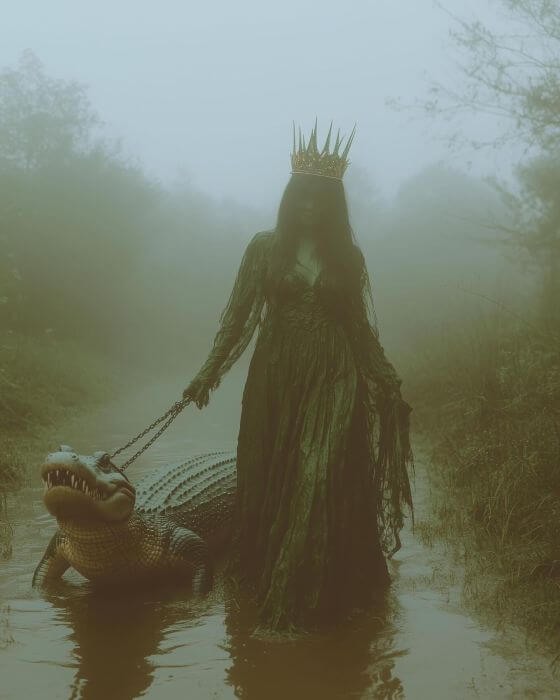
The Bog Queen’s Bargain
Genres: Gothic Fantasy, Political Intrigue
Plot Idea: Every hundred years, the rulers of the lowlands make a pact with the Bog Queen for safe passage and flood protection in exchange for annual tributes.
Character Angle: Chosen as tribute, a young noble discovers the queen isn’t a monster, she’s a prisoner bound by her own curse.
Twist(s): Freeing her from the curse will flood the entire kingdom but also stop the demand for tributes.
Marsh Signal
Genres: Sci-Fi Horror
Plot Idea: A deep-space crew receives a signal from a terraformed planet abandoned centuries ago. On landing, they find it completely overtaken by swamp and not deserted.
Character Angle: The comms officer begins receiving whispered transmissions only she can hear, always just before crew members vanish.
Twist(s): The swamp is sentient, and it’s been waiting for the descendants of those who left it behind.
The Fen Oracle
Genres: Heroic Fantasy, Mythic Adventure
Plot Idea: The Fen Oracle, a figure of legend said to see through time, awakens once every millennium. The chosen must find them in a poisoned swamp before the world ends.
Character Angle: An arrogant prince seeks the oracle for glory, but his guide, a one-eyed bog witch, teaches him what it means to truly listen.
Twist(s): The oracle is not a person but the swamp itself, which must be sacrificed to avert a future calamity.
Waders
Genres: Sci-Fi, Environmental Dystopia
Plot Idea: Genetically modified humans called “waders” were created to survive a flooded Earth. Now confined to marsh colonies, they push back.
Character Angle: A young wader who has never known dry land and dreams of walking free discovers a secret dam holding back a reclaimed city.
Twist(s): The city’s return could destroy the wader ecosystem, forcing her to choose between legacy and liberation.
The Hollow Rushes
Genres: Dark Fairy Tale, Suspense
Plot Idea: Children in a small village keep vanishing into the marshes. Their toys are found among the reeds, humming lullabies no one taught them.
Character Angle: A mother whose child was taken must confront a local legend she dismissed about reed-spirits that steal “too-loud hearts.”
Twist(s): The spirits aren’t evil. They’re fleeing something worse that sleeps under the swamp, and the children are their warning system.
Thorns of the Mire
Genres: Fantasy Thriller, Espionage
Plot Idea: A rebel courier vanishes in the swamp with vital intelligence. An assassin with ties to the swamp-dwellers is sent to retrieve it.
Character Angle: Torn between duty and roots, the assassin finds the courier alive, fighting for a cause she never knew existed.
Twist(s): The rebellion’s future doesn’t lie in the capital, it lies in the hands of the swamp people, if they choose to rise.
Songs of the Sedge
Genres: Mythic Fantasy, Coming-of-Age
Plot Idea: In a floating village where every child receives a “swamp song” on their naming day, one girl is born without one, and the village believes she’s cursed.
Character Angle: Determined to earn her song, she journeys into forbidden waters and finds a drowned library of ancestral spirits.
Twist(s): She wasn’t cursed. She was born to rewrite the music of the swamp.
The Lantern Folk
Genres: Fantasy, Folklore Horror
Plot Idea: Travelers go missing in the Mire of Aelthorn, lured by mysterious lights that locals call “lantern folk.” A scholar arrives to investigate the phenomenon.
Character Angle: A skeptical alchemist searching for a rational explanation finds herself haunted by a glowing figure whispering her dead sister’s name.
Twist(s): The lights aren’t spirits – they’re memories left behind by the swamp itself, and she’s leaving one too.
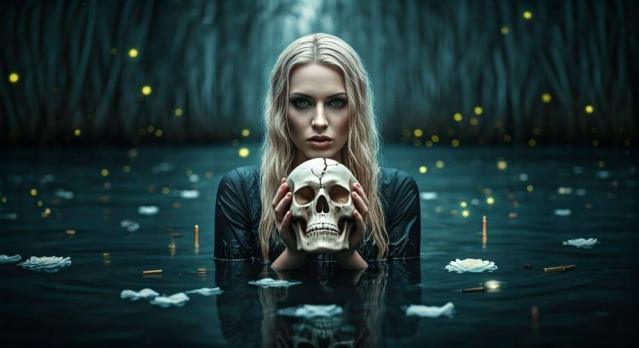
Swamps are more than creepy backgrounds. They’re deeply symbolic landscapes. They offer fertile ground for stories of transformation, decay, rebirth, and resilience. Whether you’re sending your characters on a harrowing journey or building an entire society within the marsh, swamps can add depth, danger, and wonder to your world.
So don’t just brush past the wetlands on your map. Wade in. The story may wait beneath the surface.
Happy worldbuilding!
I hope this was helpful. Let me know if you have questions or suggestions by using the Contact Me form on my website or by writing a comment. I post every Friday and would be grateful if you would share my content.
If you want my blog delivered straight to your inbox every month along with exclusive content and giveaways, please sign up for my email list here.
Let’s get writing!
Copyright © 2026 Rebecca Shedd. All rights reserved.

