The Worldbuilder’s Toolkit: Caves and Underground Realms
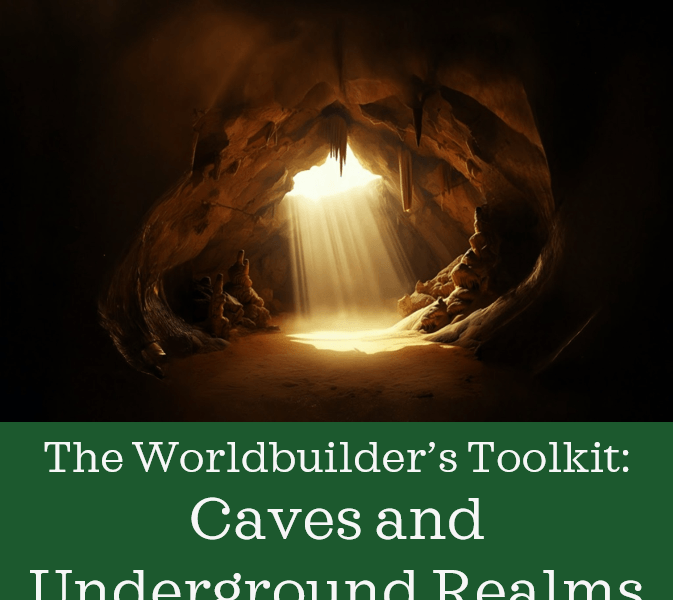

Beneath mountains, forests, and even cities lies an entire world most people never see. Caves and underground realms are some of the most evocative settings in fantasy and science fiction, places of darkness, mystery, danger, and hidden truth.
Whether you’re writing about a single cavern or an entire subterranean civilization, underground settings offer unique opportunities for tension, atmosphere, and worldbuilding depth.
Let’s descend.
Why Underground Settings Work So Well
Caves fundamentally change the rules of your world. Above ground, characters have space, light, and visibility. A journey underground often mirrors a journey inward.
Below ground, everything tightens:
Limited light
Confined movement
Distorted sound
Uncertain navigation
This creates instant tension.
Underground settings amplify:
Claustrophobia
Isolation
Fear of the unknown
Reliance on limited resources
They also naturally support themes of:
Discovery
Transformation
Descent (literal and symbolic)
Hidden truths
Types of Underground Environments
Not all caves are the same. The type of underground space you build will shape the story.
Natural Cave Systems
Limestone caverns with stalactites and stalagmites
Lava tubes formed by volcanic activity
Ice caves beneath glaciers
These feel ancient and organic.
Deep Subterranean Worlds
Vast underground ecosystems
Cavern networks spanning continents
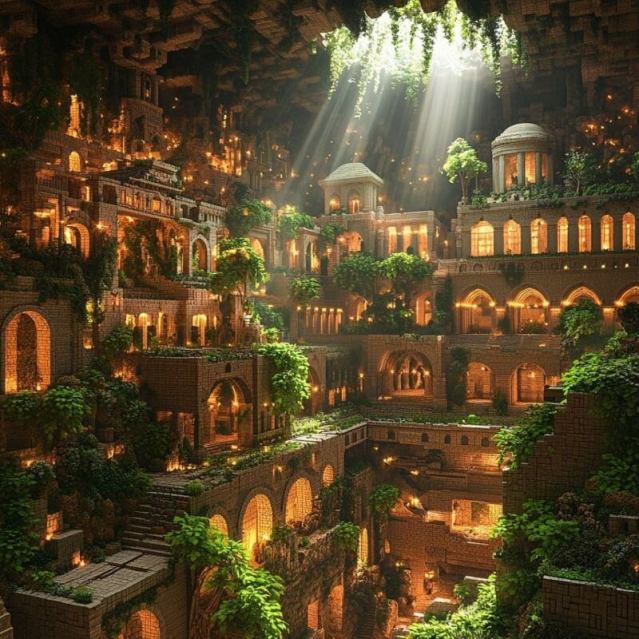
Entire civilizations living below the surface
These shift from “setting” to secondary world beneath the world.
Artificial or Sci-Fi Underground Spaces
Underground cities built for survival
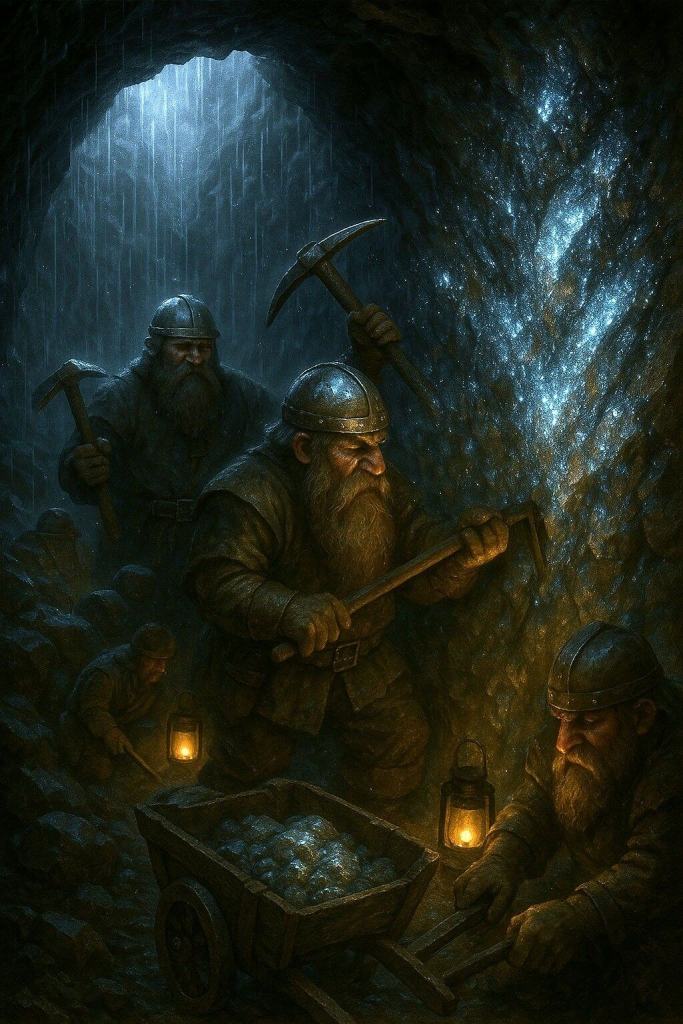
Mining colonies
Alien hive structures
Abandoned bunkers or vaults
These often carry themes of control, collapse, or forgotten technology.
Worldbuilding Tip: Decide early. Are your caves natural, engineered, or something in between?
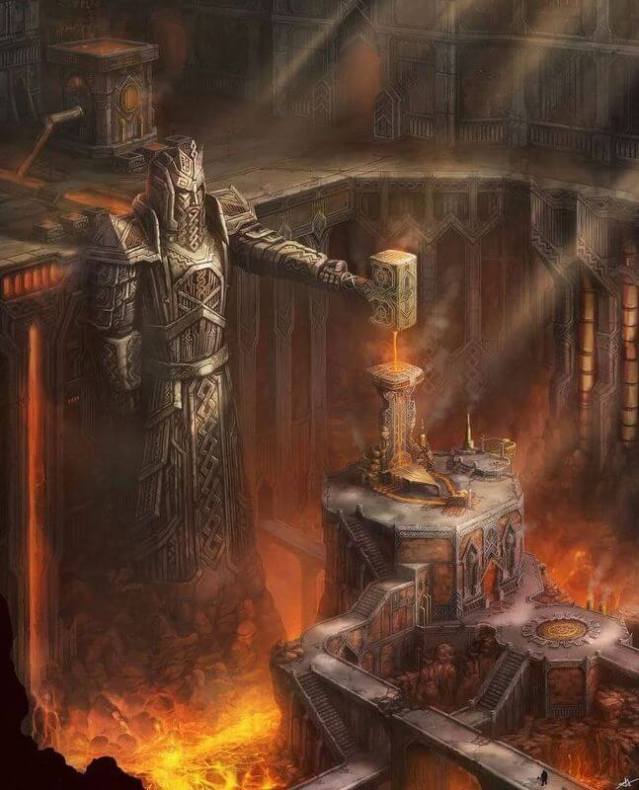
Light, Darkness, and Sensory Worldbuilding
Light is the most important factor underground. Without it, nothing works. In some settings, darkness itself may be dangerous.
Questions to Consider:
What provides light? (lanterns, fungi, crystals, bioluminescence, technology)
How far can characters see?
What happens when light fails?
Darkness isn’t just visual. it changes behavior:
Sounds echo unpredictably
Movement becomes cautious
Time becomes difficult to track
Example: A culture might measure time not by the sun, but by the life cycle of glowing cave fungi.
Ecology of the Underground
Caves are not empty, they are ecosystems. Without sunlight, life must adapt.
Real-world cave life includes:
Blind fish
Albino insects
Fungus-based food chains
These ecosystems rely on:
Minerals
Dripping water
External nutrient input
Speculative Ecosystems
In fantasy or sci-fi, you can expand this dramatically:
Bioluminescent forests of fungus
Predator species that hunt by vibration
Crystal-based lifeforms
Underground seas and rivers
Worldbuilding Tip: What is the base of the food chain? Everything else grows from that answer.
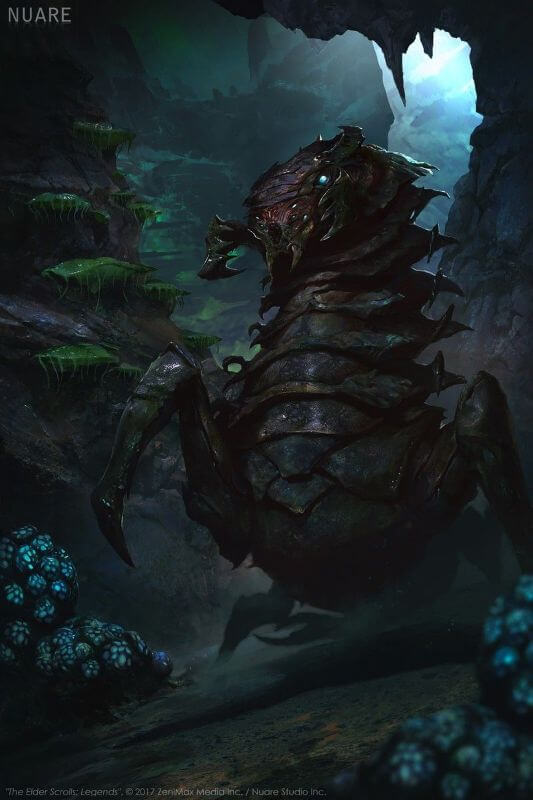
Underground Civilizations
Living underground shapes culture in profound ways.
Key Differences from Surface Cultures
No sky. No sun, stars, or weather. Mythology may reinterpret or forget these concepts.
Limited resources
Food production is controlled and precious
Water sources are critical
Navigation and space
Maps are three-dimensional
Vertical movement matters as much as horizontal
Cultural Possibilities
Societies that fear the surface as myth
Rigid caste systems based on proximity to resources
Sound-based communication systems
Rituals tied to darkness or stone
Character Idea: A guide who navigates by echo alone is the only one who can lead outsiders through a living cave system.
Caves as Places of Myth and Transformation
Caves are some of the oldest symbolic spaces in storytelling.
They often represent:
The unknown
The underworld
Death and rebirth
Hidden knowledge
Characters who enter caves rarely leave unchanged.
Mythic Uses
Gateways to other realms
Burial chambers
Places of prophecy
Homes of ancient beings
Plot Hook: A cave that only appears at certain times leads to a place where past and future overlap.
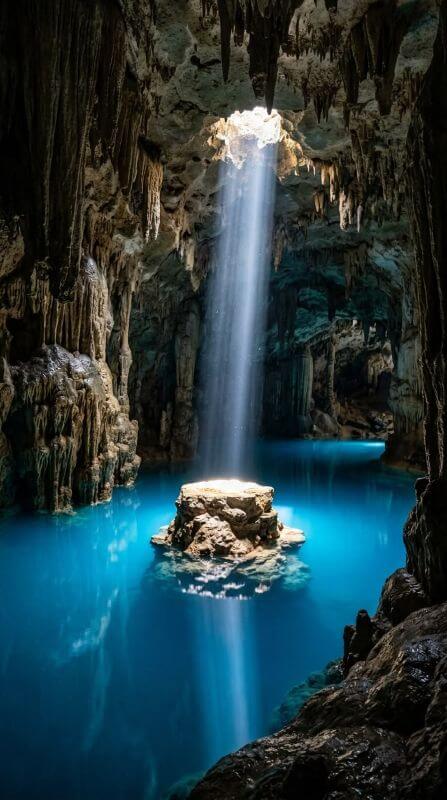
Examples and Why They Work
Let’s look at how caves and underground realms are used effectively across media.
The Lord of the Rings – Moria
The Mines of Moria are one of the most iconic underground settings in fantasy.
Why it works:
Combines ruin, scale, and history
Feels like a lost civilization frozen in time
Darkness hides an ancient threat (the Balrog)
Echoing halls create tension and atmosphere
Moria is not just a cave. It’s a fallen world.
Journey to the Center of the Earth (novel & adaptations)
A classic example of a subterranean world.
Why it works:
Expands caves into a complete hidden ecosystem
Blends science and imagination
Creates wonder alongside danger
The Descent (film)
A horror film centered on cave exploration.
Why it works:
Extreme claustrophobia
Limited light
Unfamiliar terrain
Creatures adapted to darkness
The environment itself is terrifying, even before the monsters appear.
Minecraft (video game)
Caves are a core gameplay feature.
Why it works:
Resource gathering tied to exploration
Increasing danger the deeper you go
Darkness creates tension
Player-driven discovery
It makes caves feel like both opportunity and risk.
Dungeons & Dragons — The Underdark
A vast subterranean world filled with strange creatures and civilizations.
Why it works:
Fully realized underground ecosystem
Distinct cultures (drow, duergar, etc.)
Constant danger and alienness
Clear separation from the surface world
The Underdark feels like a world with its own rules.
The Legend of Zelda series
Caves and underground areas are used frequently for puzzles and discovery.
Why it works:
Caves reward exploration
Often contain hidden items or secrets
Blend danger with curiosity
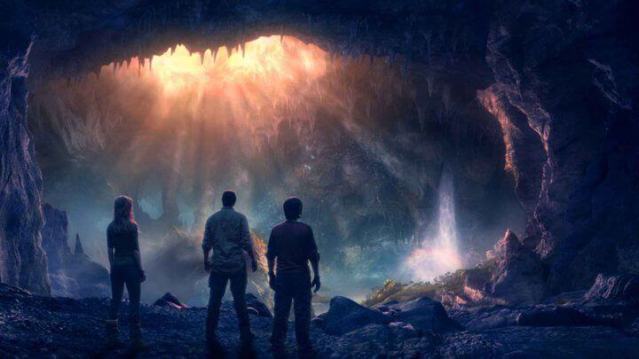
Common Pitfalls to Avoid
When writing caves and underground realms avoid:
Treating caves as empty tunnels
Ignoring how people survive without sunlight
Making navigation too easy
Forgetting resource limitations
Instead:
Make the environment active
Let it shape culture and conflict
Use darkness as a storytelling tool
Using Caves in Your Story
Caves can serve many narrative roles:
A dangerous passage
A hidden refuge
A lost civilization
A source of power
A prison for something ancient
They can be small and intimate or vast and world-spanning.
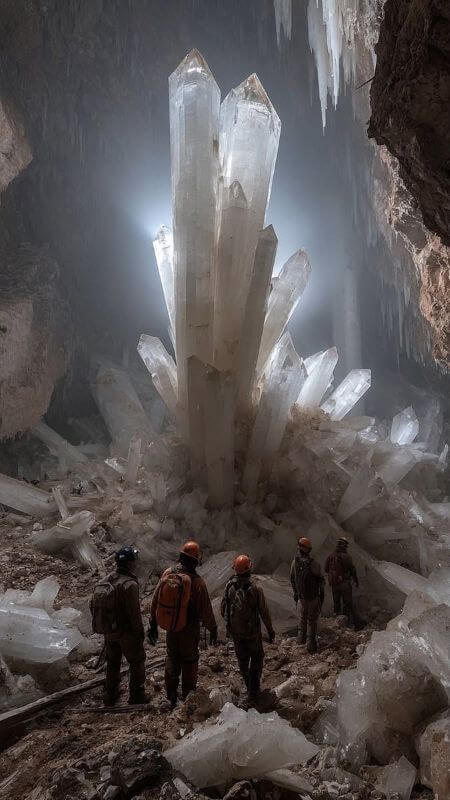
Real-World Cave Cultures and Subterranean Life
While caves often feel alien and inhospitable, humans have lived in and adapted to underground spaces for thousands of years. From ancient cliff dwellings to entire underground cities, these environments have shaped unique cultures, survival strategies, and relationships with the land.
At the same time, caves host some of the strangest life on Earth, organisms that thrive without sunlight, often in ways that feel almost fantastical. Together, these real-world examples provide rich inspiration for building believable underground societies and ecosystems in fantasy and science fiction.
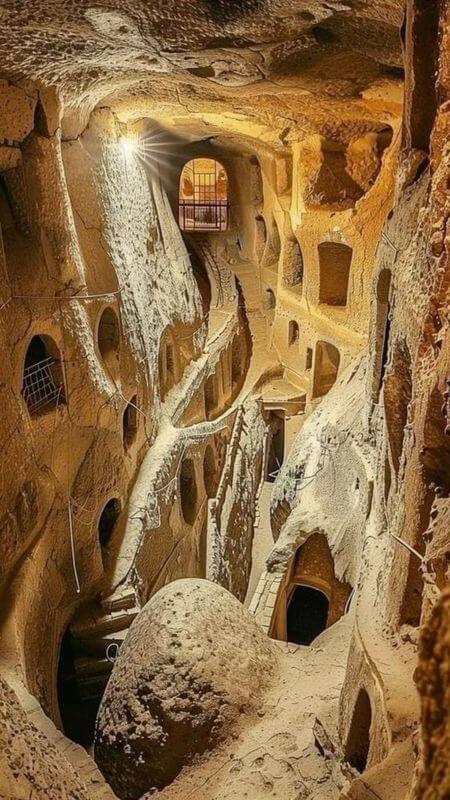
Cappadocia – Underground Cities of Anatolia
In what is now modern-day Turkey, ancient peoples carved vast underground cities into soft volcanic rock. Sites like Derinkuyu and Kaymaklı descend multiple levels below the surface, complete with ventilation shafts, food storage rooms, living quarters, and defensive passageways
These cities could house thousands of people and were often used as refuge during invasions.
Inspiration for Fiction: A subterranean civilization built not for comfort, but for survival and secrecy. Labyrinthine tunnel systems designed to confuse invaders. Airflow systems that become sacred or tightly controlled
Character Idea: A tunnel warden responsible for maintaining airflow systems discovers someone is deliberately sabotaging them to force the population upward.
The Ancestral Puebloans (Cliff and Cave Dwellings)
In the American Southwest, the Ancestral Puebloans built homes into cliffs and cave recesses, such as those at Mesa Verde. These structures offered natural protection from the elements, defensive advantages, and temperature regulation.
Inspiration for Fiction: A cliffside or cave-based society that blends architecture with natural rock formations. Communities that value vertical space and defensive positioning. Cultural traditions tied to the stone itself.
Character Idea: A young builder discovers hidden chambers deeper in the rock that predate their entire civilization.
Coober Pedy — Modern Underground Living
In Australia, the town of Coober Pedy is famous for its underground homes, built to escape extreme desert heat. Residents live in “dugouts” carved into the earth, complete with modern amenities.
Inspiration for Fiction: A futuristic underground settlement designed to survive hostile surface conditions. Blending modern or advanced technology with subterranean living. Cultural normalization of life without natural light.
Character Idea: A surface-born newcomer struggles to adapt to a society where the sky is considered dangerous or even taboo.
Cave Monasteries and Hermit Traditions
Across regions like Ethiopia, Greece, and China, caves have long been used as spiritual retreats. Monks and hermits sought isolation underground to pursue enlightenment, meditation, or communion with the divine.
Inspiration for Fiction: Orders of cave-dwelling mystics who interpret echoes, darkness, or stone formations as divine messages. Sacred caverns accessible only through trials or rituals. Knowledge preserved in hidden underground sanctuaries.
Character Idea: An apprentice monk begins hearing voices in the stone that contradict their order’s teachings.
Cultural Themes of Underground Living
Across these examples, several themes emerge that can inform your worldbuilding:
Secrecy and Protection
Underground spaces often function as refuges from war, climate, or persecution.
Resource Awareness: Air, water, and food are limited and carefully managed. Control over these resources can define power structures.
Relationship with Stone: The environment becomes part of identity. Stone is not just material, it is shelter, history, and sometimes sacred.
Altered Perception of Space: Without a horizon, cultures may think in terms of depth, layers, and enclosed pathways rather than distance.
Real Creatures of the Underground
Caves are home to organisms known as troglobites, species that have adapted specifically to life in complete darkness. These creatures often feel alien, even in reality.
Blind Fish
Found in cave systems around the world, these fish have:
No functional eyes
Enhanced senses of touch and vibration
Inspiration: Creatures that “see” through sound, magic, or electromagnetic fields.
Cave Salamanders (e.g., Olm)
The olm, found in European caves, can live for decades without food and is completely adapted to darkness.
Inspiration: Long-lived subterranean beings that move slowly but possess ancient knowledge.
Cave Insects and Arachnids
Many cave-dwelling insects are:
Pale or translucent
Extremely sensitive to vibration
Highly specialized to their environment
Inspiration: Predators that detect prey through movement alone or creatures that vanish when perfectly still.
Bats
Perhaps the most familiar cave dwellers, bats use echolocation to navigate and hunt. They also play crucial ecological roles by transporting nutrients into cave systems.
Inspiration: Flying creatures that thrive in darkness, or entire ecosystems sustained by their presence.
Bioluminescent Organisms
In some caves, such as glowworm caves, organisms produce light to attract prey.
Inspiration: Living constellations within caverns. Light used as lure rather than illumination. Ecosystems where light itself is a predator’s tool.
Building Fictional Cave Ecosystems
Real cave ecosystems often rely on:
Minerals from rock
Organic material carried in from outside
Microbial life
In speculative fiction, you can expand this into:
Fungal forests that form the base of the food chain
Crystal growths that store energy
Underground rivers supporting entire ecosystems
Symbiotic relationships between creatures and environment
Worldbuilding Tip: If your underground world is large, ask: what replaces the sun? That answer defines everything else.
Bringing It All Together
By combining real-world cultural adaptations with the strange biology of cave life, you can create underground realms that feel both imaginative and grounded.
A believable underground society might:
Carefully manage air and water
Develop navigation systems based on sound or memory
Build myths around the absence of light
Evolve alongside or in fear of the creatures that share their world
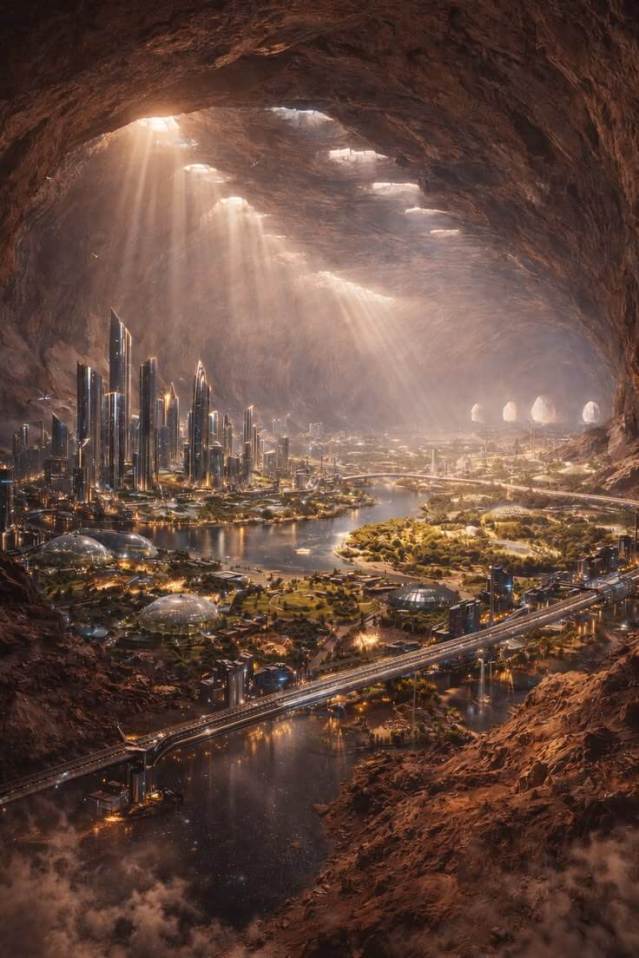
Life Without Sun: Survival, Scarcity, and Society
Caves and subterranean realms are some of the most compelling settings in speculative fiction, but they come with brutal constraints. No sunlight. Limited space. Hazardous air. Heat, pressure, and instability. If you want your underground world to feel real, you need to answer one core question:
How do people survive down there day after day, generation after generation?
The answers will shape everything: culture, economy, belief systems, and conflict.
The Central Problem: Food Without Sunlight
On the surface, the sun drives nearly all ecosystems. Underground, that foundation is gone. So where does food come from?
Realistic Foundations for Underground Food Systems
Fungi and Lichen: The backbone of most plausible cave ecosystems. Fungi can grow on decaying matter, minerals, or symbiotic networks. Vast “fungal forests” may be cultivated like crops.
Detritus-Based Chains: Organic material (plant matter, carcasses, waste) falls or is carried into caves and becomes the base of the food chain. Perhaps your underground society relies on controlled “drop shafts” where surface matter is deliberately sent down.
Chemosynthesis: Some real organisms survive using chemical energy (e.g., from sulfur vents) rather than sunlight. Entire ecosystems could be powered by mineral vents, magical ley lines, or alien energy sources.
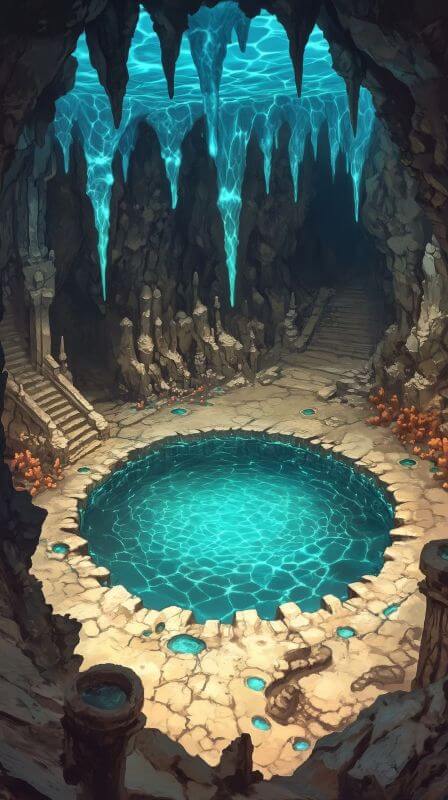
Underground Rivers and Lakes: Waterways can support fish, algae, and nutrient transport. Blind fish farms or bioluminescent algae could be harvested as both food and light.
Cultural Impact of Food Scarcity
When food is limited:
Nothing is wasted — recycling becomes sacred practice
Diet is specialized — strange textures, flavors, and rituals develop
Food becomes power — those who control production control society
Hunger shapes morality — theft, sharing, and sacrifice take on new meaning
Character Idea: A fungal farmer discovers a new strain that grows faster but causes subtle behavioral changes in those who eat it.
Air, Gas, and Breath: Invisible Threats
Underground, the greatest dangers are often unseen.
Deadly Gases
Caves can accumulate gases such as:
Carbon dioxide (suffocation)
Sulfur dioxide (toxicity)
Methane (explosive)
In fiction, these can be enhanced:
Magical miasmas that induce hallucinations
Spores that alter memory or perception
Invisible zones where breathing itself becomes lethal
Survival Strategies
Ventilation Systems: Natural shafts or engineered airflow tunnels become essential and politically important.
Gas Mapping: Entire professions may exist to chart safe air zones.
Breathing Gear or Magic: Masks, enchanted amulets, or biological adaptations.
Cultural Impact: Air may be regulated or rationed. Certain chambers may be taboo or sacred due to toxicity. Ventilation hubs could be centers of political control or conflict
Worldbuilding Detail: A society might treat fresh air as a holy gift, with rituals performed at ventilation shafts.
Heat, Lava, and Geological Danger
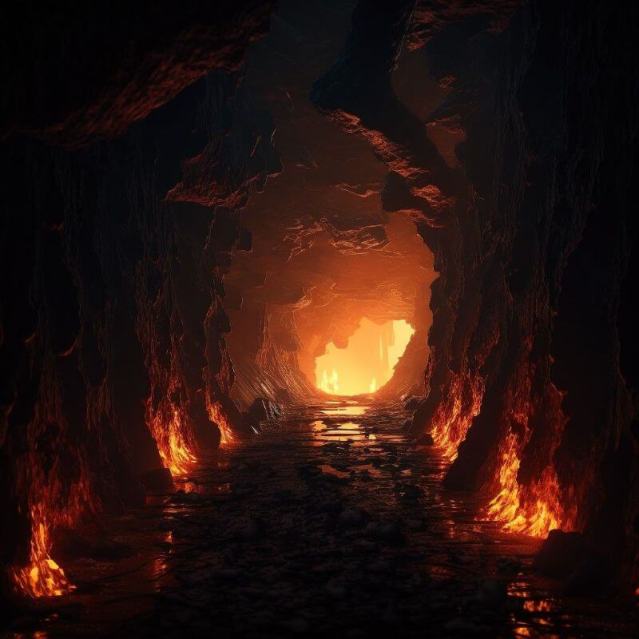
In deeper underground realms, heat becomes as dangerous as cold is on the surface.
Volcanic and Thermal Hazards
Lava flows and magma chambers
Superheated steam vents
Sudden cave-ins or earthquakes
Unstable rock formations
Survival Strategies
Thermal Zoning: Settlements built in “safe bands” between freezing upper levels and molten depths.
Heat Utilization: Harnessing geothermal energy for warmth, cooking, or industry.
Structural Engineering: Reinforced tunnels, flexible architecture, or living structures that adapt to stress.
Cultural Impact
Fire and heat may be revered or feared
Certain areas may be forbidden zones tied to myth
Professions may arise around heat control or lava navigation
Character Idea: A lava guide who escorts caravans across active magma channels discovers the flows are changing in unnatural patterns.
Water: Scarcity and Control
Water underground is unpredictable.
It may be:
Abundant in underground rivers
Completely absent in dry caverns
Contaminated by minerals or toxins
Survival Strategies
Careful mapping of water sources
Filtration systems or purification rituals
Seasonal migration within cave systems
Cultural Impact
Water sources become sacred or contested
Control of water equals political dominance
Myths may form around hidden springs or living rivers
The Psychology of Underground Life
Living without sky changes how people think.
No sunrise or sunset
No weather cycles
No visible horizon
This can lead to:
Alternative timekeeping systems (fungal cycles, water drips, mechanical clocks)
Claustrophobic or inward-focused cultures
Mythologized surface worlds (heaven, hell, or legend)
Cultural Expressions
Music based on echoes and vibration
Architecture focused on depth and layering
Stories about “the world above” becoming distorted or symbolic
Worldbuilding Detail: A culture might measure age by how many “dark cycles” a person has lived through.
Fictional Creatures of the Deep
Underground ecosystems are perfect for strange and unsettling lifeforms.
Adaptation Themes
Loss of sight leads to other sense being heightened
Pale or translucent bodies
Slow metabolism or long lifespans
Sensitivity to vibration or heat
Creature Ideas
Stone Burrowers: Creatures that tunnel through rock, reshaping entire cave systems.
Echo Hunters: Predators that track prey through sound alone and mimic voices to lure victims.
Fungal Symbiotes: Organisms that bond with hosts, providing sustenance at a cost.
Lava Swimmers: Beings adapted to extreme heat, moving through magma like water.
Crystal Entities: Lifeforms that grow rather than move, communicating through resonance.
Cultural Interaction
Some creatures may be domesticated
Others may be worshipped or feared
Entire societies may depend on a single species for survival
Plot Hook: A species thought to be livestock is revealed to be sentient and essential to the cave’s ecosystem.
Society Under Pressure
All these factors (food scarcity, dangerous air, heat, and isolation) create high-pressure societies.
Common outcomes include:
Strict social hierarchies based on resource control
Deep respect for specialists (engineers, farmers, navigators)
Strong communal bonds or ruthless competition
Traditions built around survival rather than luxury
Underground life doesn’t allow complacency. Every system must work. Every mistake has consequences.
Plot and Character Ideas
The Breathless City
Genres: Fantasy, Political Thriller
Plot Idea: A vast underground city begins experiencing air shortages as key ventilation shafts mysteriously collapse.
Character Angle: A low-ranking tunnel engineer uncovers evidence that the collapses are being orchestrated.
Twist(s): The ruling council is restricting airflow intentionally to force population control.
The Fungal Crown
Genres: Dark Fantasy, Horror
Plot Idea: A subterranean kingdom depends on a massive fungal network for food until the fungus begins growing into people.
Character Angle: A royal food-taster discovers subtle behavioral changes among those who consume the new crop.
Twist(s): The fungus is sentient and is attempting to merge with the population to expand its awareness.
Echoes of the Deep
Genres: Mystery, Fantasy
Plot Idea: Travelers report hearing voices in an unexplored cavern system, voices that know their secrets.
Character Angle: A deaf navigator who reads vibrations instead of sound is recruited to explore the caves.
Twist(s): The cave itself is recording and replaying memories from everyone who enters.
The Last Lightkeeper
Genres: Sci-Fi, Survival
Plot Idea: A colony living deep underground relies on a network of artificial light towers to sustain their crops. One by one, the towers fail.
Character Angle: The final remaining Lightkeeper must descend into restricted zones to repair the system.
Twist(s): The “light” is not artificial, it’s siphoned from a trapped stellar entity.
The Stone Choir
Genres: Mythic Fantasy
Plot Idea: A sacred cavern produces haunting harmonic tones believed to be the voice of the gods.
Character Angle: A young acolyte trained to interpret the tones begins hearing discordant notes no one else notices.
Twist(s): The cave is not singing. It’s warning of an approaching collapse that will bury the entire civilization.
Lava Roads
Genres: Adventure Fantasy
Plot Idea: Trade routes cross dangerous lava tunnels that cool and reopen unpredictably.
Character Angle: A seasoned guide known for navigating these shifting paths takes on a mysterious passenger.
Twist(s): The passenger is manipulating the lava flows, altering routes to uncover a hidden chamber.
The Hollow Map
Genres: Sci-Fi Exploration
Plot Idea: Explorers discover that a planet’s crust is riddled with massive hollow caverns forming an underground world.
Character Angle: A cartographer becomes obsessed with mapping a system that seems to change when observed.
Twist(s): The cave network is alive and rearranging itself to protect its core.
The Buried Throne
Genres: Epic Fantasy
Plot Idea: Legends speak of a lost throne buried deep beneath the earth that grants dominion over stone itself.
Character Angle: A disgraced noble ventures underground to reclaim their family’s lost legacy.
Twist(s): The throne does not grant power; it binds the ruler to the underground forever.
The Drip Clock
Genres: Speculative Fiction, Mystery
Plot Idea: A cave society measures time by the rhythmic dripping of mineral-rich water. When the dripping stops, panic spreads.
Character Angle: A timekeeper must venture into forbidden depths to discover why the rhythm has broken.
Twist(s): The dripping was controlled by an ancient machine that is now failing.
The Crystal Shepherd
Genres: Science Fantasy
Plot Idea: A community depends on crystalline growths that store energy and light. A shepherd tends these formations as they “grow.”
Character Angle: A young apprentice notices that the crystals respond to emotion.
Twist(s): The crystals are not resources; they are a dormant lifeform preparing to awaken.
The Surface Myth
Genres: Fantasy, Coming-of-Age
Plot Idea: An underground society believes the surface world is a deadly myth.
Character Angle: A curious teenager discovers a hidden passage leading upward.
Twist(s): The surface is real but it has changed in ways that make returning impossible.
The Tunnel War
Genres: Sci-Fi, War Drama
Plot Idea: Two underground civilizations wage war over access to a critical water source deep within a cave network.
Character Angle: A soldier begins questioning the war after discovering the enemy’s living conditions mirror their own.
Twist(s): The conflict is being manipulated by an unseen third force that depends on both sides continuing the war.
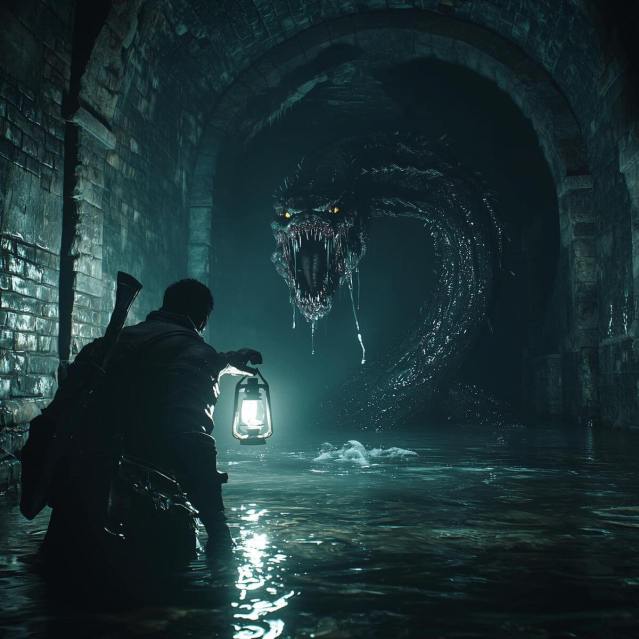
Caves and underground realms offer writers a setting that is inherently mysterious, restrictive, and transformative. They challenge characters physically and psychologically while offering opportunities for discovery and revelation.
When done well, they feel alive: breathing, shifting, watching.
Because underground, you are never truly alone. Something has always been there before you.
Happy worldbuilding!
I hope this was helpful. Let me know if you have questions or suggestions by using the Contact Me form on my website or by writing a comment. I post every Friday and would be grateful if you would share my content.
If you want my blog delivered straight to your inbox every month along with exclusive content and giveaways, please sign up for my email list here.
Let’s get writing!
Copyright © 2026 Rebecca Shedd. All rights reserved.

