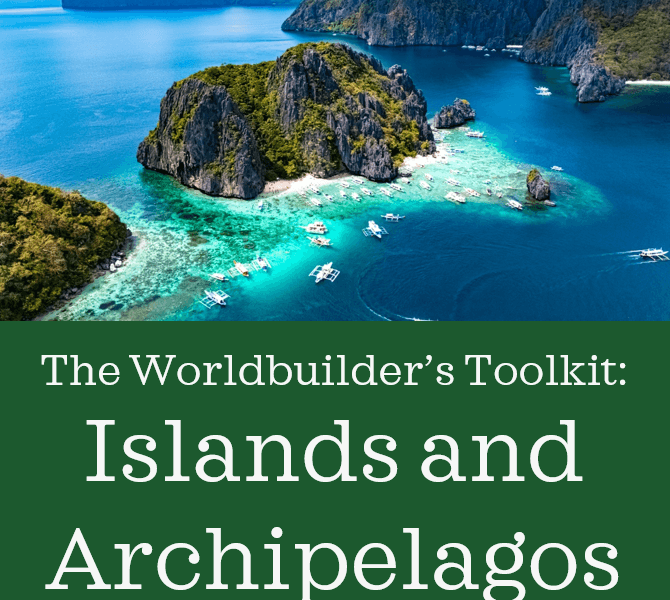
The Worldbuilder’s Toolkit: Islands and Archipelagos
There’s something inherently magical about islands.
They are worlds unto themselves: bounded, distinct, and shaped by the sea. Whether lush and welcoming or isolated and dangerous, islands create natural laboratories for storytelling. Expand that idea into an archipelago, and suddenly you have not just one world, but a network of cultures, conflicts, and journeys scattered across the water.
For writers, islands and archipelagos offer one of the most flexible and powerful settings in speculative fiction. Let’s explore how to use them.
Island vs. Archipelago: What’s the Difference?
At the most basic level, an island is a single landmass surrounded by water, while an archipelago is a group or chain of islands that are often linked geographically, culturally, or politically. These land masses can exist in the ocean or in lakes. This distinction matters more than it might seem at first glance. A single island tends to create a contained narrative space where resources are limited, cultures are tightly defined, and isolation plays a central role in shaping identity. An archipelago, on the other hand, introduces movement. It creates opportunities for trade, conflict, diplomacy, and exploration, allowing writers to build multiple distinct cultures within a shared world.
In many ways, an island acts as a stage (focused, contained, and intimate) while an archipelago functions more like a miniature world map, offering variety and interconnected storytelling.
Worldbuilding Tip: Think of an island as a stage. Think of an archipelago as a world map in miniature.
Islands as Self-Contained Worlds
An island naturally enforces boundaries. Characters can only go so far before they reach the edge, and beyond that edge lies uncertainty. This makes islands ideal for stories that rely on isolation, survival, or hidden truths. A single island can become a closed system where every decision matters more because there is nowhere else to go.
This physical limitation often shapes the culture of the people who live there. Island societies tend to develop strong identities tied to place, with traditions that emphasize self-sufficiency, resource awareness, and a deep connection to the sea. Because contact with the outside world may be limited, these cultures can evolve in unique directions, developing distinct languages, belief systems, and social structures. At the same time, isolation can create tension. Outsiders may be feared, revered, or misunderstood, and the unknown beyond the horizon can take on mythic significance.
Archipelagos: Networks of Story
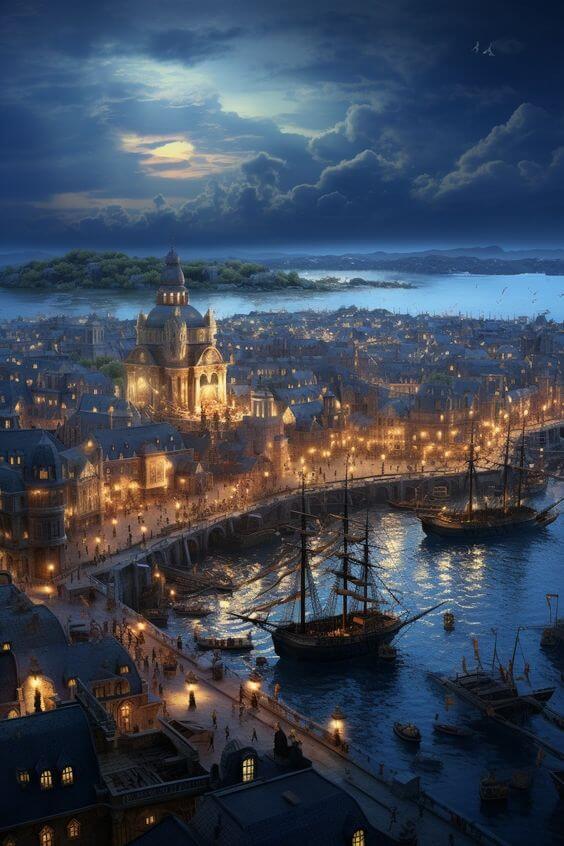
Where a single island creates isolation, an archipelago creates connection. Each island within a chain can develop its own identity, shaped by its geography, resources, and history. Some may be fertile and prosperous, others barren and harsh. Some may be centers of trade and culture, while others remain remote and mysterious.
The relationships between these islands become the heart of the story. Trade routes form, alliances are forged, and rivalries emerge. Travel becomes essential, and with it comes the exchange of ideas, goods, and traditions. An archipelago allows a writer to explore diversity within a unified setting, making it ideal for stories that involve exploration, diplomacy, or cultural interaction.
Movement between islands also creates narrative momentum. Each journey becomes an opportunity for discovery, and each destination offers something new.
Worldbuilding Tip: Ask: What does each island do differently? Food, language, religion, technology? Variation creates richness.
The Ocean as Barrier and Bridge
In island settings, the ocean is never just background. It is an active force. It separates islands, creating distance and isolation, but it also connects them, serving as a pathway for trade, exploration, and communication. The sea can be both a lifeline and a threat, shaping every aspect of life for those who depend on it.
The ease of travel across the ocean will define how your world functions. Calm seas and reliable navigation encourage trade and cultural exchange, while dangerous waters can isolate communities and turn even short journeys into high-stakes adventures. In speculative fiction, the ocean itself can take on additional layers of meaning, becoming magical, sentient, or filled with unknown dangers that reshape how characters interact with it.
Plot Hook: A once-safe sea route becomes deadly overnight, cutting off communication between islands and sparking political crisis.
Ecology and Resources
Life on islands is shaped by limitation. Land is finite, and resources must be carefully managed. Freshwater, arable soil, and building materials can all become points of tension, influencing everything from daily life to political structures.
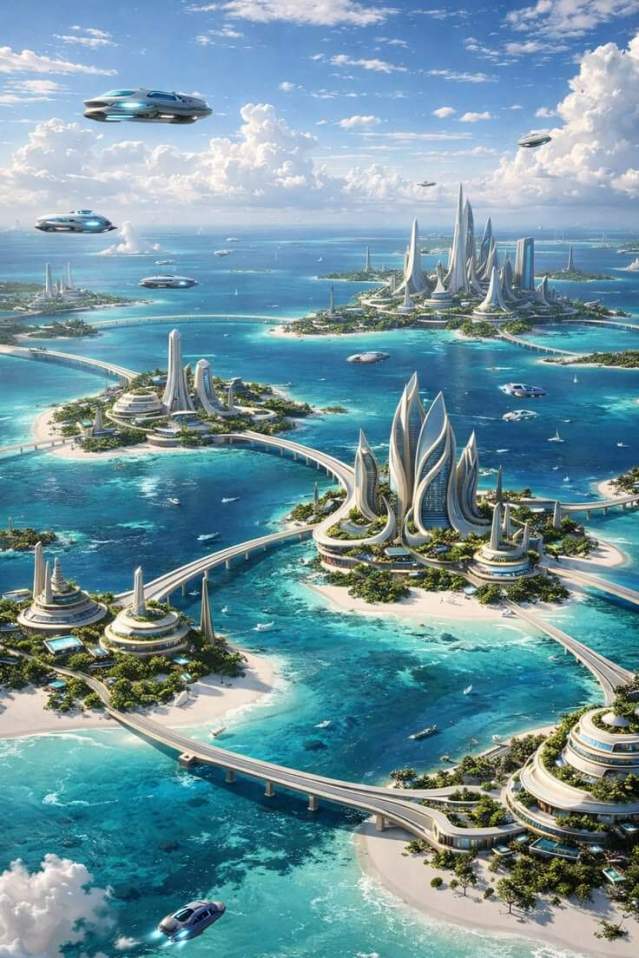
These constraints often lead to innovation. Island communities may develop unique agricultural techniques, such as terraced farming or specialized fishing methods. Trade becomes essential in archipelagos, as no single island can provide everything its people need. In science fiction settings, these challenges might be addressed through advanced technology or artificial ecosystems, but the underlying principle remains the same: scarcity drives creativity and conflict.
Myth, Identity, and the Sea
The deep tie island cultures have to ocean often finds expression in mythology and religion. The sea can be seen as a provider, offering food and opportunity, or as a destroyer, capable of storms and loss. It may also be viewed as a spiritual realm, a place where gods dwell or where souls travel after death.
Stories of creation, ancestry, and exploration often revolve around water. Navigation itself can take on spiritual significance, with knowledge of the stars, currents, and winds becoming sacred. In many island-based narratives, the act of voyaging is not just physical but symbolic, representing growth, discovery, and connection to heritage.
Worldbuilding Detail: Navigation itself might be sacred, with star-reading or wave-reading treated as spiritual practices.
Beyond Earthly Shores: Imagining Otherworldly Islands
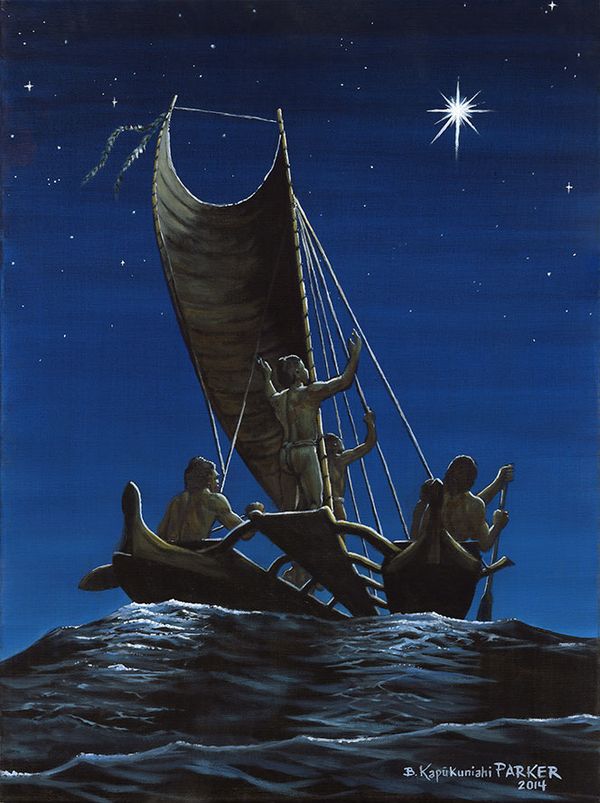
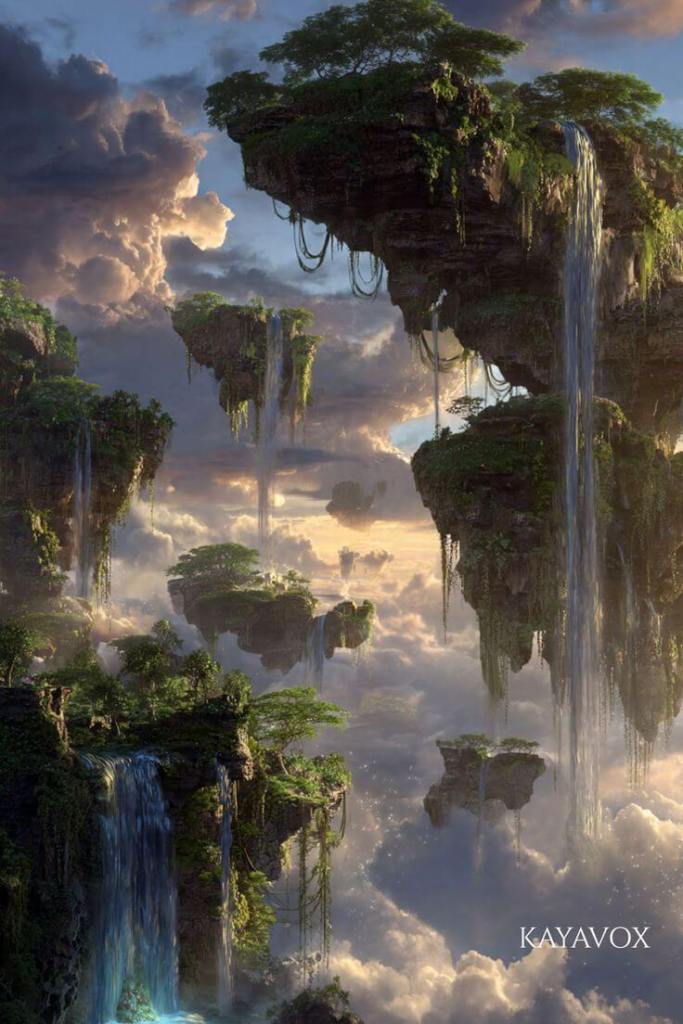
Not all islands need to be anchored in familiar oceans. In fantasy and science fiction, the concept of an “island” can be expanded far beyond land surrounded by water. Floating sky islands drifting through cloud layers can create vertical archipelagos where travel happens through airships, gliders, or creatures that ride thermal currents. In these settings, the “sea” becomes the sky itself—vast, unpredictable, and full of unseen dangers. Alternatively, your world might feature islands scattered across alien environments such as oceans of acid, methane seas, or even fields of shifting energy. These environments immediately signal to the reader that the rules are different, creating a sense of wonder and danger at the same time.
These unusual island types also reshape culture in fascinating ways. A society living on floating islands might develop a deep reverence for altitude, wind patterns, or whatever force keeps their land aloft. Navigation could depend on reading cloud formations or magnetic currents rather than stars. On a world with corrosive oceans, island communities might rely on specialized materials, biological adaptations, or protective technologies just to survive near the shoreline. Trade becomes more dangerous, isolation more intense, and the concept of “distance” more complex when the medium between islands is inherently hostile.
Worldbuilding Tip: When designing a non-traditional island setting, redefine what the “ocean” is and how it behaves. Is it fluid, gaseous, or something stranger? The nature of that surrounding space will determine travel, trade, and survival.
Why Islands Work: Examples in Storytelling
Many iconic works of fiction use islands and archipelagos because of the unique storytelling advantages these settings provide.
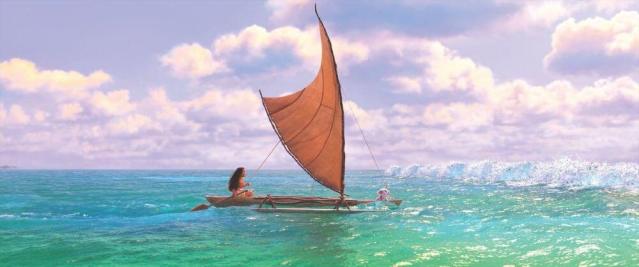
In Moana, the island represents both home and limitation. The protagonist’s journey beyond the reef is not just a physical voyage but a cultural and personal awakening, reconnecting her people with their identity as voyagers. The ocean itself becomes a character, reinforcing the idea that the world beyond the island is alive and full of possibility.
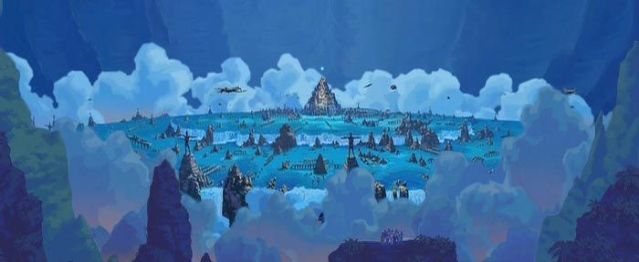
Atlantis: The Lost Empire uses the concept of a hidden island civilization to explore themes of discovery and preservation. Atlantis is isolated from the world, allowing it to maintain its knowledge and culture, but that same isolation makes it vulnerable when outsiders arrive. The mystery of its location drives the narrative forward.
In Earthsea, the entire world is an archipelago. Each island has its own culture, language, and identity, yet all are connected by the sea. This structure allows for a wide range of stories within a cohesive setting, with travel playing a central role in character development and worldbuilding.
Other media also take advantage of island settings. The Legend of Zelda: The Wind Waker uses a flooded world of scattered islands to encourage exploration, rewarding players with unique experiences on each island. Tabletop RPGs like Dungeons & Dragons also use archipelagos as modular settings, where each island can serve as a self-contained adventure while contributing to a larger narrative.
These examples work because islands naturally create boundaries, encourage exploration, and allow for both focused and expansive storytelling.
Common Pitfalls to Avoid
When writing island settings, it’s easy to fall into traps. Treating islands as interchangeable can flatten your world, making it feel less believable. Ignoring resource limitations can remove the tension that makes island life compelling. Similarly, overlooking the role of the ocean can make the setting feel incomplete, as if the water surrounding the islands has no real impact.
Instead, focus on what makes each island distinct. Let geography shape culture and ensure that the sea plays an active role in the story. The more integrated these elements are, the more immersive your world will feel.
Real-World Island Cultures: Inspiration for Fictional Societies
Islands and archipelagos have shaped human cultures in profound ways. Isolation, limited resources, and dependence on the sea create societies that are often highly adaptive, deeply rooted in tradition, and strongly connected to both place and movement. For writers, these real-world cultures offer a foundation for building fictional societies that feel lived-in and believable.
Rather than copying directly, the goal is to understand why these cultures developed the way they did and then translate those underlying pressures into your own world.
The Polynesians
Across the Pacific, Polynesian voyaging cultures mastered long-distance ocean travel without modern instruments. They navigated using stars, wave patterns, bird behavior, and even the subtle feel of ocean swells against their vessels. Navigation was not just a skill, it was identity, ancestry, and spiritual practice.
In a fictional setting, this could inspire a culture where navigation is sacred, passed down through ritual, song, or even magical inheritance. Navigators might hold positions of authority, serving as both explorers and keepers of cultural memory. Their knowledge could be the difference between survival and extinction.
Character Idea: A young navigator trained in traditional methods begins to sense a “new current” no one else can perceive, one that leads toward an island deliberately erased from history.
The Japanese
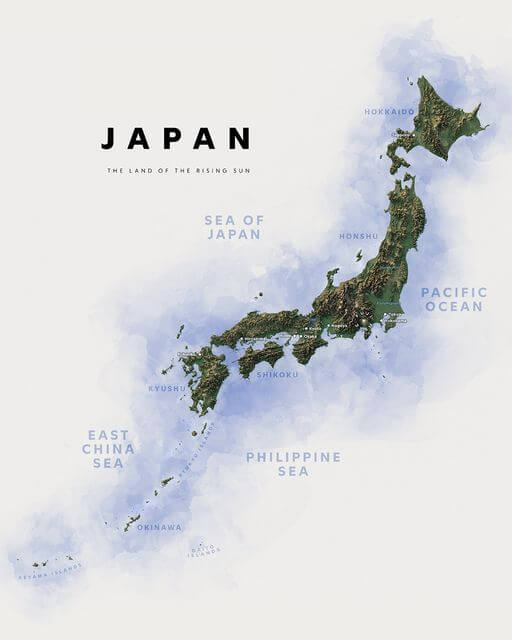
Island nations such as Japan demonstrate how geographic separation can lead to highly distinct cultural development. Periods of isolation allowed traditions, art, and social systems to evolve with minimal outside influence, creating a strong sense of identity and continuity.
In your worldbuilding, an island society might intentionally limit contact with outsiders to preserve its way of life. This can create tension between tradition and change, especially when external forces begin to encroach.
Worldbuilding Tip: Consider what your island culture believes about the outside world. Is it seen as dangerous, corrupting, or simply irrelevant? That belief will shape everything from politics to personal ambition.
The Norse
In the North Atlantic, Norse settlers in places like Iceland adapted to rugged landscapes and limited resources. Their societies emphasized resilience, storytelling, and exploration. The sea was both a lifeline and a constant threat, shaping a culture that valued endurance and skill.
This can inspire fictional island cultures that thrive in marginal environments, where survival depends on cooperation and ingenuity. These societies may produce explorers, raiders, or traders, depending on how they interact with the wider world.
Plot Hook: A seafaring culture that prides itself on exploration begins losing ships along a once-reliable route, forcing a seasoned captain to confront a threat no one understands.
The People of the Philippines and Southeast Asia
Regions like the Philippines and other Southeast Asian archipelagos demonstrate how multiple islands within close proximity can develop distinct languages, traditions, and identities. Trade and travel connect these islands, but differences remain strong, creating a dynamic cultural landscape.
For writers, this is one of the greatest strengths of an archipelago setting. Each island can feel unique, while still participating in a shared network of exchange. This allows for rich storytelling through cultural interaction, misunderstanding, and alliance.
Worldbuilding Tip: When designing an archipelago, give each island a defining trait, whether it’s a resource, belief system, or environmental feature. Then ask how that trait influences its relationship with neighboring islands.
Crossroads of Culture
Island chains like those in the Caribbean became meeting points for multiple cultures due to trade, migration, and colonization. This blending created layered identities, hybrid traditions, and complex histories shaped by both cooperation and conflict.
In a fictional archipelago, this can translate into societies that are constantly evolving. Languages may mix, traditions may merge, and cultural identity may become fluid rather than fixed. At the same time, tensions can arise over heritage, ownership, and power.
Character Idea: A traveling merchant who moves between islands begins to realize that the stories told in each place contradict one another and that the truth has been deliberately fragmented.
Life at the Edge
Life on islands and within archipelagos is defined by boundaries. Land is finite, resources are limited, and beyond the shoreline lies an ever-changing ocean that can sustain life one day and threaten it the next. For writers, this creates a setting where every decision carries weight. Survival, culture, and connection are all shaped by the constant tension.
Isolation: The Defining Pressure
On an island, distance is measured differently. Even a narrow stretch of water can become an impassable barrier when storms roll in or vessels fail. This physical separation shapes not only daily life but also how people think about the world.
Isolation often leads to self-reliance. Communities must learn to adapt to what they have, developing systems that allow them to survive without outside support. Over time, this fosters strong cultural identities. Traditions become deeply rooted, languages may evolve in unique directions, and shared history becomes a cornerstone of belonging.
At the same time, isolation can limit perspective. Knowledge of the outside world may be incomplete, exaggerated, or entirely mythologized. Outsiders arriving by sea might be viewed with suspicion, awe, or fear.
Character Idea: A young islander raised on stories of dangerous outsiders must decide whether to trust a shipwrecked stranger who claims those stories are false.
The Emotional Landscape of Being Cut Off
Isolation is not just logistical: it is deeply emotional. The horizon becomes a constant presence, both a boundary and an invitation. For some, it represents safety and home. For others, it becomes a symbol of everything they cannot reach.
Generations may live and die without ever leaving their island, which can create a powerful attachment to place. At the same time, it can spark a longing for exploration. This tension between rootedness and curiosity often drives compelling character arcs.
Worldbuilding Tip: Consider how your culture talks about the horizon. Is it seen as a wall, a path, or a mystery? That perspective can reveal a great deal about how the people view their place in the world.
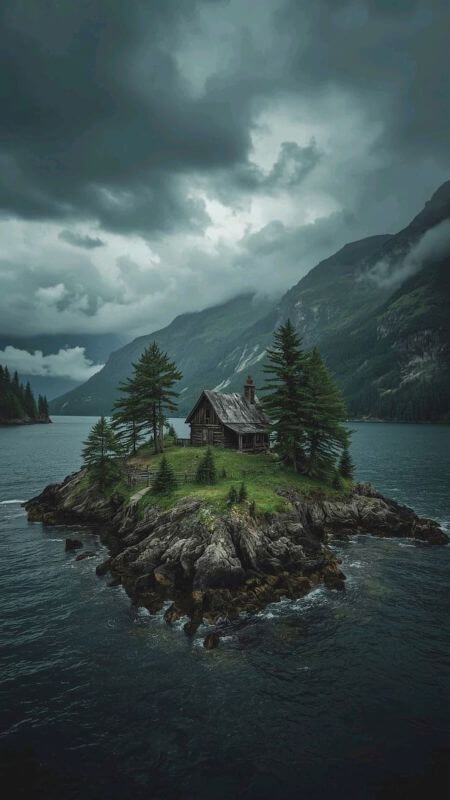
Trade and Interdependence in Archipelagos
While a single island may lean toward isolation, archipelagos thrive on connection. No island has everything it needs, and this creates natural networks of exchange.
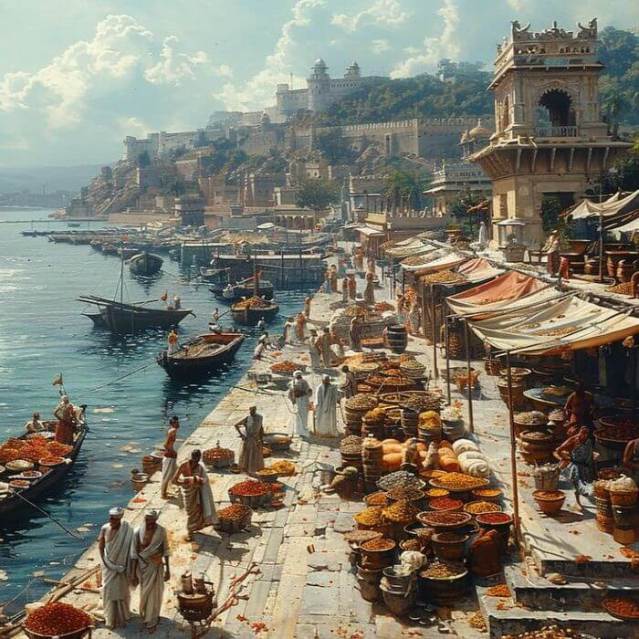
Goods move between islands but so do ideas. Trade becomes a vehicle for cultural blending, spreading technology, language, and belief systems across the region. Over time, this creates a dynamic balance between individuality and shared identity.
Trade relationships can stabilize entire regions, but they can also introduce tension. If a critical route is disrupted or a key resource becomes scarce, the effects ripple outward, impacting multiple communities at once.
Plot Hook: A vital trade route collapses when a once-predictable current shifts, leaving several islands on the brink of famine and forcing unlikely alliances to form.
Power and Control in Island Networks
In archipelagos, power often depends less on land and more on movement. Those who control ships, navigation knowledge, and safe harbors hold significant influence. Ports become centers of authority, and navigators can rise to positions of importance.
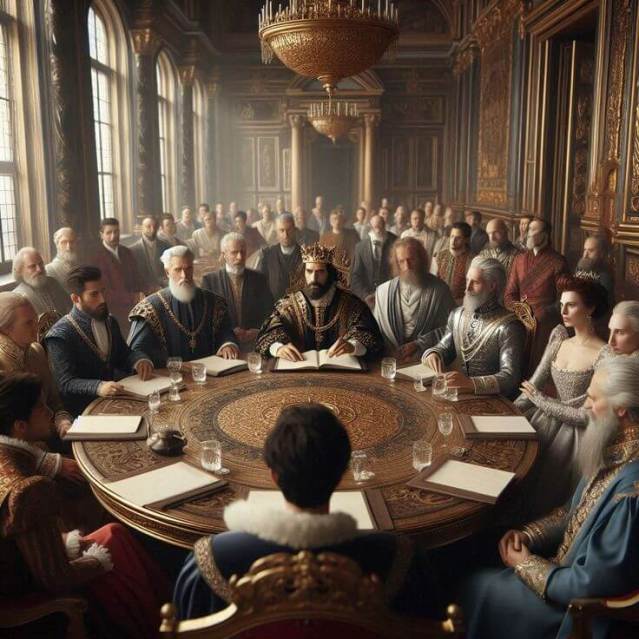
This can lead to a variety of political structures, from maritime empires that dominate trade routes to loosely connected island confederations held together by mutual dependence. It can also create opportunities for piracy, smuggling, and hidden economies that operate beyond official control.
Character Idea: A skilled navigator discovers that official charts have been altered, hiding entire islands from the rest of the world and someone is willing to kill to keep them hidden.
The Ocean as a Living Threat
The sea is never neutral. It is vast, unpredictable, and often unforgiving. Storms can rise without warning, currents can pull ships off course, and unseen hazards like reefs and shoals can destroy vessels in moments.
For those who live on islands, this danger becomes part of daily life. Respect for the ocean is not optional, it is essential. Superstitions, rituals, and traditions often develop as ways to cope with its unpredictability.
In speculative settings, the ocean can become even more dangerous. It might be filled with creatures, infused with magic, or shaped by forces that defy natural laws. This transforms every journey into a risk.
Worldbuilding Tip: Decide what sailors in your world fear most. Is it storms, monsters, getting lost, or something unseen? That fear will shape their behavior, beliefs, and stories.
Culture Shaped by the Sea
Island cultures are inseparable from the ocean that surrounds them. It influences diet, occupation, belief systems, and identity. Fishing, sailing, and navigation often become central skills, while myths and stories frequently revolve around the sea’s power.
Different islands may develop very different relationships with the ocean. Some may see it as a provider, others as a threat, and still others as a sacred space. These differing perspectives can create cultural tension, especially in archipelagos where multiple viewpoints coexist.
Character Idea: A character from a culture that reveres the sea must work with someone who fears it, forcing both to confront their assumptions during a dangerous voyage.
Plot and Character Ideas
The Vanishing Island
Genres: Fantasy, Mystery
Plot Idea: An island that appears on no maps begins fading, its coastline shrinking each day.
Character Angle: A local cartographer races to document the island before it disappears completely.
Twist(s): The island isn’t vanishing, it’s phasing into another dimension, taking its inhabitants with it.
The Broken Current
Genres: Sci-Fi, Political Thriller
Plot Idea: A vital ocean current that connects an archipelago’s trade network suddenly stops, stranding islands in isolation.
Character Angle: A seasoned navigator must rediscover ancient routes thought lost to time.
Twist(s): The current was artificially maintained by an ancient system that is now failing.
Saltblood Heir
Genres: Epic Fantasy, Coming-of-Age
Plot Idea: A young heir must unite rival island clans before an external empire invades.
Character Angle: Raised inland and unfamiliar with the sea, the heir struggles to earn the trust of seafaring leaders.
Twist(s): The heir’s lineage is tied to an ancient bloodline with half remembered legends whispering of powerful ancestral magic.
The Reef of Teeth
Genres: Adventure, Fantasy Horror
Plot Idea: Ships passing through a dangerous reef vanish without a trace.
Character Angle: A salvage diver is hired to recover lost cargo but finds something far more terrifying below.
Twist(s): The reef is a living organism that traps ships as food.
The Sky Sailors of Atalune
Genres: Science Fantasy
Plot Idea: Floating islands drift through the sky, connected by aerial trade routes.
Character Angle: A skyship mechanic discovers the islands are slowly descending toward a deadly storm layer.
Twist(s): The islands are powered by a failing ancient technology that once kept them aloft.
The Tidebound Pact
Genres: Fantasy, Political Drama
Plot Idea: Island nations maintain peace through a magical pact tied to the tides. When the tides behave erratically, alliances begin to fracture.
Character Angle: A diplomat must uncover the cause before war breaks out.
Twist(s): Someone has broken the pact intentionally to seize control of the archipelago.
The Deep Road
Genres: Sci-Fi, Exploration
Plot Idea: A submerged tunnel network connects islands beneath the ocean floor, allowing secret travel.
Character Angle: A maintenance worker discovers sections of the tunnels that were never mapped.
Twist(s): The tunnels predate the current civilization and someone is using them.
Island of the First Fire
Genres: Mythic Fantasy
Plot Idea: A sacred island believed to be the birthplace of fire is forbidden to all but a chosen few.
Character Angle: A rebellious initiate sneaks onto the island to uncover its secrets.
Twist(s): The fire is not natural, it is a contained fragment of a star.
The Drift Fleet
Genres: Post-Apocalyptic, Sci-Fi
Plot Idea: After rising seas swallow continents, survivors live on fleets of connected ships drifting between remnants of islands.
Character Angle: A young scavenger dreams of finding stable land.
Twist(s): The “stable land” exists but is controlled by a powerful faction that hides it.
The Coral Throne
Genres: Fantasy, Political Intrigue
Plot Idea: A ruler’s legitimacy depends on their ability to commune with a living coral structure beneath the sea.
Character Angle: A reluctant heir discovers the coral no longer responds.
Twist(s): The coral is dying and with it, the power structure of the entire archipelago.
The Lighthouse That Calls
Genres: Mystery, Supernatural
Plot Idea: A remote island lighthouse emits a strange signal that draws ships off course.
Character Angle: A new lighthouse keeper begins to suspect the beacon is not under human control.
Twist(s): The light is a signal meant to guide something from the depths to the surface.
Songs of the Archipelago
Genres: Fantasy, Cultural Drama
Plot Idea: Each island in an archipelago preserves part of an ancient song said to protect the region from disaster.
Character Angle: A traveling musician seeks to reunite the fragments of the song.
Twist(s): The completed song doesn’t prevent disaster, it awakens a long-dormant force tied to the sea.
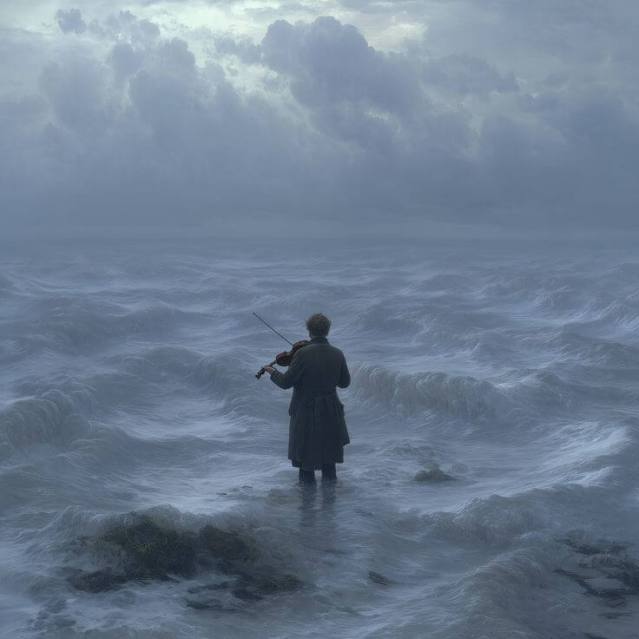
Islands and archipelagos offer writers a perfect balance between isolation and connection. They allow for focused storytelling while still supporting expansive worldbuilding.
Whether you’re telling a story of a single island cut off from the world or an entire network of cultures spread across the sea, these settings invite exploration, both physical and emotional.
Because on an island, the horizon is always visible and beyond it, there is always something more.
Happy worldbuilding!
I hope this was helpful. Let me know if you have questions or suggestions by using the Contact Me form on my website or by writing a comment. I post every Friday and would be grateful if you would share my content.
If you want my blog delivered straight to your inbox every month along with exclusive content and giveaways, please sign up for my email list here.
Let’s get writing!
Copyright © 2026 Rebecca Shedd. All rights reserved.

