The Worldbuilder’s Toolkit: Cliffs and Canyons


Cliffs and canyons are landscapes defined by contrast: height and depth, exposure and concealment, safety and danger. Where other terrains stretch or rise, these environments fracture the land, carving it into layers that must be navigated rather than simply crossed. For writers, this creates immediate tension. Movement is restricted, choices are limited, and even a small mistake can have fatal consequences. In a setting like this, geography doesn’t just shape the world, it actively drives the story.
The Geography of Division
Canyons are formed through time and force, whether carved by water, torn open by tectonic shifts, or shaped by catastrophic events. Cliffs mark boundaries, places where one world ends and another begins. Together, they create regions that are difficult to traverse and even harder to control.
Instead of wide-open movement, characters must follow specific routes. A single pass, bridge, or narrow ledge can become the only way forward. These routes naturally become points of conflict, where trade is regulated, armies are stopped, and secrets are hidden. Entire political systems can form around who controls access through these spaces.
Worldbuilding Tip: Start by mapping how people move through your canyon or cliff region. The paths they take will determine everything from trade networks to military strategy.
Vertical Worlds: Living with Height and Depth
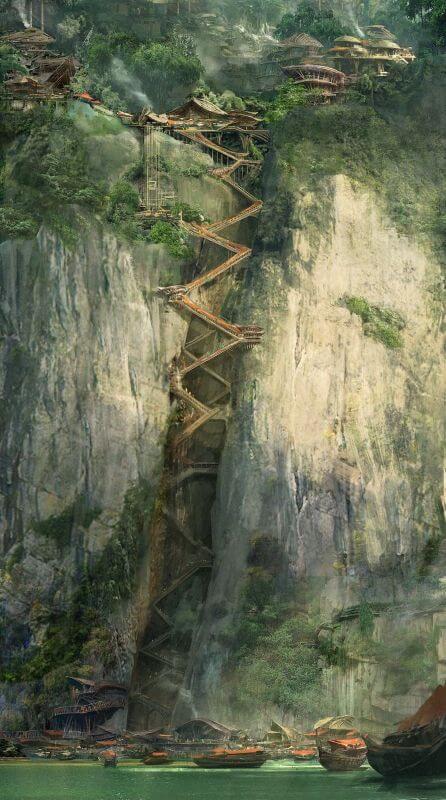
Unlike most landscapes, cliffs and canyons turn the world vertical. Life doesn’t just spread outward, it stacks. Communities may cling to cliff faces, carve homes into rock walls, or settle deep within canyon floors. Each level offers different advantages and challenges, and this physical separation can influence how societies organize themselves.
Architecture must adapt to limited and uneven space. Travel between levels becomes part of daily life, whether through carved stairways, rope systems, lifts, or more advanced or fantastical methods. Over time, this can shape identity. Those who live higher up may see themselves as distinct (perhaps even superior) to those below, while those in the depths may develop their own resilient, insular culture.
Character Idea: A courier who specializes in navigating dangerous vertical routes between cliffside settlements discovers a hidden level of the canyon that no one else seems to know exists.
Isolation and Connection
Cliffs isolate, and canyons divide but they also create very specific points of connection. Where two regions are separated by sheer drops or vast chasms, even a single crossing point becomes critical. A bridge, a narrow pass, or a stable descent route can define relationships between entire communities.
Because access is so limited, these crossings often become heavily guarded or politically contested. Trade, communication, and diplomacy all depend on safe passage, and when that passage is threatened, the effects ripple outward.
A single bridge might support the economy of multiple settlements
A hidden route could become the lifeline of smugglers or rebels
A collapsed path might isolate entire populations overnight
Plot Hook: The only stable crossing between two canyon regions collapses, and as both sides accuse each other, something begins moving through the depths that no one can reach anymore.
Harsh Environments and Survival
Cliff and canyon environments are rarely stable or forgiving. Conditions can shift dramatically depending on elevation. At higher levels, strong winds and unstable rock formations pose constant danger. Deeper within canyons, heat can build, air can stagnate, and access to sunlight may diminish.
Water is often the most critical resource. A river may run through the canyon floor but reaching it can be difficult or dangerous. Some settlements may rely on collecting rainwater or channeling it through engineered systems, while others cluster tightly around accessible sources.
These environmental pressures shape culture in practical ways. Food production may require terracing or trade, construction must account for shifting stone, and travel demands careful planning. Survival becomes a shared concern, reinforcing the importance of cooperation or, in harsher societies, competition.
Worldbuilding Tip: Decide how your societies access and control water. In a canyon setting, that single factor can determine power, wealth, and survival.
Cliffs and Canyons as Battlegrounds
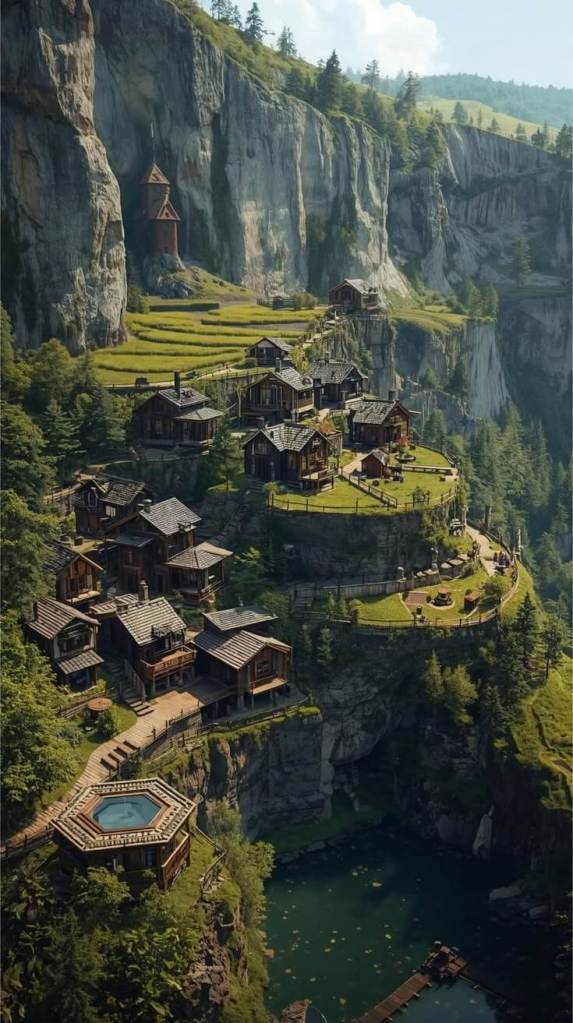
Few environments are as strategically powerful as cliffs and canyons. They naturally favor defense, forcing attackers into narrow approaches while giving defenders control of elevation. In these settings, positioning matters more than numbers, and knowledge of the terrain can determine the outcome of a conflict.
Battles here tend to be precise rather than overwhelming. Ambushes, choke points, and control of high ground define engagements. In speculative settings, this can extend into aerial combat, magical travel, or advanced technology that allows characters to exploit vertical space in new ways.
Why These Landscapes Work: Examples in Storytelling
Cliffs and canyons appear across many forms of storytelling because they naturally heighten tension and visual impact.
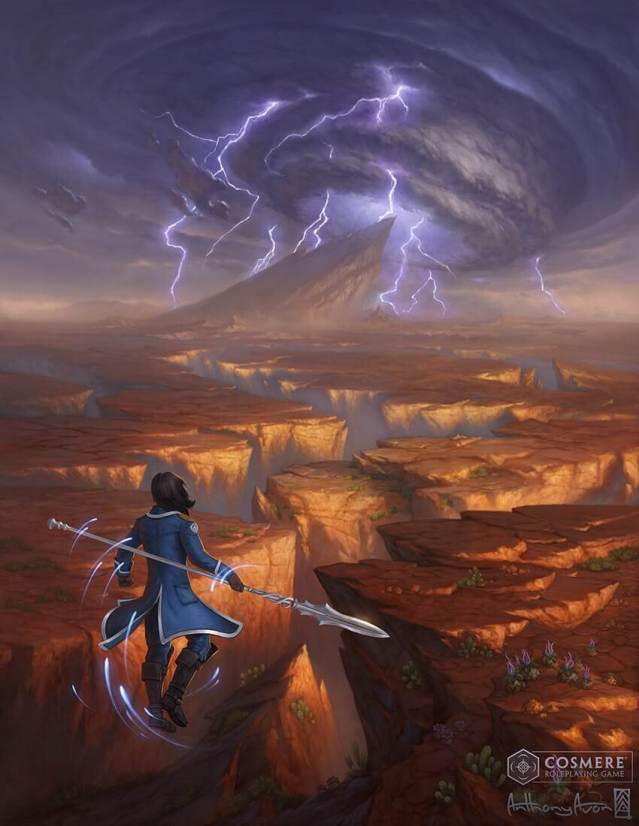
In The Stormlight Archive, the Shattered Plains are a defining feature of the world. The land is broken into plateaus separated by deep chasms, forcing characters to navigate a constantly shifting battlefield. Movement is strategic, crossings are dangerous, and the terrain itself dictates how wars are fought. This works because the environment is inseparable from the story. It shapes culture, conflict, and even the rhythm of the narrative.
In Star Wars: Episode III – Revenge of the Sith, volcanic cliffs and lava-filled canyons create a visually intense and emotionally charged setting. The environment mirrors the stakes of the story, with every movement carrying risk and finality.
Meanwhile, The Legend of Zelda: Breath of the Wild uses cliffs and canyons to encourage exploration and problem-solving. Players must think carefully about how to navigate vertical spaces, making traversal itself part of the experience.
Even in tabletop settings like Dungeons & Dragons, canyon environments are popular because they naturally create tension, limit options, and provide opportunities for ambush and discovery.
Myth, Symbolism, and Depth
Canyons often feel ancient, their layered walls revealing the passage of time. This makes them powerful symbolic spaces, representing descent, history, and the uncovering of hidden truths. Cliffs, by contrast, often mark thresholds: places where one world ends and another begins.
In speculative fiction, these environments are ideal for hiding secrets. Entire civilizations might lie buried within canyon walls, or ancient forces might sleep in the depths below. The deeper characters go, the more they move away from the familiar and into the unknown.
Canyon walls can serve as records of history, etched in layers or markings
Depth can symbolize danger, knowledge, or transformation
The edge of a cliff can represent a moment of decision or change
Plot Hook: Strange markings appear along canyon walls, forming a pattern that only becomes visible from above, revealing that the canyon itself is part of something far larger.
Creatures of the Cliffs and Depths
Cliff and canyon environments support life that is uniquely adapted to extreme conditions. In speculative settings, this allows for creatures that feel both believable and otherworldly.
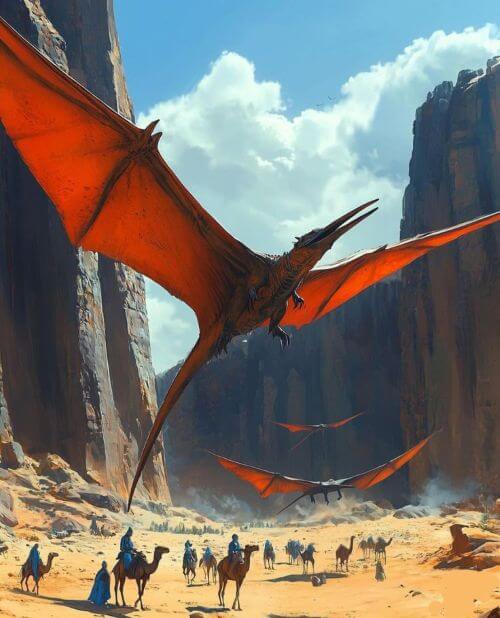
Winged predators might nest along sheer rock faces, diving into the canyon below to hunt. Other creatures could burrow through the walls, emerging unpredictably. Some may rely on camouflage, blending seamlessly into stone, while others adapt to heat, wind, or low-light conditions.
These creatures do more than populate the setting. They reinforce its danger and uniqueness. They remind characters that the environment is not passive, but alive and constantly interacting with those who move through it.
Character Idea: A creature long feared as a mindless predator begins displaying signs of intelligence, forcing a canyon community to reconsider everything they believed about the world around them.
Real-World Cliff and Canyon Cultures
Cliff and canyon environments have been home to remarkable cultures that adapted to extreme terrain long before modern engineering. These societies didn’t just survive, they developed architecture, traditions, and social systems shaped directly by vertical landscapes. For writers, studying these cultures offers a powerful way to ground fictional worlds in reality while still leaving room for imagination.
Below are several real-world examples, each with specific elements you can draw from when building your own cliffside or canyon-based societies.
The Ancestral Puebloans — Cliff Dwellers of the American Southwest
The Ancestral Puebloans, particularly those who built the cliff dwellings of Mesa Verde, created entire communities tucked into natural alcoves high along canyon walls. These structures were carefully planned, using stone and mortar to form multi-room dwellings that provided protection from both the elements and potential attackers. Access was often limited to narrow paths or ladders that could be removed, making these settlements naturally defensible.
Life in these environments required cooperation, precise construction, and a deep understanding of the surrounding land. Water collection, food storage, and seasonal movement all played critical roles in survival.
Inspiration for Fiction: A canyon culture might build its settlements into hidden alcoves, visible only from certain angles or accessible only through carefully guarded routes. Architecture could blend seamlessly into the environment, making entire communities nearly invisible to outsiders. Defensive design might be central to the culture’s identity, with access points treated as sacred or heavily controlled.
Character Idea: A young builder tasked with repairing ancient cliff dwellings discovers sealed chambers that suggest the original inhabitants were hiding from something far more dangerous than invading enemies.
The Hanging Monastery — Cliffside Architecture in China
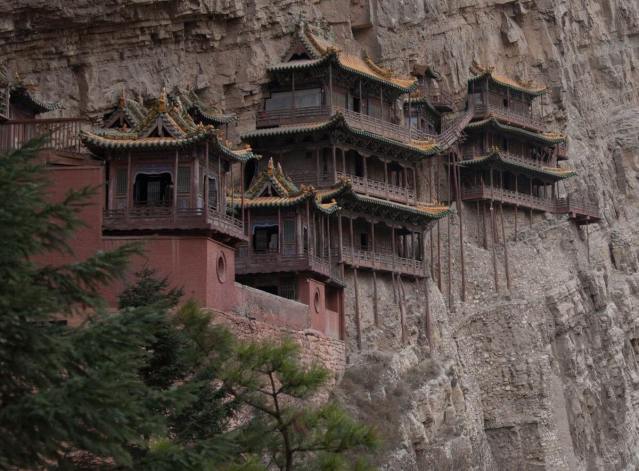
The Hanging Monastery near Mount Heng in China is one of the most striking examples of human adaptation to vertical terrain. Built directly into a cliff face and supported by wooden beams anchored into the rock, it appears to defy gravity. Its location provided both spiritual isolation and protection from flooding and conflict.
The monastery also reflects a blending of philosophies, as it historically housed elements of Buddhism, Taoism, and Confucianism.
Inspiration for Fiction: Cliffside structures can be more than practical: they can carry spiritual or philosophical meaning. A society might build temples or sacred spaces high along cliff faces to symbolize closeness to the heavens or separation from the chaos below. These locations could be difficult to reach, reinforcing their significance and limiting access to those deemed worthy.
Character Idea: An initiate training in a cliffside monastery begins to suspect that the location of the temple is not just symbolic: it is positioned to guard something hidden within the rock itself.
Cappadocia — Underground and Cliffside Cities of Anatolia
In the region of Cappadocia (modern-day Turkey), people carved extensive living spaces directly into soft volcanic rock. While best known for its underground cities, Cappadocia also features cliffside homes and entire communities built into the landscape. These spaces included ventilation systems, storage rooms, and defensive passageways, allowing inhabitants to retreat and survive during times of conflict.
This blending of above-ground and underground living created a layered environment where movement, airflow, and access were carefully controlled.
Inspiration for Fiction: A fictional culture might combine cliffside settlements with deeper carved interiors, creating a multi-layered society that exists both on the surface and within the rock. Passageways could be intentionally confusing, designed to protect inhabitants and disorient intruders. Airflow systems might become critical infrastructure or even sacred elements tied to survival.
Worldbuilding Tip: Think about how your society manages hidden space. Secret passages, concealed rooms, and layered living areas can create both practical advantages and narrative mystery.
Andean and Himalayan Cliff Communities — Terraces and Vertical Agriculture
In regions like the Andes and the Himalayas, communities have long adapted to steep terrain through terraced agriculture. By carving flat surfaces into slopes, they created arable land where none seemed possible. These terraces allowed for controlled irrigation, efficient use of limited space, and sustainable farming in otherwise inhospitable environments.
These societies also developed strong traditions tied to the land, with knowledge of terrain, weather, and water management passed down through generations.
Inspiration for Fiction: A canyon or cliff society might rely on intricate systems of terraces carved into rock faces, turning vertical space into productive land. Control of these terraces and the water that sustains them could become a central source of power. The knowledge required to maintain these systems might be closely guarded, creating tension between generations or social groups.
Plot Hook: A critical terrace system begins to fail, threatening the food supply of an entire cliffside civilization and revealing signs that the damage was not accidental.
Bringing It All Together
These real-world cultures demonstrate that cliffs and canyons are not barriers to civilization: they are environments that demand creativity, cooperation, and precision. Each example shows a different approach to solving the challenges of vertical living, from defensive design to resource management to spiritual adaptation.
For writers, the key takeaway is that environment shapes culture. A society built on cliffs or within canyons will think differently, move differently, and value different things than one on open land. By drawing from real-world examples and understanding the pressures these environments create, you can build fictional cultures that feel authentic, grounded, and deeply connected to their setting.
Living on the Edge
Cliffs and canyons don’t just shape scenery, they dictate how life works. When the ground drops away beneath your feet and the horizon is replaced by walls of stone, every aspect of survival becomes more complicated. Movement is restricted, resources are unevenly distributed, and even the simple act of traveling from one place to another can carry real danger. For writers, this creates a setting where tension is built into daily life, and where the environment constantly influences character choices.
Survival in Vertical Landscapes
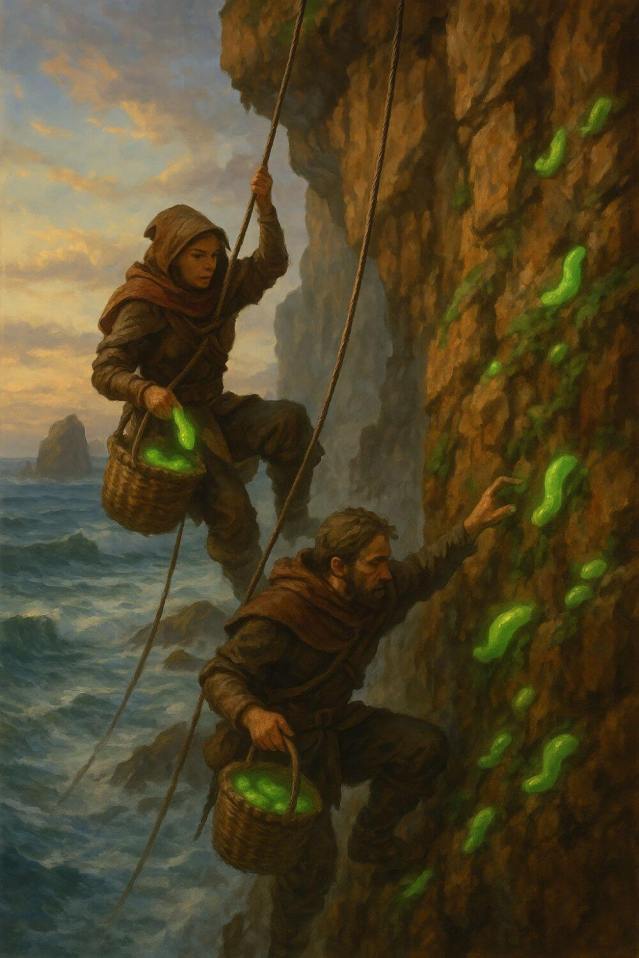
Living in and on cliffs means adapting to a world where space is limited and stability is never guaranteed. Settlements must be carefully positioned, often carved into rock faces or balanced on narrow ledges. Building materials may be abundant in stone but scarce in wood or soil, forcing creative solutions. Even something as basic as walking becomes a learned skill, with children raised to navigate steep paths and precarious edges from an early age.
Access to water is often one of the greatest challenges. A river may run through the canyon below, visible but difficult to reach, while rainfall must be captured and stored with care. Food production can be equally complex, relying on terraced farming, trade, or specialized crops that can survive in thin soil and harsh conditions. These pressures shape a culture that values precision, planning, and an acute awareness of the environment.
Worldbuilding Tip: Decide how your society handles daily movement. Are there carved stairways, rope systems, lifts, or something more fantastical? The method of traversal will influence everything from trade to social hierarchy.
Natural Barriers and Strategic Control
Cliffs and canyons are some of the most effective natural barriers in any landscape. A deep chasm or sheer drop can separate regions as completely as an ocean, forcing all movement through specific, limited routes. These routes (bridges, passes, or narrow ledges) become critical points of control.
Whoever holds these crossings holds power. Trade, communication, and military movement all depend on safe passage, and when that passage is threatened, the effects can ripple across entire regions. This makes cliff and canyon environments ideal for political tension and conflict.
Plot Hook: A vital canyon crossing is destroyed, cutting off trade between two regions and forcing a reluctant guide to lead a dangerous expedition through an uncharted route deep within the canyon.

Viewpoints and the Power of Perspective
Height changes how people see the world, literally and figuratively. Cliffside vantage points offer sweeping views of the surrounding landscape, making them ideal for watchposts, signal stations, and defensive positions. From above, movement can be tracked, threats can be spotted early, and communication can travel across great distances.
But perspective also shapes culture. Those who live high above may develop a sense of separation from the world below, seeing themselves as protectors, observers, or even rulers. Meanwhile, those who dwell in the depths of a canyon may experience a more enclosed, inward-focused existence, where the sky is a distant strip rather than an open expanse.
This difference in perspective can create powerful cultural divides. Height becomes more than geography, it becomes identity.
Character Idea: A watchkeeper stationed on a high cliff begins noticing patterns in distant movements that suggest something is deliberately avoiding detection and heading straight for the canyon below.
Sacred Heights and Hidden Depths
Cliffs and canyons naturally lend themselves to spiritual meaning. Their dramatic scale, isolation, and sense of permanence make them ideal locations for sacred spaces. High places often symbolize closeness to the divine, while deep canyon floors can represent descent into mystery, history, or the unknown.
Temples, shrines, and ritual sites may be placed in locations that are difficult to reach, reinforcing their significance. Pilgrimages to these sites can become acts of devotion, requiring physical effort and risk. Similarly, hidden caves or chambers within canyon walls may be seen as places of revelation or danger.
Cliffside temples may represent ascension or enlightenment
Canyon depths can symbolize transformation or hidden truth
Dangerous paths may be part of ritual journeys
Worldbuilding Tip: Tie spiritual meaning to elevation. Ask what “up” and “down” represent in your culture, and how that symbolism influences religion and tradition.
The Ever-Present Danger
Cliff and canyon environments are inherently unstable. Rockfalls, erosion, and shifting terrain can alter paths without warning. Strong winds can make travel hazardous, while narrow ledges leave little room for error. Even experienced inhabitants must remain vigilant.
In speculative settings, these dangers can be amplified. The environment might shift in unnatural ways, or hidden forces within the canyon could alter the landscape over time. This unpredictability keeps tension high, even in familiar surroundings.
Plot Hook: A well-known and heavily traveled cliff path begins to change overnight, leading travelers to places that shouldn’t exist.

Plot and Character Ideas
The Last Bridge of Kareth
Genres: Political Fantasy, War Drama
Plot Idea: Two rival canyon nations depend on a single ancient bridge for trade and communication. When cracks begin to appear, both sides race to control or sabotage it.
Character Angle: A neutral engineer is sent to assess the bridge but is secretly pressured by both sides to report what benefits them.
Twist(s): The bridge isn’t failing from age, it’s being weakened by something tunneling through the canyon walls below.
Voices in the Stone
Genres: Fantasy, Supernatural Mystery
Plot Idea: Cliffside dwellers begin hearing whispers from the canyon walls, offering guidance… and demands.
Character Angle: A skeptical stonecutter starts hearing voices that know intimate details of her past.
Twist(s): The canyon walls contain the consciousness of an ancient civilization, and it is slowly awakening.
The Waterfall Pact
Genres: Fantasy, Political Intrigue
Plot Idea: A rare waterfall deep in a canyon is the only reliable freshwater source for multiple settlements. A long-standing treaty governs its use until the flow begins to diminish.
Character Angle: A diplomat must renegotiate the pact while tensions rise toward open conflict.
Twist(s): The water is being diverted underground by a hidden faction that has discovered a second, secret reservoir.
The Ascendant Path
Genres: Mythic Fantasy, Religious Drama
Plot Idea: A sacred path carved into a sheer cliff is believed to lead to enlightenment. Pilgrims who reach the summit are said to return transformed or not at all.
Character Angle: A disillusioned priest undertakes the climb to prove the ritual is a lie.
Twist(s): The path alters reality as one ascends, forcing climbers to confront literal manifestations of their beliefs.
The Canyon That Eats Sound
Genres: Sci-Fi, Environmental Thriller
Plot Idea: A remote canyon begins absorbing all sound, disrupting communication and navigation. Entire expeditions vanish without a trace.
Character Angle: An acoustic scientist investigates, relying on instruments rather than hearing.
Twist(s): The canyon is generating a field that feeds on sound energy and is expanding.
The Skyhook Guild
Genres: Fantasy, Adventure
Plot Idea: Cliffside cities rely on a guild that maintains massive pulley systems used for transport between levels. When the guild goes on strike, the cities begin to fracture.
Character Angle: A young apprentice is caught between loyalty to the guild and responsibility to her community.
Twist(s): The guild controls more than transport, they secretly regulate access to hidden levels of the canyon.
The Ember Veins
Genres: Science Fantasy, Resource Conflict
Plot Idea: Rare energy crystals form along canyon walls near geothermal vents. Mining them fuels technology but destabilizes the cliffs.
Character Angle: A miner begins noticing patterns in the collapses that suggest they aren’t accidental.
Twist(s): The crystals are part of a larger living network and continuing to mine them will lead to the destruction of the settlement above, forcing them to decide between technology and survival.
The Hanging City Heist
Genres: Fantasy, Heist
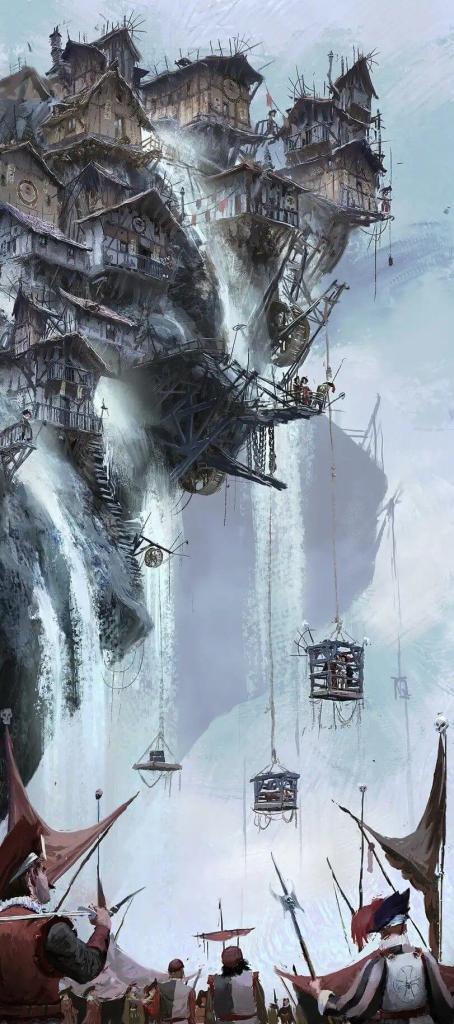
Plot Idea: A wealthy city suspended along a cliff face holds a vault accessible only through a single vertical route.
Character Angle: A climber with a criminal past is recruited to pull off an impossible heist.
Twist(s): The vault isn’t at the top, it’s hidden midway down, in a section of the cliff no one is supposed to know exists.
The Dustfall Season
Genres: Environmental Fantasy, Survival
Plot Idea: Each year, massive dustfalls cascade through the canyon, burying paths and settlements. This year, the storms are worse and earlier.
Character Angle: A seasonal guide responsible for leading migrations must adapt to conditions no one has seen before.
Twist(s): The dustfalls are being triggered by shifting terrain caused by a massive underground movement.
The Watchers Above
Genres: Sci-Fi, Psychological Drama
Plot Idea: A series of cliff-top observation stations monitor the canyon below for unknown activity. Reports begin to contradict each other.
Character Angle: A watch officer starts questioning whether the observations are real or manipulated.
Twist(s): The canyon emits signals that subtly alter perception, causing observers to see what they expect.
The Bone Ledges
Genres: Dark Fantasy, Horror
Plot Idea: A series of narrow ledges lined with ancient bones stretches along a canyon wall. Travelers must cross it to reach a distant settlement.
Character Angle: A caravan guard notices the bones are arranged in deliberate patterns.
Twist(s): The bones mark the boundary of a territory and something still enforces it.
The Map of the Deep Cut
Genres: Adventure, Fantasy Mystery
Plot Idea: A newly discovered map reveals hidden routes through an otherwise impassable canyon network.
Character Angle: A cartographer obsessed with mapping the region leads an expedition to verify it.
Twist(s): The map is accurate but only at certain times, when the canyon itself subtly shifts.
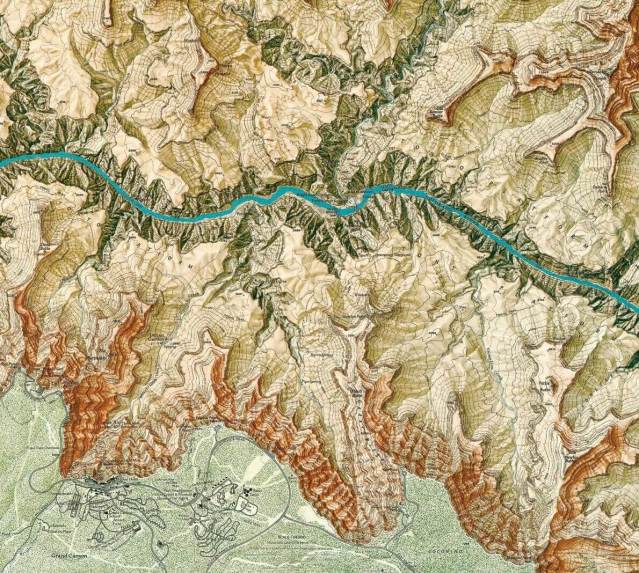
Cliffs and canyons create worlds defined by limitation, structure, and depth. They shape how people move, where they settle, and how they interact with one another. They turn geography into a constant presence in the story, influencing every decision and every conflict.
For writers, they offer a setting where tension is built into the landscape itself. Every path is deliberate. Every crossing is significant. Every descent carries risk. Because in a world of cliffs and canyons, the story is never just about where you are. It’s about how far you’re willing to go and what you might find waiting below.
Happy worldbuilding!
I hope this was helpful. Let me know if you have questions or suggestions by using the Contact Me form on my website or by writing a comment. I post every Friday and would be grateful if you would share my content.
If you want my blog delivered straight to your inbox every month along with exclusive content and giveaways, please sign up for my email list here.
Let’s get writing!
Copyright © 2026 Rebecca Shedd. All rights reserved.

