The Worldbuilder’s Toolkit: Jungles


Jungles are some of the most powerful environments a writer can use, yet they are often simplified into scenery: lush backdrops filled with vines, predators, and forgotten ruins. In reality, jungles are ecosystems of overwhelming complexity, where life competes relentlessly for light, water, and space. They are environments of abundance, but abundance does not mean safety.
For fantasy and science fiction writers, jungles offer something unusual: a setting that can feel both alive and unknowable. They conceal secrets easily. They isolate without oceans. They preserve ancient things while simultaneously consuming them. A jungle can nurture civilizations, swallow empires, or become an active force within the story itself.
The Jungle as an Active Force
Unlike plains or open deserts, jungles resist movement. Dense vegetation obscures vision, humidity drains energy, and pathways vanish beneath rapid growth. Distances become deceptive. A destination visible on a map may take days to reach because the environment complicates direct travel.
This means jungles naturally create tension. Characters are forced to slow down, adapt, and pay attention. The environment punishes overconfidence and rewards specialized knowledge.
The greatest dangers are often not dramatic predators but accumulation: exhaustion, disease, disorientation, and the gradual realization that familiar rules no longer apply.
Plot Hook: An expedition searching for a lost city realizes their maps are becoming less accurate over time until they reach the point where their maps go blank.
Survival in a Landscape of Abundance
At first glance, jungles seem generous. Water appears plentiful, vegetation grows rapidly, and animal life is everywhere. But survival in these environments depends on knowing which resources are safe.
A clear stream may carry parasites. Bright fruit may be poisonous. Dense growth can make traditional agriculture difficult despite fertile conditions. Heat and humidity accelerate decay, making food preservation a constant challenge.
Because of this, jungle societies often become repositories of specialized environmental knowledge. Survival depends on understanding medicinal plants, seasonal changes, animal behavior, and hidden dangers. Knowledge is not simply useful; it becomes power.
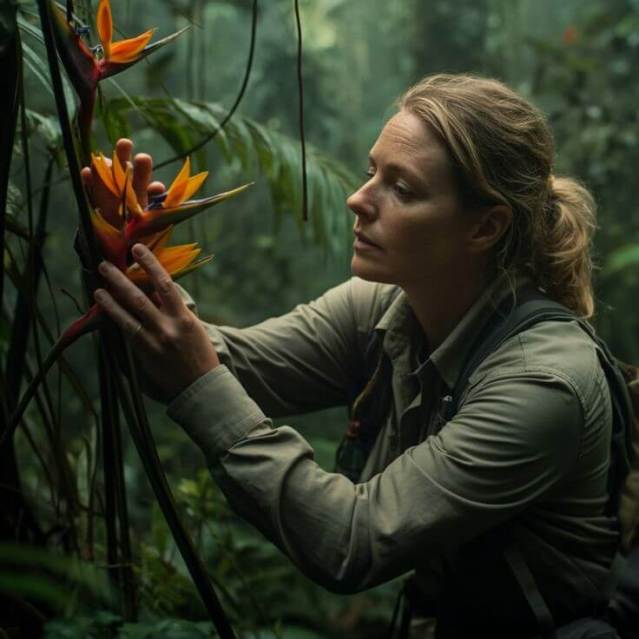
Character Idea: A healer trained to identify hundreds of medicinal and toxic plants discovers a newly emerging species with properties that could be powerfully useful or extremely deadly.

How Jungles Shape Culture
Dense vegetation often isolates neighboring communities, allowing distinct languages, traditions, and beliefs to develop within relatively small regions. Two settlements separated by only a few miles might have dramatically different cultures because travel between them is difficult and infrequent.
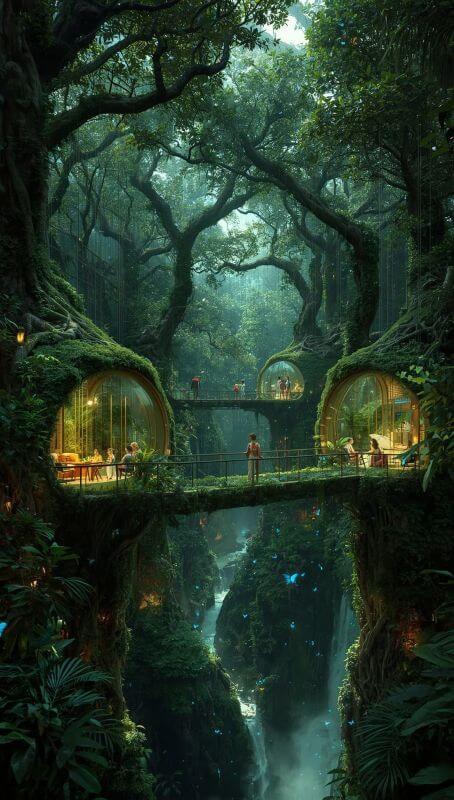
This isolation can create extraordinary cultural diversity. Oral traditions become important because environmental knowledge must survive across generations. Architecture adapts to flooding, humidity, and insects. Settlements may rise above the ground or spread vertically into the canopy.
Worldbuilding Tip: Ask yourself how your culture experiences distance. In a jungle, people may think less in miles and more in river systems, hidden routes, or seasonal accessibility.
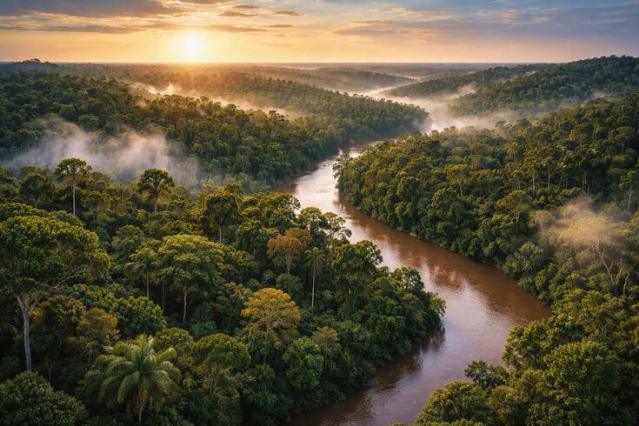
Rivers: The True Roads of the Jungle
In many jungle environments, rivers matter more than roads.
Dense vegetation often makes overland travel exhausting and slow, while waterways become efficient routes for movement, communication, and trade. Entire civilizations can organize themselves around rivers, with settlements clustering near navigable water.
Control of major waterways may determine political influence, economic power, or military strength.
River systems can create trade empires deep within otherwise isolated jungle regions
Seasonal flooding might reshape routes and alter political relationships overnight
Sacred rivers could function as both spiritual spaces and practical lifelines
Plot Hook: A river used for trade for centuries abruptly changes course, isolating communities and exposing ruins long hidden beneath the canopy.
Ancient Ruins and the Weight of Time
Few settings evoke mystery as effectively as jungles overtaking abandoned structures. Vegetation grows quickly. Stone cracks beneath roots. Entire cities disappear beneath layers of growth.
This makes jungles ideal environments for stories involving lost civilizations, forgotten technologies, ancient religions, or buried histories.
Unlike deserts, which preserve through dryness, jungles erase through growth. This creates a different emotional atmosphere. We must ask not simply what was lost but why the environment seems determined to conceal it.
Character Idea: A scholar obsessed with uncovering a vanished civilization discovers that the jungle has preserved some ruins while aggressively destroying others.
Why Jungle Settings Work: Examples in Storytelling
Jungles appear repeatedly in fantasy and science fiction because they naturally combine exploration with uncertainty.
In Avatar, Pandora’s alien ecosystem feels alive and interconnected. The environment shapes spirituality, politics, and identity, making the jungle central to the story rather than decorative. Its ecology reinforces themes of interdependence and conflict between exploitation and preservation.
The Jungle Book uses the jungle as both home and danger. Survival depends on understanding the ecosystem and one’s place within it.
Games such as Tomb Raider and Minecraft use jungle environments to reward exploration. Dense landscapes encourage curiosity because discovery requires effort.
Meanwhile, tabletop settings like Dungeons & Dragons frequently use jungles for survival campaigns, hidden civilizations, and encounters with unfamiliar ecosystems.
These settings work because jungles create uncertainty naturally. Every journey feels earned.

Alien Jungles and Living Ecosystems
Fantasy and science fiction allow writers to push jungle environments beyond biology as we know it. Entire ecosystems might function through collective intelligence. Plants may communicate chemically or telepathically. Forests might respond to intrusion. The jungle can become something closer to consciousness.
Imagine worlds where:
Predatory plants alter pathways to trap travelers
Forests remember those who have passed through them
Alien ecosystems classify visitors as threats or symbiotic partners
Worldbuilding Tip: If your jungle behaves like an intelligence, decide what it wants. Protection? Expansion? Equilibrium? Motivation makes strange ecosystems feel believable.
Creatures of the Canopy and Understory
Real jungles support extraordinary biodiversity, which makes them ideal inspiration for speculative creatures. Predators may rely on camouflage, patience, or mimicry. Other species develop through intricate symbiotic relationships.
The most memorable fictional creatures rarely exist in isolation. They occupy ecological niches.
A massive predator raises questions: What does it eat? How much territory does it need? What evolved alongside it?
Character Idea: A xenobiologist studying an alien rainforest realizes local predators are not hunting based on movement or scent but on emotional states.
Myth, Spirituality, and the Living World
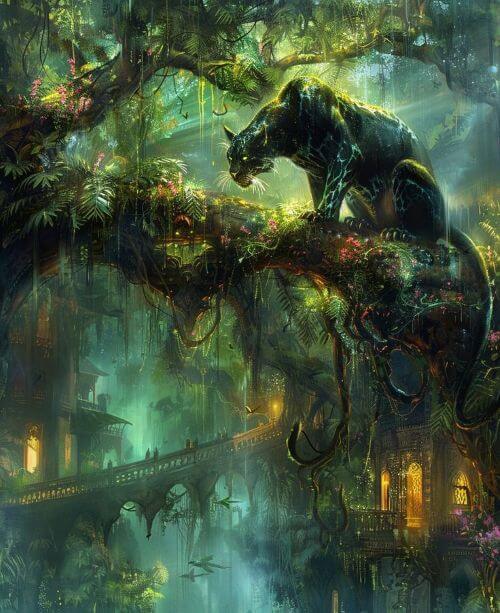
Jungles often feel ancient. Their density obscures boundaries between the ordinary and the sacred, making them natural settings for mythology and spiritual beliefs.
Cultures shaped by jungles may view the environment as inhabited by ancestors, spirits, or divine forces. Sacred groves, ritual journeys, and beliefs tied to growth, decay, and renewal emerge easily from these landscapes.
When surrounded by overwhelming life, societies may develop philosophies emphasizing interconnectedness rather than dominance.
Real-World Jungle Cultures: Inspiration for Fictional Societies
Fiction often portrays jungles as untamed wilderness, but throughout history people have built complex societies within them. These cultures adapted to dense forests, heavy rainfall, tough travel, and extraordinary biodiversity. Rather than conquering the jungle, they learned to live with it, developing agricultural systems, trade networks, architecture, and spiritual beliefs shaped directly by their environment.
For writers, these real-world examples provide something invaluable: evidence that jungles do not prevent civilization. They produce different civilizations, with distinct priorities, technologies, and relationships with the natural world.
The key is not to copy directly, but to understand how the environment influences culture.
The Maya — Cities Hidden Within the Rainforest
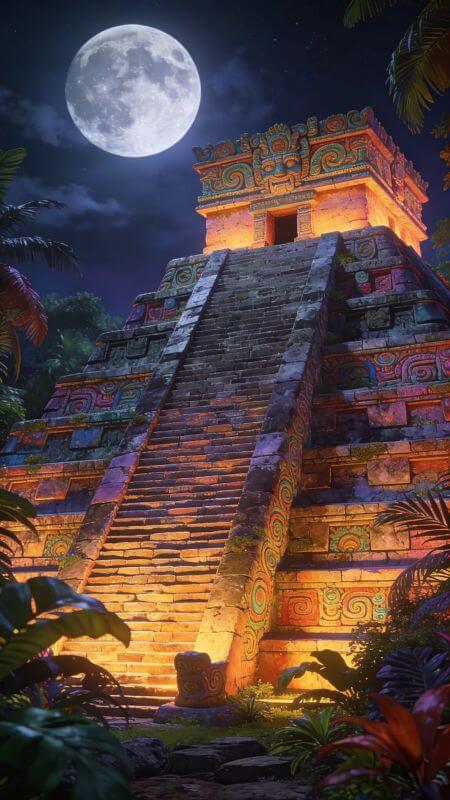
The ancient Maya built sophisticated city-states across the tropical forests of present-day Mexico, Guatemala, Belize, and surrounding regions. Contrary to older assumptions, the wilderness did not swallow Maya cities, making them isolated settlements. They were highly organized urban centers connected through trade, agriculture, and political relationships.
Living in a jungle environment required advanced environmental management. The Maya developed techniques to manage water, adapt agriculture to changing conditions, and support dense populations despite seasonal challenges.
The rainforest also influenced Maya cosmology. Sacred landscapes, caves, cenotes, and celestial observations all played important roles in religion and identity.
Inspiration for Fiction: A jungle civilization does not need to be primitive or hidden. It might instead possess advanced knowledge systems adapted specifically to its environment. Complex astronomy, environmental engineering, or spiritual traditions tied to ecological cycles can all emerge naturally.
Character Idea: An astronomer-priest from a jungle city notices celestial patterns predicting environmental changes no one else believes are possible.
Worldbuilding Tip: Ask how your civilization manages water. In jungle societies, controlling seasonal abundance can matter as much as surviving scarcity.
Indigenous Peoples of the Amazon — Knowledge as Survival
Many Indigenous peoples of the Amazon developed extraordinary knowledge of medicinal plants, ecosystems, animal behavior, and seasonal patterns. In environments where outsiders often struggle to survive, environmental understanding becomes inheritance and power.
People rarely isolate this knowledge from spirituality. Relationships between people, animals, plants, and ancestors are often deeply interconnected.
Because dense forests separate communities, tremendous cultural diversity developed. Groups living relatively near one another sometimes maintain distinct languages and traditions.
Inspiration for Fiction: Knowledge keepers may occupy central roles within your society, not because of political authority, but because survival depends on them. Healers, navigators, or environmental interpreters might become indispensable figures.
Character Idea: A healer whose community relies on generations of botanical knowledge discovers a new disease affecting plants themselves, threatening the ecosystem that supports everything else.
The Khmer Empire — Monumental Architecture in Tropical Forests
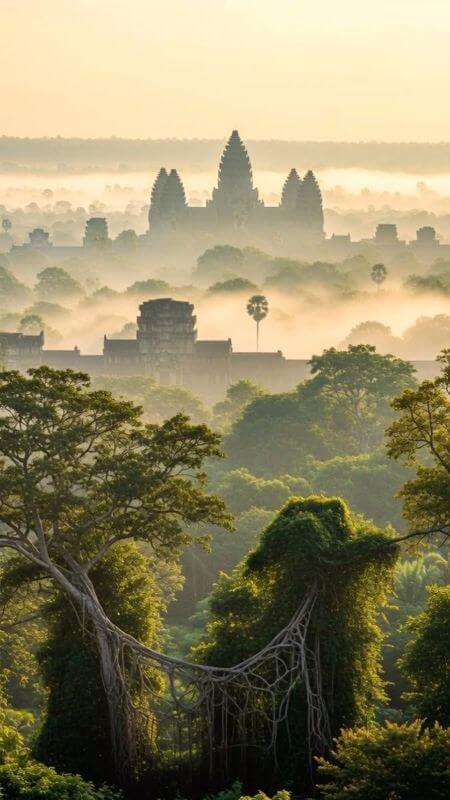
The builders of places like Angkor Wat and the wider Khmer Empire lived within a tropical environment shaped by monsoons and dense forests. Their civilization engineered sophisticated water management systems capable of supporting enormous populations.
The eventual interaction between environmental changes, infrastructure strain, and political factors remains an area of historical study and debate.
Today, images of roots growing over stone structures create a powerful visual reminder: nature and civilization are constantly negotiating for space.
Inspiration for Fiction: A jungle empire might rise through mastery of environmental engineering rather than domination through military force. Irrigation systems, flood management, and ecological knowledge could become sources of prestige and political power.
Plot Hook: An ancient hydraulic system sustaining a jungle civilization fails, forcing scholars to investigate forgotten regions abandoned generations ago.
Dayak Peoples of Borneo — Rivers, Longhouses, and Community
Many Dayak groups in Borneo historically organized communities around rivers, which served as transportation routes through dense rainforest. Longhouses accommodated multiple families, emphasizing collective living and shared survival.
In environments where movement overland is difficult, waterways become essential social and economic infrastructure.
Inspiration for Fiction: Your jungle culture may think in rivers rather than roads. Settlements could form around waterways, and concepts of distance might depend on currents, seasonal flooding, or navigable routes.
Worldbuilding Tip: Decide what functions as your culture’s highways. In jungles, rivers often matter more than paths through trees.
The San People of Central African Rainforests and Forest-Dwelling Communities
Various forest-adapted communities across Central Africa developed hunting practices, environmental knowledge, and cultural traditions deeply connected to rainforest ecosystems.
Music, storytelling, and oral traditions often preserve practical knowledge alongside identity and history. In environments where written records may be difficult to preserve, memory itself becomes infrastructure.
Inspiration for Fiction: Oral histories may carry survival information, sacred narratives, or hidden political knowledge. Songs could encode migration routes or ecological warnings.
Character Idea: A storyteller discovers that ceremonial songs traditionally performed during festivals contain directions to a place deliberately erased from collective memory.
Common Themes in Jungle Cultures
Although jungle societies vary enormously, several recurring patterns emerge.
Environmental knowledge often becomes a primary source of authority
Rivers frequently shape trade, travel, and political organization
Spiritual beliefs may emphasize interconnectedness between humans and ecosystems
Cultural diversity can develop rapidly because of environmental isolation
Understanding these pressures helps create fictional societies that feel grounded rather than decorative.
Bringing It Into Your Worldbuilding
When designing jungle cultures, resist the temptation to portray the environment as merely a hostile wilderness. Instead, ask how people adapted to it. What skills became valuable? Which professions gained prestige? How did architecture, belief systems, and governance evolve?
The most interesting jungle societies do not survive despite their environment. They survive because they learned how to belong to it.
Living Within the Green Maze
Jungles are environments of contradiction. They appear full of life, rich with resources, and endlessly fertile; yet surviving within them can be extraordinarily difficult. Heat, humidity, disease, dense vegetation, and unpredictable wildlife create constant pressure. For those who live there, survival often depends less on strength and more on knowledge.
For writers, jungles offer something especially valuable: an environment where civilization and wilderness can exist side by side, each constantly reshaping the other. Unlike landscapes that feel static, jungles are always changing. Paths disappear. Rivers shift. Ruins vanish beneath the growth. The world feels alive, and that living quality can become central to your story.
The Challenge of Everyday Survival
One of the most common misconceptions about jungles is that abundance equals ease. While vegetation grows rapidly and animal life is plentiful, many apparent resources come with hidden dangers.
Water may be contaminated despite appearing clean. Food sources can be toxic without specialized knowledge. Dense growth limits visibility and slows travel. Heat and humidity accelerate exhaustion while making the preservation of supplies difficult.
This means jungle societies often develop around expertise. Survival depends on people who understand plants, weather patterns, waterways, animal behavior, and seasonal changes.
Knowledge becomes infrastructure. Communities may rely heavily on guides, healers, navigators, or environmental specialists whose skills determine whether others survive.
Character Idea: A young guide from a jungle settlement, celebrated for never losing a traveler, begins encountering regions where inherited navigation methods suddenly fail.

Isolation in a Landscape Full of Life
Jungles create a strange form of isolation. Unlike deserts or oceans, where emptiness separates communities, jungles isolate through density.
Two villages may exist only a few miles apart and still develop dramatically unique identities because movement between them is difficult. Over generations, this can produce remarkable cultural diversity.
Trade routes may follow rivers rather than land. Languages diverge. Beliefs evolve independently. Myths arise to explain why neighboring groups live differently despite sharing the same environment.
Isolation also changes how people perceive distance. Time spent traveling may matter more than physical measurements.
Worldbuilding Tip: Ask whether your jungle culture measures journeys by distance, seasons, river crossings, or something else entirely.
Unique Ecosystems: The Jungle as a Living Network
Jungles support some of the most complex ecosystems on Earth. Every layer – from forest floor to canopy – contains distinct forms of life interacting in intricate ways.
The canopy itself can function almost like a separate world. Species may spend their entire existence high above the ground, while other organisms specialize in decay and decomposition below. This layered structure creates opportunities for speculative ecosystems.
Imagine environments where:
Bioluminescent plants create illuminated canopy worlds
Massive symbiotic organisms connect entire regions underground
Predators rely on mimicry so advanced that they imitate voices, memories, or emotions
The most compelling ecosystems feel interconnected rather than random. Species develop alongside one another, shaping behaviors and survival strategies.
Plot Hook: Researchers studying unusual migration patterns discover multiple species appear to be responding to instructions from something hidden deep within the jungle.
Disease, Decay, and the Constant Pressure of Growth
Jungles grow quickly, and growth changes everything. Structures deteriorate faster. Organic materials decay rapidly. Illness spreads more easily where heat, insects, and moisture thrive. Entire settlements may require continuous maintenance simply to remain habitable.
This creates cultures accustomed to impermanence. Architecture may prioritize repair over permanence. Traditions could emphasize renewal rather than preservation. People may expect landscapes themselves to transform within a lifetime.
Worldbuilding Tip: Consider how quickly your environment reclaims abandoned places. That rate of growth influences history, archaeology, and collective memory.
Ancient Ruins: Why Jungles Hide the Past So Well
Few images evoke mystery as strongly as ancient stone structures disappearing beneath roots and vines. Jungles excel at concealment.
Unlike deserts, which often preserve ruins through dryness, jungles bury them beneath growth. Entire cities can vanish from common knowledge despite remaining physically intact. This makes jungle settings ideal for stories involving lost civilizations, forgotten technologies, ancient religions, or buried histories.
The environment itself creates uncertainty.
A ruin discovered today may have remained hidden for centuries, not because no one searched, but because the landscape actively obscured it.
Ruins as Living Places
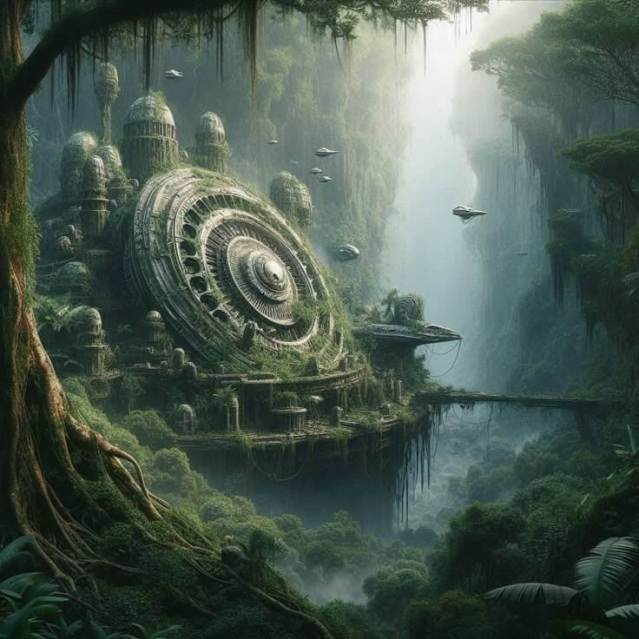
Ancient jungle ruins need not remain dead spaces. Over time, ecosystems adapt around abandoned structures. Animals nest within them. Roots split stone apart. Water reshapes foundations.
In fantasy and science fiction, this relationship can become even stranger. Ancient technologies still functioning beneath the surface might sustain the ruins. Perhaps ecosystems evolved specifically around them. Perhaps the jungle protects certain places intentionally.
Character Idea: A historian obsessed with proving an ancient empire existed discovers ruins hidden beneath the jungle canopy but realizes the structures are still being maintained by something unseen.
Why Ruins and Jungles Work Together in Storytelling
The combination of dense ecosystems and forgotten civilizations appears repeatedly in fiction because it naturally creates tension between memory and change.
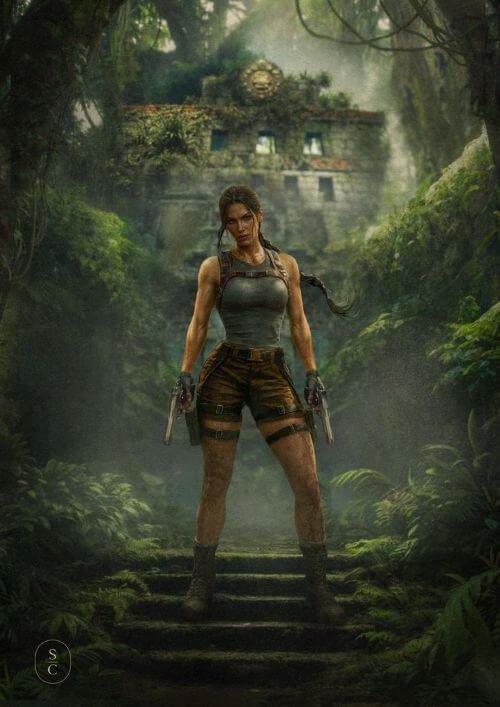
Works like Predator use jungle isolation to heighten vulnerability. The environment limits understanding and reinforces uncertainty. Meanwhile, franchises like Tomb Raider rely heavily on jungle ruins because discovery feels earned. Exploration becomes dangerous, and danger makes revelation meaningful.
The setting asks an interesting question: If something remained hidden this long, why?
Plot and Character Ideas
The River of Forgotten Names
Genres: Fantasy, Mystery, Religious Drama
Plot Idea: The priesthood believes a sacred jungle river carries the memories of the dead to the afterlife. When people forget their ancestors and eventually their own identities, the priesthood claims the river has been cursed.
Character Angle: A young funerary singer whose role is to memorize ancestral histories realizes entire bloodlines are disappearing from communal memory.
Twist(s): The memories are not vanishing; something deep in the jungle has collected them.
The Canopy Parliament
Genres: Political Fantasy, Intrigue
Plot Idea: Several jungle city-states built high within the canopy maintain peace through a rotating governing council. When one city’s harvest fails, old alliances fracture.
Character Angle: A translator raised between two rival cultures is recruited to mediate negotiations.
Twist(s): A faction seeking to force unification through crisis manufactures the food shortage.
The Blooming Plague
Genres: Environmental Fantasy, Horror
Plot Idea: A new flowering vine spreads rapidly through the jungle, improving crop yields while causing strange behavioral changes in those exposed to its pollen.
Character Angle: A healer notices that the “cured” patients all begin sharing identical dreams.
Twist(s): The vine is forming collective intelligence through human hosts.
The Ruins That Migrate
Genres: Science Fantasy, Exploration
Plot Idea: Ancient jungle ruins thought to be fixed in a location appear in different places every generation.
Character Angle: A cartographer obsessed with proving the migrations are real launches an expedition.
Twist(s): The city itself is alive and moves to avoid discovery.
The Silent Canopy
Genres: Sci-Fi, Environmental Thriller
Plot Idea: An alien jungle ecosystem abruptly falls silent. Birds stop migrating, insects disappear, and pollination collapses.
Character Angle: A xenobiologist investigating ecological collapse becomes increasingly isolated from their own team.
Twist(s): The ecosystem is not dying; it is collectively hiding.
The Jaguar Crown
Genres: Epic Fantasy, Religious Conflict
Plot Idea: A ruler’s legitimacy depends on surviving a sacred hunt within a forbidden jungle region believed to be inhabited by divine predators.
Character Angle: The reluctant heir has spent their life studying diplomacy rather than survival.
Twist(s): The predators are guardians protecting knowledge the ruling dynasty deliberately buried.
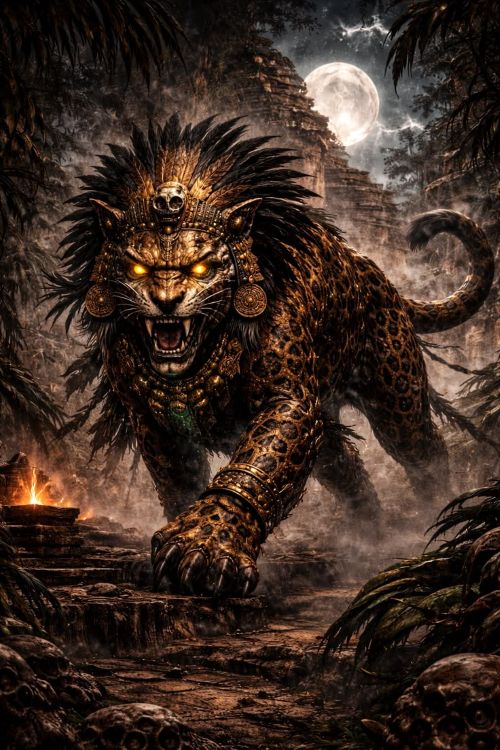
The Flood Season War
Genres: Political Fantasy, Survival
Plot Idea: Seasonal flooding alters river routes every year, shifting trade and territory between jungle nations. One year, the floods fail to arrive.
Character Angle: A river pilot whose family depends on seasonal trade must navigate growing conflict between desperate communities.
Twist(s): The missing floods are tied to an ancient infrastructure hidden beneath the jungle floor.
The Orchard of Saints
Genres: Mythic Fantasy, Religious Mystery
Plot Idea: Deep in the jungle grows an orchard believed to produce fruit granting visions from the gods. Pilgrims risk death to reach it.
Character Angle: The authorities send a skeptical temple archivist to document the orchard before political unrest closes access.
Twist(s): The visions are real, but they come from future generations rather than deities.
The Bone Road
Genres: Adventure Fantasy, Paranormal
Plot Idea: Traders crossing a dangerous jungle route rely on markers made from ancient bones said to repel spirits. One season, the spirits stop avoiding the road.
Character Angle: A caravan guard nearing retirement must escort one last journey.
Twist(s): The spirits are not becoming stronger. The protections were tied to a forgotten agreement humans broke centuries ago.
The Green Rebellion
Genres: Science Fiction, Political Drama
Plot Idea: A powerful corporation harvests biological materials from a sentient jungle ecosystem on a distant planet. Resistance movements emerged among both colonists and native populations.
Character Angle: A logistics officer overseeing extraction operations notices impossible patterns in supply failures.
Twist(s): The jungle is coordinating sabotage through species thought incapable of intelligence.
The Last Keeper of Paths
Genres: Fantasy, Coming-of-Age
Plot Idea: A jungle society depends on hereditary pathkeepers who memorize safe routes through shifting terrain. The last surviving apprentice inherits the responsibility before training is complete.
Character Angle: The protagonist doubts their abilities and secretly wants to abandon tradition altogether.
Twist(s): The paths are changing because the jungle is reacting to an approaching external threat.
The City Beneath the Roots
Genres: Fantasy, Mystery, Archaeological Adventure
Plot Idea: Excavations uncover a vast city beneath the roots of an ancient jungle. Early discoveries suggest that the civilization disappeared suddenly despite its advanced knowledge.
Character Angle: An ambitious scholar hoping to restore their damaged reputation joins the expedition.
Twist(s): The civilization never disappeared. It adapted, evolving alongside the jungle and remaining hidden in plain sight.

Jungles are landscapes of excess, of growth, complexity, and hidden things. They challenge characters not through emptiness but through overwhelming abundance. They obscure, preserve, and transform.
For writers, jungles provide settings where ecology, survival, spirituality, and culture become inseparable. Every path contains uncertainty. Every clearing may conceal history.
Because in a jungle, the question is rarely whether something is watching. The question is whether it recognized you before you noticed it.
Happy worldbuilding!
I hope this was helpful. Let me know if you have questions or suggestions by using the Contact Me form on my website or by writing a comment. I post every Friday and would be grateful if you would share my content.
If you want my blog delivered straight to your inbox every month along with exclusive content and giveaways, please sign up for my email list here.
Let’s get writing!
Copyright © 2026 Rebecca Shedd. All rights reserved.

