The Worldbuilder’s Toolkit: Rolling Hills and Valleys
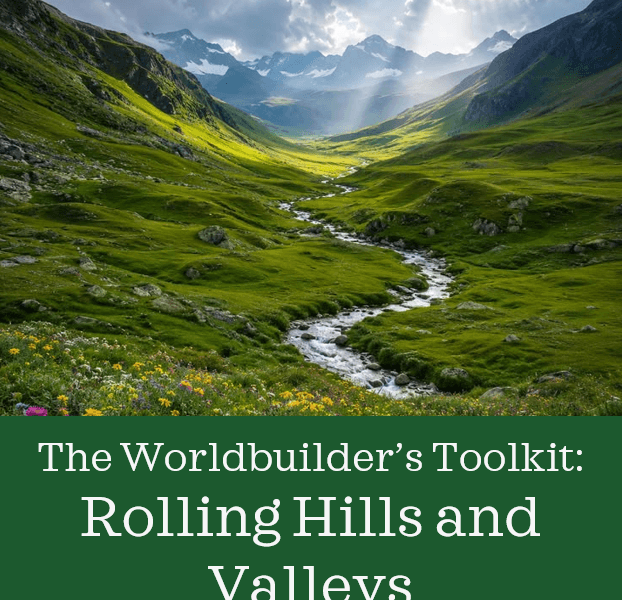

Not every memorable setting needs towering mountains or deadly deserts. Some of the most enduring landscapes in fantasy and science fiction are surprisingly gentle. Rolling hills and broad valleys evoke peace, prosperity, and familiarity, making them perfect places to establish what characters stand to lose or what they hope to protect.
Because these landscapes are often fertile, well-watered, and easy to traverse, they naturally become centers of civilization. Farms flourish, villages grow into market towns, and kingdoms establish their capitals in sheltered valleys. Yet beneath their tranquil appearance, hills and valleys can become settings for political intrigue, ancient mysteries, hidden civilizations, and devastating wars.
For writers, these landscapes offer a wonderful contrast. They can feel comforting and idyllic one moment, then become battlefields, haunted valleys, or gateways to forgotten worlds the next.
More Than Pretty Scenery
People sometimes dismiss rolling hills as “ordinary” landscapes, but their familiarity precisely makes them effective storytelling tools.
Gentle terrain allows civilizations to expand naturally. Roads are easier to build than through mountains or jungles. Rivers often wind through valleys, providing fresh water, fertile farmland, and trade routes. Communication between settlements becomes simpler, encouraging cultural exchange and political unity.
Hills create subtle variations in elevation that make landscapes visually interesting without becoming impassable. A village nestled in a valley feels protected, while a castle built atop a hill commands both the surrounding countryside and the roads leading toward it. This balance between accessibility and defensibility explains why so many real civilizations developed in similar environments.
Worldbuilding Tip: Before placing your cities randomly on a map, look for natural valleys, river systems, and gentle ridges. Geography often determines where civilizations flourish long before politics ever enters the picture.
Fertile Lands and the Rise of Kingdoms
Throughout history, prosperous kingdoms have often grown in fertile valleys. Reliable harvests support larger populations, which encourage specialization, trade, scholarship, and military strength. This prosperity can become both a blessing and a curse. Wealth attracts merchants, but it also attracts conquerors.
Rolling countryside may appear peaceful, but it often sits at the center of political struggles because everyone wants control of productive farmland.
A peaceful valley may therefore become the heart of an empire, the prize in a succession war, or the last untouched refuge during an age of chaos.
Character Idea: The heir to a prosperous farming valley has spent their entire life believing peace is normal until neighboring kingdoms begin competing for control of the region’s harvests.
Valleys as Natural Corridors
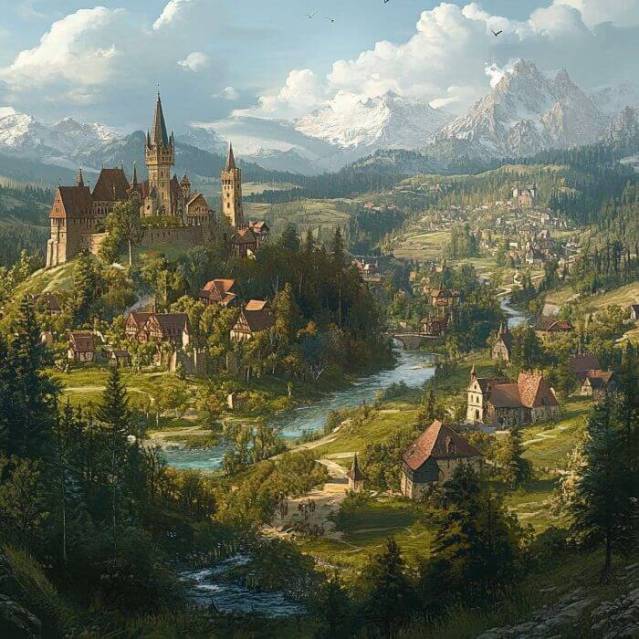
Valleys rarely exist in isolation. They often become highways through otherwise difficult terrain. Merchants, pilgrims, refugees, armies, and explorers naturally follow valleys because they provide easier travel than mountains or dense forests. Entire civilizations may grow along these routes, turning quiet farming communities into bustling crossroads.
Control of a valley can therefore mean control of commerce itself. A narrow valley between mountain ranges may become the only practical route connecting two kingdoms. Whoever controls that passage controls taxes, trade, and military movement.
Trade caravans may follow ancient valley roads established centuries earlier.
Fortified towns often develop where valleys narrow into defensible choke points.
Pilgrimage routes may follow valleys toward sacred shrines or ancient cities.
Plot Hook: A landslide blocks the only pass through a fertile valley, forcing rival kingdoms to negotiate as rumors spread that someone deliberately engineered the collapse.
Hidden Places Beneath Gentle Hills
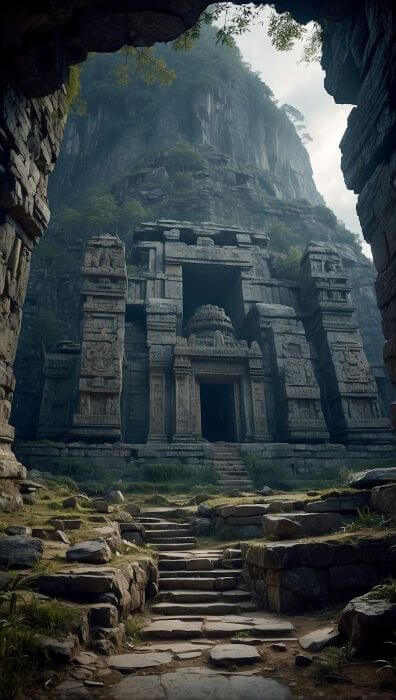
Rolling hills often conceal far more than they reveal. Unlike dramatic mountains, hills rarely appear threatening, making them ideal locations for hidden ruins, forgotten tombs, ancient tunnels, or buried civilizations. A landscape that seems peaceful on the surface can conceal thousands of years of history beneath its soil.
This contrast creates wonderful narrative tension. The ordinary becomes extraordinary. Farmers plowing fields might uncover ancient relics. Construction projects could expose buried temples. Entire civilizations may unknowingly exist above forgotten kingdoms. Fantasy and science fiction both benefit from this sense of concealed history.
Character Idea: A surveyor mapping farmland discovers strange geometric patterns beneath the hills that reveal an enormous, buried city stretching for miles underground.
Valleys as Places of Shelter and Traps
Valleys often symbolize safety. Sheltered from harsh winds and supplied with fresh water, they provide ideal locations for settlements.
Yet that same protection can become a vulnerability.
Armies entering a valley may find themselves surrounded. Floodwaters can become catastrophic. Landslides may isolate entire populations. In speculative fiction, magical barriers or alien phenomena might trap communities for generations. The geography itself creates dramatic possibilities because what protects people can also imprison them.
Worldbuilding Tip: Consider how your valley behaves during extreme weather or magical events. Safe landscapes become far more memorable when their advantages occasionally become liabilities.
Why Rolling Hills and Valleys Work: Examples in Storytelling
Many beloved fictional worlds use rolling hills and fertile valleys because they immediately communicate comfort, civilization, and home.
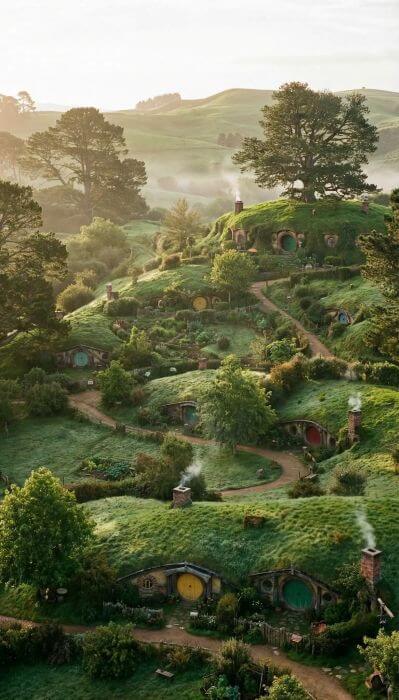
Perhaps the most iconic example is The Shire from The Lord of the Rings. Its rolling green countryside reflects the peaceful values of the Hobbits. When Frodo leaves the Shire, readers immediately understand what is at stake because the landscape itself embodies home, stability, and innocence.
In The Sound of Music, Austria’s rolling valleys reinforce themes of family, peace, and belonging, making the looming threat of war feel even more tragic.
Open-world games such as The Elder Scrolls V: Skyrim use valleys to naturally guide exploration. While towering mountains dominate the skyline, players frequently travel through fertile valleys connecting towns, farms, and ancient ruins.
Meanwhile, The Legend of Zelda: Breath of the Wild uses rolling hills to encourage curiosity. Gentle landscapes invite exploration because players can continually see intriguing landmarks just beyond the next ridge.
Tabletop RPG settings like Dungeons & Dragons frequently begin campaigns in quiet farming villages surrounded by hills. These environments provide believable starting points before heroes venture into increasingly dangerous regions.
These settings work because rolling landscapes create emotional contrast. They establish normalcy before the adventure begins.
Myths Hidden in Quiet Landscapes
Rolling hills often accumulate folklore precisely because they appear so ordinary. Ancient burial mounds, fairy rings, standing stones, mysterious caves, and forgotten battlefields fit naturally into gentle landscapes. Over generations, stories grow around them.
Perhaps every hill was once a sleeping giant. Perhaps dragons carved the valleys. Perhaps ancient kings still lie beneath grassy barrows, waiting for the world’s darkest hour.
Science fiction offers similar possibilities. The hills may conceal crashed spacecraft, buried terraforming machines, or colossal alien structures hidden beneath layers of sediment.
Plot Hook: A drought reveals dozens of perfectly circular hills that local legends claim are the tombs of sleeping gods. Archaeologists discover they are neither natural nor tombs.
Seasons and the Rhythm of Life
Rolling hills often emphasize the passage of time more than dramatic landscapes do. Fields change color with the seasons. Harvest festivals mark the year’s progression. Shepherds move livestock between pastures. Rivers swell during spring rains and shrink during summer heat. These repeating cycles create cultures deeply connected to agriculture and seasonal rhythms.
Fantasy worlds might tie magic to the harvest, while science-fiction colonies may synchronize society around planetary seasons or orbital cycles.
This rhythm gives readers a strong sense of place because everyday life feels grounded in the landscape itself.
Character Idea: A shepherd notices that every spring the same flock refuses to graze on one particular hill, eventually uncovering an ancient secret buried beneath the pasture.
Real-World Hill and Valley Cultures
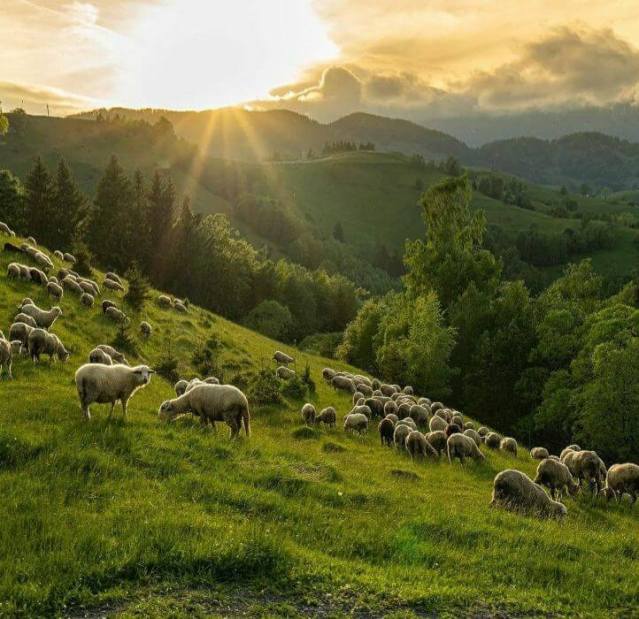
Rolling hills and fertile valleys have nurtured some of history’s most enduring civilizations. Unlike harsh deserts or towering mountain ranges, these landscapes encourage permanent settlement, agriculture, trade, and political stability. Rivers meander through valleys, fertile soil produces abundant harvests, and gentle terrain makes travel easier than in more rugged environments.
For writers, these landscapes offer an opportunity to build cultures that feel prosperous without becoming complacent. Their people may be merchants, farmers, scholars, knights, vintners, shepherds, or craftsmen. Yet history also reminds us that prosperous lands often become the focus of conquest, political intrigue, and cultural exchange.
The following cultures show how rolling hills and valleys shape everything from architecture and warfare to religion and identity.
Tuscany and Medieval Italy — Prosperity Among the Hills
The rolling hills of Tuscany have supported agriculture for thousands of years. Vineyards, olive groves, wheat fields, and small farming villages dot the countryside, while hilltop towns provided protection during periods of political instability.
People built many medieval Italian cities atop hills rather than within valleys. Elevation offered defensive advantages while still allowing access to fertile farmland below. These towns became centers of commerce, banking, scholarship, and art during the Renaissance, connected by roads winding through productive countryside.
The landscape also encouraged political fragmentation. Independent city-states competed economically and militarily while remaining closely connected through trade.
Inspiration for Fiction: A kingdom of prosperous hill cities could be politically divided but economically intertwined. Noble families might compete for influence while relying on one another’s trade networks to survive. Instead of one massive capital, your world could feature many wealthy hilltop cities, each specializing in a different craft, magical discipline, or scientific innovation.
Character Idea: A young diplomat raised among rival hill cities must prevent generations of commercial competition from erupting into civil war.
Worldbuilding Tip: Prosperity often creates competition rather than unity. Wealthy neighboring cities rarely agree on everything.
The English Countryside — Villages, Commons, and Quiet Strength
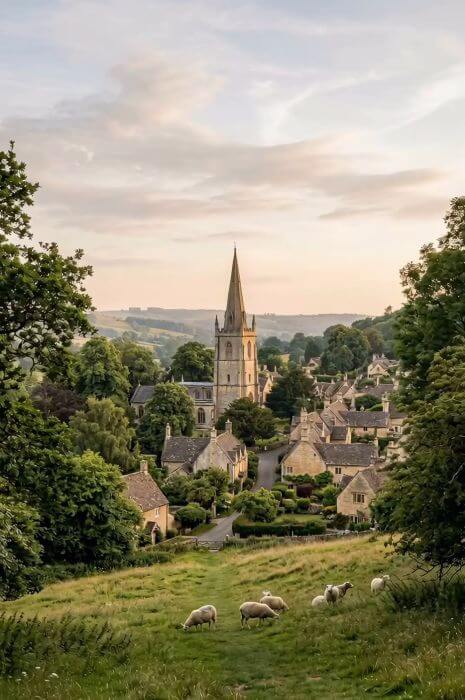
Much of rural England consists of rolling hills divided by hedgerows, streams, forests, and farmland. Villages traditionally grew around churches, mills, and market squares, while castles and manor houses overlooked the surrounding countryside.
This landscape produced communities with strong local identities. Agriculture formed the backbone of society, but trade connected even small villages to larger towns and cities. Seasonal festivals, harvest celebrations, and common grazing lands reinforced a rhythm of life tied closely to the land.
Although peaceful in appearance, these regions also witnessed invasions, civil wars, and political upheaval throughout history.
Inspiration for Fiction: This is excellent inspiration for creating a homeland worth defending. Rather than emphasizing grandeur, focus on familiarity: villages where everyone knows each other, seasonal traditions, and generations of families farming the same land. Such settings provide emotional stakes because readers understand exactly what characters stand to lose.
Character Idea: A shepherd whose quiet valley has never known war volunteers to defend it after enemy scouts appear along the surrounding hills.
The Loire Valley — Rivers, Castles, and Royal Power
The Loire Valley combines fertile farmland, navigable rivers, and gently rolling countryside. Over centuries, it became one of France’s political and cultural centers, famous for its castles, vineyards, and prosperous estates.
The Loire shows how geography influences political power. Rivers enabled trade and communication, while fertile land generated the wealth necessary to support monarchs, nobles, and artisans.
Rather than building isolated fortresses, rulers often constructed elegant castles overlooking productive landscapes, reflecting confidence and prosperity.
Inspiration for Fiction: Imagine a river valley filled with noble estates, magical academies, or ancient fortresses overlooking vineyards and orchards. Political rivalries may play out through diplomacy, marriage alliances, or economic competition rather than constant warfare.
Plot Hook: A succession crisis erupts after every noble family in a prosperous valley claims descent from the same legendary founder.
The Swiss Valleys — Independence Through Geography
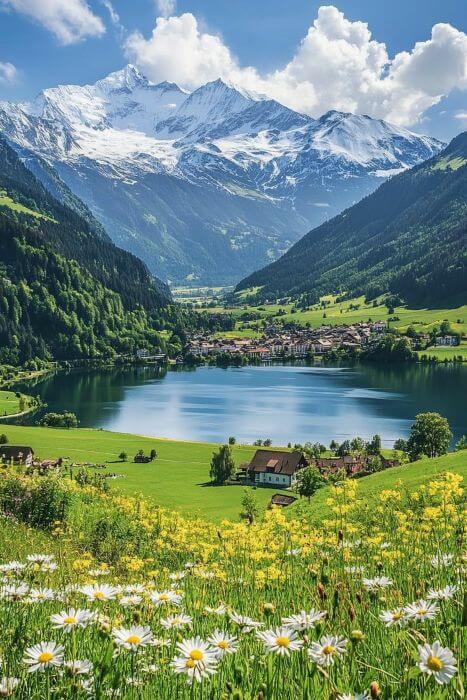
Although Switzerland is famous for its mountains, many of its historic communities developed within fertile alpine valleys connected by passes. These valleys often functioned as independent communities, protected by surrounding terrain while maintaining trade through carefully controlled routes.
Geography encouraged both cooperation and independence. Neighboring valleys frequently developed distinct identities while forming alliances for mutual defense.
Inspiration for Fiction: Your valley cultures do not all need to belong to the same kingdom. Separate valley communities may maintain different laws, customs, dialects, or religions despite living relatively close together. Travel between them could be easy during summer but impossible during winter, creating fascinating political dynamics.
Worldbuilding Tip: Geography doesn’t just separate nations; it can separate neighboring communities, allowing tremendous cultural diversity within surprisingly small regions.
The Celtic Hillfort Cultures — Power Above the Valleys
Across ancient Britain and parts of continental Europe, Celtic peoples often constructed impressive hillforts overlooking fertile valleys. These elevated settlements served as defensive positions, political centers, and symbols of authority.
The surrounding valleys provided farmland, while the hilltops offered commanding views of approaching travelers and potential enemies.
Many of these landscapes later became associated with myths involving heroes, fairies, sacred wells, and ancient kings.
Inspiration for Fiction: Instead of building castles, your culture might construct massive fortified hill settlements connected by beacon fires and sacred roads. The hills themselves could become symbols of ancestral authority, with every ruling family tracing its lineage to a particular summit.
Character Idea: A young guardian of an ancient hillfort discovers that the ceremonial beacon fires once served a far older purpose than simply warning of invasion.
The Andean Valleys — Fertility Between Mountains
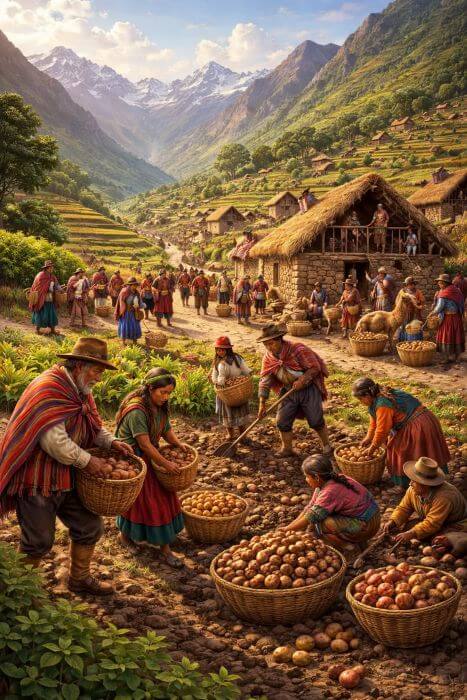
The valleys of the Andes supported civilizations such as the Inca Empire by creating fertile pockets between towering mountain ranges. Terraced agriculture, sophisticated engineering, and extensive road systems connected otherwise isolated communities.
These valleys became centers of agriculture, governance, and culture despite the challenging surrounding terrain.
Inspiration for Fiction: A valley civilization surrounded by dangerous mountains could become a beacon of stability in an otherwise hostile world. Roads connecting isolated settlements might be engineering marvels maintained for centuries. Prosperity would depend on careful planning, irrigation, and cooperation rather than sheer abundance.
Plot Hook: A mysterious collapse severs the ancient road connecting several fertile valleys, forcing isolated communities to rediscover one another after generations apart.
Common Themes in Hill and Valley Cultures
Although these cultures developed across different continents and time periods, they share several striking characteristics.
Fertile land encourages permanent settlements and long-term political stability.
Roads and rivers promote trade, communication, and cultural exchange.
Prosperity often attracts invasion, creating the need for defensive architecture and organized governments.
Strong regional identities emerge as towns and valleys develop their own traditions, festivals, and rivalries.
These recurring patterns provide an excellent framework for designing believable fictional societies.
Bringing It Into Your Worldbuilding
When creating a culture based on rolling hills and valleys, think beyond agriculture. Consider how prosperity changes people. Stable food supplies allow education, craftsmanship, philosophy, music, and scientific discovery to flourish. Wealth creates opportunities, but it also breeds ambition, jealousy, and political competition.
Remember that gentle landscapes often hide deep histories. The hill supporting today’s peaceful vineyard may once have been the site of an ancient fortress. A quiet valley church may stand atop a forgotten temple. An ordinary pasture may conceal the ruins of a civilization that shaped the entire region.
The greatest strength of these landscapes is their layered history. Every generation builds upon the foundations of those who came before.
Living in Rolling Hills and Valleys
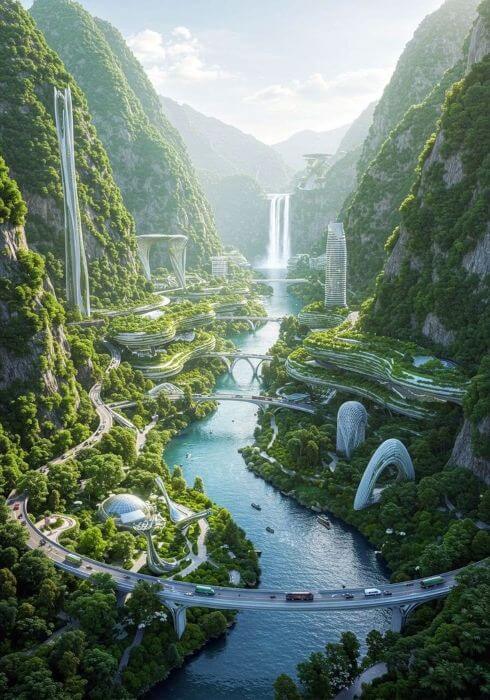
Rolling hills and fertile valleys are among the most desirable places to live. Rich soil, dependable water, moderate climates, and relatively easy travel allow agriculture to flourish, supporting larger populations than many harsher environments. Villages grow into towns, towns become cities, and over generations these regions often develop into the cultural and political heart of a kingdom.
For writers, this prosperity makes hills and valleys ideal settings for stories about civilization itself. They are places where people have the luxury to build universities, temples, markets, theaters, and libraries. Art flourishes because food is plentiful. Trade expands because roads are passable. Families remain on the same land for generations, creating deep traditions and strong local identities.
Yet prosperity comes at a price.
Fertility Breeds Civilization
A fertile valley rarely remains empty for long. As settlements expand, fields spread across the landscape, roads connect neighboring communities, and trade creates an increasing interdependence between villages and cities.
Because survival is less precarious than in deserts or tundra, societies often devote more energy to improving quality of life. Specialized professions emerge. Farmers support blacksmiths, scholars, priests, artists, and merchants. Political institutions become more complex because people have time to think beyond day-to-day survival.
This stability can shape the personalities of the people who grow up there. They may value cooperation over competition, negotiation over violence, and long-term planning over immediate gain. Family farms become symbols of continuity, and harvest festivals celebrate not only abundance but the shared effort required to maintain it.
Character Idea: The daughter of a respected farming family dreams of becoming an explorer, but leaving the valley means abandoning generations of tradition and perhaps the inheritance that keeps her community together.
A Homeland Worth Protecting
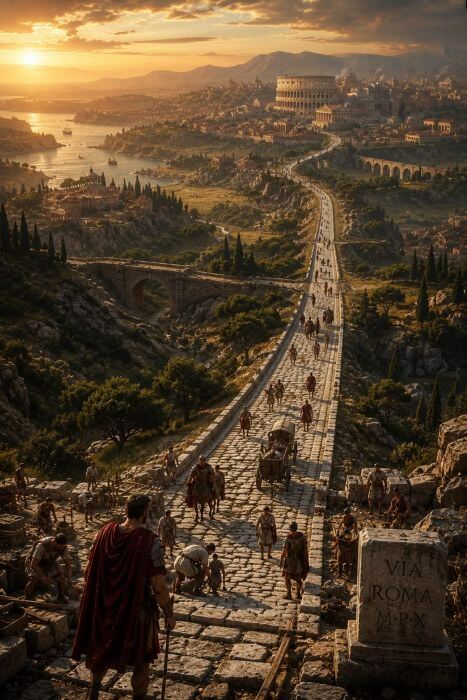
One reason fertile landscapes work so well in storytelling is that readers instinctively understand why people fight to defend them. Unlike barren wastelands or frozen tundra, these lands represent home in its most recognizable form. Green fields, grazing livestock, orchards, rivers, and villages create an emotional connection long before conflict begins.
This is why so many stories begin in peaceful countryside. The audience experiences ordinary life before the threat appears. The destruction of fertile land carries emotional weight because it represents more than lost territory. It threatens families, traditions, and the future of an entire culture.
Plot Hook: A valley famous for producing the kingdom’s harvest faces an impossible choice: surrender peacefully to an invading empire or burn its own fields to deny the enemy the food needed to continue the war.
The Curse of Open Ground
The same geography that makes hills and valleys attractive also makes them vulnerable.
Unlike mountain kingdoms or island nations, fertile lowlands often lack significant natural defenses. Armies can move across open countryside with relative ease. Villages become visible from great distances, and invading forces may follow the same roads that merchants use during peacetime.
This exposure forces societies to think differently about defense. Instead of relying entirely on geography, they often invest in walls, castles, watchtowers, fortified bridges, and professional armies. Hilltops become valuable not because they are difficult to climb, but because they provide visibility across the surrounding countryside.
Worldbuilding Tip: Ask yourself how your peaceful kingdom prepares for war. Does it maintain beacon towers across the hills? Local militias in every village? Fortified monasteries overlooking important roads? A landscape with few natural defenses often produces cultures that value vigilance.
Why Great Battles Are Fought Here
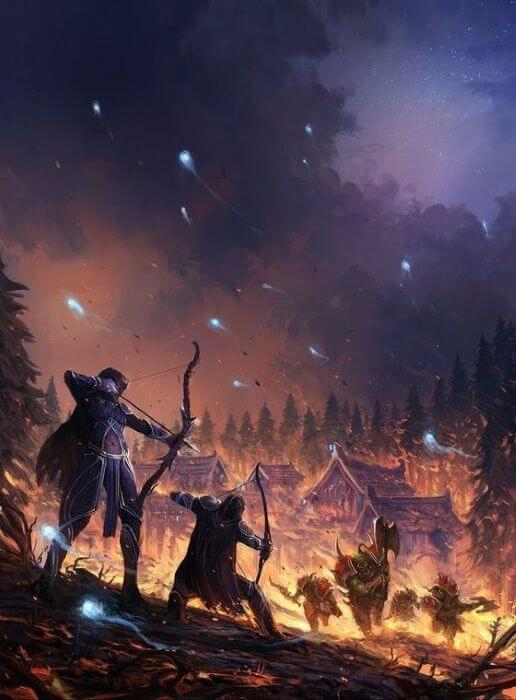
History’s greatest battles have often occurred not in mountains or forests but across fertile plains, broad valleys, and gently rolling hills. These landscapes allow armies to maneuver, deploy cavalry, transport supplies, and feed large numbers of soldiers. Roads and rivers make logistics possible, while nearby farmland provides food for both defenders and invaders.
The result is a tragic irony. The very lands most capable of supporting civilization are often the first to suffer when kingdoms go to war.
Fields become camps. Orchards are cut down for fortifications. Villages become supply depots or battlefields. A peaceful valley can become a place that people remember for bloodshed instead of harvest.
Character Idea: A young vintner inherits a family vineyard built atop an ancient battlefield and begins uncovering relics that challenge the official history of the kingdom’s greatest victory.
Landscapes That Remember
Even after wars end, the land remembers.
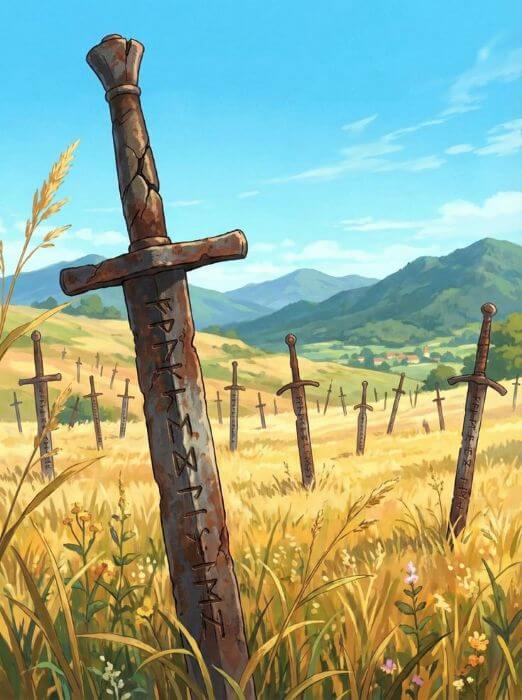
A peaceful meadow may hide forgotten graves. An isolated hill could once have supported a fortress. Stone walls dividing farmland may have originally marked ancient defensive lines. Local festivals may commemorate victories that people have long forgotten the true stories of.
These layers of history give rolling landscapes extraordinary narrative depth. Unlike dramatic ruins standing in deserts or jungles, the evidence here is often subtle. The ordinary becomes meaningful once characters learn to read the landscape.
A shepherd may unknowingly graze sheep atop the foundations of an imperial palace. Children might play in earthworks that once defended an entire kingdom.
Plot Hook: During the construction of a new irrigation canal, workers uncover an enormous battlefield where both armies vanished without explanation centuries earlier.
Peace Does Not Mean Simplicity
Because rolling hills are associated with comfort and prosperity, writers sometimes overlook the conflicts that naturally arise there.
Abundant land creates disputes over inheritance, taxation, borders, water rights, and succession. Prosperity attracts merchants, refugees, nobles, and invaders alike. Political intrigue often flourishes where survival is relatively secure because people can afford to compete for influence rather than necessities.
These conflicts may be quieter than battles against dragons or eldritch horrors, but they can be just as compelling.
A neighboring lord diverting a river may threaten thousands of livelihoods. A failed harvest can destabilize an entire kingdom. A disputed inheritance may ignite generations of civil war.
The landscape provides abundance, but abundance simply changes what people fight over.
Plot and Character Ideas
The King’s Orchard
Genres: Political Fantasy, Court Intrigue
Plot Idea: A fertile valley renowned for its orchards has long remained neutral between rival kingdoms. When the aging ruler dies without an heir, neighboring nations maneuver to control the valley’s wealth before a civil war erupts.
Character Angle: A humble orchard keeper unexpectedly discovers they are the last surviving member of the ruling bloodline, but they have no desire to become a monarch.
Twist(s): The valley’s prosperity comes from an ancient magical covenant with the land itself. The covenant will only recognize a ruler chosen for selflessness rather than noble birth.
The Sleeping Barrows
Genres: Mythic Fantasy, Paranormal Mystery
Plot Idea: The rolling hills surrounding a quiet farming village are dotted with ancient burial mounds. Every generation, one mound mysteriously opens for a single night.
Character Angle: A skeptical village historian becomes determined to prove the legends surrounding the barrows are exaggerated folklore.
Twist(s): The barrows are not tombs but prisons, and each opening allows one ancient guardian to walk the land until dawn.
The Harvest Accord
Genres: Political Fantasy, Environmental Drama
Plot Idea: Several prosperous valleys depend on an intricate system of irrigation canals maintained through centuries-old treaties. When drought strikes, old alliances unravel.
Character Angle: A canal engineer receives orders to negotiate water rights but uncovers that someone secretly diverts water for political gain.
Twist(s): The drought is artificial. An underground civilization has redirected the rivers to prevent a greater catastrophe below the surface.
The Valley of Echoes
Genres: Fantasy, Religious Mystery
Plot Idea: Pilgrims journey to a secluded valley where they believe the voices carried by the wind convey messages from the gods. When the voices suddenly change, they throw the region’s dominant religion into turmoil.
Character Angle: A young priest assigned to interpret the voices hears messages that contradict centuries of sacred doctrine.
Twist(s): The voices belong not to gods, but to an ancient civilization using forgotten technology hidden beneath the valley.
The Green Banner Rebellion
Genres: Historical Fantasy, Revolution
Plot Idea: Wealthy nobles who own the fertile hills continue raising taxes after several years of record harvests, pushing farming communities toward rebellion.
Character Angle: A respected village reeve who has spent decades avoiding politics reluctantly becomes the face of the uprising.
Twist(s): The rebels discover that the nobility has been hiding evidence that the valley’s fertility is failing.
The Shepherd’s Crown
Genres: Coming-of-Age Fantasy, Adventure
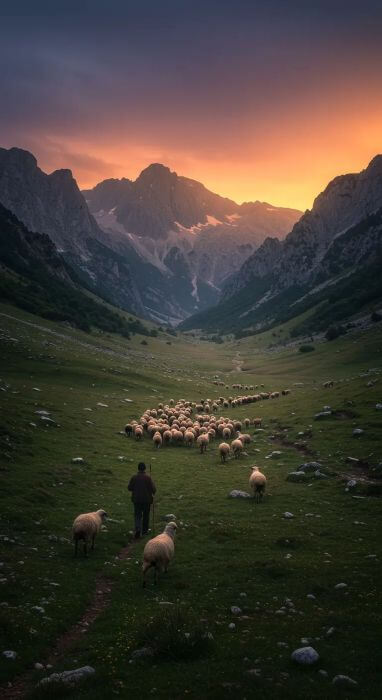
Plot Idea: Every generation, people choose the next ruler of the valley by following an ancient flock of sheep that mysteriously refuses human guidance.
Character Angle: A teenage shepherd with little confidence in their own abilities is selected to accompany the flock.
Twist(s): The sheep are not choosing a ruler; they are searching for the reincarnation of the valley’s ancient protector.
The Battle of Seven Hills
Genres: Epic Fantasy, Military Fiction
Plot Idea: Two empires prepare for war across a landscape of rolling hills that has become the most strategically important battlefield on the continent.
Character Angle: A military surveyor responsible for mapping troop movements realizes both armies are unknowingly marching toward the same hidden danger.
Twist(s): The hills conceal a dormant magical weapon that neither side understands, and the battle itself threatens to awaken it.
The Hollow Beneath the Vineyard
Genres: Fantasy Mystery, Archaeological Adventure
Plot Idea: Construction beneath one of the kingdom’s oldest vineyards uncovers an immense underground complex older than recorded history.
Character Angle: A winemaker more interested in preserving family traditions than uncovering ancient mysteries becomes the reluctant leader of the investigation.
Twist(s): The vineyard flourishes because its roots have been drawing magical energy from the buried city for centuries.
The Valley Without Winter
Genres: Environmental Fantasy, Mystery
Plot Idea: One secluded valley remains green year-round while neighboring regions endure increasingly harsh winters. Refugees flood into the area, straining its resources.
Character Angle: A village healer notices subtle changes in local plants that suggest the valley’s miracle cannot last forever.
Twist(s): A guardian spirit that is slowly sacrificing its own life sustains the eternal growing season.
The Festival of Lantern Hills
Genres: Fantasy, Paranormal
Plot Idea: Every autumn, glowing lights drift across the surrounding hills during a harvest festival. The villagers believe they are ancestral spirits blessing the fields.
Character Angle: A traveling scholar arrives intending to expose the phenomenon as a natural occurrence.
Twist(s): The lights truly are ancestral spirits, but this year they are gathering to warn of an approaching catastrophe rather than celebrate the harvest.
The Valley Road
Genres: Science Fiction, Political Thriller
Plot Idea: On a terraformed colony world, a single fertile valley connects several isolated settlements. When the transportation network begins mysteriously failing, political tensions threaten to fracture the colony.
Character Angle: A transportation planner accustomed to solving logistical problems discovers the failures follow an impossible mathematical pattern.
Twist(s): The valley lies atop an ancient alien transit system that is slowly reactivating beneath the colony.
The Hill That Remembers
Genres: Mythic Fantasy, Character Drama
Plot Idea: According to local legend, one lonely hill remembers every significant event that has ever occurred upon it. Those who sleep there dream of forgotten history.
Character Angle: A disgraced chronicler seeking to restore their reputation spends the night atop the hill, hoping to uncover the truth behind a legendary king.
Twist(s): The hill does not simply remember the past. It reveals alternate histories shaped by choices the chronicler never made, forcing the chronicler to question whether history itself is fixed.
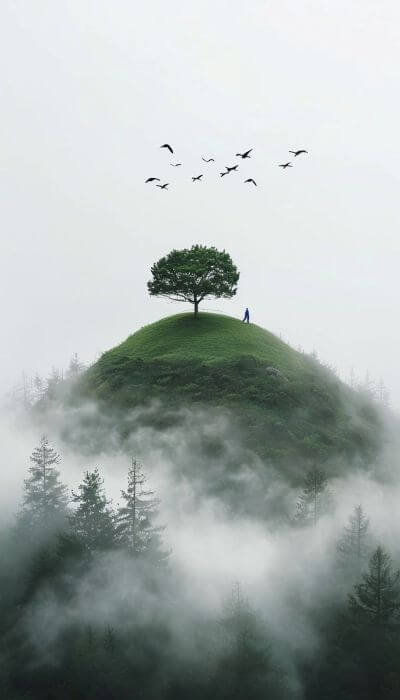
Rolling hills and valleys may appear gentle, but they are among the richest landscapes for worldbuilding. Their fertile soil supports kingdoms. Their valleys guide trade and migration. Their quiet hills conceal forgotten histories, sacred places, and ancient mysteries.
For writers, these landscapes offer an ideal balance between comfort and adventure. They provide believable homes for thriving civilizations while leaving countless opportunities for conflict, exploration, and discovery.
Because sometimes the greatest adventures don’t begin atop towering mountains or inside haunted ruins. Sometimes the next grand adventure may begin in the quietest village on the greenest hill.
Happy worldbuilding!
I hope this was helpful. Let me know if you have questions or suggestions by using the Contact Me form on my website or by writing a comment. I post every Friday and would be grateful if you would share my content.
If you want my blog delivered straight to your inbox every month along with exclusive content and giveaways, please sign up for my email list here.
Let’s get writing!
Copyright © 2026 Rebecca Shedd. All rights reserved.


Wow. Your advice is amazing. I’m an aspiring author and I’m going to find your blog amazingly helpful.
LikeLike