The Worldbuilder’s Toolkit: Floating Islands and Skylands
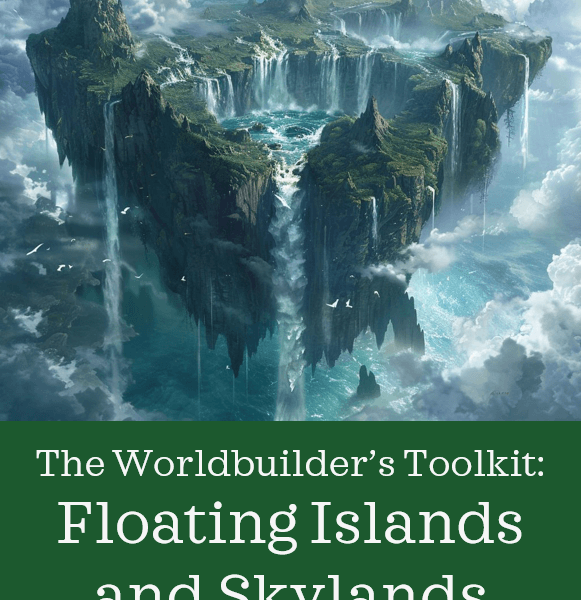
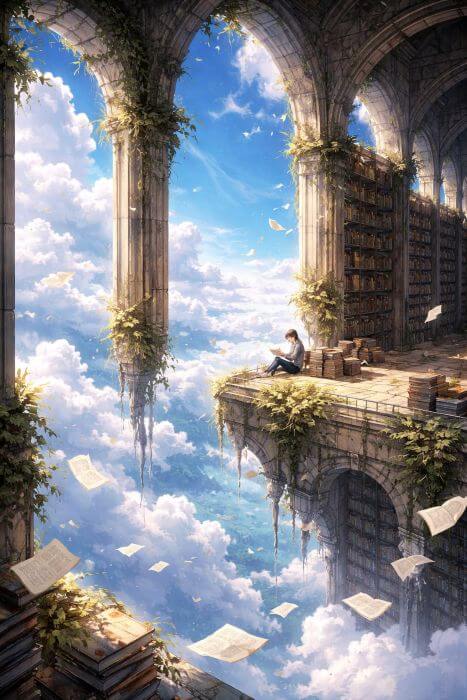
Few settings inspire wonder as immediately as floating islands. Whether they drift lazily through the clouds, orbit a dying planet, or hover above an endless abyss, skylands challenge our expectations of geography. They transform the sky from empty space into an inhabited frontier filled with kingdoms, monsters, trade routes, and mysteries.
Floating islands are appealing because they combine familiar landscapes with unfamiliar physics. A meadow floating thousands of feet above the ground feels both recognizable and magical. Readers understand the village, the castle, or the forest but the impossible location changes everything about how people live, travel, and think about their world.
For fantasy and science fiction writers, skylands offer one of the greatest opportunities for imaginative worldbuilding. Every practical question – how people travel, grow food, defend themselves, or even survive – becomes an invitation to build a richer setting.
Why Floating Islands Captivate Readers
Floating islands evoke a sense of limitless possibility. Unlike ordinary continents, they do not stay in one place. They can drift, collide, rise, sink, or disappear entirely. They encourage exploration because every island might contain something completely different from the last.
They also naturally create vertical storytelling. Instead of traveling north or south, characters may journey upward into thinner air or descend toward dangerous cloud seas below. Elevation itself becomes part of the narrative.
Perhaps most importantly, floating islands preserve mystery. Clouds hide what lies beneath. Horizons stretch farther than they do on the ground. Every voyage carries the possibility of discovering a forgotten civilization or an entirely new ecosystem suspended in the sky.
Plot Hook: Cartographers discover that one of the oldest floating islands has changed its course for the first time in recorded history, drifting toward territory no ship has ever returned from.
The Rules Behind the Impossible
One of the first questions readers will ask is simple:
Why are the islands floating?
Fantasy and science fiction answer this question differently, and the explanation shapes the tone of the entire setting.
Fantasy worlds may rely on ancient magic, divine intervention, enchanted crystals, or elemental forces. The islands could be fragments of a shattered world held aloft by forgotten spells or the homes of sky gods who lifted them above earthly conflict.
Science fiction usually looks toward advanced technology or unusual physics. Anti-gravity generators, exotic minerals, planetary magnetic fields, dark matter, or alien engineering might explain why entire landmasses remain suspended.
Whatever explanation you choose, consistency matters more than realism. Readers are remarkably willing to accept impossible premises if the world follows its own internal logic.
Worldbuilding Tip: Decide whether floating is natural or artificial. If someone intentionally created the islands, ask who built them and why.
Isolation in Three Dimensions
Floating islands create a unique form of isolation.
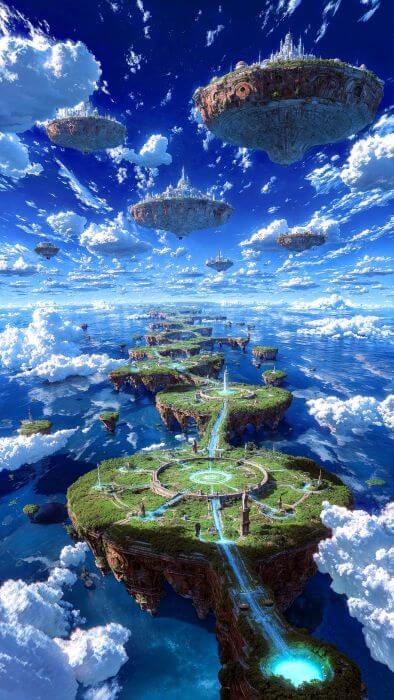
Unlike ordinary islands surrounded by water, skylands are separated by empty air. A neighboring island may be visible on the horizon yet remain completely inaccessible without specialized transportation.
This affects culture in fascinating ways. Languages diverge. Political systems develop independently. Religious traditions develop around different stars, winds, or celestial events. Entire civilizations may exist only a few miles apart while remaining strangers for centuries.
Islands connected by reliable air routes may become thriving trade partners despite being physically separated.
Character Idea: A courier who has spent years delivering messages between isolated sky kingdoms discovers one island has vanished overnight without leaving a trace.
Building Civilizations Above the Clouds
Living on floating islands presents challenges that ground-based civilizations never face.
Fresh water may depend on rainfall or elaborate collection systems. Soil depth limits agriculture. Construction materials become precious if stone or timber must be imported from other islands. Every community must consider what happens if supplies stop arriving.
These limitations often encourage highly specialized economies. One island may produce grain, another lumber, another magical crystals, while a fourth serves as the political or religious capital. Air travel transforms trade into a necessity rather than a luxury.
Airships may replace caravans as the primary means of commerce.
Flying creatures might function as livestock, cavalry, or postal services.
Entire guilds could exist solely to maintain docks, navigation beacons, and weather forecasting.
Worldbuilding Tip: Consider what your island cannot produce. Scarcity often creates more interesting trade relationships than abundance.
The Sky as an Ocean
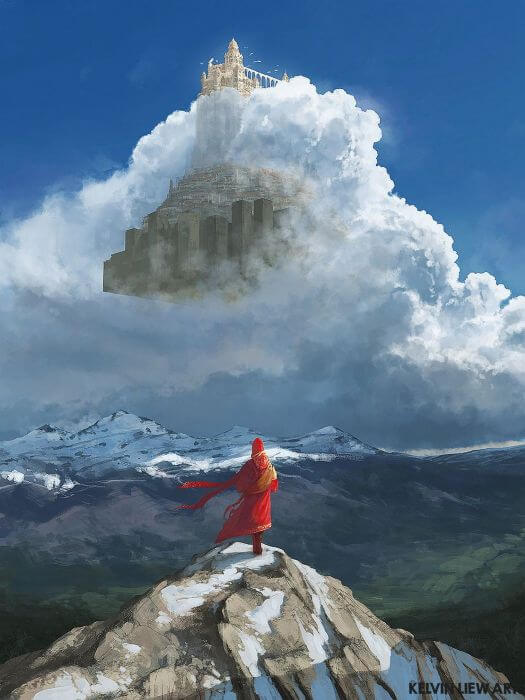
One of the most effective ways to think about floating islands is to treat the sky like an ocean.
Clouds become fog banks. Air currents replace ocean currents. Storms become maritime hazards. Pirates raid merchant vessels, while navigators chart safe routes through dangerous weather.
This approach makes the setting feel immediately intuitive while preserving its unique atmosphere. The difference is that falling overboard is no longer merely inconvenient. It may be fatal. Or perhaps the clouds conceal something far stranger than an open sky.
Plot Hook: Merchant captains disappear along a well-traveled aerial route after reporting sightings of impossible islands hidden inside storm clouds.
Why Floating Islands Work: Examples in Storytelling
Floating islands have appeared in speculative fiction for decades because they naturally inspire exploration and adventure.
In Sky’s End, floating islands create a dangerous, fragmented world where airborne travel and survival shape every aspect of society. The isolation of the islands reinforces both political tension and the constant sense of peril, while the creatures inhabiting the skies transform travel into an adventure.
Treasure Planet brilliantly reimagines classic sailing adventures by treating space as an ocean. Although its worlds are not composed entirely of floating islands, its solar sailing ships, floating ports, and swashbuckling atmosphere provide excellent inspiration for creating believable aerial cultures and trade networks.
In The Legend of Zelda: Skyward Sword, islands suspended above the clouds create a world where flight defines exploration. Each island possesses its own identity, encouraging players to experience the sky as a collection of distinct communities rather than one continuous landscape.
The floating city of Columbia in BioShock Infinite demonstrates how an airborne civilization can reinforce political themes. Isolation allows its culture to evolve separately from the world below, making geography an essential part of the narrative rather than mere scenery.
Tabletop RPG settings such as Dungeons & Dragons frequently use floating islands as homes for cloud giants, ancient magical academies, or forgotten civilizations, allowing Game Masters to create spectacular locations that feel physically disconnected from ordinary adventures.
These settings succeed because they transform movement itself into storytelling. Reaching the destination becomes part of the adventure.
Ecosystems Above the World
Floating islands need not resemble ordinary landscapes.
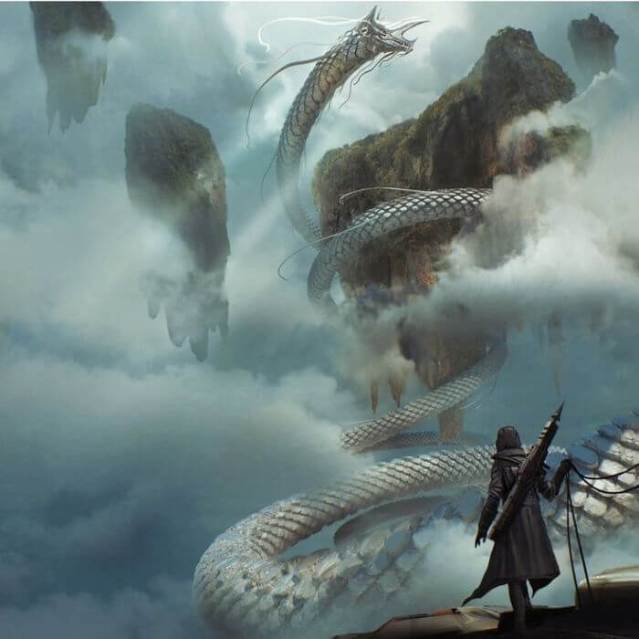
Perhaps enormous roots hang beneath them, drawing nutrients from magical currents. Giant birds may nest along their cliffs. Entire forests could grow upside down beneath the islands, illuminated by glowing crystals instead of sunlight.
Science fiction offers equally fascinating possibilities. Low gravity may produce towering vegetation. Alien organisms might float between islands like airborne jellyfish, while photosynthetic creatures drift through the atmosphere collecting sunlight.
These ecosystems should evolve alongside the environment rather than simply being transplanted from Earth.
Character Idea: A biologist studying sky-whales discovers they are quietly carrying seeds between islands, making them the hidden architects of every floating ecosystem.
Myths Above the Clouds
Throughout human history, the sky has been associated with gods, heaven, prophecy, and transcendence. Floating islands naturally inherit that symbolism.
Some cultures may believe that the highest islands are closest to the divine. Others may fear descending below the clouds, convinced terrible monsters dwell in the abyss. Ancient ruins perched on isolated peaks can become pilgrimage sites or forbidden places where mortals once challenged the heavens.
Science fiction can reinterpret these myths through advanced civilizations, orbital habitats, or forgotten alien technology. What appears divine may simply be misunderstood engineering.
Either way, vertical geography naturally reinforces themes of aspiration, faith, pride, and discovery.
Plot Hook: Every religion claims the highest floating island is sacred, but when explorers finally reach it, they find no one has lived there for thousands of years.
Defying Gravity: How Floating Islands Might Actually Float
One of the first questions readers are likely to ask about floating islands is surprisingly simple:
Why don’t they fall?
The answer doesn’t need to be scientifically accurate; it needs to be believable within the rules of your world. Whether you’re writing high fantasy, hard science fiction, or something in between, the explanation for why an island floats tells readers a great deal about your setting.
Just as importantly, it influences everything else. Transportation, warfare, trade, religion, architecture, and even mythology all grow naturally from the forces that keep the islands suspended.
Floating in Water: Nature’s Original Skylands
The simplest inspiration comes from the real world.
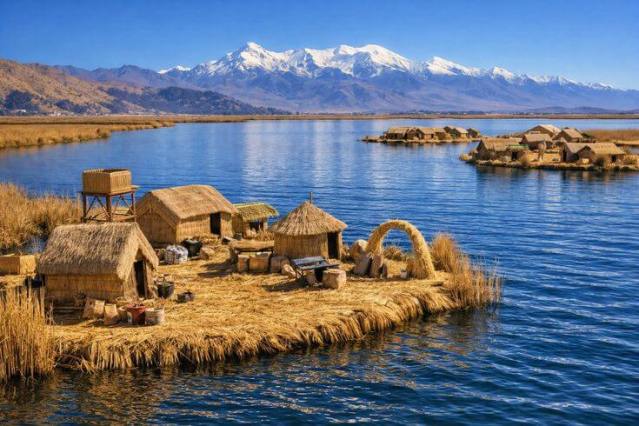
Floating islands already exist. Around the world, mats of peat, vegetation, and intertwined roots can become buoyant enough to support shrubs, trees, wildlife, and even people. Lakes in places like Loktak Lake contain naturally floating masses of vegetation called phumdis, while floating reed islands on Lake Titicaca have been home to the Uru people for centuries.
Scaling this concept upward opens fascinating possibilities. Entire floating forests might drift across inland seas. Mobile villages could migrate with seasonal currents. Floating continents might slowly collide, separate, or rotate around one another.
Unlike fixed islands, these landscapes would always be changing.
Worldbuilding Tip: If your floating islands drift on water, decide what controls their movement. Ocean currents, tides, storms, magical forces, or even enormous creatures beneath the surface can all create dynamic geography.
Floating in the Sky Through Magic
Fantasy offers perhaps the greatest freedom.
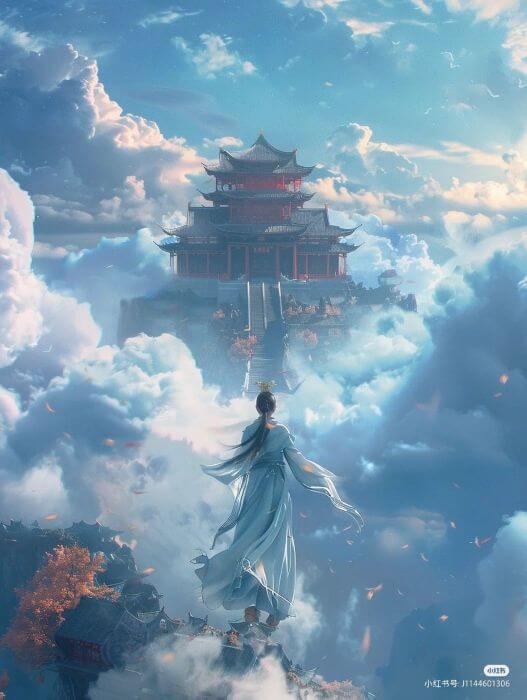
Entire islands may remain aloft through ancient enchantments, divine blessings, elemental spirits, or magical crystals embedded deep within the bedrock. Perhaps a forgotten war shattered the world, leaving fragments permanently suspended above the surface. The important question is not simply what keeps them floating.
It is who controls that power.
If magical crystals provide lift, kingdoms may wage wars over mining rights. If priests maintain ancient enchantments through ritual, political stability becomes tied directly to religious institutions. If dragons or sky spirits sustain the islands, diplomacy with nonhuman beings may become essential for civilization itself.
Magic should solve one problem while creating several new ones.
Character Idea: A young engineer responsible for maintaining an island’s levitation crystals discovers they are slowly losing power, forcing them to investigate technology no one has understood for a thousand years.
Floating Through Advanced Technology
Science fiction often approaches floating islands from an engineering perspective.
Perhaps enormous anti-gravity generators counteract planetary gravity. Exotic minerals naturally repel the planet’s magnetic field. Alien civilizations mastered inertial manipulation long before humanity arrived.
Another possibility involves orbital mega-structures or artificial habitats suspended by technologies far beyond contemporary science.
The beauty of technological explanations is that they introduce maintenance. Machines fail. Power sources run low. Ancient systems require repair.
A floating civilization suddenly becomes dependent upon engineers, technicians, and scientists every bit as much as kings or soldiers.
Plot Hook: An isolated floating colony descends toward the surface after discovering that the civilization that built its gravity engines disappeared centuries ago.
Living in Another Medium
Floating islands do not have to exist in ordinary air. Speculative fiction allows writers to imagine entirely different environments where buoyancy replaces gravity as the dominant force.
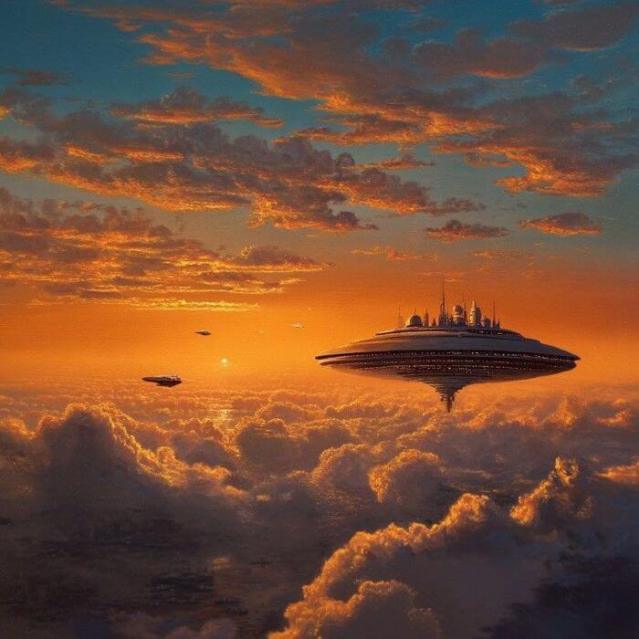
Imagine worlds where continents drift through dense atmospheres rich enough to support enormous landmasses. Perhaps vast gas giants contain breathable layers where floating ecosystems evolve. Oceans of liquid methane, ammonia, magical energy, or even living biological material could support islands unlike anything found on Earth.
Fantasy can be equally imaginative. An island might drift through glowing magical mist. A sea of clouds could possess physical substance. Entire civilizations could navigate oceans of luminous ether separating one floating realm from another.
Changing the medium changes everything about how people experience their world.
Gravity Shapes Daily Life
Once your islands float, gravity becomes something characters think about constantly. Children grow up learning never to play too close to the edge. Buildings require secure foundations despite shifting terrain. Farmers must consider how wind affects crops. Travelers check weather forecasts before every journey because storms are no longer inconveniences; they are existential threats.
Everyday architecture changes as well. People may build homes farther from cliffs than ground-based settlements. Bridges require extraordinary engineering. Docks extend into open air instead of water. Safety rails become as common as doors.
Even simple tasks such as transporting livestock or construction materials become far more complicated when everything must arrive by air.
Worldbuilding Tip: Think through ordinary life before dramatic adventures. The small adaptations people make every day often make extraordinary settings feel believable.
Transportation in Three Dimensions
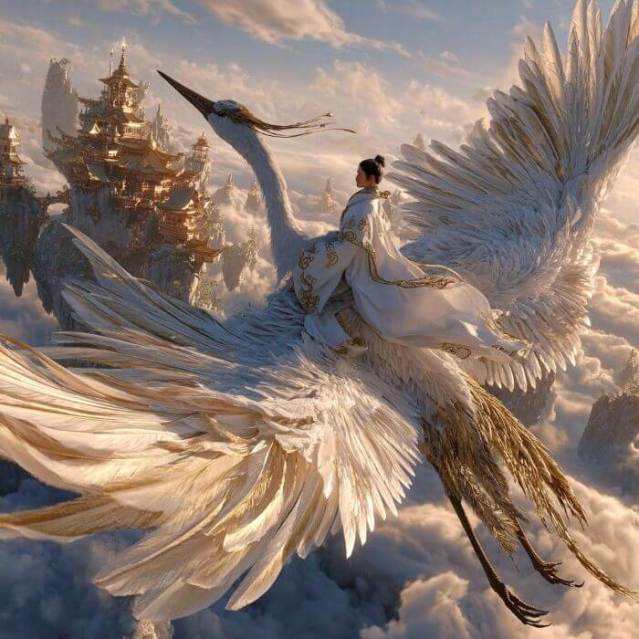
One of the greatest opportunities offered by floating islands is vertical movement. Instead of roads and mountain passes, civilizations may depend upon airships, gliders, winged creatures, magical portals, or aerial cable systems. Wind currents become highways. Dangerous updrafts replace rough seas.
Navigation itself becomes more complicated because travelers move in three dimensions rather than two. Maps may include altitude alongside distance. Pilots memorize seasonal wind patterns. Entire professions develop around forecasting aerial weather.
The sky becomes infrastructure.
Character Idea: An apprentice sky navigator discovers a newly formed wind current connecting two kingdoms that have been isolated from one another for centuries.
Ecosystems Suspended in the Air
Floating landscapes create entirely new ecological possibilities. Plants may evolve deep root systems that anchor them into levitating stone. Seeds could disperse across immense distances on powerful winds. Flying animals become the primary pollinators rather than insects.
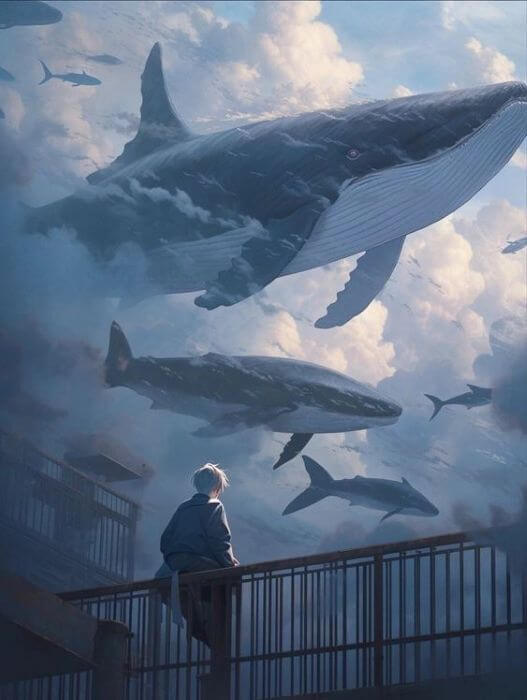
Some species might never touch solid ground during their entire lives. Others could migrate between islands like whales crossing oceans. Imagine enormous vines connecting neighboring islands, forests growing upside down beneath floating cliffs, or glowing fungi feeding on magical energy instead of sunlight. The ecosystem should reflect the unusual environment rather than simply transplanting Earth into the sky.
Plot Hook: The giant sky-whales responsible for pollinating every floating forest abruptly alter their migration routes, threatening famine across dozens of islands.
Cultures Built Around the Sky
A civilization living on floating islands would inevitably think differently about the universe. Height might symbolize status, enlightenment, or closeness to the divine. Falling could become the ultimate punishment or greatest fear. Navigation, weather, and astronomy would occupy central roles in education.
Religions may teach that the highest islands are sacred while the surface below represents exile or danger. Alternatively, cultures that remember life on the ground might view the sky as humanity’s greatest achievement rather than its birthplace.
Geography shapes worldview. People born among the clouds will not think like people born beside rivers.
Life Above the Abyss: Survival, Society, and the Fragile Balance of Floating Islands
Living on a floating island may seem idyllic from a distance, but one constant reality shapes daily life: there is no room for error. Every settlement exists on a finite piece of land suspended above an often-fatal drop. Unlike civilizations that can simply expand into neighboring territory, skyland communities are constrained by the size of the island itself. Every acre of farmland, every source of fresh water, and every building must justify the space it occupies.
For writers, these limitations create fascinating opportunities. Floating islands naturally encourage efficient societies that minimize waste, carefully manage resources, and make every decision carry long-term consequences. Geography itself becomes one of the greatest forces shaping civilization.
Living with the Edge
Perhaps the greatest psychological difference between life on the ground and life in the sky is that the edge is never far away.
Children learn from an early age to respect cliffs and strong winds. Construction crews work with elaborate safety systems. They must fence livestock carefully and secure valuable cargo before every journey. Storms become far more frightening because they threaten not only buildings but the people standing on them.
Communities may even develop customs around the danger. Homes might avoid large windows overlooking sheer drops. Festivals may celebrate surviving dangerous storm seasons. Religious rituals could honor those lost to accidental falls or commemorate legendary figures who supposedly survived impossible descents.
The ever-present possibility of falling influences psychology as much as architecture.
Character Idea: A rescue pilot who has spent their career recovering survivors from impossible falls investigates reports of people who never reach the ground.
Limited Land, Unlimited Demand
No matter how fertile an island may be, space is finite. Food production quickly becomes one of the defining challenges of skyland civilizations. Limited pasture makes large herds of cattle impractical. Instead, societies might rely on carefully managed terraces, orchards, rooftop gardens, greenhouses, hydroponics, aquaculture, or magically accelerated agriculture. Every square foot becomes valuable.
Fresh water presents a similar challenge. Some islands may collect rainfall in enormous cisterns. Others depend on clouds, magical condensation, underground reservoirs, or regular deliveries from neighboring islands. During dry seasons, water conservation may become the highest priority for the government.
Limited space also affects population growth. Young adults may need to emigrate to newly settled islands, while families carefully regulate inheritance to prevent farmland from being divided into unusable parcels.
Worldbuilding Tip: Decide what ultimately limits your civilization: food, water, housing, or energy. The scarcest resource often determines which professions become most respected and which technologies receive the greatest investment.
Economies Built on Interdependence
Very few floating islands could remain completely self-sufficient. One island may possess rich farmland but little timber. Another may contain forests but no reliable freshwater springs. A third may produce valuable minerals while importing nearly everything else.
Trade therefore becomes essential rather than optional. Airship captains, flying couriers, navigators, weather forecasters, dockworkers, and aerial engineers become some of the most important people in society. The interruption of a single trade route could leave entire communities without critical supplies.
Rather than isolated kingdoms, floating islands may function more like an interconnected archipelago whose survival depends upon cooperation.
Plot Hook: An enormous storm destroys the primary aerial shipping corridor connecting several sky kingdoms, forcing old rivals to cooperate before famine spreads across the floating nations.
Technology Shaped by the Sky
The unique environment encourages technological innovation unlike anything found in ground-based civilizations.
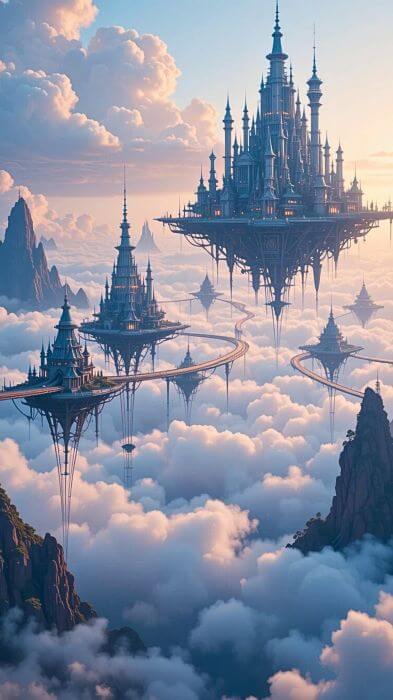
Construction emphasizes lightweight but durable materials. Windmills and atmospheric generators may provide abundant energy. Cargo lifts, aerial cranes, suspension bridges, and docking towers become common features of major cities.
Navigation also becomes a sophisticated science. Pilots study prevailing winds the way sailors once studied ocean currents. Engineers develop methods for stabilizing buildings during turbulence, while meteorologists hold positions of enormous political importance because accurate forecasts save lives.
Fantasy settings may replace machinery with magic, but the underlying challenges remain remarkably similar. Magical levitation, enchanted sails, or domesticated flying creatures simply become different solutions to the same logistical problems.
Cultures Shaped by the Open Sky
People who spend their entire lives above the clouds will inevitably see the world differently from those who live on the ground. The sky becomes familiar rather than mysterious. Winds gain names and personalities. Storms become respected adversaries. Height may symbolize freedom, wisdom, or closeness to the divine.
These beliefs influence everything from architecture to religion. People might build temples at the highest point of every island. Funeral traditions could involve returning the dead to the winds. Songs, myths, and proverbs may all reference flight, balance, and the dangers of overconfidence.
Meanwhile, people who have never visited the surface may view the world below with equal parts curiosity and fear, just as many ground-dwellers tell legends about the mysterious kingdoms above the clouds.
Character Idea: A historian born among the clouds becomes obsessed with proving that humanity originally came from the surface rather than the sky, challenging one of the oldest beliefs in their civilization.
What Happens If the Islands Fall?
Perhaps the most terrifying question in any skyland setting is this:
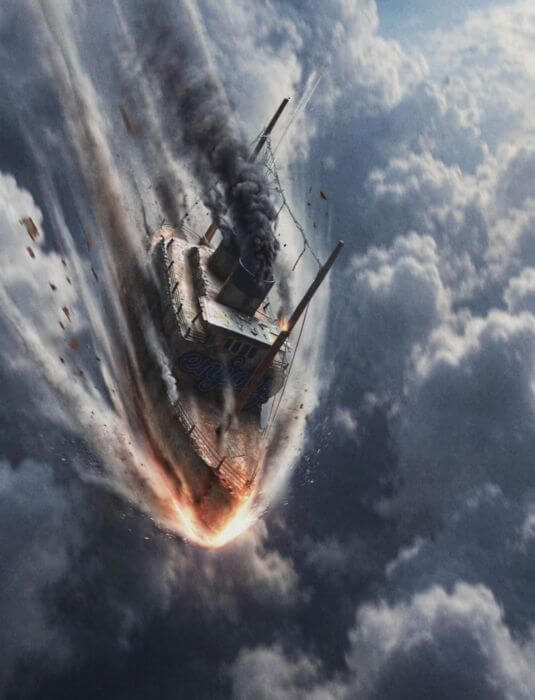
What keeps the islands afloat and what happens if it fails?
The answer depends on your world’s rules.
If magic sustains the islands, the weakening of ancient enchantments could cause entire continents to descend. If anti-gravity technology powers them, aging machinery may require resources or knowledge that no longer exist. Exotic crystals could slowly lose their charge. Celestial alignments might alter magical currents. Even changing weather patterns or planetary magnetic fields could threaten the delicate balance keeping the islands suspended.
The possibility of failure introduces enormous dramatic tension because the threat is existential. A city cannot simply rebuild if the land beneath it crashes into the world below.
Even rumors that an island is becoming unstable would reshape politics and economics. Wealthy families might quietly leave. Merchants would hesitate to invest. Religious leaders could interpret the event as divine judgment, while scientists race to identify the true cause.
We no longer ask just how to halt the fall, but also if rescuing everyone is possible when survival is impossible.
Plot Hook: Instruments in the world’s greatest floating city detect a gradual loss of altitude. The decline is almost imperceptible, but calculations suggest the island has less than a year before it begins an irreversible descent.
Plot and Character Ideas
The Falling Kingdom
Genres: Epic Fantasy, Political Drama
Plot Idea: For centuries, the greatest floating kingdom has ruled the skies from the largest island ever discovered. When astronomers detect that the island is slowly losing altitude, neighboring nations begin preparing for the inevitable collapse while the royal court desperately tries to hide the truth.
Character Angle: A young engineer responsible for maintaining the island’s ancient levitation engines becomes one of the few people who knows the kingdom has only months before disaster.
Twist(s): The island is not failing. It is deliberately descending because an ancient defense system believes the world below is finally safe to return to.
The Wind Parliament
Genres: Political Fantasy, Court Intrigue
Plot Idea: Twelve floating islands govern themselves through an assembly that meets aboard a massive wandering skyship. When one island disappears entirely, the remaining delegates accuse one another of sabotage.
Character Angle: A junior courier accustomed to carrying diplomatic messages becomes the only witness to the island’s final moments.
Twist(s): The missing island has not been destroyed, it has crossed into another layer of reality that only appears once every thousand years.
The Orchard Above the Clouds
Genres: Environmental Fantasy, Adventure
Plot Idea: Every floating civilization depends upon fruit grown on a single island whose unique soil exists nowhere else. When the harvest begins failing, famine threatens the entire sky realm.
Character Angle: A quiet horticulturist who has spent a lifetime studying the ancient trees becomes humanity’s best hope for saving them.
Twist(s): The trees are dying because the enormous creatures whose migrations once pollinated them have quietly gone extinct.
The Temple of Empty Air
Genres: Religious Fantasy, Mystery
Plot Idea: A temple suspended on the highest floating island has long been believed to stand closest to the gods. Pilgrims travel from across the world seeking divine guidance, until the sacred island suddenly begins drifting away from every known air current.
Character Angle: A young priest questioning their faith volunteers to accompany the temple wherever it leads.
Twist(s): The temple is not moving toward heaven; it is returning to the place where the gods first abandoned the world.
The Sky Whale Migration
Genres: Fantasy Adventure, Ecological Mystery
Plot Idea: Every year, colossal flying creatures migrate between the floating islands, carrying seeds that sustain forests across the skylands. This year, the migration never arrives.
Character Angle: A beastkeeper whose family has studied the sky whales for generations refuses to believe they simply vanished.
Twist(s): The whales are fleeing something far larger.
The Cartographer of Lost Skies
Genres: Exploration Fantasy, Science Fantasy
Plot Idea: New floating islands occasionally emerge from dense cloud banks, while others disappear forever. A renowned cartographer dedicates their life to mapping these shifting lands.
Character Angle: After decades of exploration, the aging cartographer finally notices a hidden pattern linking every appearance and disappearance.
Twist(s): The islands are orbiting an invisible object suspended high above the world.

The Crystal Beneath the Capital
Genres: Fantasy, Political Thriller
Plot Idea: An enormous magical crystal buried beneath its foundations supports the greatest city in the sky. Noble houses compete to control access to the crystal’s maintenance chambers.
Character Angle: A humble apprentice miner accidentally discovers evidence that someone has been secretly weakening the crystal.
Twist(s): The conspirators believe crashing the island is the only way to prevent an even greater catastrophe.
The Sky Dock Syndicate
Genres: Steampunk Fantasy, Crime Drama
Plot Idea: Every airship entering the floating kingdoms must pass through one enormous aerial port. Criminal organizations gradually seize control of shipping, customs, and fuel supplies.
Character Angle: A veteran dockmaster nearing retirement challenges the syndicate after witnessing innocent crews disappear.
Twist(s): The criminals are secretly preparing the islands for a war no legitimate government believes is coming.
The Island That Hunted
Genres: Paranormal Fantasy, Horror
Plot Idea: Sailors tell stories about a floating island that appears only during violent storms. Ships that land there are never seen again.
Character Angle: A daring salvage captain accepts a lucrative contract to investigate the legendary island.
Twist(s): The island is alive, feeding by luring civilizations close enough to absorb their magical energy before drifting away again.
Gravity’s Heir
Genres: Science Fiction, Coming-of-Age
Plot Idea: Humanity survives on artificial skylands orbiting above a poisoned planet. A teenager discovers they possess the rare ability to interact directly with the anti-gravity systems that keep every island aloft.
Character Angle: The protagonist has spent their life trying to avoid responsibility, only to become indispensable to the survival of millions.
Twist(s): Designers never intended the gravity systems to keep humanity in the sky; they built them to keep something trapped beneath.
The Pilgrimage of Falling Stars
Genres: Mythic Fantasy, Religious Adventure
Plot Idea: Once every century, fragments break away from the oldest floating island and fall to the surface. Pilgrims believe these “fallen stars” contain divine blessings, while scholars insist they are remnants of an ancient civilization.
Character Angle: A devout pilgrim and an atheist archaeologist reluctantly join the same expedition to recover the newest fragment.
Twist(s): The fragments are pieces of a slowly disintegrating world, and reuniting them may either restore the islands or destroy them.
The World Below
Genres: Epic Fantasy, Discovery Adventure
Plot Idea: Every civilization in the sky believes the surface beneath the clouds is an uninhabitable wasteland. When a damaged airship crashes through the cloud layer, its surviving crew discovers a thriving civilization that has believed the floating islands to be gods for centuries.
Character Angle: A cautious skyship captain must decide whether revealing the truth will unite two civilizations or begin a devastating war.
Twist(s): Both civilizations have only half of their world’s true history. The floating islands’ original builders intended to save humanity from a disaster that is beginning once again.
Floating islands and skylands transform the sky into a living frontier. They combine the isolation of islands with the wonder of flight, creating settings where every journey feels like an expedition and every horizon promises discovery.
For writers, they offer extraordinary opportunities for worldbuilding. When civilizations suspend themselves above the clouds, politics, trade, ecology, religion, and exploration all change. Whether supported by ancient magic, impossible physics, or forgotten technology, these worlds invite readers to imagine life from an entirely new perspective.
Because the greatest thing about floating islands is not that they defy gravity. It is that they remind us there are still places where the impossible could be just beyond the next cloud.
Happy worldbuilding!
I hope this was helpful. Let me know if you have questions or suggestions by using the Contact Me form on my website or by writing a comment. I post every Friday and would be grateful if you would share my content.
If you want my blog delivered straight to your inbox every month along with exclusive content and giveaways, please sign up for my email list here.
Let’s get writing!
Copyright © 2026 Rebecca Shedd. All rights reserved.

