The Worldbuilder’s Toolkit: Highlands and Plateaus
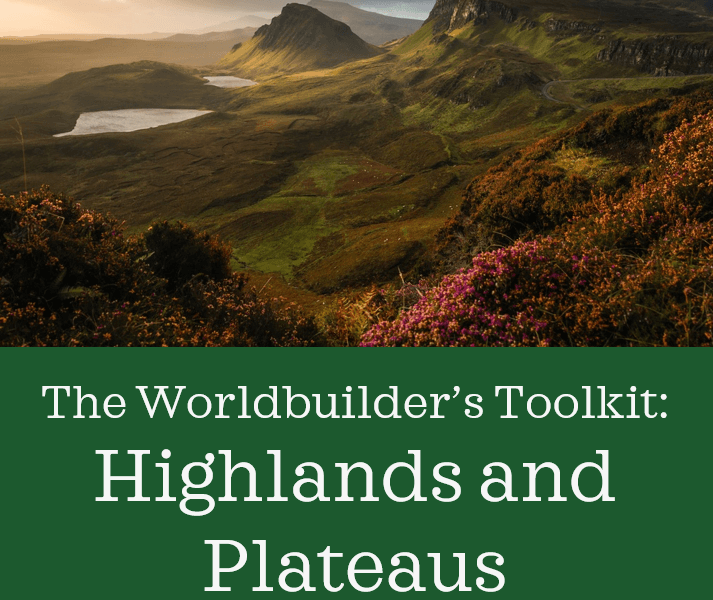

Highlands and plateaus occupy an interesting middle ground in speculative fiction. They lack the towering peaks and extreme isolation of major mountain ranges, yet they are far removed from the gentle ease of lowland plains and valleys. They are elevated worlds, broad stretches of upland country where thin air, exposed terrain, steep approaches, dramatic escarpments, and unpredictable weather can shape entire civilizations.
For fantasy and science fiction writers, these landscapes offer enormous possibilities. A plateau can support cities, farms, armies, and even empires while remaining remarkably difficult for outsiders to reach. Highlands can create culturally distinct regions without completely isolating their inhabitants from neighboring peoples. They can serve as refuges, fortresses, sacred landscapes, grazing grounds, mineral-rich frontiers, or the heartlands of powerful civilizations.
Most importantly, elevation changes perspective, both literally and culturally. People who have spent generations looking down upon the surrounding world may develop very different ideas about themselves and their neighbors.
Highlands, Plateaus, and Mountains: What’s the Difference?
These landscapes overlap, but they are not quite the same thing.
A highland is an elevated region characterized by hills, ridges, valleys, and sometimes mountains. The terrain may be rugged without consisting primarily of towering peaks.
A plateau, meanwhile, is a broad area of relatively level or gently rolling land sitting significantly higher than the surrounding terrain. Some plateaus stretch across enormous regions and contain their own mountains, rivers, lakes, grasslands, and valleys.
Mountains emphasize vertical relief. Plateaus emphasize elevation across a broad area.
That distinction matters enormously for worldbuilding. A mountain settlement may have only small pockets of usable land, while a plateau could support an entire agricultural civilization thousands of feet above sea level.
Worldbuilding Tip: Don’t treat a plateau as a giant flat tabletop. Real plateaus contain rivers, canyons, rolling grasslands, wetlands, cliffs, isolated peaks, and deeply eroded valleys. Give your elevated landscape internal geography.
A World Above the World
Elevation immediately changes the environment. Temperatures become cooler as altitude increases. Weather can shift rapidly. Winds may sweep across exposed uplands with little vegetation to slow them. Oxygen becomes thinner at extreme elevations, affecting both visitors and inhabitants.
Yet highlands can also be surprisingly fertile. Volcanic soils may support productive agriculture. Mountain-fed streams provide irrigation. Broad upland grasslands can sustain enormous herds. Terracing allows farmers to cultivate slopes that outsiders might consider unusable.
This creates an appealing contradiction for fiction: a civilization can be geographically difficult to reach while still possessing enough resources to become wealthy and powerful.
Character Idea: A lowland ambassador arrives expecting an impoverished mountain society and instead discovers a sophisticated plateau kingdom whose agricultural terraces feed cities larger than those back home.
The Fortress Made by Geography
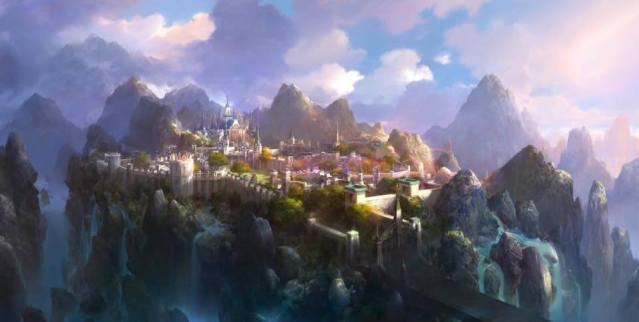
Plateaus can be extraordinary defensive positions.
An army approaching a high plateau must first climb onto it. Roads may pass through narrow valleys, steep switchbacks, or a handful of easily fortified passes. Cliffs and escarpments can function as natural walls stretching for hundreds of miles.
Once attackers reach the top, however, the situation changes. The plateau itself may provide broad terrain suitable for cavalry, agriculture, roads, and cities.
This allows writers to create kingdoms that combine the defensive advantages of mountains with the economic advantages of open country. The result could be a civilization extraordinarily difficult to conquer.
Plot Hook: An empire that has resisted invasion for eight centuries discovers an enemy army using a forgotten road carved through the cliffs by the civilization that originally inhabited the plateau.
Trade: Getting Up Is Only Half the Problem
Geographic protection often comes with economic costs. Merchants must somehow transport goods up and down steep terrain. Roads require constant maintenance. Wagons may be impractical on certain routes. Landslides, snow, floods, and rockfalls can sever connections with the lowlands.
These challenges encourage specialized transportation. Pack animals may dominate upland trade. Sophisticated road networks might zigzag across escarpments. Fantasy civilizations could use giant birds, magical lifts, or teleportation gates. Science-fiction settlements might rely on cable systems, elevators, aircraft, or orbital transport.
A single reliable route can become enormously valuable. That creates natural locations for toll forts, trading cities, inns, monasteries, customs stations, and military garrisons.
Worldbuilding Tip: Identify the easiest route onto your plateau. Unless your civilization is deliberately isolated, that route will probably become one of the most politically and economically important places in the region.
Culture at Altitude
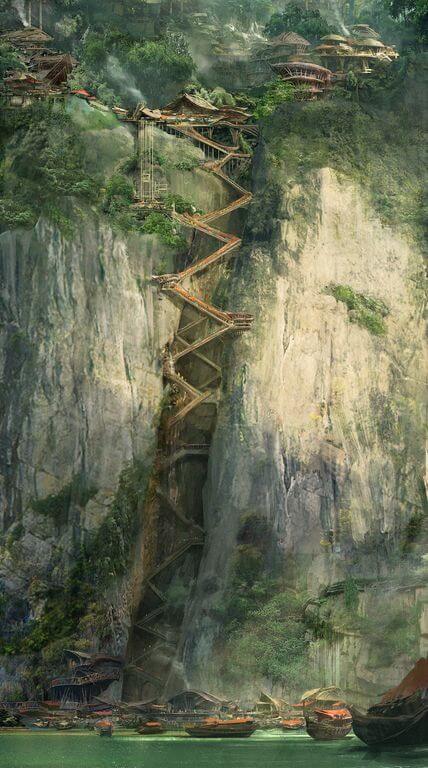
Generations of geographic separation can create strong regional identities.
Highland communities may speak different dialects from neighboring lowlanders, preserve older customs, or develop distinctive clothing suited to cold and wind. Seasonal migration between high and low pastures may structure family life. Communities scattered across broad uplands might maintain powerful clan or village identities while still recognizing a larger shared culture.
Elevation can also influence how people perceive outsiders. Lowlanders may view highlanders as remote, stubborn, unsophisticated, or fiercely independent. Highlanders may regard lowlanders as soft, crowded, decadent, or politically intrusive.
Neither stereotype needs to be true. The tension between perception and reality can provide excellent characterization.
Character Idea: A highland noble educated at the lowland imperial court returns home after twenty years and discovers they are now considered simultaneously too highland by the court and too foreign by their own people.
Agriculture Above the Lowlands
High-altitude agriculture requires adaptation.
Growing seasons may be shorter. Frost can arrive unexpectedly. Certain crops thrive while others fail completely. Livestock may become more important than grain farming because upland grasslands provide excellent grazing.
Cultures may therefore become exceptionally skilled at preserving food. Cheese, dried meat, fermented foods, hardy grains, and root vegetables could dominate local cuisine.
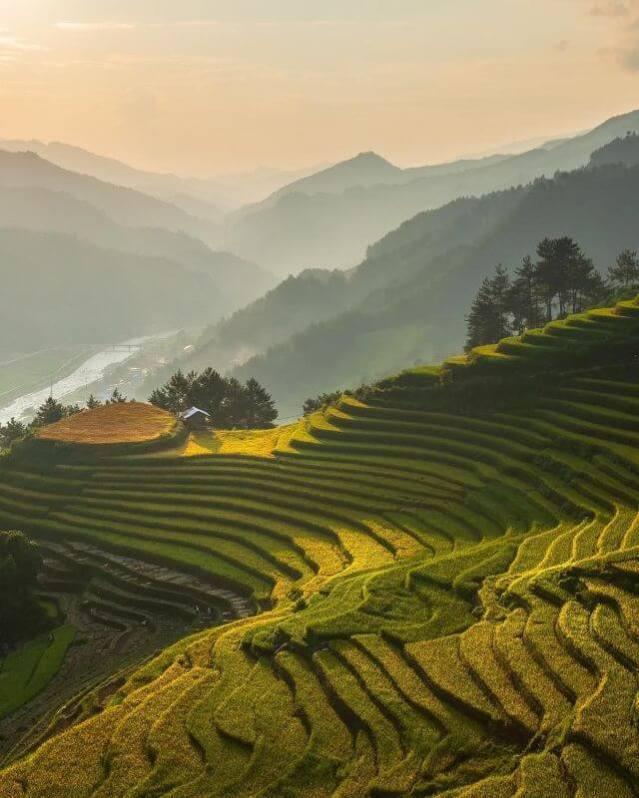
Terracing can dramatically expand usable farmland while irrigation channels carry water from upland streams.
In fantasy, agriculture might become even stranger. Cold-resistant magical crops could grow only above a certain altitude. Herds of fantastic animals might graze on mineral-rich grasses. Science-fiction colonists could cultivate genetically engineered plants specifically designed for thin atmospheres and intense ultraviolet radiation.
The landscape determines the menu.
Why Highlands and Plateaus Work in Fiction
Some of speculative fiction’s most memorable landscapes use elevated terrain to reinforce themes of isolation, power, history, and cultural difference.
The Lord of the Rings repeatedly uses elevated landscapes to establish defensible civilizations. Rohan’s upland grasslands, for example, support its horse culture while creating immense open spaces suitable for cavalry. The landscape and culture feel inseparable.
Black Panther presents Wakanda as a geographically protected civilization whose terrain helps explain how it remained isolated while developing independently. Mountains and elevated regions reinforce the sense of a hidden world existing alongside the wider one.
The world of The Elder Scrolls V: Skyrim uses highland terrain to create strong regional identities. Settlements separated by ridges, valleys, tundra, and elevated plains feel culturally distinct even when relatively close together.
In tabletop role-playing games such as Dungeons & Dragons, plateaus frequently provide ideal locations for isolated monasteries, dragon territories, lost cities, giant strongholds, and civilizations deliberately separated from surrounding kingdoms.
These settings work because elevation creates boundaries without requiring complete isolation. Characters can see the wider world while still remaining physically and culturally separated from it.
Sacred Ground and the High Places
Human cultures have frequently associated elevated places with divinity.
The reason is simple to understand. Standing on a plateau overlooking the surrounding landscape creates a powerful psychological experience. Clouds may appear below you. The stars seem unusually close. Storms form along distant horizons.
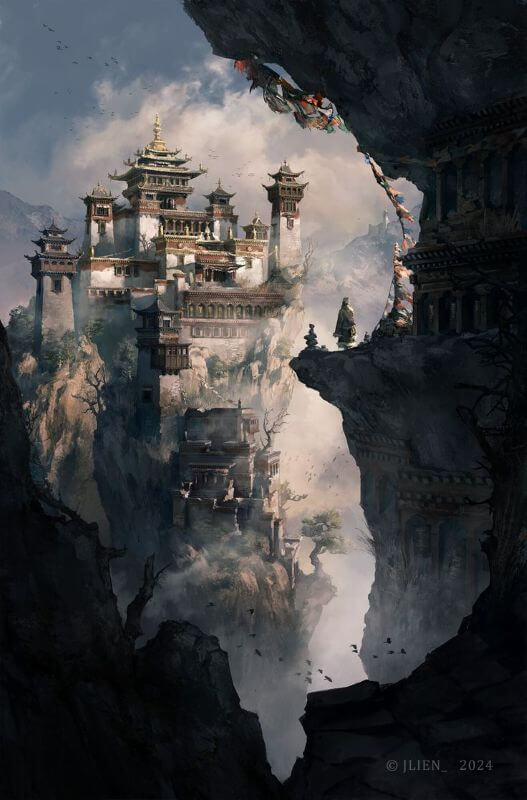
In fantasy worlds, these associations can become literal. Plateaus may be places where gods once walked. High-altitude temples might receive prophetic visions unavailable elsewhere. Magical energy could become stronger with elevation.
Science fiction can reinterpret the same imagery. A plateau might contain an ancient observatory because its thin atmosphere provides ideal astronomical conditions. An alien civilization could have constructed communication arrays there. A religious pilgrimage site could actually be an abandoned orbital tracking station.
Plot Hook: Pilgrims have climbed to a sacred plateau for thousands of years to watch mysterious lights cross the heavens. An astronomer finally realizes the lights are following a deliberate pattern and something in orbit is trying to communicate.
Resources Beneath the Heights
Plateaus and highlands can contain valuable mineral resources, making them economically important despite their remoteness. Mining communities may extract metals, gemstones, coal, salt, magical crystals, or rare technological materials. Volcanic highlands can contain unusual geology.
This creates another useful contradiction: outsiders may desperately want resources in territory that is extremely difficult to invade or occupy.
Trade agreements, colonial ambitions, mining concessions, and smuggling networks naturally emerge.
Character Idea: A miner discovers that the rare crystals supporting the kingdom’s magical technology are actually structural components of something enormous buried beneath the plateau.
Weather Without Shelter
Highlands can be brutally exposed.
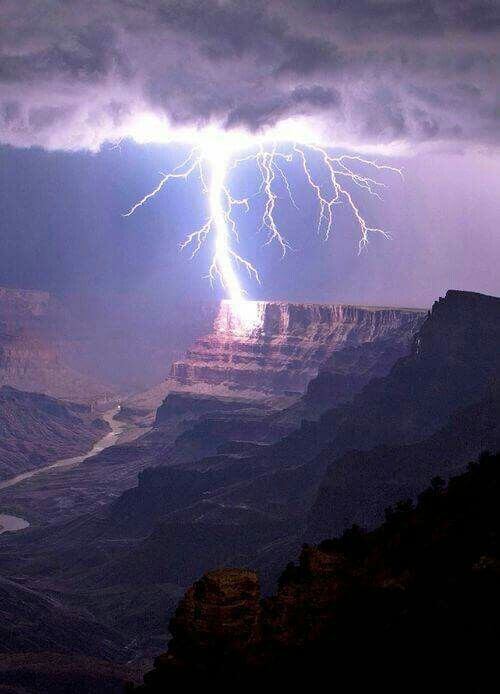
With few natural barriers, winds sweep across open terrain. Storms can arrive rapidly. Lightning may strike elevated locations frequently. Snow can bury roads, while fog transforms familiar paths into dangerous mazes.
Travelers accustomed to lowlands may dramatically underestimate these conditions. Highland cultures, meanwhile, developed practical adaptations. Buildings may be low and sturdy. Roofs must withstand wind. Roads follow sheltered terrain. Travelers learn to recognize subtle changes in clouds and wind direction. The environment produces knowledge that outsiders do not possess.
Worldbuilding Tip: Let local expertise matter. A supposedly uneducated shepherd who can read approaching weather may be far more useful during a journey than the kingdom’s greatest scholar.
Highlands as Refuges
Difficult access makes highlands natural refuges. Defeated armies may retreat there. Persecuted religious communities may establish monasteries in remote valleys. Indigenous populations may preserve their independence long after conquerors have taken over surrounding lowlands.
Over generations, refuge can become identity. A people might proudly remember that their ancestors climbed into the highlands rather than surrender. Their national mythology may celebrate resistance, endurance, and independence.
But refuge can create complications as well. What happens when the danger that drove people into the highlands disappears? Do they return? Do they remain? Do they even consider the lowlands home anymore?
Plot Hook: A highland kingdom founded by refugees learns that the empire their ancestors fled collapsed generations ago. A political movement demands that they descend and reclaim their ancestral homeland.
Beyond Earth: Plateaus in Science Fiction
Alien worlds allow writers to push highland geography much further.
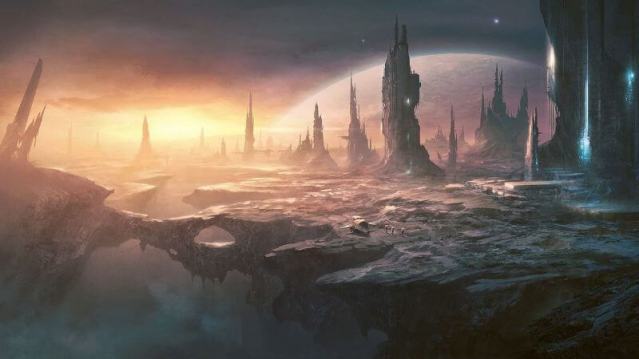
A planet with lower gravity might possess plateaus towering far higher than anything on Earth. An enormous, uplifted continent could rise above a toxic atmospheric layer, making the highlands the only habitable portion of the planet.
That immediately reverses familiar geography. Instead of struggling to survive at altitude, civilization might depend upon staying high enough.
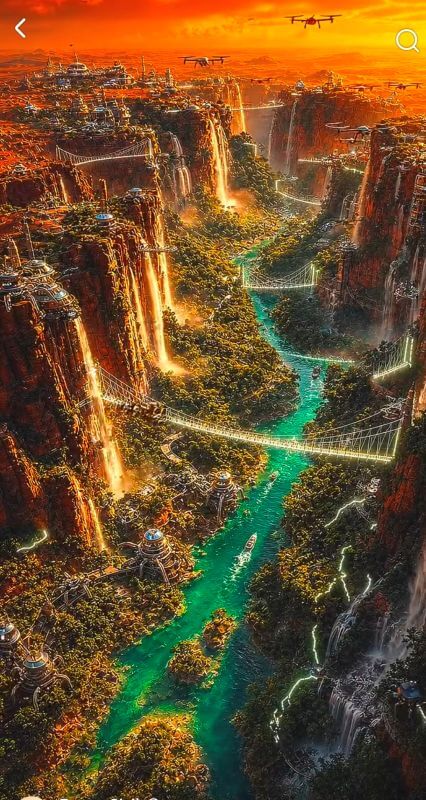
Settlements could cluster along enormous plateaus while poisonous clouds fill the lowlands. Trade routes might cross elevated bridges between habitable regions. Descending becomes the dangerous expedition rather than climbing.
Alternatively, highlands may provide protection from alien predators, radiation, floods, or atmospheric phenomena.
Character Idea: A scientist raised on humanity’s safe high plateaus volunteers for the first expedition into the supposedly lifeless lowlands and discovers an ecosystem and civilization that should not exist.
Questions to Ask When Building Highlands and Plateaus
A few questions can help turn elevated terrain from background scenery into a functioning part of your world:
How high is the region, and how does altitude affect climate, breathing, agriculture, and travel?
Where does the water come from, and where does it flow after leaving the plateau?
What are the easiest routes into and out of the region, and who controls them?
What can inhabitants produce locally, and what must they import?
How has elevation influenced religion, warfare, architecture, transportation, and attitudes toward outsiders?
What resources or strategic advantages make other societies interested in the region?
The goal is not to answer every question on the page. It is enough to understand that the landscape quietly influences the decisions your characters make.
Real-World Highland and Plateau Cultures
Highlands and plateaus have produced some of history’s most distinctive cultures. Elevation creates separation without creating complete isolation. Highland peoples may trade regularly with their lowland neighbors while maintaining different languages, political traditions, clothing, agriculture, and beliefs. Difficult approaches can protect communities from conquest, while limited farmland and harsh weather demand ingenuity and cooperation.
For writers, these societies offer useful inspiration because geography often becomes part of cultural identity. Highland peoples may define themselves partly in contrast to the people living below them. Independence, endurance, livestock, clan relationships, control of mountain passes, and attachment to ancestral land can all become central cultural themes.
As always, the goal is not to copy a historical culture wholesale, but to examine how its environment shaped it and then apply those pressures creatively to your own world.
The Scottish Highlands — Clans, Cattle, and Cultural Independence
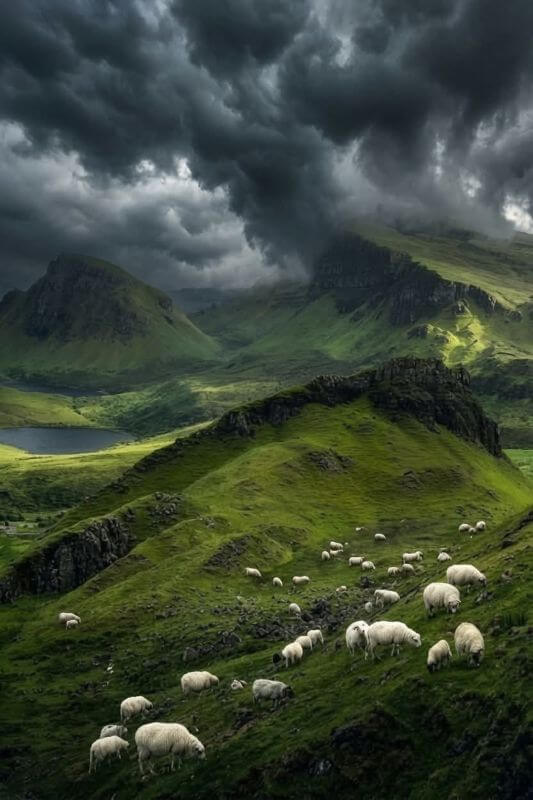
The Scottish Highlands provide one of the most recognizable examples of a society shaped by upland geography. Rugged glens, moors, lochs, and highland pastures helped create communities that could remain comparatively separated from one another even within a relatively small geographic region. Kinship and local loyalties became extremely important, contributing to the development of the clan system.
Cattle were historically significant to the Highland economy, and the seasonal movement of livestock between grazing areas influenced daily life. Long-distance cattle droving connected remote communities with markets farther south, and this demonstrated that geographically isolated societies need not be economically isolated.
The Highlands also became closely associated with resistance and cultural identity. Political conflicts involving the Scottish crown, England, and eventually the Jacobite risings gave Highland culture an enduring association with independence and rebellion. Following the Jacobite defeat at Culloden in 1746, government policies, economic changes, and eventually the Highland Clearances transformed Highland society and contributed to large-scale displacement and emigration.
Inspiration for Fiction: A highland fantasy culture could organize itself around powerful extended families whose loyalty predates the kingdom supposedly governing them. Rival clans might feud internally, yet unite immediately against outside interference. Seasonal livestock migrations could create traditional routes whose ownership carries enormous political importance. This is also excellent inspiration for stories about cultural displacement. Perhaps an empire wants upland grazing lands for magical creatures, mining, or military settlements, pushing families from ancestral territories. Characters may face whether preserving their culture requires remaining on the land or carrying that culture elsewhere.
Character Idea: The younger child of a Highland clan leader returns from years at the royal court to discover the crown intends to reorganize the clans and seize their traditional grazing lands. They understand both worlds well enough to negotiate, but no longer fully belong to either.
The Tibetan Plateau — Life on the Roof of the World
The Tibetan Plateau is one of Earth’s highest inhabited regions, with large areas sitting thousands of meters above sea level. People living there have adapted not only culturally but physiologically to high-altitude conditions.
Traditional livelihoods have included pastoralism, particularly raising yaks, sheep, and goats, alongside agriculture in areas where elevation and climate permit it. Yaks are especially important because they provide transportation, milk, meat, fiber, and fuel through dried dung, a wonderful real-world illustration of how one well-adapted animal can become central to an entire culture.
Tibetan Buddhism has also profoundly shaped the region’s cultural landscape. Monasteries, pilgrimage routes, sacred mountains, and religious institutions became closely intertwined with geography. Remote monasteries were not simply isolated religious retreats; many became important centers of scholarship, art, political authority, and economic activity.
Inspiration for Fiction: A high-altitude civilization might depend heavily on one fantastical species uniquely adapted to the plateau. Instead of treating that animal merely as transportation, consider everything it provides: clothing, food, fuel, trade goods, military mobility, and even religious symbolism. High elevations can also affect spirituality. A culture literally living closer to the sky may associate height with enlightenment, prophecy, or communication with divine beings. Monasteries positioned on isolated plateaus could preserve knowledge unavailable anywhere else.
Worldbuilding Tip: When creating an important domesticated species, ask what happens if it disappears. If one animal supplies transportation, food, fiber, and fuel, disease among the herds could threaten the entire civilization.
The Andean Altiplano — Civilizations Built at Altitude
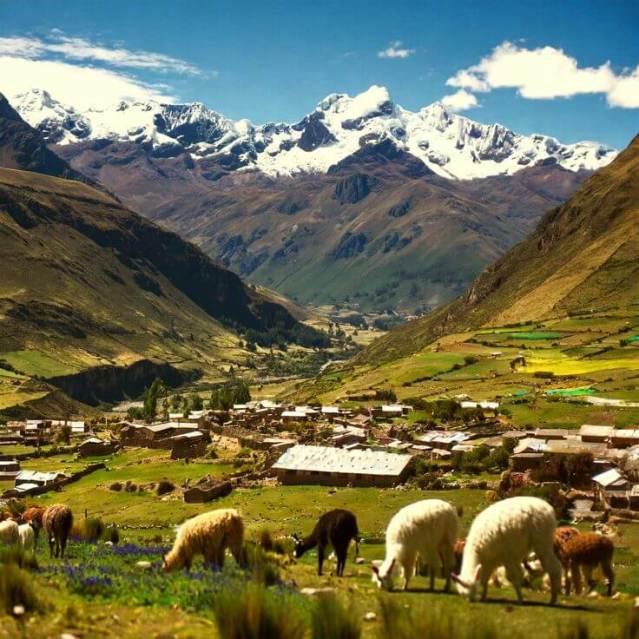
The high plateaus and valleys of the Andes supported sophisticated civilizations long before European arrival. Cultures including Tiwanaku and, later, the Inca adapted agriculture, transportation, architecture, and governance to environments that outsiders might initially consider inhospitable.
Terracing allowed communities to cultivate steep land while controlling erosion and water. Farmers developed crops suited to altitude, including potatoes and quinoa, while llamas and alpacas supplied transport, meat, wool, and other resources.
The Inca created an extraordinary road system linking communities across wildly varied terrain. Rather than preventing political centralization, difficult geography encouraged infrastructure specifically designed to overcome it. Relay runners could transmit information rapidly across great distances, and storehouses positioned along roads helped support travelers and armies.
Inspiration for Fiction: A plateau empire does not need to be technologically or politically fragmented simply because travel is difficult. It may instead become renowned for engineering. Imagine roads carved across cliffs, suspension bridges spanning impossible gaps, or magically maintained relay stations capable of moving information across an empire faster than neighboring lowland kingdoms. You can also use elevation to create specialized agriculture. Crops growing only within certain altitude bands might become valuable commodities, while communities at different elevations trade with one another to create a surprisingly diverse economy.
Plot Hook: The imperial road system has functioned flawlessly for centuries. When several relay stations simultaneously fall silent, officials realize someone or something is deliberately severing the plateau empire one region at a time.
The Ethiopian Highlands — Protected Kingdoms and Ancient Faith
The Ethiopian Highlands offer a powerful example of how elevation can help sustain long-lived civilizations. The highlands contain fertile agricultural regions, dramatic escarpments, and rugged terrain that historically complicated invasion while supporting substantial populations.
The region became home to powerful states including the Kingdom of Aksum and later Ethiopian kingdoms and empires. Ethiopia also developed one of the world’s oldest continuous Christian traditions, with religious identity becoming deeply intertwined with political history and landscape.
In places like Lalibela, medieval churches were carved directly from rock, offering a visually dramatic inspiration. These structures show how sacred architecture can emerge from the landscape rather than simply being constructed upon it.
Inspiration for Fiction: This is excellent inspiration for an ancient highland kingdom that views its survival through centuries of invasion as evidence of divine protection. Geography and religion can reinforce one another until mountains, plateaus, kingship, and faith become inseparable parts of national identity.
Sacred architecture might literally carve downward into the plateau, hiding monumental temples from distant view. Religious institutions could preserve records stretching back farther than those of surrounding civilizations.
Character Idea: A scholar-priest studying inscriptions in an ancient rock-cut sanctuary uncovers evidence that the kingdom’s supposedly unbroken royal dynasty was replaced centuries ago and that the church concealed it.
The Central Asian and Mongolian Plateaus — Pastoral Mobility Across the Heights
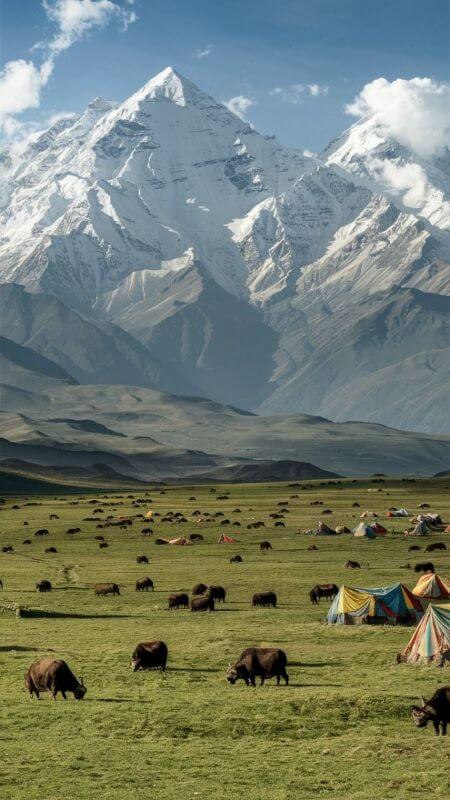
Broad uplands do not always create sedentary civilizations. Across the high plains and plateaus of Central Asia and Mongolia, pastoral societies developed lifestyles centered on livestock and mobility.
Horses became transformative, allowing people to move quickly across immense distances. Sheep, goats, cattle, camels, and horses supported economies in regions where intensive agriculture was often difficult. Portable dwellings and seasonal migration allowed communities to respond flexibly to changing pasture and weather.
Mobility could also translate into military power. Societies accustomed to riding long distances and managing large herds possessed skills readily adapted to mounted warfare and long-range communication.
Inspiration for Fiction: A plateau culture might understand territory very differently from a farming kingdom. Rather than defining ownership through fixed boundaries, land rights could depend on seasonal grazing, migration corridors, and access to wells. This creates immediate political friction when sedentary outsiders draw permanent borders across landscapes traditionally understood through movement.
Plot Hook: A lowland empire builds a chain of forts across what it believes is empty plateau territory, unknowingly blocking the ancient migration route of several powerful pastoral clans and of the enormous creatures they follow.
The Mexican Plateau — Cities, Agriculture, and Highland Power
Much of central Mexico lies at substantial elevations, and its highland basins and plateaus supported major civilizations long before European colonization. Cities such as Teotihuacan and, later, Tenochtitlan arose within elevated environments capable of supporting dense populations through sophisticated agriculture, trade, and water management.
These highlands demonstrate that plateau societies can be heavily urbanized. Large cities, marketplaces, religious centers, road networks, and complex states can flourish thousands of feet above sea level.
Elevation also creates ecological variety. Relatively short journeys can move travelers between different climates and agricultural zones, encouraging regional trade.
Inspiration for Fiction: Avoid assuming every highland culture must comprise scattered shepherds and isolated villages. Your plateau might hold one of the world’s largest cities. Perhaps the plateau’s climate protects it from tropical diseases common below, attracting immigrants and helping the city grow. Different elevation zones could specialize in different crops and resources, generating an intricate internal trade network.
Worldbuilding Tip: Treat altitude like latitude. Moving a relatively short distance upward or downward can change climate, vegetation, agriculture, and even disease patterns dramatically.
Shared Themes Across Highland Cultures
The Scottish Highlands, Tibetan Plateau, Andes, Ethiopian Highlands, Central Asian uplands, and Mexican Plateau are enormously different places, but their histories show several useful patterns for writers:
- Elevation encourages distinctive regional identities without preventing trade or sophisticated government.
- Pastoralism and specialized agriculture often develop where conventional lowland farming is difficult.
- Difficult approaches can protect political or religious independence.
- Roads, passes, bridges, and migration corridors become disproportionately important.
- Sacred landscapes and ancestral attachment can become deeply intertwined with cultural identity.
Most importantly, highland cultures should never be reduced to the stereotype of tough, isolated mountain people. Geography creates opportunities and hardships. Upland societies can produce merchants, scholars, sophisticated governments, enormous cities, monasteries, engineers, cavalry forces, and international trade networks.
Bringing It Into Your Worldbuilding
When designing your fictional highland society, begin by asking what elevation “gives” them rather than only what it takes away.
Perhaps their highlands provide natural defenses, extraordinary grazing land, valuable minerals, clear astronomical observations, or crops that cannot survive anywhere else. Maybe their isolation preserved an ancient language or religious tradition that disappeared from the lowlands centuries ago. Perhaps their control of the only plateau crossing gives them influence far beyond their population.
Then consider the relationship between highlanders and lowlanders. Geography often creates cultural stereotypes in both directions. Highlanders may see themselves as independent guardians of older traditions, while lowlanders dismiss them as provincial. Lowlanders may consider themselves cosmopolitan, while highlanders see them as dependent upon comfort and political fashion.
Neither side needs to be correct. That friction is where characters begin to feel real.
Life Above the Lowlands
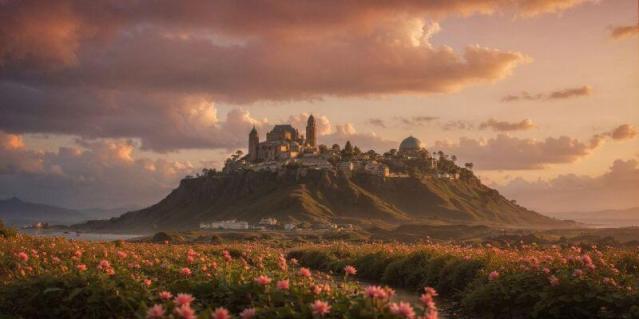
Highlands and plateaus create a distinctive balance between protection and separation. Their elevation can shield communities from invasion, flooding, disease, or political control, but it can also make travel slower, winters harsher, and trade more difficult. For writers, this tension is especially useful because it shapes both the practical life of a society and the way its people understand themselves.
A highland culture may see its terrain as a blessing – safe, defensible, and rich in grazing land or minerals – while outsiders see the same landscape as remote and inconvenient. That difference in perspective can become central to politics, identity, and conflict.
The Advantages of Height
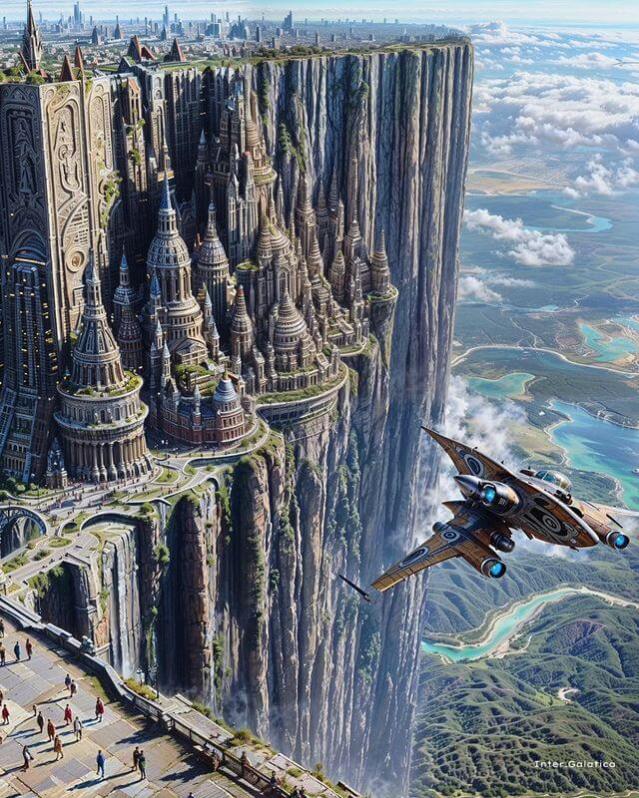
Elevated land often offers excellent defensive positions. Steep approaches, narrow passes, and escarpments can make invasion difficult, allowing smaller populations to resist larger armies. Even when the plateau itself is broad and fertile, access to it may be limited to a handful of routes that can be guarded.
Height can also create practical benefits. Cooler temperatures may make certain crops or livestock possible where the lowlands are too hot. Highland regions can contain mineral wealth, strong winds for energy, clear skies for astronomy, or headwaters that feed rivers below. In science fiction, elevated terrain might sit above toxic atmospheric layers or dangerous weather systems, making the highlands the safest place on the planet.
Worldbuilding Tip: Decide what your highland region has that the lowlands want. Natural defenses become much more interesting when they protect something valuable.
Isolation Without Total Separation
Highlands often experience isolation but do not become completely cut off. Unlike an island, a plateau may still connect to surrounding regions through passes, valleys, and trade routes. This creates societies that can remain culturally distinct while still taking part in wider political and economic systems.
The difficulty of travel, however, means that contact may be seasonal. A mountain pass might be open for only half the year. A landslide could sever a trade route for months. News from the capital may arrive late enough that local leaders decide independently.
Over generations, this can strengthen regional identity. Highlanders may develop their own dialects, customs, clothing, and laws even while technically belonging to a larger kingdom.
Character Idea: A royal magistrate sent to enforce new laws in a remote plateau province discovers that the locals have been governing themselves successfully for generations and have little interest in outside interference.
The Challenges of Everyday Life
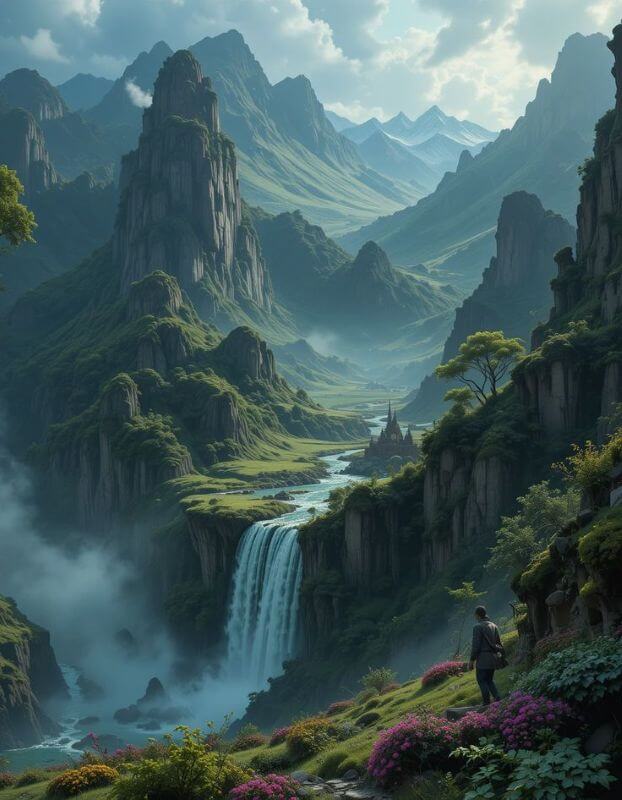
Elevation makes many ordinary tasks harder. Growing seasons may be shorter, the weather more unpredictable, and soils thinner. Strong winds can damage crops and buildings, while chilly nights arrive even during otherwise mild seasons.
Water can be abundant in some highlands and scarce in others. Snowmelt, springs, and upland lakes may provide reliable supplies, but villages far from them must depend on canals, cisterns, or carefully managed wells.
Transportation is another constant challenge. Moving heavy goods uphill requires labor, animals, or technology. Roads need constant maintenance, and a single collapsed bridge or blocked pass can disrupt an entire region.
These difficulties often produce cultures that value preparedness. Food preservation, livestock management, weather knowledge, and communal labor become essential rather than optional.
Highland People and Cultural Identity
People raised in elevated landscapes may develop a strong sense of belonging to place. They tie their identity not just to a kingdom or religion, but to specific valleys, ridges, grazing grounds, and passes.
This can foster independence. If communities have historically survived with little help from central authorities, they may distrust distant rulers. Local leaders, clan networks, or village councils may carry more practical authority than royal officials.
It can also create pride. Highlanders may see themselves as tougher, more self-reliant, or more traditional than lowlanders. Lowlanders may stereotype them as stubborn, provincial, or uncivilized. Those stereotypes can fuel both humor and conflict.
Plot Hook: A lowland ruler tries to standardize taxes and laws across a highland region, only to discover that the existing local customs are tied to ancient resource-sharing agreements that keep the entire plateau functioning.
Trade Across Difficult Terrain
Trade in highland regions depends heavily on routes. A single pass may connect two entire civilizations. Towns at the top or bottom of these routes naturally become commercial centers.
Because transport is expensive, highland economies often focus on goods valuable enough to justify the journey: metals, gemstones, wool, medicinal plants, rare animals, preserved foods, or specialized crafts. In fantasy, magical ores or sacred herbs might fill the same role. In science fiction, the plateau could produce rare isotopes, clean atmospheric resources, or materials available only at high elevations.
Trade also shapes culture. Merchants bring languages, fashions, and ideas from the lowlands, while local communities decide which influences to adopt and which to resist.
Pass towns may become cosmopolitan despite being geographically remote.
Seasonal markets can draw people from scattered settlements.
Officials’ heavy taxation or control of routes may cause smuggling to flourish.
Worldbuilding Tip: Think about what is worth hauling uphill. The answer will tell you what makes your highland economy viable.
Seasonal Movement and Pastoral Life
Many upland societies rely on livestock because grazing can be more practical than intensive farming. Seasonal movement between high and low pastures may become central to the calendar.
This leads to cultures that view migration as normal life, not instability. Families may divide seasonally, with some members remaining in villages while others travel with herds. Festivals mark the departure and return of livestock, and traditional routes become culturally significant.
Conflict can emerge when governments, borders, or private landowners interfere with these movements.
Character Idea: A young herder discovers that a newly fortified border cuts directly across the migration route their people have used for centuries, threatening both their livelihood and their relationship with neighboring clans.
Defense and Military Culture
Highlands can produce formidable defensive societies because locals understand the terrain outsiders do not. Locals know which paths remain passable after storms, where armies can find water, and which cliffs they can cross safely.
Invaders may find themselves exhausted before the battle even begins.
Yet plateaus can also support large armies once attackers reach the top. Broad uplands allow cavalry, wagons, or mechanized forces to maneuver far more easily than narrow mountain valleys. This creates an interesting military dynamic: the hardest part may gain access, not winning afterward. A kingdom might therefore concentrate nearly all its fortifications along the plateau edge while leaving its interior relatively open.
Religion and the Meaning of Height
Elevation naturally lends itself to spiritual interpretation. People may associate high places with gods, ancestors, purity, or revelation. Sacred sites may stand on prominent ridges or isolated plateaus. Pilgrimages could involve hard climbs, turning physical hardship into part of religious devotion.
Some cultures may view the lowlands as spiritually dangerous places of disease, corruption, or foreign influence.
In science fiction, the same cultural pattern might develop around observatories, orbital communication sites, or safe zones above toxic clouds.
Plot Hook: A sacred plateau, long forbidden to outsiders, becomes the only safe route for refugees fleeing a catastrophe below, forcing religious leaders to choose between tradition and compassion.
When Isolation Becomes Vulnerability
The same geography that protects highland societies can also become dangerous during a crisis.
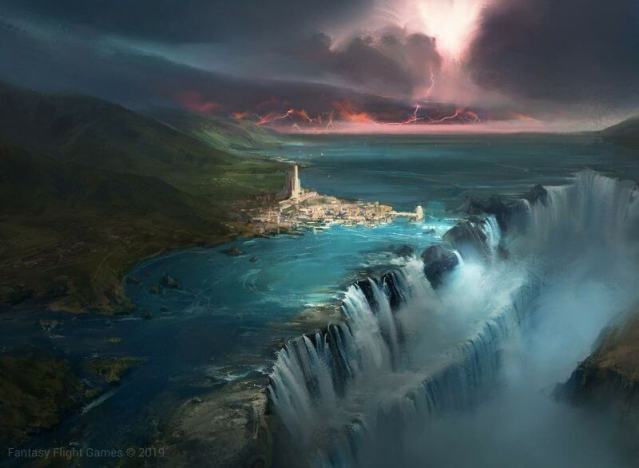
If trade routes close, imported food or medicine may disappear. A harsh winter can trap entire communities. A plague or crop failure may be especially devastating if outside aid cannot arrive quickly.
Political isolation can also become a problem. Central government may ignore a remote region until rebellion, famine, or invasion is already underway.
This makes highland societies resilient, but not invulnerable.
Plot and Character Ideas
The Road Above the Clouds
Genres: Political Fantasy, Adventure
Plot Idea: Three kingdoms depend on a single ancient road climbing onto a vast plateau rich in iron, medicinal plants, and grazing land. When a landslide destroys the road, the highland clans suddenly control resources the lowlands desperately need. A neighboring empire offers to construct a new route but demands permanent military access in exchange.
Character Angle: A highland roadkeeper whose family has maintained the passes for generations is unexpectedly drawn into international negotiations because she knows the terrain better than any diplomat.
Twist(s): The landslide was deliberate, but not political sabotage. An isolated highland community destroyed the road after discovering something dangerous migrating toward the plateau from below.
The Last Clan Banner
Genres: Political Fantasy, Character Drama
Plot Idea: After centuries of loose allegiance, a powerful lowland monarch declares that the highland clans must reorganize into ordinary provinces, ending their traditional autonomy and communal grazing rights.
Character Angle: The protagonist is the younger son of a clan chief who has spent most of his adult life serving in the royal army and genuinely believes in the kingdom. Now both sides expect his loyalty.
Twist(s): The king is not simply seeking greater control. Surveyors discovered an enormous deposit of magically valuable ore beneath the clans’ ancestral grazing lands, and several supposedly rebellious chiefs have already accepted secret bribes.
The Mountain That Answered
Genres: Religious Fantasy, Mystery
Plot Idea: For a thousand years, pilgrims have climbed to a plateau shrine and offered prayers toward a sacred peak. During an important festival, a voice suddenly answers.
Character Angle: A practical-minded priest responsible for managing the thousands of pilgrims must investigate while preventing panic, religious schism, and opportunistic claims of prophecy.
Twist(s): The voice really is supernatural but it is not the god worshipped at the shrine. Something much older has been listening to the prayers for centuries and has finally responded.
The Summer Pastures
Genres: Environmental Fantasy, Family Saga
Plot Idea: Highland herders have followed the same seasonal migration between winter valleys and summer plateau pastures for countless generations. Changing weather has dried the high pastures, forcing several traditionally separate clans into the same shrinking grazing areas.
Character Angle: A young herder who recently inherited an enormous flock after her father’s death must navigate an escalating feud while trying to keep her family financially afloat.
Twist(s): The changing rainfall is not natural. A distant kingdom has completed an enormous magical weather-working project to make its own agricultural lands wetter, unknowingly shifting rainfall away from the highlands.
The Fortress at World’s Edge
Genres: Military Fantasy, Political Thriller
Plot Idea: Invaders have never conquered an enormous plateau because only three passes allow access to its interior. Then an invading army suddenly appears in the highlands.
Character Angle: An elderly fortress commander who has spent forty years guarding one of the supposedly impregnable passes must figure out how the enemy bypassed every defense before the plateau’s scattered forces get overwhelmed.
Twist(s): The invaders discovered an ancient tunnel through the escarpment. The tunnel was deliberately erased from highland history because it once served as an escape route for a deposed royal dynasty, and descendants of that dynasty are guiding the invasion.
The City of Thin Air
Genres: Science Fiction, Environmental Thriller
Plot Idea: Human colonists inhabit enormous plateaus rising above the poisonous lower atmosphere of an alien world. Generations have grown up believing that descending below a certain altitude means certain death. Then atmospheric readings show that the toxic layer is slowly rising.
Character Angle: An atmospheric scientist whose family dismisses her work as alarmist discovers that the highest plateau settlements may have less than fifty years before becoming uninhabitable.
Twist(s): The atmosphere isn’t changing naturally. Terraforming machinery beneath the lowlands has operated again and stopping it might destroy an ecosystem that has developed below the clouds.
The Shepherd of Dead Men
Genres: Paranormal Fantasy, Mystery
Plot Idea: Shepherds on a remote plateau have long told stories about figures walking through the mist along an abandoned road. Nobody worries about the ghosts because they always follow the same path and never acknowledge the living. Then one night, they left the road.
Character Angle: A teenage shepherd who has seen the procession since childhood is the only witness when the dead suddenly change direction and begin walking toward the capital.
Twist(s): They are soldiers killed in a forgotten battle. They are not seeking revenge. They are returning to defend the highlands because the enemy that killed them has returned.
The Water Above
Genres: Political Fantasy, Environmental Drama
Plot Idea: Nearly every major river in the surrounding lowlands originates on one enormous plateau. After years of drought, highland communities construct reservoirs to secure their own future, dramatically reducing the water reaching kingdoms downstream.
Character Angle: A hydraulic engineer from the plateau believes her reservoirs will save thousands of highlanders but becomes the focus of international outrage when lowland harvests fail.
Twist(s): Everyone has misdiagnosed the crisis. Water isn’t simply becoming scarce, the entire plateau is slowly rising, altering precipitation and drainage patterns across the continent.
The Sky Burial
Genres: Religious Fantasy, Paranormal Mystery
A highland culture places its honored dead at sacred sites on the plateau, believing that their spirits ascend to the heavens. When bodies disappear before the ceremonies are complete, religious authorities fear sacrilege.
Character Angle: A mortuary priest whose responsibility is preparing the dead becomes determined to discover what is happening before frightened families abandon centuries of tradition.
Twist(s): The bodies are being taken by an enormous creature thought extinct for centuries. According to forgotten religious texts, its return is not an omen of disaster but fulfillmenting the oldest version of the burial tradition.
The Pass Market
Genres: Fantasy, Economic and Political Intrigue
Plot Idea: A trading city controls the easiest route between the highlands and the wealthy lowland kingdoms. Generations of neutrality have made it enormously prosperous. A new engineering technique makes a rival pass viable for the first time, threatening the city’s entire economy.
Character Angle: A merchant whose family has grown wealthy operating warehouses and caravan yards realizes the city must reinvent itself rather than simply destroy its competition.
Twist(s): Someone sabotages the alternative route, apparently on the city’s behalf. The protagonist discovers the attacks are actually being carried out by a foreign power hoping to provoke a war between the two highland regions.
The Plateau of Stars
Genres: Science Fantasy, Archaeological Mystery
Plot Idea: The highest plateau on the continent is famous for extraordinarily clear skies and has been home to astronomers for millennia. A new observatory discovers that several “stars” described in the oldest records no longer exist and may never have been stars at all.
Character Angle: A brilliant but socially awkward astronomer becomes obsessed with comparing ancient observations against the modern sky.
Twist(s): The lights were enormous orbital structures. One remains, and after thousands of years of silence, it has descended toward the plateau.
When the Highlands Bloom
Genres: Environmental Fantasy, Political Drama
Plot Idea: An unusually warm period transforms a cold plateau into fertile farmland. Lowland settlers pour into territory previously considered useful only for grazing, establishing farms and towns across traditional clan lands. What begins as an agricultural boom rapidly becomes a struggle over who actually owns the highlands.
Character Angle: A highland magistrate with a lowland mother and highland father must settle increasingly violent disputes between pastoral communities and immigrant farmers.
Twist(s): The warming is temporary. Ancient highland records describe the same phenomenon centuries earlier and show that within a decade the plateau will experience a catastrophic winter capable of killing anyone who remains. The conflict changes from who gets the land to who believes the warning soon enough to leave.
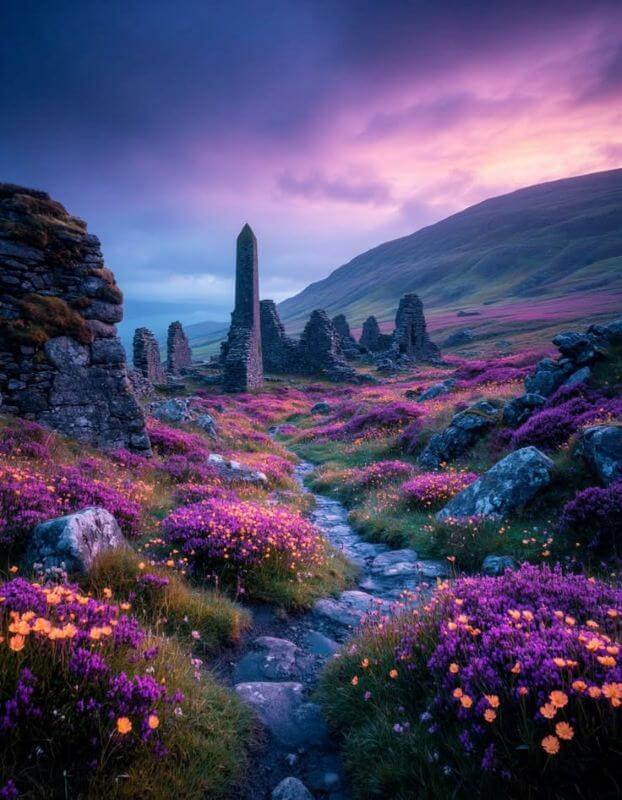
Highlands and plateaus offer writers an extraordinary balance between isolation and accessibility. They can support great cities and prosperous farms while remaining naturally protected from surrounding powers. They encourage distinctive cultures, specialized agriculture, unusual trade systems, and strong traditions of independence.
Their elevation can make them sacred landscapes, strategic strongholds, hidden refuges, or repositories of valuable resources. In fantasy, they may bring mortals closer to gods and magic. In science fiction, they may be the only habitable regions above hostile atmospheres or the remnants of enormous geological and technological mysteries.
Most importantly, highlands change how characters see their world. From the plateau’s edge, kingdoms become patches of farmland, rivers become silver threads, and distant mountains sink beneath the horizon. A people raised in such a place might understandably come to believe that they stand above the rest of the world. Whether they are right is where the story begins.
Happy worldbuilding!
I hope this was helpful. Let me know if you have questions or suggestions by using the Contact Me form on my website or by writing a comment. I post every Friday and would be grateful if you would share my content.
If you want my blog delivered straight to your inbox every month along with exclusive content and giveaways, please sign up for my email list here.
Let’s get writing!
Copyright © 2026 Rebecca Shedd. All rights reserved.


