The Worldbuilder’s Toolkit: Coral Reefs and Underwater Worlds

The ocean already feels like another world.
Descend only a short distance beneath the surface and familiar rules begin to change. Light fades. Sound behaves differently. Pressure increases. Movement becomes three-dimensional. Creatures appear that seem as though they belong on another planet rather than Earth. Coral reefs, meanwhile, explode with color and life, creating some of the most complex ecosystems on the planet.
For fantasy and science fiction writers, underwater worlds offer almost unlimited possibilities. They can contain sprawling cities hidden beneath the waves, nomadic civilizations following migrating sea creatures, kingdoms built into coral reefs, alien oceans kilometers deep, or entire societies that have never seen dry land.
But convincing underwater worldbuilding requires more than putting castles beneath the sea. Water changes everything: transportation, architecture, warfare, communication, food production, technology, and even how characters perceive space.
The best underwater settings embrace those differences.
Coral Reefs: Cities Built by Living Things
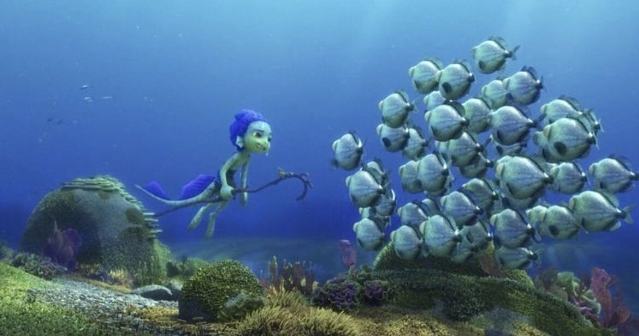
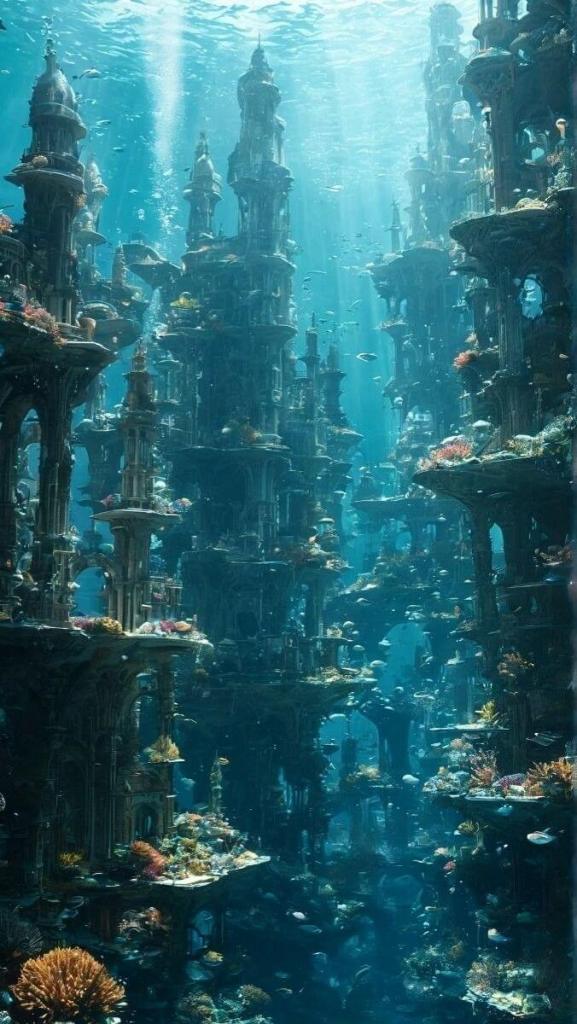
Coral reefs are especially useful inspiration because they already resemble fantastical cities. Towers, branching structures, caves, tunnels, and terraces grow over generations as living organisms construct enormous ecosystems.
Unlike most landscapes, reefs are simultaneously geography and biology. Thousands of species may depend on the same reef for food, shelter, reproduction, and protection. Predators patrol its edges while smaller creatures occupy specialized niches within its structure.
A fantasy civilization living among coral might therefore think very differently about architecture. Buildings may be cultivated rather than constructed. Families could inherit sections of living reef that have been tended for generations. Expanding a city might require decades of careful growth rather than simply quarrying stone.
Science fiction offers similar possibilities. Genetically engineered coral could produce breathable oxygen, absorb pollutants, store information, or grow structures designed specifically for human habitation.
Worldbuilding Tip: If your civilization lives within a reef, decide whether the reef is scenery, infrastructure, or a living partner. The more intertwined it is with society, the more distinctive your underwater culture will feel.
A World Without Roads
Underwater civilizations live in three dimensions. A surface city exists primarily along a horizontal plane. Streets connect buildings. People generally enter structures from ground level. Even tall buildings are anchored to the same surface.
Underwater, there is no reason for this limitation. A city might stretch hundreds of feet vertically. Homes could cling to cliffs while markets float above them. Important buildings may hang beneath rock shelves or rise from the seabed. Entrances could exist on rooftops, walls, or underneath structures because inhabitants can approach from almost any direction.
Transportation becomes equally different. Swimmers may move freely through the city, while larger distances require currents, domesticated animals, submarines, magical propulsion, or specialized vehicles.
Traditional maps may become difficult to use because knowing north and south is not enough. Citizens also need to know whether something lies above or below them.
Character Idea: A surface cartographer hired to map an enormous underwater capital discovers that every attempt to flatten the city onto a traditional map makes it nearly impossible to navigate.
Depth Creates Different Worlds
One of the greatest advantages of underwater worldbuilding is that you can create dramatically different environments without traveling very far horizontally.
Near the surface, sunlight supports coral reefs and abundant ecosystems. Travel downward and colors disappear as light is absorbed. Descend farther and darkness becomes permanent. Pressure rises, temperatures drop, and the creatures themselves become increasingly strange.
These depth zones can function almost like separate countries. A shallow-water civilization may know surprisingly little about the people living in deep trenches. Deep-sea inhabitants might find sunlight painful or even dangerous. Trade between them could require specialized intermediaries capable of surviving both environments.
Fantasy allows these divisions to become even stronger. Magic might behave differently under pressure. Ancient creatures could inhabit trenches where even merfolk refuse to travel. Science-fiction settings could contain colonies adapted genetically to particular depths.
Plot Hook: After centuries without contact, emissaries from a civilization living in an ocean trench arrive in a shallow-water kingdom with a warning: something beneath them is moving upward.
Building Underwater Cities
Underwater architecture depends greatly on who or what built the city.
Aquatic species that breathe water need no sealed buildings. Their cities can remain completely open to the surrounding ocean, perhaps resembling enormous reefs, sculpted caves, or forests of kelp.
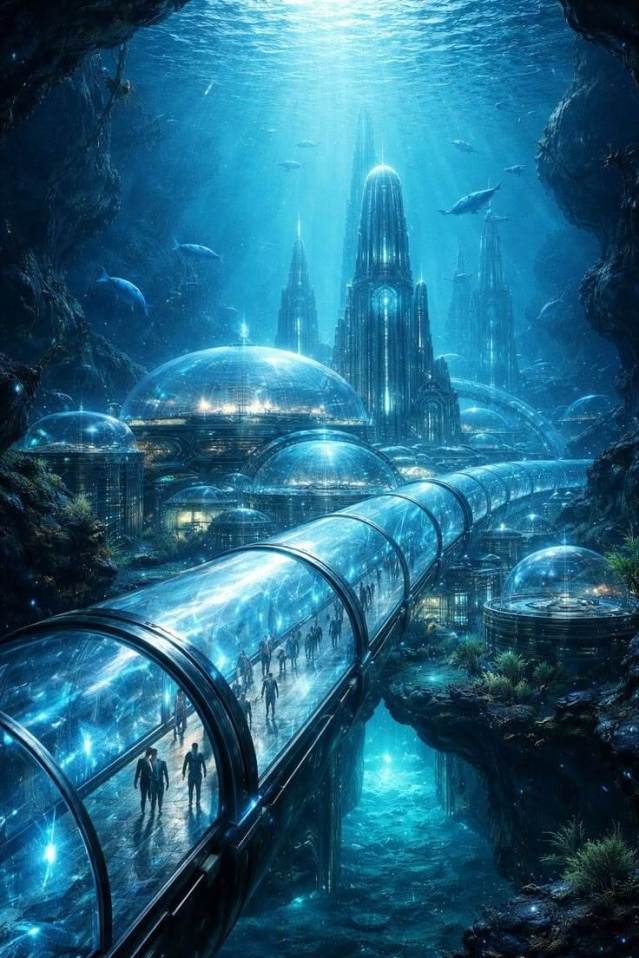
Air-breathing inhabitants face greater engineering challenges. Habitats must withstand pressure while remaining watertight. Air must be generated, circulated, and protected.
Possible underwater settlements could include:
- Cities carved directly into underwater cliffs or volcanic rock
- Living structures grown from coral, shell, or enormous organisms
- Pressure-resistant domes connected by tunnels
- Floating settlements anchored at particular depths
- Habitats built around geothermal vents or submerged alien technology
Architecture also reveals culture. A civilization comfortable with open water may consider enclosed rooms claustrophobic, while inhabitants of pressurized colonies may regard the surrounding ocean as beautiful but lethal.
Worldbuilding Tip: Before designing an underwater city, decide whether its inhabitants naturally belong underwater. That single choice changes almost every aspect of architecture and technology.
Food Beneath the Surface
Like every civilization, underwater societies need a reliable food supply.
Fishing alone probably cannot sustain enormous cities indefinitely. Aquatic cultures may instead develop forms of agriculture completely different from terrestrial farming.
Kelp forests could function as grain fields. Shellfish beds might be carefully cultivated. Fish could be herded rather than hunted. Coral ecosystems may produce edible organisms that are harvested seasonally.
Deep-sea civilizations have an entirely different challenge because sunlight cannot support photosynthesis. Ecosystems near hydrothermal vents demonstrate that life can instead rely on chemical energy, offering fascinating inspiration for alien or fantastical civilizations. That immediately creates political stakes: control the vents, and you may control the food supply.
Currents as Roads and Trade Routes
Ocean currents can play the same role rivers, roads, and prevailing winds play on land. Experienced travelers may know exactly when currents change direction or speed. Merchants could ride currents between distant cities, dramatically reducing travel time in one direction while making the return journey difficult.
Trade routes would consequently shift seasonally. Certain settlements might become wealthy because they sit at the intersection of several currents. Others might remain isolated despite being geographically nearby because reaching them requires fighting against powerful flows.
Character Idea: A merchant navigator discovers that one of the great ocean currents is gradually shifting, threatening to bypass the trading city that has controlled regional commerce for centuries.
Examples in Fiction
Kingdoms Beneath the Sea: Aquaman
Perhaps the most familiar modern example of an underwater civilization is Atlantis in DC’s Aquaman stories and the 2018 film Aquaman.
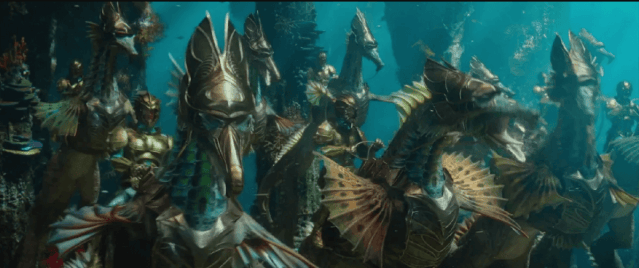
Atlantis works because it is not simply a terrestrial kingdom placed underwater. Its environment affects transportation, military technology, architecture, wildlife, and politics. Characters ride marine animals, vehicles move freely through three dimensions, and several distinct underwater kingdoms occupy different environments.
The setting also demonstrates how geography can produce cultural divisions. The ocean is not treated as one homogeneous place. Different regions produce different societies, just as mountains, deserts, and forests do on land.
That is an important lesson for writers:
The ocean is not a biome. It contains many biomes.
Your tropical reef civilization should probably feel very different from your abyssal kingdom.
Twenty Thousand Leagues Under the Seas: Exploration of an Alien Earth
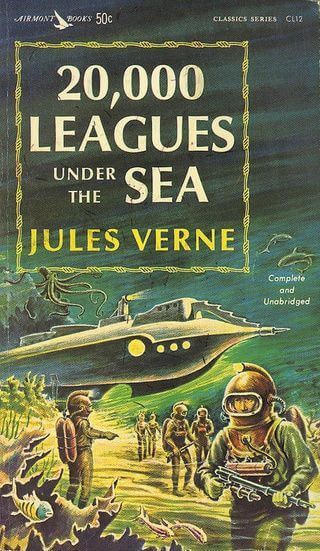
Jules Verne’s Twenty Thousand Leagues Under the Seas demonstrates another strength of underwater storytelling: discovery.
Captain Nemo’s Nautilus allows characters to explore environments that were almost completely inaccessible to Verne’s nineteenth-century readers. Underwater forests, shipwrecks, strange creatures, and submerged landscapes transform Earth’s oceans into an alien frontier.
It works because the characters are exploring somewhere that technically belongs to their own world while remaining profoundly unfamiliar.
Science fiction writers can use this same dynamic. You do not necessarily need another planet to provide a sense of first contact. The unknown civilization might already be beneath your characters’ feet.
Finding Nemo: The Reef as Community
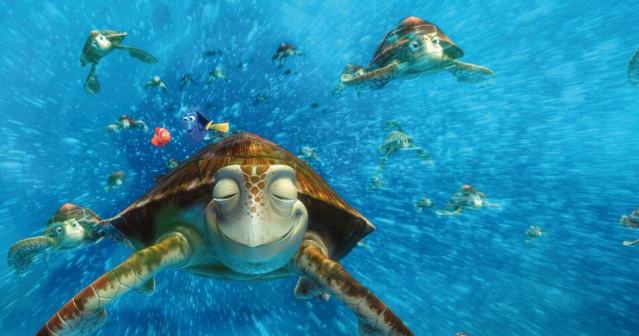
Pixar’s Finding Nemo provides an excellent example of using a coral reef as more than a beautiful backdrop. The reef functions as home. It contains neighborhoods, schools, recognizable routes, predators, and social networks. Leaving it means entering an enormous and unpredictable outside world. The contrast between the colorful, relatively protected reef and the open ocean gives the journey emotional weight. The audience understands exactly what Marlin is leaving behind.
For worldbuilders, the lesson is useful: safe and dangerous are relative. A coral reef can serve the same narrative role as a peaceful village at the edge of a dark forest.
Plot Hook: A reef civilization discovers that the protective coral surrounding its cities is dying, slowly eliminating the barrier that has kept deep-water predators away for generations.
Subnautica: The Ecosystem as Story
The video game Subnautica demonstrates how powerful underwater worldbuilding becomes when ecology drives exploration. The planet’s ocean contains distinct biomes with different depths, resources, hazards, and creatures. Progress requires players to understand those environments and develop technology capable of reaching progressively more dangerous regions.
Depth itself becomes a progression mechanic. The player doesn’t simply travel farther. They travel deeper, and deeper means stranger. That structure translates beautifully into novels. Every descent can reveal another layer of the world.
Worldbuilding Tip: Think vertically when designing mysteries. Perhaps your characters know what lies fifty meters down, have legends about what lies five hundred meters down, and have absolutely no idea what exists at five thousand.
Underwater Adventures in Tabletop RPGs
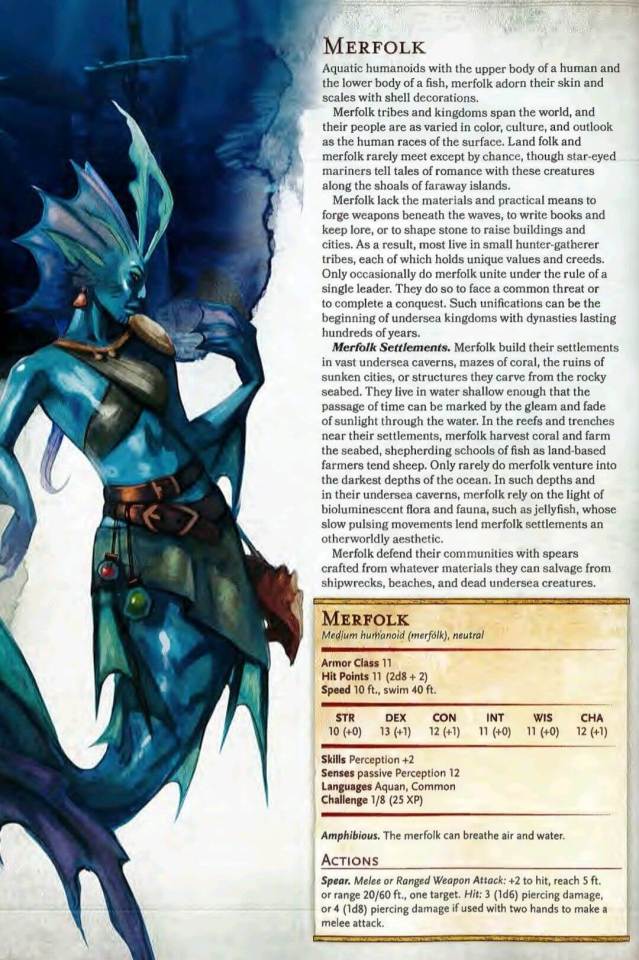
Tabletop games such as Dungeons & Dragons have long used underwater environments for adventures involving aquatic civilizations, submerged ruins, sea monsters, merfolk, sahuagin, elemental realms, and ancient treasures.
Underwater settings work especially well in tabletop campaigns because familiar abilities suddenly behave differently. Movement changes. Communication may become difficult. Fire magic may work differently. Equipment designed for surface travel becomes inconvenient. This forces players to rethink strategies they normally take for granted.
The same principle works in fiction. Changing the environment should change what characters are capable of doing.
Warfare Underwater
Underwater combat would look dramatically different from warfare on land. There are few conventional defensive walls when enemies can swim over them. Armies can approach from above or below. Projectiles behave differently in water, and traditional cavalry becomes irrelevant unless replaced by domesticated marine creatures or specialized vehicles.
Terrain still matters, however. Reefs, trenches, kelp forests, volcanic ridges, and strong currents can all create strategic chokepoints.
A fortress might therefore defend a narrow current rather than a road.
An army could use migrating creatures as concealment.
Science-fiction submarines might exploit temperature layers and underwater geography to remain hidden.
Character Idea: A military commander trained to defend a reef kingdom horizontally realizes an invading deep-sea army intends to attack vertically from beneath the city.
Coral Reefs as Living History
Coral grows over generations. That makes reefs fascinating places for cultural memory.
A civilization might remember its history through layers of coral deliberately cultivated around monuments. Families could maintain ancestral reef gardens. Important events might be commemorated by planting new coral formations. The reef itself becomes an archive.
Fantasy could take this literally. Coral might retain memories, allowing priests to communicate with ancestors by touching ancient formations. Science fiction could use genetically engineered coral capable of storing biological or digital information.
Destroying a reef would therefore mean destroying more than an ecosystem. It could mean erasing history.
Plot Hook: After an earthquake breaks open a section of ancient reef, historians discover layers underneath containing records from a civilization supposedly predating intelligent life in the ocean.
Religion Beneath the Waves
An underwater culture’s spirituality should reflect what its people experience. Surface dwellers frequently associate the sky with divinity because it lies above them. But what does “above” mean to someone living several kilometers beneath the ocean?
Perhaps the sunlit surface represents heaven.
Perhaps the abyss represents the sacred unknown.
Whale migrations could become religious events. Hydrothermal vents may be considered places of creation. Tides and currents could be interpreted as divine forces connecting distant communities.
A deep-sea civilization might never have seen the sun at all. Their myths about the brilliant world above could sound as strange as human legends about the underworld. That reversal can create fascinating encounters between cultures.
The Dangers of an Underwater World
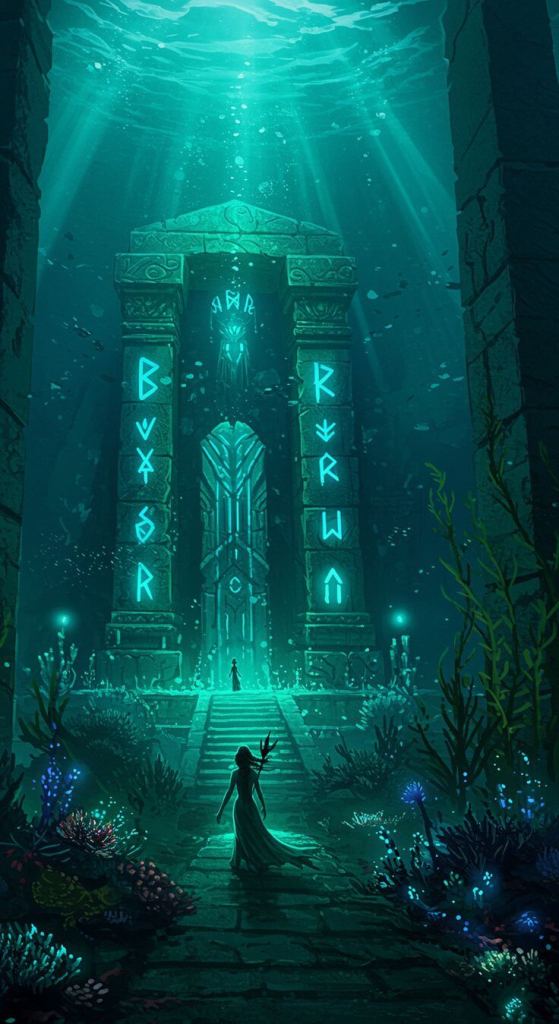
Water provides life, but an underwater civilization exists inside an environment capable of becoming deadly very quickly.
Storms reshape reefs. Earthquakes trigger underwater landslides. Volcanic eruptions alter water chemistry. Currents change direction. Oxygen levels fall. Harmful algal blooms spread.
For air-breathing civilizations, even a small structural failure can become catastrophic.
The underwater environment also creates unusual hazards that may not exist on land: extreme pressure, decompression, darkness, cold, limited visibility, and the sheer difficulty of escaping upward quickly.
Fantasy and science fiction can add magical currents, psychic predators, alien microorganisms, living reefs, or trenches where the normal laws of physics begin to fail.
The trick is not to add every possible danger. Choose hazards that logically emerge from your world.
Character Idea: An ambassador from an abyssal civilization must negotiate a treaty with a shallow-water kingdom while confined inside a pressure chamber because neither species can physically survive in the other’s environment.
The Advantages of Living Beneath the Waves
Although underwater life presents obvious difficulties, oceans contain enormous resources.
Food is perhaps the most immediate. Fish, shellfish, seaweed, crustaceans, and other organisms can support extensive food systems. A sophisticated underwater civilization would probably develop aquaculture rather than depending entirely upon hunting. Kelp forests could become farms, shellfish beds carefully cultivated, and schools of domesticated fish managed much like terrestrial livestock.
Water also provides three-dimensional living space. Settlements can occupy the seabed, underwater cliffs, floating platforms, reefs, caves, and structures suspended at different depths. A single location could support multiple cities vertically stacked above one another.
For naturally aquatic species, transportation could also require relatively little infrastructure. Why build a road when everyone can swim?
Worldbuilding Tip: Don’t focus exclusively on what makes underwater life harder. Ask what aquatic civilizations find easier than terrestrial ones. Your merfolk may be utterly baffled by humanity’s obsession with roads, stairs, bridges, and wheeled vehicles.
Reef Communities and the Idea of Stewardship
One particularly useful concept writers can draw from coastal and island cultures is that resource management does not have to resemble modern private ownership. When communities depend upon fisheries or reefs for generations, rules may develop governing when particular species can be harvested, who can use certain areas, and when locations should be left alone to recover.
In fantasy, these practices could intertwine with religion. A reef closed to fishing during spawning season might be described as belonging temporarily to a sea god. A practical ecological rule and a sacred tradition can reinforce one another.
Science fiction could take the same idea in another direction. Colonists living inside an alien ocean may discover that survival requires careful monitoring of an ecosystem they barely understand.
Worldbuilding Tip: Ask not only “who owns the reef?” but “who is responsible for it?” Ownership and responsibility can produce very different political systems.
The Reef as a Cultural Border
Coral reefs can create boundaries every bit as significant as mountains. A barrier reef may separate calm lagoons from dangerous open water. Different creatures inhabit each environment. Navigation methods change. Storms affect them differently.
That boundary can become cultural as well. People “inside the reef” might consider themselves civilized and protected, while those beyond it are viewed as dangerous outsiders. Communities living on the outer reef may instead see themselves as guardians protecting sheltered populations who know nothing about the real ocean.
Children crossing the reef for the first time could undergo coming-of-age ceremonies. Exile might literally mean being sent beyond the reef. A simple ecological boundary becomes a social one.
Coral Reefs as Agricultural Heartlands
For an aquatic civilization, a healthy reef could function much like a fertile river valley. Reefs support enormous biodiversity and can provide food, shelter, medicines, construction materials, and nursery habitats for important species. Protecting them may therefore become an issue of national security.
Wars could be fought over reefs.
Treaties might regulate fishing rights.
Priests might bless spawning grounds.
Environmental destruction becomes political destruction when the ecosystem itself supports civilization.
A dying reef might produce the underwater equivalent of famine.
Worldbuilding Tip: Think of reefs as infrastructure. Destroying one could be comparable to simultaneously burning farmland, destroying villages, eliminating fisheries, and wrecking roads.
Bringing It Into Your Worldbuilding
For most of human history, the ocean has not simply been a boundary at the edge of civilization. For countless communities, it has been a highway, pantry, workplace, sacred landscape, and source of identity. Coral reefs in particular can support extraordinary concentrations of life, providing fish, shellfish, building materials, sheltered waters, and natural barriers against waves and storms.
Cultures living beside reefs and shallow tropical seas consequently develop knowledge that can seem almost supernatural to outsiders. They learn to read currents, tides, clouds, stars, fish behavior, water color, and the shape of reefs hidden beneath the surface. Some communities construct settlements directly over the water, while others spend so much of their lives diving, sailing, and fishing that the distinction between “land culture” and “sea culture” becomes difficult to make.
For fantasy and science fiction writers, these societies provide excellent inspiration for civilizations that exist at the boundary between terrestrial and underwater worlds. The important lesson is not simply to borrow boats, fishing techniques, or architecture. Look at how generations of dependence on the ocean shape identity, religion, political authority, trade, and people’s understanding of the world around them.
When building an aquatic or reef-centered civilization, start by considering how thoroughly water shapes everyday experience.
A terrestrial writer naturally thinks of water as something characters enter. For aquatic cultures, water is simply where life happens. Currents are weather and transportation simultaneously. Reefs are neighborhoods. Schools of fish can be livestock. Kelp beds are farms. Shipwrecks become ruins. A whale migration might be a seasonal event as significant as a terrestrial harvest.
Then consider how much environmental knowledge ordinary people possess. A fisher may recognize hundreds of species. Children may understand tides before they understand arithmetic. Navigators could interpret subtle changes in current that outsiders cannot even detect.
This gives characters expertise rooted naturally in their culture rather than conveniently acquired for the plot.
Rare Resources Beneath the Waves
The ocean floor contains resources difficult or impossible to reach from land.
Real-world seabeds contain polymetallic nodules and mineral deposits associated with hydrothermal vents, while speculative oceans can offer much stranger treasures. Magical coral, pearls containing memories, superconducting minerals, alien microorganisms, biological medicines, geothermal energy, or materials created only under immense pressure could make underwater territory enormously valuable.
This immediately introduces politics. A surface kingdom may claim the seabed because it lies off its coast. An aquatic civilization may find that claim absurd. From their perspective, people who cannot even survive there are declaring ownership over someone else’s homeland.
Science fiction can make this conflict especially sharp when corporations arrive before governments understand the ecosystem.
Plot Hook: A mining company discovers an incredibly valuable mineral surrounding deep-ocean vents. Only after extraction begins do researchers realize the “mineral formations” are actually the abandoned structures of an unknown civilization.
Trading with the Surface
Contact between terrestrial and aquatic civilizations creates fascinating economic possibilities because each possesses easy access to resources the other finds difficult to obtain.
Surface civilizations can provide timber, grains, livestock products, ceramics, textiles, and materials requiring dry manufacturing. Underwater cultures might offer pearls, coral, seafood, medicines, rare minerals, salvaged goods, and resources collected at otherwise unreachable depths.
But conducting trade becomes complicated.
Where do negotiations occur?
Ports might contain flooded chambers beside dry rooms. Artificial pools could allow aquatic merchants to enter surface marketplaces. Floating trade stations might sit offshore, with goods transferred between ships and underwater caravans.
In science fiction, pressure-controlled diplomatic stations could accommodate species from radically different environments.
Trade therefore produces specialized border communities containing people capable of operating in both worlds.
Character Idea: A merchant born to a surface mother and aquatic father runs one of the few trading houses capable of operating legally in both civilizations and consequently knows everyone’s secrets.
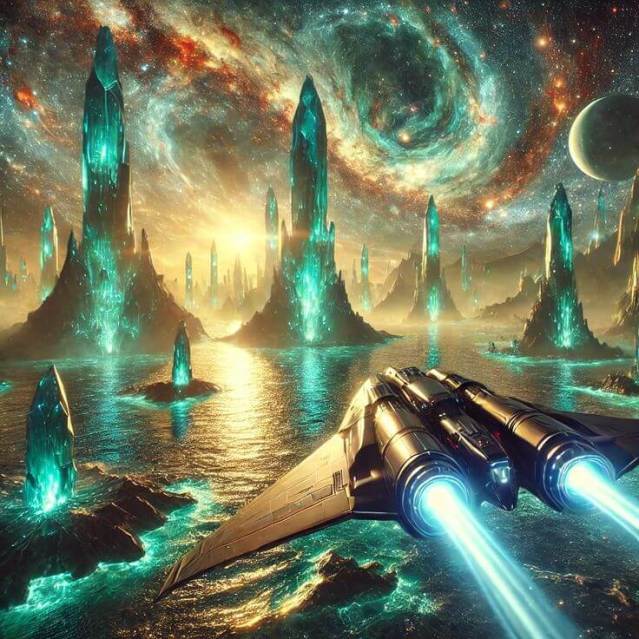
New Oceans: Humanity Meets an Alien Sea
Science fiction allows writers to take everything humanity has learned from Earth’s oceans and then make it only partially useful.
Colonists arriving on an ocean world would bring centuries of maritime experience. Shipbuilders understand buoyancy. Sailors understand storms and currents. Fishermen understand that animals congregate around particular habitats. Oceanographers understand circulation, salinity, temperature layers, and ecosystems.
But alien oceans might violate their assumptions. Different gravity would affect waves and tides. Multiple moons could create extraordinarily complex tidal cycles. Atmospheric density could alter storms. Different salinity would change buoyancy. Alien biochemistry might make seawater corrosive, toxic, or biologically dangerous.
The colonists therefore possess useful experience without possessing all the answers. And that is much more interesting than either complete competence or complete ignorance.
Who Becomes Valuable on an Ocean Planet?
Space colonization stories naturally emphasize pilots, engineers, scientists, and soldiers. But an ocean planet would create demand for a very different collection of skills.
Commercial fishermen understand working in dangerous weather while handling heavy equipment. Submarine crews understand enclosed environments and underwater navigation. Offshore oil workers know how to maintain complicated machinery surrounded by hostile ocean. Marine biologists understand ecosystems. Coast Guard crews specialize in rescue. Divers understand how quickly small equipment failures can become emergencies.
Suddenly, people whose professions seemed ordinary on Earth become some of the colony’s most valuable experts.
Character Idea: A retired fishing captain who signed up for an off-world colony expecting a quiet retirement becomes the settlement’s unofficial maritime expert after discovering that the scientists designing its boats have never actually worked at sea.
Deadliest Catch – But the Crabs Are the Size of Trucks
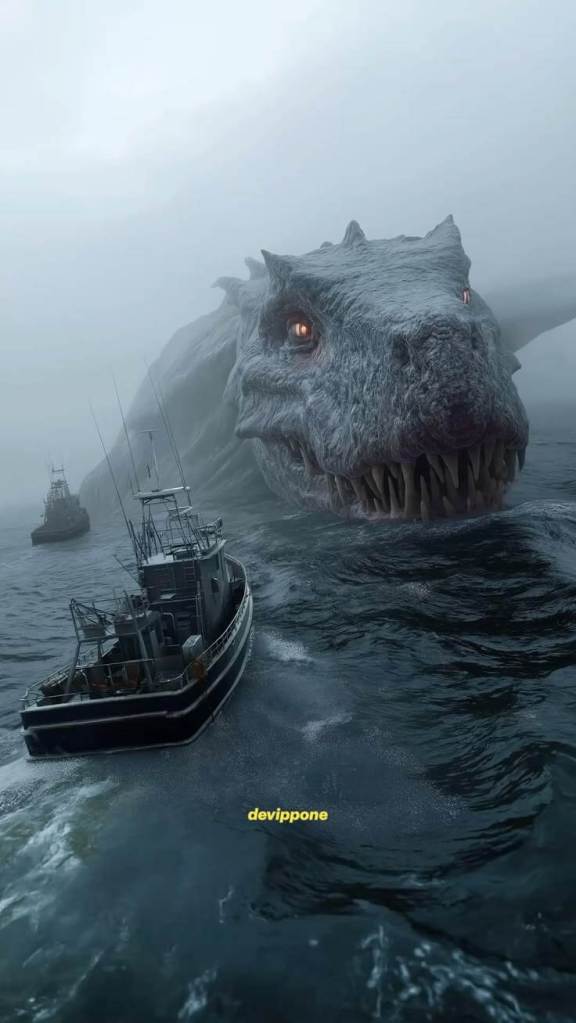
And then there are the crab fishermen. Taking the basic occupational world of something like Deadliest Catch and moving it onto an alien ocean is a fantastic science-fiction premise because commercial crab fishing is already dangerous enough to feel slightly unreal.
Now the ocean has changed. The colony discovers an enormous crustacean analogue whose meat is extraordinarily nutritious or whose shell contains a biological compound essential for medicine, starship manufacturing, or terraforming.
And the creatures are enormous. Suddenly crab pots become industrial cages. Hydraulic equipment must be redesigned. Boats require reinforced hulls. Crews need powered equipment simply to handle the catch. Most importantly, the fishermen must learn the animals. Perhaps alien crabs migrate hundreds of kilometers during a brief season. Maybe they live around volcanic vents. Perhaps storms trigger mass movement. Their breeding cycle could be tied to the planet’s three moons.
The first crews will make mistakes. Probably expensive ones.
Plot Hook: Veteran Alaskan crab fishermen are recruited to establish a commercial fishery on humanity’s first ocean colony. The money is unbelievable, the storms are worse than anything on Earth, and the “crabs” average fifteen feet across. Halfway through the first season, the crews realize the animals aren’t migrating toward their spawning grounds. They’re fleeing something.
Alien Ecology Should Surprise the Experts
One of the most entertaining aspects of this kind of story would be watching experienced maritime workers discover which instincts remain useful and which ones become dangerously wrong.
A captain may correctly recognize storm behavior but completely misunderstand alien animal migration. A marine biologist may understand ecological relationships but underestimate the physical realities of hauling a five-ton organism onto a moving deck.
The scientists and fishermen need one another. This creates excellent character dynamics because neither group possesses complete expertise. The best discoveries could come when someone recognizes an Earth-like pattern hidden inside something completely alien. A fisherman might notice predators following the crab migration. An engineer realizes the local equivalent of barnacles is weakening hulls. A meteorologist discovers the fishermen have independently developed better storm predictions because they noticed changes in animal behavior.
Experience becomes valuable without becoming infallible.
Technology Evolves Around the Ocean
After several generations, colonists would stop simply adapting Earth equipment and begin designing technology specifically for their new world. Ships evolve around local waves and gravity. Sonar systems are adjusted for alien water chemistry. Fishing equipment is designed around local organisms. Underwater settlements use indigenous biological materials. Eventually the technology stops looking imported.
The same should happen in fantasy civilizations. Thousands of years beneath the ocean should produce technologies optimized for that environment rather than waterproof versions of surface inventions.
This is one of the best ways to make an underwater society feel genuinely old.
Cultures Created by Dangerous Waters
Dangerous occupations produce their own cultures.
Fishermen develop superstitions, jargon, traditions, rivalries, and rituals. Families measure time in fishing seasons. Ports develop reputations. Certain captains become legendary.
Move that onto another planet and a new culture begins forming remarkably quickly. The first generation still tells stories about Alaska, Norway, Newfoundland, Japan, or Earth. Their grandchildren tell stories about the First Season, when nobody knew how big the crabs could get. A century later, those stories have become folklore. Perhaps nobody even remembers why touching the hull before departure is supposed to bring good luck. They simply know that every fisher has done it since humans first sailed this ocean.
That is how worldbuilding becomes history.
Underwater civilizations live in environments offering extraordinary abundance alongside constant danger. Coral reefs can become agricultural heartlands, ocean currents become trade routes, and deep-sea resources can support entire economies. Contact with surface civilizations introduces opportunities for commerce alongside disputes over territory, resources, and fundamentally different ideas about who owns the sea.
Science fiction adds another fascinating layer by allowing humans already familiar with Earth’s oceans to confront alien ones. Their experience gives them an advantage, but never certainty. Different tides, gravity, weather, chemistry, and biology force old maritime traditions to evolve into something new.
And sometimes the best way to make an alien world feel believable is not to send the stereotypical fearless space explorer. Send the exhausted fifty-year-old crab boat captain staring at a fifteen-foot crustacean climbing out of the pot while calmly informing the crew:
“Yeah. We’re going to need a bigger winch.”
Character and Plot Ideas
The Dying Reef
Genres: Environmental Fantasy, Political Drama
Plot Idea: The enormous coral reef supporting three underwater kingdoms begins to bleach and die. Fish disappear, cultivated shellfish fail, and sections of living architecture crumble. The kingdoms blame one another for poisoning the water, bringing centuries of cooperation dangerously close to war.
Character Angle: A reef tender from a politically insignificant border community has spent her life cultivating coral and notices changes months before royal scholars acknowledge the crisis. Suddenly, rulers who once ignored her community desperately need its knowledge.
Twist(s): Nothing is poisoning the reef. A deep-ocean current that has supplied nutrients for thousands of years has shifted. Saving the reef will require restoring the current but doing so will destroy a prosperous settlement built across its ancient path.
The Kingdom Beneath the Trench
Genres: Paranormal Fantasy, Exploration, Horror
Plot Idea: Everyone knows civilization ends at the edge of the Great Trench. Even deep-water peoples refuse to descend into it. Then strange lights begin moving far below, followed by unfamiliar creatures fleeing upward.
Character Angle: A disgraced deep-sea explorer sees the disturbances as a chance to restore his reputation and leads the first expedition into the trench.
Twist(s): An intelligent civilization has existed at the bottom for millennia. They aren’t emerging to conquer the upper oceans. Something beneath their cities has awakened, and they are refugees.
The Treaty of Two Worlds
Genres: Political Fantasy, Diplomatic Drama
Plot Idea: After generations of sporadic contact, a powerful surface empire and an underwater kingdom attempt their first comprehensive treaty covering trade, fishing rights, territorial waters, shipwreck salvage, and access to seabed minerals. Negotiations nearly collapse when both civilizations discover that their definitions of territory are fundamentally incompatible.
Character Angle: A bilingual merchant raised in a surface port but descended from an aquatic family is appointed as an interpreter. She quickly realizes she isn’t merely translating languages, she is translating entirely different concepts of ownership.
Twist(s): The disputed reef neither nation claims belongs to a third culture that deliberately withdrew from contact centuries earlier. They are about to return.
The Crab Season of Kepler-91
Genres: Science Fiction, Survival Adventure
Plot Idea: Human colonists discover that gigantic alien crustaceans migrating through their planet’s northern ocean contain a compound essential for producing a lifesaving medication. Earth commercial fishermen are recruited to establish the first sustainable fishery. The crews quickly discover that twenty years in the Bering Sea did not entirely prepare them for twelve-ton crabs, unfamiliar storms, three moons, and an ocean whose currents reverse with terrifying speed.
Character Angle: A veteran crab-boat captain nearing retirement accepts one final contract because the colony offers enough money to secure her family’s future. She finds herself commanding a mixed crew of experienced Earth fishermen, marine biologists, and colonists who have never worked a commercial fishing season.
Twist(s): The first disastrous season isn’t caused by bad luck. The crabs have changed their migration route because something has begun hunting them. Worse, the supposedly simple crustaceans display coordinated behavior suggesting humanity has dramatically underestimated their intelligence.
The Harvest at Blackwater Vent
Genres: Science Fiction, Corporate Thriller
Plot Idea: Colonists discover microorganisms around hydrothermal vents that produce an extraordinarily efficient superconducting material. Corporations rush to establish extraction operations, turning a remote stretch of alien seafloor into one of humanity’s most valuable industrial regions.
Character Angle: A maintenance diver working for the largest extraction company begins noticing that supposedly depleted vents recover whenever mining operations stop.
Twist(s): The microorganisms are deliberately producing the material as part of a larger biological structure. Humanity isn’t mining a mineral deposit. It is dismantling something alive and the organism has begun repairing itself around the mining stations.
The Pearl Throne
Genres: Political Fantasy, Court Intrigue
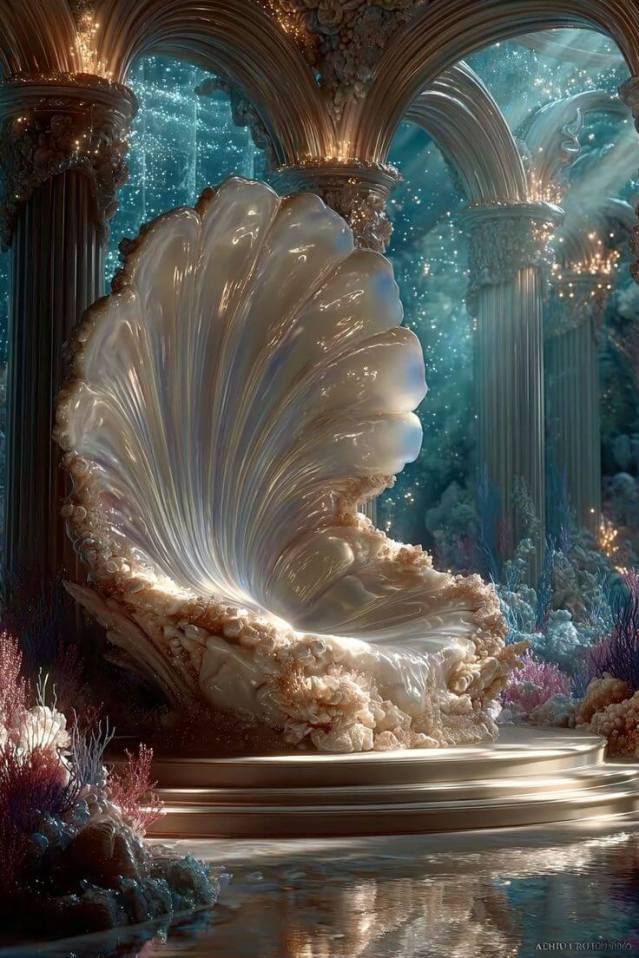
Plot Idea: The monarchs of a reef kingdom are crowned with a pearl produced by a colossal mollusk living beneath the royal city. When the old queen dies, the sacred creature fails to produce the pearl required to legitimize her successor.
Character Angle: The royal creature keeper, whose family has quietly cared for the mollusk for generations, becomes trapped between three competing heirs demanding that she make it produce another pearl.
Twist(s): The creature isn’t malfunctioning. It produces a pearl only for rulers it accepts and none of the three claimants qualify. Instead, it produces one when the supposedly insignificant keeper approaches.
The City That Grew Wrong
Genres: Biological Fantasy, Mystery
Plot Idea: An underwater civilization grows its buildings from specially cultivated coral. Architects spend decades guiding reefs into homes, towers, temples, and defensive structures. Then one neighborhood begins growing without human guidance.
Character Angle: An elderly coral architect nearing retirement is summoned because she designed the original foundations fifty years earlier.
Twist(s): The coral isn’t growing randomly. Seen from above, the new structures form symbols belonging to a civilization that disappeared before the current inhabitants evolved. The reef has been preserving their memories genetically.
The War Above the Water
Genres: Military Fantasy, Political Adventure
Plot Idea: Two surface kingdoms go to war, sending fleets across waters belonging to an underwater civilization that has remained neutral for centuries. Sunken ships, discarded weapons, magical attacks, and thousands of bodies begin devastating the reefs below.
Character Angle: An underwater military commander is ordered to protect her kingdom without openly entering the surface war.
Twist(s): She discovers one surface power is deliberately sinking its own ships over important reef settlements, hoping to provoke the underwater kingdom into attacking its enemy and entering the war as an unwilling ally.
The Shipwreck Market
Genres: Fantasy Adventure, Crime, Mystery
Plot Idea: An underwater city has become wealthy salvaging ships lost along a notoriously dangerous stretch of ocean. Furniture, metals, weapons, books, and surface luxuries flow through its enormous wreck markets. When shipwreck numbers suddenly increase, prosperity explodes.
Character Angle: A young salvage diver delighted by the sudden abundance discovers evidence that several supposedly storm-lost vessels were deliberately sunk.
Twist(s): The city’s merchant council has secretly altered navigation markers on the surface to drive ships onto the reefs. But someone else has discovered the scheme and is deliberately steering a heavily armed royal treasure fleet toward the same waters.
The Children of the Dry God
Genres: Religious Fantasy, Paranormal Drama
Plot Idea: An abyssal civilization has never seen the ocean’s surface. Its religion teaches that a brilliant realm called the Dry Heaven exists above the water, where the souls of the righteous will someday live without gills. Most inhabitants regard the stories symbolically until a surface vessel sinks into their territory carrying living humans.
Character Angle: A skeptical temple scholar is assigned to study the impossible air-breathing creatures and realizes their existence could either validate her religion or tear it apart.
Twist(s): Ancient temple records reveal that the abyssal people once breathed air themselves. Their ancestors deliberately transformed their descendants to survive underwater after fleeing a catastrophe on the surface.
The Ocean Between Worlds
Genres: Science Fiction, First Contact, Environmental Mystery
Plot Idea: Humanity’s first colony on an ocean planet struggles for decades to establish fisheries. The native ecosystem behaves unpredictably: schools vanish from established grounds, predators abruptly abandon territories, and massive reef-like structures appear to change shape between seasons.
Character Angle: A second-generation fisherman has little formal scientific education but knows the alien ocean better than researchers recently arrived from Earth. He begins noticing patterns in the movements of dozens of supposedly unrelated species.
Twist(s): The planet’s ocean is not filled with separate ecosystems. The reefs, microorganisms, migrating animals, and enormous deep-sea creatures form components of a planet-spanning symbiotic intelligence. The colonists’ fishing operations haven’t gone unnoticed. The ocean has spent decades studying them and has finally decided to make contact.
The Cathedral of Whales
Genres: Religious Fantasy, Mystery
Plot Idea: Every year, enormous whales migrate to a sacred reef where their songs resonate through underwater caverns. An aquatic religion teaches that the whales carry messages from the dead. For the first time in recorded history, the whales arrive but refuse to sing.
Character Angle: A young cantor trained since childhood to interpret the songs must determine whether the silence is an ecological warning or a divine judgment.
Twist(s): The whales have not stopped communicating. Their song has shifted beyond the frequencies the inhabitants normally hear because they are attempting to communicate with something much larger approaching across the ocean.
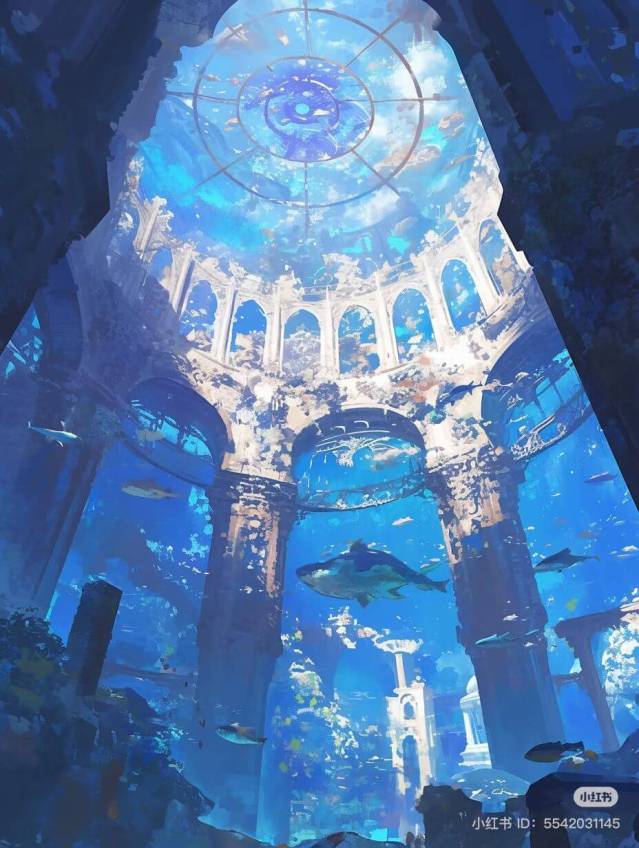
Coral reefs and underwater worlds offer writers something rare: an environment familiar enough to understand yet alien enough to inspire wonder.
They force civilizations to reconsider architecture, agriculture, transportation, warfare, trade, religion, and even the basic idea of direction. Coral reefs can become living cities. Currents become highways. Depth creates borders. Entire kingdoms may exist above or below one another without ever meeting.
Stories such as Aquaman, Twenty Thousand Leagues Under the Seas, Finding Nemo, and games like Subnautica work because they do not treat the ocean merely as scenery. The environment actively shapes what characters can do and how their societies function.
That is the key to effective underwater worldbuilding. Don’t simply put your civilization beneath the water. Ask what happens when generations of people have never known anything else.
Because beneath the surface lies enough unexplored world for entire civilizations, religions, wars, and histories. And the deepest places may still have no idea the surface exists.
Happy worldbuilding!
I hope this was helpful. Let me know if you have questions or suggestions by using the Contact Me form on my website or by writing a comment. I post every Friday and would be grateful if you would share my content.
If you want my blog delivered straight to your inbox every month along with exclusive content and giveaways, please sign up for my email list here.
Let’s get writing!
Copyright © 2026 Rebecca Shedd. All rights reserved.

