The Worldbuilder’s Toolkit: Salt Flats and Arid Plains
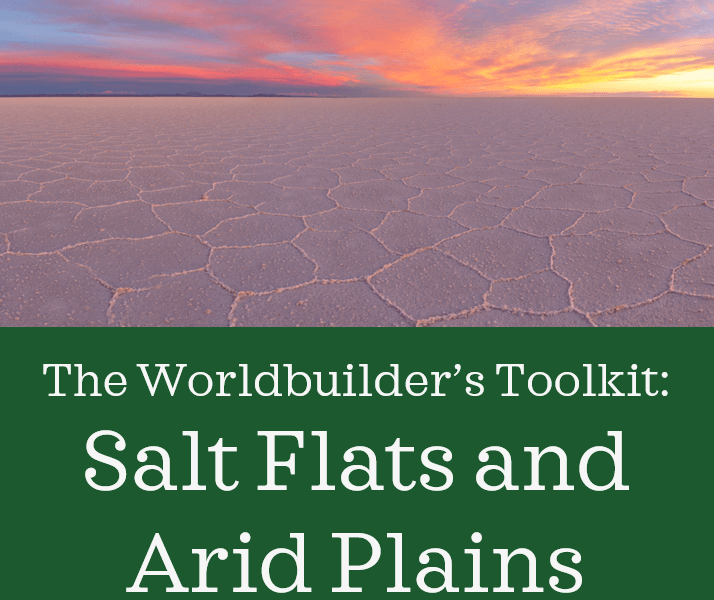

A traveler crests a low ridge and sees white stretching to the horizon.
There are no towering dunes, no golden sea of sand, and perhaps scarcely a plant in sight. The earth is flat enough to distort distance. Heat shimmers above the ground. Mountains that seem close enough to touch may still be a day’s journey away. At noon, the landscape is painfully bright. After sunset, the temperature plummets. When rain finally comes, the seemingly solid ground can transform into a shallow lake or an expanse of treacherous mud.
Salt flats and arid plains offer writers a very different kind of desolation from the stereotypical desert. They can be breathtakingly beautiful, brutally exposed, mineral-rich, sacred, economically valuable, or almost impossible to cross. Their apparent emptiness can conceal ancient lake beds, buried settlements, migratory wildlife, valuable deposits, and evidence that the environment was once dramatically different.
For fantasy and science fiction, these landscapes are especially useful because they create worlds defined not by what rises from the ground, but by the almost unnerving absence of anything to hide behind.
Salt Flats, Arid Plains, and Deserts: What’s the Difference?
“Desert” is fundamentally a climatic term. A desert is a region receiving very little precipitation. It does not have to consist of sand dunes. Deserts can be rocky, mountainous, gravel-covered, icy, or filled with salt flats.
An arid plain is a broad, relatively flat or gently rolling landscape where limited rainfall produces sparse vegetation. It may technically lie within a desert or semi-desert, but its defining visual characteristic is openness rather than dunes.
A salt flat, or salt pan, forms when water collects in a basin but has no effective route to the ocean. The water evaporates and leaves dissolved minerals behind. Repeated cycles can eventually produce immense expanses of salt and other evaporite minerals. This means a salt flat frequently contains the ghost of a vanished body of water.
That fact alone offers enormous storytelling possibilities.
Worldbuilding Tip: When creating a salt flat, ask what used to be there. Was it a lake, inland sea, magical ocean, alien biological reservoir, or something stranger? The landscape can preserve clues to an environment that no longer exists.
The Power of an Empty Horizon
Forests conceal. Mountains obstruct. Cities overwhelm. Salt flats reveal.
On an enormous open plain, characters may see travelers approaching from miles away. There are few places for an army to hide and almost nowhere for fugitives to disappear. A single tower, tree, vehicle, animal, or person becomes visible against the horizon.
Yet visibility does not necessarily mean safety. Distance becomes deceptive when there are few objects providing scale. Something that looks nearby may actually be many miles away. Heat haze can distort shapes and create mirages. Featureless terrain can make navigation surprisingly difficult despite the absence of obvious obstacles. The landscape creates psychological exposure as well. Characters cannot simply duck behind a tree when danger appears.
Character Idea: A fugitive accustomed to disappearing into crowded cities must cross a salt plain where her pursuers can see her caravan from miles away and she can see them slowly gaining.
Salt as a Resource
Salt seems mundane in a modern kitchen, but historically it has been an enormously important commodity. Humans and livestock require it, and before refrigeration it was particularly valuable for food preservation. A major salt deposit can therefore support trade networks stretching far beyond an otherwise inhospitable region.
In fantasy, the salt itself could possess unusual properties. Perhaps it disrupts magic, preserves spirits along with bodies, repels supernatural creatures, or is necessary for alchemy.
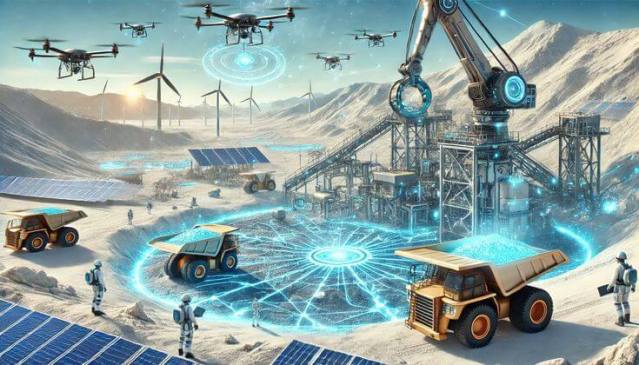
Science fiction can expand the mineral wealth of salt flats even further. Ancient alien lakes might leave behind lithium, borates, rare salts, or completely fictional compounds essential to batteries, reactors, terraforming systems, or interstellar technology. Suddenly the apparently worthless wasteland becomes some of the most strategically valuable territory on the planet.
Plot Hook: Two kingdoms that ignored an enormous salt flat for centuries discover that crystals beneath it are essential for a newly invented magical technology. Unfortunately, the supposedly “empty” land already belongs to nomadic communities who have no intention of surrendering it.
Crossing the Open Country
Travel across an arid plain presents very different challenges from crossing dunes. The terrain may appear easy. It is flat. There are few physical barriers. Under the right conditions, travelers can move rapidly.
The problem is everything else.
Water sources may be separated by enormous distances. Shade can be virtually nonexistent. Dust storms sweep across exposed terrain. Salt crust can conceal mud or brine beneath it. Seasonal rains may suddenly flood depressions that appeared completely dry hours earlier.
Travel therefore depends heavily upon local knowledge. A caravan leader may know which patches of apparently identical ground will support a wagon and which will swallow it. A nomadic guide might identify hidden springs from vegetation invisible to an outsider. A science-fiction rover pilot may recognize mineral crusts indicating dangerously unstable ground.
Worldbuilding Tip: Don’t make survival depend solely on endurance. Make it depend on knowledge. The person who knows the landscape should matter more than the person with the biggest sword.
Life Where Water Comes and Goes
Salt flats often reveal an important truth about dry environments: absence of water does not mean water never arrives. Some flats periodically flood.
A shallow lake can appear across what was recently cracked earth, attracting birds, insects, and other wildlife. Dormant organisms emerge. Plants bloom. Then the water evaporates and the white plain returns.
That rhythm could dominate local culture. People might measure years according to floods rather than conventional seasons. Temporary settlements appear during wet periods. Fishing or harvesting occurs for a few frantic weeks. Religious festivals celebrate the return of water.
In a fantasy world, the cycle could be even more dramatic. A salt sea might fill once every decade, carrying magical creatures from underground reservoirs. An alien salt basin might briefly become biologically active whenever its planet’s eccentric orbit produces a wet season.
Plot Hook: Once every twenty-seven years, rain transforms a vast salt flat into an inland sea. This time, when the water arrives, the rooftops of a previously unknown city appear beneath its surface.
The Culture of Exposure
People raised on open plains may develop a different relationship with visibility and distance. They may become exceptional observers. A plume of dust on the horizon carries information: perhaps riders, livestock, a caravan, or an approaching storm. Children learn to judge distance from tiny changes in shape and movement.
Settlements may also be conspicuous. Without forests or rugged terrain to hide them, communities might cluster around the few dependable water sources or construct buildings partly underground for protection from heat and wind.
Clothing may prioritize sun protection rather than simply cooling. Broad coverings, goggles, veils, or reflective fabrics could become practical necessities before becoming cultural markers.
Architecture, clothing, transportation, and social customs should all respond to exposure.
When the Ground Becomes a Mirror
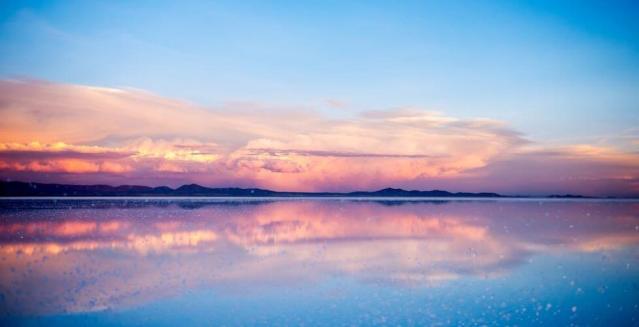
Some salt flats become spectacular reflective surfaces when covered by a thin layer of water. The horizon seems to vanish as earth and sky merge.
For fantasy writers, it is almost impossible to resist making such a place supernatural. Perhaps reflections sometimes show events occurring elsewhere. Travelers navigate by stars reflected beneath their feet. Spirits appear only in the mirrored landscape. A pilgrimage requires believers to cross the flats during the rainy season because heaven is believed to touch the earth there.
Science fiction can produce equally strange effects. An alien salt flat might contain crystalline deposits that interfere with sensors, scatter communications, or produce optical phenomena mistaken for supernatural events.
Character Idea: A priest who has spent thirty years interpreting visions reflected in a sacred salt lake sees something impossible during the annual pilgrimage: a constellation that does not exist in the sky above.
Examples in Fiction
Salt Flats on Screen: Star Wars
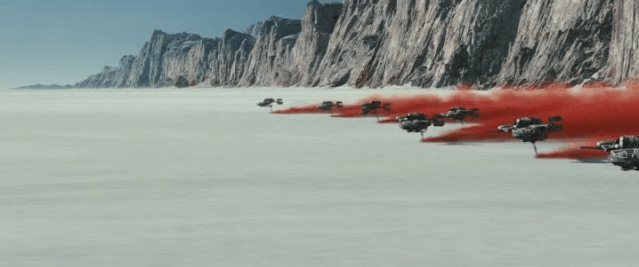
The salt-covered world of Crait in Star Wars: The Last Jedi demonstrates the visual power of a salt-flat environment. Its pale surface conceals vivid red mineral soil beneath, so movement across the battlefield physically scars the landscape.
That simple visual choice accomplishes several things at once. It makes movement easy to track, emphasizes the enormous openness of the battlefield, and gives the environment an identity distinct from a conventional sandy desert.
For writers, the lesson is not to imitate Crait’s colors. Instead, consider what lies immediately beneath the visible surface of your landscape. The ground characters walk across can reveal their passage.
Endless Roads: Mad Max
The landscapes associated with the Mad Max: Fury Road style of post-apocalyptic storytelling demonstrate another strength of arid plains: movement. Broad, barren terrain allows vehicles, pursuers, and storms to dominate the horizon. Geography encourages mobile stories because staying still can be more dangerous than moving.
Although Mad Max employs several kinds of desert and arid terrain rather than focusing exclusively on salt flats, its environments show how emptiness can amplify action. A distant threat can remain visible long before it arrives.
For writers, that allows suspense to build slowly. The characters know what is coming. They simply cannot escape it.
Salt and Survival in Video Games
Games frequently use salt flats and barren plains to convey enormous scale. The Great Salt Lake Desert and Bonneville Salt Flats have influenced the visual language of post-apocalyptic and science-fiction environments precisely because they look simultaneously earthly and alien.
Settings such as those encountered throughout Fallout demonstrate how open wastelands can make isolated settlements feel particularly significant. A tiny outpost becomes important when there is nothing else for miles.
Tabletop RPGs can exploit the same geography. In Dark Sun, brutal arid environments make travel, water, resources, and survival integral to adventure rather than incidental background details.
A salt flat in a tabletop campaign can function almost like a dungeon without walls: the party must manage supplies, choose routes, recognize environmental hazards, and decide whether suspicious landmarks are worth the risk of investigating.
What’s Buried Beneath the Salt?
Salt preserves. That makes salt flats wonderful locations for archaeological mysteries.
An ancient lake may once have supported cities along its shores. As the climate changed, settlements were abandoned and gradually buried beneath sediment and salt.
Fantasy can make preservation much stranger. Bodies may remain perfectly intact. Magical creatures could lie dormant rather than dead. Ancient spells sealed beneath salt might reactivate when exposed to water.
Science fiction offers similar possibilities. An alien lake bed could preserve microorganisms, spacecraft, technological ruins, or chemical evidence of a vanished biosphere.
The salt flat becomes an archive of environmental catastrophe.
Plot Hook: Miners drilling beneath a salt basin discover an intact ship embedded hundreds of feet below the surface. Geological evidence indicates the basin has been dry for two million years. The ship’s emergency beacon is still transmitting.
Settlements at the Edge
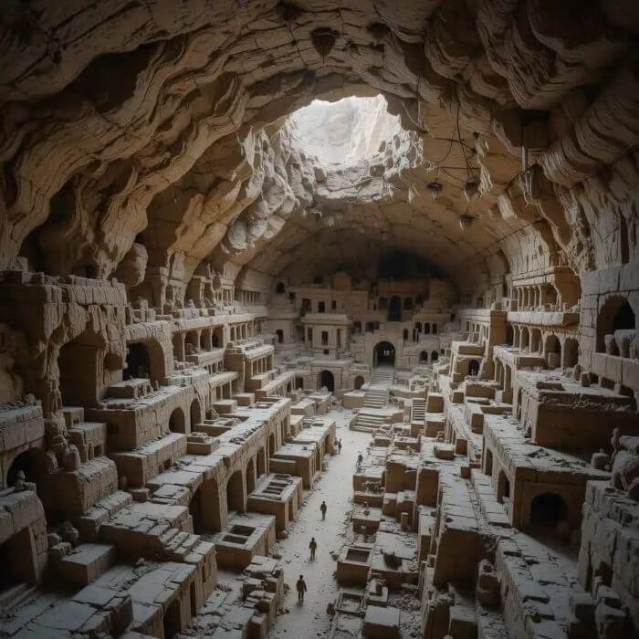
Permanent settlements on extremely dry plains tend to cluster around whatever makes survival possible: springs, wells, rivers, mines, transportation routes, or modern infrastructure. That concentration creates interesting political dynamics.
Control the well and you may control the town.
Control several wells and you may control the trade route.
A fortress built beside the only dependable spring for fifty miles may exert influence completely disproportionate to its size.
Settlements could also move. Nomadic or semi-nomadic peoples may follow grazing, seasonal water, migratory animals, or economic opportunities rather than remaining tied to one location. This gives writers alternatives to the conventional walled fantasy city.
Warfare on Open Ground
Arid plains provide little cover, making military movement highly visible. Scouts become invaluable. Fast cavalry, vehicles, flying creatures, or other mobile forces may dominate warfare. Supply lines become even more important than battlefield strength. An army cannot remain indefinitely on a plain without water. Defenders may not need to defeat invaders directly if they can deny them wells, destroy cisterns, or force them onto routes incapable of sustaining thousands of soldiers.
The environment itself becomes a weapon. A commander raised in the region may deliberately retreat, allowing an invading army to advance farther and farther from dependable water before attacking its supply lines.
Worldbuilding Tip: When planning a battle in an arid region, map the water before you map the armies. Where soldiers can drink may determine the campaign long before anyone draws a sword.
Salt Flats on Alien Worlds
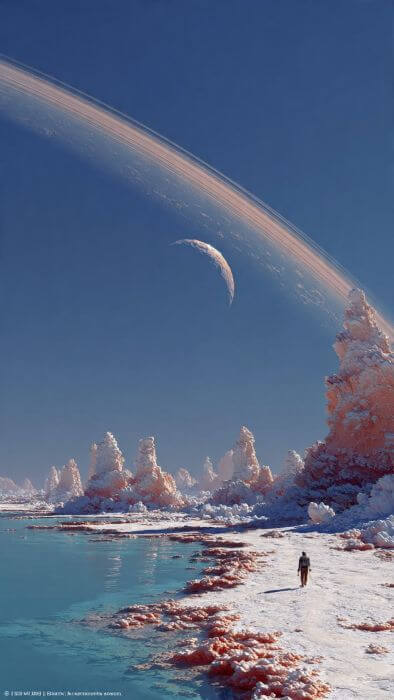
Science fiction can push these environments beyond anything found on Earth. An alien salt flat need not consist primarily of sodium chloride. It could be the evaporated remains of a methane sea, an ammonia lake, or an ocean containing unfamiliar dissolved minerals. The resulting landscape might be toxic, corrosive, explosive, or extraordinarily valuable.
Different gravity and atmospheric conditions could create bizarre formations. Crystals might grow meters high. Seasonal condensation could produce temporary lakes. Strong winds could drive mineral particles across the surface like abrasive snow. Colonists accustomed to Earth’s deserts might initially make dangerous assumptions. A white plain looks familiar. Its chemistry may be anything but.
Character Idea: A planetary geologist becomes suspicious when colonists begin calling a newly discovered basin “the salt flats.” Tests reveal that the white crystals aren’t salt at all and that they are being continuously produced by microorganisms beneath the surface.
Questions to Ask When Building Salt Flats and Arid Plains
A few questions can help transform an empty landscape into a functioning environment:
- Why is the region dry, and has it always been this way?
- Where does water appear, and how predictable is it?
- What minerals or biological resources make the landscape valuable?
- How do inhabitants navigate when landmarks are scarce?
- What happens during rare storms or floods?
- Who controls wells, springs, mines, and dependable crossing routes?
- What evidence remains of earlier, wetter periods?
- How does extreme visibility affect warfare, architecture, travel, and culture?
You do not need to explain every answer directly to readers. Knowing them yourself will make the setting influence characters naturally.
Real-World Salt Flat and Arid Plain Cultures: Inspiration for Fictional Societies
Salt flats and arid plains may appear empty from a distance, but many have supported human communities for centuries. Their inhabitants learned how to extract value from landscapes outsiders often dismissed as barren, developing economies based on salt, livestock, seasonal migration, trade, mining, and highly specialized environmental knowledge.
These regions also demonstrate how dramatically a resource can shape culture. Salt can be food, preservative, trade good, sacred substance, or source of political power. Seasonal water transforms apparently lifeless plains into grazing grounds or temporary wetlands. Migration routes become as important as permanent settlements, while those who know how to cross an exposed landscape safely possess valuable knowledge.
For writers, these cultures provide excellent models for societies that thrive not by conquering hostile environments, but by understanding them better than anyone else.
Aymara and Quechua Communities Around Salar de Uyuni — Salt, Llamas, and Trade
Bolivia’s Salar de Uyuni, the world’s largest salt flat, lies within the high Andean Altiplano. Indigenous Aymara and Quechua communities have long lived around this seemingly endless white landscape, combining activities such as salt harvesting, camelid herding, and high-altitude agriculture.
Historically, salt was more than something used locally. Llama caravans could carry blocks of salt away from the salar and into valleys where they were exchanged for crops and other products unavailable on the high plateau. This meant that a barren landscape could support far-reaching economic connections precisely because it produced something other regions needed.
Communities surrounding the salar also demonstrate how landscapes can acquire spiritual as well as economic meaning. The earth, mountains, salt, animals, and agricultural cycles may exist within relationships involving reciprocity and respect rather than being viewed simply as commodities.
Today, another resource beneath the salt – lithium – has added a new layer of economic and political significance to the region, creating a particularly useful real-world model for speculative fiction in which an ancient resource landscape suddenly becomes valuable for an entirely new reason.
Inspiration for Fiction: Imagine a culture whose ancestors have harvested magical salt for centuries using caravans that connect the uplands with distant kingdoms. Then scholars discover that something beneath the salt is essential to a revolutionary new technology. Suddenly territory outsiders once considered worthless becomes one of the most valuable places in the world. That creates immediate tension between traditional use, national governments, foreign investors, and the people whose lives have always been connected to the land.
Character Idea: A young caravan leader expects to inherit her family’s traditional salt route but instead becomes a political spokesperson when a powerful empire claims rights to the magical mineral beneath her people’s harvesting grounds.
The Killaka and Other Andean Caravan Societies — Trading Across Ecological Worlds
Historic Andean societies often used llama caravans to connect radically different ecological zones. Highland communities might possess salt, wool, livestock products, or minerals while valleys produced maize, fruit, honey, and other foods difficult to grow at elevation.
Salt therefore helped connect environments that could not easily sustain the same resources.
This is an excellent reminder that inhospitable landscapes do not necessarily produce isolated cultures. If the people living there possess something valuable enough, they may become essential members of enormous trade networks.
Caravan travel also creates specialized knowledge. Experienced travelers must know where water can be found, which routes remain passable, where animals can graze, and which communities will provide hospitality or trade.
Inspiration for Fiction: Your salt-flat culture could become famous not merely as producers but as connectors. Their caravans may be the only reliable link between kingdoms separated by hundreds of miles of hostile terrain. Maps may be less valuable than experienced caravan leaders who memorize wells, landmarks, seasonal conditions, and political relationships. Their neutrality might also become politically important. Rival kingdoms may tolerate one another’s merchants because everyone depends upon the same caravan people.
Worldbuilding Tip: If your arid society operates long-distance trade, ask what they carry home. Trade networks are usually built on exchange, not simply exporting one valuable resource.
The Agariyas of the Little Rann of Kutch — Seasonal Life on a Changing Salt Plain
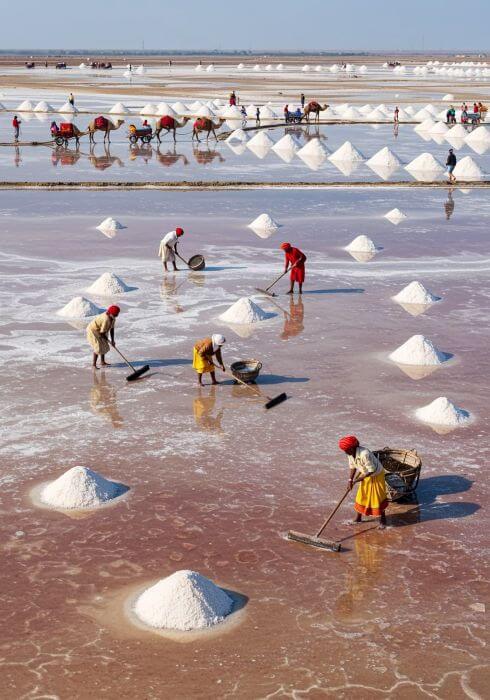
The Little Rann of Kutch in Gujarat, India, demonstrates how dramatically a salt landscape can change with the seasons. During part of the year, the region floods. As the water recedes and the land dries, salt workers known as Agariyas migrate onto the flats for months at a time to produce salt from underground brine.
Families establish temporary homes near their salt pans and work through an extended production season before returning to villages as the monsoon approaches again. Their work requires detailed knowledge of brine, evaporation, soil, weather, and crystal formation.
The landscape therefore creates a culture with two different rhythms of life: village life and salt-season life.
It also illustrates the complications of traditional livelihoods conducted on land that governments or outside institutions may classify differently: as wasteland, protected habitat, commercial resource, or state property. People can possess generations of practical and cultural connection to a place without their rights fitting neatly into formal systems of ownership.
Inspiration for Fiction: A fantasy culture might migrate onto a salt basin only during the dry season, establishing temporary towns that disappear before seasonal floods return. These “temporary” settlements could have elaborate traditions, leadership structures, marriages, markets, and festivals despite existing for only part of each year. Conflict might arise when a king declares the supposedly empty basin crown property because nobody lives there permanently. To the seasonal inhabitants, the idea that absence equals abandonment would be absurd.
Plot Hook: A monarch sells mining rights to a vast salt flat he believes uninhabited, only to discover that tens of thousands of seasonal workers are preparing to return to lands their families have used for centuries.
The Afar of the Danakil Depression — Salt Caravans in an Extreme Landscape
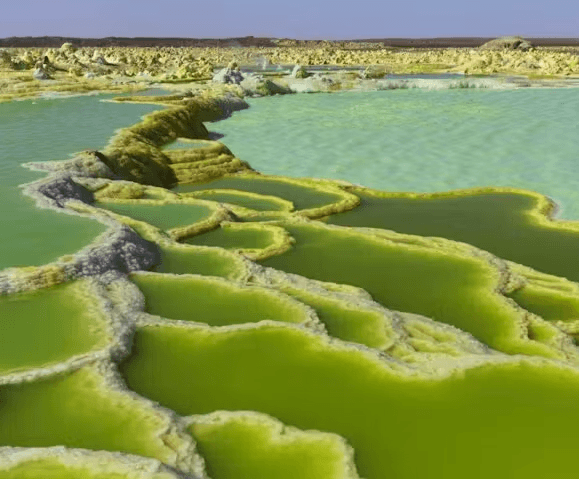
The Afar Depression of Ethiopia and Djibouti contains some of the world’s most dramatic arid terrain: salt plains, volcanic landscapes, intense heat, and areas lying below sea level. Afar communities have lived within this region for generations, combining pastoralism with trade and specialized knowledge of an environment many outsiders find extraordinarily difficult to survive.
Salt extraction became particularly important. Blocks of salt were cut from deposits and transported by camel caravans toward highland markets. Salt blocks historically carried considerable economic value in Ethiopia, creating trade connections between one of the country’s harshest landscapes and more densely populated upland regions.
The contrast is particularly striking: a region almost hostile to conventional agriculture becomes economically important precisely because its geology produces something people elsewhere need.
The Afar also demonstrate how mobility can be an adaptation rather than a sign of instability. In arid environments where pasture and water fluctuate, moving animals and households according to available resources can be far more sustainable than remaining permanently fixed in one location.
Inspiration for Fiction: This offers excellent inspiration for a culture outsiders describe as wandering but whose movements actually follow highly sophisticated patterns. Every well, seasonal pasture, volcanic landmark, and salt deposit may fit into a mental map passed across generations. Characters from agricultural civilizations may assume the land is empty because they see few permanent buildings. Your nomadic inhabitants know instead that the entire landscape is organized by routes, agreements, grazing rights, and inherited knowledge.
Character Idea: An imperial surveyor sent to divide an “empty” salt plain into mining concessions reluctantly hires a local pastoralist as a guide and slowly realizes every line on his proposed map cuts through someone’s water rights, migration route, or ancestral territory.
The Lickanantay of the Atacama — Oasis Communities Beside Salt and Stone
The Lickanantay, or Atacameño people, have inhabited the extraordinarily arid Atacama region of northern Chile for centuries. Rather than attempting to farm uniformly across the dry landscape, communities concentrated around oases, river valleys, and other dependable water sources while making use of surrounding highlands and salt basins.
Agriculture included crops suited to local conditions, while llamas provided livestock and transportation. Craft traditions, mining, and trade connected these communities with other parts of the Andes.
The resulting culture was not simply “desert adapted.” It operated across multiple environmental zones. Oasis agriculture, highland grazing, caravan trade, mineral resources, and salt-flat environments could all form parts of the same economic and cultural world.
Contemporary Lickanantay communities also offer an important reminder that indigenous relationships with salt-flat landscapes remain living rather than archaeological. Modern extraction of resources such as lithium creates new tensions involving water, industry, ancestral territories, and cultural continuity.
Inspiration for Fiction: A fictional salt-flat civilization does not need to live directly on the salt itself. Its settlements may cluster around oases while the wider salt basin functions as grazing land, mining territory, sacred geography, and trade route. Different parts of the landscape can have different owners, guardians, or spiritual meanings. This also creates excellent science-fiction inspiration. A rare mineral vital to advanced technology might exist beneath land long considered economically marginal. Industrial extraction could suddenly place a small local culture at the center of international politics.
Worldbuilding Tip: Give supposedly barren places multiple kinds of value. One faction sees lithium. Another sees grazing. Another sees ancestral land. Another sees sacred ground. Conflict becomes much richer when everyone values the same landscape for different reasons.
Salt Workers, Traders, and the Politics of an Essential Resource
Across many regions, salt production produced specialized communities because the work required knowledge of evaporation, brine, weather, and transport. Salt could then travel enormous distances through merchant networks because practically everyone needed it.
This creates useful models for fictional occupational cultures.
Salt workers may possess their own terminology, songs, tools, rituals, and seasonal calendar. Caravan merchants develop different traditions from those who actually harvest the resource. Local rulers may tax salt, while smugglers make fortunes avoiding those taxes.
If salt possesses magical properties, all of these dynamics become even stronger. Perhaps ordinary people need salt to preserve food, while sorcerers need the purest crystals for protective circles. Religious institutions may require it for purification ceremonies. Suddenly one landscape supplies peasants, priests, magicians, merchants, and kings for completely different reasons.
Plot Hook: A salt-workers’ guild shuts down production after the crown doubles its tax, expecting economic concessions. Instead, supernatural creatures begin appearing throughout the kingdom because nobody realized the miners’ salt was also maintaining ancient household protections.
Culture Written Across an Open Landscape
People living on arid plains often develop extraordinary awareness of subtle environmental signs. A distant dust plume may reveal approaching travelers. Certain clouds indicate rain many miles away. Animal behavior can suggest nearby water or changing weather.
This knowledge can become cultural prestige.
A child from such a society may learn to judge distance across apparently featureless ground years before an outsider could do so accurately. Stories and songs may encode routes between wells. Hospitality customs may become especially important because refusing water to a traveler in such an environment can effectively mean condemning them to death.
Likewise, social rules surrounding water, salt, pasture, and shelter may be stricter than outsiders expect, not because the culture is rigid, but because generations have learned what happens when essential resources are mismanaged.
Water, Water Everywhere – and None to Drink
Salt flats offer writers one of nature’s crueler contradictions. There may be enormous quantities of water nearby, yet little or none of it is drinkable.
Groundwater can be highly saline. Seasonal flooding may produce shallow lakes that evaporate rapidly. Springs and freshwater wells can therefore become disproportionately valuable.
Settlement patterns will follow them. A small freshwater spring beside a massive salt basin might support the only permanent town for dozens of miles. Caravan routes connect one dependable source with the next. Whoever controls those wells may possess significant political power. Water laws may consequently become some of the oldest and most carefully enforced laws in the culture.
Plot Hook: An earthquake opens a new freshwater spring in disputed territory between two arid kingdoms. Within weeks, temporary camps become settlements, merchants arrive, and both governments claim that ancient maps prove the spring belongs to them.
When the Road Disappears
Seasonality can dramatically reshape transportation. Imagine a salt basin serving as the fastest trade route between two kingdoms for eight months each year. During the rainy season, however, the road disappears beneath water. Entire economies would organize themselves around that cycle. Merchants rush shipments across before the rains. Inns fill during the final weeks of the trading season. Caravans become stranded when storms arrive early. Prices rise in communities cut off until the flat dries again.
In fantasy, the transformation could be more dramatic. Perhaps flooding awakens aquatic magical creatures dormant beneath the salt. Trade switches from caravans to shallow-draft boats for several months.
Science fiction might give settlers amphibious vehicles capable of operating during both seasons.
Worldbuilding Tip: Allow transportation networks to change throughout the year. A road doesn’t have to remain a road in every season.
Islands in a Sea of Salt
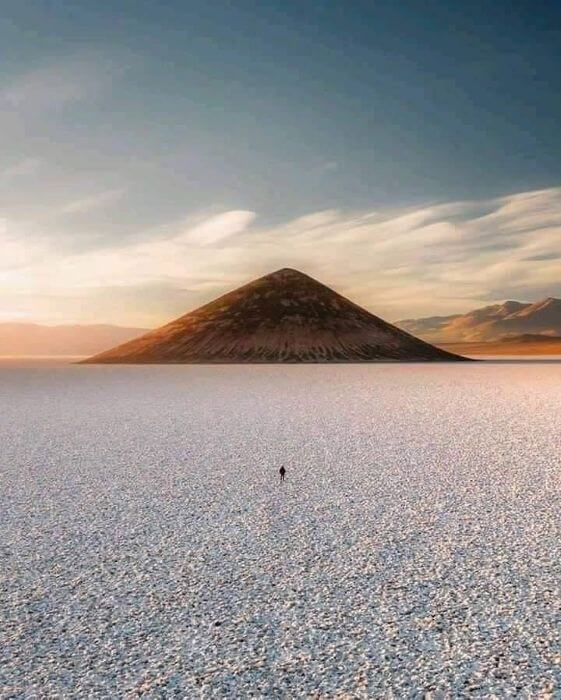
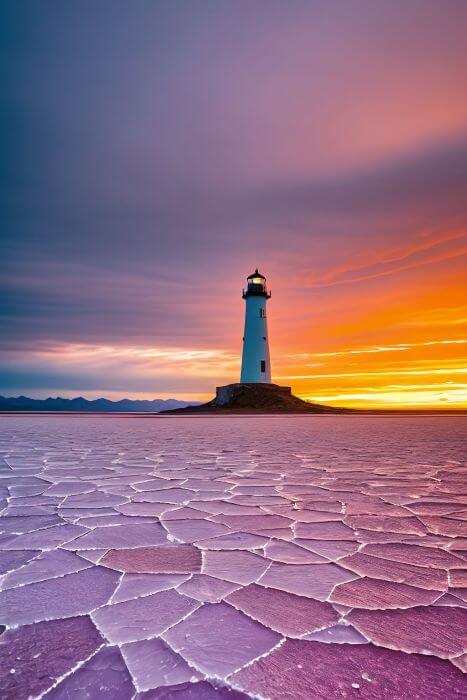
Salt flats sometimes contain rocky outcrops or former islands left behind by vanished lakes. These can become enormously important. An elevated patch of ground provides shelter, navigation, defensible terrain, and potentially vegetation or freshwater. It might support a monastery, fortress, trading post, burial ground, or isolated village.
From a worldbuilding perspective, such places become natural landmarks in otherwise featureless terrain. They may also become sacred. Imagine generations of travelers seeing the same dark mountain rising from an endless white horizon. Stories accumulate around it. Travelers leave offerings. Eventually the landmark becomes part navigation aid, part shrine.
Character Idea: The hereditary keeper of an isolated waystation in the center of a vast salt flat discovers that the “island” beneath her family’s home is actually the uppermost tower of a buried city.
Salt Gets Into Everything
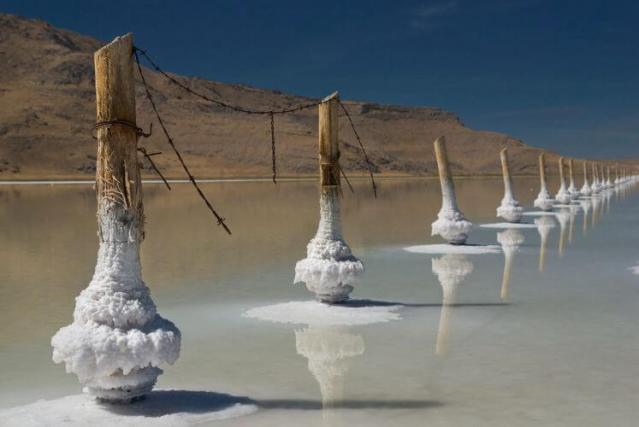
One easily overlooked challenge is that salt can be extremely destructive. Salt damages certain materials, accelerates corrosion, contaminates freshwater, and can create problems for agriculture. Equipment operating around salt requires maintenance.
For a science-fiction colony, this could become an enormous engineering concern. Vehicles, electronics, seals, and machinery designed for another environment may deteriorate unexpectedly quickly.
Fantasy civilizations face equivalent challenges. Metal tools require constant care. Leather, wood, magical artifacts, or domesticated creatures may respond poorly to prolonged exposure.
This can influence craftsmanship. Local smiths and engineers may develop techniques outsiders consider unnecessary until their equipment begins failing.
Plot and Character Ideas
The Kingdom Beneath the Salt
Genres: Archaeological Fantasy, Political Adventure
Plot Idea: An earthquake cracks open a vast salt flat, revealing streets, towers, and temples beneath the crust. According to legend, the ancient kingdom that once occupied the basin was destroyed when its inland sea vanished. Three neighboring nations immediately claim the ruins and whatever treasures they contain.
Character Angle: A local salt harvester who has spent her life navigating the flats is hired by royal archaeologists because she can recognize unstable ground better than their experts. She gradually realizes that stories her grandmother told her correspond perfectly to the buried city’s streets.
Twist(s): The city wasn’t abandoned after the sea disappeared. Its inhabitants deliberately drained the water to imprison something beneath the lake bed. The earthquake has broken the final seal.
The White Road
Genres: Political Fantasy, Trade Drama
Plot Idea: For centuries, neutral caravan clans have controlled the only reliable route across a salt basin separating two powerful empires. A newly invented magical vehicle can cross the flats without guides, threatening the clans’ livelihood and allowing both empires to move armies across territory previously protected by distance.
Character Angle: A young caravan master initially fights to preserve her family’s profession but gradually realizes that stopping technological change is impossible. She instead tries to transform the clans into something neither empire can afford to eliminate.
Twist(s): The vehicles work perfectly during the dry season. Nobody designing them knew that portions of the “road” become several feet of corrosive brine after the first rains.
Two Skies
Genres: Religious Fantasy, Mystery
Plot Idea: Once every seven years, rains cover a sacred salt flat with a thin layer of perfectly still water. Thousands of pilgrims gather to witness the heavens reflected beneath their feet, believing that during this time the mortal world lies between two divine realms. This year, the reflection is wrong.
Character Angle: A skeptical temple astronomer tasked with calculating the beginning of the pilgrimage discovers stars appearing in the reflection that aren’t present overhead.
Twist(s): The reflected sky shows the heavens as they appeared thousands of years earlier. Night by night it moves forward through history and something enormous is getting closer.
The Last Well
Genres: Environmental Fantasy, Political Thriller
Plot Idea: A decades-long drought has caused wells across an enormous arid plain to fail. Only one major aquifer remains dependable, and three traditionally nomadic peoples depend upon it. A neighboring kingdom decides the water is too important to remain under “unorganized” tribal control and sends soldiers to secure it.
Character Angle: A well keeper whose family has arbitrated water disputes for generations must somehow prevent both invasion and war between the communities already dependent upon the aquifer.
Twist(s): The aquifer isn’t drying naturally. An enormous irrigation project hundreds of miles away is drawing from the same underground water system and nobody involved realized the two were connected.
The Salt Widow
Genres: Paranormal Fantasy, Gothic Mystery
Plot Idea: Travelers crossing the White Expanse tell stories about a woman who appears during moonless nights and asks caravans for water. Anyone who refuses supposedly disappears before reaching the other side. Most merchants dismiss the story as superstition until entire caravans begin vanishing.
Character Angle: A practical caravan guard who has never believed the legend becomes obsessed with investigating after her husband disappears on the flats.
Twist(s): The Salt Widow is real, but she isn’t killing travelers. She is the ghost of a woman who died searching for a buried spring and has spent centuries trying to lead people toward it. Something else has learned to follow her.
The Lithium Wars
Genres: Science Fiction, Political Thriller
Plot Idea: Colonists have largely ignored an enormous salt basin because it supports little agriculture and contains no permanent settlements. Then geologists discover deposits beneath it essential to the colony’s fusion-storage technology. Corporations and governments begin dividing mining rights among themselves.
Character Angle: A surveyor born into a semi-nomadic community is hired to map the concessions and realizes the proposed mines overlap migration corridors, seasonal settlements, burial grounds, and nearly every reliable freshwater source.
Twist(s): Mining isn’t merely threatening the groundwater. The valuable deposits are the fossilized remains of an alien microbial ecosystem and some organisms beneath the deepest layers are still alive.
The Army on the Horizon
Genres: Military Fantasy, Political Drama
Plot Idea: A wealthy city-state sits beside the only dependable spring along a major salt-flat crossing. When an invading army appears on the distant horizon, the defenders can watch it approaching for three days. Unfortunately, the city cannot withstand a siege.
Character Angle: An elderly caravan guide unexpectedly becomes the city’s most important military adviser because she knows every seasonal water source within two hundred miles.
Twist(s): Rather than defending the walls, she proposes abandoning the city temporarily and poisoning nothing. The invaders will discover for themselves that their maps show wells that dried up years ago. But someone inside the city is secretly supplying them with updated locations.
When the White Sea Returns
Genres: Environmental Fantasy, Survival Adventure
Plot Idea: Ancient chronicles claim that the enormous salt flat was once an inland sea, but nobody takes seriously the prophecy that the water will someday return. Then unprecedented rainfall begins hundreds of miles upstream. The basin starts filling.
Character Angle: A salt worker whose family maintains a seasonal camp on the flats realizes the water is rising far faster than government officials predict and begins evacuating isolated communities.
Twist(s): The returning water is not the catastrophe. Dormant eggs preserved beneath the salt for thousands of years begin hatching, restoring an ecosystem that disappeared when the ancient sea dried and its largest predator survived in the same way.
The City of Salt
Genres: Economic Fantasy, Political Intrigue
Plot Idea: A wealthy city controls the continent’s largest source of salt, allowing its merchant council to influence kingdoms hundreds of miles away. When a rival nation discovers another massive deposit, the city’s monopoly collapses almost overnight.
Character Angle: The daughter of a powerful salt merchant has spent her entire life preparing to inherit an economic empire that suddenly may be worthless. Rather than trying to destroy the competition, she searches for something else the city can offer.
Twist(s): She discovers that the oldest, deepest salt deposits possess a property nobody noticed when ordinary salt was profitable enough: they suppress magic completely. The city’s worthless mines suddenly become strategically priceless in a world dominated by magical warfare.
The Town That Exists Six Months a Year
Genres: Fantasy, Social Drama, Mystery
Plot Idea: Every dry season, thousands of salt workers migrate onto an enormous basin and construct a temporary city around its richest deposits. Shops, taverns, shrines, courts, and neighborhoods appear almost overnight. When the rains return, everyone leaves before the basin floods. One year, several hundred people refuse to go.
Character Angle: The elected magistrate of the seasonal town must convince the holdouts to evacuate while trying to discover why families who have respected the flood for generations suddenly insist upon remaining.
Twist(s): Workers have discovered an ancient structure beneath the salt that becomes accessible only when groundwater begins rising. They believe it contains treasure worth risking the flood.
The Saltbound
Genres: Dark Fantasy, Religious Drama
Plot Idea: Criminals condemned for the worst offenses are traditionally exiled onto the salt flats with enough water to reach a distant shrine. Anyone who completes the crossing is considered forgiven by the gods. Almost nobody survives. Then condemned prisoners begin returning in large numbers.
Character Angle: A compassionate priest who has spent years opposing the punishment initially celebrates until she realizes the survivors have all undergone the same strange personality change.
Twist(s): Something beneath the salt has discovered that the pilgrimage provides it with desperate humans nobody expects to see again. It saves them from death in exchange for carrying fragments of itself beyond the flats. The “miracle” is slowly spreading it across the kingdom.
The Rainmaker’s Son
Genres: Environmental Fantasy, Political Drama, Coming-of-Age
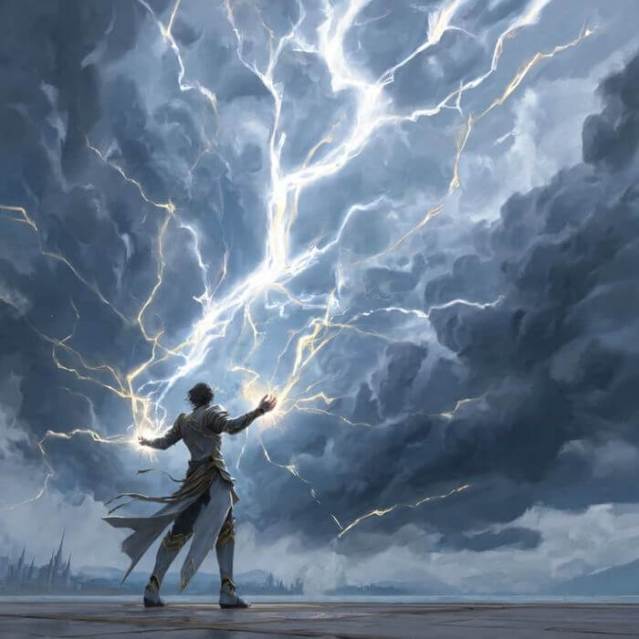
Plot Idea: An arid civilization carefully manages its limited rainfall through generations of weather magic. Rainmakers are forbidden from altering weather beyond tightly defined boundaries because changing rainfall in one place inevitably deprives another. When the son of a famous rainmaker secretly summons a storm to save his drought-stricken village, he succeeds spectacularly. Months later, communities hundreds of miles away begin dying.
Character Angle: Horrified by what he has accidentally caused, the young mage travels across the arid plains trying to restore the atmospheric balance while encountering people suffering because of his decision.
Twist(s): His storm did not create the larger drought. It merely revealed that someone else has been stealing rainfall on an enormous scale for years. A supposedly lush neighboring kingdom has built its prosperity by magically diverting storms away from the arid peoples and his unauthorized spell has finally made the manipulation detectable.
Salt flats and arid plains offer far more than another variation on the desert. Their defining features are openness, exposure, scarcity, and transformation. A landscape that appears utterly dead during one season may become a shallow lake during another. Ground that seems worthless may contain minerals capable of supporting empires. An apparently empty basin may preserve evidence of civilizations that flourished when the climate was entirely different.
They also create a distinctive kind of tension. There is nowhere to hide. Water sources become strategic objectives. Distance becomes deceptive. Trade follows narrow chains of survivable routes across enormous open spaces.
For fantasy, salt can become sacred, magical, preservative, or hostile to supernatural forces. For science fiction, evaporated alien seas can preserve ancient ecosystems and concentrate resources essential to advanced technology.
Most importantly, salt flats are landscapes haunted by absence. The lake is gone. The rivers have vanished. The shoreline may lie hundreds of miles from water. But the white earth remembers that they were once there. And for a writer, the most interesting question may be what else it remembers.
Happy worldbuilding!
I hope this was helpful. Let me know if you have questions or suggestions by using the Contact Me form on my website or by writing a comment. I post every Friday and would be grateful if you would share my content.
If you want my blog delivered straight to your inbox every month along with exclusive content and giveaways, please sign up for my email list here.
Let’s get writing!
Copyright © 2026 Rebecca Shedd. All rights reserved.

