The Worldbuilder’s Toolkit: Fjords and Glacial Landscapes
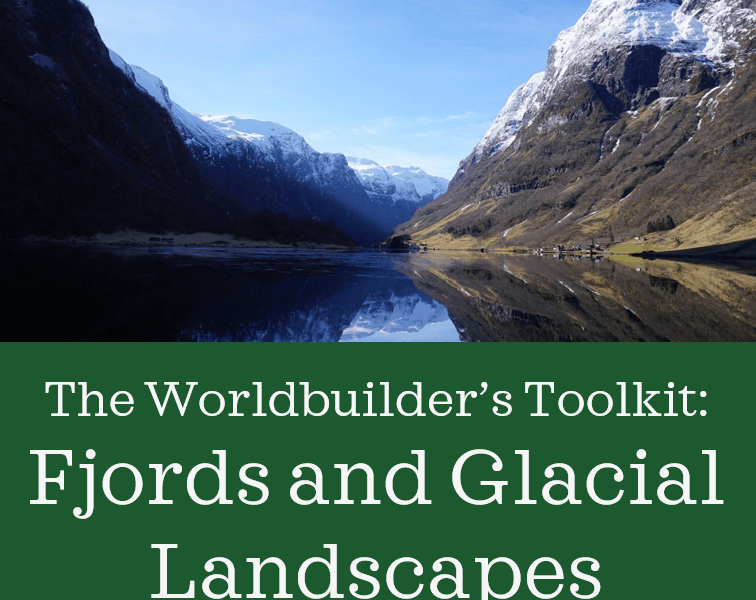

Imagine a ship entering a narrow inlet where dark cliffs rise almost vertically from black water. Waterfalls plunge hundreds of feet from hanging valleys overhead. Snow remains in the shadows even during summer, while a glacier gleams between distant peaks. Small settlements cling to strips of habitable land along the shore, connected more easily by boat than by road.
Few landscapes create such immediate drama as fjords and glacial terrain.
For fantasy and science fiction writers, these environments offer much more than spectacular scenery. Glaciers create and reshape landscapes. Fjords become natural highways penetrating deep into otherwise inaccessible terrain. Mountains isolate communities while waterways connect them. Glacial valleys provide farmland surrounded by formidable natural barriers. Ice can preserve bodies, artifacts, microorganisms, magic, and secrets for thousands of years.
Most importantly, these landscapes are environments defined by change. Glaciers advance and retreat. Ice dams form and collapse. Coastlines rise after the weight of ice disappears. Rivers change course. Entire landscapes can emerge from beneath ice that covered them for millennia.
For writers, the ice is not simply part of the setting. It is one of the forces creating the world.
What Exactly Is a Fjord?
A fjord is not simply a narrow bay surrounded by mountains. Fjords are created by glaciers. During periods of extensive glaciation, enormous masses of moving ice carve deep valleys through rock. Because glaciers can erode below sea level, these valleys may become extraordinarily deep.
When the glacier retreats and the sea enters the valley, a fjord forms.
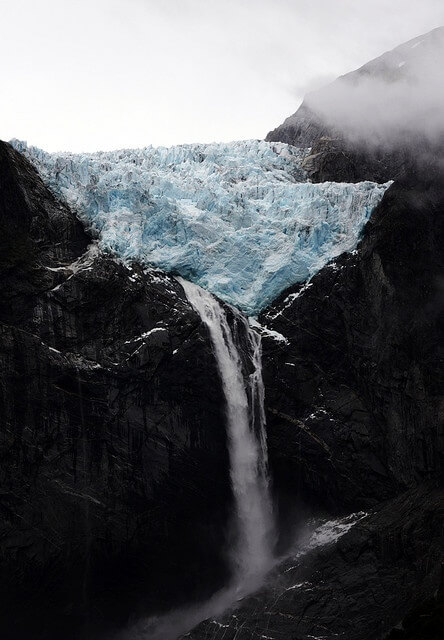
That origin explains their distinctive appearance: deep, narrow waterways surrounded by steep cliffs and mountains. Tributary glaciers can also carve smaller valleys that remain high above the main fjord, producing hanging valleys and dramatic waterfalls.
Glacial landscapes include much more than fjords. They can contain moraines composed of debris deposited by glaciers, broad U-shaped valleys, glacial lakes, exposed bedrock, ice caves, crevasses, braided rivers, isolated boulders carried enormous distances by ice, and entire mountain ranges sculpted by repeated periods of glaciation.
This gives writers an important worldbuilding principle: Glaciers leave evidence behind.
Even if the ice disappeared thousands of years ago, the landscape remembers it.
Worldbuilding Tip: Don’t limit glacial terrain to places currently covered in ice. Your kingdom may occupy a lush valley whose shape, soil, lakes, rivers, and cliffs were created by glaciers that vanished ten thousand years earlier.
Fjords Are Not the Same as Tundra
Fjords, glaciers, tundra, and polar environments frequently appear together, but they describe different things.
Tundra is an ecosystem characterized primarily by cold conditions, short growing seasons, and vegetation dominated by low-growing plants rather than forests. Permafrost is common in many tundra environments.
Polar regions are geographic and climatic regions surrounding the poles.
Glacial landscapes, by contrast, are created by moving ice.
A fjord is a particular landform produced by glacial erosion and subsequent flooding by the sea. This means fjords can exist in regions that are surprisingly green. Forests may cover lower slopes. Farms can occupy sheltered valleys. Orchards might grow in favorable microclimates. Coastal waters may teem with fish.
Likewise, glaciers can exist far from the poles if mountains rise high enough.
That distinction matters for fantasy worldbuilding because a fjord kingdom does not automatically need to be an endless frozen wasteland populated by people struggling desperately against cold. It might be fertile, maritime, prosperous, and densely connected by water.
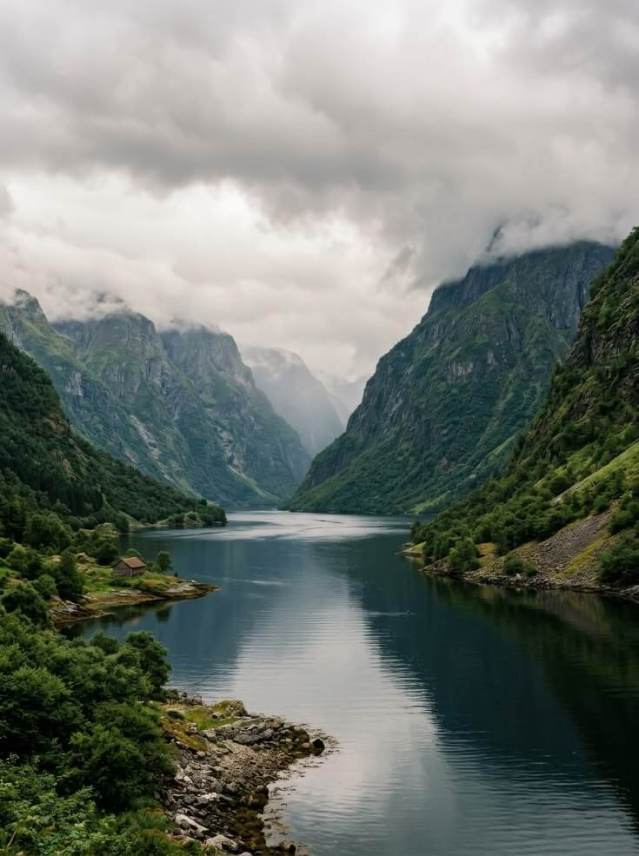
Waterways Through the Mountains
One of the greatest advantages of fjords is transportation. Mountains make overland travel difficult. Roads must cross passes, climb steep slopes, and navigate valleys that may not connect conveniently.
A fjord changes everything. Ships can travel deep into mountainous country without crossing the mountains themselves.
This can create societies where the sea functions as the primary road system. Two villages separated by only twenty miles may have little practical connection by land while maintaining constant contact by boat. Major settlements naturally develop at strategic locations: sheltered harbors, river mouths, narrow passages, or the heads of fjords where inland trade routes meet maritime ones.
Worldbuilding Tip: When mapping a fjord kingdom, draw the waterways before drawing the roads. Your inhabitants may think about geography from the water inward rather than from the land outward.
The Geography of Isolation
Fjords create a fascinating contradiction. They connect and isolate simultaneously.
A community may trade easily with settlements fifty miles away along the coast while having remarkably little contact with another village located just over the mountain. This can produce intense local identities.
Individual fjords may develop their own dialects, customs, rivalries, political loyalties, and marriage networks. A kingdom that looks geographically compact on a map may consist of dozens of semi-isolated communities connected through maritime trade.
Winter intensifies this effect. Storms, ice, avalanches, and dangerous seas can temporarily cut settlements off.
In fantasy, individual valleys might even develop distinctive magical traditions because practitioners had limited contact for generations.
Character Idea: A royal tax collector assigned to standardize laws throughout a fjord kingdom discovers that every valley insists it has ancient exemptions granted by a different king and several can produce documents apparently proving it.
Where Can Anyone Actually Build?
The dramatic cliffs that make fjords beautiful also limit settlement. Flat land may be scarce. Communities cluster around river deltas, glacial terraces, valley floors, and relatively gentle slopes. A tiny patch of fertile ground can become extremely valuable.
Architecture adapts accordingly. Settlements may stretch lengthwise along shorelines rather than expanding outward. Buildings climb hillsides. Warehouses occupy waterfronts because almost everything arrives by boat.
Fantasy cities could become even more dramatic. Bridges span narrow inlets. Fortresses occupy cliffs overlooking harbors. Magical lifts connect waterfront districts with settlements hundreds of feet above.
Science-fiction colonists might carve structures directly into cliffs because stable rock provides better protection than exposed surface habitats.
The landscape forces vertical thinking.

Glaciers: Rivers That Move Like Stone
Glaciers may appear motionless, but they are moving systems. Snow accumulates, compresses into ice, and gradually flows under its own weight. Over enormous periods of time, glaciers grind against rock, transport debris, reshape valleys, and alter drainage systems.
For characters living nearby, glaciers may seem almost alive.
They groan.
They crack.
They advance.
They retreat.
Chunks break away without warning.
A fantasy culture might easily interpret a glacier as a sleeping god, frozen dragon, imprisoned spirit, or physical manifestation of winter itself.
Science fiction could make the glacier literally alive. Perhaps an alien ecosystem moves through ice over centuries, too slowly for early colonists to recognize its behavior.
Plot Hook: A glacier revered as a sleeping goddess has retreated every summer for centuries and returned every winter. One spring, it begins advancing instead and is moving several times faster than any glacier should.
When the Ice Gives Something Back
Ice is an extraordinary preservative. Bodies, biological material, artifacts, and traces of past environments can remain frozen for astonishing lengths of time.
For speculative fiction, this is irresistible.
A retreating glacier might reveal:
- A perfectly preserved army that disappeared centuries earlier.
- The ruins of a settlement built before recorded history.
- An extinct creature containing intact magical or genetic material.
- An ancient spacecraft buried before humans reached the planet.
- A pathogen sealed away since the last ice age.
- Evidence proving the accepted history of the world is wrong.
This is one of those rare situations where environmental change can naturally initiate the plot. Something that has remained inaccessible for thousands of years suddenly becomes reachable.
Character Idea: A glaciologist studying an unusually rapid retreat discovers human footprints emerging from beneath ice known to be hundreds of thousands of years old.
The Beauty and Terror of Ice
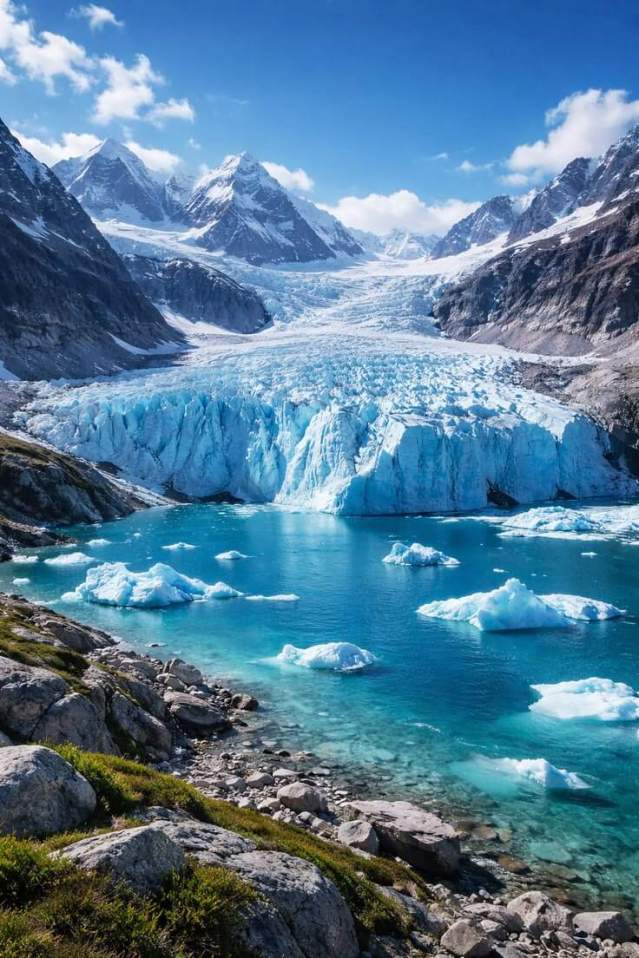
Glacial environments can be astonishingly beautiful. Blue ice glows from within deep crevasses. Meltwater forms brilliant lakes. Ice caves create translucent chambers. Mountains reflect across perfectly still fjord waters. Aurora displays may appear overhead at high latitudes.
Yet much of that beauty is dangerous. Crevasses may be concealed beneath snow. Glacial lakes can suddenly drain. Ice caves collapse. Avalanches descend with little warning. Calving glaciers send enormous masses of ice into water, potentially producing dangerous waves. This makes glaciers ideal environments for scenes where characters are drawn toward something visually magnificent while understanding that approaching it may kill them.
Worldbuilding Tip: Use beauty and danger together. The most memorable extreme landscapes are often not ugly places characters endure—they are places characters love despite knowing exactly how dangerous they are.
Fjords and the Maritime Economy
Fjords can support surprisingly prosperous communities. Cold coastal waters may contain rich fisheries. Sheltered harbors provide safe anchorage. Forested slopes supply timber. Mountain rivers provide freshwater and potentially waterpower.
In fantasy, rare magical organisms might inhabit deep fjord waters. Pearls, seaweed, enchanted fish, leviathan bone, or minerals exposed by glacial erosion could support valuable industries.
Science-fiction fjords on alien planets could contain similarly unusual resources. Glacial meltwater might concentrate rare minerals, while native organisms gather in nutrient-rich coastal waters.
Trade becomes essential because individual settlements may specialize heavily. A fishing village exchanges preserved fish for grain from a fertile valley. Mountain miners send ore downriver to coastal ports. Shipwrights depend upon forests farther inland. The fjord binds these economies together.
Natural Fortresses
Fjords provide extraordinary defensive geography.
A fortress overlooking a narrow channel can potentially control maritime access to an enormous inland region. Chains, barriers, magical wards, artillery, or defensive towers might make a narrow passage nearly impossible to force.
Invaders cannot simply sail wherever they please. But defenders also face risks. A fleet trapped deep inside a fjord has limited escape routes. An enemy controlling the mouth can blockade communities farther inland. This creates excellent military scenarios because geography matters enormously.
Plot Hook: An invading fleet captures the fortress guarding the mouth of the kingdom’s largest fjord, trapping the royal navy inside. A local fishing captain knows of an ancient channel through the skerries that does not appear on military charts but navigating warships through it may be impossible.
Examples in Fiction
How to Train Your Dragon: Landscape and Culture
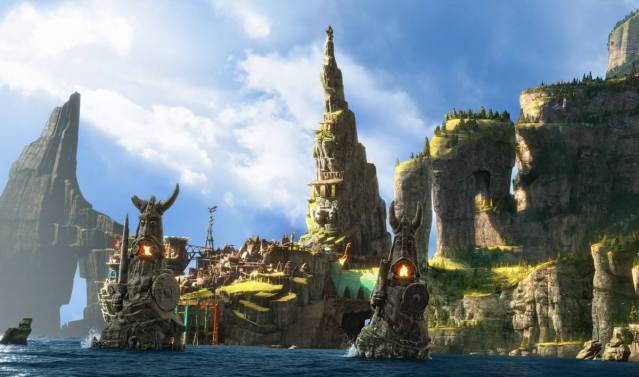
The world surrounding Berk in How to Train Your Dragon draws heavily upon the visual language of northern maritime landscapes: steep cliffs, cold seas, rocky islands, mist, and dramatic elevation.
It works because the geography supports the culture. Boats matter. Fishing matters. Cliffs provide natural habitats for flying dragons. Settlements appear shaped by weather and terrain rather than dropped onto a generic landscape.
Most importantly, the environment supports the story’s central creatures. Dragons flying between cliffs and across open water feel naturally integrated into the setting.
For writers, that provides a valuable lesson: fantastic creatures should interact with geography.
Frozen: Ice as a Transformative Force
Frozen uses a Scandinavian-inspired fjord kingdom whose environment becomes dramatically altered when supernatural winter descends. The setting makes Elsa’s powers immediately consequential. Ice does not merely make things colder. It changes transportation, agriculture, trade, and access to the kingdom. The fjord itself becomes part of the crisis.
That is a useful fantasy principle. If a character can control an environmental force, consider the economic and geographic consequences rather than treating the power solely as a combat ability.
A magically frozen harbor can be more devastating than an army.
Skyrim: Mountains, Valleys, and Glacial Wilderness
The Elder Scrolls V: Skyrim uses northern landscapes – mountains, snowy valleys, glaciers, coastal ice, rivers, and rugged settlements – to reinforce the cultural identity of Skyrim. The environment contributes heavily to the feeling that communities are separated by difficult terrain. Roads wind through mountain passes, isolated ruins emerge from snow, and the northern coast feels markedly different from the greener southern regions.
The game’s ancient Nordic ruins also demonstrate how effectively cold landscapes can preserve history. Tombs and structures remain physically present in remote terrain, allowing the past to feel unusually close.
The Golden Compass: Ice, Distance, and the Unknown
Philip Pullman’s Northern Lights, published in North America as The Golden Compass, uses the far north as a landscape of increasing remoteness and mystery. The journey northward carries characters away from familiar institutions and into environments where different peoples, creatures, and political forces operate.
This demonstrates another powerful use of glacial landscapes: distance from authority. Remote fjords, glaciers, and ice fields can become places where central governments have little practical control. Explorers, exiles, religious communities, smugglers, scientists, and rebels may all gravitate toward the margins.
Glacial Landscapes in Tabletop RPGs
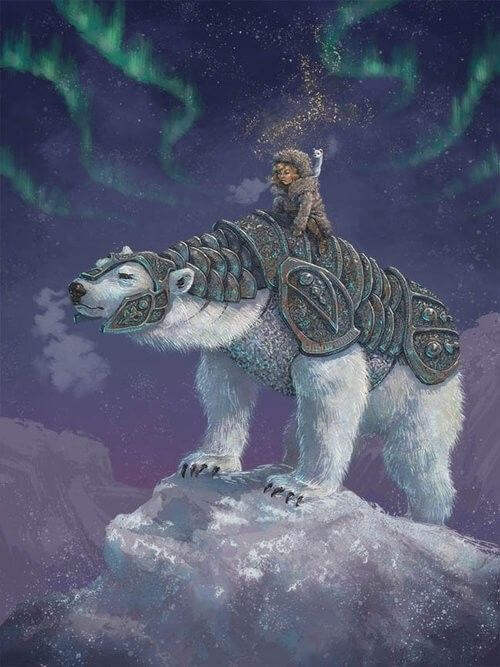
Tabletop settings such as Icewind Dale: Rime of the Frostmaiden use extreme northern environments to make survival and isolation part of the adventure itself. Cold weather, limited settlements, dangerous travel, frozen waterways, and isolated communities change how players approach ordinary problems.
Fjords can add another layer to this kind of campaign because they create natural adventure corridors. Characters travel by ship from settlement to settlement while mountain ranges restrict overland movement.
A fjord system can function almost like a dungeon writ large: narrow entrances, branching passages, hidden coves, isolated communities, dangerous creatures, and ancient sites accessible only from the water.
The Moving Coastline
One particularly fascinating feature of glacial landscapes is that they continue changing even after glaciers retreat. The enormous weight of ice can depress the Earth’s crust. Once that weight disappears, land can gradually rebound upward through a process called post-glacial rebound. Over long periods, shorelines move.
For fantasy writers, imagine what that does to ancient maps and property claims. A harbor used five hundred years ago may now sit inland. Islands may become connected to the mainland. Sacred stones once submerged might emerge from the sea.
Science-fiction settings can accelerate these processes through terraforming or planetary engineering.
Plot Hook: An ancient boundary treaty states that two kingdoms divide their territory at “the stone beneath the sea.” Centuries of land uplift expose the stone and the inscriptions covering it reveal that neither kingdom wrote the treaty.
When Glaciers Retreat
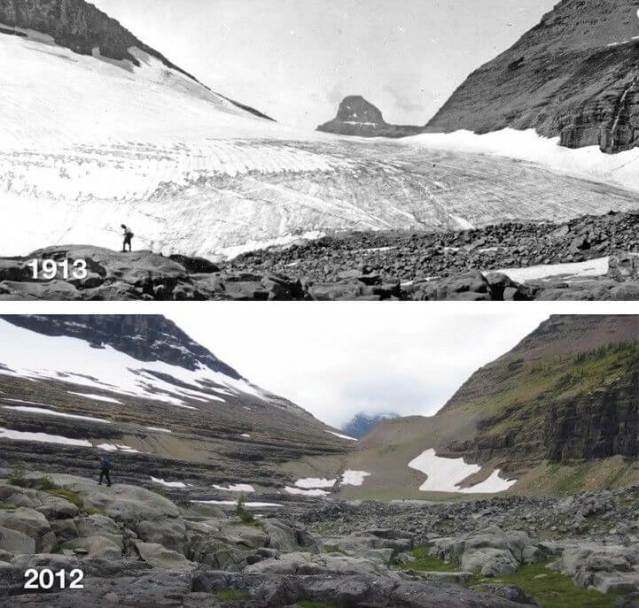
A shrinking glacier transforms everything downstream. New land appears. Rivers change. Lakes form. Habitats shift. Previously inaccessible valleys open for settlement. That creates both opportunity and conflict.
Who owns newly exposed land?
The nearest village?
The crown?
The descendants of people whose ancestors lived there before the ice advanced?
In fantasy, perhaps nobody has seen the valley for three thousand years. Its reappearance becomes the equivalent of discovering an entirely new country.
In science fiction, colonists might deliberately melt glaciers as part of terraforming, only to discover that the ice was stabilizing something they did not understand.
Character Idea: A royal surveyor is assigned to map land emerging from beneath a retreating glacier and finds boundary stones proving that an ethnic minority expelled centuries ago has a legitimate historical claim to the entire valley.
Glacial Catastrophes
Ice can fail spectacularly.
Glacial lakes may accumulate behind natural dams of ice or debris. If those barriers fail, enormous volumes of water can suddenly rush downstream.
Avalanches can bury settlements. Glaciers can dam rivers and redirect them. Icebergs can threaten shipping.
Fantasy can magnify these hazards. A magical glacier might hold back an inland sea. An ice wall created by ancient sorcerers could function as both prison and dam.
Science fiction might involve ice sheets covering subsurface oceans on alien moons. Drilling through the ice could alter pressures within an environment no human has ever encountered.
Plot Hook: Engineers discover that the glacier above the capital has been functioning as a natural dam for thousands of years. The lake beneath it is growing, the ice is thinning, and evacuating the entire fjord would mean abandoning the kingdom’s economic heartland.
Questions to Ask When Building Fjords and Glacial Landscapes
A few questions can help turn dramatic scenery into a functioning environment:
- Is the glacier advancing, stable, or retreating?
- How much flat land exists for farming and settlement?
- Are communities connected more easily by land or water?
- Where are the best harbors, and who controls them?
- What resources come from the mountains, glaciers, forests, and sea?
- How do winter conditions alter transportation and communication?
- What has the ice preserved?
- What new territory appears when glaciers retreat?
- Which settlements are threatened by avalanches, floods, landslides, or calving ice?
- How has living between mountain and sea shaped local identity?
You don’t need to explain all of this directly to the reader. Much of it can appear through where people build, how they travel, what they fear, and what they value.
Real-World Fjord and Glacial Cultures: Inspiration for Fictional Societies
Fjords and glacial landscapes have supported human communities for thousands of years. Far from being empty frozen margins, these regions have often produced maritime traders, fishers, pastoralists, farmers, hunters, explorers, and highly localized cultures shaped by steep terrain and difficult travel.
The most useful lesson for writers is that glacial landscapes do not produce one kind of society.
A community living at the head of a sheltered fjord may depend on farming and river trade. Another, only a few miles away over the mountains, may be almost entirely maritime. A highland group may move livestock seasonally through valleys carved by glaciers, while a coastal settlement depends on fishing, shipbuilding, and trade.
This creates excellent inspiration for fictional cultures built around isolation, mobility, local identity, environmental knowledge, and a deep awareness that mountains and ice can both protect and imprison.
Norse Communities of Norway — Fjords as Roads
Perhaps the most famous historical cultures associated with fjords are the Norse communities of medieval Scandinavia, especially Norway.
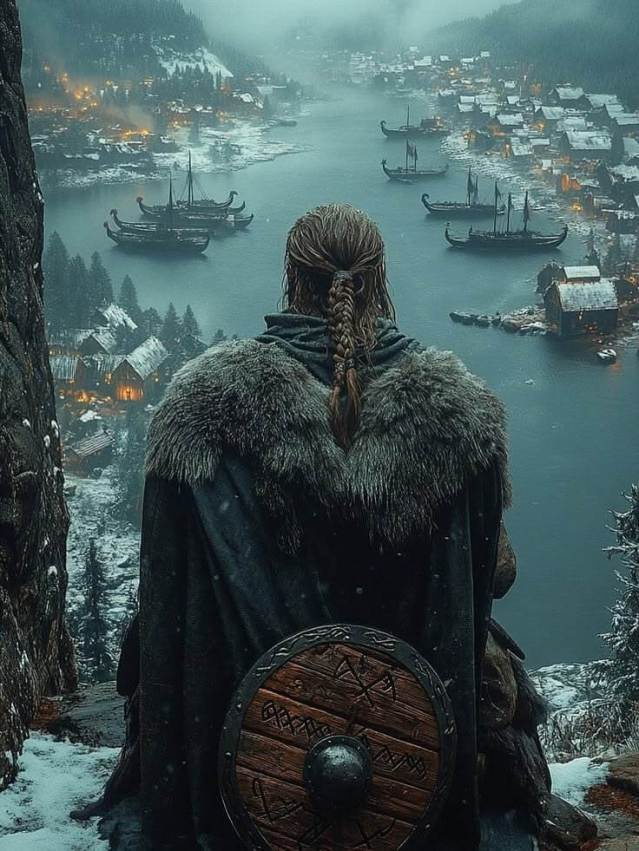
Norway’s geography encouraged people to think of the sea as a transportation network rather than a barrier. Long, deeply cut fjords reached far inland while mountains made overland travel difficult. Coastal settlements therefore depended heavily on boats for communication, trade, fishing, and warfare.
This helped create a maritime culture in which shipbuilding and navigation had enormous importance. A community that could construct reliable vessels was not simply better at travel; it had greater economic and military reach.
Norwegian settlements also combined multiple livelihoods. Fishing, farming, livestock raising, hunting, timber, and trade could all contribute to survival. Some farms occupied surprisingly productive patches of land along fjords, while maritime resources supplemented what the limited agricultural land could provide.
Inspiration for Fiction: A fjord kingdom does not need to think of itself as divided by water. Its people may consider waterways the easiest part of their geography. A royal messenger might travel primarily by boat. Local rulers control narrow straits rather than highways. Important political centers develop around harbors rather than crossroads. A character raised there may find inland kingdoms frustrating because traveling twenty miles requires days of riding instead of simply sailing across a fjord.
Character Idea: A young noble from a maritime fjord province arrives at the inland royal court and discovers that other nobles consider ship captains socially inferior. To her, this is absurd. Her family has always trusted captains with lives, cargo, diplomacy, and war.
Icelandic Settlers — Building Society on Glacial and Volcanic Land
Medieval Iceland provides another useful model because its communities lived in a landscape shaped simultaneously by glaciers, volcanic activity, harsh weather, and limited agricultural opportunities.
Settlement concentrated where grazing and farming were possible, while fishing and other marine resources remained essential. Geographic isolation also helped produce distinctive legal and political traditions, including the Alþingi, an early parliamentary assembly.
Iceland’s landscape encouraged scattered settlement rather than dense urban centers. Farms could be widely separated, making hospitality, kinship, local reputation, and legal assemblies particularly important for maintaining social order.
The environment itself was never passive. Volcanic eruptions, severe winters, glacial floods, and changes in grazing conditions could all reshape communities.
Inspiration for Fiction: A fictional glacial society might have weak centralized government but exceptionally strong law. Because communities are separated by mountains, rivers, and ice, local disputes may be resolved at seasonal assemblies where representatives travel from across the region. This can create a culture where memory and testimony carry enormous weight. If written communication is limited, law speakers, genealogists, and respected witnesses become politically powerful.
Worldbuilding Tip: Environmental isolation does not automatically create political chaos. It can instead produce cultures obsessed with clear legal procedure because formal rules are necessary to prevent feuds between scattered communities.
Sámi Communities of Northern Scandinavia — Seasonal Movement Across Glacial Landscapes
The Sámi peoples of northern Norway, Sweden, Finland, and Russia have long lived across environments shaped by glaciers, including mountains, tundra, forests, river valleys, and coastal regions.
Some Sámi communities became especially associated with reindeer pastoralism, while others relied more heavily on fishing, hunting, or mixed livelihoods. The important point is that Sámi culture cannot be reduced to a single occupation.
Seasonal movement has been particularly significant in many regions. Reindeer herding requires access to different grazing areas at different times of year, and migration routes may cross huge distances.
These routes can be older and more culturally important than modern political borders.
Inspiration for Fiction: This is excellent inspiration for a culture whose geography is defined by movement rather than permanent towns. A clan might consider an entire migration corridor its homeland. Mountain passes, calving grounds, winter forests, and river crossings all form parts of one connected territory. An outsider looking at a map sees several different provinces. The people living there see one annual journey. This immediately creates political conflict if a kingdom draws borders across traditional routes.
Plot Hook: A newly negotiated peace treaty divides two kingdoms along a mountain range, accidentally cutting an ancient migratory people off from their animals’ winter grazing grounds.
Greenlandic Norse and Inuit Communities — Different Ways of Living in the Same Environment
Greenland offers writers a particularly useful comparison because different cultures adapted to its glacial environment in very different ways. Norse settlers established farming communities in relatively sheltered southwestern areas, raising livestock and maintaining connections with Europe.
Inuit communities developed highly specialized Arctic hunting, fishing, transportation, clothing, and survival technologies suited to sea ice, marine mammals, and extreme cold.
The contrast demonstrates that geography does not dictate one inevitable lifestyle. Different technologies, cultural traditions, trade networks, and environmental knowledge can produce dramatically different responses to the same landscape.
Inspiration for Fiction: Imagine two fictional peoples living along the same glacial coast. One builds permanent farming settlements in sheltered valleys and considers itself civilized because it owns land and livestock. The other moves seasonally, hunts marine animals, uses lightweight boats, and understands sea ice far better than the farmers. Each initially believes the other’s lifestyle is irrational. Then environmental conditions change. The more adaptable culture suddenly has the advantage.
Character Idea: A farmer’s daughter raised to distrust coastal hunters becomes stranded after sea ice destroys her family’s settlement and must learn that the people she considered primitive understand the landscape better than anyone in her own community.
Inuit Cultures — Sea Ice as Geography
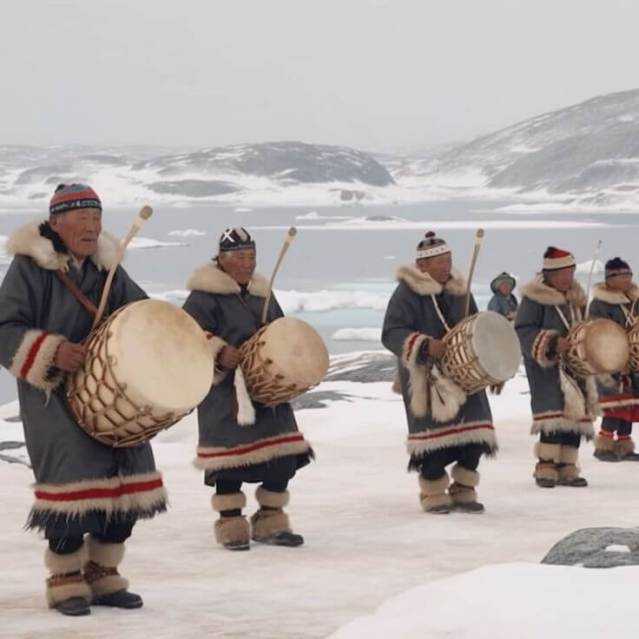
Inuit communities across Arctic North America and Greenland developed extraordinary expertise in environments where ice itself changes constantly. Sea ice is not simply frozen water. It creates routes, hunting grounds, barriers, and hazards that appear and disappear seasonally.
Knowing the difference between safe and dangerous ice can be a matter of life and death. Traditional knowledge includes close observation of weather, snow, animal behavior, currents, and ice conditions.
Travel methods evolved accordingly, including sleds, kayaks, umiaks, and technologies adapted to cold maritime environments.
Inspiration for Fiction: This is one of the best models for writing a culture whose map literally changes. A route safe in early winter becomes impossible in spring. A frozen channel connects islands for several months, then becomes open sea. People who understand seasonal geography may navigate confidently where outsiders see only chaos. In fantasy, perhaps magical ice shifts in response to tides or spirits. In science fiction, an alien moon’s frozen ocean might crack and reform constantly due to gravitational forces.
Worldbuilding Tip: Let experienced characters read ice the way sailors read waves or farmers read weather. Expertise becomes visible through tiny observations rather than exposition.
The Scottish Highlands and Western Sea Lochs — Clans, Mountains, and Maritime Connections
Scotland does not possess fjords in the strict geological sense usually associated with Norway, but many sea lochs occupy glacially carved valleys and create similar patterns of rugged coastal settlement.
Historically, Highland and island communities were connected through both land and sea. Clans could maintain strong regional identities shaped by mountainous terrain, seasonal movement, livestock, and maritime travel.
The sea could connect communities more efficiently than roads. This is particularly useful inspiration for writers because it shows how political identity can remain intensely local even within a larger kingdom.
Inspiration for Fiction: A monarch may claim authority over the entire coast, but practical power belongs to local families controlling valleys, harbors, and mountain passes. One lord might dominate a fjord because his fortress controls the entrance. Another holds influence because his clan controls the only overland route into the interior. This creates a political system where geography produces semi-independent regional powers.
Plot Hook: A king tries to weaken the old fjord clans by building a royal road through the mountains. The road is presented as modernization, but everyone understands that it will allow royal troops to bypass the clans’ control of the waterways.
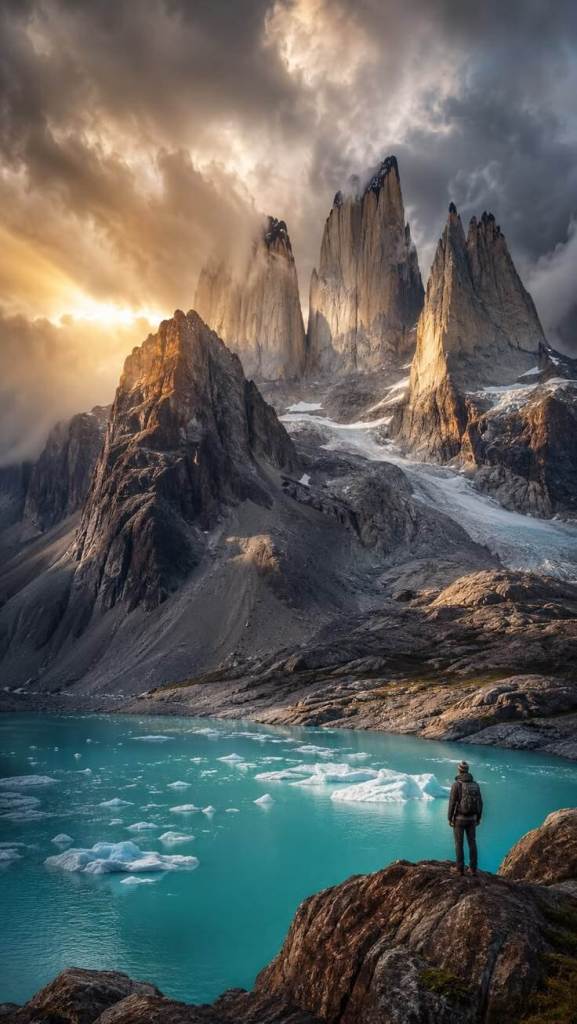
Patagonian Fjord Communities — Living at the Edge of Land and Ice
The southern regions of Chile contain enormous systems of fjords, islands, glaciers, and channels shaped by the Patagonian ice fields.
Indigenous peoples such as the Kawésqar developed maritime lifeways adapted to this complex geography, traveling among islands and channels and relying heavily on marine resources.
In such environments, the boundary between land and water becomes less important than the network of navigable channels. A community can be highly mobile without traveling far in straight-line distance.
Inspiration for Fiction: This offers a wonderful alternative to the stereotypical “Viking fjord culture.” Your fictional fjord inhabitants might be maritime nomads rather than farmers or warriors. Families live aboard vessels or move between seasonal camps. Children learn navigation before agriculture. Their concept of territory centers on channels, anchorages, shellfish beds, and currents rather than fields. An invading land-based empire may have enormous difficulty even understanding where this culture’s homeland begins and ends.
Alpine Glacial Valleys — Mountain Pastoralism and Seasonal Movement
Glacial landscapes do not need to reach the sea.
Across the Alps, glaciers carved valleys that later became important settlement corridors. Communities developed farming and pastoral systems adapted to steep terrain and seasonal changes.
Transhumance – the seasonal movement of livestock between lower and higher pastures – became important in many mountain regions.
Valleys could support permanent settlements while high alpine pastures were occupied only during summer.
This creates a vertical economy. Different elevations provide different resources at different times of year.
Inspiration for Fiction: A fantasy culture could organize society vertically:
- Valley settlements grow crops.
- Mid-elevation forests provide timber.
- High meadows support summer grazing.
- Glaciers supply rivers and sacred sites.
- Rights to each elevation may belong to different families, villages, monasteries, or guilds.
- A conflict over one mountain slope could therefore involve farmers, shepherds, miners, priests, and downstream towns simultaneously.
Worldbuilding Tip: In mountainous glacial environments, don’t think only horizontally. Elevation can function almost like separate ecological provinces stacked above one another.
Himalayan Glacial Communities — Water Towers and Sacred Mountains
Across the Himalayas, glaciers and snowfields feed rivers supporting enormous populations downstream. Mountain communities often live close to the sources of water that sustain distant lowland civilizations.
The landscape can also hold profound religious significance. Peaks, glaciers, lakes, and rivers may be understood as sacred places rather than simply physical resources.
This creates an interesting imbalance. A relatively small mountain community may live beside a glacier supplying water to millions of people far away.
Inspiration for Fiction: Imagine a remote monastery responsible for rituals believed to maintain a sacred glacier. Lowland rulers mock the tradition until the glacier begins shrinking and rivers feeding their kingdoms start failing. Suddenly priests who once seemed politically irrelevant become central to international negotiations. This is especially powerful in fantasy because religious belief and environmental reality do not have to be opposites. The ritual may actually matter.
Character Idea: A young monk who privately doubts his order’s ancient glacier rites becomes the only surviving person capable of performing them when the ice begins collapsing.
Fjord Cultures and Local Identity
Perhaps the most useful cultural effect of fjord geography is fragmentation without complete isolation. People remain connected through water, but mountains divide daily life. That means communities can be simultaneously cosmopolitan and intensely local. A merchant may regularly B186 P11trade with foreign ships while rarely visiting the neighboring valley. A fisherman may know coastlines hundreds of miles away better than a village located ten miles inland. Dialects, laws, customs, religious practices, and rivalries can develop separately in each fjord.
This gives writers an easy way to create regional diversity without needing vast geographic distances.
The Politics of the Narrow Passage
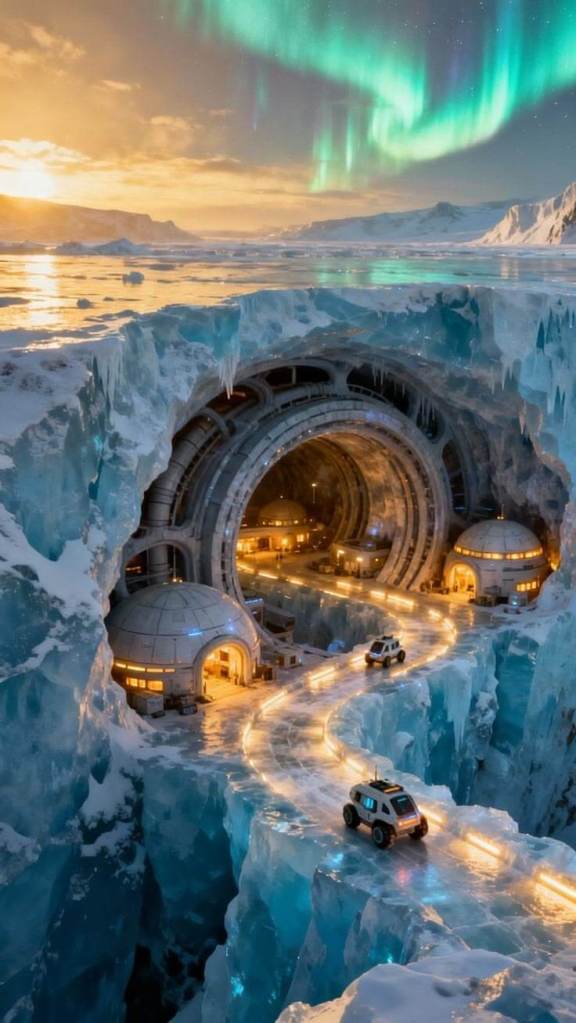
Fjord cultures are especially vulnerable to chokepoints. A single narrow strait may control access to dozens of settlements. Whoever holds the fortress above it can tax trade, enforce law, or blockade entire regions. This naturally produces political power based on geography rather than population. A tiny lordship controlling a narrow channel might possess more influence than a much larger agricultural province.
Inspiration for Fiction: Consider creating titles based on waterways:
- The Keeper of the Narrows.
- The Warden of the Inner Fjord.
- The Lord of Three Harbors.
Such positions might originally be practical military offices that gradually became hereditary nobility. That allows geography itself to create your aristocracy.
When the Ice Is Part of Cultural Memory
Glaciers change slowly enough that several generations may witness noticeable movement. A village may remember when the glacier reached a certain rock. Older people remember walking across ice where their grandchildren now see a lake. Stories preserve earlier landscapes. This gives glacial cultures an unusually visible relationship with deep time.
In fantasy, oral histories may describe places currently buried beneath ice. What sounds like mythology could actually be geography remembered across centuries.
Plot Hook: A supposedly mythical epic describes a road through a valley currently covered by a glacier. When the ice retreats, archaeologists discover the road exactly where the story said it would be.
Building Fictional Fjord and Glacial Cultures
When designing your own society, consider how geography affects everyday relationships. Ask whether people travel more easily by boat, sled, mountain trail, or seasonal ice. Decide whether land or water defines property. Consider whether families remain in one valley for generations or move seasonally between ecological zones.
Then think about what outsiders misunderstand. Perhaps inland rulers assume coastal people are isolated when they participate in enormous maritime trade networks. Perhaps foreigners call a migratory people homeless even though every fjord, island, and winter camp belongs to a carefully remembered territorial system. Perhaps lowlanders view glaciers as empty wilderness while mountain communities see them as sacred archives containing ancestral history.
A few useful questions include:
- What routes exist only in summer or winter?
- Which occupations carry the greatest prestige?
- Does wealth come from land, livestock, fish, ships, or control of harbors?
- How independent are individual fjords or valleys?
- Who controls mountain passes and narrow waterways?
- How are seasonal migration rights inherited?
- What stories explain glaciers advancing or retreating?
- What happens when environmental change opens a route that has been closed for centuries?
Plot and Character Ideas
The Glacier’s Crown
Genres: Political Fantasy, Environmental Drama
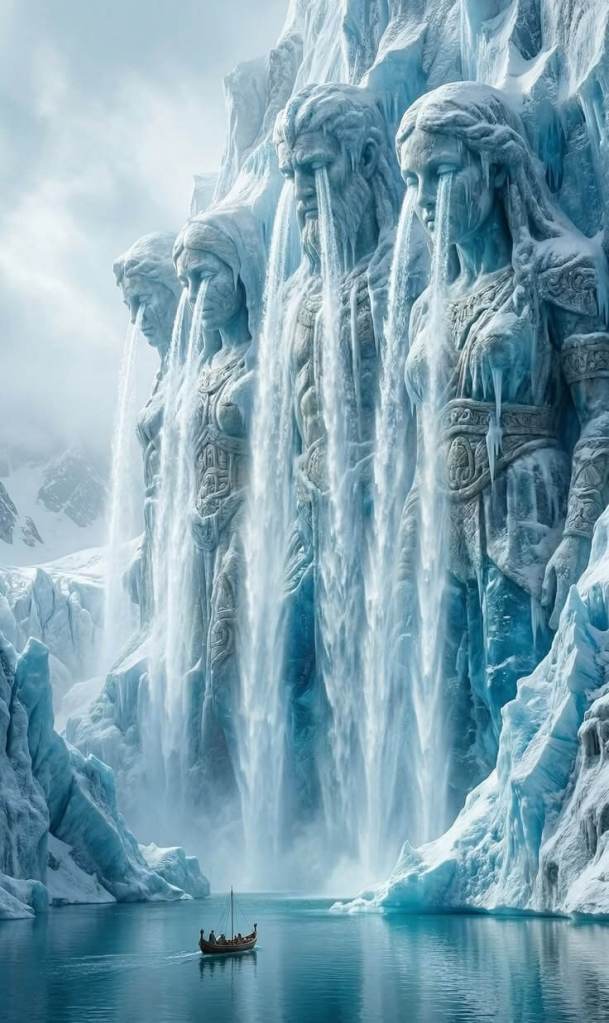
Plot Idea: A kingdom’s legitimacy rests on an ancient coronation rite performed atop a sacred glacier. When the ice begins retreating rapidly, the path to the shrine becomes unstable just as the old king dies and rival heirs prepare to claim the throne.
Character Angle: A royal guide from a family that has led monarchs across the glacier for generations is ordered to escort both claimants, even though she believes neither deserves the crown.
Twist(s) The retreating ice reveals that the coronation shrine is much older than the kingdom itself. Its inscriptions show that the rite was originally meant to choose a steward of the glacier, not a monarch.
The Harbor Behind the Mountain
Genres: Political Thriller, Maritime Adventure
Plot Idea: A powerful empire blockades a rebellious fjord province, confident that every navigable entrance has been sealed. Yet ships carrying weapons and food continue appearing inside the fjord.
Character Angle: A disgraced naval officer is ordered to find the hidden route and redeem his career. His only useful guide is an elderly fisher who despises the empire.
Twist(s): The secret passage is not a fixed channel. It opens only during certain tidal and glacial conditions, and the local communities have deliberately kept it off every official chart for centuries.
When the Ice Bells Ring
Genres: Religious Fantasy, Paranormal Mystery
Plot Idea: A monastery built beside a glacier teaches that deep cracking sounds in the ice are the voices of saints warning of disaster. For generations, the bells have been interpreted through elaborate religious rituals.
Then the glacier begins producing a pattern no scripture recognizes.
Character Angle: A young novice trained as both a musician and natural philosopher becomes obsessed with transcribing the sounds.
Twist(s): The pattern is not prophetic. Something trapped beneath the glacier is communicating, and it has learned the monastery’s bell language by listening for hundreds of years.
The Valley Returned
Genres: Environmental Fantasy, Political Drama
Plot Idea: A retreating glacier exposes a fertile valley that has not been visible for eight centuries. Three neighboring lordships immediately claim the new land, while refugees and landless farmers begin settling it without permission.
Character Angle: A royal surveyor is sent to establish legal boundaries and discovers that her own ancestors were among the people displaced when the glacier originally advanced.
Twist(s): Ancient boundary markers reveal that the valley was once independent. Worse, descendants of its former inhabitants have preserved a legal claim everyone assumed was folklore.
The Avalanche Law
Genres: Social Fantasy, Legal Drama
Plot Idea: In a fjord society, cutting trees from designated mountain slopes is one of the gravest crimes because the forests help protect villages from avalanches. When a wealthy noble orders illegal logging to build a war fleet, a winter avalanche destroys an entire settlement.
Character Angle: A local magistrate from a humble farming family must prosecute one of the most powerful men in the kingdom.
Twist(s): The noble did order the logging, but someone deliberately triggered the avalanche afterward to ensure he would be blamed for mass murder.
The Black Ice Below
Genres: Science Fiction, Environmental Thriller
Plot Idea: Colonists on a glaciated moon rely on fjord-like meltwater channels for transportation and energy. Scientists discover a layer of dark ice beneath the main glacier that absorbs far more heat than expected, accelerating melting.
Character Angle: A glaciologist who warned against expanding the colony’s hydroelectric system is forced to work with the engineer who dismissed her concerns.
Twist(s): The black layer is not mineral contamination. It is a dormant alien biosphere awakening as the ice warms.
The Lord of the Narrows
Genres: Political Fantasy, Military Intrigue
Plot Idea: A minor noble family controls a fortress overlooking the narrow entrance to the kingdom’s richest fjord. When civil war begins, both royal factions need passage through the strait.
Character Angle: The fortress heir is a cautious young man who never expected to inherit and now finds himself capable of determining which claimant controls half the kingdom’s trade.
Twist(s): His father secretly promised passage to both factions before dying. He discovers that the only way to avoid immediate war may be to close the narrows to everyone including the king.
The Drowned Chapel
Genres: Gothic Fantasy, Paranormal Mystery
Plot Idea: Each spring, unusually low tides reveal the roof of a stone chapel beneath a fjord. Local tradition forbids anyone from entering it, claiming the building was drowned as punishment for heresy. A visiting historian ignores the warning.
Character Angle: A village boatbuilder reluctantly agrees to guide the historian because her family has guarded the site for generations without knowing why.
Twist(s): The chapel was never a place of worship. It was built around a sealed fissure in the seabed, and the “heretics” deliberately flooded the valley to keep something beneath it contained.
The Winter Passage
Genres: Adventure Fantasy, Trade Drama
Plot Idea: Two prosperous regions are connected by a mountain pass during summer and a frozen fjord during winter. An unusually warm year leaves both routes unusable at once, threatening famine and economic collapse.
Character Angle: A merchant caravan leader whose wealth depends on seasonal transport attempts to pioneer a dangerous third route across newly exposed glacial terrain.
Twist(s): The warming is not natural. A neighboring kingdom has been using weather magic to keep its own harbors ice-free, unintentionally shifting regional climate patterns.
The People Beneath the Ice
Genres: Archaeological Fantasy, Paranormal Adventure
Plot Idea: A glacier collapse reveals an intact settlement buried beneath hundreds of feet of ice. Buildings, tools, food, and even bodies appear perfectly preserved. Then one of the bodies wakes up.
Character Angle: A physician accompanying the excavation becomes responsible for a woman who speaks a dead language and believes only a few days have passed since her village was buried.
Twist(s): The villagers were not killed by the glacier. They intentionally entered a magical stasis to escape a catastrophe and their awakening means the danger they feared may be returning.
The Fjord Without Fish
Genres: Environmental Fantasy, Community Drama
Plot Idea: A fishing culture depends on the annual arrival of vast schools of silver fish that support nearly every settlement in the fjord. One year, the fish never come.
Character Angle: A young fisher who has always been considered unlucky because he prefers studying currents and water temperature over traditional fishing lore becomes the only person with a plausible explanation.
Twist(s): The fish have changed migration routes because a deepwater predator has entered the fjord. The creature is not natural to the region. It was driven there by something even larger moving offshore.
The Last Light on the Glacier
Genres: Religious Science Fantasy, Mystery
Plot Idea: Every midsummer, pilgrims climb to a blue-ice cavern where sunlight passes through the glacier and illuminates an ancient crystal said to hold the memory of the world. This year, the light reveals images no one has ever seen.
Character Angle: A skeptical archivist is sent by the crown to determine whether the visions are genuine or being manipulated by the priesthood.
Twist(s): The crystal is recording history, but not only the past. The latest images show a future in which the fjord is dry, the glacier gone, and the capital abandoned. The archivist must determine whether the vision is prophecy, probability, or warning.
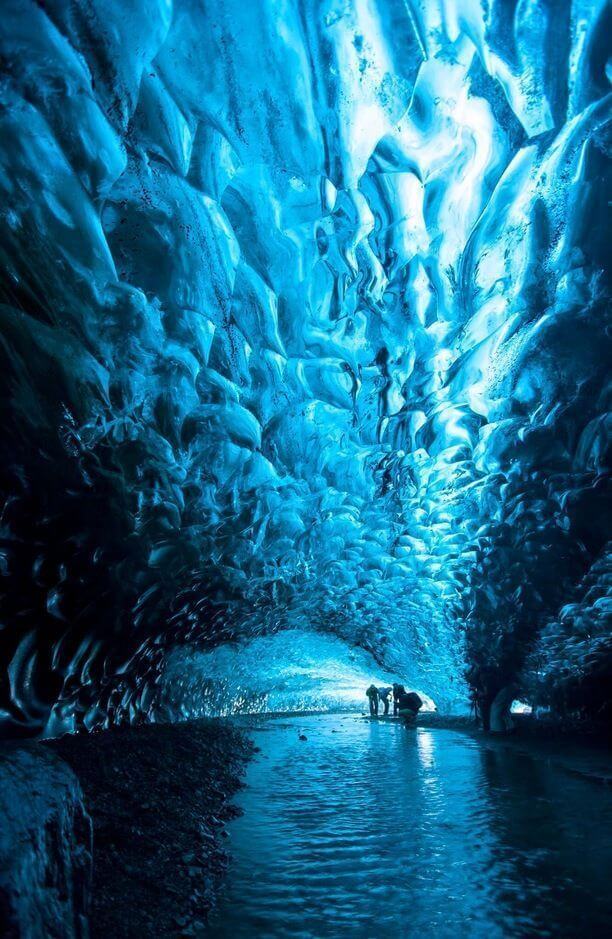
Fjords and glacial landscapes give writers something very different from generic frozen wilderness. They are landscapes created by movement.
Ice carves mountains. Valleys become waterways. Glaciers transport stone across enormous distances. Retreating ice reveals land hidden for thousands of years. Fjords connect settlements that mountains otherwise divide.
Unlike tundra, which describes an ecosystem, or polar regions, which describe broad geographic areas, glacial landscapes tell the geological history of what ice has done to the world. That history can shape everything from trade and warfare to religion and political borders.
For fantasy, glaciers can imprison ancient beings, preserve forgotten armies, or mark the passage of supernatural ages. For science fiction, they can contain ancient organisms, buried technology, climatic records, or entire ecosystems beneath alien ice.
And perhaps that is the greatest storytelling potential of a glacier. Every year the ice retreats a little farther. Every year it reveals something that has not seen daylight for centuries. Eventually, it may reveal something everyone would rather have remained frozen.
Happy worldbuilding!
I hope this was helpful. Let me know if you have questions or suggestions by using the Contact Me form on my website or by writing a comment. I post every Friday and would be grateful if you would share my content.
If you want my blog delivered straight to your inbox every month along with exclusive content and giveaways, please sign up for my email list here.
Let’s get writing!
Copyright © 2026 Rebecca Shedd. All rights reserved.

