
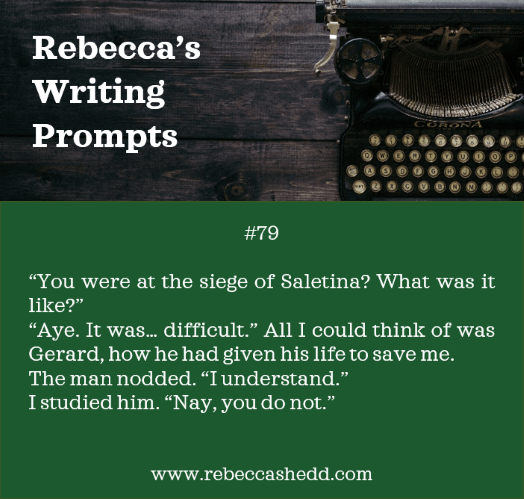
Breathing Life into Fantasy: Creating a Believable Setting
Posted on January 19, 2024 Leave a Comment
The appeal of fantasy lies in its ability to transform the impossible into reality and make extraordinary things seem commonplace. But for a fantasy world to captivate readers, it must feel believable and immersive. Crafting a world that feels genuine is crucial, not just a writing exercise. In this article, I’ll delve into how to make your fantasy world feel authentic, emphasizing the importance of historical context, geography, and climate. Additionally, I’ll examine how history and setting interconnect and how including logical rules enhances the believability of your world.
The Importance of Believable Fantasy Worlds
One of the primary reasons to make your fantasy world believable is to engage your readers. A well-crafted world draws readers in, allowing them to suspend disbelief and immerse themselves in the story. When readers feel like they’re walking through your world’s landscapes, they become emotionally invested in the story.
Believable worlds create emotional resonance. Readers form a stronger bond with the story when they can connect with the characters’ struggles and successes.
A coherent world with logical rules and a realistic backdrop enhances your reader’s experience. Inconsistencies can jar readers from the narrative and disrupt the suspension of disbelief. It also gives you the ability as a writer to set up situations where your readers will recognize what is going on without having to spell it out.
Building a Believable History
One way to make your fantasy world feel real is to craft a history that is vivid, textured, and interconnected with the narrative. A rich history adds depth and context to your world. Consider these strategies:
Pivotal Events – Integrate pivotal historical events into your narrative. These events shaped the societies, politics, and cultures of your world. Think of them as the historical equivalent of plot points in your story.
Example: In J.R.R. Tolkien’s Middle-earth, the War of the Ring is a major historical event that impacts the characters and the political landscape.
Legendary Figures – Create legendary figures whose stories you weave into the fabric of your world. These figures can be heroes, kings, or even tragic anti-heroes whose legacies continue to affect the present.
Example: Arthurian legends influence countless fantasy worlds, from Camelot to the sword in the stone, reflecting the enduring power of historical stories.
Cultural Evolution – Show how your cultures have developed. Consider how historical events, technological advancements, or invasions have shaped the customs, traditions, and belief systems of your world’s inhabitants. This can also be as simple as showing evolving fashion trends.
Example: In George R.R. Martin’s “A Song of Ice and Fire” series, the history of Westeros plays a significant role in the complex web of political intrigue and power struggles.

The Role of Geography and Climate
Geography and climate play a vital role in shaping the identity and atmosphere of your fantasy world.
Landscape Diversity – Diverse landscapes can offer a range of settings for your story. From lush forests and towering mountains to desolate deserts and rolling plains, each environment can play different roles in your narrative.
Example: The diverse regions of Narnia, created by C.S. Lewis, each have their own unique geography and climate, contributing to the sense of wonder and adventure.
Climate as a Character – Consider how climate affects the lives of your characters. Seasonal changes, unusual weather patterns, and natural disasters can add depth and conflict to your world.
Example: In Anne McCaffrey’s Dragonriders of Pern series, Threadfall greatly influences culture, architecture, and people’s way of life. It also grants a high social status to the dragonriders.
Geopolitical Significance – Geography can have geopolitical significance. Reflect on how the positioning of mountains, rivers, or oceans can affect trade routes, border conflicts, and regional power dynamics.
Example: The desert landscape of Arrakis in Frank Herbert’s “Dune” plays a central role as the only known source of the valuable spice melange, fueling political intrigue and conflict.

Drawing from Real World History
The history of the real world is a rich source of inspiration when crafting your fantasy world. By grounding your world in familiar historical contexts, you can create a sense of authenticity. Here are a few ways to accomplish this:
Analogous Civilizations – Use real-world civilizations as models for your fantasy world’s cultures, societies, and political structures. For instance, you could draw inspiration from ancient Rome, feudal Japan, or medieval Africa. Also consider mixing and matching elements from various cultures to create something new.
Example: The “Wheel of Time” series by Robert Jordan draws heavily from various real-world cultures, infusing each with unique traits and characteristics.
Historical Events – Adapt historical events into your world’s narrative. This can give readers a sense of familiarity and connect them to your story’s larger themes.
Example: “Game of Thrones” by George R.R. Martin draws from real historical events, particularly the Wars of the Roses, to craft a complex and politically driven narrative.
Incorporate Myths and Legends – You can infuse your world with elements from real world myths, legends, and folklore. These components can add depth and resonate with readers who recognize the source material.
Example: Neil Gaiman’s “American Gods” blends ancient mythological figures with modern America, creating a rich tapestry of old and new.
The Connection Between History and Setting
The connection between history and setting is the backbone of a believable fantasy world. History shapes your world, while the setting provides context for the events of the past. Here’s how to strengthen this connection:
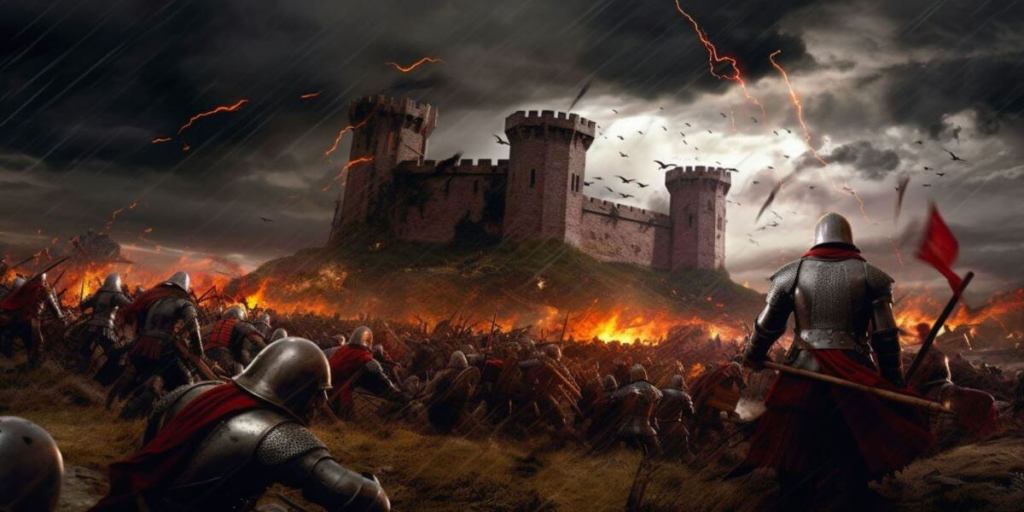
Echoes of the Past – Create echoes of historical events in your world’s setting. Ruined castles, ancient battlefields, looming monuments, or enigmatic artifacts can serve as reminders of the past, sparking curiosity and intrigue. They can also play a part in the plot.
Example: The ancient city of Anor Londo in Hidetaka Miyazaki’s “Dark Souls” series is a haunting reminder of the past, now decaying with secrets of its own.
Cultural Traditions – Show how historical events have influenced cultural traditions and rituals. The customs and celebrations of your world can be rooted in significant historical moments.
Example: In Patrick Rothfuss’ “The Name of the Wind,” the characters celebrate the autumn festival of “Mae Midsummer,” which is based on a legendary event.
Political Intrigue – The political landscape of your world should be deeply connected to its history. Show how past conflicts, alliances, and betrayals have reverberated through time to influence contemporary power struggles.
Example: In the “Mistborn” series by Brandon Sanderson, the world’s political system is shaped by a history of revolutions and magical conflicts.

Logical Rules and Internal Consistency
To ensure your fantasy world feels real, you must establish logical rules and maintain internal consistency. Readers must feel that your world operates according to its own set of laws and principles.
Magic Systems – If your world features magic and you have decided to use a hard magic system, define its rules and limitations. Hard magic systems should have a consistent set of principles that govern their use. Readers should understand what magic can and cannot do within the context of your world. If you decide to go with a soft magic system, it is still a good idea to understand the rules of your magic even if you never detail them to your readers.
Example: Brandon Sanderson’s “Laws of Magic” in his “Cosmere” universe create clear boundaries for magic, ensuring a logical and consistent system.
World Laws – Establish natural laws within your world, such as the behavior of physics, chemistry, and biology. Even if your world has magical elements, adhering to these laws creates a sense of realism.
Example: Terry Pratchett’s “Discworld” series has its own unique laws of physics and magic, which, while whimsical, are internally consistent.
Character Behavior – Characters should act in ways that align with the world’s rules and customs. They should behave in a way that is consistent with their cultural and historical context.
Example: In “The Hobbit” by J. R. R. Tolkien, Bilbo’s character arc aligns with the cultural values and historical events of Middle-earth.
Worldbuilding creates fantasy realms where readers can lose themselves. To make your world feel real, you must invest in its history, geography, and climate, and connect these elements seamlessly. By using actual history and logical rules, you can make your world feel authentic and captivating. Remember that the magic of fantasy lies not in the impossible, but in the art of making it feel utterly believable. Happy worldbuilding!
I hope this was helpful. Let me know if you have questions or suggestions by using the Contact Me form on my website or by writing a comment. I post every Friday and would be grateful if you would share my content.
If you want my blog delivered straight to your inbox every month along with exclusive content and giveaways, please sign up for my email list here.
Let’s get writing!
Copyright © 2024 Rebecca Shedd. All rights reserved.
Introduction to Worldbuilding
Posted on January 5, 2024 Leave a Comment

Fantasy literature transports readers to unimaginable realms, where they can escape reality and embark on epic quests, encounter mythical creatures, and explore magical lands. The key to the magic of these stories lies in creating fantasy worlds that are immersive, believable, and awe-inspiring. These realms become characters in their own right. The art of worldbuilding that captivates and inspires readers is what we’ll explore over this year. Worldbuilding is essential for crafting immersive stories, whether you’re an aspiring writer or a fan of fantasy.
To create a believable and engaging setting, you must start with a solid foundation. Here are some key considerations when crafting your world. I will be exploring all these topics in greater depth over the next year.
Creating a Believable Setting
Begin with the basics.
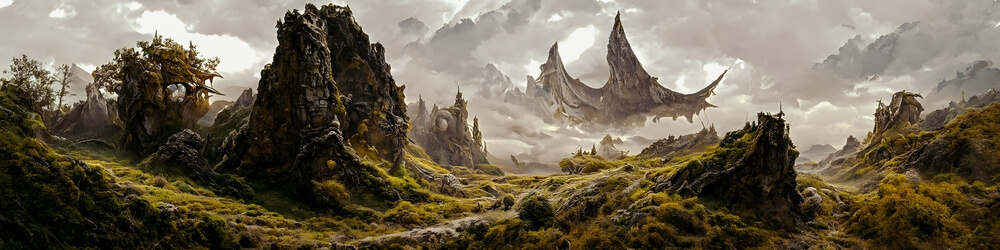
Geography and Topography – What is the lay of the land? Consider the physical features—mountains, rivers, forests, deserts—that make up your world. Are there vast underground caverns, lost cities, or labyrinthine catacombs? How do these elements affect the climate, ecosystems, and the civilizations that inhabit them?
Climate and Weather – Weather plays a crucial role in setting the tone of your world. Think about seasonal changes, unusual weather patterns, and their impact on agriculture, travel, and daily life. Weather patterns and seasonal changes influence the behavior of flora and fauna. These factors also affect how your world’s civilizations have developed.
Flora and Fauna – Populate your world with a diverse range of plants and creatures. Consider their adaptations to the environment and their role in your world’s ecosystem.
History and Lore
Every fantasy world has a history filled with legendary wars, iconic heroes, and world-altering events. Create a detailed history and lore for your world.
Historical Events and Conflicts – Think about pivotal moments in your world’s past. These events can shape your cultures and inform your characters and their motivations. They can also impact the political landscape.
Races and Species
Whether your world is populated by humans, mythical creatures, or a mix of both, give careful thought to its inhabitants.
Creating Diverse Races – Do you want different races and species with unique characteristics and histories in your world? Consider how these races interact and what conflicts or alliances may arise.
Cultural Diversity
In a well-rounded fantasy world, cultures add richness and depth to your setting.
Languages and Linguistics – Develop distinct languages for different cultures, with their own scripts and dialects. Language can be a powerful tool for worldbuilding.
Religions and Belief Systems – Explore the religions in your world. Are there pantheons of gods, monotheistic faiths, or animistic beliefs? How do these religions influence daily life and morality? If there are multiple religions in your world, how do the followers of different faiths interact with each other? Are they peaceful or antagonistic?
Political Systems and Factions – The political landscape of your world can be as intricate as its cultures. Are there kingdoms, empires, or city-states? Are there power struggles, alliances, or wars on the horizon? Political intrigue can be a rich source of conflict and plot.
Cultural Traditions and Rituals – What traditions and rituals exist in the cultures of your world? Explore how geography, climate, and history have affected culture. Cultural aspects encompass literature, gender roles, social institutions like marriage and education, superstitions, and more.

Economy and Trade: The Lifeblood of Your World
Economic systems play a vital role in shaping your world’s societies and conflicts.
Economic Systems – How do people earn a living? What is the currency, and how is wealth distributed? Resources are also critical factors to consider.
Trade Routes and Commerce – Think about the trade routes that crisscross your world. How do they influence cultural exchange and the flow of goods?
Technology and Advancements – Determine the level of technology in your world. Is it a medieval society with swords and horses, or is it a technologically advanced world with steam-powered contraptions? Technology influences every aspect of life, from transportation to communication.
The Magic of Magic Systems
Magic is often a central element of fantasy worlds, and its form is a vital thread in the fabric of your setting.
Magic Rules and Limitations – Establish clear rules for how magic operates in your world. Is it bound by specific laws? Are there limits to its power? Is it something that comes naturally or do people need to be taught and practice it to become skilled? Is magic taught in formal academies, through apprenticeship, or by personal trial and error? This not only adds depth but also provides opportunities for conflict and growth.
Types of Magic Users – Define the various magic users, from wizards and sorcerers to witches and warlocks. Explore their unique abilities and how they fit into the broader society. Are magic users powerful people in the government and society or are they feared and hunted?
Cultural Influence – Consider how different cultures within your world approach and interact with magic. Is it revered, feared, or a closely guarded secret? How do these beliefs shape the world’s politics and religions?
Hidden Realms – Are there hidden realms in your world accessed through portals, magical gateways, or ancient artifacts? These can be realms of wonder, danger, or both.
The Art of Visualizing: Creating Maps and Geography
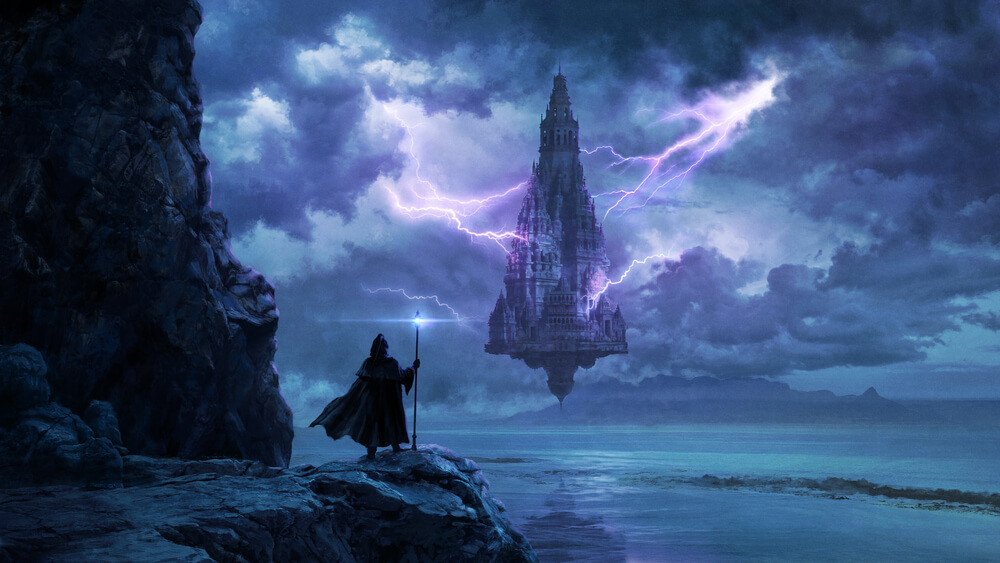
Maps and visual aids are invaluable for both writers and readers. They provide a tangible sense of your world’s geography and help orient the reader.
Sketching Maps – Create maps of your world, whether it’s a single continent or an entire cosmos. Maps help you keep track of locations and distances, ensuring consistency throughout your narrative.
Visual Aids – Consider using visual aids like sketches, diagrams, or 3D models to help readers picture key places, objects, and creatures.
Building Worlds for Different Fantasy Subgenres
Different subgenres of fantasy require unique worldbuilding approaches.
Worldbuilding for High Fantasy – Embrace the epic and the mythical. High fantasy often features sweeping landscapes, legendary artifacts, and world-altering events.
Worldbuilding for Urban Fantasy – Blend the magical with the mundane. Urban fantasy typically places fantastical elements in a contemporary urban setting.
Worldbuilding for Steampunk – Give your world a Steampunk touch by incorporating Victorian aesthetics, steam-powered machinery, and an industrial revolution atmosphere.
Characters in Your World: Integration and Impact
Characters are the lens through which readers explore your world. The world shapes their backgrounds and experiences they inhabit.
Character Integration – Ensure that you seamlessly integrated your characters into the world. The culture, politics, and history of the world they live in should influence their personal stories.
Reader Engagement – Engage your readers by immersing them in your world. Use descriptive language and character experiences to make the setting come alive.

Fantasy worldbuilding takes time, creativity, and careful consideration. Each facet of your world, from its geography and cultures to its magic systems and mythical creatures, contributes to the spectacle of your story. Remember that your goal is to transport your readers to a realm of wonder and adventure, where the boundaries of reality fade away, and the possibilities are limited only by your imagination. Happy worldbuilding!
I hope this was helpful. Let me know if you have questions or suggestions by using the Contact Me form on my website or by writing a comment. I post every Friday and would be grateful if you would share my content.
If you want my blog delivered straight to your inbox every month along with exclusive content and giveaways, please sign up for my email list here.
Let’s get writing!
Copyright © 2024 Rebecca Shedd. All rights reserved.
The Writer’s Guide to Entering & Exiting a Harbor
Posted on December 22, 2023 Leave a Comment

Sailing ships entering and exiting harbors relied on a combination of wind power, currents, and manual labor. The techniques and procedures varied depending on the size of the ship, prevailing wind and tide conditions, and the design of the harbor. Here is a general overview of how sailing ships entered and exited harbors.
As always, magic is the exception to the rule. Because magic.
Entering Harbor
The crew of the ship would use maps, instruments (like sextants), and landmarks to find their way to the harbor.
As the ship approached the harbor entrance, the crew would reduce sail by furling or lowering some sails. This reduced the ship’s speed and made it more maneuverable.
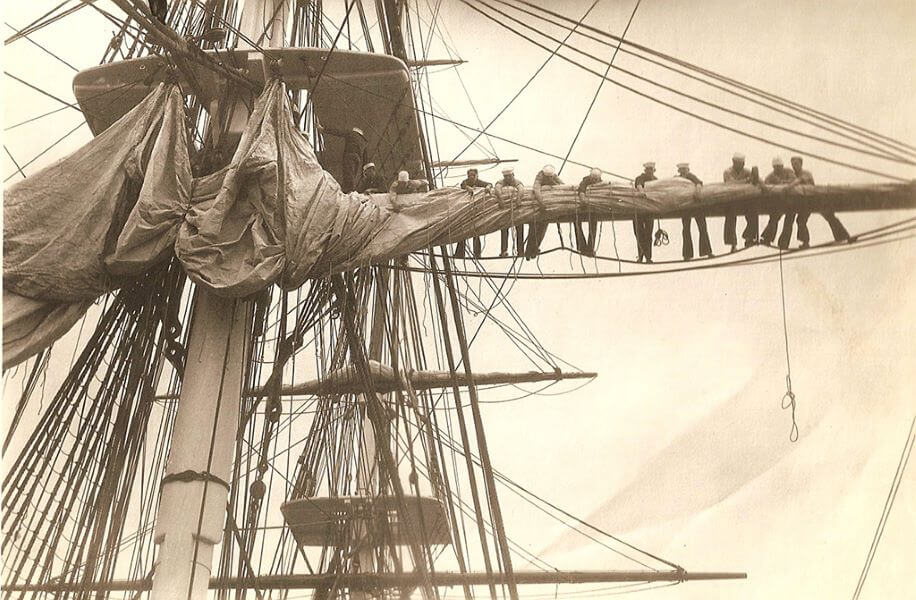
The anchor would be ready to drop in case of emergencies or if the ship needed to come to a stop quickly.
Many times, local pilots familiar with the harbor would come on board to guide the ship safely through the narrow and often treacherous entrance. Pilots had specialized knowledge of the harbor’s currents, tides, and hazards.
Depending on the wind direction and the layout of the harbor, the crew would use various techniques to maneuver the ship. These might include tacking (changing the direction of the ship by turning it into and across the wind) or wearing ship (changing direction by turning away from the wind). In the time before motorized vessels, sailors would use row boats to pull ships into harbor. Later, they would fill this role with tugboats. Another method they used was to let out the anchor, load it onto a rowboat, and drop it further out in the direction they wished to go. They would then weigh anchor, pulling the ship towards it. Sailors commonly took advantage of the incoming tides to push their ships into the harbor.
The ship’s crew and harbor authorities would communicate using signal flags, semaphore, or other means to coordinate the ship’s entry.
Once safely inside the harbor, the ship would drop anchor and secure it to the seabed to prevent drifting. They often did this with manual capstans or windlasses. They would also secure the ship to the dock using ropes that were tied to cleats on the dock and sturdy points on the ship. Typically, sailors used three lines: a bowline, a stern line, and a spring line. These lines were tight enough to prevent the boat from drifting too far, but slack enough to allow it to move with the tide and wind.

Exiting Harbor
To leave the harbor, the ship’s crew would “weigh anchor,” which meant raising the anchor from the seabed. This required the use of capstans or windlasses powered by the crew’s muscle.

Once they had secured the anchor, the crew would set the sails. The configuration of sails depended on the wind direction and the ship’s desired course.
The ship’s crew would plan their route out of the harbor, considering the wind and tide conditions. They would aim to avoid obstacles and other vessels.
Like entering the harbor, the crew would use various sailing maneuvers to navigate through the harbor entrance. The crew had to balance the speed and direction of the ship with care to avoid collisions and ensure a safe exit. Sailors used the same methods applied to bring a ship into harbor in reverse to exit the harbor.
Sometimes, a harbor pilot might continue to guide the ship out of the harbor to ensure a safe departure.
Once the ship had safely navigated the harbor entrance, it would set its course for its intended destination, adjust its sails as necessary, and resume its journey under wind power.
These procedures required skilled seamanship, teamwork, and a deep understanding of the local conditions. Bad weather, strong currents, or crowded harbors can make entering and exiting difficult.
I hope this was helpful. Let me know if you have questions or suggestions by using the Contact Me form on my website or by writing a comment. I post every Friday and would be grateful if you would share my content.
If you want my blog delivered straight to your inbox every month along with exclusive content and giveaways, please sign up for my email list here.
Let’s get writing!
Copyright © 2023 Rebecca Shedd. All rights reserved.

Writer’s Deep Dive: Sextant
Posted on December 8, 2023 Leave a Comment

The sextant is one of the most easily recognizable and yet least understood navigational instruments. Today I will explain how to take a reading with the sextant and the function of all its pieces.
Now, let’s dive in!
The Basics
The basic principles of the sextant were found in the unpublished writings of Isaac Newton but were first implemented around 1731 by John Hadley and Thomas Godfrey.
The sextant measures the angular distance between two visible objects. Often one of those objects is the horizon, and the other is the sun or the north star. However, the sextant can also measure the distance between two objects, such as the moon and another celestial body, such as a star or planet. This can determine Greenwich mean time and thus longitude. You can calculate the latitude by noting the time of a sighting and measuring the angle. The distance of a landmark can be determined by sighting the height of it. When held horizontally, a sextant can measure angles between objects on a chart. Unlike older tools, you can use the sextant during the day or at night. Because a sextant measures relative angle, it does not need to be completely steady, meaning that you can use it on a moving ship.
The frame of a sextant is marked with angles. You move the index bar to take a reading on those angles. Traditional sextants have half horizon mirrors, so one mirror shows the horizon and the other shows the celestial body being cited. Both objects appear bright and clear, meaning that you can use the sextant at night and in haze. Most sextants have shade glasses to protect the user’s eyes from looking directly at the sun.
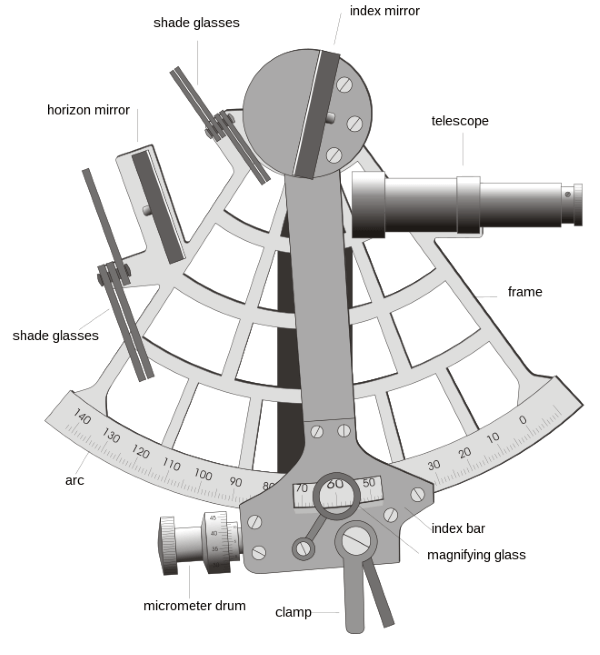
Sighting, shooting, or taking a sight is how people refer to taking a reading with a sextant. First, point the sextant at the horizon. Then rotate the index bar until the celestial body being cited appears in the second half of the mirror. Then, line up the bottom of the celestial object with the horizon, release the clamp, and swing the sextant side to side to verify alignment. The user can then read the angle that is shown by the arrow on the index bar.

The readings for a sextant are sometimes subject to index errors. This is due to slight misalignments with the mirrors. You can adjust calculations to ensure the accuracy of the reading. Adjustments for height above the water, light bending, and shift in position of the celestial body are usually necessary. Changes in temperature can warp the ark of the sextant, creating inaccuracies. Mariners originally made most sextants of brass because it expands less than other materials although it was heavier.
Users can determine their location on earth by using trigonometric calculations and nautical almanac data after correcting their reading.
The Write Angle
There are many ways that you can use a sextant in your stories. Below are just a few.
Navigational Tool – The sextant was an essential navigation tool in history. It was useful for people who explored uncharted territories like sailors, pilots, and explorers without GPS.
Historical Setting – If sextants were commonly used in the specific historical period in which your story is set, it can serve as a hallmark for the era and illustrate the challenges of navigation in the past.
Survival Story – If your character is in a survival situation, such as after a shipwreck, a sextant can be a lifeline for them to find their way to safety. If they struggle with using the instrument accurately, it can add a layer of tension and hope. If there is more than one survivor, they can disagree about how to use a sextant and whether each other’s readings are accurate.
Character – Showing a character that is competent at using a sextant or struggling can add depth and reveal some of their skills and back story. If your character is based on a historical figure such as a famous explorer or scientist, their use of the sextant can add depth and authenticity to your story.
Mystery – Maybe your character stumbles upon an old sextant with cryptic markings or coordinates that are the beginning of an adventure.
I hope this was helpful. Let me know if you have questions or suggestions by using the Contact Me form on my website or by writing a comment. I post every Friday and would be grateful if you would share my content.
If you want my blog delivered straight to your inbox every month along with exclusive content and giveaways, please sign up for my email list here.
May you always find the right words.
Copyright © 2023 Rebecca Shedd. All rights reserved.
The Writer’s Guide to Maritime Navigation
Posted on November 24, 2023 Leave a Comment
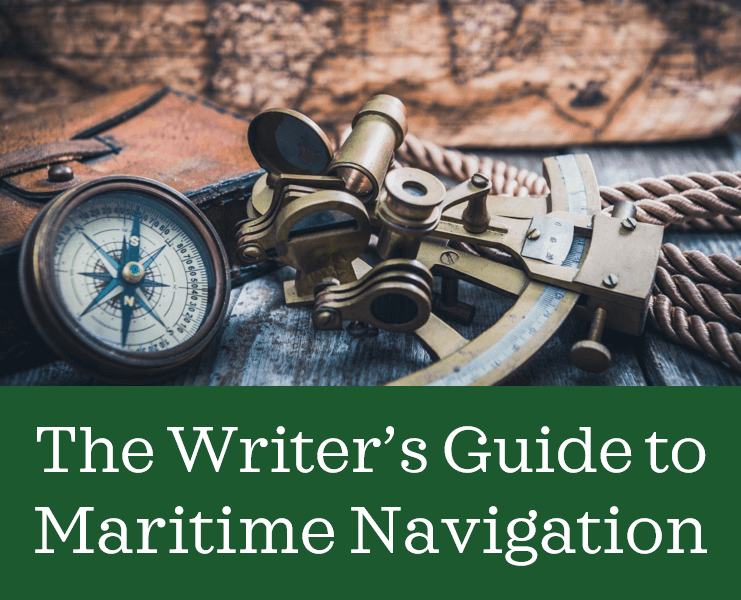
Over the last couple of weeks, I have covered different ships and a large span of maritime history. However, all these ships mean nothing if you do not know how to get where you are going. Today I will cover maritime navigation. I will mainly focus on navigation before satellite and radio.
As always, magic is the exception to the rule. Because magic.
Latitude and Longitude
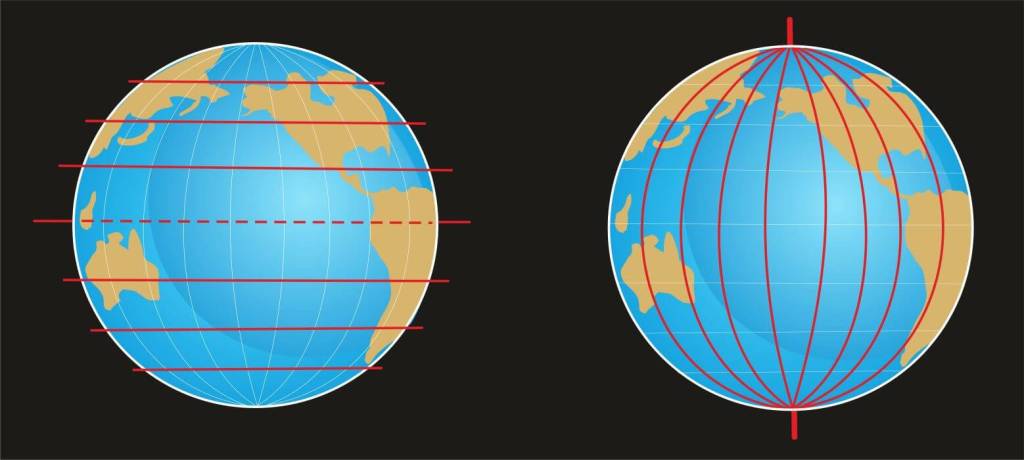
Latitude is the distance north to south around the globe and is depicted as horizontal lines on maps of the Earth. It is usually expressed in degrees with the equator being 0 degrees. Mariners calculated latitude in the northern hemisphere by sighting the sun, moon, or north star with a sextant.
Longitude, the vertical lines on your map, dictate east-to-west distances from the prime meridian or Greenwich meridian. Longitude is also expressed in degrees ranging from 0 to 180 degrees east to west. Longitude is much harder to calculate than latitude because you must know the exact time that you are from Greenwich mean time. This requires hyper accurate timepieces which were not available until the late 18th century and not affordable until the 19th century.
Coastal Navigation
Our earliest seafaring ancestors followed the coast. With the shoreline in sight, it was harder to get lost than venturing out into open waters.
Dead Reckoning
Early mariners navigated by using landmarks, memory, observation, and information passed down by others. A variation of this type of navigation is known as dead reckoning. A ship captain would point his vessel in the direction that he wished to go and try to hold a straight line. He would estimate his location given the speed of the ship. This is not the best navigation method because any steering error can take the vessel wildly off course.
Celestial Navigation
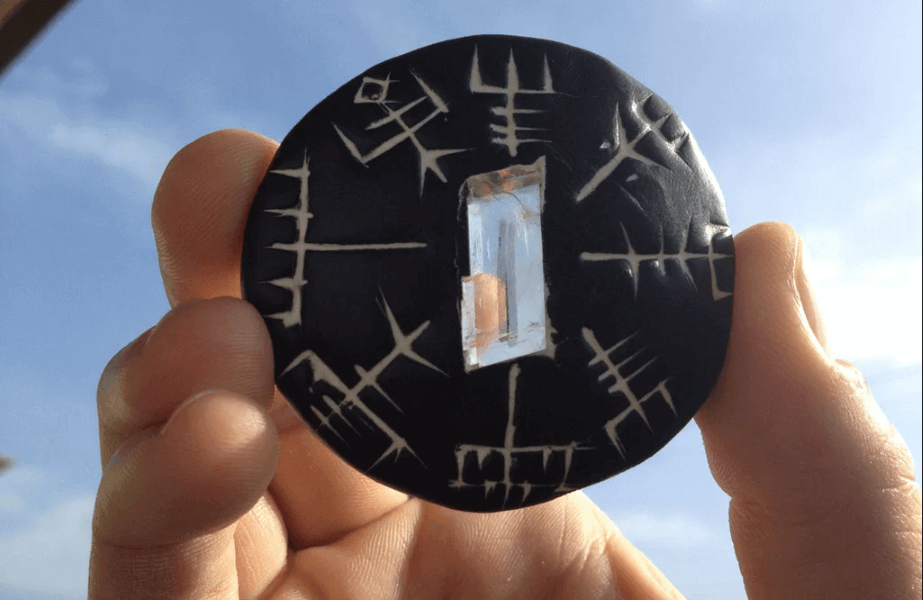
Celestial navigation is based on the observation of the sun, moon, and stars. Sailors would use the sun to set an east or west heading. The North Star was used heavily by early mariners at night. Ancient Vikings are rumored to use a special type of crystal known as a sunstone to locate the sun even on a cloudy day and then utilize a primitive compass known as a sunboard to set their heading. If you are interested in learning more there was a fantastic episode of Expedition Unknown that covers this topic.
Astrolabe
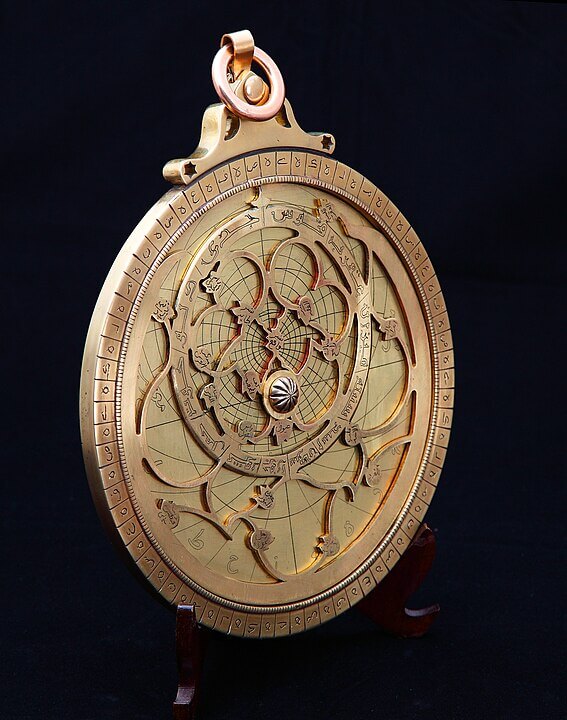
An astrolabe is an instrument that serves as a star chart and a physical model of visible heavenly bodies. It is usually a metal disc with a pattern of wire cut outs and perforations that allow the user to accurately calculate astronomical positions. It can measure the altitude above the horizon of a celestial body and can identify stars or planets to determine latitude. Although it is less reliable in rough seas. The astrolabe was used widely during the Islamic Golden Age.
Compasses
The compass uses a magnetized needle to determine magnetic north. They also show angles in degrees with N corresponding to 0 degrees. This allows the compass to show bearings in degrees. The Han Chinese developed the first compass using lodestones. [1] The earliest representation of a compass used aboard ship was from an illustration dating to 1403.
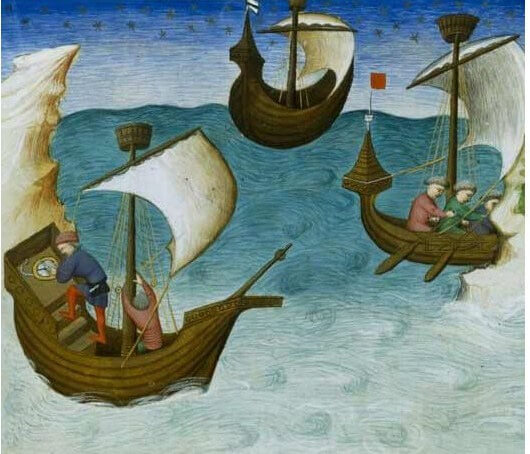
Sextant
The sextant is an instrument that measures the altitude of an object. The sextant measures the angle and time, which can calculate the latitude. I will go into further detail in my next blog post.
I hope this was helpful. Let me know if you have questions or suggestions by using the Contact Me form on my website or by writing a comment. I post every Friday and would be grateful if you would share my content.
If you want my blog delivered straight to your inbox every month along with exclusive content and giveaways, please sign up for my email list here.
May you always find the right words.
Copyright © 2023 Rebecca Shedd. All rights reserved.
[1] Lowrie, William (2007). Fundamentals of Geophysics. London: Cambridge University Press. pp. 281. ISBN 978-0-521-67596-3. Early in the Han Dynasty, between 300–200 BC, the Chinese fashioned a rudimentary compass out of lodestone ... the compass may have been used in the search for gems and the selection of sites for houses ... their directive power led to the use of compasses for navigation


.jpg)