
Writer’s Deep Dive: Horse Bits
Posted on February 18, 2022 1 Comment

Most people know that the primary way that a horse is steered is by using a bit. However, there is a lot more to it.
Now, let’s dive in!
The Basics
First, the bit is not the only way a rider communicates with their horse. Weight shifts, leg cues, verbal commands, and sometimes whip cues are all used with the reins and bit.
Before we get too far into the subject of bits, there is sometimes you need to understand about horse’s mouths. Horses have two sets of teeth: incisors and molars. The incisors are the front teeth that are used for cutting grass when a horse is grazing, although they can also be used for defense or attack. The molars are the large flat-topped grinding teeth that chew the grass before it’s swallowed. Unlike our teeth, horses have a gap between the two where there are only gums. It is in this gap that the bit sits. It is not resting on the teeth themselves.


Occasionally, horse will have wolf teeth that grow in that gap between the incisors and molars. It can be painful for the horse to have a bit hit their wolf teeth. Nowadays, wolf teeth are commonly removed surgically. The corner of a horse’s mouth lines up with the gap between the incisors and molars, which is known as the interdental space.
The bit applies pressure to the tongue, gums, and sometimes the roof of the mouth. If the bridle is too loose, the bit will bang against the back incisors. If it’s too tight, it will press against the front molars. The horse can become desensitized, which is known as “hard mouthed” if a rider is too harsh with the bit.
There is some specific terminology when discussing bits.
Bar or Mouthpiece – The piece that sits across the horse’s tongue and gums. It can be a solid piece of metal or twisted wire and can be straight, jointed or curved. It’s believed that thicker bits are gentler while thinner bits are harsher.
Cheekpieces – The cheekpieces connect to the bar at either side outside the horse’s mouth. The rest of the bridle is attached to the top of the cheekpieces, while the reins are attached to the bottom. There are several styles of cheekpieces, including D-ring and eggbutt.
Shanks – Shanks are pieces that extend downward from the cheekpieces. When the reins are pulled, they rotate the bit in the mouth and apply leverage. The longer the shanks, the stronger the leverage and the less pressure is needed on the reins to create it.


The Write Angle
Proper fitting of the bit and handling of the reins can be a way for a writer to point out that a character knows what they are doing with horses. Also, one trick to get a horse to open its mouth for the bit is to put your thumb in the gap and wiggle it around. Most horses open their mouths and you’re in no danger of being bit. Show instead of tell, right?
It is possible for a horse to get the bit between their teeth and take control away from the rider. This is an opportunity for some moments of drama or tension, especially if it involves a runaway horse with the rider hanging on for dear life.
If a character is tacking a green horse, you can point out that they are choosing a gentle bit with a thick bar and no shanks. In converse, a character could be forced to choose a thin bit with long shanks to control an unruly hard-mouthed horse.
I hope this was helpful. Let me know if you have questions or suggestions by using the Contact Me form on my website or by writing a comment. I post every Friday and would be grateful if you would share my content.
If you want my blog delivered straight to your inbox every month along with exclusive content and giveaways, please sign up for my email list here.
Let’s get writing!
Copyright © 2022 Rebecca Shedd. All rights reserved.
The Writer’s Guide to Ecclesiastical Titles
Posted on February 11, 2022 6 Comments

Besides royalty and nobility, members of the clergy also have a rich history of titles and forms of address. Since religion, especially Catholicism and Eastern Orthodoxy, played such a large part in European society throughout much of history, it is important for a writer who is setting their story in this period or one drawing inspiration from it to know the basics of church hierarchy and forms of address.
If you need the titles and forms of address for royalty and nobility, please read my previous articles here and here.
If you are writing fantasy, they can be discarded completely in favor of your own inventions, if you so wish.
Pope and Patriarch
The pope is the head of the Roman Catholic Church and the patriarch is the leader of the Eastern Orthodox church.
The most common form of address for the pope is “your Holiness.” This title can also be used when referencing him, e.g., “his Holiness” or “His Holiness Pope Francis.” The term “Holy Father” is also used as well as “Most Blessed Father” and “Most Holy Father.” During the Middle Ages, the term “Dominus Apostolicus,” meaning “the Apostolic Lord,” was used. [1] Other titles have been applied to the pope, including Bishop of Rome, Vicar of Jesus Christ, Successor of Peter, and many more. [2]
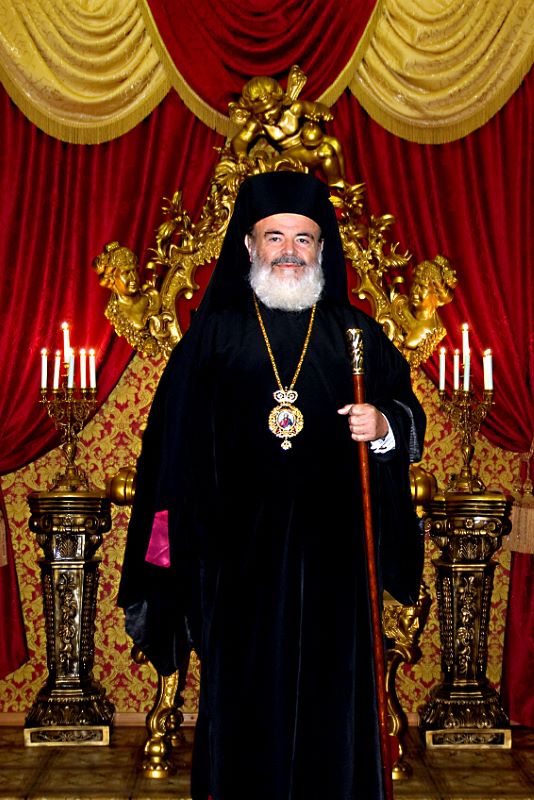
The Ecumenical Patriarch of the Eastern Orthodox church is addressed as “Your All-Holiness” and referred to as “His All-Holiness.” The formal form of address is “Bartholomew, by the grace of God Archbishop of Constantinople, New Rome and Ecumenical Patriarch.” [3]

Cardinal
A cardinal oversees a large territory and directs the archbishops and bishops that report to him. Collectively, they make up the college of cardinals. One of their responsibilities is selecting the next pope after the previous one dies or retires. In the Catholic church, they are well known for their red vestments.
They are commonly addressed as “Your Eminence” and referred to as “His Eminence.” They are considered princes of the church and can be addressed in the same way with “Your Grace.” [4]

Archbishop
An archbishop leads an archdiocese, a large or heavily populated area that included all the churches located inside its boundaries.
They are addressed as “Your Excellency” and referred to as “His Grace Archbishop (Name).” Other common forms of address include “Your Grace” with the title being “The Most Reverend.”
Eastern Orthodox archbishops are referred to as “The Most Reverend Archbishop (Name) of (Place)” and addressed as either “Your Beatitude” or “Your Eminence.” [5]
Bishop
A bishop oversees one or more dioceses and is under the authority of their archbishop.
The common form of address in the Roman Catholic church is “Your Grace.” He is referred to as “Bishop (Name).”
Bishops in the Eastern Orthodox church as referred to as “The Most Reverend Bishop (Name) of (Place)” and addressed as “Bishop (Name).”
Priest
A priest handles a parish church.
His is usually addressed and referred to as “Father (Name)” or just “Father.” An Eastern Orthodox priest is also called “Father” but can additionally be referred to as “The Reverend Father.” [4]

Religious Orders
In both the Roman Catholic and Eastern Orthodox churches, there are religious orders whose members are referred to as monks, if male, and nuns, if female. In the Catholic tradition, they are called “Brother (Name)” and addressed as “sister” or “Sister (Name). It’s the same in the Eastern Orthodox tradition, although monks are referred to as “Father” and nuns as “Mother” or “Sister.”
I hope this was helpful. Let me know if you have questions or suggestions by using the Contact Me form on my website or by writing a comment. I post every Friday and would be grateful if you would share my content.
If you want my blog delivered straight to your inbox every month along with exclusive content and giveaways, please sign up for my email list here.
Let’s get writing!
Copyright © 2022 Rebecca Shedd. All rights reserved.
[1] Guruge, Anura (2008). Popes and the Tale of Their Names. AuthorHouse. ISBN 978-1-4343-8440-9.
[2] Annuario Pontificio, published annually by Libreria Editrice Vaticana, p. 23*. ISBN of the 2012 edition: 978-88-209-8722-0.
[3] Rodopoulos, Panteleimon (2007). "Institutions of the Ecumenical Patriarchate". An overview of Orthodox canon law. Translated by Lillie, W.J. Rollinsford, N.H.: Orthodox Research Institute. p. 213. ISBN 1-933275-15-4. OCLC 174964244.
[4] https://en.wikipedia.org/wiki/List_of_religious_titles_and_styles#Catholicism
[5] https://en.wikipedia.org/wiki/Archbishop
Writer’s Deep Dive: Posterns
Posted on February 4, 2022 7 Comments

Castles and fortified cities are popular with writers. Access to them can become critical to the plot, especially during a war or siege. Gates and barbicans are well-known access points, but many castles and cities use posterns as a secondary point of entrance or exit. Let’s dive in!
The Basics
Posterns, also known as sally ports, were secondary doors or gates. They were set into the outer curtain wall of a castle or city. They were usually small, with only enough room for one person to pass through at a time, although some were large enough for a horse and rider. Often, they were concealed, making it difficult or impossible for someone unfamiliar with their location to find them. They commonly had gates or doors that locked or latched shut.
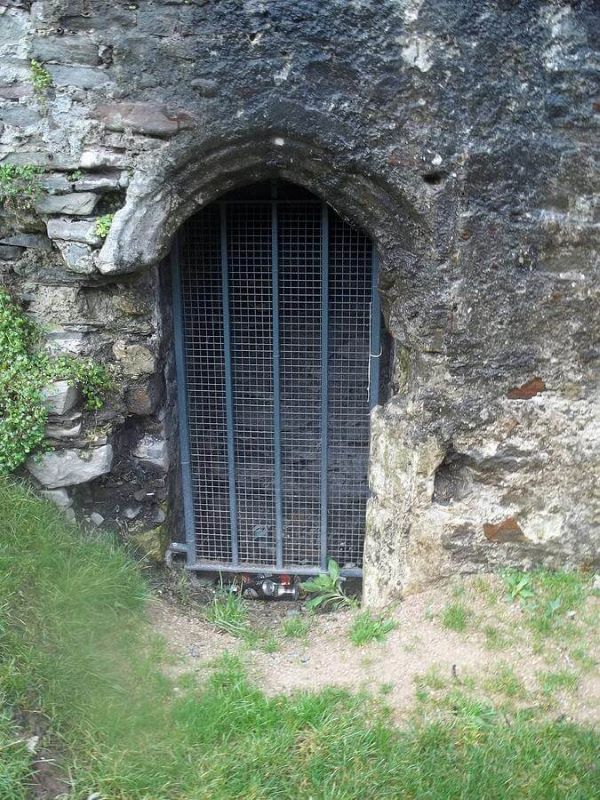
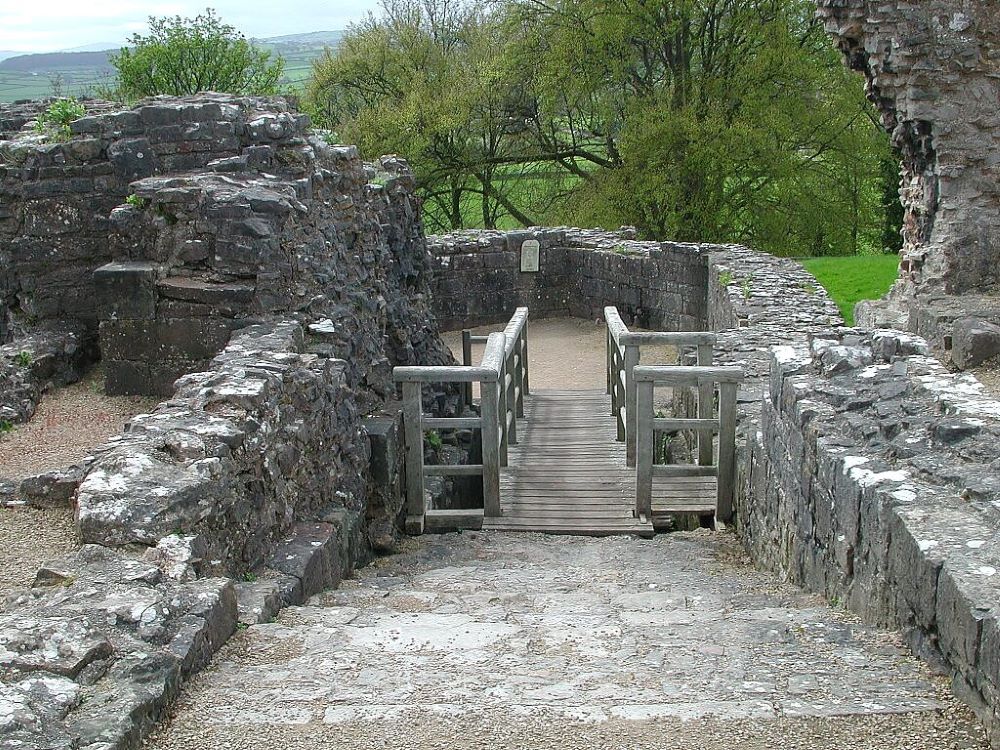
Because of their size, they were easier to defend, since only one soldier or rider could come through at a time. This created a chokepoint that favored the defenders. [1]
Posterns had a varied of uses, including as a sally port during a siege to attack the besieging army, a discrete way of entering or exiting, and an escape route.
There are historical records of posterns and several that still exist. The cities of Jerusalem, London, and York had many posterns. Posterns are also mentioned in literature. In Le Chanson de Girart de Roussillon, the hero escapes through a postern when he is betrayed. In Sir Thomas Malory’s Le Morte d’Arthur, a knight of the Round Table flees through a postern. [2]

The Write Angle
There are so many opportunities for a writer when it comes to posterns.
If you have a character that needs to escape from a castle or walled city, a postern provides a great option. Since some of them were large enough for a horse and rider, messengers could use them to escape a besieging army, especially since posterns were well away from the main gates and commonly concealed. In fact, in my in-process novel, I use a postern as a means of escape for several messengers fleeing a besieged city.
A postern could also be used to get into a castle or walled city. If a person is told of the location of a concealed postern, they could sneak in. The door could be opened from the inside or the lock could be picked from outside. It could also be used by a resident of a castle or walled city to sneak out to meet a sweetheart or deliver covert information.
Of course, as I mentioned above, posterns were used by soldiers to sneak out and launch surprise attacks on an enemy army, especially if they are besieging the castle or city. A castle’s soldiers could also sneak into an enemy’s encampment and sabotage their tools and equipment, turn their horses or other livestock loose, or set things on fire.

I hope this was helpful. Let me know if you have questions or suggestions by using the Contact Me form on my website or by writing a comment. I post every Friday and would be grateful if you would share my content.
If you want my blog delivered straight to your inbox every month along with exclusive content and giveaways, please sign up for my email list here.
Let’s get writing!
Copyright © 2022 Rebecca Shedd. All rights reserved.
[1] Van Emden, Wolgang. "Castle in Medieval French Literature", The Medieval Castle: Romance and Reality (Kathryn L. Reyerson, Faye Powe, eds.) U of Minnesota Press, 1991, p.17 ISBN 9780816620036
[2] Malory, Thomas. Le Morte D'Arthur, Chap IV, Library of Alexandria, 1904
The Writer’s Guide to Noble Titles
Posted on January 28, 2022 110 Comments
Today I will cover the titles and forms of address for members of the nobility. Collectively, the nobles of a country or kingdom are known as the peerage. There was a strict pecking order within the peerage during much of European history and it still exists in a form today in the United Kingdom and other European countries where the nobility is intact.
If you are interested in titles for royalty, I suggest you read my previous article, The Writer’s Guide to Royal Titles. Just as with that article, I will focus on medieval and Renaissance Europe.
Duke and Duchess
A duke was the highest-ranking member of the peerage, below only royalty. Several royal families have the traditional of giving princes the title of duke, including the UK, Belgium, Denmark, Spain, and Portugal. A duchess was the wife of a duke and could be of royal blood or not.
The proper form of address both in writing and verbally is “Your Grace,” although “My Lord Duke” can also be used. [1] “Your Grace” is used only with those of royal blood. [2] If a duke is greeting another duke in a formal setting, they would use “your Grace” if both are of royal blood or “my Lord Duke,” if they are not. In an informal setting, they would use “Duke (Name)” and if they are friends and in a private setting, they would likely use their first names.
The same rules apply for a duchess, although she would use the term “Duchess.”
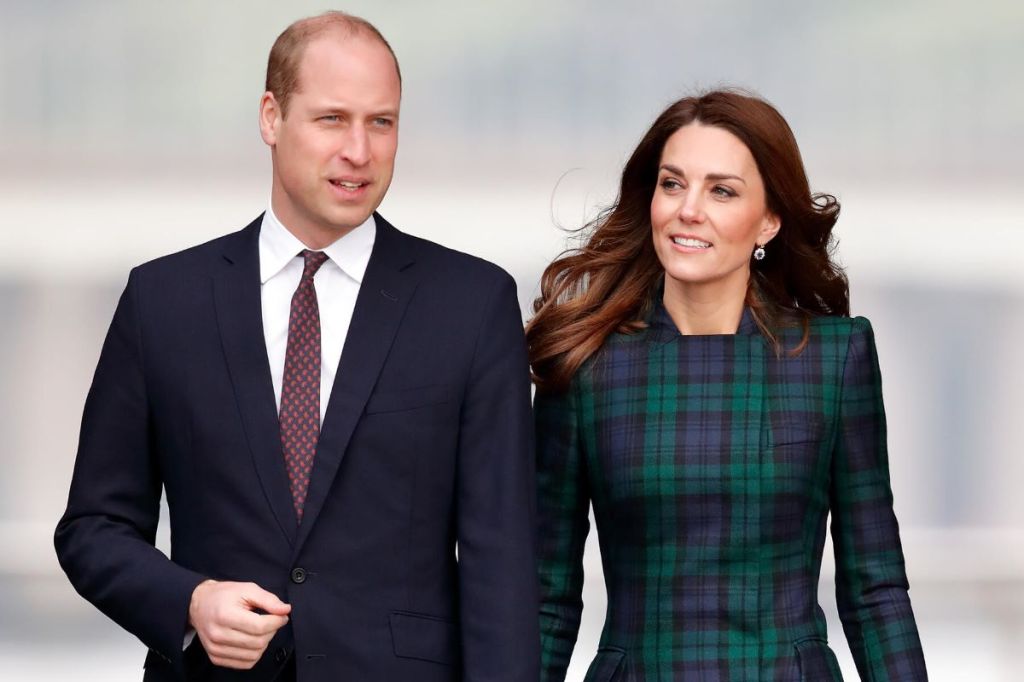
A duke or duchess could also be referred to by the name of the territory they control, even if they are of royal blood. For example, Prince William and his wife, Catherine, are referred to as the Duke and Duchess of Cambridge.
Marquis and Marchioness
The rank of marquis and marchioness originated in France. It also refers to a noble who is given land on the border of a country, commonly called a march, and has a special duty to defend it against invasion. In the UK, the title is spelled marquess.
The formal form of address was “my Lord” or “your Lordship.” “Marquis (Name)” could be used in more informal settings.
A marchioness is the wife of a marquis. She would be referred to as “my Lady” or “your Ladyship” and informally as “Lady (Name).”
Just as with a duke and duchess, a marquis could be referred to by the name of the territory he controls. For example, John Stewart, the Marquis of Waterton would be called Lord Waterton but not Lord Stewart or Lord John. [3] His wife, Anne Stewart, the Marchioness of Waterton would be called Lady Waterton or Lady Anne but not Lady Stewart. A married woman was also never referred to by her maiden name.
Earl and Countess
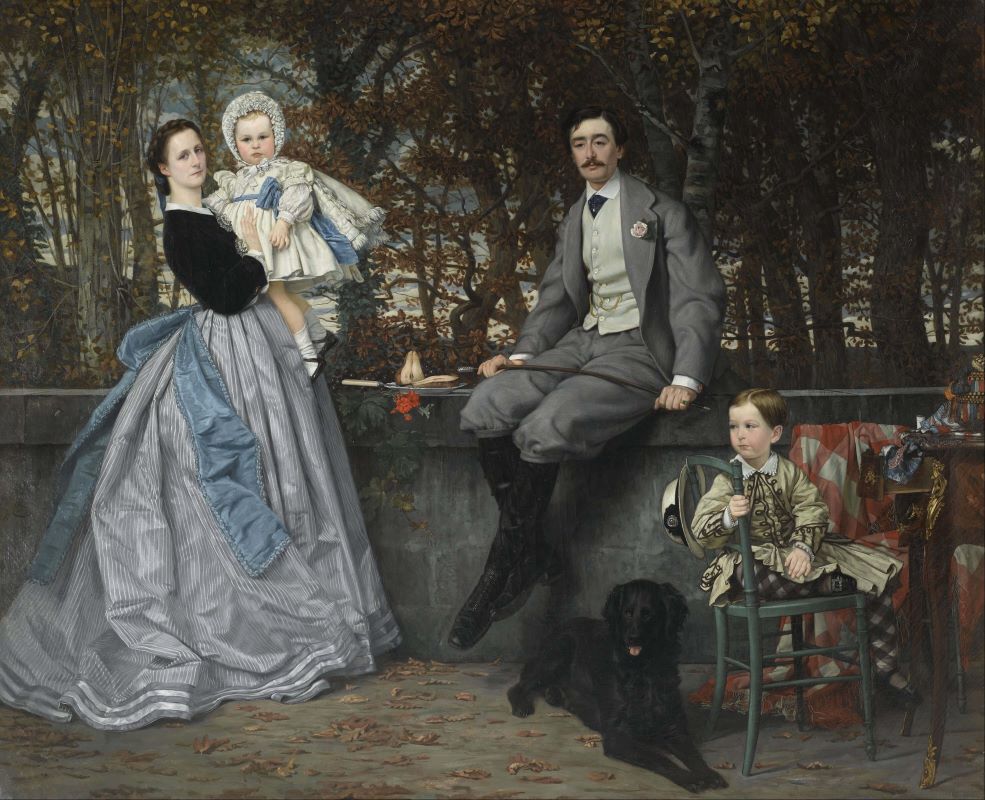
Earl is an ancient title that likely originated from the Scandinavian title jarl and referred to a high-ranking chieftain who ruled in the king’s stead. [4] The wife of an earl is a countess.
All the same rules for a marquis and marchioness apply.
Viscount and Viscountess
Use of the title viscount and viscountess varies between different European counties. In some, it is an administrative or judicial title, while in others, such as the UK, it is a hereditary title.
All the same rules for a marquis and marchioness apply.
Baron and Baroness
Baron and baroness were titles that originated in France and were introduced to England after the Norman Conquest of 1066. They later spread to Scotland, Italy, and Scandinavia.
All the same rules for a marquis and marchioness apply.
Knight and Lady
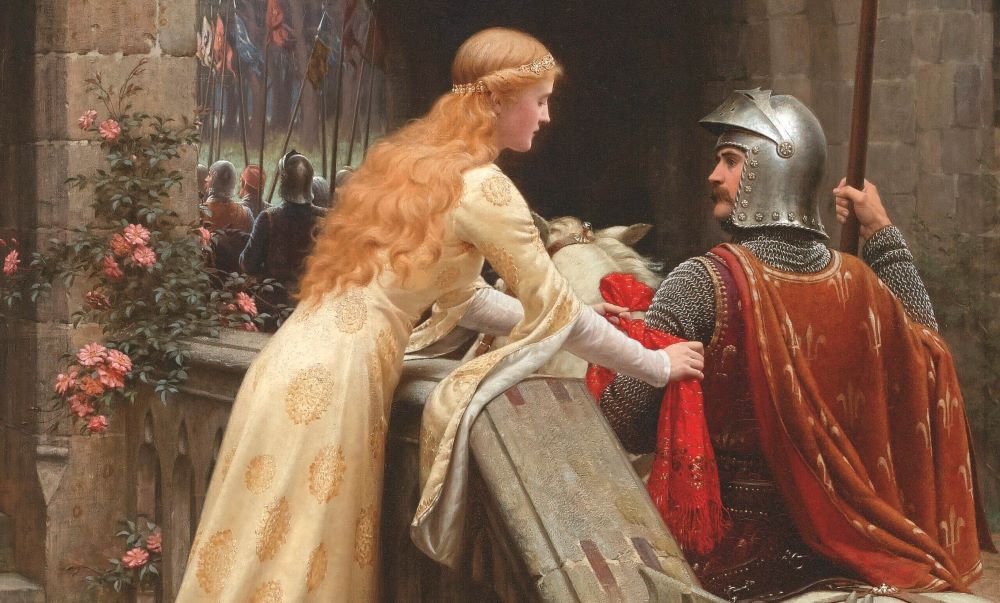
A knight is a warrior given a title and lands by a monarch as a reward for military service. The title was commonly hereditary. [5] The wife of a knight was usually referred to as a lady. A knight could hold another higher title or not.
The common form of address was “sir” although he could also be referenced by name. For example, Sir Thomas Ward would be called Sir Thomas or Master Ward, but not Sir Ward. His wife, Margaret, would be called Lady Ward or Dame Margaret. [6]
I hope this was helpful. Let me know if you have questions or suggestions by using the Contact Me form on my website or by writing a comment. I post every Friday and would be grateful if you would share my content.
If you want my blog delivered straight to your inbox every month along with exclusive content and giveaways, please sign up for my email list here.
Let’s get writing!
Copyright © 2022 Rebecca Shedd. All rights reserved.
[1] Montegue-Smith, Patrick, ed. (1984). Debrett's Correct Form. London: Futura Publications. p. 27. ISBN 0-7088-1500-6.
[2] Secara, Maggie, A Compendium of Common Knowledge 1558-1603, Popinay Press, Los Angeles, CA, 1990-2008, ISBN 978-0-9818401-0-9, p. 25.
[3] Secara, Maggie, A Compendium of Common Knowledge 1558-1603, Popinay Press, Los Angeles, CA, 1990-2008, ISBN 978-0-9818401-0-9, p. 26.
[4] "Earl". Oxford English Dictionary. Retrieved 24 March 2020.
[5] Almarez, Felix D. (1999). Knight Without Armor: Carlos Eduardo Castañeda, 1896-1958. Texas A&M University Press. p. 202. ISBN 9781603447140.
[6] Secara, Maggie, A Compendium of Common Knowledge 1558-1603, Popinay Press, Los Angeles, CA, 1990-2008, ISBN 978-0-9818401-0-9, p. 27-28.
Writer’s Deep Dive: Aiming a Bow
Posted on January 21, 2022 3 Comments

Bows show up a lot in books, from Robin Hood to Katniss Everdeen. Of course, one of the keys to being a good archer is hitting what you’re aiming at. Unfortunately, unless you have shot a traditional bow, most people do not know what that involves. Let’s dive in!
The Basics
There are two schools of thought when it comes to shooting a bow and they are aiming versus instinct shooting. Aiming, as the name implies, involves carefully setting up your shot to hit your target. Instinct shoot involves drawing the bow and loosing it when you feel it is in the right spot to hit the target. Really, there is no right or wrong way if you hit where you want to.
However, we are going to be covering several aiming techniques today. Before I jump in, I want to stress the importance of good form. Your fictional archer needs to be pulling the bow to full draw back to their anchor point, a spot on their face or jaw that they always go to. This repetition makes you a much more consistent shooter. This is a good video to explain anchor points.

For all the following aiming methods, it is common to close the eye further away from the arrow and aim with the other. For example, if you are a righthanded shooter, like most archers are, you will be aiming with your right eye. Although there are plenty of archers who keep both eyes open.
If you are shooting at a close to mid-range target, say 10-30 yards (9-27 m), you will line up the tip of your arrow with the spot on the target that you want to hit. This is commonly called “point on” targeting.
If you are at a further distance, you will have to use a technique known as gap shooting. Say you want to hit the bullseye of a target. You would aim at a point above it to account for the amount the arrow will drop in flight. Gap shooting is also used to adjust from left to right to account for wind. For long distance shooting, say 60 yards (55 m), the arrow must be arched. The bow is raised and often the archer overdraws past their face and anchors on their chest.

Facewalking is when an archer changes their anchor point. For example, if they have been anchoring at the corner of their mouth but change to anchor on the back corner of their jaw for a longer shot.

Stringwalking is used by modern recurve shooters to change the trajectory of their shots. It’s rarely utilized by traditional archers because it’s hard on wooden bows. The archer changes the position of their fingers on the string to change their shot.
There is another method that I have not been able to find a name for. A bowstring with two colors is needed and the archer counts the number of twists, moving the arrow nock accordingly.
Whatever method your fictional archer uses, they will likely have to take several shots to dial in the distance, adjusting with each try.

The Write Angle
Writing about a character carefully lining up a shot can add drama and tension to your story. This is especially true if there are obstacles or difficult weather conditions. Now that you are familiar with the various aiming methods, you can describe your character choosing a technique based on the distance and wind conditions. Being able to describe your character’s aiming adds a level of realism to your novel.
The aiming technique also changes how an arrow will hit. If your archer is “point on,” the arrow will strike at a 90° angle. However, if the shot was arched to cover a longer distance, the arrow will be striking from above at terminal velocity.
It would be interesting to see a fictional archer use facewalking to achieve a particular shot. Or to use gap shooting and describe how they are aiming for a point above their target because of the distance or to one side to account for wind.
It would also be interesting to have your archer miss the first couple of shots and adjust to dial into the target.
I hope this was helpful. Let me know if you have any questions or suggestions by using the Contact Me form on my website or writing a comment. I post every Friday and would be grateful if you would share my content.
If you want my blog delivered straight to your inbox every month along with exclusive content and giveaways please sign up for my email list here.
Let’s get writing!
Copyright © 2022 Rebecca Shedd. All rights reserved.
The Writer’s Guide to Royal Titles
Posted on January 14, 2022 7 Comments

Fantasy writers have a love affair with royalty, with kings, queens, and princes littered across the genre. Yet royals and nobles appear in other genres as well, such as science fiction. But unless you interact with a real royal court or a group playing one at your local Renaissance faire or SCA event, most writers struggle. This is especially true if your protagonist is a member of a royal family.
Today I will be covering titles and forms of address in a variety of situations. I will be pulling mostly from medieval and Renaissance European traditions. The rules change dramatically between countries and time periods and vary due to situations and personal preference If you are writing fantasy, they can be discarded completely in favor of your own inventions, if you so wish.
Situations and Personal Preference
The forms of address varied based on the situation and personal preference. For example, if a king was a pompous ass, he could demand his subjects and staff refer to him in the most formal manner all the time. A more laidback royal could request people to use her informal title or even her first name.
The forms of address would vary based on the situation. A formal audience would require different forms of address than a private meeting between people who grew up together or have a close personal relationship.
King
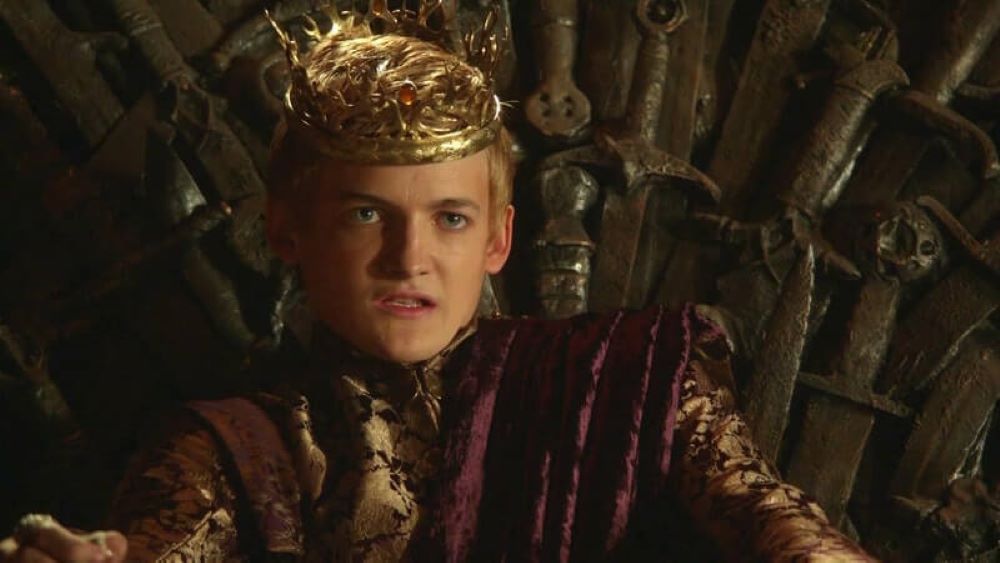
At the top of the great chain of being was the king. He ruled a country or kingdom, and no one was above him except God or maybe a pope.
The proper term of address both verbally and in writing is “Your Majesty” or “Your Grace.” After the initial greeting, he can be referred to less formally. During the Middle Ages, he would be called “sire” or “my king.” The modern equivalent is “sir.”
If a king is greeting another king in a formal setting, he would likely refer to him as “Your Majesty.” If he was being especially formal or buttering him up, he could refer to him as “Your Most Royal Majesty” and possibly continue with “king of (kingdom).” A king could also be called by the name of his kingdom. For example, the king of England could be asked “Will England send aid?”
In an informal setting, two kings would likely call each other “King (First Name).”
If they are close friends and in private, they would likely call each other by their first names. Unless they grew up together, the relationship would start out formal, gradually become more casual until one or both requested that the other call them by their first name.
Queen
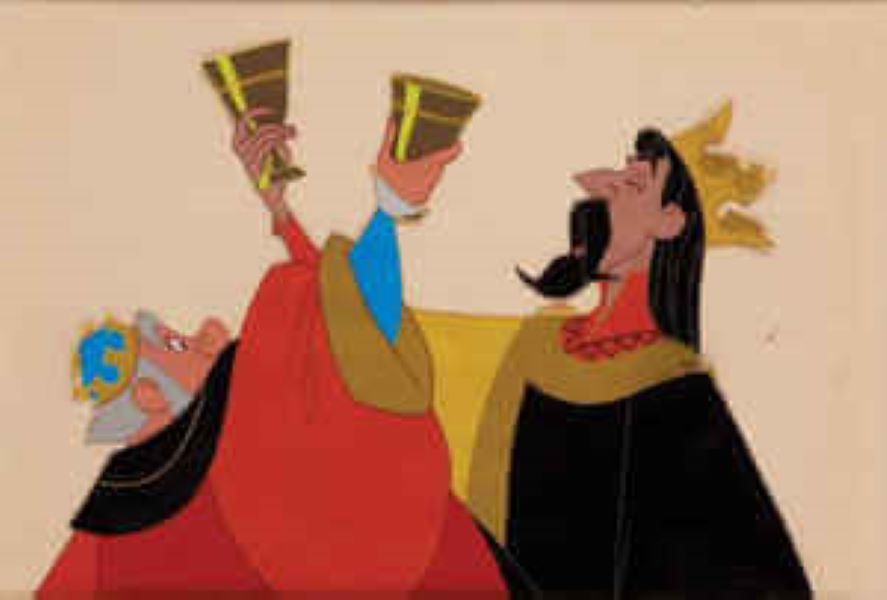
The queen was commonly the wife of the king although she could also be a monarch in her own right.
The proper term of address verbally and in writing is “Your Majesty,” although the spouse of a king could also be referred to as “Your Highness” or “Your Grace.” After the initial greeting, she can be referred to as “madam” or “my queen.” If the queen is accompanying her husband, they can be collectively referred to as “Your Majesties.” If someone was being subtly disrespectful, they could refer to a queen ruling as a monarch as “Your Highness,” implying that she is not on the same level as a king.
A queen greeting a king or another queen ruling in her own right in a formal setting would likely use the term “Your Majesty.” A queen who is the spouse of a king would greet another spouse of a king as “Your Highness.”
In an informal setting, the same rules that apply to kings would be used here. The same for close friends in private.

Other Members of the Royal Family
Other members of the royal family include the sons and daughters of the monarch, their spouses, and their children.
The term of address verbally and in writing is “Your Royal Highness” or “Your Highness.” After the initial greeting, they can be referred to as “sir” or “madam.” Princes could also be called “my prince” or “my lord” and princesses as “my lady.”
A prince or princess greeting another prince or princess would likely refer to them as “Your Highness.”
In an informal setting, they would refer to them as “Prince (Name)” or “Princess (Name),” for example, “Greetings, Prince Derek.”
In private, two friends would use their first names.
Children were expected to refer to their parents formally, such as “my lord father” and “my lady mother.” They could also use “sir” or “madam.”

I hope this was helpful. Let me know if you have any questions or suggestions by using the Contact Me form on my website or writing a comment. I post every Friday and would be grateful if you would share my content.
If you want my blog delivered straight to your inbox every month along with exclusive content and giveaways please sign up for my email list here.
Let’s get writing!
Copyright © 2022 Rebecca Shedd. All rights reserved.
[1] Secara, Maggie, A Compendium of Common Knowledge 1558-1603, Popinay Press, Los Angeles, CA, 1990-2008, ISBN 978-0-9818401-0-9, p. 24-29.
[2] Mortimer, Ian, The Time Traveler’s Guide to Medieval England: A Handbook for Visitors to the Fourteenth Century, Touchstone, New York, 2008, ISBN 978-1-4391-1289-2, p. 40-43.
[3] https://en.wikipedia.org/wiki/Forms_of_address_in_the_United_Kingdom
Writer’s Deep Dive: 18th Century Pockets
Posted on January 7, 2022 26 Comments

For the past 17 months I have been putting out Writer’s Guides in an attempt to provide writers with accurate information. However, I have received several requests to do a deeper dive into my topics. Starting this year, I will be putting out Writer’s Deep Dives every other week. However, I will continue to put out my Writer’s Guides twice a month and alternate between the two. If there is a topic that you want me to do a Deep Dive into, please reach out and let me know.
The presence and/or size of women’s pockets has been a topic of hot debate for a while. The last time women had pockets of decent size was the 18th century. Let’s dive in!
The Basics
Women’s pockets during the 18th century were a separate garment and not integral to their clothing. They tied with a ribbon around the waist and were accessed by slits in the sides of her skirts. There could be a single pocket bag or a pair of them.
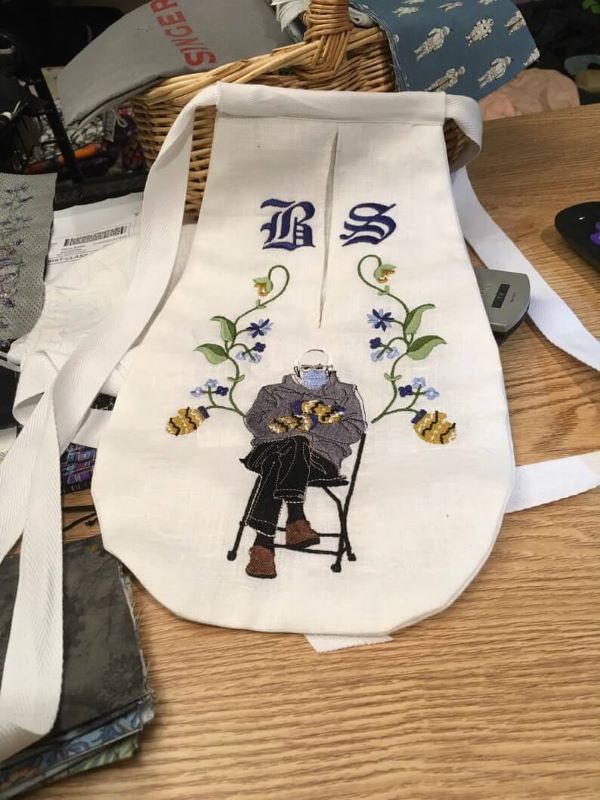
They were large! I made a pair of 18th century-style pockets for my 1775 dress based on surviving examples. They are easily large enough to fit a modern smart phone plus my wallet, fan, mitts, and car keys. There are even larger examples out there. I like to call them the mom purse of 18th century pockets.
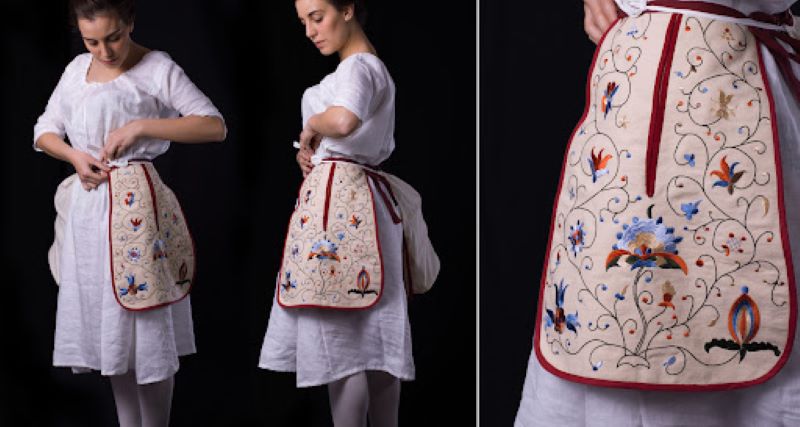
Pockets could be plain or made of fancy fabric. Quilted or pieced pockets were popular. I have a friend who used velvet as the lining for her pocket so she could also be certain when she was inside them.
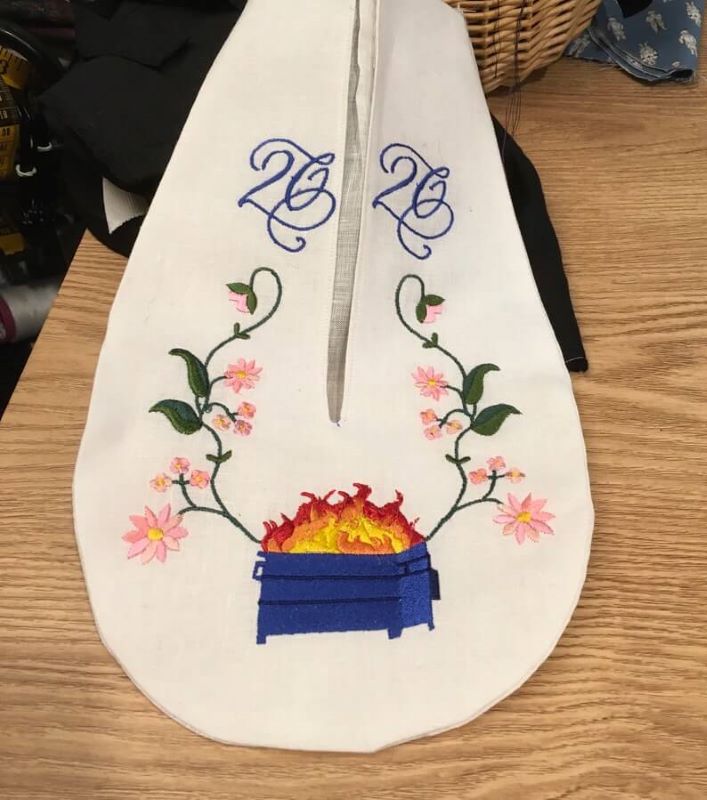
Since pockets were worn every day and were hidden from view close to the body, they were a very personal item. Many women embroidered them with private designs, sometimes including the initials of lovers. Several reenactors have kept up this tradition and there are some hilarious designs out there. Here are two of my favorites.
The Write Angle
Since 18th century pockets are so big, there are some great opportunities as a writer to take advantage of them. Several items could be smuggled inside them, including maps, bottles of poison, or a knife. Since they were rarely suspected, a woman could smuggle all kinds of things in her large pockets.
One of the risks to this design was that the ribbon that secured the pocket(s) around the waist could break. In fact, there is an 18th century nursery rhyme about that. “Lucy Locket lost her pocket. Kitty Fisher found it. Not a penny was there in it, only a ribbon round it.” Loosing a pocket could be a fantastic way to start or advance the plot in a novel, especially if the pocket contains important documents or another vital item.
Also, if a woman had embroidered the name or initials of her secret or forbidden lover on her pockets, and they were discovered by her family or husband, this could be another great way to advance the plot. Personal embroidery of this type was common during the 18th century.
It can be easy to miss the pocket opening. My first time wearing pockets, I thought I had my hand inside it and let go of my phone, only to have it fall out the bottom of my skirt. A woman missing her pocket and dropping an important item out through her skirts could also be a great plot point.

I hope this was helpful. Let me know if you have any questions or suggestions by using the Contact Me form on my website or writing a comment. I post every Friday and would be grateful if you would share my content.
If you want my blog delivered straight to your inbox every month along with exclusive content and giveaways please sign up for my email list here.
Let’s get writing!
Copyright © 2022 Rebecca Shedd. All rights reserved.
Book Update
Posted on December 29, 2021 1 Comment
I am excited to announce that the third and final round of self editing on my up-coming novel is complete! I have already sent the first two chapters to my beta readers and after the New Year will begin the search for a professional editor.
Please stay tuned for more updates!
The Writer’s Guide to Castle Myths
Posted on December 17, 2021 6 Comments

Over the last five weeks, I’ve been providing information to give you a basic understanding of castles. Today, we are tackling the most common myths. Since castles are popular, they are depicted a lot in movies, TV shows, video games, and books. But there are several things that are often shown incorrectly.
As always, magic is the exception to the rules. Because magic.
Cold and Drafty
Castles are commonly depicted as being cold, drafty, and dark. This is often blamed on the fact they are constructed of cold stone with small windows. However, as I’ve already explained in my previous articles, castles weren’t always made of stone; many were made from timber or brick. For the sake of argument, I’m going to focus on stone castles.
In cold climates, stone can be cooling since it responds to the ambient air temperature. During the second half of the Middle Ages, the world experienced the Little Ice Age. The average temperatures dropped, and the ice pack grew. Most scientists agree that it extended from the 16th to the 19th century although others argue that it lasted from 1300 to 1850. [1] [2]
There were several ways, however, to ward off the chill in a stone castle. Thick tapestries of wool were hung on the walls to provide insulation. Rushes were used on the floors, although we don’t know if they were strewn loose or woven into mats. Canopies and curtains on beds helped to keep in the heat. Many rooms were kept small to hold in heat. Early castles had a large open hearth in the great hall and braziers in the other rooms. With the introduction of chimneys in the 12th century, fireplaces began replacing open hearths and braziers, becoming common by the 16th century. [3] [4] The people living in castles also dressed in layers to ward off the cold.

Photo source.
Grey and Colorless
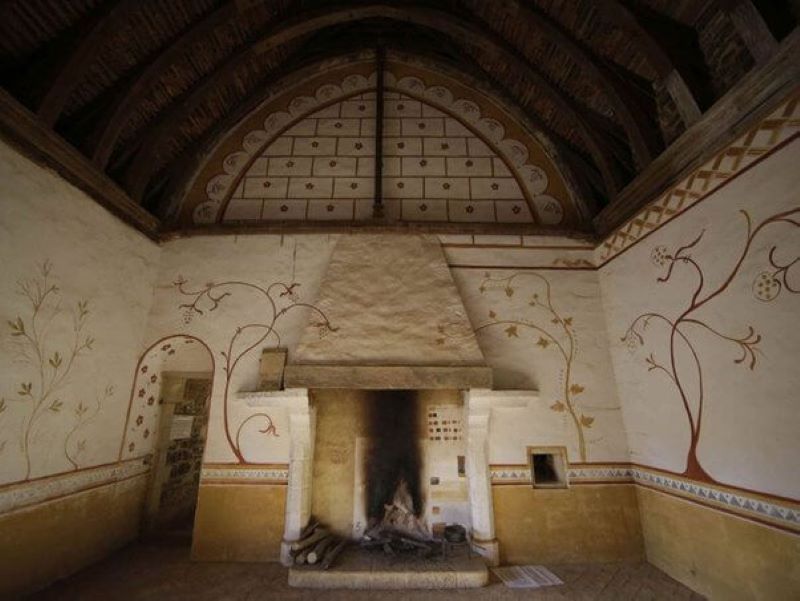
When we look at existing castles today, they are grey and colorless. But they didn’t start off that way. As I covered in my previous article, there is good evidence that the exteriors of castles were covered by a layer of white plaster.
The interiors were not neglected either. Our medieval ancestors loved color. Walls that weren’t covered with insulating tapestries were often rendered with plaster and painted, as were ceilings. [5]

Use of Space
A lot of video games, especially, show castles with large rooms. Usually, there is due more to the game giving the player room to maneuver than to actual castle architecture. Excluding the Great Hall, most of the rooms in a castle were quite small. This was done to limit the waste of space and as I mentioned before, to keep rooms warm.
Stone Ceilings and Other Overuse of Stone
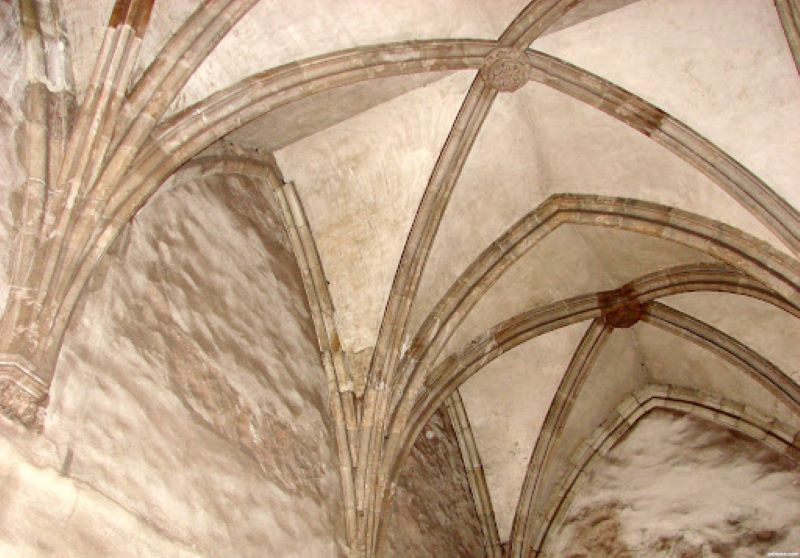
Another mistake that a lot of video games make, is showing that everything in a castle is made of stone. Floors and roofs were commonly made of timber beams and planks. It would be hard to make a floor out of stone (unless it was the ground floor) because the weight would require a tremendous amount of support. The exterior walls of a tower would be made of stone, but the internal floors would be timber. Ceilings or the tops of towers could be made of stone, but it would have to be buttressed to support the weight. Staircases could be made of stone or timber.
I hope this was helpful. Let me know if you have any questions or suggestions by using the Contact Me form on my website or writing a comment. I post every Friday and would be grateful if you would share my content.
If you want my blog delivered straight to your inbox every month along with exclusive content and giveaways please sign up for my email list here.
Let’s get writing!
Copyright © 2021 Rebecca Shedd. All rights reserved.
[1] Mann, Michael (2003). "Little Ice Age" (PDF). In Michael C MacCracken; John S Perry (eds.). Encyclopedia of Global Environmental Change, Volume 1, The Earth System: Physical and Chemical Dimensions of Global Environmental Change. John Wiley & Sons. Retrieved 17 November 2012.
[2] Grove, J.M., Little Ice Ages: Ancient and Modern, Routledge, London (2 volumes) 2004.
[3] James Burke, Connections (Little, Brown and Co.) 1978/1995, ISBN 0-316-11672-6, p. 159
[4] Sparrow, Walter Shaw. The English house: how to judge its periods and styles. London: Eveleigh Nash, 1908. 85-86.
[5] https://www.quora.com/If-medieval-castles-were-whitewashed-especially-on-the-inside-what-designs-would-you-find-painted-on-the-walls
The Writer’s Guide to Siege Engines
Posted on December 10, 2021 7 Comments

Besieging a castle or a city inherently has a great amount of built-in tension that a writer can use to fantastic effect. If you want to read besieging a castle, I recommend my last article, The Writer’s Guide to Besieging a Castle. Today, we are focusing on siege engines, a general term that includes catapults, trebuchets, and battering rams. My focus will be medieval Europe since I have limited knowledge of siege engines outside of this location and period.
As always, magic is the exception to the rules. Because magic.
Siege Tower
The earliest type of siege engine is the siege tower, also known as a belfry. [1] This might seem strange at first because it is a passive piece of equipment. However, siege towers were highly effective against walls and other fortifications. They were enclosed towers on wheels that were maneuvered into place against a wall. Then a gangplank was lowered, bridging the way to the top of the wall, and allowing soldiers to rush across. They could also have archers on the top. The benefit of siege towers was that it protected the soldiers inside from arrows and other projectiles and were sometimes covered in fresh animal hides to prevent it from being set on fire. [1] It allowed many of them to gain the battlements at one time.
The oldest siege towers were used in the 9th century by the Neo-Assyrian Empire. The Romans used them to great effect, such as at the siege of Masada in 73-74 CE. [2] The Greeks and ancient Chinese also used them.

Battering Ram
The battering ram is well known in history and fiction. It comes in several forms, the simplest being a large tree trunk or log cleaned of branches that is carried by a group of people and slammed against a gate or other barrier (think “Beauty and Beast”). Later, the battering ram would be suspended from a wheeled frame by ropes or chains. It would be pulled back then allowed to swing forward. Eventually, a roof was added to the frame to protect the wielders from arrows, rocks, or whatever other nasty surprises a besieged fortress could muster.
There is some evidence that battering rams date back to Bronze Age Egypt. [3] Many cultures used them throughout history including the Carthaginians, Assyrians, ancient Greeks including Alexander the Great, the Romans, and most countries in Europe during the Middle Ages.

Photo source.
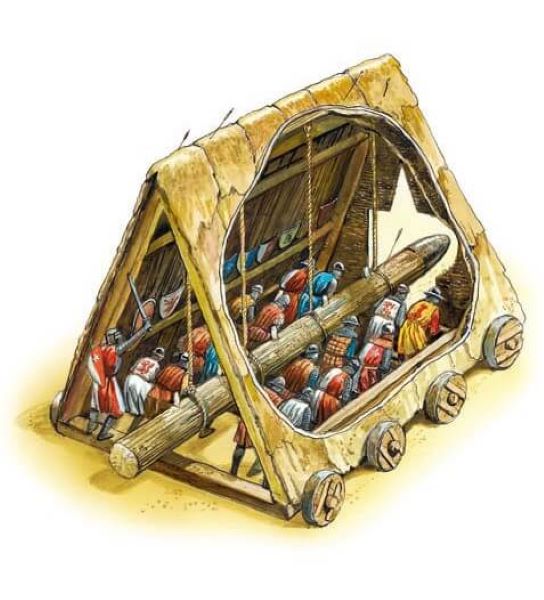
Photo source.
Catapult
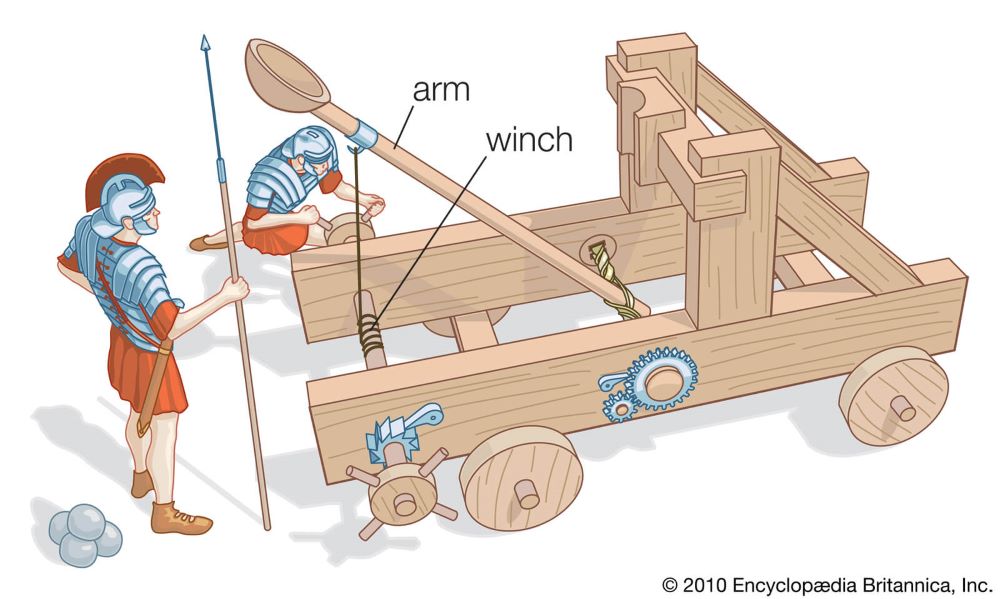
The catapult is the first missile thrower on our list. It consists of an arm ending in a bucket, into which the missile is placed. A bundle of twisted ropes, sinew or other materials was at the base of the arm. As the arm was pulled back, it twisted this bundle further, leading to a build up of torque and energy since the twisted ropes were trying to straighten. When the arm is released, the ropes fling it forward at speed, propelling the missile in the bucket. However, this type of torsion system can only produce a certain amount of throwing power. It wasn’t enough to be effective against stone walls and was mainly used against personnel.
The earliest catapults are from 4th century China, but they were also used by the ancient Greeks and Romans. [4]
Ballista
The ballista is basically a giant crossbow and operates on the same principle. Tension is created by pulling back on the string, usually with a winch and rachet system, and flexing the bow arms. When the string is released, the missile is propelled forward. Usually, either giant crossbow bolts or stones were used. As a result of the bigger size, everything about a ballista was scaled up from its smaller cousin. Generally, it was used as an anti-personnel weapon.
The earliest ballistae were developed by the ancient Greeks although the Romans used it as inspiration for the smaller scorpion.

Trebuchet
The trebuchet was the pinnacle of siege engine technology and could dish out an incredible amount of energy and destruction. It wouldn’t be until the advent of artillery that it’s destructive power would be surpassed. The trebuchet has a long throwing arm with a sling attached to it. The throwing power was achieved either with a counterweight or traction. A counterweight trebuchet has a large bucket on the opposite end of the throwing arm that is weighed down, commonly with rocks. The arm was pulled down, either with brute form or a winch. When it was released, the counterweight dropped, swinging the arm, and attached sling up. The traction trebuchet relied on a large group of people hauling together on ropes to provide the energy to swing the arm. Please be aware that “counterweight trebuchet” and “traction trebuchet” are modern terms and we have no evidence they were used in history. [5]
Trebuchets were also incredibly versatile, and we have records of them being used to attack and defend fortifications as well as on ships. It was the first siege engine that could successfully take down castle walls. They could also fire a variety of missiles including stones or even bombs of lime and sulfur such as were fired during the Battle of Caishi in 1161. [6]
The traction trebuchet is thought to have originated in China as early as the 4th century. [7] However, it’s believed that the biggest trebuchet in history was Warwolf, which was built on the order of King Edward I of England to fight the Scots. It could reportedly throw rocks weighing up to 298 pounds (135 kg) a distance of 660 feet (200 m). [8]

I hope this was helpful. Let me know if you have any questions or suggestions by using the Contact Me form on my website or writing a comment. I post every Friday and would be grateful if you would share my content.
If you want my blog delivered straight to your inbox every month along with exclusive content and giveaways please sign up for my email list here.
Let’s get writing!
Copyright © 2021 Rebecca Shedd. All rights reserved.
[1] Castle: Stephen Biesty's Cross-Sections. Dorling Kindersley Pub (T); 1st American edition (September 1994). Siege towers were invented in 300 BC. ISBN 978-1-56458-467-0.
[2] Duncan B. Campbell, "Capturing a desert fortress: Flavius Silva and the siege of Masada", Ancient Warfare Vol. IV, no. 2 (Spring 2010), pp. 28–35. The dating is explained on pp. 29 and 32.
[3] "Siege warfare in ancient Egypt". Tour Egypt. Retrieved 23 May 2020. ...we find a pair of Middle Kingdom soldiers advancing towards a fortress under the protection of a mobile roofed structure. They carry a long pole that was perhaps an early battering ram.
[4] Chevedden, Paul E.; et al. (July 1995). "The Trebuchet". Scientific American: 66–71. Original version.
[5] Purton, Peter (2009), A History of the Early Medieval Siege c.450-1200, The Boydell Press
[6] Needham, Joseph (1987). Science and Civilisation in China: Military technology: The Gunpowder Epic, Volume 5, Part 7. Cambridge University Press. p. 166. ISBN 978-0-521-30358-3.
[7] Chevedden, Paul E.; et al. (July 1995). "The Trebuchet". Scientific American: 66–71. Original version.
[8] "The largest trebuchet ever built: Warwolf in the Siege of Stirling Castle / thefactsource.com". Retrieved 2020-03-25.
 Rebecca Shedd - Author