
The Writer’s Guide to Corset Myths
Posted on October 1, 2021 147 Comments

Part 1
When people find out I’m a historical reenactor and routinely wear a corset, I am asked several outlandish questions. Have I ever passed out? Have my organs moved? Isn’t that thing incredibly uncomfortable? I was told by a former coworker once that if anyone wears a corset, they will die.
Obviously, there are a lot of myths perpetuated about corsets and other boned garments like 18th century stays and 16th pairs of bodies. In this two-part article, we will be jumping into the most common myths.
If you want a brief history of boned garments, I recommend you read my Writer’s Guide to the History of Corsets.
I also recommend this video about corset myths.
The Purpose of Corsetry
There is this narrative out there that women were forced into a device of torture that was cranked down to achieve a twelve-inch waist (30.48 cms). First, many women throughout history voluntarily choose to wear a corset just as many women today freely chose to wear a bra. And let’s not forget the modern waist trainer that is basically a corset.
Second, the purpose of corsetry throughout most of its history was to smooth the figure and lift the bust. They also acted as a back brace for working women. During the 18th century, stays were used as a base to pin clothing to, such as stomachers.
Third, there is a big difference between tight lacing and wearing a corset as part of everyday clothing. I have put tight lacing into its own section, so more on that later.
Impossibly Tiny Waists
We might as well address the elephant in the room. Did all women from the 16th to the early 20th century lace down to extremely tiny waists? The short answer is no. I’m sure there were some women who went to extremes. In our modern world, there are people who are starving themselves or getting extensive plastic surgery. Is this minority indicative of what the rest of us are doing? Of course not! Yet these people tend to get outsized attention because their behavior and appearance is outrageous. The same was true of women who tight laced to extremes.
In fact, during the period there were concerns about lacing down too far and recommendations of sensible waist measurements. One example is this 1883 article from the Toronto Daily Mail that states that 25-27 inches (63.5-68.58 cms) not too large. In fact, the columnist says anyone that laces an unfortunate girl day and night down to 18 inches (45.72 cms) should be put in a straight waistcoat (i.e., a straitjacket). [1] For comparison, below is the size guide for Forever 21, an American brand marketed to younger women. As you can see, their XS and S sizes have a waist measurement range from 24-27 inches (60.96-68.58 cms).
Another reason we know not all women had tiny waists is because we have surviving garments with large waist measurements. [2] Yes, there are blouses from the 19th century in museums with small waists but most of them were made for teenagers or women in their early twenties.


Optical Illusion
The appearance of a tiny waist through much of history was achieved partially by optical illusion. If a woman is wearing a large puffy skirt, especially one supported by multiple petticoats or a cage crinoline (and multiple petticoats) with a bodice with a large fluffy bertha or wide sleeves then her waist will look small by comparison. Another thing to keep in mind is that padding was common. Women (and men) padded out their hips, butt, bust, and shoulders. The amount and location of padding depended on the time period and fashionable silhouette. A great modern example of this optical illusion is Lily James in Disney’s Cinderella.
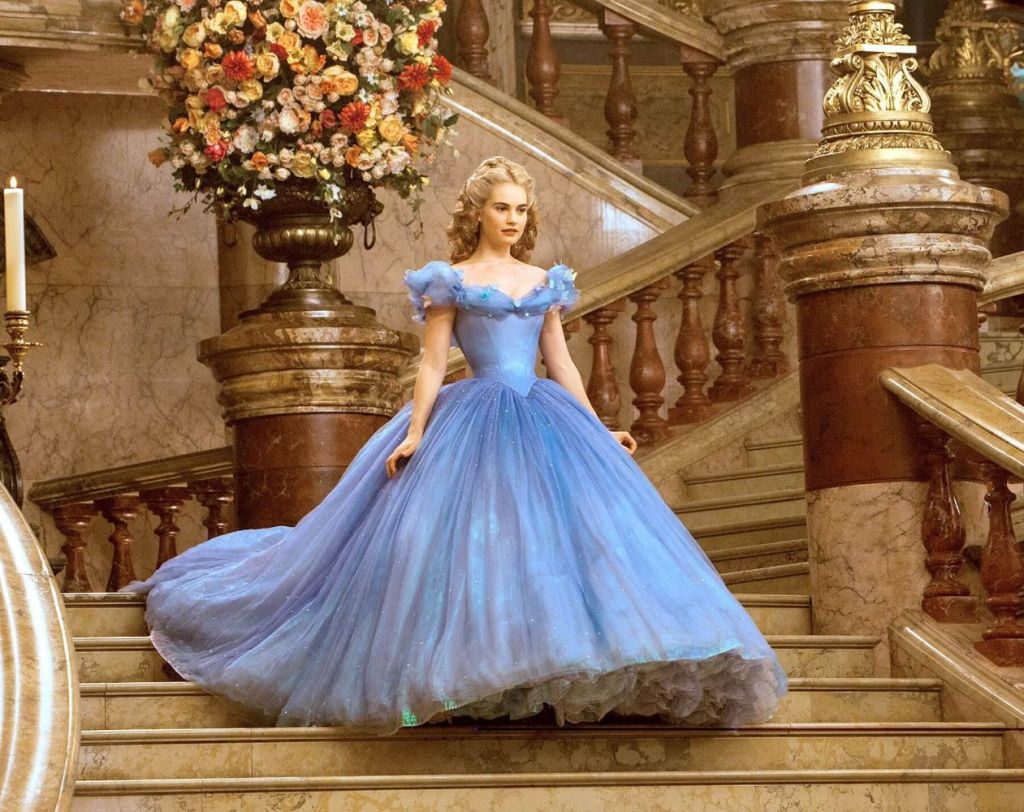
Photo source.
Tight Lacing
Throughout much of history, eyelets for lacing were just holes bored through the fabric with an awl and reinforced with stitching. As a result, there was a limit on how tightly they could be laced. Cranking the lacing on thread eyelets will cause them to tear out. It wasn’t until the metal eyelet became widespread in the 1850s that tight lacing was even achievable. Even then, tight lacing was only practiced by a small minority of high fashion women.
Many of the photographs of Victorian women with impossibly tiny waists were altered. Photo shops routinely touched up photographs to not only make waists smaller but remove freckles, wrinkles, cleavage lines, and other imperfections. If you’re interested in a deeper dive into Victorian photoshop, I recommend this video by Bernadette Banner.

Worn Against the Skin
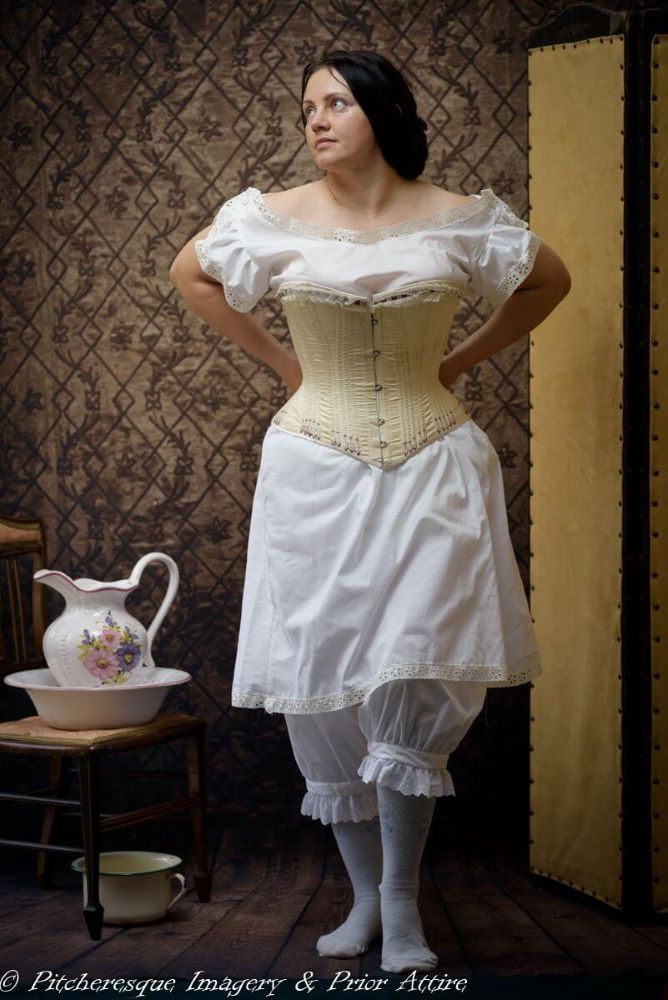
One of the biggest mistakes I see regarding boned garments in movies and TV is that they were worn directly on the skin. This is not true. Pairs of bodies, stays, and corsets were always worn over a chemise or shift. This prevented the body’s oils and sweat from damaging the corset and protected the wearer’s body from chafing. Also, the chemise could be laundered frequently while the corset could not.
I hope this was helpful. Let me know if you have any questions or suggestions by using the Contact Me form on my website or writing a comment. I post every Friday and would be grateful if you would share my content.
If you want my blog delivered straight to your inbox every month along with exclusive content and giveaways please sign up for my email list here.
Let’s get writing!
Copyright © 2021 Rebecca Shedd. All rights reserved.
[1] https://news.google.com/newspapers?id=UP1MAAAAIBAJ&sjid=9jQDAAAAIBAJ&pg=4608%2C2577118
[2] Arnold, Janet. “Patterns of Fashion 2: Englishwomen’s Dresses & Their Construction C. 1860 - 1940”, 1982.
The Writer’s Guide to the History of Corsets & Other Boned Garments
Posted on September 24, 2021 20 Comments

There are few garments in human history that are surrounded by more myths and misinformation than corsets. Some wild claims have been made about the effects of corsetry and the reasons why women and men wore corsets. Today we will be diving into the history of boned and laced garments and over the next two weeks we will be busting myths.
I recommend this video from Abby Cox about the difference between pair of bodies, stays, and corsets.
As always, magic is the exception to the rules. Because magic.
A Brief History
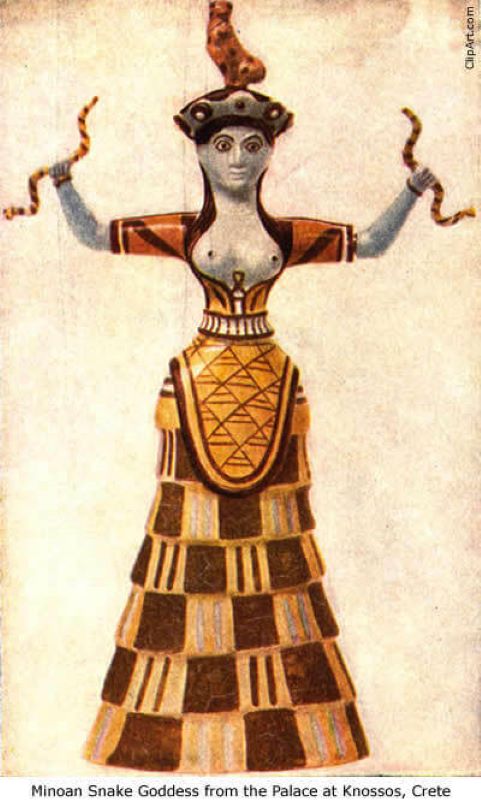
Women have been lacing themselves into various garments for roughly 500 years. There is even some evidence that Minoan women of early Crete were using a version of the corset. [1]
16th Century Pair of Bodies
The first boned and laced garment was the 16th century pair of bodies (also spelled bodys). [2] It spiral laced in the front or back through thread-enforced eyelets and had shoulder straps. The pair of bodies also had tabs at the bottom that fanned out over the hips and helped support the weight of the skirts and petticoats and prevented them from cutting into the flesh of the waist.It was used to create the conical torso that was fashionable at the time as well as to lift the breasts.
However, the idea of a woman lacing herself into a garment wasn’t new. The kirtles of the 15th century usually laced snugly and provided support for the bust. But the pair of bodies were the first to use boning. During this same period, lower class women began boning their bodices to provide lift to the bust and maintain a straight line. They also acted as a back brace for hard work. Reed and whalebone were used to provide structure. Neither of these materials is very stiff and over time they mold to the wearer’s body. [3] Some pairs of bodies had a pocket in the front for a busk, a piece of wood, horn, ivory, metal, or whalebone that insured the front remained straight.

18th Century Stays
During the 18th century, the pair of bodies transitioned into stays. [4] The shape changed but the basic function did not. Stomachers and other clothing were commonly pinned to them. Just as with the pair of bodies, the point was to create the fashionable conical silhouette. Plus, the shoulder straps pulled the shoulders back into the proper posture and the tabs supported the weight of the skirts and protected the waist. Unlike the pairs of bodies that were only worn by the upper class, stays were worn by all classes of women. It was considered improper to go without, sort of like going without a bra today.
The term “corset” was used during this period to describe an unboned support garment. Obviously, a lot of changes were made to get to what most modern people would recognize as a corset.

19th Century Corsets
Stays shortened to just below the bust during the beginning of the 19th with the high-waisted Empire styles. When the waistline began to drop again during the 1820’s, several changes were made, and this garment began to be referred to as a corset. Gussets for the bust and hips were added, and the shoulder straps became less common, disappearing by the 1840s. [5] Ironically, the corset was originally designed for men and favored by the dandy, but male corsetry is a topic for another post. [6]
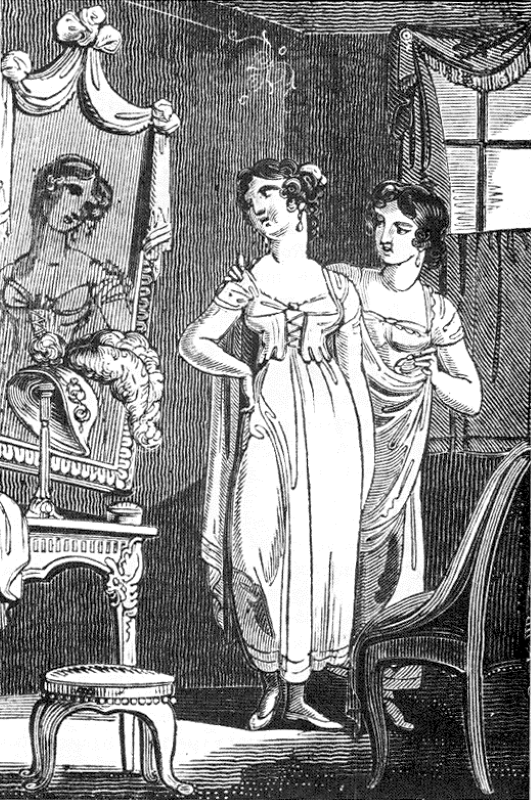
The metal eyelet was first developed in 1828 although it wasn’t until Henry Bessemer developed a faster method in 1856 that they become more widely used. [7] It allowed corsets to really be cranked tight for the first time, a practice known as tight lacing. However, tight lacing was only practiced by a minority of high fashion ladies and was also an erotic fetish.
The other big change was the invention of the metal busk also known as front claps. The loop and post closure allow the corset to be opened and closed from the front with the lacing still in the back. This made it much easier to put on and take off.

The corset changed shape and length throughout the 19th century. Curved panels created a dramatic hourglass shape, even when the garment wasn’t being worn. With the introduction of metal boning and the invention of the steam heated torso at the end of the 1860s to shape the boning, even more drastic curves were achieved. [8] The hourglass shape was replaced in 1897 by the straight front or S bend corset, which pushed the bust forward and the hips back. [9]


Into the 20th Century
The corset continued into the beginning of the 19th century but by the 1920s it was being rapidly replaced by the girdle and the brassiere. Since then, corsets have seen brief periods of revival such as the waist cincher of the late 1940s and early 1950s and the corset fashions of the 1980s. It survives in a modified version today in the modern waist cinchers and shapewear as well as fetish wear and cosplay such as steampunk.
I hope this was helpful. Let me know if you have any questions or suggestions by using the Contact Me form on my website or writing a comment. I post every Friday and would be grateful if you would share my content.
If you want my blog delivered straight to your inbox every month along with exclusive content and giveaways please sign up for my email list here.
Let’s get writing!
Copyright © 2021 Rebecca Shedd. All rights reserved.
[1] Steele, Valerie (2001). The Corset: A Cultural History. Yale University Press. ISBN 0-300-09953-3.
[2] Waugh, Norah (December 1, 1990). Corsets and Crinolines. Routledge. ISBN 0-87830-526-2.
[3] Bendall, Sarah (2019-01-01). "Bodies or Stays? Underwear or Outerwear? Seventeenth-century Foundation Garments explained". Sarah A Bendall. Retrieved 2020-07-18.
[4] Bendall, Sarah (2019-01-01). "Bodies or Stays? Underwear or Outerwear? Seventeenth-century Foundation Garments explained". Sarah A Bendall. Retrieved 2020-07-18.
[5] Waugh, Norah (December 1, 1990). Corsets and Crinolines. Routledge. ISBN 0-87830-526-2.
[6] Steele, Valerie (2001). The Corset: A Cultural History. Yale University Press. ISBN 0-300-09953-3.
[7] https://www.pinterest.com/pin/337277459563854497/
[8] "1860s corsets". vam.ac.uk. Archived from the original on 2011-01-08. Retrieved 2010-06-20.
[9] https://genealogylady.net/2015/08/16/fashion-moments-pigeon-breast/
The Writer’s Guide to 1890s Men’s Fashion
Posted on September 17, 2021 108 Comments

Many of the trends from the 1880s continued into the 1890s. The trendy silhouette was slim. Fashions were becoming more informal and styles that were considered informal just a few decades prior were now appropriate for formal evening occasions or the professional office. Sportswear became important with the popularity of pastimes such as tennis, rowing, and especially bicycling.
For an overview of fashion for the entire 19th century, please read my Writer’s Guide to 19th Century Fashion. Another example of the clothing from this period is HBO’s “The Nevers.” Although it’s a fantasy show, the costuming is quite accurate.
Silhouette & Trends
A long lean silhouette was the fashion. Standing collars and tall crowned hats were seen in this decade in keeping with the slender look. However, the cut of trousers became more relaxed. [1]

Underwear
Shirts were commonly cotton and were heavily starched during this period. Collars were as high as three inches (7.62 cms) although they usually still featured turned down wingtips. [2] Shirt studs were a popular decoration. For informal events, striped or colorful shirts became popular. [3]
Readymade underwear was now available in department stores.
Daywear
The frock coat was still the most formal daytime option. However, the less formal morning coat was gradually replacing it. [4] The level of formality was determined mainly by the fabric used, ranging from formal dark colors to casual tweed. The morning coat suit was becoming the standard wear of businessmen. The lounge or sack coat was the most casual daytime option. It was a favorite of the working class although it was also gaining popularity with the upper class as a casual daytime alternative. [5] Three-piece or ditto suits made of the same fabric were common.
Waistcoats or vests, as the Americans called them, began to be made in colorful fabrics again. They were generally single breasted and could come with or without lapels.

Sportswear
Just like the ladies, sports were popular with men, and they had wardrobes to accommodate them. [6]
The reefer jacket without a waistcoat was worn at the seaside or for sporting. [7]
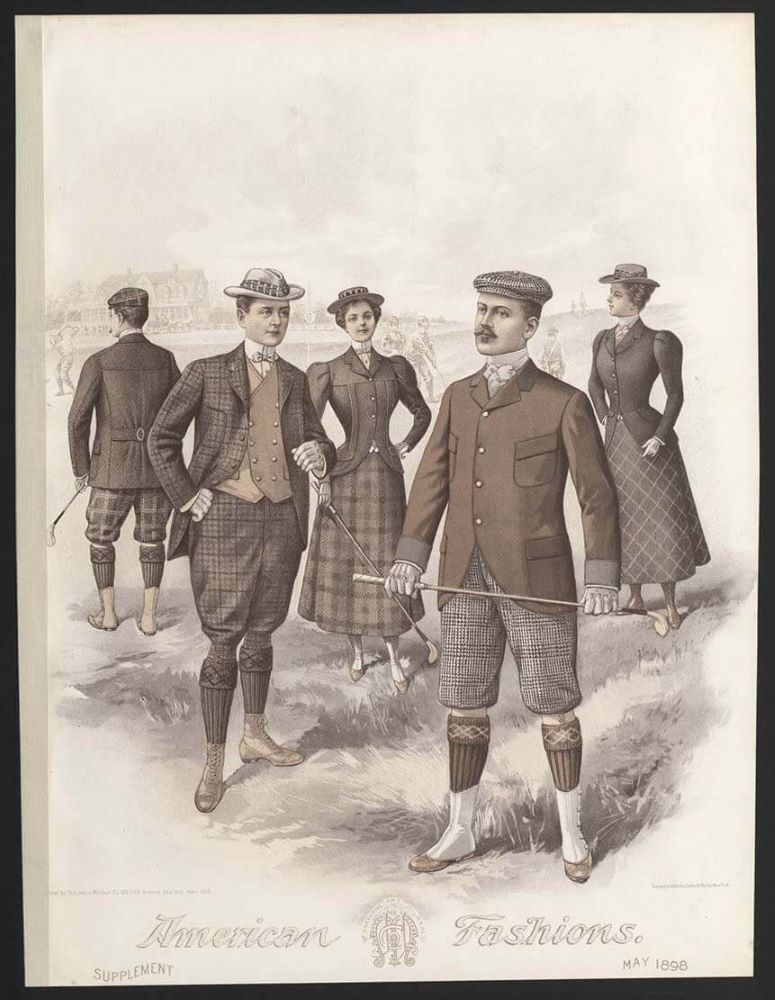
The Norfolk jacket was popular for shooting since its vertical pleats provided range of motion. It was commonly paired with breeches, called knickerbockers by the Americans, and boots or shoes with gaiters.
Lounge or sack suits made of light or striped fabric were popular choices for yachting, tennis, and the seaside. They were often paired with a straw boater hat. [8] A variation of the lounge jacket was the blazer, which was commonly made in navy blue, bold stripes, or bright colors, and was popular for sailing and the seaside.
The cycling craze was also enjoyed by men and any of the above options were acceptable. [9] If a Norfolk jacket and breeches were worn, it was usually with stockings and low shoes.
Eveningwear
A dark tailcoat paired with a white tie was still the standard for evening. The dinner jacket, known as the tuxedo by the Americans, was becoming an acceptable option for more informal evening affairs such as a dinner at home or an outing to the gentleman’s club. [10] It was a gussied-up version of the sack or lounge coat that had been introduced in the previous decade. [11}

Outerwear
Knee-length topcoats and calf-length overcoats were still common. They often had collars of fur or velvet.

Hairstyles & Headwear
Hair was short and usually parted to the side. Pointed beards and full moustaches were also popular.
The top hat was still necessary for formal affairs. The bowler was a popular informal option. The crown become rather tall. [12] The fedora was introduced during this decade. [13] It had a soft structure and a low creased crown. The prince of Wales, Edward VII, popularized a variation of the fedora known as a homburg. [14]
Footwear
Short ankle boots were the common shoe. The lower portion was usually leather with a contrasting cloth upper. They could be laced, buttoned, or secured by an elastic section on the side. A pointed toe became the fashion during this decade. Shoes normally came in brown or black although white was introduced in the 1890s for summer. Socks were black, even with white shoes. Sock suspenders, also known as shirt stays, were introduced during this decade and were elastic bands that clipped to the top of the sock and the bottom of the shirt.
Rubber and canvas shoes were worn for sports and were the ancestor of the modern sneaker.
Low laced pumps were the standard for evening. [15]
Accessories
Ascots or neckties done in a four-in-hand knot were the standard neckwear. They were usually secured with a stick pin. The bowtie returned to popularity during this decade.
Other popular accessories included the pocket watch, the cane, and cufflinks. Gloves were worn for daytime and evening although it was increasingly becoming acceptable to forego them.
Spats became a popular accessory during this decade.
I hope this was helpful. Let me know if you have any questions or suggestions by using the Contact Me form on my website or writing a comment. I post every Friday and would be grateful if you would share my content.
If you want my blog delivered straight to your inbox every month along with exclusive content and giveaways please sign up for my email list here.
Let’s get writing!
Copyright © 2021 Rebecca Shedd. All rights reserved.
[1] Shrimpton, Jayne. Victorian Fashion. Oxford: Shire Publications, 2016 p. 38-40.
[2] Tortora, Phyllis G. and Keith Eubank. Survey of Historic Costume, 5th ed. New York: Fairchild Books, 2010 p. 401.
[3] Laver, James. Costume and Fashion: A Concise History, 5th ed. London: Thames & Hudson, Ltd, 2012 p. 206.
[4] Tortora, Phyllis G. and Keith Eubank. Survey of Historic Costume, 5th ed. New York: Fairchild Books, 2010 p. 401.
[5] Shrimpton, Jayne. Victorian Fashion. Oxford: Shire Publications, 2016 p 39.
[6] Laver, James. Costume and Fashion: A Concise History, 5th ed. London: Thames & Hudson, Ltd, 2012 p. 202.
[7] Laver, James. Costume and Fashion: A Concise History, 5th ed. London: Thames & Hudson, Ltd, 2012 p. 202.
Shrimpton, Jayne. Victorian Fashion. Oxford: Shire Publications, 2016 p 40.
[8] Shrimpton, Jayne. Victorian Fashion. Oxford: Shire Publications, 2016 p 40.
[9] Laver, James. Costume and Fashion: A Concise History, 5th ed. London: Thames & Hudson, Ltd, 2012 p. 202-204.
Tortora, Phyllis G. and Keith Eubank. Survey of Historic Costume, 5th ed. New York: Fairchild Books, 2010 p. 401.
[10] Laver, James. Costume and Fashion: A Concise History, 5th ed. London: Thames & Hudson, Ltd, 2012 p. 205.
[11] Tortora, Phyllis G. and Keith Eubank. Survey of Historic Costume, 5th ed. New York: Fairchild Books, 2010 p. 401-402.
[12] Shrimpton, Jayne. Victorian Fashion. Oxford: Shire Publications, 2016 p 38-41.
[13] Tortora, Phyllis G. and Keith Eubank. Survey of Historic Costume, 5th ed. New York: Fairchild Books, 2010 p. 403.
[14] Hughes, Clair. Hats. London: Bloomsbury, 2017 p.44.
[15] https://victorianweb.org/art/costume/nunn23.html
The Writer’s Guide to 1890s Women’s Fashion
Posted on September 10, 2021 114 Comments

The 1890s was a transitory period between the stuffy Victorians and the modern Edwardians. The world was changing quickly. Technology such as trains, telephones, and electricity were leading to a forward-thinking world connected like never before. Woman had more opportunities to work and socialize outside the home and the suffragette movement was gaining steam.
For an overview of fashion for the entire 19th century, please read my Writer’s Guide to 19th Century Fashion. Another example of the clothing from this period is HBO’s “The Nevers.” Although it’s a fantasy show, the costuming is quite accurate.
Silhouette
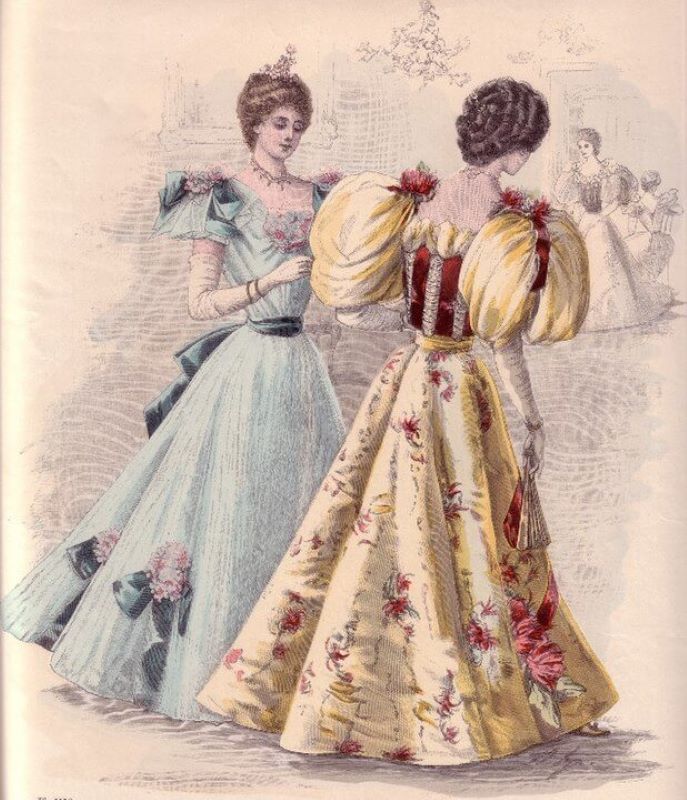
The dramatic bustled silhouette of the 1880s died out by 1892. Sleeves widened, first with a small puff at the shoulder. [1] Then the gigot or leg-of-mutton sleeves of the 1830s returned with a vengeance. After 1895, the width shrank again, returning to the narrow fit and small shoulder puff at the beginning of the decade.
The sharp angular bustle disappeared, replaced with first a bell-shaped skirt, then ones with more of a trumpet shape. Both styles were gored to lay smoothly over the hips.
The waist was nipped in to balance out the wide sleeves and skirts. [2]
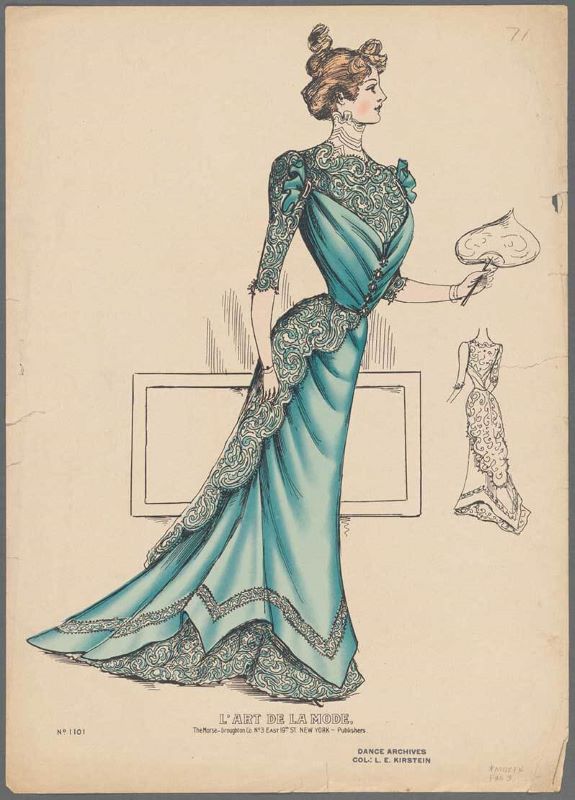
About 1897, the “pigeon-breasted” silhouette came into style and carried into the next decade. As the name implies, a large, thrust forward bosom was the style with a nipped-in waist and the hips tilted toward the back. [3]
The “New Woman” & the Gibson Girl
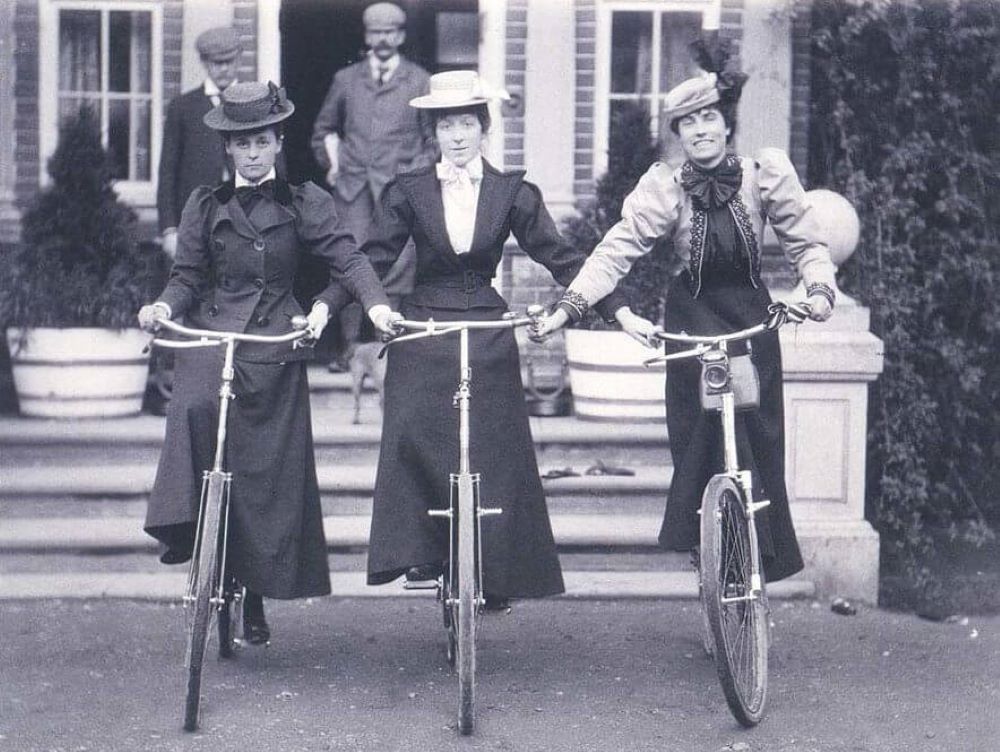
The “New Woman” was one that enjoyed greater freedoms than ever before. She was usually young, intellectual, and financially independent, with a love of sports. Thanks to the Industrial Revolution, the growth of cities, and the widening implementation of electricity, women had many more opportunities to work outside the home. During this decade, the number of women employed outside the home almost doubled. [4] In fact, a woman could make enough money as a secretary, librarian, or shop assistant to support herself without relying on her family or a husband. Work hours were shortening with mechanization and the passage of labor laws. This gave women more leisure time. Women’s participation in sports such as tennis, golf, and especially bicycling, exploded. The bicycle was also an independent and practical way for women to get to work. [5]
The spirit of the “New Woman” was idealized through the illustrations of Charles Dana Gibson, which became known as the “Gibson Girl.” Gibson’s girls were confident, self-assured, independent, and always dressed in the latest styles. They soon became the feminine ideal [6] In fact, the curly, swept-up hairstyle seen in many of Gibson’s illustrations is still called the “Gibson Girl” hairstyle today.
Undergarments
Combinations in cotton were the base layer.
Over this was worn the corset. At the beginning of the decade, it had an hourglass shape. However, in 1897, the straight front corset was introduced. This style forced the hips back, creating a straight line from the bosom down the front. [7] It was supposed to be a healthier alternative to the previous corset styles.
Corset covers had been worn to soften the harsh line of the corset from showing through the outer layers. With the rise of the “pigeon-breasted” silhouette, a series of ruffles was added to pad out the chest.
The bustle died out by 1892 and was replaced with a small bum pad that was tied around the waist. This provided a bit of fullness through the rear.

Day Dress
Women’s styles were increasingly influenced by men’s fashions during this decade. [8] This was especially apparent in women’s work and sporting attire.
Daytime styles were commonly high necked and long-sleeved. A shirtwaist, a type of blouse styled after men’s shirts, became popular. It was paired with an ankle-length skirt, a belt, a jacket, and a hat. Shirtwaists could be simple white buttoned-up shirts or feature trim, tucks, frills, or patterned fabric. [9] Neckties and bow ties were often worn with shirtwaists. They were commonly paired with a suit called a tailor-made. [10] Bodices like those from the previous decade were also worn.
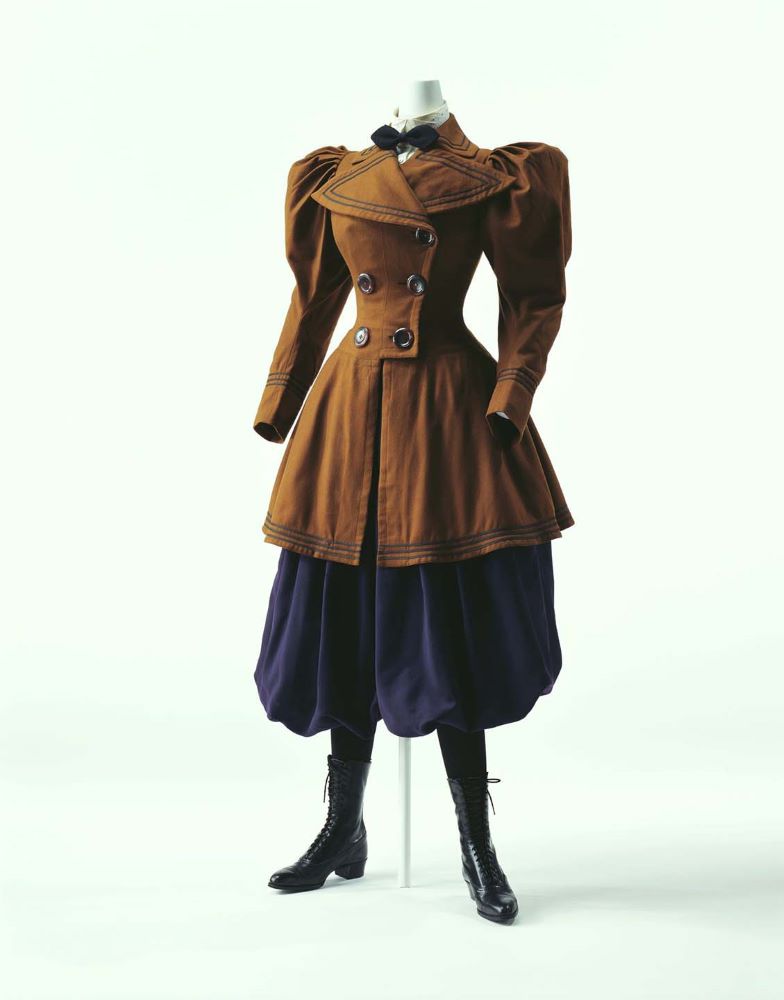
For playing sports, skirts were given a deep pleat in the back or shortened for freedom of movement. The most daring women wore the “bicycle suit” which was developed to make cycling easier. It consisted of a jacket and bloomers or voluminous breeches. Bathing outfits also featured bloomers worn with a sleeved top.

Eveningwear
The same silhouettes that reigned during the day were also seen at night. The only difference was the neckline, which became low and open. Also, the sleeves were short, although they were still fashionably puffy.

Outer Garments
With the reintroduction of the gigot sleeve, capes became popular since they spread gracefully over the top. They commonly had high collars and were elaborately trimmed. Jackets and coats were commonly worn over shirtwaists and featured gigot sleeves. The prized cashmere shawls of the previous decades were removed completely from women’s’ wardrobes and were now seen draped over pianos and furniture. [11] The dolman also disappeared.

Hairstyles & Headwear
The “Gibson Girl” hairstyle was all the rage, featuring a high bun and curls around the face.
Hats had become shorter and wider than those from the previous decade. However, there was still a propensity toward lots of decoration, including whole stuffed birds. While the hats were low, the trim often stuck straight up and included flowers, ribbons, and feathers. [12] Straw boaters were also a popular style, especially for the seaside or sporting.

Accessories
Most of the accessories from the previous decade were still popular. They included the pocket watch, reticule, fan, muff, and parasol. Gloves were becoming less common.
I hope this was helpful. Let me know if you have any questions or suggestions by using the Contact Me form on my website or writing a comment. I post every Friday and would be grateful if you would share my content.
If you want my blog delivered straight to your inbox every month along with exclusive content and giveaways, please sign up for my email list here.
Let’s get writing!
Copyright © 2021 Rebecca Shedd. All rights reserved.
[1] Severa, Joan L. Dressed for the Photographer: Ordinary Americans and Fashion 1840-1900. Kent, OH: Kent State UP, 1995 p. 458; 476-481.
[1] Severa, Joan L. Dressed for the Photographer: Ordinary Americans and Fashion 1840-1900. Kent, OH: Kent State UP, 1995 p. 458; 476-481.
[2] Tortora, Phyllis G. and Keith Eubank. Survey of Historic Costume, 5th ed. New York: Fairchild Books, 2010 p. 397.
Shrimpton, Jayne. Victorian Fashion. Oxford: Shire Publications, 2016 p. 26-27.
[3] https://genealogylady.net/2015/08/16/fashion-moments-pigeon-breast/
[4] Tortora, Phyllis G. and Keith Eubank. Survey of Historic Costume, 5th ed. New York: Fairchild Books, 2010 p. 380-382.
[5] Shrimpton, Jayne. Victorian Fashion. Oxford: Shire Publications, 2016 p. 27.
Warner, Patricia Campbell. When the Girls Came Out to Play: The Birth of American Sportswear. Boston: University of Massachusetts Press, 2006 p. 117.
[6] Tortora, Phyllis G. and Keith Eubank. Survey of Historic Costume, 5th ed. New York: Fairchild Books, 2010 p. 399.
[7] Laver, James. Costume and Fashion: A Concise History, 5th ed. London: Thames & Hudson, Ltd, 2012 p. 213.
[8] Fukai, Akiko, ed. The Collection of the Kyoto Costume Institute: Fashion, A History from the 18th Century to the 20th Century. Kyoto: Taschen, 2013 p. 127.
[9] Laver, James. Costume and Fashion: A Concise History, 5th ed. London: Thames & Hudson, Ltd, 2012 p. 208.
[10] Tortora, Phyllis G. and Keith Eubank. Survey of Historic Costume, 5th ed. New York: Fairchild Books, 2010 p. 399.
Fukai, Akiko, ed. The Collection of the Kyoto Costume Institute: Fashion, A History from the 18th Century to the 20th Century. Kyoto: Taschen, 2013 p. 127.
[11] Severa, Joan L. Dressed for the Photographer: Ordinary Americans and Fashion 1840-1900. Kent, OH: Kent State UP, 1995 p. 464-466.
Tortora, Phyllis G. and Keith Eubank. Survey of Historic Costume, 5th ed. New York: Fairchild Books, 2010 p. 400.
[12] Shrimpton, Jayne. Victorian Fashion. Oxford: Shire Publications, 2016 p. 28.
The Writer’s Guide to 1880s Men’s Fashion
Posted on September 3, 2021 21 Comments

Many of the trends for men’s fashions from the 1870s continued into the 1880s. The overall silhouette continued to slim and there was an emphasis on reserved styles. This decade also saw the introduction of several new articles of clothing.
For an overview of fashion for the entire century, please read my Writer’s Guide to 19th Century Fashion.
Silhouette
The fashionable silhouette of the decade was long and lean. [1] Coats were tailored close to the body, sleeves were narrow, and trousers were straight and slim.

Underwear
A cotton shirt was the standard first layer. Usually, the points of the collar were pressed down into wings although tall, stiffened collars came into fashion. Collars and cuffs were commonly removeable.
Cotton or linen drawers were worn under trousers and the “union suit,” also known as “long johns” were popular.
Daywear
The frock coat remained the most formal choice for daytime and featured a waist seam and full skirts. [2] The morning or cutaway coat was a step down in formality. It had a waist seam and the front gently sloped towards the back. Depending on the fabric used and the trousers it was paired with, the morning coat could range from formal in black to informal in tweed. [3] The most casual daytime option was the sack or lounge coat. It had a relaxed fit with no waist seam and could be single or double breasted. [4] All three styles buttoned quite high, usually hiding the waistcoat, if one was worn at all.
If a waistcoat was worn, it was commonly made of matching fabric to the coat.
Trousers were straight and lean. They could be made of the same fabric as the coat and waistcoat or a different complimenting color. Subtle patterns, such pinstripes, were worn.

Sportswear
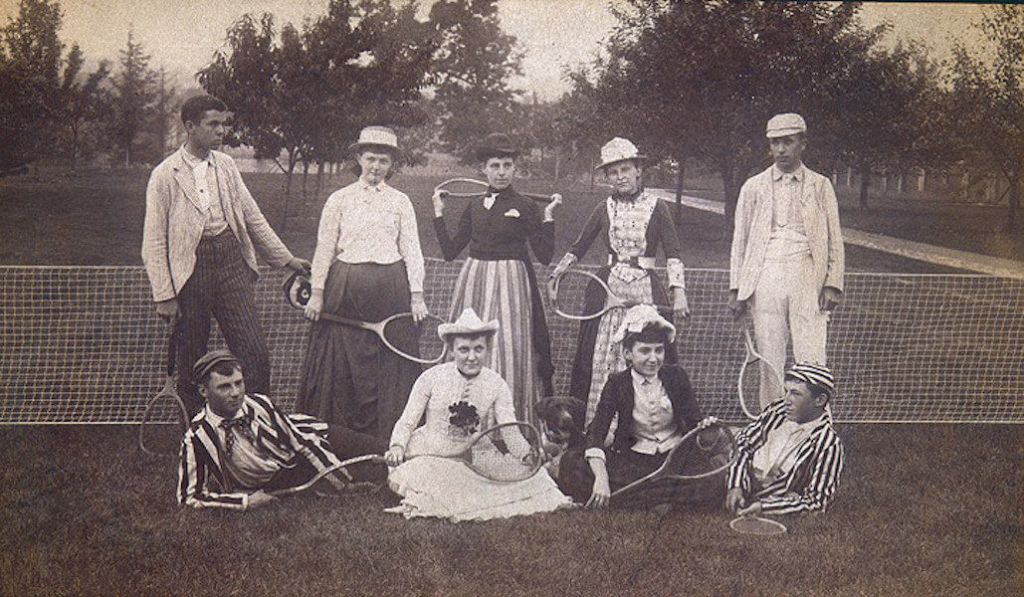
Sports such as hunting, rowing, and tennis were widespread and a popular outfit for these activities was a blazer and light flannel trousers. [5] Bright colors and bold stripes on the blazer was fashionable.
Reefer jackets from the previous decade were still trendy for summer sports and picnics. The Norfolk jacket, with a pleated back and cloth belt, became popular for country pursuits such as hunting and shooting. It was frequently paired with knee-breeches and gaiters. [6]
Eveningwear
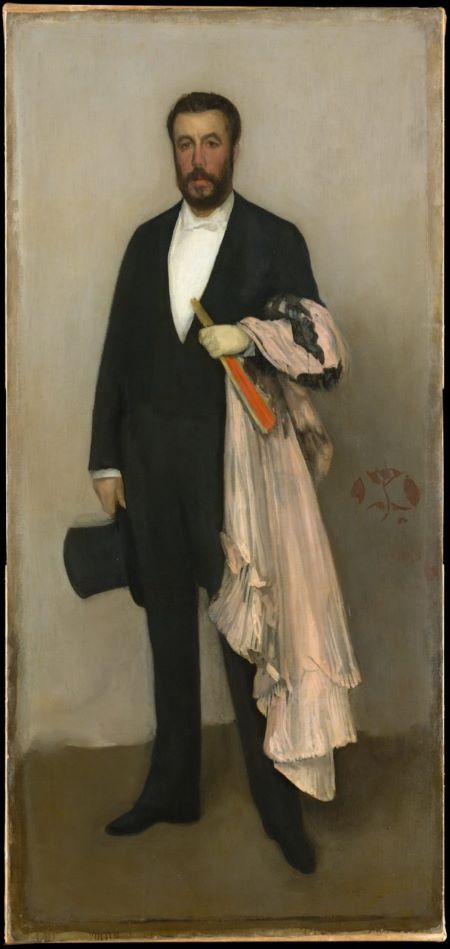
The uniform for evening was still the tailcoat, a double-breasted waistcoat, dark trousers, and a white tie. The notched collar was replaced by a rolled satin collar.
The tuxedo or dinner jacket was introduced during this decade as a less formal evening option. [7] It was a dressier version of the lounge jacket.
Outer Garments
Knee-length topcoats and calf-length overcoats were the most common options for outerwear. They often had contrasting collars of velvet or fur.
By this decade, the working class had largely adopted corduroy jackets and trousers and had given up their smock frocks.

Hairstyles & Headwear
Hairstyles barely changed from the 1870s with a short side-part and manicured facial hair being the norm.
The silk top hat was the standard for evening although it is seen during the day. The bowler was worn exclusively during the day. The crowns of bowlers became quite high during this period. [8]

Footwear
Low laced shoes in black and brown were common.
Accessories
The necktie and bow tie were one of the few spots of color remaining in men’s fashions. They were usually secured with a tie or stick pin. [9] Other accessories such as pocket watches and canes were still practical and popular. Gloves were worn but it was becoming more acceptable to go without them, especially for day.
I hope this was helpful. Let me know if you have any questions or suggestions by using the Contact Me form on my website or writing a comment. I post every Friday and would be grateful if you would share my content.
If you want my blog delivered straight to your inbox every month along with exclusive content and giveaways please sign up for my email list here.
Let’s get writing!
Copyright © 2021 Rebecca Shedd. All rights reserved.
[1] Shrimpton, Jayne. Victorian Fashion. Oxford: Shire Publications, 2016 p. 38.
[2] Cumming, Valerie ed., The Dictionary of Fashion History. New York: Berg, 2010 p. 87.
Laver, James. Costume and Fashion: A Concise History, 5th ed. London: Thames & Hudson, Ltd, 2012 p. 202.
[3] Shrimpton, Jayne. Victorian Fashion. Oxford: Shire Publications, 2016 p. 39.
[4] Tortora, Phyllis G. and Keith Eubank. Survey of Historic Costume, 5th ed. New York: Fairchild Books, 2010 p. 401.
[5] Shrimpton, Jayne. Victorian Fashion. Oxford: Shire Publications, 2016 p. 40.
[6] Tortora, Phyllis G. and Keith Eubank. Survey of Historic Costume, 5th ed. New York: Fairchild Books, 2010 p. 401.
Laver, James. Costume and Fashion: A Concise History, 5th ed. London: Thames & Hudson, Ltd, 2012 p. 202, 204.
[7] Tortora, Phyllis G. and Keith Eubank. Survey of Historic Costume, 5th ed. New York: Fairchild Books, 2010 p. 401-402.
Waugh, Norah. The Cut of Men’s Clothes: 1600-1900. New York and London: Routledge, Taylor and Francis Group, 2015 p. 115.
[8] Shrimpton, Jayne. Victorian Fashion. Oxford: Shire Publications, 2016 p. 38.
[9] Tortora, Phyllis G. and Keith Eubank. Survey of Historic Costume, 5th ed. New York: Fairchild Books, 2010 p. 401.
Shrimpton, Jayne. Victorian Fashion. Oxford: Shire Publications, 2016 p. 37-38.
The Writer’s Guide to 1880s Women’s Fashion
Posted on August 27, 2021 15 Comments

The 1880s saw the slim fitted princess line fall from fashion and the bustle make a comeback. The decade is also marked by a profusion of trim on all pieces of clothing and accessories. There was, however, concern over the tight corsetry and a growing artistic movement that drew from historical influences.
For an overview of fashion for the entire 19th century, please read my Writer’s Guide to 19th Century Fashion.
The Fashionable Silhouette
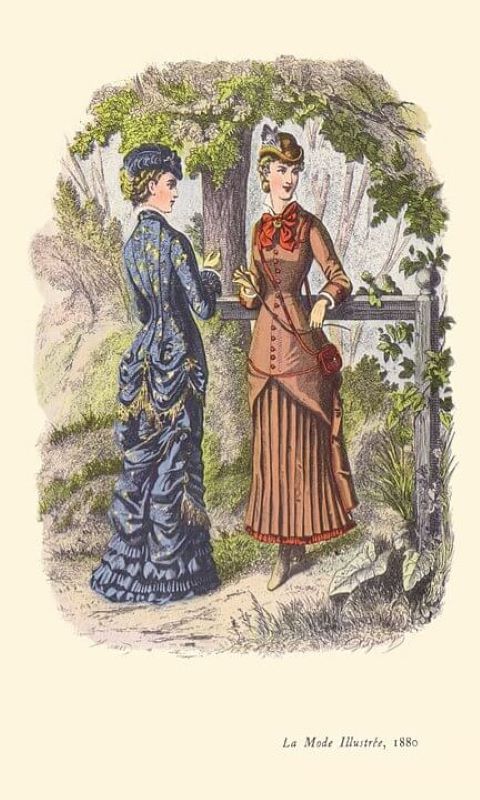
There were two fashionable silhouettes during the 1880s. The snug fitted princess line was the style until around 1883. [1] For more information on this style, I encourage you to read my Writer’s Guide to 1870s Women’s Fashion.
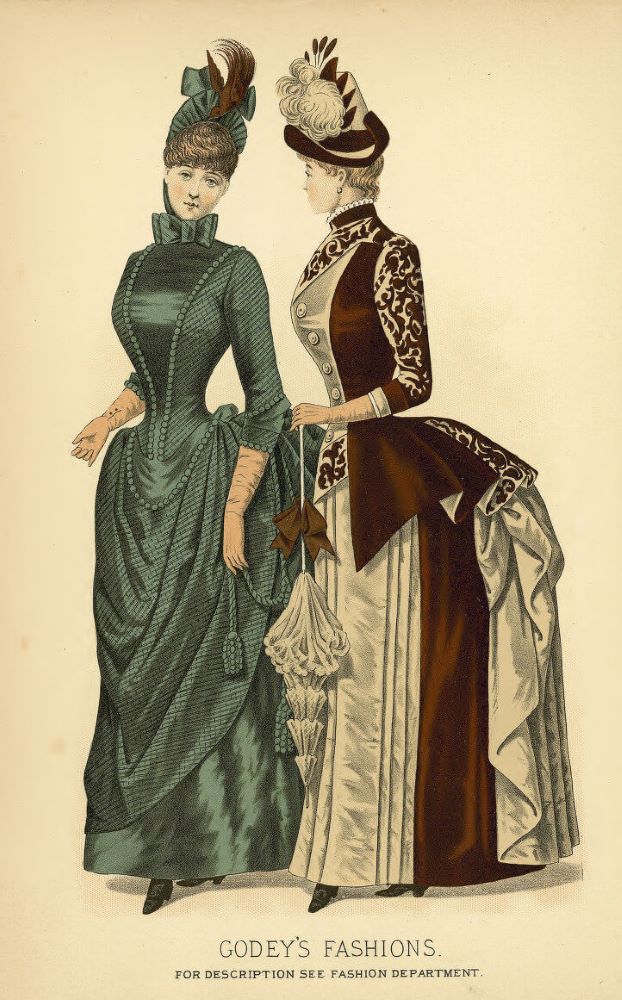
After that, the bustle came roaring back into popularity. However, rather than the soft rounded protrusion of the 1870s, this version was sharp and angular. [2] It stuck out straight from the small of the back. It grew over the years, reaching its largest by 1886. One writer at the time said the bustles were so big that “whereon a good-sized tea tray might be carried.” [3] They began to shrink starting in 1888 and by 1891 had vanished altogether. [4] Draped overskirts were worn over decorated underskirts in either matching or complimenting colors or patterns. The overskirt could be bustled up quite high or gently draped. [5]
Both styles used an abundance of embellishment. Ruffles, box pleats, ribbons, flounces, flowers, trim, lace, ruffles, shirring, and bows were used with abandon for both daytime and evening. [6]
Undergarments
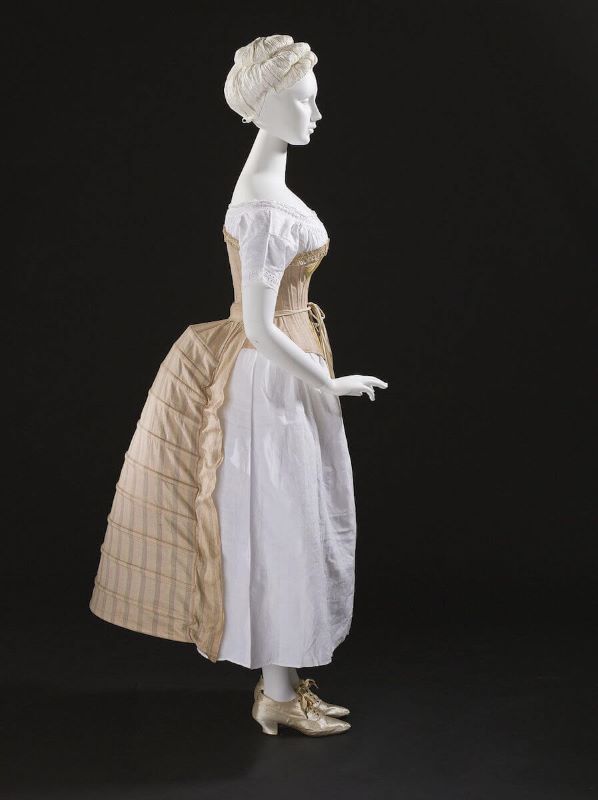
The standard undergarment was combinations, a joining of a chemise and bloomers or drawers into one garment. They were usually made from cotton or linen, although woolen combinations were recommended wear for sports. Most of these had open crotches to make going to the bathroom easier. A women would just have to lift the front of her skirt and straddle the toilet or position the chamber pot.
Over this was worn the corset, which featured a split busk in the front, making it easier for women to put it on without help.
A petticoat was usually put on next. A lobster tail bustle was used to achieve the fashionable “junk in the trunk.” It was like the semi-circular boned bustles of the 1870s, only longer. It folded easily for sitting or storage. [7] Over it was worn at least one more petticoat. A bustle petticoat, with rows of flounces in the back, helped to support the skirts.
Day Dress
Dresses worn during the day were usually narrow and modest. Necklines were high, often with standing collars. The sloping shoulders of the previous decades were replaced with a higher shoulder seam and snug sleeves. The dramatic fit was achieved using darts and a smooth line was maintained by adding boning to the seams of bodices. Skirts ended just above the floor. [8]
In both styles, the long basque bodice, which extended over the hips, was popular. Inspiration was also taken from men’s styles and women’s jackets commonly featured a contrasting central panel that invoked the look of a vest and coat.
Eveningwear
Dresses for evening had low wide necklines and short sleeves, or sometimes only shoulder straps. [9] Long, heavily decorated trains were common. Opera length gloves were essential, usually in white although other colors could be worn.

Outerwear
Jackets, mantles, and coats replaced cloaks and capes for outerwear. They were tailored to fit over and emphasize the bustle. [10] A style of mantles known as the dolman was especially popular. The back had a connected tie that went around the waist, so the garment was fitted in back. However, the front had long hanging ends and the sleeves were usually cut wide. [11]


Hairstyles & Headwear
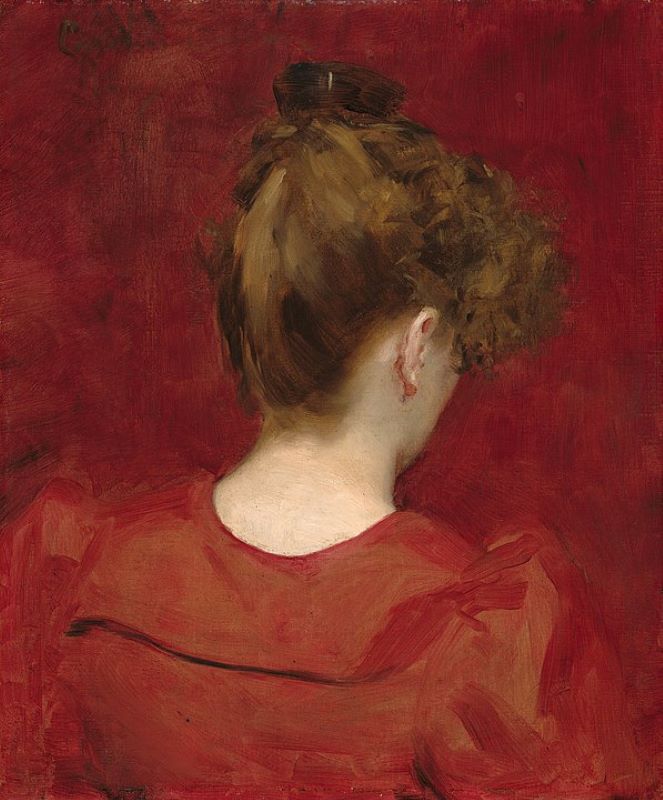
Hairstyles were restrained, with tight buns being popular, especially with the standing collars of the mid-1880s. [12] The frizzy bangs of the previous decade were still in style and were nicknamed “Josephine curls.”
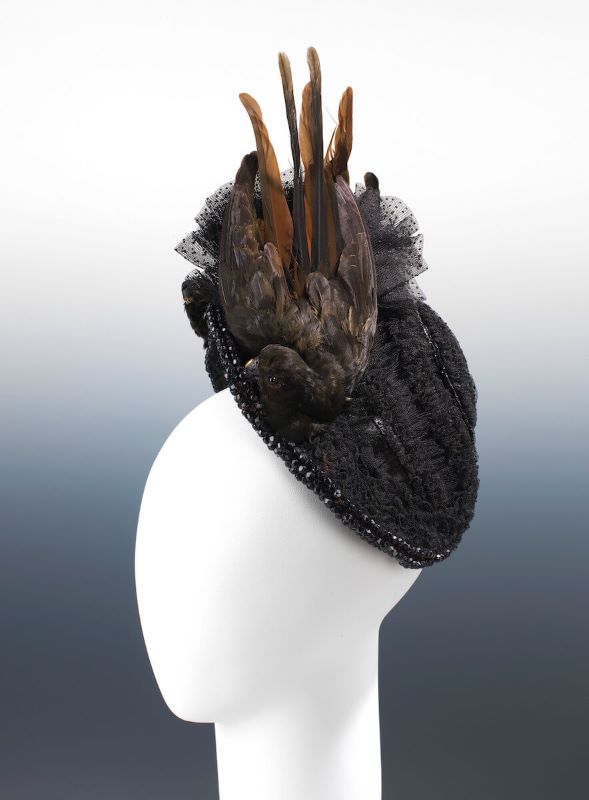
The hat had almost completely replaced the bonnet. During this decade they grew to impressive heights and were ridiculed as “Four Stories and a Basement.” [13] With so much space and the decade’s love of decoration, hats were elaborately trimmed. Sprays of feathers and entire stuffed birds were all the rage. This trend devastated bird populations, causing many species to become endangered and leading to the founding of the American Audubon Society in 1886, and the English Royal Society for the Preservation of Birds in 1889. [14].
Footwear
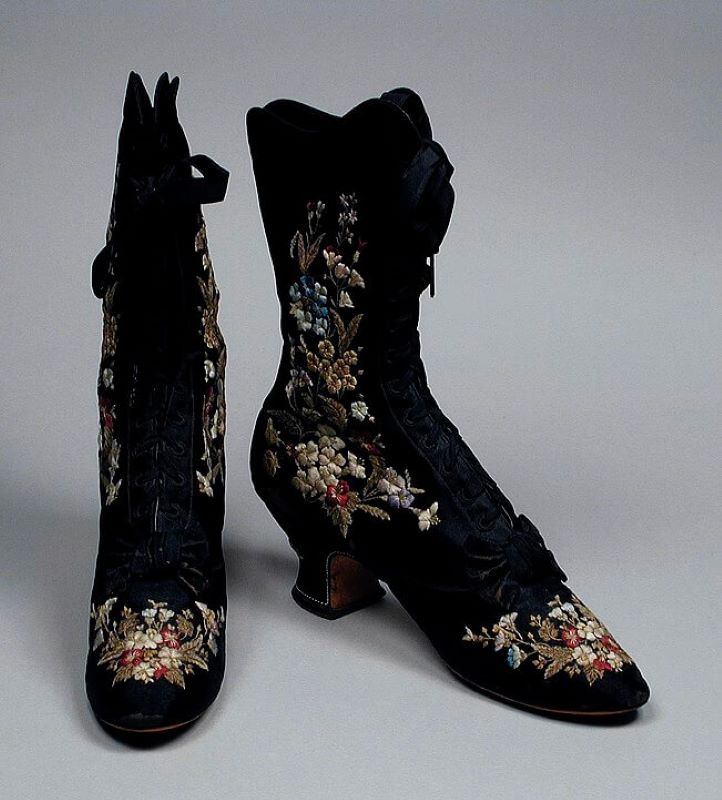
The standard shoe for daytime was a mid-calf heeled boot that either laced or buttoned. Today we call them “granny boots.” For evening, fabric or leather slippers were worn.
Accessories
The standard accessories from the previous decades were still popular, mainly for their practicality. These included the parasol, fan, muff, and pocket watch. Gloves were still standard for evening but were being worn less for daytime.
The Aesthetic Movement and Dress Reform
The Aesthetic Movement was an artistic Bohemian rebellion against the mainstream fashions of the day. Fashion was becoming increasingly industrialized and artists such as the Pre-Raphaelite Brotherhood longed for the less-restrained styles of the past. They drew much of their inspiration from medieval and Renaissance designs. [15] It was usually worn without a corset, bustle, and petticoats. [16]
There were also groups, such as the Rational Dress Society, that advocated against the restrictive styles out of fear of the damage to women’s’ health. [17] They directed much of their anger against the corset. [18]
Neither of these movements become mainstream and both were mercilessly mocked in the press. [19] The closest they became to popularity was their influence on tea gowns, which were only worn in the privacy of the home.

I hope this was helpful. Let me know if you have any questions or suggestions by using the Contact Me form on my website or writing a comment. I post every Friday and would be grateful if you would share my content.
If you want my blog delivered straight to your inbox every month along with exclusive content and giveaways please sign up for my email list here.
Let’s get writing!
Copyright © 2021 Rebecca Shedd. All rights reserved.
[1] Fukai, Akiko, ed. The Collection of the Kyoto Costume Institute: Fashion, A History from the 18th Century to the 20th Century. Kyoto: Taschen, 2013 p. 214.
[2] Tortora, Phyllis G. and Keith Eubank. Survey of Historic Costume, 5th ed. New York: Fairchild Books, 2010 p. 386, 390.
[3] Shrimpton, Jayne. Victorian Fashion. Oxford: Shire Publications, 2016 p. 24-25.
[4] Fukai, Akiko, ed. The Collection of the Kyoto Costume Institute: Fashion, A History from the 18th Century to the 20th Century. Kyoto: Taschen, 2013 p. 239.
[5] Cunnington, C. Willett. English Women’s Clothing in the Nineteenth Century: A Comprehensive Guide with 1,117 Illustrations. Mineola, NY: Dover Publications, 1990 p. 320B-321.
Tortora, Phyllis G. and Keith Eubank. Survey of Historic Costume, 5th ed. New York: Fairchild Books, 2010 p. 391.
[6] Fukai, Akiko, ed. The Collection of the Kyoto Costume Institute: Fashion, A History from the 18th Century to the 20th Century. Kyoto: Taschen, 2013 p. 216.
[7] Laver, James. Costume and Fashion: A Concise History, 5th ed. London: Thames & Hudson, Ltd, 2012 p. 198.
[8] Tortora, Phyllis G. and Keith Eubank. Survey of Historic Costume, 5th ed. New York: Fairchild Books, 2010 p. 391.
[9] Fukai, Akiko, ed. The Collection of the Kyoto Costume Institute: Fashion, A History from the 18th Century to the 20th Century. Kyoto: Taschen, 2013 p. 225-235.
[10] Tortora, Phyllis G. and Keith Eubank. Survey of Historic Costume, 5th ed. New York: Fairchild Books, 2010 p. 392.
[11] Cumming, Valerie ed., The Dictionary of Fashion History. New York: Berg, 2010 p. 67.
[12] Tortora, Phyllis G. and Keith Eubank. Survey of Historic Costume, 5th ed. New York: Fairchild Books, 2010 p. 393.
[13] Ginsburg, Madeliene. The Hat: Trends and Traditions. London: Studio Editions, 1990 p. 92.
[14] Shrimpton, Jayne. Victorian Fashion. Oxford: Shire Publications, 2016 p. 26.
Ginsburg, Madeliene. The Hat: Trends and Traditions. London: Studio Editions, 1990 p. 92.
[15] Ellis, Martin, Victoria Osborne, and Tim Barringer. Victorian Radicals: From the Pre-Raphaelites to the Arts & Crafts Movement. New York: American Federation of Arts, 2018 p. 35-36.
[16] Tortora, Phyllis G. and Keith Eubank. Survey of Historic Costume, 5th ed. New York: Fairchild Books, 2010 p. 384.
[17] Laver, James. Costume and Fashion: A Concise History, 5th ed. London: Thames & Hudson, Ltd, 2012 p. 200.
[18] Mitchell, Rebecca N., ed. Fashioning the Victorians: A Critical Sourcebook. London: Bloomsbury, 2018 p. 77-83.
[19] Laver, James. Costume and Fashion: A Concise History, 5th ed. London: Thames & Hudson, Ltd, 2012 p. 200.
The Writer’s Guide to 1870s Men’s Fashion
Posted on August 20, 2021 108 Comments

Men’s fashions had already started to converge from those of women’s and the trend continued in the 1870s. While the bustle and princess line styles were over-the-top frothy confections, men’s tastes ran more to conservative and understated. By this decade, it’s easy to see today’s styles reflected in the clothing and some photographs from the period could be mistaken for being as late as the 1950s.
For an overview of fashion for the entire century, please read my Writer’s Guide to 19th Century Fashion.
Silhouette
The fashionable silhouette slimmed again from the baggy oversized styles of the 1860s. All elements also became plainer and the overall line crisper and cleaner. A tailoring journal in 1871 put it best, saying, “Gentlemen dress as quietly as it is possible to do and there are no extremes in dress.” [1]

Underwear
The shirt was the standard first layer and cotton was now the most common fabric. The points of the collar were being pressed down into wings. Shirts had become plain, with the ruffles, pleats, and starch disappearing. [2] Cotton or linen drawers were worn under trousers and the “union suit,” also known as “long johns,” were popular.
Daywear
The frock coat was standard for daytime affairs and had a waist seam and full, knee-length skirts. [3] It was considered the most formal daytime option. Short frock coats, with skirts ending mid-thigh or shorter, were briefly in fashion at the beginning of the decade. [4] The morning coat or cutaway coat was generally considered less formal although it did depend on the fabric it was made from. Dark wool was considerably more proper than tweed. [5] It had a waist seam, could be either single or double breasted, and usually closed with three to four buttons. Silk braid was occasionally used on the edges.
Waistcoats or vests could be cut straight across or longer with points. While they had been made of colorful or patterned fabric in previous decades, they were increasingly plain colors or made of the same fabric as the coat and trousers, what was known as a “ditto suit.”
Trousers were straight and tubular without pleats at the waist.
The sack or lounge suit was popular, especially among the lower classes and for informal events. The jacket had no waist seam, and the waistcoat and trousers were usually made from the same fabric. [6] It was paired with a plain white shirt and a tie.

Eveningwear
A dark tailcoat paired with a white shirt, a dark, double-breasted waistcoat, and dark trousers was the standard look for evening. [7] A white cravat or bowtie was also typical. We would recognize it today as “white tie and tails.”

Outer Garments
The greatcoat styles of the previous decade were still common, including the chesterfield, ulster, and Inverness coats. The double-breasted reefer jacket was a popular choice for sporting. [8]


Hairstyles & Headwear
Hair became shorter and worn parted to the side. Facial hair returned with a vengeance and beards, moustaches, and mutton chops were all common. However, it was important to keep all facial hair neatly trimmed.
The top hat was considered more formal and was usually worn for evening or paired with fancy frock or morning coats. The bowler was popular for daytime and for pairing with informal morning coats and sack suits. [9]


Footwear
Shoes were made of leather and typically low and buttoned or laced closed. Boots were worn for riding.
Accessories
The gold watch chain and the stick pin were the only bling an 1870s gentleman was allowed. [10] Gloves were still commonly worn for both daytime and evening. A variety of neckwear was popular including the cravat, the bowtie, and the necktie, tied with a four-in-hand knot. Canes or walking sticks were popular and are seen in many portraits and fashion plates.
I hope this was helpful. Let me know if you have any questions or suggestions by using the Contact Me form on my website or writing a comment. I post every Friday and would be grateful if you would share my content.
If you want my blog delivered straight to your inbox every month along with exclusive content and giveaways please sign up for my email list here.
Let’s get writing!
Copyright © 2021 Rebecca Shedd. All rights reserved.
[1] Shrimpton, Jayne. Victorian Fashion. Oxford: Shire Publications, 2016 p. 35.
[2] Tortora, Phyllis G. and Keith Eubank. Survey of Historic Costume, 5th ed. New York: Fairchild Books, 2010 p. 401.
[3] Cumming, Valerie ed., The Dictionary of Fashion History. New York: Berg, 2010 p. 87.
[4] Foster, Vanda. A Visual History of Costume: The Nineteenth Century. London: BT Batsford, 1984 p. 99.
[5] Shrimpton, Jayne. Victorian Fashion. Oxford: Shire Publications, 2016 p. 37.
[6] Tortora, Phyllis G. and Keith Eubank. Survey of Historic Costume, 5th ed. New York: Fairchild Books, 2010 p. 401.
[7] Tortora, Phyllis G. and Keith Eubank. Survey of Historic Costume, 5th ed. New York: Fairchild Books, 2010 p. 402.
[8] Laver, James. Costume and Fashion: A Concise History, 5th ed. London: Thames & Hudson, Ltd, 2012 p. 202.
[9] Tortora, Phyllis G. and Keith Eubank. Survey of Historic Costume, 5th ed. New York: Fairchild Books, 2010 p. 403.
[10] Shrimpton, Jayne. Victorian Fashion. Oxford: Shire Publications, 2016 p. 36-38.
The Writer’s Guide to 1870s Women’s Fashion
Posted on August 13, 2021 20 Comments

The First Bustle Era continued into the 1870s from the tail end of the previous decade. The focus was put on the back of the skirt, but they also went crazy for embellishment. Then Alexandra, Princess of Wales, came on the scene and popularized the natural form or princess line dress. The bustle dropped from popularity, although it reappeared in the 1880s.
For an overview of fashion for the entire century, please read my Writer’s Guide to 19th Century Fashion.
Undergarments
The standard first layer was either a cotton or linen chemise or increasingly, combinations. Combinations married the chemise and pantalettes or bloomers into a single garment. [1] The reduction in bulk was especially important under the slim princess line styles. They could have a closed crotch or be open, known as split bloomers, to make going to the bathroom easier.
The corset was essential for achieving the fashionable silhouette. They had a split busk in the front. They achieved the curvaceous shape through clever tailoring of the panels and steam-molding to a form. [2] Whalebone and cording were the most popular types of boning. Both are pliable and had some give. They also molded to the wearer’s body over time. Corsetry became more severe with the princess line since the silhouette was very slim, sometimes down to the knees. [3] The corset cover was becoming more common. It was worn over the corset to protect the dress from rubbing against the corset’s hard edges and to soften those edges from showing through the outer layers.
The bustles of the beginning of the decade were originally supported by the crinolette. But it was gradually replaced by the bustle. Both garments used a semi-circular formation of fabric-covered wire hoops to create structure. [4] Both would fold up to allow for the wearer to sit or for storage.


The First Bustle Era
The bustle was popular until around 1876. The waistline was slightly above the natural waist and the shoulder was long and sloping. At the beginning of the decade, the bell-shaped sleeves of the previous decade were still popular. [5] The bustles of this period could be quite pronounced and frothy.
Embellishment was taken to extreme levels with an impressive profusion of ruffles, pleats, gathers, bows, trim, and multiple layers of draped fabric. Dresses from this period more closely resembled decorated pastries than clothing. Overskirts were often layered over underskirts in complex arrangements.
Bodices known as basques, extended over the top of the skirt. They were just as heavily embellished as the skirts and frequently matched. [6] For daytime, necklines were high although V shaped, or squared necklines became popular. The neckline could be filled in with a partlet.
For evening, bodices were slightly off-the-shoulder with short, puffed sleeves or no sleeves at all. The bertha was still a popular embellishment.


The Princess Line
The natural form or princess line came into fashion about 1876. It was pioneered by Alexandra, Princess of Wales, who married Queen Victoria’s eldest son, Albert Edward, in 1863. She had a statuesque frame and the new line showed it off to greatest advantage. She had a busy social calendar and always appeared in the latest fashions. [7]
The style was characterized by a figure-hugging line that usually extended to the hips but could go as low as the knees. The bodice generally didn’t have a waist seam, the fit instead being achieved with darts. They usually extended over the hips, echoing the basque styles of the First Bustle Era. [8] This style became known as the cuirass bodice. Most princess line dresses had cascading fullness at the bottom of the skirt and trains were common, even for daytime. [9] The shoulder seam rose to the natural line and sleeves became tighter, echoing the overall snug fit.
Even with the changing styles, daytime dresses were still long-sleeved and high-necked and those for evening were off-the-shoulder with short sleeves.


The Casual & the Artistic
This decade saw two rebellions against the restrictive fashions of the day.
The first was the tea gown and the other the leisure dress. The tea gown was a loose, unstructured garment meant to be worn at home with female friends and allowed women to loosen their corsets or abandon them completely. [10] Since tea gowns did not have waist seams, some experts speculate that the princess line developed from them. [11] Leisure dress also made an appearance, such as that for the seaside. While it usually followed the fashionable silhouette, it tended to be brighter and more daring. [12]
Artistic dress was a product of the Pre-Raphaelite Brotherhood and drew heavily from medieval styles. It was frequently worn without a corset.


Outerwear
Coats and jackets, with back vents to accommodate the bustle, were popular during this decade. Those inspired by men’s styles such as the chesterfield were especially fashionable. [13]
Hairstyles & Headwear
The elaborate curly hairstyles of the previous decade remained popular, with elaborate knots and braids and a cascade of curls. Hairpieces were common. [14] During this decade, short curly bangs became all the rage. [15] With the introduction of the princess line, hairstyles became tighter and more confined, the loose curls disappearing.
Bonnets and hats vied for popularity but increasingly the hat was winning out. By the end of the decade, bonnets were for Sunday best or older, conservative women. [16]

Footwear
Low, thick-heeled button boots were the norm for daytime while silk slippers were worn for evening.
Accessories
Common accessories included reticules, muffs, parasols, and fans. Gloves were still common but were slowly fading from use. Women had begun to wear pocket watches of their own, although they were smaller than men’s.
I hope this was helpful. Let me know if you have any questions or suggestions by using the Contact Me form on my website or writing a comment. I post every Friday and would be grateful if you would share my content.
If you want my blog delivered straight to your inbox every month along with exclusive content and giveaways please sign up for my email list here.
Let’s get writing!
Copyright © 2021 Rebecca Shedd. All rights reserved.
[1] Tortora, Phyllis G. and Keith Eubank. Survey of Historic Costume, 5th ed. New York: Fairchild Books, 2010 p. 386.
[2] Shrimpton, Jayne. Victorian Fashion. Oxford: Shire Publications, 2016 p. 20.
[3] Cunnington, Phillis. The History of Underclothes. London: Michael Joseph, 1951 p. 179.
[4] Cumming, Valerie ed., The Dictionary of Fashion History. New York: Berg, 2010 p. 35.
Shrimpton, Jayne. Victorian Fashion. Oxford: Shire Publications, 2016 p. 17-18.
[5] Cunnington, C. Willett. English Women’s Clothing in the Nineteenth Century: A Comprehensive Guide with 1,117 Illustrations. Mineola, New York: Dover Publications, 1990 p. 258.
[6] Severa, Joan L. Dressed for the Photographer: Ordinary Americans and Fashion 1840-1900. Kent, Ohio: Kent State UP, 1995 p. 301, 329.
[7] Strasdin, Kate. Inside the Royal Wardrobe: A Dress History of Queen Alexandra. London: Bloomsbury, 2017 ch. 3.
[8] Cumming, Valerie ed., The Dictionary of Fashion History. New York: Berg, 2010 p. 61.
Tortora, Phyllis G. and Keith Eubank. Survey of Historic Costume, 5th ed. New York: Fairchild Books, 2010 p. 386.
[9] Cunnington, C. Willett. English Women’s Clothing in the Nineteenth Century: A Comprehensive Guide with 1,117 Illustrations. Mineola, New York: Dover Publications, 1990 p. 256.
[10] Tortora, Phyllis G. and Keith Eubank. Survey of Historic Costume, 5th ed. New York: Fairchild Books, 2010 p. 387.
[11] Coleman, Elizabeth Ann. The Opulent Era: Fashions of Worth, Doucet, and Pingat. London: Thames and Hudson, Ltd., The Brooklyn Museum, 1989 p. 47.
[12] The Girls in Green: Women's Seaside Dress in England, 1850–1900, Deirdre Murphy, The Costume Society, Vol. 40, 2006
[13] Cumming, Valerie ed., The Dictionary of Fashion History. New York: Berg, 2010 p. 46, 213.
Shrimpton, Jayne. Victorian Fashion. Oxford: Shire Publications, 2016 p. 21.
Tortora, Phyllis G. and Keith Eubank. Survey of Historic Costume, 5th ed. New York: Fairchild Books, 2010 p. 392
[14] Cunnington, C. Willett. English Women’s Clothing in the Nineteenth Century: A Comprehensive Guide with 1,117 Illustrations. Mineola, New York: Dover Publications, 1990 p. 296.
[15] Shrimpton, Jayne. Victorian Fashion. Oxford: Shire Publications, 2016 p. 22.
[16] Ginsburg, Madeliene. The Hat: Trends and Traditions. London: Studio Editions, 1990 p. 91.
The Writer’s Guide to 1860s Men’s Fashion
Posted on August 6, 2021 11 Comments

The men’s fashions of the 1860s are marked by an increasing lack of tailoring. An oversized, even baggy silhouette became common. However, military officers, who often had their uniforms custom made by a tailor, wore more fitted styles.
For an overview of fashion for the entire 19th century, please read my Writer’s Guide to 19th Century Fashion.
Silhouette
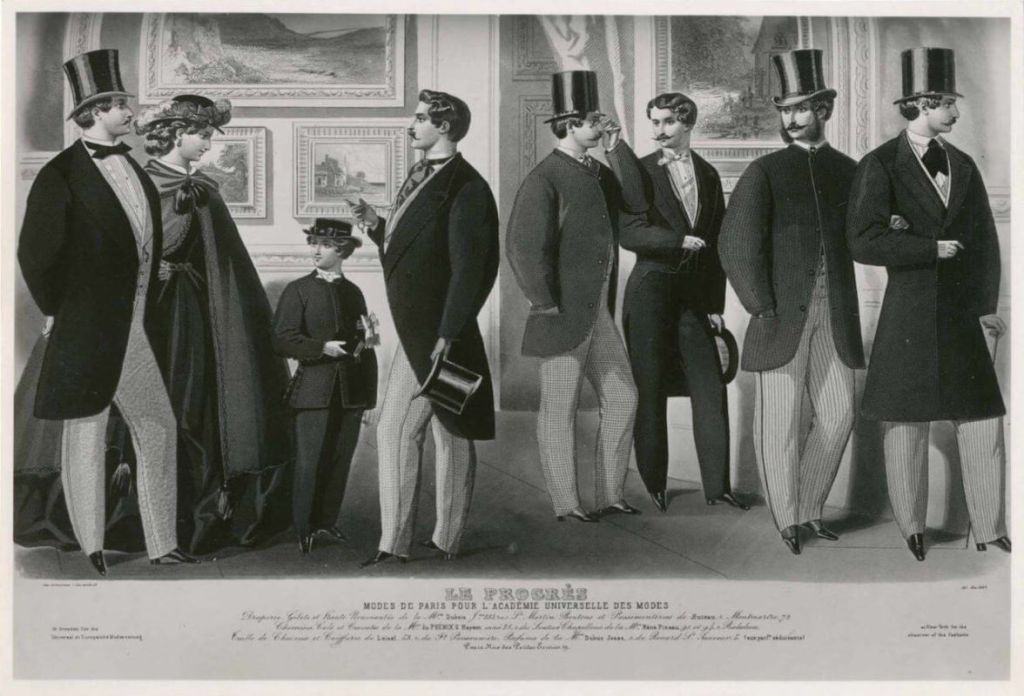
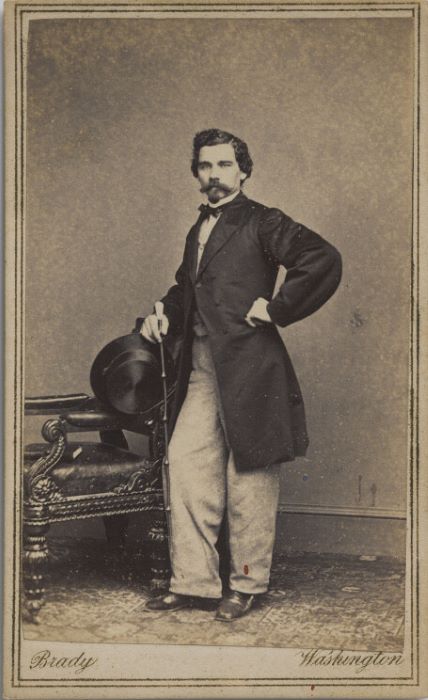
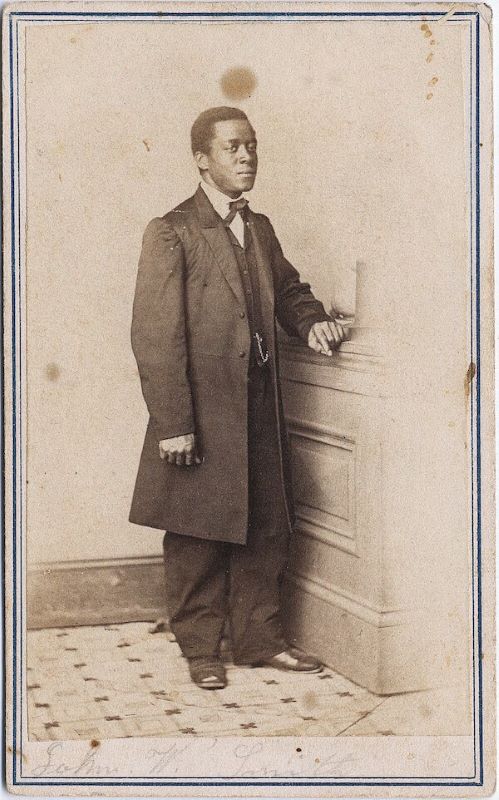
The outsized civilian silhouette was characterized by loose coats with large sleeves and baggy trousers. Coats continued to have the dropped shoulder seen in the 1850s. [1]
Readymade & Casual
The American Civil War led to readymade clothing being mainstreamed. The manufacturing of clothing could be cut in half using a sewing machine. According to Brooks Brothers, the time to sew an overcoat could be reduced from six days to three with the help of a machine. [2] In the first half of the decade, the number of sewing machines in use doubled. [3] Not surprising considering the Union army was ordering 1.5 million uniforms a year. It also started collecting men’s measurements, which paved the way for standardized sizing. [4]
Underwear
Linen or cotton shirts were still the standard base layer. Increasingly, they had turned down collars instead of standing. Since the necklines of coats and waistcoats continued to rise, shirts became plainer since less of them was being seen. However, shirts worn for evening were often ruffled or embroidered and heavily starched. [5]
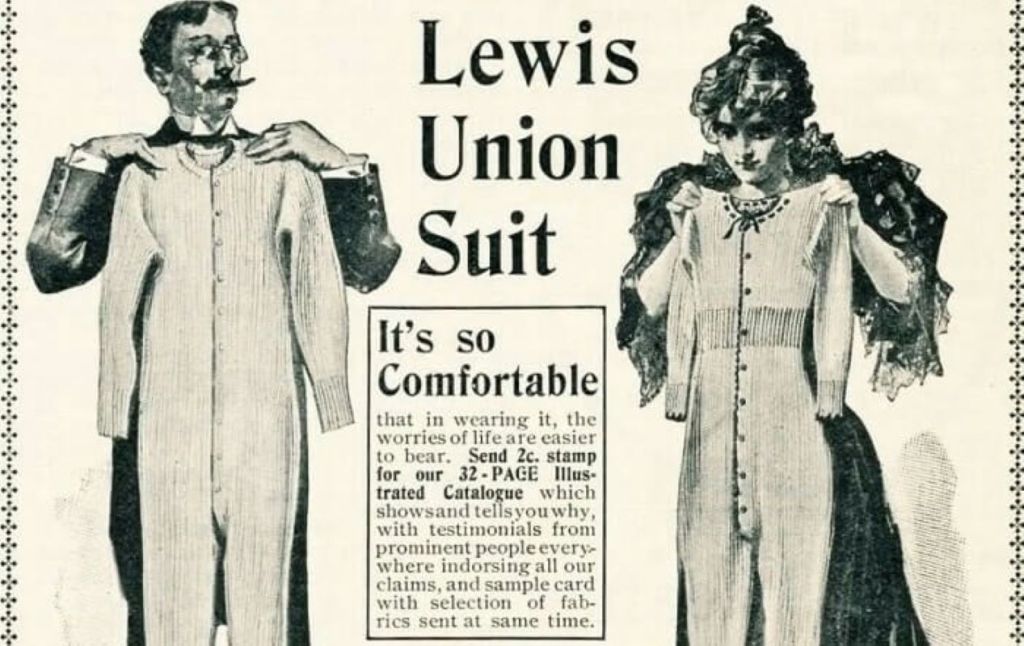
In 1868, the union suit was patented. Today, it’s more commonly known as “long johns.” Starting as women’s underwear, it became popular with men. [6]
Daywear
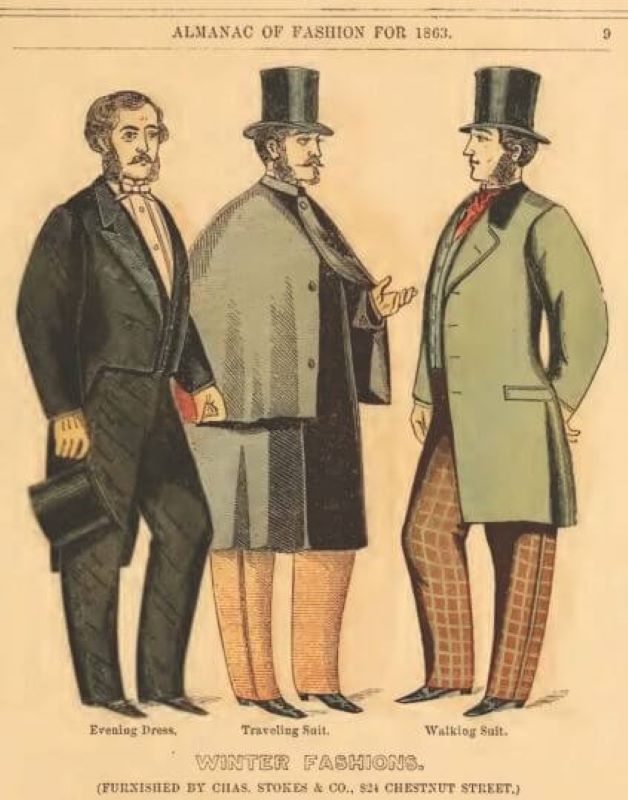
The sack or lounge jacket was the most casual option for daytime. It was cut straight without a waist seam. It was usually made of dark wool although “ditto” suits, what we would call a three-piece suit, of light fabric were also worn. [7] The morning coat was popular for formal or business daytime events. It had a waist seam and tails that gently curved to the back. [8] It was often made of dark heavyweight wools or tweeds. The frock coat was a step above the morning coat in formality but was still acceptable for day. [9] It had a waist seam and full, knee-length skirts and was usually made in black wool. [10]
Trousers came in a variety of light and dark colors as well as patterns such as stripes and checks. However, as the decade continued, patterns became less common. [11] Suspenders or bracers were increasingly used to hold trousers in place.
Waistcoats or vests were cut straight across, were single breasted, and had shawl or notched lapels. [12]
Eveningwear
By this decade, the tailcoat was completely relegated to eveningwear. It was usually worn with a matching waistcoat and trousers and a white cravat.
Outer Garments
Several styles of greatcoat were popular including the chesterfield, the top frock, and the Inverness coat. [13] The chesterfield was usually embellished with braid and had a silk velvet collar. [14] The top frock and Inverness coats had attached capes at the shoulder. [15] A short, double-breasted jacket known as a reefer was also popular. [16] Cloaks were worn for evening. [17]
Hairstyles & Headwear
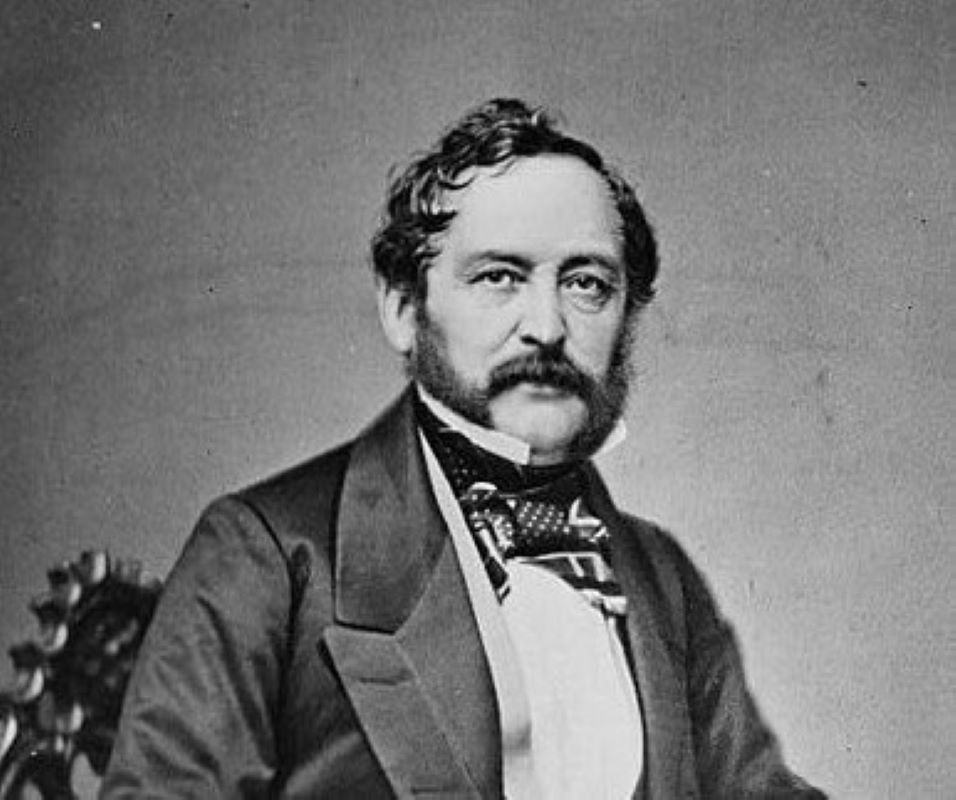
Hair was usually short with a side part. A soft wave was considered attractive. [18] A variety of facial hair was popular including moustaches, beards, sideburns, and muttonchops. [19]
The top hat was king and reached incredible heights during this decade, known as a “stovepipe.” President Lincoln worn this style almost exclusively. However, the top hat was increasingly seen as a formal option and was gradually being relegated to evening. [20] The bowler was a popular informal choice. It came in black or brown for summer. [21] Flat crowned straw hats were also worn during summer.
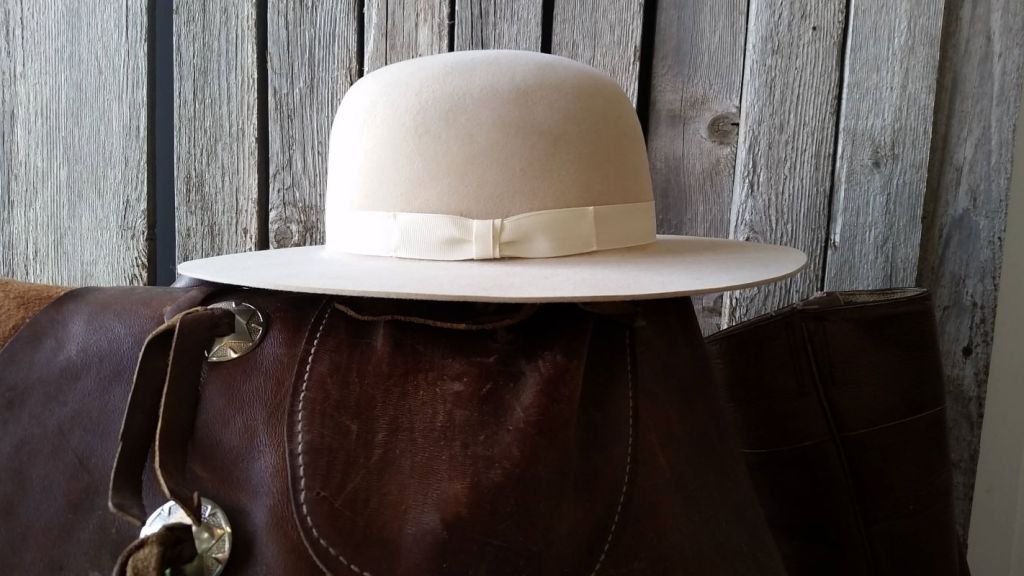
In 1865, the Boss of the Plains hat was introduced by hatmaker John B. Stetson. It had a rounded crown and a wide brim that became popular with cowboys and settlers because of how practical it was.
Footwear
There were several options for men’s footwear including low shoes or boots, which either laced or buttoned, mid-calf boots, and tall knee-high boots. Most styles had low to no heel.
Accessories
The cravat was still an essential accessory. It was usually loosely knotted and secured with a stickpin or tied into a bow. Gloves were required for evening, but men were starting to forego them during the day. Pocket watches on chains were common and practical. Walking sticks and canes were popular.
I hope this was helpful. Let me know if you have any questions or suggestions by using the Contact Me form on my website or writing a comment. I post every Friday and would be grateful if you would share my content.
If you want my blog delivered straight to your inbox every month along with exclusive content and giveaways please sign up for my email list here.
Let’s get writing!
Copyright © 2021 Rebecca Shedd. All rights reserved.
[1] Severa, Joan L. Dressed for the Photographer: Ordinary Americans and Fashion 1840-1900. Kent, Ohio: Kent State UP, 1995 p. 209.
[2] Severa, Joan L. Dressed for the Photographer: Ordinary Americans and Fashion 1840-1900. Kent, Ohio: Kent State UP, 1995 p. 208.
[3] Tortora, Phyllis G. and Keith Eubank. Survey of Historic Costume, 5th ed. New York: Fairchild Books, 2010 p. 356, 358.
[4] Tortora, Phyllis G. and Keith Eubank. Survey of Historic Costume, 5th ed. New York: Fairchild Books, 2010 p. 358.
[5] Tortora, Phyllis G. and Keith Eubank. Survey of Historic Costume, 5th ed. New York: Fairchild Books, 2010 p. 370-371.
[6] https://www.realmenrealstyle.com/history-origins-mens-underwear/
[7] Severa, Joan L. Dressed for the Photographer: Ordinary Americans and Fashion 1840-1900. Kent, Ohio: Kent State UP, 1995 p. 209.
Shrimpton, Jayne. Victorian Fashion. Oxford: Shire Publications, 2016 p. 34-35.
[8] Cumming, Valerie ed., The Dictionary of Fashion History. New York: Berg, 2010 p. 135.
Tortora, Phyllis G. and Keith Eubank. Survey of Historic Costume, 5th ed. New York: Fairchild Books, 2010 p. 370.
[9] Cumming, Valerie ed., The Dictionary of Fashion History. New York: Berg, 2010 p 87.
Severa, Joan L. Dressed for the Photographer: Ordinary Americans and Fashion 1840-1900. Kent, Ohio: Kent State UP, 1995 p. 209.
[10] Cumming, Valerie ed., The Dictionary of Fashion History. New York: Berg, 2010 p 87.
Severa 209
[11] Tortora, Phyllis G. and Keith Eubank. Survey of Historic Costume, 5th ed. New York: Fairchild Books, 2010 p. 371.
Severa, Joan L. Dressed for the Photographer: Ordinary Americans and Fashion 1840-1900. Kent, Ohio: Kent State UP, 1995 p. 209.
[12] Severa, Joan L. Dressed for the Photographer: Ordinary Americans and Fashion 1840-1900. Kent, Ohio: Kent State UP, 1995 p. 209.
[13] Laver, James. Costume and Fashion: A Concise History, 5th ed. London: Thames & Hudson, Ltd, 2012 p. 205.
[14] Cumming, Valerie ed., The Dictionary of Fashion History. New York: Berg, 2010 p 46.
[15] Laver, James. Costume and Fashion: A Concise History, 5th ed. London: Thames & Hudson, Ltd, 2012 p. 205.
[16] Tortora, Phyllis G. and Keith Eubank. Survey of Historic Costume, 5th ed. New York: Fairchild Books, 2010 p. 371.
[17] Tortora, Phyllis G. and Keith Eubank. Survey of Historic Costume, 5th ed. New York: Fairchild Books, 2010 p. 371.
[18] Severa, Joan L. Dressed for the Photographer: Ordinary Americans and Fashion 1840-1900. Kent, Ohio: Kent State UP, 1995 p. 210.
[19] Tortora, Phyllis G. and Keith Eubank. Survey of Historic Costume, 5th ed. New York: Fairchild Books, 2010 p. 371.
[20] Shrimpton, Jayne. Victorian Fashion. Oxford: Shire Publications, 2016 p. 35.
[21] Byrde, Penelope (8 July 1979). Male Image: Men's Fashion in Britain 1300-1970. Great Britain: Batsford. ISBN 978-0-7134-0860-7.
The Writer’s Guide to 1860s Women’s Fashion
Posted on July 30, 2021 8 Comments

The 1860s is a study in contrasts when it comes to fashion. The new bright synthetic dyes and the increasing embellishment and detail competed with expectations for modesty and austerity that reigned during the United States’ Civil War. The biggest statement of the decade’s fashions, however, was the incredible widths that skirts attained.
For an overview of fashion for the entire 19th century, please read my Writer’s Guide to 19th Century Fashion.
Silhouette
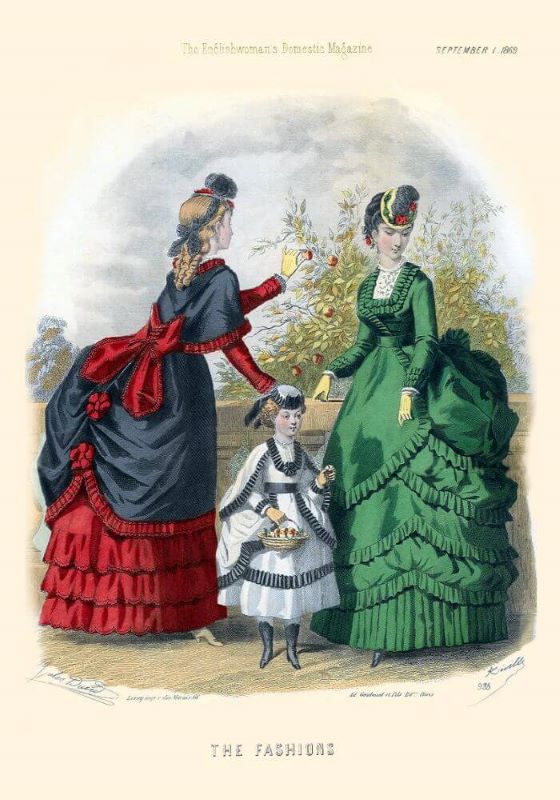
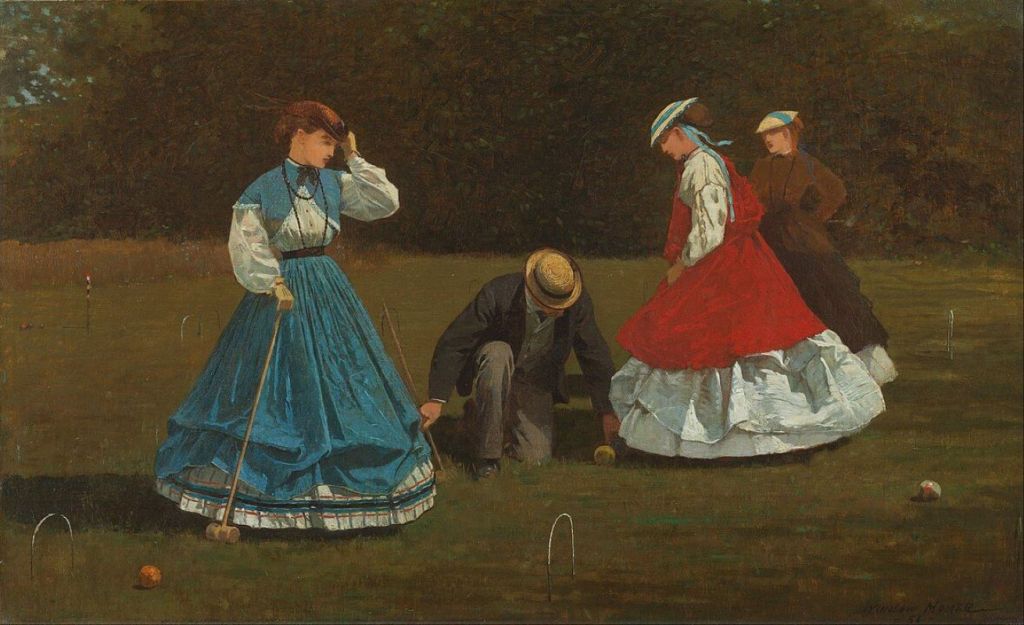
At the beginning of the decade, the fashionable silhouette was a fitted bodice with sloping shoulders and sleeves set below the natural shoulder, a fitted bodice, and a wide, floor-length skirt. The cage crinoline was circular and even all the way around.
Around 1862, the shape of the cage crinoline became elliptical, pushing more of the skirt’s volume to the back. A series of subtle changes to the shape were seen throughout the following years.
By 1868, the fashionable shape was almost flat in the front with most of the volume in the back. [1] The cage crinoline was modified into the crinolette, which only had hoops in the back. [2] This predicted the First Bustle Era.

Innovations & Influences
The use of the sewing machine by both home seamstresses and factories exploded. Although Isaac Singer had begun commercially selling his machine 1851, it wasn’t until the 1860s that it was used widely. The massive need for uniforms for the Civil War was a large contributing factor. [3] The amount and variety of readymade clothing for women expanded due to the speed and efficiency of the sewing machine. [4] As a result of this, the new cage crinolines were accessible to women of all social classes because they were cheap and fast to produce. [5]
Other chemists followed in the footsteps of William Perkins and began producing a rainbow of intense synthetic dyes. Two such colors were magenta and solferino, both named after towns in Italy. [6]
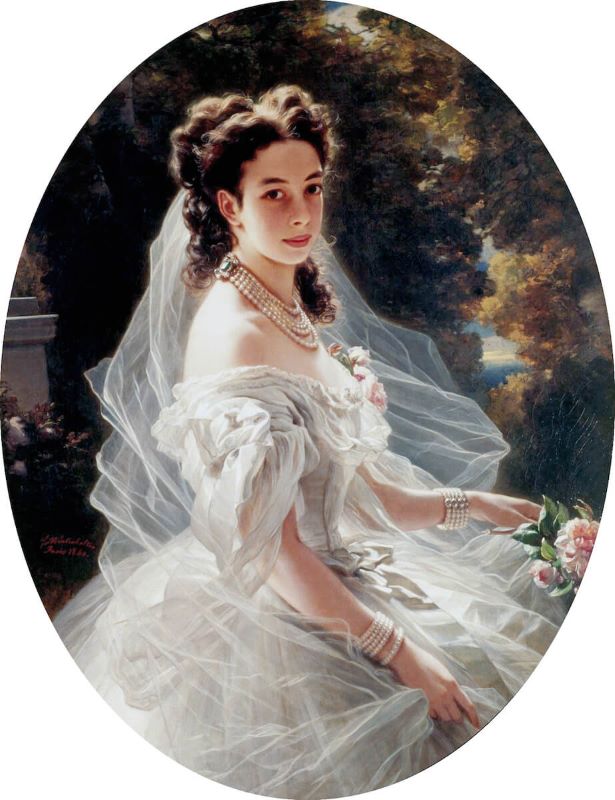
The influence of Charles Worth rocketed up through this decade. Even though he had opened his fashion house in 1858, it wasn’t until the 1860s that he cemented his reputation. Princess Pauline von Metternich is credited with helping launch his career. She ordered two gowns from him after reviewing a book of designs sent to her by Worth’s wife, Marie. She only paid 300 francs each after Marie said Worth would make a gown at any price. Her new white tulle evening gown caught the attention of Empress Eugenie, who requested an introduction to the designer.

Underwear
The linen or cotton chemise was still the base layer for all classes of women. It was generally short-sleeved and knee-length. With the introduction of the cage crinoline, drawers, pantelettes, and modesty skirts had become more common.
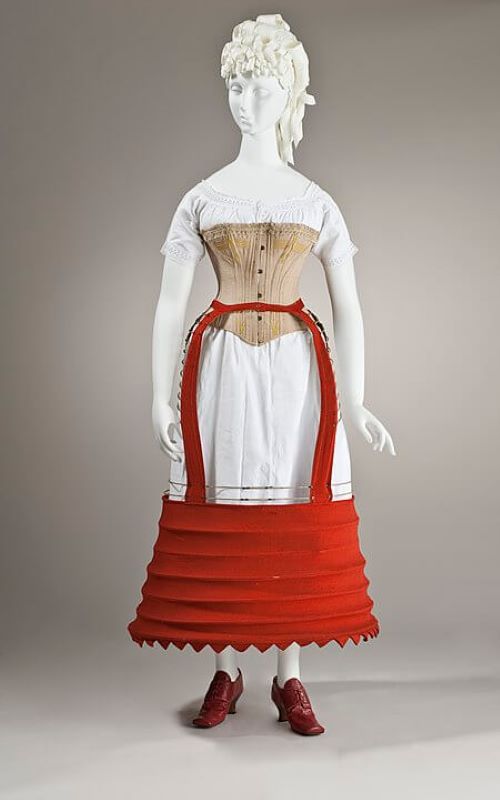
The corset was an essential support garment and helped to nip in the waist. The wide skirts of the decade made the waist look small by comparison. As result, tight lacing was not necessary. [7] At the beginning of the decade, corsets shortened since the waistline had returned to the natural waist and there was no need to restrict the hips. [8] However, as the volume of the skirts moved to the back and more emphasis was placed on the hips, they lengthened again and became more heavily boned. The dramatic curves were achieved through the shape of the panels and steam molding the boning. Toward the end of the decade, Edwin Izod invented a steam heated copper torso on which a corset soaked in starch was placed to dry. [9] Tight lacing became more common although concerns about the detrimental effects to women’s’ bodies were raised. [10] The split busk was also introduced during this decade. It meant the front fastened with a series of metal loops and posts. This innovation made it was far easier for women to put on their corsets themselves without the help of another person.
The cage crinoline of the previous decade was worn until the introduction of the elliptical cage crinoline, which was in turn replaced by the crinolette. Petticoats were still necessary to provide structure, although not as many needed to be worn.

Day Dress
Bodices or jackets buttoned in the front and had high necklines and long sleeves. The sleeves, which had begun to widen during the 1850s, reached their widest and were known as pagoda sleeves. False sleeves known as engageantes were worn beneath them. As the decade progressed, they became slimmer and were constructed with a curve like men’s sleeves. [11] The necklines were often embellished with detachable collars and wide belts, known as Swiss waists, were popular. [12] Young women began wearing blouses or shirtwaists instead of bodices.
The wide skirts were embellished, sometimes quite heavily with trim, braid, contrasting fabric, pleats, buttons, and tassels. Around 1865, it became trendy to pull up the skirt to show off the petticoat underneath, which was often a coordinating color and as heavily embellished as the skirt. [13]
Elements of military uniforms were incorporated, such as with the Zouave jacket of the 1850s. Another style was the “garibaldi” blouse. It was usually red with black braid or embroidery and was frequently paired with a Zouave jacket and Swiss waist. [14]
Eveningwear
The almost-of-the-shoulder evening bodices of the previous decade were still popular as was the bertha. Silk was by far the most popular fabric. Short gloves or fingerless mitts were worn.

Outerwear
Shawls were popular since fitted jackets didn’t work over the large skirts. Jackets, such as the paletot, increased in popularity. [15] Mantles were also worn and frequently trimmed with braid or tassels. [16]
Hairstyles & Headwear
The simple hairstyles from the previous decades were still worn at the beginning of the 1860s. The hair was parted in the center and brushed back into a bun. “Spaniel curls” over the ears were still popular. [17] A decorative hairnet known as a snood was worn over the bun.
As the decade progressed, the popular hairstyle became cascades of curls paired with braids and a chignon. The snood fell out of use. [18] False hairpieces were often used to achieve the fashionable looks. For evening, hair was lavishly arranged and embellished with feathers, jewelry, or flowers. [19]
The bonnet had been the standard from previous decades but in the 1860s it became acceptable to wear a small hat instead. [20] Bonnets became smaller and often the brim didn’t cover the face anymore. Hats were worn in the center of the head but with the higher hairstyles that were more voluminous and complicated in the back, hats were tipped forward over the forehead. [21]

Footwear
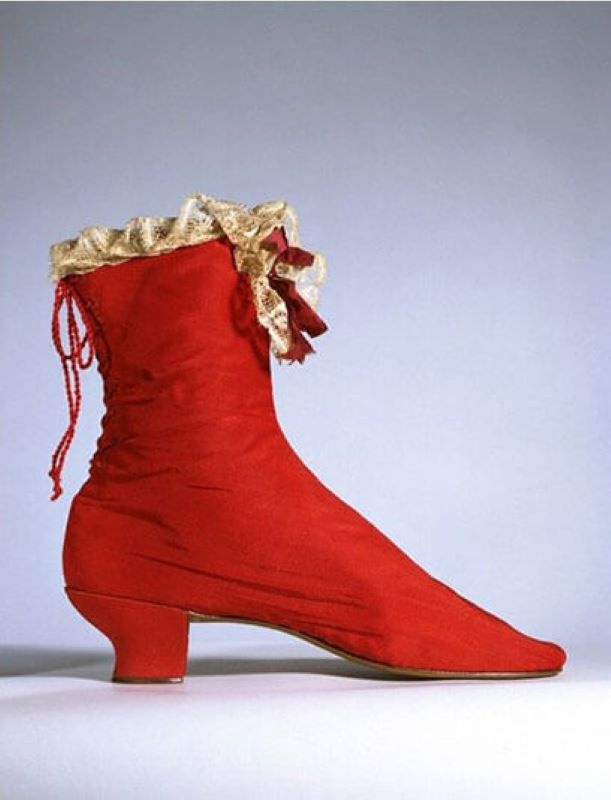
Shoes were usually calf-height with low thick heels. They either buttoned or laced. For evening, silk slippers were worn.
Accessories
Fans, parasols, and muffs were popular. Gloves were worn for most occasions, except when dining. Reticules were necessary since integral pockets were uncommon.
I hope this was helpful. Let me know if you have any questions or suggestions by using the Contact Me form on my website or writing a comment. I post every Friday and would be grateful if you would share my content.
If you want my blog delivered straight to your inbox every month along with exclusive content and giveaways please sign up for my email list here.
Let’s get writing!
Copyright © 2021 Rebecca Shedd. All rights reserved.
[1] Laver, James. Costume and Fashion: A Concise History, 5th ed. London: Thames & Hudson, Ltd, 2012 p. 188.
[2] Cunnington, C. Willett. English Women’s Clothing in the Nineteenth Century: A Comprehensive Guide with 1,117 Illustrations. Mineola, New York: Dover Publications, 1990 p. 230. Takeda and Spilker (2010), p. 99.
[3] Tortora, Phyllis G. and Keith Eubank. Survey of Historic Costume, 5th ed. New York: Fairchild Books, 2010 p. 358.
[4] Tortora, Phyllis G. and Keith Eubank. Survey of Historic Costume, 5th ed. New York: Fairchild Books, 2010 p. 358.
[5] Shrimpton, Jayne. Victorian Fashion. Oxford: Shire Publications, 2016 p. 13.
[6] Cunnington, C. Willett, English Women's Clothing in the Nineteenth Century, Dover Publications, Inc. New York 1990 ISBN 0-486-26323-1, page 208
[7] Mitchell, Rebecca N., ed. Fashioning the Victorians: A Critical Sourcebook. London: Bloomsbury, 2018 p. 94.
[8] Tortora, Phyllis G. and Keith Eubank. Survey of Historic Costume, 5th ed. New York: Fairchild Books, 2010 p. 361.
[9] "1860s corsets". vam.ac.uk. Archived from the original on 2011-01-08. Retrieved 2010-06-20.
[10] Routledge History of Sex and the Body, 2013, p. 196
[11] Severa, Joan L. Dressed for the Photographer: Ordinary Americans and Fashion 1840-1900. Kent, Ohio: Kent State UP, 1995 p. 194-197.
[12] Tortora, Phyllis G. and Keith Eubank. Survey of Historic Costume, 5th ed. New York: Fairchild Books, 2010 p. 363.
[13] Thieme, Otto C., Elizabeth A. Coleman, Michelle Oberly, and Patricia Cunningham. With Grace and Favor: Victorian & Edwardian Fashion in America. Cincinatti: Cincinatti Art Museum, 1993 p. 51.
[14] Cunnington, C. Willett. English Women’s Clothing in the Nineteenth Century: A Comprehensive Guide with 1,117 Illustrations. Mineola, New York: Dover Publications, 1990 p. 211.
Tortora, Phyllis G. and Keith Eubank. Survey of Historic Costume, 5th ed. New York: Fairchild Books, 2010 p. 366.
[15] Severa, Joan L. Dressed for the Photographer: Ordinary Americans and Fashion 1840-1900. Kent, Ohio: Kent State UP, 1995 p. 203-204.
[16] Tortora, Phyllis G. and Keith Eubank. Survey of Historic Costume, 5th ed. New York: Fairchild Books, 2010 p. 366.
[17] Cunnington, C. Willett. English Women’s Clothing in the Nineteenth Century: A Comprehensive Guide with 1,117 Illustrations. Mineola, New York: Dover Publications, 1990 p. 244.
[18] Severa, Joan L. Dressed for the Photographer: Ordinary Americans and Fashion 1840-1900. Kent, Ohio: Kent State UP, 1995 p. 205-206.
[19] Tortora, Phyllis G. and Keith Eubank. Survey of Historic Costume, 5th ed. New York: Fairchild Books, 2010 p. 367.
[20] Cunnington, C. Willett. English Women’s Clothing in the Nineteenth Century: A Comprehensive Guide with 1,117 Illustrations. Mineola, New York: Dover Publications, 1990 p. 238.
[21] Severa, Joan L. Dressed for the Photographer: Ordinary Americans and Fashion 1840-1900. Kent, Ohio: Kent State UP, 1995 p. 206-207.
 Rebecca Shedd - Author