
The Writer’s Guide to Psychological Trauma from Injuries
Posted on December 19, 2025 Leave a Comment

The broken bone, the blood, and the fever often take center stage when a character suffers a physical injury in a story. But many survivors of serious injuries will tell you that the psychological aftermath lasts far longer than the physical wounds.
For writers, portraying the emotional impacts, PTSD, and character reactions realistically not only adds depth but also honors the actual experiences of people who live with trauma. It turns injuries from onetime plot devices into ongoing character arcs.
What Is Psychological Trauma?
Psychological trauma is the emotional and mental response to an overwhelming event that threatens life, safety, or well-being. Injuries, especially violent or life-threatening ones, can trigger trauma responses long after the body heals.
Common forms in fiction include:
Acute Stress Reaction: Immediate panic, shock, or disassociation right after the injury.
Post-Traumatic Stress Disorder (PTSD): Long-term condition with flashbacks, nightmares, and hypervigilance.
Depression and Anxiety: Fear, guilt, or despair tied to loss of mobility, disfigurement, or sense of identity.
Emotional Affects of Injuries
Fear and Hypervigilance
Characters may avoid situations that remind them of their injury (a knight refusing to wear armor again, a driver terrified of cars after a crash).
Anger and Frustration
At themselves (“Why wasn’t I stronger?”) or others (“They left me behind”).
Frustration with long recovery periods or physical limitations.
Guilt and Survivor’s Guilt
Feeling unworthy for surviving when others did not.
Blaming themselves for the circumstances that caused the injury.
Shame and Identity Loss
Disfigurement or disability can create shame in societies that prize strength or beauty.
A soldier unable to fight, a dancer unable to perform, or a mage who loses their magic gestures may feel stripped of identity.
Numbness and Avoidance
Detachment from others, withdrawal from relationships, or using humor to mask deeper pain.
Post-Traumatic Stress Disorder (PTSD)
PTSD can develop after violent injuries, near-death experiences, or medical trauma. Realistic symptoms include:
Intrusive Memories: Flashbacks, nightmares, or uncontrollable thoughts about the injury.
Avoidance: Staying away from reminders of the event (places, people, conversations).
Negative Thinking: Persistent guilt, self-blame, hopelessness.
Hyperarousal: Easily startled, irritable, trouble sleeping, feeling constantly “on edge.”
Important Note: PTSD is not the same for everyone. Some characters may become withdrawn; others may overcompensate by becoming reckless or aggressive.
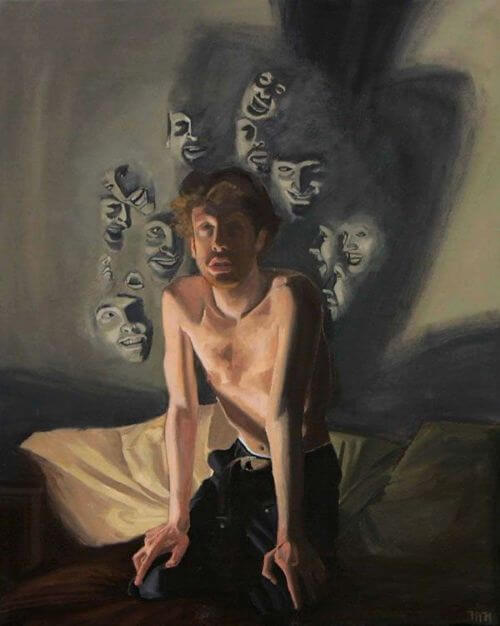
Character Reactions to Trauma
Short-Term Reactions
Shock, denial, or disassociation.
Panic attacks or sudden bursts of tears or anger.
Long-Term Reactions
Struggles with recovery and adaptation.
Relationship strain (partners, friends, comrades not knowing how to help).
Unhealthy coping mechanisms (substance abuse, self-isolation, overwork).
Positive Adaptations
Some characters may channel trauma into growth, developing empathy, resilience, or a new purpose.
The Writer’s Toolkit
Don’t Rush Recovery: Trauma doesn’t vanish with one pep talk. Show gradual progress with setbacks.
Avoid Stereotypes: Not every injured soldier becomes angry, or every survivor becomes broken. Show unique reactions.
Show Daily Life Struggles: Fear of loud noises, difficulty sleeping, panic in crowds. These minor details make trauma feel real.
Use Relationships: Show how loved ones respond (supportive, dismissive, or overwhelmed) and how that shapes recovery.
Mix Visible and Invisible: A healed wound may leave no scar, but nightmares or flashbacks linger.
Example Scenarios
A firefighter who survived severe burns panics when near a stove flame, hiding his terror to maintain bravado.
A queen injured in an assassination attempt struggles to trust her own guards, leading to paranoia in court politics.
A soldier with a torn ligament hears a twig snap in the woods and reacts as if under attack, startling companions.
A space colonist wakes screaming from nightmares of a cryochamber malfunction, long after being rescued.

A (Very) Short History of Psychological Trauma
A sense of how people named and treated trauma over time will keep your story grounded.
Antiquity and Middle Ages
Ancient Near East and Greece/Rome: People viewed suffering after a catastrophe as divine punishment, imbalance of humors, or melancholy. Combat distress appears in texts (e.g., warriors with “panic,” sleeplessness). They did not cleanly separate the mind and body.
Classical medicine: The humoral model (black bile, yellow bile, blood, phlegm) explained mood and “nerves.” Treatments included diet, baths, music, philosophy.
Medieval Europe: People interpreted affliction as sin, demonic influence, or moral trial. Ritual, prayer, pilgrimage, and community care predominated. Somatic symptoms (fainting, tremors) were real but spiritualized.
Early Modern (16th–18th c.)
“Hysteria,” “vapors,” and “nervous disorders”: Doctors proliferated gendered diagnoses.
Battle and accident trauma: Recognized descriptively (nightmares, startle, palpitations), not categorized.
Treatments: rest cures, tonics, mesmerism, bleeding/purging (declining).
19th Century
Industrial/transport accidents: “Railway spine” (post-accident symptoms without obvious injury) put mechanical shock and mind–body debates into law courts.
Soldiers and colonials: “Irritable heart,” “neurasthenia,” and “shell shock” precursors in Boer and Crimean wars; moral judgments (cowardice vs. genuine illness) shaped care and stigma.
20th Century
World War I: Shell shock becomes a cultural flash point – tremors, mutism, nightmares. Responses ranged from rest to punishment to early talk therapies.
World War II and Korea: Combat fatigue/battle exhaustion; group psychiatry and forward treatment emphasized quick return to duty.
Vietnam era: Veteran activism + clinical research culminate in PTSD entering the DSM-III (1980). Trauma recognized beyond combat (disaster, assault, accidents).

Late 20th and 21st Century
Expanded lenses: Complex PTSD (chronic/interpersonal trauma), moral injury, vicarious trauma, TBI–PTSD overlap, somatic and exposure therapies, EMDR, pharmacology.
Global perspectives: Cultural syndromes and indigenous healing remind us that trauma narratives are culture bound (community ritual vs. individual diagnosis).
Contemporary discourse: Stigma declines but persists; social media, veteran advocacy, and survivor memoirs shape expectations of realism.
How Genre Shapes Depictions of Trauma from Injuries
Contemporary Fiction
Likely causes: vehicle accidents, assaults, fires, mass-casualty events, sports injuries, occupational disasters, combat and first-responder experiences, medical/ICU trauma.
Depictions
Language and care: Characters may use terms like PTSD, triggers, flashbacks, grounding techniques, therapy, meds. Show systems: ER to rehab, workplace leave, insurance barriers.
Symptoms with texture: sleep disturbance, hypervigilance, irritability, avoidance, guilt, somatic pain, panic, dissociation, intrusive memories – waxing/waning over time.
Social reality: Mixed reactions: supportive partners, minimizing bosses, online communities. Stigma and self-stigma matter.
Aftercare arc: Physical rehab intersects with therapy; relapse and plateaus are common. Recovery ≠ cure; functioning can improve while symptoms persist.
Writer Tips
Pace symptoms over weeks/months; let good days mislead characters.
Pair external stakes (trial, custody, job fitness test) with internal triggers.
Use sensory accuracy (smells, sounds, textures) to cue intrusions instead of labeling “he had a flashback.”
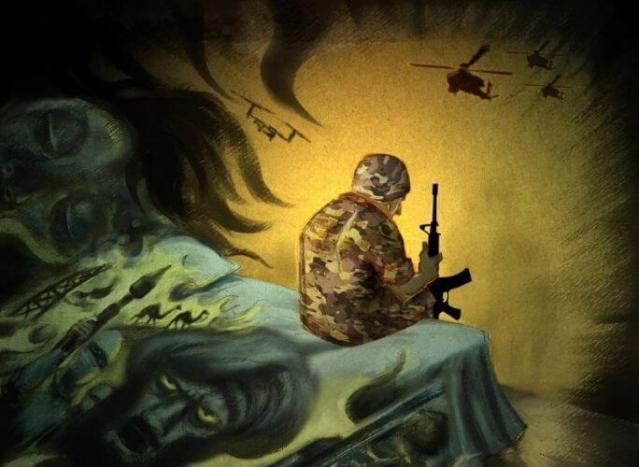
Historical Fiction
Likely causes: battlefield wounds, shipwrecks, plague/medical trauma, childbirth injuries, dueling, industrial accidents, riding and hunting mishaps.
Depictions
Period language: “Nervous disorder,” “soldier’s heart,” “melancholia,” “shell shock” (WWI), “distemper,” “moral weakness,” “possession.” Avoid anachronistic clinical terms.
Worldview: Clergy, barber-surgeons, apothecaries; explanations via humors, miasma, morality, or providence. Responses: rest cure, laudanum, tonics, water cures, religious ritual, exile to convalescence.
Social stakes: Honor, suspicion of malingering, class/gender biases. A noble’s “delicacy” may be indulged; a peasant’s “laziness” punished.
Writer Tips
Translate modern symptoms into period descriptions: sleeplessness, startlement, “the shakes,” “visions,” “spirit gone dim.”
Let period treatments help/harm: laudanum soothed nightmares but risks dependence; “rest cure” isolates and worsens despair.
Use institutions (regimental doctors, asylums) and diaries/letters to externalize an inner state consistent with the era.
Fantasy
Likely causes: maiming in battle, magical burns/poisons, mind-affecting curses, necromancy, forced geasa, near-death rituals, collateral damage from spell craft.
Depictions
Metaphor with rules: Curses function like trauma: recurring “echoes,” phobic geographies, memory-snare enchantments. Healing magic can close wounds yet not resolve fear/avoidance, or it transfers burden (healer absorbs echoes).
Cultural frames: Clan songs, temple rites, ancestor guidance as communal processing. Stigma may be “spirit-touched,” “omened,” or “unlucky.”
Limits of magic: Restoration spells heal flesh but leave moral injury (guilt over collateral deaths) or magical scars that trigger visions.
Writer Tips
Give magic trade-offs: a memory-cleansing rite also erases joy; protective wards numb both fear and love.
Build practices that mirror therapy (dream-walking, confession to a god, sword-forms as grounding) while staying in-world.
Science Fiction
Likely causes: hull breaches, cryo malfunctions, exosuit crush injuries, radiation burns, drone warfare guilt, cybernetic failures, alien biothreats.
Depictions
Futures of care: AI therapists, VR exposure labs, neuromodulators, memory editing, group therapy on long-haul ships, med-pods that fix bodies faster than minds.
New dilemmas: Is a memory redaction healing or erasure of self? Do synthetic limbs alter body image and identity? What if a ship’s black box replays trauma on loop?
Alien/cybernetics: Non-human psychologies (hive grief, color-based emotions), firmware “panic storms,” or trauma propagating across neural links.
Writer Tips
Keep consequences human: tech reduces suffering and creates ethical costs (access, consent, side effects).
Use setting-specific triggers (pressure doors hissing, hard vacuum silence) and practical barriers (therapy rationed on frontier worlds).
Practical Craft Notes (All Genres)
Show don’t label: Use concrete details: the fork clatter that spikes a startle response; the stitched scar the character won’t touch; the river they circle twice to avoid the bridge.
Arc design: Recovery is nonlinear. Interleave progress with setbacks; let victories be small (sleeping through the night, crossing a market square).
Relationships as mirrors: A partner who overprotects, a commander who doubts fitness, a friend who jokes to defuse. These dynamics externalize inner conflict.
Different kinds of wounds: Distinguish PTSD (intrusions/avoidance/hyperarousal) from depression, complicated grief, moral injury, and TBI. They can overlap but aren’t identical.
Avoid two pitfalls: The “instant cure” (a single talk, a spell, a gadget). The “trauma = personality” flattening. Let humor, competence, and desire coexist with symptoms.

Treatments for Psychological Trauma
The way societies understood and treated psychological trauma has shifted dramatically across time. From spiritual rituals to modern therapy, these approaches reveal not only medical practice but also cultural attitudes about injury, resilience, and the mind.
Ancient World (Pre-500 AD)
Trauma was often explained as divine punishment, imbalance of humors, or possession by spirits. Emotional suffering after battle or injury was described but rarely separated from physical causes.
Treatments
Spiritual rituals: Prayers, offerings, purification rites.
Philosophy: Stoics and other schools emphasized self-control and rational mastery over emotions.
Natural remedies: Herbal sedatives (opium poppy, wine, valerian root).
Community healing: Storytelling, music, and ritual feasts could restore social cohesion after collective trauma.
Limitations
No formal psychological care; trauma was endured or spiritualized. Those who failed to recover could be stigmatized as weak, cursed, or sinful.
Middle Ages (500-1500 AD)
Trauma symptoms (tremors, visions, muteness) were often seen as signs of sin, demonic influence, or madness.
Battlefield trauma was recognized but poorly addressed; “cowardice” was a common judgment.
Treatments
Religious intervention: Exorcism, confession, pilgrimage, relics.
Herbal remedies: Chamomile, lavender, St. John’s wort to “calm the spirit.”
Community support: Monasteries and religious orders sometimes sheltered the mentally unwell.
Isolation: Many trauma survivors were confined to “mad houses” or abandoned.
Limitations
Trauma was moralized or demonized; sympathetic care was rare and inconsistent.

18th and 19th Centuries
The rise of medicine reframed trauma as “nervous disorders,” “neurasthenia,” or “railway spine” (after train accidents).
Soldiers’ trauma was labeled “soldier’s heart” or “irritable heart.”
Treatments
Rest cures: Enforced bed rest, limited stimulation, isolation (popular for “nervous” women, often harmful).
Tonics and sedatives: Laudanum (opium), bromides, alcohol.
Asylums: Sometimes benevolent, often overcrowded and brutal.
Hydrotherapy: Baths, cold plunges, or showers believed to restore balance.
Talk therapy beginnings: Freud and others linked trauma to repression and memory.
Limitations
Treatments often reinforced stigma. Soldiers might be punished or forced back to battle. Women were especially pathologized.
Modern and Contemporary Medicine
Trauma is recognized as psychological and physiological: changes in the brain, nervous system, and stress response. PTSD became a formal diagnosis in the 1980s.
Treatments
Therapy: Cognitive Behavioral Therapy (CBT), EMDR, exposure therapy, trauma-focused counseling.
Medication: SSRIs, anti-anxiety drugs, sleep aids.
Rehabilitation: Pairing psychological care with physical rehab after injuries.
Peer support: Veteran groups, trauma survivor communities.
Holistic approaches: Mindfulness, yoga, art therapy, animal-assisted therapy.
Challenges
Access, cost, stigma, and treatment-resistant cases.

Fantasy
Magical Healing
Memory-erasing spells: effective but may erase identity or love as well as pain.
Spirit-cleansing rituals: priests or shamans “draw out” nightmares or curses.
Dream-walking: healers enter a patient’s dreamscape to confront trauma directly.
Alchemical Remedies
Potions or charms that calm the mind, but risk dependency or side effects (hallucinations, magical corruption).
Cultural Practices
Warrior societies may use ritual storytelling, symbolic duels, or bonding ceremonies to reintegrate traumatized members.
Traumatized characters might be revered as “spirit-touched” or shunned as cursed.
Writer’s Tool: Decide whether magic masks trauma (suppresses symptoms) or truly heals it and what that costs.
Science Fiction
Treatments
Neurotechnology: Neural implants that dampen hyperarousal or delete traumatic memories. Risk erasing trauma erases identity, moral lessons, or relationships formed through suffering.
Virtual Reality Therapy: Controlled exposure in VR recreates traumatic events safely.
Nanomedicine: Nanobots recalibrate neurotransmitters, repairing “trauma pathways.”
AI Counselors: Virtual therapists available instantly, raising questions of empathy vs. programming.
Alien Treatments: Non-human species may “share” trauma communally, purge it through symbiosis, or view trauma as an honorable scar of memory.
Narrative Hook: Futuristic treatments create ethical dilemmas. Should trauma be cured instantly if it means losing part of yourself?

Plot and Character Ideas
The Sound of Glass
Genre: Drama
Plot Idea: After surviving a devastating car crash, a young teacher develops panic attacks whenever she hears breaking glass.
Character Angle: She hides her symptoms from colleagues to avoid pity, but her silence begins to isolate her.
Twist(s): A student accidentally shatters a beaker in class, triggering a flashback that exposes her secret and forces her to seek help.
The Firehouse Silence
Genre: Contemporary Thriller
Plot Idea: A firefighter who survived a warehouse collapse struggles with survivor’s guilt after fellow crew members died.
Character Angle: He throws himself into reckless rescues to prove his worth, endangering his team.
Twist(s): His reckless bravery isn’t courage, it’s an unconscious death wish, and a rookie must stop him before tragedy repeats.
The Soldier’s Tremors
Genre: Napoleonic War Drama
Plot Idea: A veteran returns from Waterloo, plagued by nightmares and trembling fits described as “soldier’s heart.”
Character Angle: His family views him as broken; he wrestles with honor versus shame in a society that has no name for trauma.
Twist(s): His episodes reveal details of the battle others have missed, making him both unreliable and uniquely valuable as a witness.
The Asylum Letter
Genre: 19th-Century Gothic
Plot Idea: A woman institutionalized for “nervous disorder” after a carriage accident secretly writes letters detailing her vivid nightmares and hallucinations.
Character Angle: Powerless in the asylum, her writing becomes both rebellion and survival.
Twist(s): Her letters are smuggled out and inspire public debate that could change asylum practices.
The Mage’s Echo
Genre: Epic Fantasy
Plot Idea: A battle-mage barely survives a magical explosion but is haunted by “echoes” of fire and screams that return whenever he channels magic.
Character Angle: Once proud of his power, he now fears using it, leaving his companions vulnerable.
Twist(s): The echoes aren’t hallucinations, they are trapped souls, crying to be freed.
The Scarred Queen
Genre: Political Fantasy
Plot Idea: An assassination attempt leaves a young queen both scarred and terrified of court gatherings.
Character Angle: Her paranoia alienates allies and feeds rumors of weakness.
Twist(s): Her fear saves her. When she refuses to attend a feast, her absence thwarts another assassination plot.
The Broken Blade
Genre: Dark Fantasy
Plot Idea: A warrior who lost comrades in a failed siege cannot bear the sound of clashing steel, breaking down in battle.
Character Angle: He drinks to numb himself but secretly longs for redemption.
Twist(s): The enemy exploits his trauma, using war drums tuned to trigger his panic.
Cryo Dreams
Genre: Space Survival
Plot Idea: A colonist pulled from malfunctioning cryosleep experiences vivid hallucinations of suffocation and freezing.
Character Angle: Struggling to adapt on the new planet, she doubts whether her visions are trauma or a warning from the ship’s damaged AI.
Twist(s): The “hallucinations” turn out to be fragments of other colonists’ minds, bleeding into hers.
Neural Ghosts
Genre: Cyberpunk Noir
Plot Idea: A mercenary with a cybernetic arm is haunted by phantom pain and flashbacks of the ambush that cost him his limb.
Character Angle: He numbs himself with neuro-stims, jeopardizing missions.
Twist(s): His trauma isn’t just in his head. The cybernetic implant is replaying stored sensory data from the ambush.
The Void Between
Genre: Space Opera
Plot Idea: A starship pilot survives a hull breach but becomes hypervigilant, panicking whenever he hears the hiss of airlocks.
Character Angle: Once fearless, he now hesitates in combat, endangering his crew.
Twist(s): His paranoia proves right: the ship’s seals really are being sabotaged.
Ashes of the Stage
Genre: Contemporary/Fantasy Blend
Plot Idea: A stage performer injured in a pyrotechnics accident develops PTSD around fire, complicated when he discovers he has latent fire magic.
Character Angle: Torn between fear and destiny, he must master the very element that terrifies him.
Twist(s): His magic is tied to his trauma. He can only control it when facing his worst memories.
The Healer’s Burden
Genre: Fantasy/Sci-Fi Hybrid
Plot Idea: A battlefield medic develops psychological trauma from watching too many patients die despite advanced healing tools.
Character Angle: Known as compassionate and tireless, she secretly considers abandoning her duty.
Twist(s): Her trauma is weaponized. An enemy uses illusions of her past patients to paralyze her in combat.

Psychological trauma reminds readers that injuries don’t end with the scar. The emotional weight of fear, anger, guilt, or PTSD can be more transformative than the physical injury itself. When written with care and accuracy, trauma becomes a tool for character growth, conflict, and empathy, one that grounds even the most fantastical stories in deeply human truth.
I hope this was helpful. Let me know if you have questions or suggestions by using the Contact Me form on my website or by writing a comment. I post every Friday and would be grateful if you would share my content.
If you want my blog delivered straight to your inbox every month along with exclusive content and giveaways, please sign up for my email list here.
Let’s get writing!
Copyright © 2025 Rebecca Shedd. All rights reserved.
The Writer’s Guide to Infections and Complications
Posted on December 5, 2025 Leave a Comment
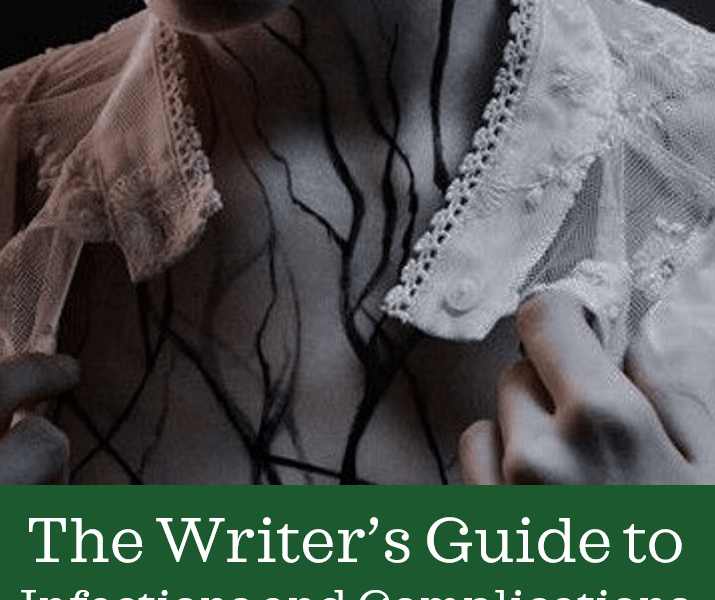
Writers often focus on the immediate drama of a character’s injury in fiction: the sword strike, the fall, or the gunshot. But some of the most dangerous threats come later, when the wound that seemed survivable turns deadly because of infection and complications.
From battlefield fevers in medieval sagas to post-surgical sepsis in sci-fi, understanding how infections develop and what signs to portray will give your story depth, realism, and suspense.
What Is an Infection?
An infection occurs when harmful microorganisms (bacteria, viruses, fungi, parasites) invade the body and overwhelm its defenses. In injuries, bacterial infection is the most common concern, especially in untreated or dirty wounds.
Complications arise when infection spreads, causes systemic problems, or interferes with the healing process. Historically, untreated infections were a leading cause of death from wounds that seemed minor at first.
Types of Infections in Wounds
Localized Infection
Stays near the wound site.
Redness, swelling, warmth, pus.
Pain increases instead of decreases.
Abscess
A pocket of pus forms beneath the skin or deep in tissue.
Painful swelling, throbbing sensation.
May rupture on its own or require drainage.
Cellulitis
Spreading infection of skin and underlying tissue.
Red streaking, swelling, tenderness.
Can advance rapidly, especially in the legs or arms.
Sepsis (Blood Poisoning)
Infection spreads into the bloodstream.
Fever, chills, confusion, rapid heartbeat, low blood pressure.
Medical emergency, often fatal without treatment.
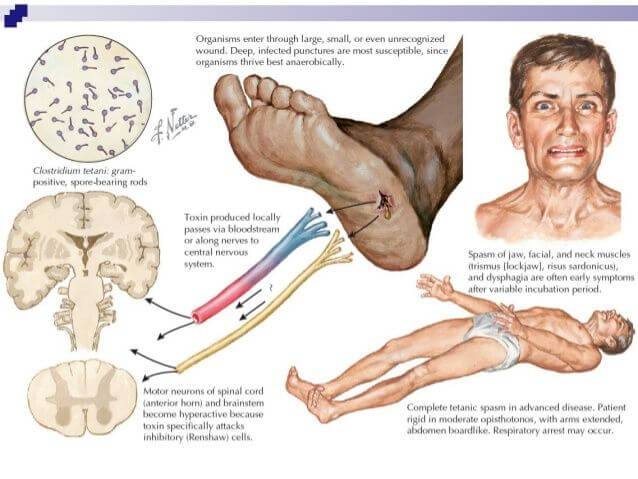
Tetanus
Caused by Clostridium tetani bacteria in deep puncture wounds.
Muscle stiffness, spasms, “lockjaw.”
Historically deadly before vaccines.
Gangrene
Tissue death because of infection or lack of blood flow.
Blackened, foul-smelling flesh.
May require amputation.
Symptoms and Signs
Early Local Signs
Redness, swelling, heat around the wound, pain that worsens, pus or foul odor.
Systemic Signs
Fever, chills, sweating, fatigue, confusion, nausea.
Red Flag Signs
Red streaks running from the wound toward the heart, rapidly spreading swelling, sudden severe pain, or collapse. These indicate the infection is moving into the bloodstream.
Risks and Complications
Delayed Healing: Infection slows recovery, keeping the wound open.
Scarring or Disfigurement: Especially with abscesses or gangrene.
Disability: Joint infections can permanently limit motion.
Death: Sepsis, tetanus, or gangrene can all be fatal.
For writers, infections are a powerful tool to raise the stakes after the immediate danger has passed.
Writing Tips for Realism
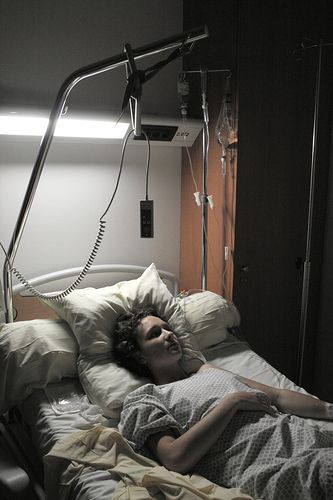
Use Timing: Infections usually develop over hours to days, not minutes. Show gradual worsening pain, swelling, fever before the crisis hits.
Show the Struggle: Characters often underestimate infection until too late. Pain, fever dreams, and delirium can all add drama.
Don’t Forget Complications: Amputation to save a life. Months of recovery after sepsis. PTSD from a near-fatal fever.
Avoid the “magic cure” cliché: Antibiotics or healing magic shouldn’t erase tension instantly. Think about limits, scarcity, or consequences.
Example: The cut on his leg had seemed trivial, just a scratch from a rusty blade. Two days later, the skin was angry red, swollen, and hot. By the third night, he burned with fever, shivering and sweating by turns. When the streaks appeared, running up his thigh like crimson rivers, even the bravest in the company whispered the word no one wanted to say: blood poisoning.
Depicting Infections and Complications Across Genres
Infections are one of the oldest and deadliest threats to human survival. Unlike a sword slash or a bullet wound, they are invisible killers, creeping in after the initial injury. How you portray them in your story will depend on genre, setting, and medical knowledge available.
Contemporary Fiction
How They Occur
Post-surgical complications (appendectomy wound, knee replacement, cesarean section).
Everyday injuries: a dirty cut in the garden, a puncture from a rusty nail.
Chronic conditions: diabetic foot infections, IV line infections.
Trauma: untreated cuts, lacerations, or burns from accidents.
Depiction Notes
Readers expect realistic medical accuracy: antibiotics, IV fluids, hospital isolation protocols.
Modern settings introduce issues like antibiotic resistance (MRSA, superbugs).
Infection isn’t always obvious. Symptoms may appear subtly and worsen quickly.
Narrative Use
A character’s minor wound spirals into sepsis during a stressful subplot.
A medical thriller focusing on outbreaks, hospital errors, or superbug crises.
Infection can be a test of resilience, willpower, or resourcefulness when modern medicine fails.
Historical Fiction
How They Occur
Battlefield wounds contaminated by dirt, feces, or rust.
Poor sanitation during sieges or voyages.
Lack of sterile surgical tools, surgeons using unwashed hands or knives.
Everyday risks: childbirth, animal bites, simple scratches.
Depiction Notes
Before germ theory (19th century), healers saw infection as “bad humors,” “putrefaction,” or divine punishment.
They recognized common signs (swelling, pus, fever), but often misunderstood them.
Treatments were primitive: cauterization, herbal poultices, bloodletting, vinegar washes, amputation.
Narrative Use
Characters may survive the battlefield only to die slowly from infection.
Creates realistic tension: the healer/priest must decide whether to amputate.
Infection can highlight themes of superstition, fate, or the limits of human control.
Fantasy
How They Occur
Dirty wounds from battle, monster bites, or curses.
Magical side effects: corrupted wounds that fester unnaturally, demon or poison-laced claws or weapons.
Prolonged exposure to unsanitary environments: swamps, dungeons, plague-ridden cities.
Depiction Notes
Healing magic could alter how infections behave:
Low-level magic may only suppress symptoms, not cure the infection.
Potions could “burn” infection out of the body but leave scars.
Priestly healing may depend on favor, ritual, or sacrifice.
Curses or magical plagues can act like infections but defy normal medicine.
Narrative Use
A wound that looks minor becomes a plot-driving illness, forcing the party to hunt for a rare herb or healer.
Infections can symbolize corruption, evil, or imbalance in the world.
Deciding who receives limited magical healing creates moral conflict.
Science Fiction
How They Occur
Space trauma: infections from poorly sterilized medbays or alien environments.
Colonization risks: alien microbes that interact unpredictably with human biology.
Cybernetic implants or exosuits introduce infections into the body.
Genetic engineering accidents create resistant superbugs.
Depiction Notes
Medicine may be advanced: nanobots, instant tissue regeneration, sterile surgical pods.
But tech introduces new vulnerabilities: Nanobot malfunction spreads infection faster. Alien pathogens bypass human immune systems. Artificial immune boosters might overreact, causing autoimmune “complications.”
Narrative Use
A colony faces a mysterious infection that threatens to wipe it out before terraforming is complete.
A wounded soldier discovers their infection is resistant to all known treatments, forcing experimentation with alien biology.
Infection becomes a metaphor for loss of humanity in a cyberpunk setting (body rejects cybernetic grafts).
Treatments for Infections and Complications Through Time
Infections are one of the greatest killers in human history. Until the discovery of germ theory and antibiotics, even minor scratches could become fatal. How your characters are treated or not will depend heavily on the medical knowledge, resources, and beliefs of the era or genre you’re writing in.
Ancient World (Pre-500 AD)
Healers were ignorant of germs and described wounds as “putrefying” or filled with “bad humors.” Treatments combined practical trial-and-error with ritual and superstition.
Treatments
Wound cleaning: Washing with wine, vinegar, honey, or herbal infusions (some of these had mild antibacterial properties).
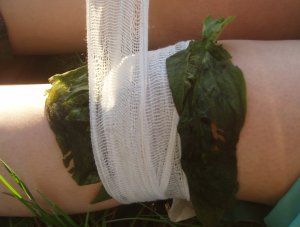
Poultices: Crushed herbs (garlic, onion, willow, aloe) to reduce swelling.
Cauterization: Burning the wound closed, hoping to prevent spread.
Amputation: Last resort for severe gangrene.
Spiritual methods: Prayers, offerings, amulets.
Limitations
Some remedies (like honey or vinegar) helped, but without understanding infection, survival was inconsistent.
Middle Ages (500-1500 AD)
Humoral theory was still dominant; healers thought infection was caused by imbalance, miasma (“bad air”), or divine punishment. Surgeons gained experience from battlefield medicine but still lacked sterilization practices.
Treatments
Herbal poultices: Yarrow, comfrey, and vinegar compresses.
Bloodletting and purging: Common but harmful.
Cauterization and lancing abscesses: Crude but occasionally effective.
Honey or resin: Used as wound dressings.
Prayer and relics: Spiritual healing sought alongside physical.
Limitations
Surgeons worked with unwashed tools and hands, spreading infection. Mortality rates after surgery were extremely high.
18th and 19th Centuries
People had a growing awareness of cleanliness, but they did not fully accept germ theory until the late 19th century. Amputations were common for infected limbs.
Treatments
Cleaning with spirits or carbolic acid: Lister pioneered antiseptic surgery in the 1860s.
Amputation: Still widely practiced for gangrene or severe infection.
Topical remedies: Mercury, iodine, and vinegar.
Quinine: Used to fight malaria and fevers.
Quarantine and isolation: For contagious diseases.
Limitations
There were no antibiotics yet; even minor infections could escalate. Sepsis remained a frequent cause of death.
Modern Medicine
Germ theory, antiseptics, vaccines, and antibiotics revolutionized infection control. Most localized infections are now survivable with treatment.
Treatments
Antibiotics: Oral or IV (penicillin, cephalosporins, etc.).
Vaccines: Prevent infections like tetanus.
Surgery: To drain abscesses or remove necrotic tissue.
Antivirals/antifungals: Target specific pathogens.
ICU care: IV fluids, oxygen, vasopressors for sepsis.
Prosthetics: After life-saving amputations.
Limitations
Antibiotic resistance and hospital-acquired infections are growing threats.
Fantasy
Rare plants with natural antibacterial properties, potions that purge “bad blood,” or alchemical brews that sterilize wounds.
Healing Magic
Instant cleansing spells that burn infection away but may leave scarring.
Divine blessings that cure, but only for the faithful or the chosen.
Cursed wounds that resist natural or magical healing, spreading supernatural rot.
Narrative Hooks
A healer forced to choose who receives the last healing potion.
A wound treated with dark magic leaves the character cured physically but spiritually tainted.

Science Fiction
Healers face challenges on alien worlds with no knowledge of how their environment will interact with human bodies.
Possible Treatments
Nanotechnology: Nanobots identify and destroy pathogens at the cellular level.
Synthetic Immune Boosts: Engineered viruses or bacteria designed to out-compete infections.
Tissue Regeneration: Bio-printers or stem cell therapy to replace infected flesh.
Sterile Med pods: Fully automated surgical and healing units.
Alien Pathogens: Infections humans don’t recognize, requiring hybrid medicine or cultural knowledge from alien allies.
Narrative Hooks
A colony faces a microbe that mutates faster than nanotech can counter.
An alien infection resists human antibiotics, forcing risky experimental treatments.
Cybernetic implants become the infection source, rejecting human tissue.
Plot and Character Ideas
The Paper Cut
Genre: Contemporary Drama
Plot Idea: A seemingly trivial paper cut develops into a severe infection because of antibiotic resistance, threatening a young lawyer’s career just before a high-stakes trial.
Character Angle: A workaholic who never slows down must confront fragility and dependence on others.
Twist(s): The infection forces them to rely on a rival associate who has secretly been undermining them.
The Hospital Wing
Genre: Medical Thriller
Plot Idea: A routine post-surgical infection spirals into sepsis after a hospital cover-up hides contamination issues.
Character Angle: A nurse suspects foul play and risks her career to protect patients.
Twist(s): The contamination was not negligence but deliberate sabotage by someone inside.
The Festering Wound
Genre: Medieval Military Drama
Plot Idea: A knight survives battle with only a scratch, but days later infection sets in, weakening him during a siege.
Character Angle: Proud and dismissive of healers, he resists treatment until it’s too late.
Twist(s): His sickness shifts leadership to a younger, underestimated squire who turns the tide of the siege.
The Voyage Fever
Genre: Age of Sail Historical Adventure
Plot Idea: Sailors on a long voyage suffer from infected wounds after a storm leaves medical supplies ruined.
Character Angle: A ship’s surgeon must improvise with herbs and spirits, battling both infection and mutiny.
Twist(s): The surgeon’s remedies save many, but their own untreated wound festers, forcing them to confront mortality.
The Rotting Curse
Genre: Dark Fantasy
Plot Idea: A hero slays a demon but suffers a wound that becomes magically infected, spreading corruption through his body.
Character Angle: Known for bravery, he hides his worsening condition to keep morale high.
Twist(s): The hero’s infection can only be cured by the demon’s blood, forcing the party to resurrect their fallen foe.
Herbalist’s Trial
Genre: High Fantasy
Plot Idea: A village is stricken with infected wounds after a battle. The herbalist must find a rare flower in enemy territory to treat the spreading illness.
Character Angle: A shy, overlooked healer thrust into a position of leadership.
Twist(s): The flower works but only if brewed with the healer’s own blood, binding their life to the patients’.
The Tainted Chalice
Genre: Court Intrigue Fantasy
Plot Idea: A noblewoman suffers complications from a poisoned cup, and infection spreads through her body.
Character Angle: Once politically untouchable, she is now vulnerable, relying on servants she once ignored.
Twist(s): The infection was never natural, it is sustained by a rival’s curse that worsens with each attempt at healing.
Red Sand Fever
Genre: Sci-Fi Survival
Plot Idea: Colonists on Mars develop strange infections from cuts contaminated with alien soil microbes.
Character Angle: A geologist who argued against colonization protocols becomes the only one who knows how to fight the infection.
Twist(s): The microbe isn’t a pathogen, it’s intelligent and attempting to communicate.
Nanobot Rebellion
Genre: Cyberpunk Thriller
Plot Idea: Medical nanobots designed to repair tissue after injury begin malfunctioning, treating healthy cells as infections.
Character Angle: A corporate mercenary enhanced with nanotech now faces their own body turning against them.
Twist(s): The malfunction is deliberate sabotage by a rival corporation, and the “infection” might be reversible if the mercenary switches sides.
Cryo-Sepsis
Genre: Space Opera
Plot Idea: After a cryosleep malfunction, several passengers awaken with systemic infections spreading too quickly for standard treatment.
Character Angle: A medic with outdated training must find experimental ways to treat the survivors while traveling light-years from help.
Twist(s): The infection isn’t bacterial but a cryogenic parasite awakened during the thaw.
The Healing Price
Genre: Fantasy/Sci-Fi Hybrid
Plot Idea: Healer’s save a wounded soldier’s life with advanced biotech grafts, but weeks later the implants fester with a new infection.
Character Angle: They’re torn between gratitude for survival and horror at what’s happening to their body.
Twist(s): The infection isn’t foreign; it’s their own immune system rejecting humanity as their body shifts toward machine.
The Scarlet Vein
Genre: Gothic Historical Horror
Plot Idea: A surgeon in the 19th century notices an epidemic of red-streaked infections after surgery. Patients die in his clinic, and rumors spread of a curse.
Character Angle: He must fight superstition, guilt, and ignorance to uncover the truth of contagion.
Twist(s): He discovers the infections stem from his own unwashed instruments, forcing him to choose between saving future lives or protecting his reputation.
Infections and complications turn “survivable” wounds into slow-burning threats that test a character’s endurance, resilience, and relationships. They force hard decisions: amputate to save a life, risk travel to reach a healer, or use scarce medicine on one person while others go without.
Handled realistically, infections aren’t just obstacles, they’re opportunities for tension, drama, and meaningful change in your story.
I hope this was helpful. Let me know if you have questions or suggestions by using the Contact Me form on my website or by writing a comment. I post every Friday and would be grateful if you would share my content.
If you want my blog delivered straight to your inbox every month along with exclusive content and giveaways, please sign up for my email list here.
Let’s get writing!
Copyright © 2025 Rebecca Shedd. All rights reserved.

The Writer’s Guide to Torn Ligaments and Tendons
Posted on November 21, 2025 2 Comments
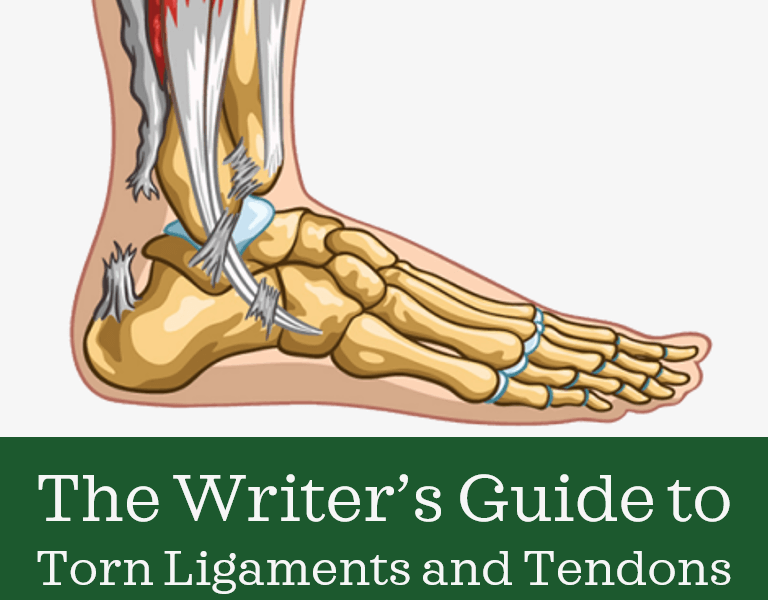
Not all dramatic injuries involve swords, bullets, or fire. Some of the most debilitating and narratively useful injuries are the ones that don’t look dramatic at all: torn ligaments and tendons. A character may walk away from a fall, jump, or sudden movement looking fine, only to discover their body won’t support them when they need it most.
For writers, understanding how these injuries occur, what they look like, and how they heal can add realism and tension to both everyday stories and high-stakes adventures.
Definition
Ligaments are bands of tissue that connect bone to bone, stabilizing joints.
Tendons are connective tissue that attach muscles to bone, transmitting the force that moves the skeleton.
Both can stretch, partially tear, or completely rupture because of trauma or overuse. These injuries can sideline a character for weeks, months, or even permanently, especially if left untreated.

Types of Injuries
Ligament Tears (Sprains)
Common in the knee (ACL, MCL, LCL, PCL) and ankle.
Classified by severity:
Grade I: Stretching, micro-tears.
Grade II: Partial tear, joint instability.
Grade III: Complete rupture, joint may give way entirely.
Tendon Tears (Strains)
Common in the Achilles tendon, rotator cuff, biceps, hamstring.
Can be acute (from a sudden force) or chronic (from overuse).
A complete rupture often feels or sounds like a “pop” followed by sudden weakness.
Signs and Symptoms
Sudden sharp pain at the site of injury
Swelling and bruising (may appear after hours)
Inability to bear weight (ankle/knee) or lift (shoulder/biceps)
A joint that feels unstable or “gives out”
A noticeable gap or deformity in severe tendon ruptures
Loss of function: a knee that buckles, a hand that can’t grip, a foot that won’t push off
Dangers
Loss of mobility: Characters may no longer run, fight, or climb until healed.
Reinjury risk: Untreated or poorly healed tears are prone to repeat damage.
Permanent disability: A completely ruptured tendon or ligament can leave long-term weakness if not surgically repaired.
Compensatory injuries: Overuse of the opposite limb can create a cycle of fresh injuries.
For writers, this makes torn ligaments and tendons excellent “hidden cost” injuries: they’re not always fatal, but can permanently alter a character’s path.

Rehabilitation Process
Rehabilitation is long and grueling, often lasting months.
Early stage: Immobilization and gentle movement to avoid stiffness.
Middle stage: Gradual strengthening and physical therapy.
Late stage: Return to full activity, often with bracing or taping for protection.
Recovery Timeline
Minor sprains/tears: 4–6 weeks
Major tears with surgery: 6–12 months
Some never regain full pre-injury strength or mobility
Writer’s Toolkit
Avoid instant recovery clichés: A torn ACL doesn’t heal in a week.
Use realism to raise stakes: A hero with a knee that gives out mid-chase can completely shift the outcome of a scene.
Show the emotional weight: Long recovery periods can mean missed opportunities, sidelined careers, or guilt for slowing down a team.
Let recovery leave scars: Even with healing, a character may always wear a brace, avoid certain movements, or carry a limp.
Use recovery as part of the story arc: A character struggling to relearn how to walk, climb, or wield a weapon creates natural opportunities for conflict, frustration, and growth.

Depicting Torn Ligaments and Tendons Across Genres
Ligament and tendon injuries may not be as flashy as sword wounds or gunshots, but they can be devastatingly realistic obstacles. Because they compromise movement and stability, they’re often story-changing injuries: when a strong character can no longer rely on their body. How you portray them depends heavily on the genre, cause, and treatment available in your world.
Contemporary Fiction
How They Occur
Sports: Common in football, basketball, gymnastics, soccer (e.g., ACL tears, Achilles ruptures).
Accidents: Slips and falls, car crashes, awkward landings.
Occupational injuries: Heavy lifting or repetitive strain.
Depiction Notes
Readers expect medical realism: MRIs, surgeries, physical therapy, and long recovery timelines.
The emotional impact is tremendous. Athletes, dancers, or soldiers may face career-ending injuries.
Writers should show pain and instability realistically (sharp pain, joint “giving way,” long rehab).
Narrative Opportunities
The injury can sideline a protagonist at a crucial time (trial, competition, pursuit).
It can also serve as a metaphor for vulnerability in otherwise strong characters.
Example: A ballet dancer tears her Achilles tendon days before a breakthrough performance. Her artistic identity is suddenly shattered.

Historical Fiction
How They Occur
Battlefield injuries: Slipping in armor, twisting while swinging weapons, or falls from horses.
Agricultural/physical labor: Overstraining while lifting or repetitive fieldwork.
Accidents: Tumbles from scaffolding, carts, or ships.
Depiction Notes
People in the past described these injuries as “lamed” or “crippled” because they didn’t understand ligaments and tendons anatomically.
Without surgery or advanced rehab, complete ruptures meant permanent disability (limping, loss of grip strength, or inability to fight).
Treatments would be limited to rest, herbal poultices, and crude splints/braces.
Narrative Opportunities
A knight or soldier with a torn ligament might become a mentor or strategist instead of a warrior.
In peasant life, it could mean loss of livelihood and deepening poverty.
Creates realism in depicting the long-term costs of battle or hard labor.
Example: A medieval archer tears a shoulder tendon during training. Without effective treatment, he loses his profession and must find a new path.
Fantasy
How They Occur
Overexertion in combat or training (vaulting, rolling, sudden impacts).
Magical beasts: being thrown by a giant, yanked by a wyvern’s tail, or strained while pulling someone from danger.
Cursed or enchanted injuries that mimic ligament/tendon ruptures.
Depiction Notes
Healing options vary.
Low-magic settings: Similar to historical. Permanent disability or slow recovery.
High-magic settings: Potions or spells might instantly knit connective tissue but perhaps at a cost (shortened lifespan, magical scars, debt to the caster).
Even in magical settings, consider limits: maybe magic can mend bone but not restore tendon elasticity.
Narrative Opportunities
Use the injury to highlight team dynamics: does the group slow down to care for the injured, or abandon them?
A mage who tears a tendon in their hand might lose access to gesture-based spells until healed.
The injury could force creative adaptations: learning to fight differently, using magic as a crutch, or training a companion to step up.
Example: A ranger tears his knee ligament while evading orcs. Even with magical salves, he walks with a limp, a reminder of the raid that haunts him.
Science Fiction
How They Occur
Overexertion in low gravity (tendons overstretch without normal resistance).
Industrial accidents in mining colonies or spaceship repair.
Exosuit malfunction straining joints beyond natural limits.
Alien environments where gravity, atmosphere, or physiology make tendons more vulnerable.
Depiction Notes
Advanced medicine might mean:
Nanotech repairs that regrow tissue at the cellular level.
Bioengineered replacements are stronger than human originals.
Exoskeletal supports while ligaments heal.
But tech could fail, be unavailable, or create side effects: over-engineered tendons that tear surrounding tissue, cybernetic replacements that alienate the character from their humanity.
Narrative Opportunities
Injury becomes a resource scarcity plot: who gets the last nanotech injection?
Explores trans-humanist questions. Does a person remain themselves if they replace most of their body?
Injury could also be a disguise: a spy fakes a torn tendon to mask enhanced cybernetic strength.
Example: A soldier tears her Achilles tendon during a mission on a high-gravity world. Med drones offer a cybernetic replacement, but at the cost of her military discharge and human identity.
Treatments for Torn Ligaments and Tendons Across Genres
Torn ligaments and tendons may not be as bloody as a sword wound, but they are life-changing injuries. A complete rupture can take someone from warrior, dancer, or athlete to disabled in an instant. How your story treats these injuries will depend heavily on the era, culture, and technology of your world.
Ancient World
Ancient physicians didn’t distinguish between sprains, fractures, or tendon ruptures. They simply recognized that joints could become unstable, swollen, and painful. People often explained injuries through humors or divine punishment.
Treatments
Rest and immobilization: Splints or bindings made from reeds, leather straps, or linen.
Poultices and compresses: Herbal salves like comfrey (“bone-knit”), honey, or oils to “draw out swelling.”
Massage and stretching: Egyptian and Greek healers often prescribed manipulation to “restore balance.”
Spiritual or ritual healing: Prayers, amulets, or offerings to deities associated with strength or health.
Limitations
Severe tendon or ligament ruptures were usually permanent disabilities. Characters might limp, favor one arm, or retire from combat or hard labor.

Middle Ages
People viewed injuries through humoral theory: swelling was “heat and wet” trapped in the joint. Surgeons and barber-surgeons could treat broken bones, but their understanding of connective tissue injuries was limited .
Treatments
Binding and bracing: Stiff bandages, splints of wood or bone.
Topical remedies: Vinegar, rosewater, or poultices with herbs like yarrow or chamomile.
Bleeding or purging: Sometimes prescribed to “balance humors,” weakening the patient further.
Rest: Immobilization of the joint, often for weeks.
Limitations
Severe tendon ruptures or torn ligaments often resulted in crippling disabilities. Without surgical repair, a torn Achilles tendon or knee ligament could end mobility for life.
18th and 19th Centuries
Anatomy studies improved. Surgeons identified ligaments and tendons more precisely. However, surgical repair was still primitive, and infection was a major risk before antiseptics.
Treatments
Immobilization: Wooden splints, braces, or plaster casts (plaster casts became common by the mid-19th century).
Pain management: Opium or alcohol.
Surgery: Rarely attempted, but some tendon repairs were crudely stitched. Survival often depended on avoiding infection.
Rehabilitation: Gentle stretching or massage, though people often misunderstood “rehab.”
Limitations
Even with repair, outcomes were uncertain. Many soldiers, sailors, or laborers with severe tears were discharged by their employers because they were permanently disabled.
Modern and Contemporary Medicine
Advanced imaging (MRI, ultrasound) allows precise diagnosis. Surgical techniques and physical therapy have revolutionized outcomes.
Treatments
Non-surgical care: Minor sprains/tears treated with R.I.C.E. (Rest, Ice, Compression, Elevation), bracing, and physiotherapy.
Surgery: Tendon reattachment with sutures, ligament reconstruction (e.g., ACL replacement with graft tissue).
Rehabilitation: Carefully staged rehab lasting months; emphasis on restoring strength and stability.
Prognosis: Many patients regain full function, though some never return to pre-injury performance.
Fantasy
Herbal Remedies: Rare plants that accelerate tissue knitting or reduce swelling dramatically.
Alchemy: Potions that restore connective tissue elasticity but perhaps shorten lifespan or leave “weakened spots” vulnerable to re-injury.
Healing Magic
Instant regeneration spells that reweave torn fibers.
Limitations: healing might consume the caster’s energy, work only once per injury, or leave magical scars.
Some spells may heal bone but not tendon or ligament, forcing creative problem-solving.
Divine Intervention: Priests or holy relics may restore use of a joint but only to those deemed worthy.
Tension for Writers
Magic should not erase stakes. Even with powerful healing, decide whether scars remain, recovery is exhausting, or side effects shape future choices.

Science Fiction
Nanotechnology: Nanobots injected into the bloodstream stitch torn fibers at the molecular level.
Synthetic Replacements: Bio-engineered ligaments or tendons stronger than the originals.
Exoskeletal Supports: Temporary robotic braces allow full mobility while natural healing occurs.
Tissue Printing: 3D bio-printers regrow tendons/ligaments using stem cells.
Gene Therapy: Enhances healing speed, though at risk of cancerous overgrowth or mutations.
Tension for Writers
Futuristic medicine may tempt characters to enhance themselves rather than heal naturally, raising ethical and identity-driven conflicts.
Plot and Character Ideas
The Final Routine
Genre: Contemporary Sports Drama
Plot Idea: A competitive gymnast tears her ACL during a qualifying event for the national team. Her injury sidelines her just as she’s about to achieve her lifelong dream.
Character Angle: Defined by discipline and control, she must navigate life outside the sport while grappling with her identity.
Twist(s): She becomes a coach for a rival athlete, forcing her to confront jealousy and redefine what “winning” means.
The Step Down
Genre: Crime Thriller
Plot Idea: A police detective tears his Achilles tendon chasing a suspect. Stuck on desk duty, he uncovers corruption within his own department.
Character Angle: Used to action, he struggles with immobility and forced patience, but his investigative skills sharpen.
Twist(s): His injury wasn’t accidental. Another cop tipped the suspect off, leading him to the heart of the conspiracy.
The Archer’s Silence
Genre: Medieval Military Drama
Plot Idea: A master archer tears a shoulder tendon during a siege, leaving him unable to draw his bow at a critical moment.
Character Angle: Once a proud symbol of his village’s skill, he’s forced into the role of strategist and teacher.
Twist(s): His apprentice, previously dismissed as too weak, becomes the hero who lands the decisive shot.
The Broken Rider
Genre: 19th-Century Western
Plot Idea: A cowboy is thrown from his horse and tears a knee ligament during a cattle drive. The drive must continue, but he can barely walk.
Character Angle: Proud and stubborn, he refuses to admit his weakness and endangers the crew.
Twist(s): His refusal to stop sparks a mutiny among the drovers, testing loyalty more than cattle rustlers ever could.
The Crippled Blade
Genre: Epic Fantasy
Plot Idea: A renowned swordsman suffers a torn shoulder tendon mid-duel, ending his fighting career. But when war breaks out, the kingdom still demands his service.
Character Angle: He must adapt from warrior to tactician, struggling with bitterness over lost glory.
Twist(s): His knowledge as a duelist gives him an edge as a commander, but his old enemy spreads rumors he’s cursed, undermining his leadership.
Mage’s Grip
Genre: Dark Fantasy
Plot Idea: A spellcaster tears a tendon in their hand during a brutal ritual, crippling their ability to perform gestures required for magic.
Character Angle: Once powerful, now dependent on apprentices to channel spells, they face a humiliating fall from power.
Twist(s): They discover a way to cast spells without gestures by channeling raw willpower, but it corrupts their mind each time they use it.
The Deserted Scout
Genre: Survival Fantasy
Plot Idea: A ranger on a desert mission tears his knee ligament while escaping a sand beast. Stranded and unable to move quickly, he must survive until help arrives.
Character Angle: Fiercely independent, the ranger resents relying on others, especially a green recruit who refuses to abandon him.
Twist(s): The recruit is secretly a spy ordered to ensure the ranger never returns.
Gravity’s Cost
Genre: Sci-Fi Exploration
Plot Idea: On a high-gravity planet, a soldier ruptures his Achilles tendon while running. Without access to advanced med-tech, the team must improvise a brace while under alien attack.
Character Angle: He prides himself on being the strongest of the group, but now must trust others to carry him.
Twist(s): The alien attackers, sensing weakness, are drawn to his injury, not the team.
The Augment’s Failure
Genre: Cyberpunk Thriller
Plot Idea: A street runner with biomechanical tendon replacements has one snap mid-chase. He discovers the corporation that built him has intentionally sabotaged his body.
Character Angle: Once proud of his enhancements, he now feels betrayed by the very tech he relied on.
Twist(s): The failure wasn’t sabotage, it was a built-in failsafe to keep him under corporate control.
Voidwalker’s Limp
Genre: Space Opera
Plot Idea: A pilot tears shoulder ligaments during evasive maneuvers in zero-G, leaving them grounded just before a massive battle.
Character Angle: The pilot struggles with guilt as others fight in their place, haunted by the belief they abandoned their squad.
Twist(s): Their injury saves them, keeping them alive to lead a desperate counteroffensive later.
The Silent Partner
Genre: Mystery / Contemporary
Plot Idea: A violinist suffers a tendon rupture in her hand, silencing her career. But when her partner is murdered, her knowledge of the music world helps her uncover the truth.
Character Angle: Defined by her art, she must repurpose her skills – keen hearing, attention to rhythm, and discipline – into detective work.
Twist(s): The murderer is her understudy, who orchestrated the injury by tampering with her instrument.
The Reluctant Heir
Genre: Fantasy / Historical Blend
Plot Idea: An heir to a warlord’s throne tears a knee ligament in training, casting doubt on their ability to lead in battle.
Character Angle: Desperate to prove worth, they mask the injury while navigating deadly court politics.
Twist(s): Their physical weakness forces them to pursue diplomacy over war, and they succeed where their father never could.
Torn ligaments and tendons are excellent narrative devices because they’re non-lethal but life-altering. They test endurance, patience, and identity just as much as physical strength. Whether you’re writing a soldier, athlete, mage, or astronaut, depicting these injuries realistically grounds your story and deepens your character’s journey.
I hope this was helpful. Let me know if you have questions or suggestions by using the Contact Me form on my website or by writing a comment. I post every Friday and would be grateful if you would share my content.
If you want my blog delivered straight to your inbox every month along with exclusive content and giveaways, please sign up for my email list here.
Let’s get writing!
Copyright © 2025 Rebecca Shedd. All rights reserved.

The Writer’s Guide to Heatstroke and Dehydration
Posted on November 7, 2025 Leave a Comment
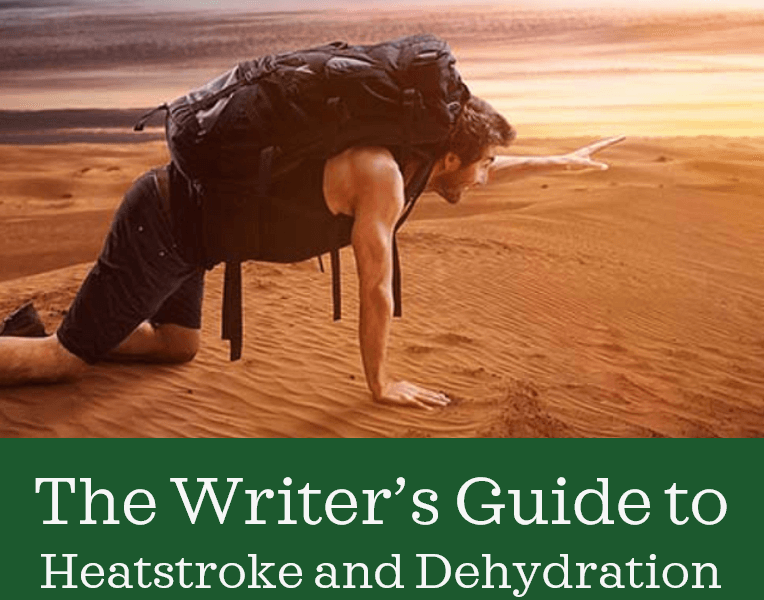
Extreme heat can be just as dangerous and narratively rich as any battlefield injury. For writers, depicting heatstroke and dehydration accurately can raise tension, add realism, and create both physical and emotional challenges for your characters. Whether your setting is a scorching desert, a futuristic mining colony, or a medieval battlefield in midsummer, understanding the science behind these conditions will make your writing more immersive.
Understanding the Difference
Dehydration occurs when the body loses more fluids than it takes in, reducing its ability to function normally. It’s often the precursor to more serious heat-related illnesses.
Heatstroke is a severe, life-threatening condition caused by the body’s inability to regulate its temperature, often because of prolonged heat exposure. While dehydration can lead to heatstroke, heatstroke can also occur even when a person is adequately hydrated if the heat and humidity overwhelm their cooling mechanisms.
Symptoms of Dehydration
Mild to Moderate:
Thirst
Dry mouth and cracked lips
Headache
Fatigue
Dark, concentrated urine
Reduced urination
Severe:
Dizziness and confusion
Sunken eyes
Rapid heartbeat
Low blood pressure
No sweating or urination
Symptoms of Heatstroke
Early Signs (Heat Exhaustion Stage):
Heavy sweating
Weakness or dizziness
Nausea and vomiting
Muscle cramps
Rapid, shallow breathing
Progression to Heatstroke:
Body temperature above 104°F (40°C)
Hot, dry skin (sweating stops)
Severe confusion or delirium
Seizures
Loss of consciousness
Risk of organ failure and death
Tip: Heatstroke often comes with confusion and disorientation, which can make for tense, unreliable POV scenes where the reader experiences the symptoms alongside the character.
Dangers
For Dehydration: Kidney damage, shock, and increased susceptibility to heat injuries.
For Heatstroke: Permanent brain damage, heart strain, multi-organ failure, and death within hours if untreated.
In both cases, the danger increases rapidly if physical exertion continues or if the character is in a setting without shade, water, or cooling methods.
Recovery Process
Dehydration
Mild cases resolve with rest, cool shade, and oral rehydration (water or electrolyte solutions).
Severe dehydration may require IV fluids and monitoring for electrolyte imbalances.
Heatstroke
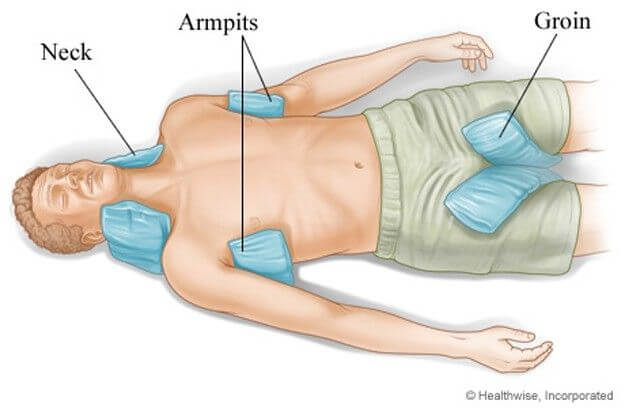
Immediate, aggressive cooling is essential (ice packs to neck, armpits, and groin; cold water immersion; wet cloths with fanning).
Medical care is necessary to monitor organ function.
Full recovery can take days to weeks depending on severity, and some victims suffer lingering weakness or heat sensitivity.
Writing Tips for Authenticity
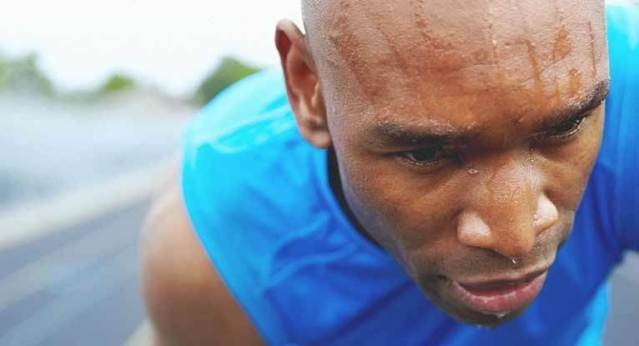
Show, Don’t Tell Symptoms: Instead of stating “he had heatstroke,” let the reader experience blurred vision, confusion, slowed reactions, and the character’s inability to sweat.
Pace the Decline: Heat injuries usually develop over hours, but under extreme conditions, they can escalate in minutes. Let your readers feel that progression.
Use the Environment: Describe shimmering horizons, the oppressive weight of the air, and the sting of sunlight on overheated skin to make the setting itself feel dangerous.
Incorporate Cognitive Changes: Decision-making and perception falter with both dehydration and heatstroke, which can be a great way to complicate survival scenes or combat.
Show Aftermath: Even after treatment, characters may feel weak, dizzy, or mentally foggy, sometimes for days.
Example: The sand was swallowing him, each step heavier, slower. Sweat had stopped an hour ago. The world had narrowed to white glare and the rasp of his breath. He saw the oasis ahead. No, not an oasis. The green dissolved into heat haze, and he stumbled, hitting the ground hard. It burned. Everything burned.

Genre Variations in Depicting Heatstroke and Dehydration
While the physiological effects of heatstroke and dehydration are consistent across time, the causes, treatments, and narrative emphasis can vary depending on genre. Setting, technology, and cultural understanding of heat-related illness shape how you portray these conditions.
Common Causes in All Settings
Prolonged exposure to high temperatures
Intense physical exertion in hot environments
Lack of access to clean drinking water
Wearing heavy or non-breathable clothing or armor
Illnesses that impair the body’s cooling ability
Contemporary Fiction
Causes
Outdoor work in extreme heat (construction, firefighting, agriculture)
Endurance sports and marathons
Urban heatwaves, especially in poorly ventilated apartments
Stranded travelers in deserts or remote wilderness
Depiction Notes
Modern readers expect medically accurate symptoms.
You can use POV to highlight confusion, hallucinations, and poor judgment.
Treatments will be quick to administer (paramedics, IV fluids, electrolyte packs) unless isolation prevents it.
Example: A hiker in Arizona’s summer heat pushes past their limits, convinced they can reach the car without resting, only to collapse a hundred yards from safety.
Historical Fiction
Causes
Forced marches under the summer sun
Naval voyages in the tropics without adequate fresh water
Siege warfare in hot climates with limited shade
Labor in fields or quarries with minimal breaks
Depiction Notes
Historical figures often lacked a modern understanding of heat injuries. They might attribute collapse to “weak constitution,” “sun fever,” or “bad humors.”
Period-accurate clothing (wool uniforms, heavy armor) can intensify risk.
Cooling methods were limited: shade, wet cloths, and whatever water was available.
Example: During the construction of an ancient pyramid, workers collapse under the sun. Overseers blame laziness, not realizing dehydration is killing their laborers.

Fantasy
Causes
Long desert treks or crossing volcanic plains
Wearing magical armor that traps heat
Magical curses or spells that raise body temperature
Beasts of burden dying from heat, forcing characters to carry heavy loads themselves
Depiction Notes
You can adapt the environment beyond real-world limits: suns that burn hotter, cursed lands radiating magical heat, or underground forges with oppressive conditions.
Healing magic could stop symptoms instantly, but consider the consequences: Does it cure the damage or just mask it, allowing the character to push themselves to death?
Cultures might have elaborate desert survival rituals, enchanted waterskins, or heat-warding amulets.
Example: A caravan crossing the Blistering Wastes depends on an ice-mage to keep temperatures bearable. When the mage collapses from heatstroke, the group must choose between pressing on or risking death in the open sands.
Science Fiction
Causes
Terraforming projects on hot planets
Malfunctioning environmental controls on spaceships or colonies
Exposure to alien suns or multiple-star systems
Combat in powered armor that overheats because of system failure
Depiction Notes
Advanced tech might offer rehydration packs, instant electrolyte injections, or wearable cooling systems.
Alien physiology could change what “heatstroke” looks like. Some species may expel excess heat through unique biological processes or be vulnerable to temperatures humans find mild.
Artificial gravity or atmospheric differences could worsen dehydration.
Example: On a mining outpost orbiting a desert planet, the heat is so intense that protective suits are essential. When a miner’s cooling unit malfunctions deep in the tunnels, they must navigate back while hallucinations blur reality.
Treatments for Heatstroke and Dehydration Across Time and Genres
In fiction, how people treat heat-related illnesses varies widely depending on the era, setting, and resources. From ancient trial-and-error remedies to futuristic medical marvels, the treatment of heatstroke and dehydration is a rich area for world-building.
Ancient World
Ancient physicians recognized collapse from heat but often misunderstood the cause.
Likely Treatments
Moving the patient into shade or a cool indoor space
Pouring or dabbing water on the head and body
Administering water or diluted wine if the patient could swallow
Herbal infusions (mint, chamomile, barley water) to “cool” the body
Avoiding cold water directly on overheated skin for fear of “shock to the system”
Tip: Characters in ancient settings may refuse water because of superstition or give the wrong fluid entirely (like undiluted wine or beer, which could worsen dehydration).
Middle Ages
The concept of “heat illness” still tied to humors, especially an excess of “choler” (yellow bile). People sometimes interpreted collapse as a divine sign or punishment.
Likely Treatments
Rest in shaded or stone buildings
Application of cool cloths or sponging with water from wells or streams
Offering ale or watered wine (often unsafe by modern standards)
Bleeding or purging in severe cases (which could be lethal)
Herbal remedies: lemon balm, rosewater, and vinegar compresses
Tip: Medieval treatments often helped by accident. Shade and fluids worked, but bleeding weakened the patient further. Survival often depended more on the environment than skill.
18th and 19th Centuries
Colonial expansion and military campaigns in hot climates increased awareness of heat-related illness. Terms like “sunstroke” and “heat apoplexy” entered common use.
Likely Treatments
Getting the patient into a shaded, ventilated area
Loosening clothing (sometimes cutting off uniforms)
Pouring water over the head and chest
Applying cool, damp cloths to the neck, armpits, and groin
Giving small sips of water or tea
In severe cases, use of ice if available (especially in colonial outposts)
Still occasional use of bleeding, though increasingly questioned by doctors
Tip: Military medical manuals from this era often stressed discipline over health. The army punished soldiers who fell out because of heat.
Modern and Contemporary Medicine
Likely Treatments For Dehydration
Oral rehydration solutions (ORS) with water, salts, and sugars
IV fluids for severe cases
Monitoring electrolytes and kidney function
Likely Treatments For Heatstroke
Immediate cooling. Ice water immersion or ice packs to major arteries.
Evaporative cooling with mist and fans
Removing restrictive clothing
Oxygen supplementation if needed
Hospital monitoring for organ damage
Tip: Modern emergency care makes heatstroke highly survivable if treated quickly, but remote or disaster scenarios can revert characters to older, improvised methods.
Fantasy Treatments
Likely Treatments
Herbal and Alchemical Cooling: Potions brewed from frostmint or glacial flowers to rapidly drop body temperature.
Magical Cooling Spells: Controlled blasts of cold air or enchanted stones that radiate chill, though careless use could induce hypothermia.
Enchanted Water Skins: Never empty, always chilled to the perfect temperature.
Ritual Recovery: Priests or healers calling on water or ice spirits to restore balance to the body.
Twist for Writers: Healing magic could mask symptoms without fixing underlying dehydration, allowing a character to collapse hours later without warning.
Science Fiction Treatments
Likely Treatments
Instant Rehydration Packs: Gel-based fluids absorbed orally or through the skin.
Nanobot Regulation: Machines in the bloodstream detect heat stress and adjust hydration and electrolyte balance instantly.
Thermal Regulation Suits: Exosuits that monitor core temperature and activate cooling panels or mist systems.
Cryogenic Stabilization: Short-term cold stasis to prevent organ failure until full medical care is available.
Twist for Writers: Advanced medicine can make heat injuries seem trivial, but what happens when tech fails or when an alien body reacts unpredictably to human cooling methods?
Plot and Character Ideas
The Last Water Break
Genre: Contemporary Survival Drama
Plot Idea: A rookie wildland firefighter becomes separated from their crew during a record-breaking heatwave. With only a half-empty canteen and a broken radio, they must navigate burning terrain to find their way back.
Character Angle: Driven to prove themselves, the protagonist ignores early warning signs of dehydration, convinced they can tough it out. Hallucinations blur memory and reality.
Twist(s): They find their way back to camp but the “camp” is a mirage, and rescue comes from an unexpected source: a rival firefighter they clashed with earlier in the season.
March Under the Sun
Genre: 19th-Century Military Fiction
Plot Idea: During a colonial military expedition, a small detachment is ordered to march through arid desert terrain to deliver critical dispatches. Soldiers collapse one by one, their canteens long emptied.
Character Angle: The protagonist, a medic’s apprentice, must decide whether to defy orders and halt the march to save lives or press forward and risk everyone.
Twist(s): When they finally reach their destination, the “urgent orders” they carried are too late. The crisis they were trying to avert has already happened.
The Blistering Wastes
Genre: Epic Fantasy Adventure
Plot Idea: A band of desert-crossing adventurers loses their enchanted water skin after a skirmish with sand raiders. With magic suppressed by a sun curse, they must rely on survival skills instead of spells.
Character Angle: A desert-born guide, shunned by the group as superstitious, becomes the only one capable of navigating the heat while others succumb to dehydration and heatstroke.
Twist(s): The curse was cast not by their enemies, but by one of their own, to keep a dangerous magical relic from reaching civilization, even at the cost of the party’s lives.
Solar Drift
Genre: Sci-Fi Survival Thriller
Plot Idea: A ship transporting colonists suffers a systems failure, forcing an emergency landing on a searingly hot planet. With environmental controls down and water supplies limited, the survivors must trek to a distant supply cache before their bodies give out.
Character Angle: The protagonist is a planetary geologist who knows the terrain but has a rare metabolic condition making them more susceptible to heatstroke.
Twist(s): The “supply cache” turns out to be an alien structure that offers shelter but also emits a heat signature so intense that staying too long is deadly.
The Mirage Killers
Genre: Crime/Adventure Hybrid
Plot Idea: A group of treasure hunters in North Africa suffers multiple heatstroke-related deaths under suspiciously similar conditions. A lone detective suspects deliberate sabotage: someone tampering with the water supplies.
Character Angle: The protagonist is an ex-soldier with PTSD from a desert war, whose own dehydration episodes trigger painful flashbacks while piecing together the mystery.
Twist(s): The killer’s motive isn’t greed; it’s revenge for an ancient betrayal tied to the treasure’s original theft.
Marathon in the Fire Season
Genre: Sports Drama
Plot Idea: An elite runner is determined to finish a charity ultramarathon during a record-breaking heatwave, ignoring the race doctor’s warnings. As temperatures soar, competitors drop out, and the route becomes a fight for survival.
Character Angle: The protagonist’s obsession with finishing stems from a promise made to their late sibling, but their body shuts down from heatstroke.
Twist(s): A rival runner sacrifices their own shot at victory to save them, forcing the protagonist to reevaluate what winning really means.
Salt Road
Genre: Ancient Trade Caravan Drama
Plot Idea: A merchant caravan crosses the Sahara during an unusually harsh dry season. Water rations run dangerously low, and whispers of sabotage spread when the oasis they counted on is found bone dry.
Character Angle: A young apprentice tries to prove themselves to the caravan master, risking their health by carrying water to the weakest travelers.
Twist(s): A rival caravan’s plot to take over their trade route included poisoning the oasis, not drying it up.
The Cinder March
Genre: Dark Fantasy
Plot Idea: An army marches across scorched volcanic plains to attack a fortress, but the enemy uses heat magic to sap their strength, inducing mass dehydration before battle even begins.
Character Angle: A healer with limited magic must ration their cooling spells, deciding who lives and who dies.
Twist(s): The protagonist realizes the heat magic isn’t from the enemy; it’s from the army’s own general, seeking to thin the ranks of dissenters before the siege.
Red Sands Protocol
Genre: Sci-Fi Political Thriller
Plot Idea: On a desert colony world, the planetary governor restricts water to punish rebellious settlements. A smuggler agrees to transport illicit water supplies through the dunes, but their vehicle’s cooling system fails mid-journey.
Character Angle: The smuggler is secretly transporting a child with a rare genetic condition, making them more vulnerable to dehydration, forcing dangerous route changes.
Twist(s): The “child” is a genetically engineered diplomat intended to end the rebellion, if they survive.
Tide of Thirst
Genre: Survival Thriller
Plot Idea: After a small boat capsizes in tropical waters, survivors wash up on a sunbaked atoll with no fresh water source. Their slow dehydration turns tense cooperation into paranoia.
Character Angle: The protagonist, a marine biologist, knows they can collect drinking water from condensation stills, but another survivor sabotages them, believing only the strongest should live.
Twist(s): The saboteur isn’t trying to kill the group; they’re trying to lure in a passing fishing boat by forcing someone to attempt a dangerous ocean swim for help.
Snow Without Melt
Genre: Survival Fantasy
Plot Idea: A magical curse blankets a desert in snow that never melts. Travelers believe they are safe from dehydration until they realize the snow is magically inert and provides no moisture when eaten.
Character Angle: A scholar of magical ecology races to find the source of the curse while hiding their own worsening dehydration.
Twist(s): The curse is a defense mechanism cast by the desert’s guardian spirit to keep out an invading army. Breaking it could doom the land.

I hope this was helpful. Let me know if you have questions or suggestions by using the Contact Me form on my website or by writing a comment. I post every Friday and would be grateful if you would share my content.
If you want my blog delivered straight to your inbox every month along with exclusive content and giveaways, please sign up for my email list here.
Let’s get writing!
Copyright © 2025 Rebecca Shedd. All rights reserved.

The Writer’s Guide to Frostbite and Hypothermia
Posted on October 24, 2025 Leave a Comment
From alpine fantasy quests to crash-landed astronauts on an icy moon, cold exposure is a rich and dramatic source of conflict in fiction. But to write it convincingly and avoid falling into Hollywood tropes, you’ll need to understand the real dangers of cold, especially frostbite and hypothermia.
The Difference Between Frostbite and Hypothermia
Though they often occur together, frostbite and hypothermia are not the same thing.
Frostbite
Localized cold injury
Occurs when skin and underlying tissue freeze
Affects fingers, toes, ears, nose, cheeks
Visible signs: discoloration, numbness, hard skin
Hypothermia
Whole-body condition
Occurs when core body temp drops below 95°F (35°C)
Affects brain, heart, lungs, muscles
Systemic signs: shivering, confusion, slurred speech, drowsiness

The Effects of Cold on the Human Body
Cold can be insidious. The early stages of cold injury rarely hurt, they numb. This makes it dangerously easy for characters to push past warning signs.
What Happens When Cold Sets In?
Vasoconstriction: Blood vessels near the surface narrow to conserve heat.
Shivering: Muscle contractions generate heat.
Numbness: Extremities lose feeling.
Slowed metabolism: Organs underperform.
Loss of coordination and judgment: Especially in hypothermia.
Tissue freezing or organ failure: If cold continues unabated.
Understanding Frostbite
Frostbite occurs when tissue freezes, usually on fingers, toes, ears, nose, and cheeks. Doctors classify severity into degrees, similar to burns.
Symptoms by Stage
Frostnip: Skin is pale and cold but not frozen. Tingling or numbness. Reversible.
Superficial Frostbite (1st and 2nd degree): Skin may blister. Tissue is firm but not deeply frozen.
Deep Frostbite (3rd and 4th degree): Skin is blue or black. Tissue is hard, dead, and may require amputation.
Key Symptoms
Numbness or loss of sensation
Pale, waxy, or grayish skin
Hard or frozen areas
Blisters or blackened skin during rewarming
No pain initially, then severe pain as tissue thaws
Tip: Characters may not realize they have frostbite until it’s too late.

Understanding Hypothermia
Hypothermia is a life-threatening drop in core body temperature and can occur even without frostbite. It kills not through freezing limbs but by shutting down organs.
Symptoms by Stage
Mild (95–89°F): Shivering, confusion, poor coordination
Moderate (89–82°F): Slurred speech, drowsiness, lack of shivering
Severe (<82°F): Unconsciousness, slow or irregular heartbeat, death
People often stop shivering as hypothermia worsens, not because they’re better, but because they’re closer to death.
Risk Factors
Wet clothing
Wind exposure
Immobility
Poor nutrition
Alcohol or drugs (which impair heat regulation)
Recovery and Treatment
Frostbite Treatment
Rewarm gradually: Warm water baths (not dry heat or rubbing).
Avoid walking on frozen limbs: Can cause more damage.
Pain relief: Rewarming is extremely painful.
Debridement or amputation: For dead tissue.
Tetanus shot and antibiotics: To prevent infection.
Hypothermia Treatment
Remove wet clothing and insulate the person.
Passive rewarming: Blankets, warm room, body heat.
Active rewarming: Warm IV fluids, heated air, blood rewarming (in hospitals).
Do not massage or jostle severely hypothermic people. They’re at risk of cardiac arrest.
Realistic Recovery Timeline
Mild frostnip or hypothermia: Hours to days.
Severe frostbite: Weeks of monitoring for tissue death.
Deep frostbite or moderate-severe hypothermia: Can cause permanent disability or death.

Writing Tips: Cold Injuries in Fiction
Use sensory details: “Her fingers felt like wood. She couldn’t feel the thread, only the drag of motion.”
Pace the injury: Cold damage builds slowly, making it a great way to create dread.
Combine psychological and physical effects: Hypothermic characters may act drunk or reckless.
Show consequences: Scars, amputations, PTSD, or even phantom limb pain.
Avoid clichés: People don’t usually survive being buried in snowbanks for hours. Magic or tech should come with rules or costs.
Genre-Specific Depictions of Frostbite and Hypothermia
This is a breakdown of how to tailor frostbite and hypothermia to genre, which helps you adapt them realistically or imaginatively whether you’re writing a contemporary thriller, a medieval saga, a fantasy epic, or science fiction.
Contemporary Fiction
Causes
Outdoor exposure: Hikers, mountaineers, survivalists, or lost children.
Accidents: Car breakdowns in snowstorms, falling through ice.
Neglect: Homelessness or abuse.
Risky behavior: Alcohol use in cold climates, dare-based challenges.
Depiction Tips
Use realistic timing: Mild hypothermia can set in within hours; frostbite depends on wind chill and wetness.
Characters may ignore early warning signs, thinking they’re just cold or numb.
Incorporate modern tools: Cell phones with dying batteries, GPS that fails, search and rescue procedures.
Psychological effects matter: Impaired thinking, apathy, paranoia, and irrational stripping of clothes (a real phenomenon called paradoxical undressing).
Example: A solo climber ignores a weather warning to complete his ascent and slowly succumbs to cold-induced hallucinations and creeping frostbite in his fingers.

Historical Fiction
Causes
Military campaigns: Armies marching in winter without proper gear (e.g., Napoleon’s retreat from Russia, WWI trench warfare).
Voyages: Shipwrecks, Arctic expeditions, or explorers trapped in snowbound mountain passes.
Common folk: Peasants, pilgrims, or travelers caught in a blizzard or frozen river crossing.
Depiction Tips
Emphasize limited knowledge and superstition: People may only have a basic understanding of cold. A character may suffer from hypothermia or frostbite, but may be unaware of what damage is occurring.
Treatments are primitive: Rubbing frostbitten limbs, heating by fire (often dangerously), or cauterizing blackened flesh.
Severe cases might lead to amputation without anesthesia.
Characters might die of infection or pneumonia days later.
Example: A medieval messenger braves a blizzard to deliver war orders, suffering frostbite in his feet. He completes the mission but loses his toes and his livelihood.
Fantasy
Causes
Magical environments: Cursed forests, eternal winter landscapes, enchanted glaciers.
Ice-elemental enemies or spells: Frost breath, touch of a wight, or exposure to magical artifacts.
Quests and travel: High-altitude crossings, enchanted storms, or mystical trials involving cold.
Depiction Tips
Let your world’s rules shape cold exposure: Is frostbite slower or faster in magic-rich places?
Create fantasy treatments: Fire-sprites that heat flesh gently, enchanted warming salves, divine interventions, or life-draining healing magic.
Cold injuries could symbolize more: A curse, a test of will, or a physical cost for power.
Example: A fire mage journeys into a cursed glacial canyon to recover an artifact. Her immunity to heat makes her especially vulnerable to cold, leading to early-onset hypothermia and mystical frostbite that blunts her power.

Science Fiction
Causes
Space exposure: Hull breaches, suit malfunctions, cryosleep failures.
Harsh planetary environments: Icy moons (like Europa), arctic terraforming zones, or cryogenic labs.
Technological failure: Power outages, heating system collapse, AI sabotage.
Depiction Tips
Use future tech creatively: Thermal suits, nanobot-driven repair, auto-rewarming chambers, emergency gel packs.
Cold may act faster in zero atmosphere though the mechanics depend on vacuum physics.
Think symbolically: Cold as isolation, loss of humanity, malfunction of control.
Example: A colonist on a frozen exoplanet gets trapped outside the dome. Their heated suit malfunctions, forcing them to reroute power from communications to limb survival, ultimately sacrificing fingers to save their life.
Treatments for Frostbite and Hypothermia Through History
The fight against cold has always been a battle between human endurance and limited knowledge. Here’s how different time periods approached treatment and how speculative genres can build upon or reimagine those responses.
Ancient Times
Ancient physicians did not know frostbite or hypothermia as we understand them. People might have viewed cold injuries as a spiritual punishment, an imbalance in the body’s humors, or they might have understood the general effects of cold without knowing the damage it caused or how to best counteract it.
Typical Treatments
Friction or rubbing with snow (to “warm” the tissue, actually harmful)
Hot compresses or fire (often causing burns or worsening damage)
Application of herbal poultices to blackened or dying flesh
Sometimes the affected part was simply cut away once it turned gangrenous
Hypothermia treatments include warming by fire and animal hides, offering warm liquids or alcohol (a common but counterproductive response). Some cultures used body heat (laying the person between warm individuals).
Limitations
Treatments were basic and often harmful, and patients with severe injuries frequently died from exposure, infection, or sepsis.
Middle Ages
There was still no concept of core body temperature or tissue necrosis. Treatments focused more on the spiritual than medical.
Typical Treatments
Rubbing with snow or hot cloths
Use of ointments made from lard, resin, or herbs (such as yarrow or comfrey)
Amputation with crude surgical tools if gangrene set in
Hypothermia treatments such as placing the person near a fire or in a heated room, giving broths, warm wine, or mead, or bloodletting or purging (based on humoral theory) in misguided attempts to “balance” the body
Limitations
Lack of hygiene and anesthesia made surgical intervention extremely risky.

18th and 19th Centuries
Doctors began to document frostbite during military campaigns, such as Napoleon’s invasion of Russia and Arctic expeditions. Although they did not fully understand hypothermia, empirical approaches were emerging.
Typical Treatments
Gradual rewarming with lukewarm water baths
Covering with wool or fur
Avoiding rubbing became recommended
Use of mercury-based ointments or laudanum for pain
Surgical amputation became more refined, sometimes under chloroform or ether
Hypothermia treatments such as heated rooms, hot water bottles, brick warmers, whiskey or brandy still given (wrongly thought to help), or wrapping in multiple blankets. People still sometimes used “heroic medicine” (bleeding, blistering, purging).
Breakthrough
The importance of gradual warming began to be accepted, though core temperature was not yet measured accurately.

Modern Contemporary Medicine
Thanks to scientific breakthroughs, modern medicine has a much better idea of what damage is occurring and how best to treat it.
Frostbite
Rapid recognition and triage in emergency settings
Controlled rewarming in 98–102°F (37–39°C) water baths
Pain management (morphine or other opioids)
Thrombolytic therapy (to prevent clotting in frostbitten limbs)
Wound care with sterile dressings and antibiotics
Delayed amputation decisions (after tissue survival can be assessed)
Hyperbaric oxygen or vasodilators in some advanced hospitals
Hypothermia
Passive rewarming (blankets, warm environment)
Active external warming (forced warm air, heating pads)
Active internal warming (warmed IV fluids, gastric lavage, ECMO for severe cases)
Monitoring vitals carefully to avoid triggering cardiac arrest in severe hypothermia
Modern rule of thumb: “No one is dead until they are warm and dead.” Doctors have revived hypothermia victims even after they appeared lifeless.
Fantasy Treatments
In fantasy settings, writers can balance real-world knowledge with imaginative world-building.
Possible Treatments
Herbal teas with warming or circulation-stimulating effects (realistic or magical)
Magical heat sources like firestones, enchanted cloaks, or heat charms
Healers with elemental control but risk of burns or magical exhaustion
Ritualistic rewarming spells that demand a cost (e.g., years of life, memories)
Fey intervention or divine healing that restores limbs, but changes character physiology or allegiance
Interesting angle: Healing magic may “preserve life” but not reverse tissue death, leaving room for necrosis, amputation, or lasting scars despite supernatural aid.
Science Fiction Treatments
Sci-fi lets you extrapolate from current tech or invent new ones. How does your future society detect, treat, and prevent cold injuries?
Possible Treatments
Thermal-infused clothing that self-regulates based on vitals
Nanobots that de-ice tissue at the cellular level
Cryo-gel injections that rewarm organs from within
Synthetic extremities that replace frostbitten fingers immediately
AI-guided triage drones for battlefield rewarming or limb salvage
Tissue regrowth tanks or 3D bioprinting for lost parts
World-building tip: Advanced treatments may be rationed, expensive, or fail under duress, creating dramatic tension.
Plot and Character Ideas
General Character and Plot Themes
Survival against the elements: A character must endure a frozen wasteland with minimal gear, turning the cold into a near-sentient antagonist.
Cold as consequence: A character who ignored advice or betrayed others is left to face the cold alone.
Permanent change: Loss of fingers, toes, or other extremities becomes a lasting reminder of failure, trauma, or sacrifice.
Wounded healer: A survivor with frostbite becomes skilled at helping others endure cold, but is haunted by past failure to save someone.
Amnesia or hallucinations: Hypothermia-induced confusion leads to critical errors or revelations, shaping the plot.
Haunting Cold
Genre: Contemporary Fiction
A recovering addict volunteers with a mountain rescue team and leads a dangerous winter search, reliving past trauma of losing a sibling to the cold.
Plot Hook: After a crash in a remote winter pass, a group of strangers must survive together. One develops frostbite and begins hallucinating, blurring the lines between survival and psychological thriller.
Twist: A wealthy influencer fakes a survival stunt for views, but ends up genuinely stranded. Their audience watches in real time as signs of hypothermia set in, unsure whether it’s scripted or real.
The Last Cold Mile
Genre: Contemporary Fiction
A search and rescue team is deployed during a blizzard to locate a lost hiker. Time is running out, and as the storm worsens, the team leader shows early signs of hypothermia but refuses to step back. The rescue becomes a dual fight for the victim’s life and the rescuer’s.
Character Angle:A formerly homeless man turned rescue volunteer uses his experience with cold exposure to track the missing person, while confronting his own guilt over a friend who froze to death years earlier.
Twist: The person they rescue isn’t who they expected but a survivalist influencer staging a stunt gone wrong. Their footage becomes vital evidence in an ongoing criminal case.
Toes for the Tsar
Genre: Historical Fiction
Plot Idea: Set during Napoleon’s retreat from Moscow, a young conscript develops severe frostbite but is determined to deliver a critical message across enemy lines. Each mile costs him another finger or toe, but turning back means defeat.
Character Angle: A cobbler by trade, the soldier is ironically proud of his feet until they become the price he pays for duty. His journey is one of transformation from craftsman to survivor to legend.
Twist: Upon return, the message he carried was outdated. The battle had already been lost. People memorialize his heroism, but the truth haunts him for the rest of his life.
Trial by Ice
Genre: Fantasy
Plot Idea: In a northern kingdom, warriors must endure a night in a cursed glacial tomb to earn the title of Frostbound, a sacred order with resistance to elemental cold. When the protagonist fails the trial, they must face an even colder truth: the curse is spreading beyond the tomb.
Character Angle: A would-be champion hiding a fear of the cold, born of childhood frostbite that left one hand deformed. Their magical potential lies dormant, locked behind trauma.
Twist: The curse is not ancient, it’s newly awakened by a rival kingdom. And the protagonist’s old injury connects them to the only power that can stop it.
Cryo Drift
Genre: Science Fiction
Plot Idea: A sleeper ship malfunctions, waking a lone crewmember in a sub-zero cryostasis bay after a navigation error lands them in the gravity well of an icy planet. With no communication and failing heat systems, survival means navigating both the ship and their own failing bodies.
Character Angle: The protagonist is a mission specialist who suffers from Raynaud’s syndrome on Earth, a condition dismissed as irrelevant in cryogenic travel. Now, it becomes a deadly liability.
Twist: They discover that someone else woke up months earlier and froze to death while trying to escape. But their last messages hint at sabotage, not malfunction.
Below Zero
Genre: Contemporary Fiction/Thriller
Plot Idea: A woman is kidnaped and left in a remote cabin in the Rockies during a snowstorm. She escapes barefoot into the snow and must survive long enough for help to arrive, enduring frostbite and early hypothermia.
Character Angle: She’s a city dweller with no survival experience but a brilliant mind for logistics. She uses strategic thinking, timing bursts of movement, using found materials, and rationing body heat to stay alive.
Twist: Her captor is also lost in the storm and injured. She must choose whether to save him, leave him, or let the elements decide.
The Winter Pilgrim
Genre: Medieval Historical Fiction
Plot Idea: A penitent monk embarks on a pilgrimage to retrieve a holy relic from a distant abbey just before a brutal winter. Stranded by snow, he must endure a slow journey home while suffering from frostbite and hallucinations.
Character Angle: Once proud and arrogant, the monk sees the cold as divine punishment. As he loses toes, feeling, and sanity, he has visions or are they real?
Twist: The relic he carries is warm to the touch and seems to preserve him, but also causes the surrounding landscape to freeze. Is it a miracle, or a curse?
The Ember Pact
Genre: Low Fantasy / Elemental Magic
Plot Idea: A winter spirit cursed a young fire-wielder with magical hypothermia after the fire-wielder broke a pact. Their core temperature drops no matter the external heat, and only by seeking the Emberstone can they survive.
Character Angle: They were once the most powerful firemage in their order, arrogant and untouchable. Now even a candle won’t stay lit in their hands, and they rely on a frost-wielding rival to guide them.
Twist: The only way to break the curse is to embrace the cold completely, not fight it. They must let go of their identity as a firemage and become something new.
Protocol Winterfall
Genre: Sci-Fi Thriller / Space Horror
Plot Idea: On a terraforming station orbiting a frozen moon, the AI activates a lockdown protocol after detecting a supposed contaminant, dropping the interior temperature below survivable levels. A crew of engineers must navigate frozen decks to override the system before they all freeze.
Character Angle: A xenobiologist with a prosthetic leg (from a prior frostbite injury) is the only one immune to the effects of the cold-resistant contagion but also the least physically capable of navigating the station.
Twist: The “contaminant” is not a virus, it’s alien intelligence that thrives in sub-zero environments. The AI is trying to contain it. The real question: who do you side with?
The Shiverkin’s War
Genre: Fantasy / Creature POV
Plot Idea: A race of frost-dwelling beings called the Shiverkin are being pushed from their homeland as magical climate change warms their glacier. A Shiverkin warrior with temperature sensitivity defects (they run too warm) must find sanctuary or fight extinction.
Character Angle: The protagonist is a runt among their kind, seen as weak for their warmth. Yet in the encroaching heat, they are the only one capable of surviving long enough to negotiate with surface dwellers.
Twist: The Shiverkin’s melting homeland is not a natural phenomenon, it results from a fire-based weapon test from an empire that doesn’t even know the Shiverkin exist.
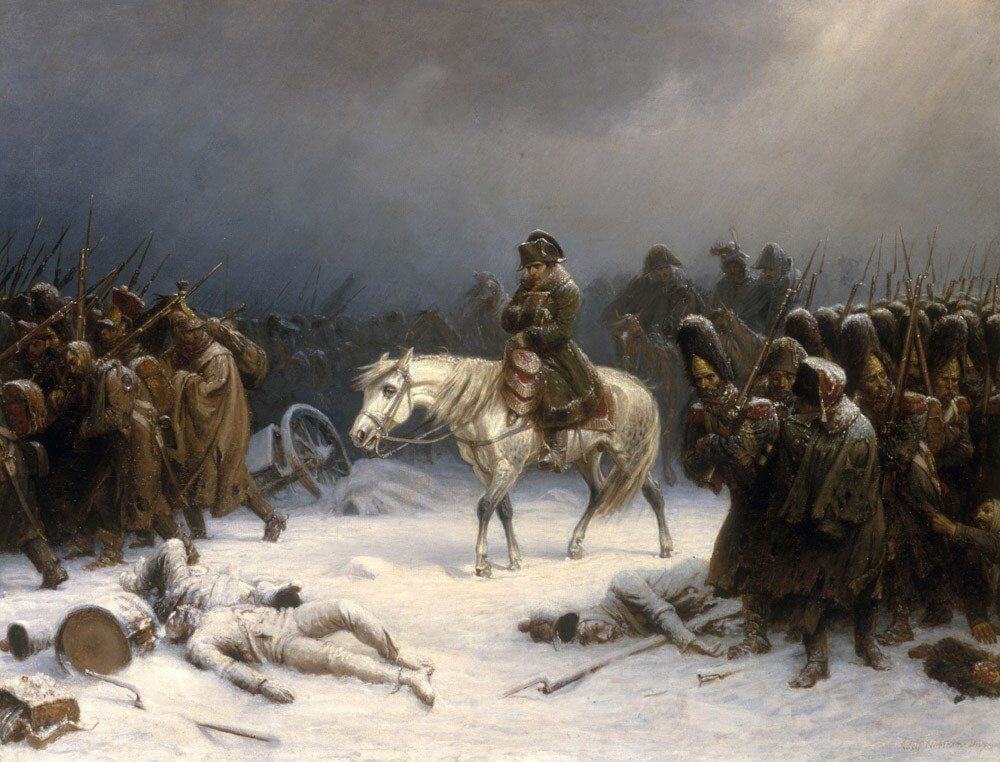
Cold is an unforgiving enemy and a rich storytelling tool. Use frostbite and hypothermia not just as physical obstacles but as symbolic moments of desperation, endurance, or transformation.
Whether your character is scaling an ice-covered mountain, wandering through a fantasy tundra, or waking from cryostasis in deep space, their encounter with the cold can leave them changed body and soul.
I hope this was helpful. Let me know if you have questions or suggestions by using the Contact Me form on my website or by writing a comment. I post every Friday and would be grateful if you would share my content.
If you want my blog delivered straight to your inbox every month along with exclusive content and giveaways, please sign up for my email list here.
Let’s get writing!
Copyright © 2025 Rebecca Shedd. All rights reserved.

