The Writer’s Guide to Dislocations
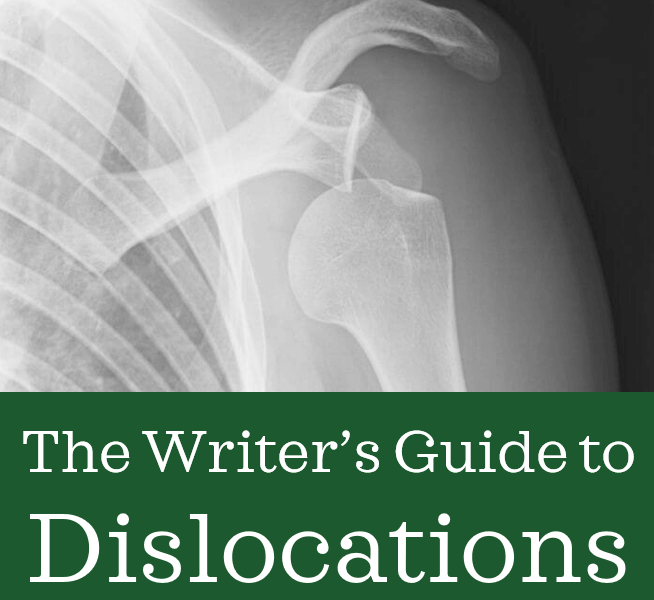
A forcibly displaced joint causes excruciating and debilitating injuries. Unlike fractures, where bones break, a dislocation affects the connective tissues that hold joints together, often tearing ligaments and stretching tendons. Writing realistic dislocations requires understanding which joints are affected, symptoms, appearance, and long-term effects. This article will guide you through writing authentic and compelling injury scenes involving dislocations.
What is Dislocation?
Blunt trauma, falls, or extreme twisting movements push or pull a joint out of alignment, causing a dislocation. The injury can tear ligaments, damage nerves, and cause intense pain, requiring either immediate reduction (putting it back in place) or medical intervention.
Common Causes of Dislocations in Fiction
Combat: A well-placed strike, fall, or grappling move could force a joint out of place.
Falls and Accidents: Landing awkwardly can lead to shoulder, elbow, or hip dislocations.
Overuse or Hyperextension: Gymnasts, martial artists, or extreme athletes might suffer from recurring dislocations.
Torture and Restraint: A character may have a joint forcibly dislocated as punishment or during an escape attempt.
Joints Most Commonly Affected by Dislocation
Shoulder Dislocation (Most Common)
Likelihood: Most frequently dislocated joint (50% of all dislocations).
Appearance: Shoulder appears flattened or deformed, arm may hang limply.
Symptoms: Intense pain in the upper arm and collarbone area. Inability to lift or rotate the arm. Tingling or numbness if nerves are affected.
Common Causes Falls (especially landing on an outstretched arm). Hard impacts (punches, tackles, being thrown). Overextension (pulling the arm too far back).
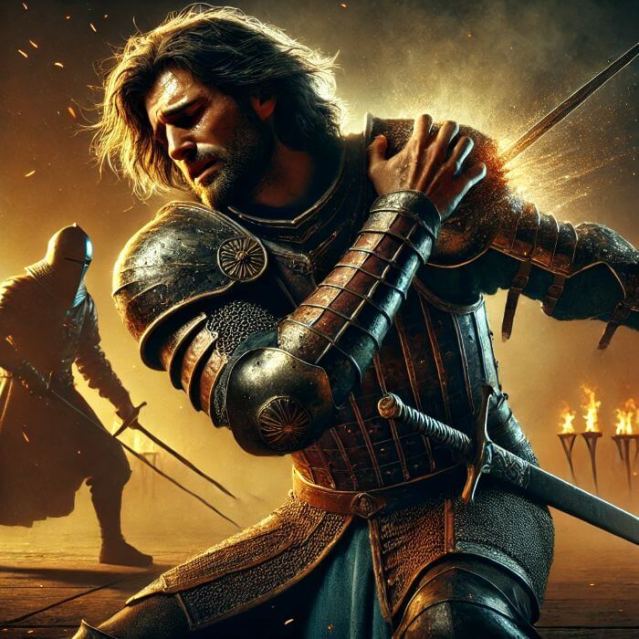
Example: “His opponent twisted his arm and wrenched upward. The pain was immediate, searing through his shoulder as the joint popped free. His arm hung limp, useless, but there was no time to scream—he had to keep fighting.”
Hip Dislocation (Rare but Devastating)
Likelihood: Less common but extremely serious—often occurs in high-impact trauma (e.g., car crashes, falls from heights).
Appearance: The leg appears shortened or twisted at an unnatural angle.
Symptoms: Severe pain in the hip, groin, or thigh. Inability to stand or bear weight on the affected leg. Numbness or tingling in the foot (nerve damage possible).
Common Causes: Falling from significant heights (off a horse, down a cliff, from a building). Extreme force (car accidents, battlefield trauma). Torture or extreme restraint (a forced separation of the legs).
Complications: Often accompanied by a fractured pelvis or femur. High risk of nerve damage (sciatic nerve involvement). Long-term recovery—can take months, sometimes requiring surgery.
Example: “The fall was worse than he thought. When he tried to move, agony lanced through his hip, and his leg wouldn’t obey. He forced himself to look—his leg had twisted, and the joint was no longer in its proper place.
Finger Dislocation
Likelihood: Common in fighters, athletes, or those who fall onto their hands.
Appearance: A finger bent at an unnatural angle.
Symptoms: Sharp pain at the affected knuckle. Swelling and bruising. Difficulty gripping objects.
Common Causes: Punching with improper form (boxers, brawlers). Catching a ball or weapon incorrectly. Falling onto outstretched fingers.
Example: “He swung his fist, but the impact was off—too much force, wrong angle. Pain shot up his hand as his ring finger bent sideways, dislocated at the knuckle. He swallowed a curse. That was going to be a problem.”
Knee Dislocation (Rare but Severe)
Likelihood: Less common but extremely serious—often involves ligament tears.
Appearance: The knee appears twisted or out of place, swelling quickly.
Symptoms: Excruciating pain in the knee and lower leg. Inability to bear weight or walk. Nerve damage may cause numbness.
Common Causes: Car accidents (dashboard injuries). Falling hard on the knee. Extreme twisting (during combat or sports).
Example: “The soldier’s leg twisted the wrong way as he fell, and the pain was immediate. He tried to stand, but his knee buckled—the joint had shifted out of place, leaving his leg useless beneath him.”

Symptoms and Immediate Effects of Dislocation
Immediate Signs of Dislocation:
Sudden, severe pain at the joint.
Visible deformity—the joint may look “off” or misaligned.
Swelling and bruising around the area.
Limited movement—the limb feels frozen or is excruciating to move.
Tingling or numbness (if nerves are affected).
Treatment and Recovery for Dislocations
How to Fix a Dislocated Joint (Reduction)
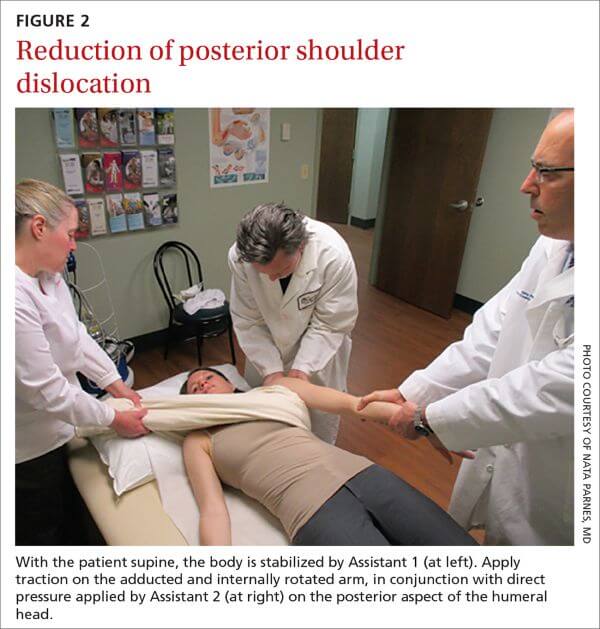
Do NOT Force It Back! Forcing a joint back can tear ligaments, damage nerves, or break bones.
Immobilize the Joint: Keep the affected limb still and supported.
Ice and Pain Management: Reduces swelling and numbs pain.
Seek Medical Help: A trained professional should perform the reduction (putting it back in place).
Long-Term Effects of Dislocations
Even after realignment of the joint, the damage persists, and symptoms may include:
Chronic Weakness: The joint is now more prone to dislocations in the future.
Ligament damage: Permanent stretching can affect the soft tissue around the joint.
Arthritis and Pain: Years later, old dislocations can cause stiffness or joint pain.
Psychological Trauma: If the dislocation happened in a traumatic event (battle, accident, torture), the character might hesitate to use that limb again.
Example: “Even years later, his shoulder never felt quite right. A bad throw, a sudden twist—each time, he felt the familiar, sickening shift of the joint, the ghost of an old injury that refused to be forgotten.”
Depicting Dislocations Across Genres
Dislocations are painful, debilitating injuries that affect joint movement and physical ability. However, the genre heavily influences how fiction portrays a dislocation. A medieval knight, a cybernetic soldier, and a modern-day athlete will experience, treat, and recover from a dislocation in vastly different ways.
This article explores how contemporary, historical, fantasy, and science fiction settings depict dislocations, including how armor, medical advancements, and supernatural elements influence their severity and treatment.
Contemporary
In a modern setting, realistic medical treatment and long-term recovery are key. A character suffering a dislocation cannot “pop it back in” instantly without consequences—ligament damage, swelling, and pain will persist.
Common Causes
Sports and Athletics: Football tackles, boxing injuries, gymnastics, or parkour accidents.
Street Fights and Self-Defense: A character caught in a wrist lock or armbar may suffer a joint dislocation.
Car Accidents and Falls: A hip or knee dislocation could result from a high-speed crash or workplace injury.
Torture and Restraint: Interrogators might dislocate a prisoner’s shoulder or fingers to inflict pain without causing permanent disability.
Impact on Characters
Immediate Medical Treatment: Ice, slings, and professional relocation by a doctor.
Pain and Mobility Issues: The character will struggle to move the affected limb for weeks, needing physical therapy.
Realistic Recovery Time
Minor dislocations (finger, wrist): A few weeks.
Severe dislocations (shoulder, hip, knee): Months of rehab, possible surgery.
Psychological Effects
An athlete may fear reinjury, affecting their performance.
A character with recurring dislocations (e.g., an ex-fighter) might hesitate to engage in combat.
Example: “The moment his shoulder hit the pavement, he knew something was wrong. His arm dangled uselessly at his side, pain pulsing through the joint. Gritting his teeth, he forced himself to stay calm—he needed a hospital, not a quick fix.”
Historical
In historical fiction, dislocations were dangerous, painful, and often permanent injuries because of primitive medical techniques. Without an understanding of ligament damage, proper relocation, or physical therapy, characters would suffer lasting consequences.
Common Causes
Battlefield Trauma: A knight falling from a horse could dislocate their shoulder or hip. Hand-to-hand combat could cause wrist, elbow, or finger dislocations.
Occupational Accidents: Blacksmiths, builders, or farmers might suffer dislocated knees or fingers from accidents with tools or animals.
Judicial Punishments and Torture: Medieval torturers dislocated shoulders or fingers (e.g., the rack, thumbscrews, or breaking wheels).
Impact on Characters
Lack of Proper Treatment: Joints might be forcibly relocated without pain relief, causing permanent stiffness or nerve damage. If a physician is available, they might use Hippocratic methods (traction-based relocation).
High Risk of Infection: Swelling and inflammation could lead to sepsis if improperly treated. Some treatments involved herbs, poultices, and prayer, rather than effective medical intervention.
Permanent Disability: Chronic pain and stiffness were common long-term effects. A warrior with a severe knee or shoulder dislocation might never return to battle.
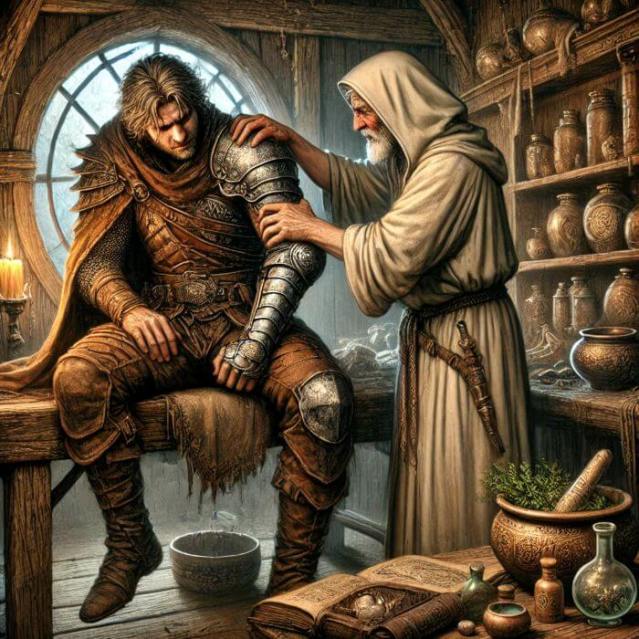
Example: “The healer yanked his arm with a sharp jerk. He screamed as the joint popped back into place, stars bursting behind his eyes. ‘You’ll live,’ she muttered, tying his arm across his chest with a rough cloth. ‘But don’t think you’ll lift a sword soon.’”
Fantasy
Fantasy settings introduce magical healing, enchanted armor, and supernatural causes for dislocations. However, a well-written injury should still follow logic—even in a world with magic, a dislocated shoulder should not heal instantly without consequence.
Common Causes
Heavy Armor and Blunt Force: Knights in battle might suffer dislocations if they fall hard in heavy plate armor. A shield strike could dislocate an opponent’s shoulder without breaking skin.
Monsters and Magic Attacks: A dragon’s tail swipe could send a warrior flying, dislocating multiple joints. A spell might force a limb out of place unnaturally, causing a magical injury resistant to healing.
Cursed Wounds and Unhealable Damage: Some injuries may resist healing magic, forcing a character to endure long-term pain. A “healed” dislocation might still ache under certain conditions (e.g., a full moon, near cursed objects).
Impact on Characters
Magical Healing Limitations: Does magic fix the joint immediately, or does the character still need time to recover? Are side effects present (e.g., scars glowing, pain returning at night)?
Enhanced Durability: Orcs, dwarves, or magically enhanced beings may recover faster or resist dislocations.
Fantasy Armor Considerations: Plate armor might protect against dislocation but add weight, making recovery harder. Chainmail and leather armor might not prevent joint trauma.
Example: “The ogre’s club sent him flying, his shoulder wrenching out of place with a sickening pop. He gasped, vision going white with pain. The healer rushed forward, muttering a spell—warmth flooded the joint, and though the pain faded, the ache remained, a ghost of the injury still lingering beneath his skin.”
Science Fiction
In futuristic settings, medical technology, cybernetics, and genetic enhancements will alter the treatment and experience of dislocations.
Common Causes
Zero-Gravity Injuries: In space, a sudden jolt might hyperextend a joint, causing a floating dislocation with no gravity to reset it naturally.
Cybernetic Malfunctions: A synthetic limb could dislocate or malfunction, locking the joint in place or failing to provide sensation.
Advanced Combat: Energy weapons might knock a limb out of place without breaking the skin. Powered exoskeletons could force joints beyond their natural limits.
Impact on Characters
Instant Fixes with Medical Advancements: Regenerative injections could repair torn ligaments instantly. Nanotechnology might realign the joint and reinforce tendons.
Cybernetic Limbs and Prosthetics: If a cyborg dislocates a synthetic joint, do they feel pain, or is it just mechanical failure? Can they self-repair their injury?
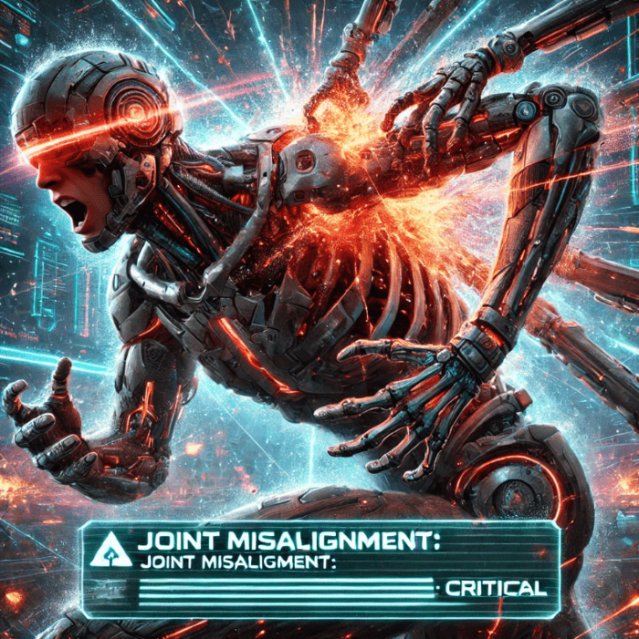
Example: “The shockwave threw him into the air, and when he landed, his cybernetic shoulder twisted at an unnatural angle. The AI in his exosuit registered ‘Joint Misalignment: Critical.’ With a hiss, the servos whirred—resetting the joint with a mechanical snap.”
Treating Dislocations Across Eras and Genres
Dislocated joints are painful and debilitating injuries, and their treatment depends heavily on the historical period, medical advancements, and the genre of the story. In some settings, practitioners employ primitive or brutal methods, while in others, advanced medical technology or magic enables near-instant healing. Below, we explore typical treatments for dislocations across the ancient world, medieval period, contemporary medicine, fantasy, and science fiction.
Ancient World
In ancient times, medical knowledge was limited, and treatments for dislocations often relied on brute force, traction, and herbal remedies. Without an understanding of ligaments or nerves, the process was painful and often left permanent damage.
Typical Treatments
The Hippocratic Method (Traction-Based Reduction): Named after the Greek physician Hippocrates, this method involved pulling and rotating the limb to force the joint back into place. A physician would use their foot or a cloth sling to create leverage and pop the joint back in.
Tying and Binding: After reduction, the affected limb was immobilized with cloth bandages or wooden splints.
Herbal Remedies and Ointments: Crushed opium, henbane, or mandrake might ease pain. Poultices of honey and wine were used to reduce swelling.
Superstition and Rituals: Some cultures believed dislocations were punishments from the gods, leading to prayer-based healing.
Challenges
Painful and crude—there were no anesthetics, so patients had to endure the agony.
High risk of reinjury—without proper splints or rehabilitation, recurring dislocations were common.
Permanent Weakness—Overstretching or tearing often damaged ligaments and tendons beyond repair.
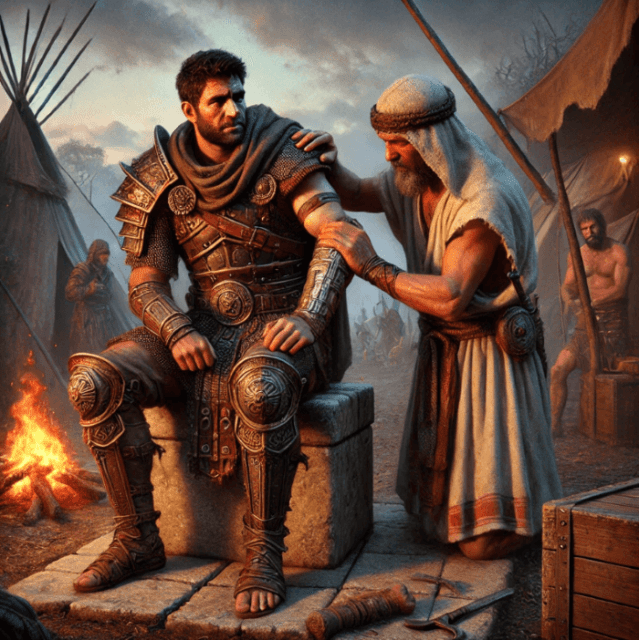
Example: “The healer placed her foot against his ribs and pulled his arm with a sharp jerk. A sickening pop echoed through the tent, and he bit down on a leather strap to keep from screaming. ‘It’s back in place,’ she said. ‘Now drink this before the pain makes you faint.’”
Medieval World
By the medieval period, medical knowledge had advanced slightly, but brutal battlefield medicine, crude surgery, and reliance on superstition still made dislocations dangerous.
Typical Treatments
Physician-Assisted Reduction: Healers often yanked or twisted the injured limb forcefully into place. Sometimes, a healer might pull the joint while another person holds the patient still.
Immobilization with Wood or Leather Splints: Linen bandages, leather straps, or wooden splints were used to keep the joint from moving.
Pain Management: People used alcohol, poppy tinctures, or herbal mixtures for pain relief. Some patients received a wooden stick or leather strap to bite down on during treatment.
Heat and Bloodletting: Some believed that warming the joint or draining “bad blood” would help to heal. Hot irons or poultices were applied to reduce swelling.
Challenges
Poor hygiene and infection risk—without antiseptics, even a simple treatment could lead to life-threatening infections.
Misaligned Healing—Improperly setting the dislocation could lead to permanent deformity.
Crude Braces and Long Recovery—without proper therapy, dislocations often resulted in lifelong joint instability.
Example: “‘Hold him down,’ the surgeon ordered. Two men pressed the wounded knight to the table as the surgeon twisted his leg back into place. A scream tore through the air, followed by gasping breaths. ‘It’s done,’ the surgeon muttered, reaching for a leather strap to bind the knee in place. ‘He won’t walk for weeks, but he’ll live.’”
Modern
Today, medical treatment for dislocations is highly effective and minimizes long-term damage. X-rays, anesthesia, and physical therapy ensure proper healing.
Typical Treatments
X-Rays and Diagnosis: Doctors use X-rays to confirm the severity of the dislocation and check for fractures.
Reduction (Repositioning the Joint): The doctor gently manipulates the joint back into place (with painkillers or sedatives if necessary). Surgery might be necessary if ligaments or tendons are torn.
Immobilization and Recovery: They keep the joint in a sling, splint, or brace for several weeks. Physical therapy helps restore strength and prevent reinjury.
Challenges
Recurring Dislocations: After a joint dislocates, it is more prone to re-dislocation.
Ligament Weakness: Soft tissue damage can lead to chronic pain or instability.
Example: “‘You’re lucky,’ the doctor said, studying the X-ray. ‘No fractures, but your shoulder’s a mess. We’ll pop it back in and put you in a sling. No heavy lifting for six weeks.’”
Fantasy
Fantasy settings allow for magical healing, enchanted remedies, and mystical medical practices. However, a well-written injury should still follow some logic—even in a world with magic, a dislocated joint might not heal instantly.
Typical Treatments
Healing Magic: Does the magic fully restore ligaments, nerves, and soft tissue? Some spells might cause searing pain as the joint realigns itself.
Alchemy and Herbal Remedies: Potions that speed up healing but may have side effects (hallucinations, weakness). Runes or enchanted bandages that slowly repair the joint.
Cursed Wounds and Supernatural Dislocations: Some magical injuries resist healing, forcing the character to seek a rare cure.
Example: “The healer placed her hands over his shoulder, whispering an incantation. Warmth flooded the joint as the bones shifted back into place. Pain flared for a moment, then faded—though the joint still ached, as if remembering the injury.”
Science Fiction
In futuristic settings, advanced medicine, cybernetics, and nanotechnology will alter the treatment and experience of dislocations.
Typical Treatments
Regenerative Injections: Stem cell therapy or nano-medicine could repair damaged ligaments instantly.
Cybernetic Enhancements: If a character has synthetic joints, they might self-repair or reset automatically.
Medical Pods and Instant Healing Tech: Some sci-fi universes might have medical bays that scan and instantly correct injuries.
Example: “The shockwave threw him backward, and his cybernetic shoulder twisted at an unnatural angle. His HUD flashed red—‘Joint Misalignment: Critical.’ With a hiss, his exosuit auto-realigned the joint, sending a pulse of nanobots to repair the tissue. Pain flared, then faded. ‘Good as new,’ he muttered.”
Plot and Character Ideas
Dislocations may not seem as dramatic as broken bones or deep wounds, but they can create tension, force hard choices, and leave lasting effects on a character’s physical and mental state. Whether used in battle scenes, survival situations, or supernatural curses, dislocations can serve as a key plot device or character challenge.
Here are plot and character ideas centered on dislocations, including fantasy, science fiction, and historical fiction scenarios.
The Dislocated Shoulder Escape
Genre: Thriller, Historical, Fantasy, Science Fiction
Plot Idea: A character dislocates their own shoulder to escape from restraints, a trap, or captivity.
Character Angle: They must decide between excruciating pain or certain death. The injury hampers their ability to fight, climb, or run, adding extra tension. After escaping, they must set the joint back in place, despite shock, blood loss, or exhaustion.
Example: “The manacles were too tight. The only way out was to force his shoulder out of place—the pain was blinding, but he didn’t stop. With one last pull, his arm slipped free, leaving him gasping in agony.”
The Battle-Worn Veteran with a Recurring Dislocation
Genre: Fantasy, Historical, Contemporary, Science Fiction
Plot Idea: A warrior, soldier, or ex-fighter suffers from recurring shoulder dislocations because of an old injury, making combat unpredictable and dangerous.
Character Angle: Their dominant arm is unreliable, forcing them to adapt their fighting style. They hesitate to engage in hand-to-hand combat, fearing their joint will fail them. They seek a cure, surgery, or magical solution, but none exist—or come at a significant cost.
Example: “The duel had barely begun when he felt it – the familiar, sickening shift of his shoulder. He gritted his teeth, knowing he had seconds before the pain became unbearable. He had to finish this fast or not at all.”
The Medic with the Crippling Injury
Genre: Fantasy, Historical, Contemporary
Plot Idea: A field medic or healer dislocates their shoulder while saving another person, leaving them unable to continue treating the wounded.
Character Angle: Guilt—they blame themselves for failing those they couldn’t save. Desperation—they attempt to treat others one-handed. Personal Growth—they train a new apprentice to continue their work.
Example: “She reached out to stop the bleeding—then a rough shove sent her sprawling. Pain exploded in her shoulder, and she knew, with sickening certainty, that her arm was useless. She had saved lives before, but now, she could only watch them slip away.”
The High-Stakes Heist Gone Wrong
Genre: Thriller, Science Fiction, Fantasy
Plot Idea: A thief dislocates their knee or shoulder mid-heist, leaving them vulnerable and in danger of being caught.
Character Angle: Their team must decide whether to leave them behind or risk everything to help. They must push through the pain to complete the job, knowing they are the only one who can finish the mission. The injury permanently weakens them, forcing them to reconsider their life of crime.
Example: “The security door loomed ahead, but his knee had other ideas. The moment he landed, the joint twisted, and white-hot pain shot through his leg. He was supposed to be fast—unstoppable. Now, he was a liability.”
The Tortured Prisoner’s Dilemma
Genre: Dark Fantasy, Dystopian, Historical
Plot Idea: Torturers dislocated the prisoner’s joints, leaving them unable to fight back or escape.
Character Angle: They must endure agonizing pain while plotting their escape. Their torturer deliberately leaves the joint untreated, ensuring lifelong pain and weakness. The character later confronts their captor, seeking revenge or closure.
Example: “The chains weren’t what held him down—it was his own body, broken piece by piece. Every movement sent waves of agony through his dislocated joints, but he would not scream. He would not break.”
The Rookie’s First Injury
Genre: Contemporary, Sports, Military Fiction
Plot Idea: A young athlete, soldier, or adventurer suffers a severe dislocation during their first major challenge, forcing them to reconsider their career path.
Character Angle: They are afraid to push themselves again, worried about reinjury. They face doubt from their peers, who see them as weak or unreliable. They undergo grueling rehabilitation, proving their resilience.
Example: “He had trained for years, but one wrong step had ruined everything. The coach’s voice rang in his ears— ‘You can’t play with a busted shoulder.’ But he wasn’t giving up. Not yet.”
The Cursed Joint: A Supernatural Dislocation
Genre: Fantasy, Horror
Plot Idea: A character’s joint keeps dislocating unnaturally, as if a curse or unseen force is tearing them apart.
Character Angle: The dislocation happens randomly, making them a danger to themselves and others. They must break the curse before it spreads to other joints. The wound whispers to them, as if something inhuman is inside them.
Example: “The healer set the bone back into place—but it popped out again within seconds. This wasn’t a normal injury. Something was inside him, twisting his body against his will.”
The Cybernetic Joint Malfunction
Genre: Science Fiction, Cyberpunk
Plot Idea: A cyborg soldier or enhanced human suffers a joint dislocation because of mechanical failure, leaving them vulnerable in battle.
Character Angle: Their body is rejecting the implants, causing constant pain and breakdowns. They must find an underground tech expert to repair the damage before they shut down entirely. The malfunction leads to a discovery—was their cybernetic body designed to fail?
Example: “The servos in his shoulder sparked, and suddenly, his entire arm went limp. Not now. Not in the middle of a fight. His HUD flashed red—‘Joint Misalignment: Critical.’ He was stronger than human—but he was breaking down faster, too.”
The Healer’s Dilemma: Reset or Ruin
Genre: Fantasy, Medical Drama, Historical
Plot Idea: A healer, doctor, or medic must relocate a dislocated joint without proper tools or knowledge, risking permanent damage to the patient.
Character Angle: They must decide whether to risk the procedure or leave the injury untreated. Past failures haunt them, making them hesitant. The patient turns out to be someone important, raising the stakes.
Example: “‘If I do this wrong, you’ll never use your arm again,’ she whispered. He met her gaze. ‘Do it anyway.’ With a deep breath, she braced against his ribs and pulled.”
Dislocations are brutal injuries that leave lasting effects on the body. By accurately depicting the symptoms, treatment, and long-term effects of dislocations, you create believable, immersive injury scenes that make your characters’ struggles feel real.
I hope this was helpful. Let me know if you have questions or suggestions by using the Contact Me form on my website or by writing a comment. I post every Friday and would be grateful if you would share my content.
If you want my blog delivered straight to your inbox every month along with exclusive content and giveaways, please sign up for my email list here.
Let’s get writing!
Copyright © 2025 Rebecca Shedd. All rights reserved.

