

Writer’s Deep Dive: Toledo Steel
Posted on November 11, 2022 1 Comment


Damascus, Syria was not the only city that became famous for its steel. Toledo, Spain was also producing high quality and highly valued blades from ancient times.
Now, let’s dive in!
What is Toledo Steel?
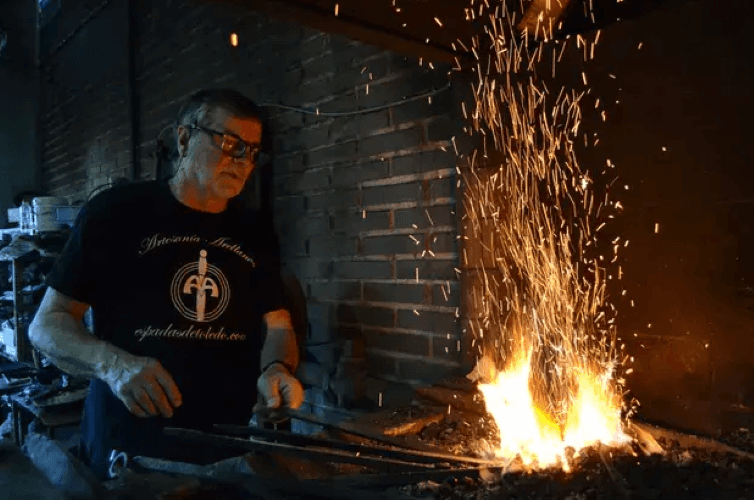
Toledo steel was famous for being flexible and strong and its production was a closely guarded secret until the 20th century. It started with the metals. An envelope of steel was folded around a wrought iron strip, which gave the metal the strength of the steel and the flexibility of the iron. The combination of metals was heated, and forge welded together. This technique is called san mai by modern bladesmiths and is often used when forging swords and knives. It’s also known as the “taco” method. Because of this technique, Toledo steel was said to have a “soul of iron.” [1]
The second secret was the production with a strict schedule of heating, cooling, and temperature. If the process was not followed exactly, the blade would not be of the highest quality. Originally, prayers and psalms were carefully recited with the same rhythm to keep the timing. This process was long and difficult and the average bladesmith produced two to three weapons per year.
History
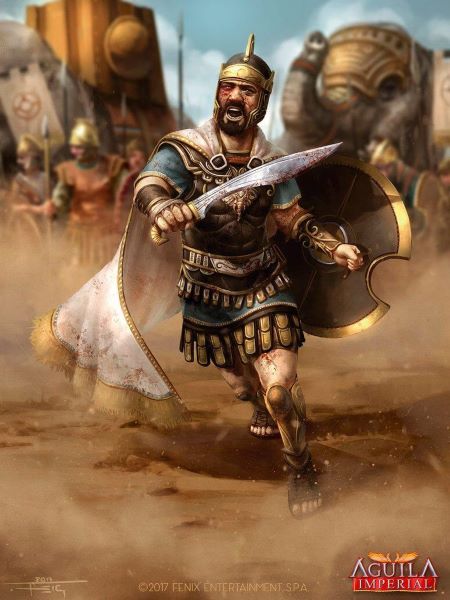
Historians are unsure when the peoples of Iberia began making Toledo steel, but the tribes of ancient Hispania were famous for a type of sword known as a falcata. It was thought to be more fatal than other weapons. [1] The steel and style of sword became prized by the 3rd century when Hannibal choose to arm his soldiers with them during the Second Punic War. The Romans were impressed by their quality and later made Toledo the standard source of steel for their legions. [2]
The production of Toledo steel continued under the Muslin occupation of the Iberian Peninsula but reached its peak in the 15th and 16th centuries after the Christians regained control of southern Spain. [3]
However, as armies replaced their swords with guns, blacksmithing and bladesmithing began to die out. In 1761, King Carlos III of Spain ordered the creation of the Royal Sword Factory in Toledo to preserve the techniques and methods of steel production. [4] Unfortunately, the art has continued to decline and as of 2021, only one master swordsmith remained in Toledo. [5]
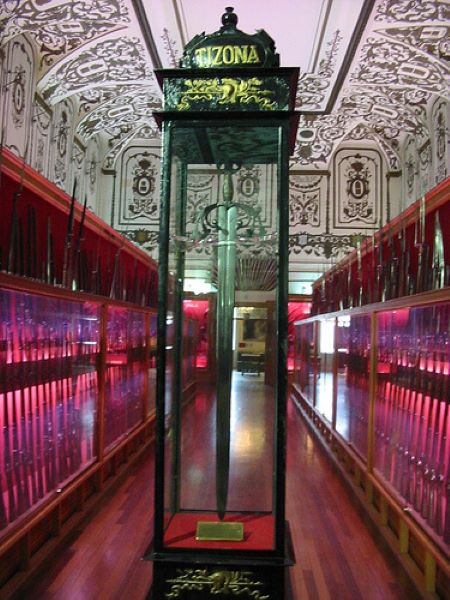
Besides Hannibal and his army, other famous warriors to carry Toledo swords include El Cid with his swords, Tizona and Colada, Emperor Charles V, and Charlemagne. Also, the ceremonial sword of the Catholic monarchs used to knight Christopher Columbus was Toledo steel. [1]
The Write Angle
Sword-making cities can be a fantastic inspiration for fantasy writers. Is there a unique type of metal or weapon in your novel? Is there a famous forge or city of bladesmiths? Does your hero or heroine carry a legendary sword with a name?
I hope this was helpful. Let me know if you have questions or suggestions by using the Contact Me form on my website or by writing a comment. I post every Friday and would be grateful if you would share my content.
If you want my blog delivered straight to your inbox every month along with exclusive content and giveaways, please sign up for my email list here.
Let’s get writing!
Copyright © 2022 Rebecca Shedd. All rights reserved.
[1] https://artesaniamorales.com/en/contenido/6-the-toledo-sword
[2] Diodorus Siculus 5.33.4
[3] “La Real Fábrica de Espadas de Toledo y el mejor acero del mundo”. 17 September 2015.
[4] “The Bite of Spanish Steel: An Introduction to the Metal that Made Toledo”. May 2017.
[5] https://www.theguardian.com/world/2021/aug/24/toledos-last-swordmakers-refuse-to-give-up-on-their-ancient-craft

The Writer’s Guide to Casting Metal
Posted on October 28, 2022 2 Comments

While blacksmithing may be the most well-known method of shaping metal, casting is a craft just as ancient. Casting can also produce intricate shapes that a blacksmith cannot match. Casting is commonly represented in fiction, especially in the “gearing up” scenes, although many of those scenes are inaccurate.
As always, magic is the exception to the rule. Because magic.
History
As I mentioned in my Writer’s Deep Dive: Metalworkers, the oldest cast piece is a copper frog from 3200 BC, that was found in Mesopotamia. [1] However, it is believed that the origins of metal casting are rooted in Southern Asia, specifically China, India, and Pakistan. [2] Most of these early pieces were tools, weapons, and religious statues.

Ancient people commonly added lead when casting copper because it made the molten copper more fluid, allowing them to cast more intricate designs. An example is the dancing girl statue from Mohenjo-daro. [3]
India was the first to use casting to mass produce coins, starting with silver but switching to copper alloy. They stacked multiple coin template molds in a clay cylinder and poured molten metal down the center. This method produced one hundred coins at once. [3]

Types of Casting
Lost Wax Casting – This method is used to create a replica. A mold is made from the original and from the mold, a wax or paraffin cast is made. The wax is covered in a fireproof material such as clay, then heated upside down so that the wax runs out or is “lost.” Then the remaining clay mold is filled with molten metal. The original object can either be a carved wax model or a finished piece, such as a metal statue.
This method of casting is one of the most ancient. The oldest examples of lost wax casting are gold artifacts that were found in Bulgaria. [4] A record was found on a clay tablet in Sparta, Babylon that specified how much wax was needed to cast a key. [5] This technique was adopted early in the Middle East and West Africa. China and Western Europe adopted the method much later. [3]

Mold Casting – Also known as molding, this process involves pouring molten metal into a rigid mold. Early molds were made of stone or ceramic. Articulated molds had multiple pieces that assembled to form a complete mold. [6] One method, known as piece-molding, used different molds to create separate pieces that were joined. Larger pieces such as statues were cast in pieces rather than the whole being cast at once.
Writer’s Tip: It has become common to see mold casting used to create swords in many fantasy movies and TV shows. However, mold casting is not a suitable method for creating a sword. Forging and tempering produce much better blades. Casting can produce good quality spearheads.

Sand Casting – A form of mold casting, this method uses an impression made in sand as the mold rather than a carved stone or molded ceramic mold. The sand is commonly mixed with clay to help it hold its shape. Molds made of sand are cheap, but they wear out faster than a stone or ceramic mold and also cannot produce the fine detail that other methods can.

Plaster Casting – This method is like sand casting but uses plaster instead of sand for the molding material. It can only be used with non-ferrous materials. The metal cools more slowly with this method than with sand casting, allowing time for the metal to fill thin cross-sections, creating more complex and detailed parts. [7]
Other Methods – There are more modern methods of casting that I have not covered. I choose to highlight those used during the ancient and medieval periods. Other methods include die casting, centrifugal casting, investment casting, rapid casting, and squeeze casting.
Finishing
Once the raw castings are released from the mold, they must be finished. The primary work is removing the unwanted extra metal, which includes the access port through which the metal was poured. This process is known as fettling and is often time-consuming. [8] After that, the piece is smoothed with filing or grinding and assembled, if it has multiple parts.
I hope this was helpful. Let me know if you have questions or suggestions by using the Contact Me form on my website or by writing a comment. I post every Friday and would be grateful if you would share my content.
If you want my blog delivered straight to your inbox every month along with exclusive content and giveaways, please sign up for my email list here.
Let’s get writing!
Copyright © 2022 Rebecca Shedd. All rights reserved.
[1] Ravi, B. (2005), Metal Casting: Computer-Aided Design and Analysis (1st ed.), PHI, ISBN 81-203-2726-8
[2] Davey, Christopher J. (2009). J. Mei; Th. Rehren (eds.). The early history of lost-wax casting. Metallurgy and Civilisation: Eurasia and Beyond. London. pp. 147–154.
[3] Craddock, Paul T (October 8, 2014). “The Metal Casting Traditions of South Asia: Continuity and Innovation”. Indian Journal of History of Science. 50 (1): 55–82.
[4] Leusch, Verena; Armbruster, Barbara; Pernicka, Ernst; Slavčev, Vladimir (2015-02-01). "On the Invention of Gold Metallurgy: The Gold Objects from the Varna I Cemetery (Bulgaria)—Technological Consequence and Inventive Creativity". Cambridge Archaeological Journal. 25 (1): 353–376. doi:10.1017/S0959774314001140. ISSN 0959-7743. S2CID 163291835.
[5] Hunt, L. B. (1980). The Long History of Lost Wax Casting, Gold Bulletin. p. 66-79.
[6] “Articulated mold assembly and method of use thereof”. google.com. 14 March 2013. Retrieved 19 March 2018.
[7] Degarmo, E. Paul; Black, J T.; Kohser, Ronald A. (2003), Materials and Processes in Manufacturing (9th ed.), Wiley, ISBN 0-471-65653-4
[8] T F Waters (11 September 2002). Fundamentals of Manufacturing For Engineers. CRC Press. pp. 17–. ISBN 978-0-203-50018-7.

Writer’s Deep Dive: Damascus Steel
Posted on October 14, 2022 3 Comments

Damascus steel blades have been prized for their sharpness, durability, and balance of hardness and flexibility. Throughout history, steel has been valued, upheld as a gift from the gods. Yet Damascus steel has a legendary status and to this day is ascribed near-mythological properties.
Now, let’s dive in!
What is Damascus Steel?
Damascus is a high carbon steel alloy that exhibits a unique pattern when forged. [2]
The metal was developed in southern India and Sri Lanka during the mid-1st millennium BCE and was known as Wootz steel or Seric steel. A mixture of cast iron (also known as pig iron), iron, and sometimes steel was heated to extreme temperatures in a crucible that was commonly made of clay. [1] Often sand, glass, ashes, and other fluxes or cleaning agents were added to the mixture. The charcoal or coal fires in use at the time could not produce temperatures high enough to melt steel. They could, however, melt cast iron. As the iron or steel sat in the melted cast iron, they absorbed its carbon, creating a composite. The hot metal was then poured into molds to form ingots or billets. [3]
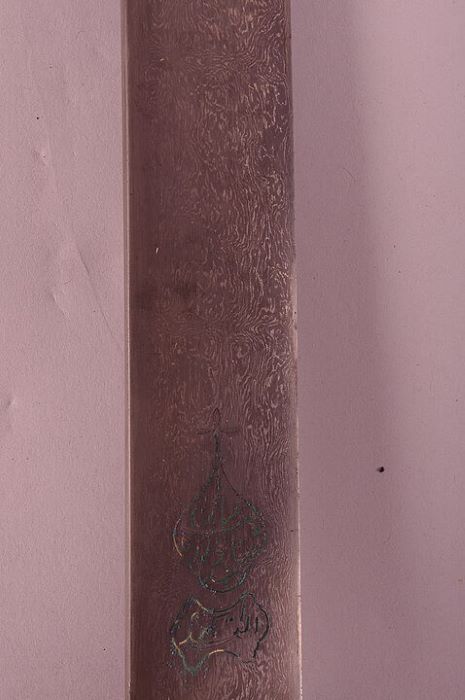
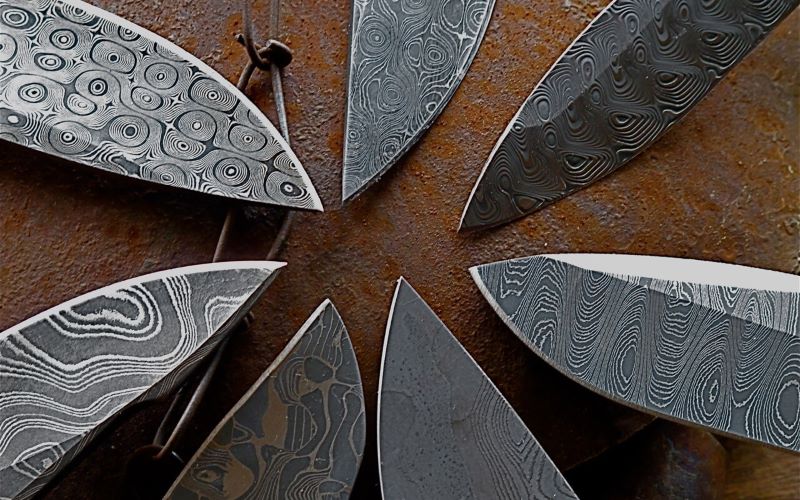
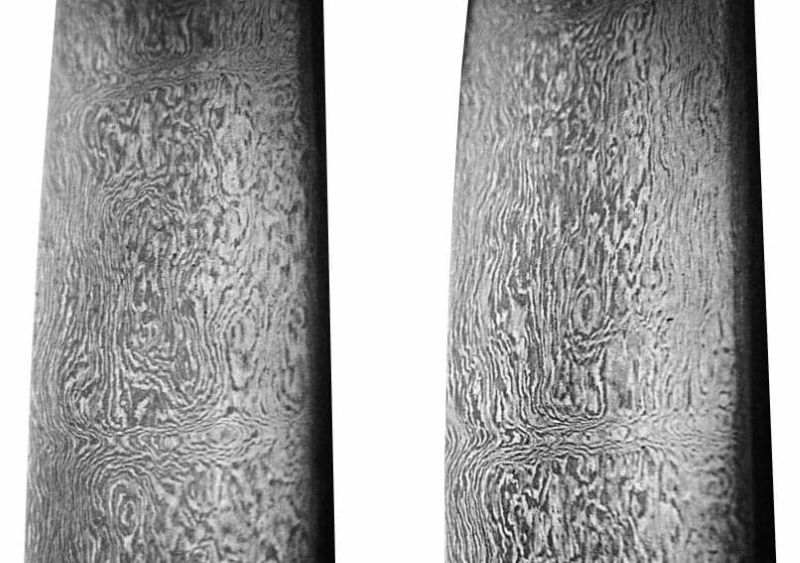
However, the mix of metals in these ingots was irregular and the carbon unevenly dispersed. To spread the mixtures of metals more evenly, during the forging process, the billet was drawn out, then folded back on itself hundreds or even thousands of times. Rather than quenching, the blades were commonly hardened by repeated heating and air cooling in a process called thermal cycling. Filing and polishing a forged Damascus blade revealed an intricate pattern. Often the banding is reminiscent of flowing water, but other patterns, such as “ladder” and “rose” were possible. This distinct patterning is the hallmark of Damascus steel. Unlike etched metal, the swirling pattern runs through the entire blade and not just the surface. If a Damascus blade is cut or broken, the pattern is visible in the cross section. Throughout history, multiple cultures have referred to Damascus as “watered steel.” They were also called “damascene” or “damascened” swords. [6]
The City that Named a Steel
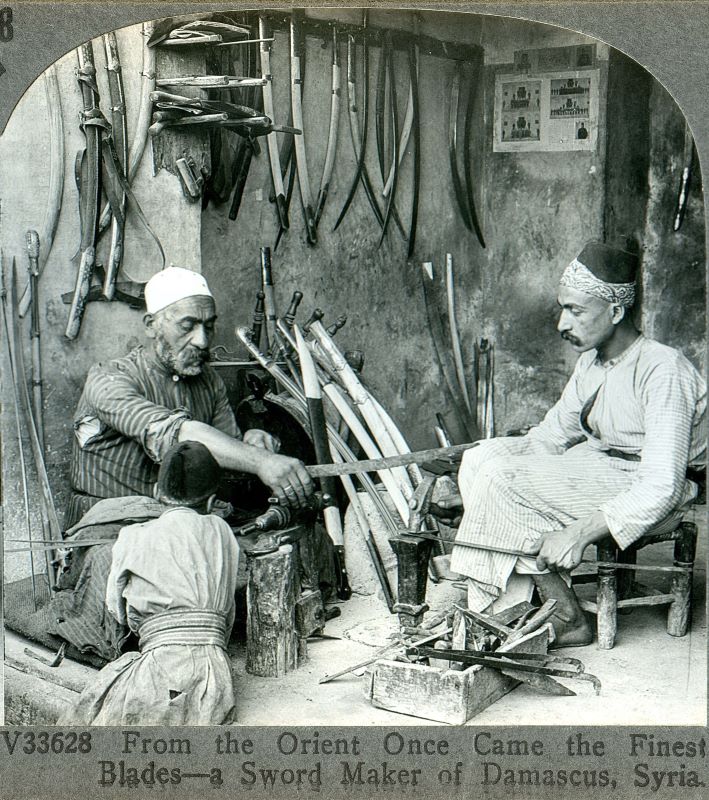
There are several theories about the origin of the name “Damascus.” The most common is that it was named as the capital city of Syria that became famous for its swordsmiths. [4] The city of Damascus became the primary customer for ingots of Wootz steel from India and Sri Lanka and a leader in blade making from the 3rd to the 17th century. [5]
Other theories claim the name is derived from “damas,” the Arabic root word for “watered” and the origin of the word “damask.” There are also records of a swordsmith named Damasqui who used crucible steel. [7]
Over time, the production of Damascus swords declined. The last account is from Sri Lanka in 1903 by Coomaraswamy. [8]
Crucible Steel Versus Pattern Welding
Beginning in the 18th century, some gunsmiths began using the term Damascus steel for their pattern-welded gun barrels.
Pattern welding involves stacking and welding hard and soft metals together to form a billet, which is then drawn out and folded. Sometimes decorative patterns are cut into the metals to create complex designs. Pattern welding dates to the first millennium BC and was used by the Celts and Vikings. [9]
Although similar in appearance, pattern welded steel is not the same as Damascus. Crucible steel is harder and more time-consuming to produce. Unfortunately, a lot of pattern wielded steel is marketed as Damascus nowadays as well as surface etched blades.
I hope this was helpful. Let me know if you have questions or suggestions by using the Contact Me form on my website or by writing a comment. I post every Friday and would be grateful if you would share my content.
If you want my blog delivered straight to your inbox every month along with exclusive content and giveaways, please sign up for my email list here.
Let’s get writing!
Copyright © 2022 Rebecca Shedd. All rights reserved.
[1] Dube, R. K. (2014-11-01). “Wootz: Erroneous Transliteration of Sanskrit “Utsa” used for Indian Crucible Steel”. JOM. 66 (11): 2390–2396. doi:10.1007/s11837-014-1154-1. ISSN 1543-1851.
[2] Figiel, Leo S. (1991). On Damascus Steel. Atlantis Arts Press. pp. 10–11. ISBN 978-0-9628711-0-8.
[3] Pacey, Arnold (1991). Technology in World Civilization: A Thousand-year History. MIT Press. p. 80. ISBN 978-0-262-66072-3.
[4] Goddard, Wayne (2000). The Wonder of Knifemaking. Iola, WI: Krause Publications. pp. 137–145. ISBN 978-0-87341-798-3.
[5] Sinopoli, Carla M. (2003). The Political Economy of Craft Production: Crafting Empire in South India, c. 1350–1650. Cambridge University Press. p. 192. ISBN 0-521-82613-6.
[6] Osborn, Marijane (2002). ““The Wealth They Left Us”: Two Women Author Themselves through Others' Lives in Beowulf”. heroicage.org. Department of English, University of California at Davis. Retrieved 6 July 2021.
[7] Bīrūnī, Muḥammad ibn Aḥmad (1989). Kitāb al-jamāhir fī maʻrifat al-jawāhir [The book most comprehensive in knowledge on precious stones: al-Beruni's book on mineralogy]. Islamabad: Pakistan Hijra Council. ISBN 969-8016-28-7. OCLC 25412863.
[8] Feuerbach, Anna Marie. (2002). Crucible steel in Central Asia: production, use, and origins. University of London. OCLC 499391952.
[9] Verhoeven, John D. (2002). “Genuine Damascus Steel: a type of banded microstructure in hypereutectoid steels” (PDF). Materials Technology. Iowa State University. Steel Research, 73 (8): 356–365. Archived from the original (PDF) on 3 September 2006 – via Internet Archive.

The Writer’s Guide to Types of Metals
Posted on September 30, 2022 4 Comments

The metal used in the forging process is just as important as the item being made. Poor quality will cause bent blades or dull tools. Today, I will explore the most common metals found on our planet and some of their history. This is not an exhaustive list and does not mean you cannot make up your own metals for your world.
As always, magic is the exception to the rule. Because magic.
Naturally Occurring Metals
Gold – A “free” metal that can be found in caves and rivers, gold was the first worked by humans according to the earliest records. [1] This metal occurs naturally around the world and was used by many ancient civilizations for jewelry and other decorations, including those in Egypt, India, the Middle East, and North and South America. [2] Once it is extracted, gold is refined to remove impurities. Refining involves heating the metal to a molten state and skimming off the slag that rises to the surface. Gold can also be mixed with other metals to form an alloy and can only be tempered through work hardening.

Image source.
Silver – Like gold, silver is a naturally occurring metal that can be found in the earth’s crust. It can also form an alloy with other metals. Silver is a byproduct of refining gold, copper, lead, and zinc. Throughout history, it was mainly used as ornamentation or currency and was in use in Europe, Asia, and the Middle East. [3] It also became a critical component of early photography because of its photosensitivity.

Copper – This was the first metal that was smelted, around 5,000 B.C., and cast into shape, around 4,000 B.C. [4] It was also the first to be successfully used to create weapons, although it was also used decoratively. It could only be tempered by work hardening and could be combined with other metals to form alloys. Most commonly, it was mixed with tin to form bronze. The earliest evidence of worked copper is a pendant that dates from 8,700 BCE and was found in northern Iraq. [5]
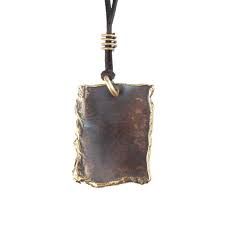
Image source.
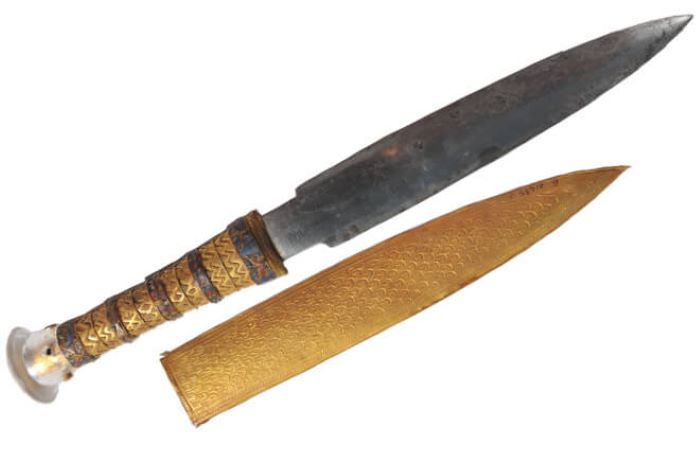
Iron – Iron in a metallic state is rare on earth but can be found in abundance within iron ores. The primary source of metallic iron is meteorites, which were prized by ancient civilizations. A dagger made of meteoric iron was found in the tomb of the pharaoh Tutankhamun. [6] Removing iron from ore is known as smelting and requires kilns or furnaces that can reach a temperature of 2,730 ° F (1,500° C). After that, iron can be worked hot in a forge. The earliest evidence of iron working has been found in Mesopotamia and Syria and dated between 3,000 and 2,700 B.C. [7]
Tin – This metal is soft and malleable and can be bent with little effort. There are few artifacts that have been found made solely of tin since most tin was mixed with copper to form bronze. Tin is unevenly dispersed around the globe with the richest source being Europe, most notably the border region between Germany and the Czech Republic, the Iberian Peninsula, Brittany in France, and southwestern Briton. There is evidence of trade in tin from Cornwall by the Late Bronze Age. [8]

Lead – Lead is a soft and easily worked metal, but as a heavy metal, it is denser than others. This metal is easily extracted from ores and is a byproduct of silver smelting. [9] It was used by the ancient peoples of the Middle East and throughout history lead has been used in plumbing, bullets and shot, batteries, making pewter, and cosmetics.

Alloys
Bronze – Bronze is a mixture of copper and most commonly tin, although arsenic, aluminum, manganese, nickel, or zinc could also be used. It is harder than copper, more resistant to corrosion, and has a lower melting point, making it easier to melt and cast. [10] Bronze cannot be tempered with heat but must be work hardened. This metal was a game changer for ancient civilization because it could be crafted into harder and more durable tools, weapons, and armor. The earliest bronze artifact comes from Serbia and dates to 4,650 B.C. [11]

Steel – This metal is an alloy of iron and carbon. There is evidence of limited production from Anatolia from as far back at 1,800 B.C. [12] Steel has high tensile strength and is low cost to produce. The use of the bloomery smelter and crucibles were developed as the best method to process steel and the early masters were in Sri Lanka. They were using these advanced methods by the 6th century BC. [13] This steel was known as Seric Iron or Wootz steel and it was exported to the Romans, Egyptians, Arabs, and Chinese. [14] Later it was called Damascus and is still prized today for its durable sharp edge. Eventually, the knowledge of how to create steel spread throughout the Old World, across Asia, the Middle East, Africa, and Europe.
I hope this was helpful. Let me know if you have questions or suggestions by using the Contact Me form on my website or by writing a comment. I post every Friday and would be grateful if you would share my content.
If you want my blog delivered straight to your inbox every month along with exclusive content and giveaways, please sign up for my email list here.
Let’s get writing!
Copyright © 2022 Rebecca Shedd. All rights reserved.
[1] “Mystery of the Varna Gold: What Caused These Ancient Societies to Disappear?”.
[2] Sutherland, C.H.V, Gold (London, Thames & Hudson, 1959) p 27 ff.
[3] Readon, Arthur C. (2011). Metallurgy for the Non-Metallurgist. ASM International. pp. 73–84. ISBN 978-1-61503-821-3.
[4] McHenry, Charles, ed. (1992). The New Encyclopedia Britannica. Vol. 3 (15 ed.). Chicago: Encyclopedia Britannica, Inc. p. 612. ISBN 978-0-85229-553-3.
[5] Rayner W. Hesse (2007). Jewelrymaking through History: an Encyclopedia. Greenwood Publishing Group. p. 56. ISBN 978-0-313-33507-5.No primary source is given in that book.
[6] Bjorkman, Judith Kingston (1973). “Meteors and Meteorites in the ancient Near East”. Meteoritics. 8 (2): 91–132. Bibcode:1973Metic...8...91B. doi:10.1111/j.1945-5100.1973.tb00146.x.2,730
[7] Weeks, Mary Elvira; Leichester, Henry M. (1968). "Elements known to the ancients". Discovery of the elements. Easton, PA: Journal of Chemical Education. pp. 29–40. ISBN 0-7661-3872-0. LCCN 68-15217.
[8] Pernicka, Ernst; Lockhoff, Nicole; Galili, Ehud; Brügmann, Gerhard; Giumlia-Mair, Alessandra R.; Soles, Jeffrey S.; Berger, Daniel (26 June 2019). "Isotope systematics and chemical composition of tin ingots from Mochlos (Crete) and other Late Bronze Age sites in the eastern Mediterranean Sea: An ultimate key to tin provenance?". PLOS ONE. 14 (6): e0218326. Bibcode:2019PLoSO..1418326B. doi:10.1371/journal.pone.0218326. ISSN 1932-6203. PMC 6594607. PMID 31242218.
[9] Hong, S.; Candelone, J.-P.; Patterson, C. C.; et al. (1994). "Greenland ice evidence of hemispheric lead pollution two millennia ago by Greek and Roman civilizations" (PDF). Science. 265 (5180): 1841–43. Bibcode:1994Sci...265.1841H. doi:10.1126/science.265.5180.1841. PMID 17797222. S2CID 45080402.
[10] James E. McClellan III; Harold Dorn (2006). Science and Technology in World History: An Introduction. JHU Press. ISBN 978-0-8018-8360-6. p. 21.
[11] Radivojević, Miljana; Rehren, Thilo (December 2013). "Tainted ores and the rise of tin bronzes in Eurasia, c. 6500 years ago". Antiquity Publications Ltd. Archived from the original on 2014-02-05.
[12] Akanuma, H. (2005). "The significance of the composition of excavated iron fragments taken from Stratum III at the site of Kaman-Kalehöyük, Turkey". Anatolian Archaeological Studies. Tokyo: Japanese Institute of Anatolian Archaeology. 14: 147–158.
[13] Davidson, H. R. Ellis (1994). The Sword in Anglo-Saxon England: Its Archaeology and Literature. Woodbridge, Suffolk, UK: Boydell Press. ISBN 0-85115-355-0.
[14] Srinivasan, Sharada (1994). "Wootz crucible steel: a newly discovered production site in South India". Papers from the Institute of Archaeology. 5: 49–59. doi:10.5334/pia.60.
Writer’s Deep Dive: Metalworkers
Posted on September 16, 2022 1 Comment

When most people think of metalworkers, the image that commonly comes to their mind is a medieval blacksmith hammering at his anvil. However, there are other types of metalworkers, most of whom were skilled in a specialized craft.
I will focus in this article on metal crafts from before the Industrial Revolution. Unfortunately, that means I will leave out ironworkers, welders, and machinists.
Now, let’s dive in!
Whitesmiths
While blacksmiths worked with dark-colored metals such as iron, whitesmiths worked with light colored metals such as tin. [1] Whitesmithing is also used as a term for finishing work such as polishing, filing, lathing, and burnishing. [2] The first written description of a whitesmith is from 1686. [3]

Jewelers
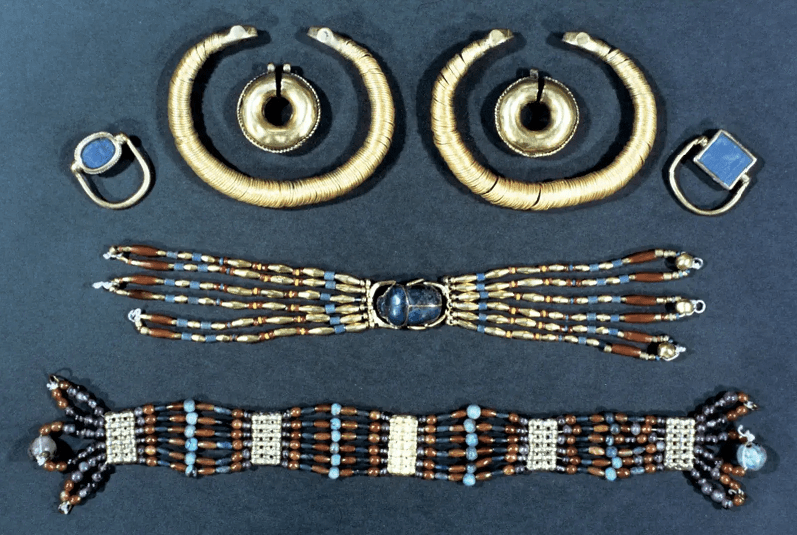
Although we rarely consider people who craft metal jewelry as metalworkers, they are masters at manipulating gold, silver, and other precious metals. The first metal jewelry was copper and made 7,000 years ago. [4] The ancient Egyptians crafted and wore a tremendous amount of gold jewelry.
Founders
A founder is a craftsman who casts objects by pouring molten metal into molds. A variety of metals can be cast, including aluminum, cast iron, bronze, brass, and steel. There are also many types of casting, such as sand casting, shell molding, die casting, and loam molding. The oldest cast piece is a copper frog from 3200 BC, that was found in Mesopotamia. The Chinese began casting iron between 800 and 700 BC and the technology made its way to Europe in the 15th century.

Farriers
Farriers specialize in shoeing horses, although it also involves trimming the excess growth off the hoof. These tradesmen must have blacksmithing skills to custom fit or even fabricate horseshoes, but also knowledge of the anatomy of the lower leg and foot. Although the term farrier is synonymous with horses, there are farriers who see to the trimming and health of the hooves of cattle, goats, and sheep. The first horseshoes were made of leather or woven plants. The metal horseshoe developed in northern Europe during the 6th and 7th centuries.

Armorer
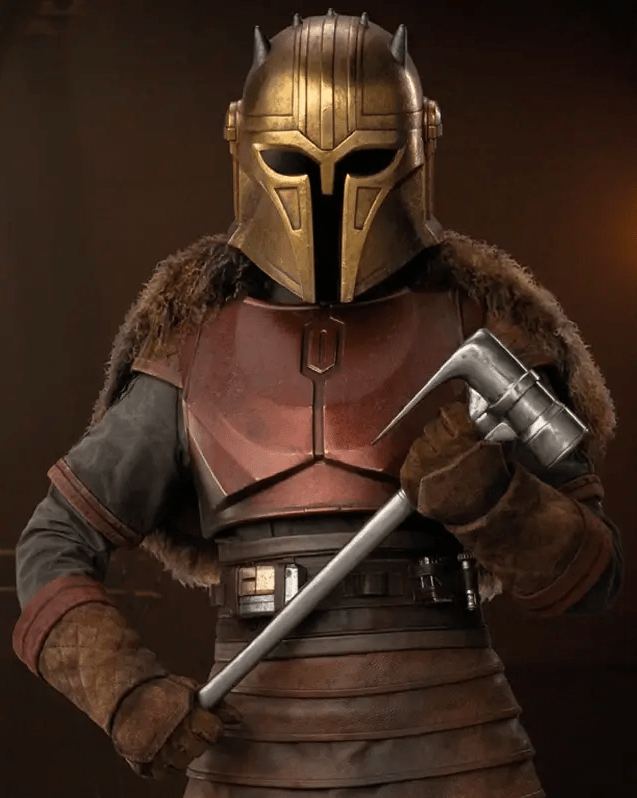
A craft specializing in armor, this art requires blacksmithing and usually leatherworking. Plate armor was first used by the ancient Greeks and full suits of plate mail were developed in Europe, starting the 12th century and through the 14th.
Blade and Gunsmiths
Bladesmithing is a catch-all terms for craftsmen who made a variety of blades, including knives, daggers, scythes, and swords. [5] There are specific terms for each type, such as knifemaker and swordsmith. Blademaking is a specialized skill that requires knowledge of metallurgy and various techniques. Different regions became famous for their unique metal, techniques, or quality.
The art nearly died out in the Western world after the Middle Ages when the sword stopped being a common weapon of war. The last couple of decades have seen a rebirth, although much of the knowledge was lost. Other parts of the world kept the craft alive, such as Japan, where they never stopped making blades.
Gunsmithing is the art of crafting and repairing firearms. It requires incredible precision and exact machining.

I hope this was helpful. Let me know if you have questions or suggestions by using the Contact Me form on my website or by writing a comment. I post every Friday and would be grateful if you would share my content.
If you want my blog delivered straight to your inbox every month along with exclusive content and giveaways, please sign up for my email list here.
Let’s get writing!
Copyright © 2022 Rebecca Shedd. All rights reserved.
[1] Susan Hanway Scott (2012), "Whitesmithing", The Hunt Magazine, vol. Summer 2012
[2] John Holland (1831). "VI". A treatise on the progressive improvement and present state of the manufactures in metal. Vol. II:Iron and Steel. Longman, Rees, Orme, Brown, Green & Longman, and John Taylor. pp. 124–157.
[3] Oxford English Dictionary https://en.oxforddictionaries.com/
[4] Holland, J. 1999. The Kingfisher History Encyclopedia. Kingfisher books.
[5] Barney, Richard W.; Loveless, Robert W. (March 1995) [1977]. How to Make Knives. Knife World Publications. ISBN 0-695-80913-X.
 Rebecca Shedd - Author