
The Writer’s Guide to Venom
Posted on August 15, 2025 Leave a Comment

Venom is a biological weapon with bite – fast, deadly, and often misunderstood. Nature has used it for millions of years to paralyze, kill, or subdue prey, and it makes a powerful storytelling device in fiction. Whether your character is battling a serpent in the jungle, stung by a sci-fi insect, or cursed by a mythical creature, understanding how venom works in the real world can help you write scenes that are both gripping and grounded.
This article will walk you through the different venoms, their symptoms, the treatments, and how to use venom in your story to raise tension and make consequences matter.
What Is Venom?
Venom is a toxic substance actively delivered into the body through a bite, sting, or specialized organ (like fangs or a stinger). It differs from poison, which must be ingested, inhaled, or absorbed. In fiction, they’re often confused, but their effects and delivery systems are distinct.
If it bites you and you die, it’s venom.
If you bite it and die, it’s poison.
Types of Venom and Their Symptoms
Venoms come in several forms, each affecting the body differently. Many creatures deliver combinations of these toxins, which complicate diagnosis and treatment.
Neurotoxic Venom
What it does: Attacks the nervous system.
Symptoms: Muscle weakness or paralysis. Difficulty speaking or swallowing. Respiratory failure. Drooping eyelids (ptosis). Numbness or tingling.
Symptom Onset: Within minutes to 2 hours.
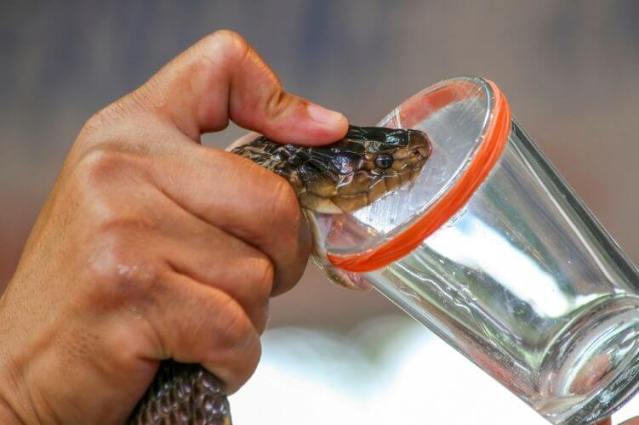
Animals: Cobras, mambas, kraits, blue-ringed octopus, cone snails, black widow spiders.
Great for fiction: High-stakes paralysis, inability to speak, ticking clock tension. Paralysis during a stealthy assassination, or characters gradually losing control of their body while trying to escape.
Hemotoxic Venom
What it does: Destroys blood cells, affects clotting, damages organs.
Symptoms: Internal bleeding. Swelling and bruising around the bite. Blood in vomit or stool. Organ failure (especially kidneys and liver). Shock.
Symptom Onset: 30 minutes to several hours
Animals: Vipers (e.g., rattlesnakes, puff adders), some lizards (Gila monster, Komodo dragon).
Great for fiction: Visceral, painful wounds; characters slowly weakening, disfiguring injuries. Graphic tissue damage, rapidly worsening injuries, or a sense of time running out because of organ failure.

Cytotoxic Venom
What it does: Destroys tissue and individual cells.
Symptoms: Severe pain at the bite site. Swelling and blisters. Necrosis (tissue death). Risk of amputation if untreated.
Symptom Onset: Hours to days.
Animals: Some vipers and spitting cobras, brown recluse spiders.
Great for fiction: Long-lasting scars, amputations, characters carrying trauma (and proof) of the encounter. Disfiguring wounds, delayed consequences of a bite, or lasting trauma after recovery.
Myotoxic Venom
What it does: Breaks down muscle tissue.
Symptoms: Intense muscle pain. Weakness or inability to move limbs. Dark urine (from muscle breakdown). Risk of kidney failure.
Symptom Onset: Hours, often with delayed symptoms. A warrior whose limbs weaken in battle, or a victim forced to choose between movement and further damage.
Animals: Sea snakes, certain rattlesnakes, some scorpions.
Great for fiction: Quiet internal damage, survivor guilt, delayed medical crises.
Cardiotoxic Venom
What it does: Attacks the heart
Symptoms: Irregular heartbeat. Chest pain. Cardiac arrest. Affects heart rhythm or damages cardiac muscle.
Symptom Onset: Within minutes to 2 hours.
Animals: Some cobras (particularly king cobras). Certain frogs and toads (more toxic than venomous via skin secretions)
Great for fiction: Collapse, near-death episodes, or deceptive slow-onset symptoms that mimic a heart attack.
Bonus: Unusual Venomous Animals
Platypus: Males have venomous spurs on their hind legs. Painful but non-lethal.
Cone snails: Beautiful but deadly, capable of delivering lethal neurotoxin through a harpoon-like tooth.
Box jellyfish: Their venom can stop the heart in minutes and cause irukandji syndrome, an intense, painful reaction.
Komodo dragons: Once thought to kill by bacteria, now known to inject anticoagulant venom to weaken prey.

Antivenoms, Treatments, and Survival Odds
Antivenom (Antivenin)
Made from antibodies produced by injecting venom into animals (usually horses or sheep).
Must be specific to the type of venom. Rattlesnake antivenom won’t work for a cobra bite.
Most effective when given early, within hours of the bite.
Additional Treatments
Supportive care (IV fluids, breathing support)
Wound cleaning and antibiotics (to prevent secondary infections)
Pain control
Surgical debridement (in cases of necrosis)
Survival Rates
In modern settings with access to antivenom: Very high, especially for North American and European bites.
In rural or undeveloped areas: Mortality remains high, especially for children and the elderly.
In historical or fantasy settings without modern medicine: Venomous bites can be fatal or permanently disabling.
Long-Term Effects of Envenomation
Even with treatment, survivors may experience:
Permanent nerve damage (neurotoxic)
Amputations (cytotoxic)
Chronic pain or arthritis
Kidney failure (myotoxic)
PTSD or trauma responses
Increased susceptibility to future envenomation because of immune sensitization
Characters may bear physical scars and emotional consequences, offering great depth to long-term arcs.
Depicting Venom in Fiction
Venom in fiction can be biological, mystical, or mechanical, depending on the world you build. Whether it’s a rattlesnake bite in the Wild West or a genetically modified arachnid on a terraformed planet, the way writers portray venom from its delivery to its consequences should reflect the genre you’re writing in.
In this article, we’ll explore how the depiction of venom changes by genre, focusing on contemporary and historical fiction, then diving into how fantasy and science fiction expand the possibilities through unique creatures and creative world-building.
Contemporary Fiction
Modern depictions of venom are rooted in biology and realism. Audiences expect accurate symptoms, treatment options, and a plausible chain of events.
Common Sources
Snakebites (rattlesnakes, copperheads, coral snakes)
Spider bites (black widow, brown recluse)
Scorpion stings
Exotic pets or illegal smuggling (e.g., Gila monsters, tarantulas)
Depiction Focus
Accurate symptom timelines: swelling, paralysis, neurotoxicity
Access to emergency medicine: antivenom, supportive care, logistics
Survival stories or medical thrillers: often involve race-against-time dynamics
Forensic clues: matching bite patterns, venom types, or sourcing rare antivenom as part of a mystery plot
Example: A rattlesnake bites a hiker miles from help. The story explores survival, improvisation, and the fragility of the human body against nature’s design.

Historical Fiction
In historical settings, people fear and misunderstand venom, attributing its symptoms to spirits, curses, or divine punishment rather than biology.
Common Sources
Native wildlife (e.g., snakes, insects)
Assassin’s tools: poisoned daggers, venomous powders
Traditional medicine or folk practices involving animal toxins
Depiction Focus
Lack of diagnosis: venom symptoms mistaken for madness, witchcraft, or disease
Ineffective treatments: bloodletting, poultices, herbal purging
Social consequences: accusations of sorcery, revenge killings, political cover-ups
Symbolism: venom representing treachery, feminine danger, or divine wrath
Example: In a medieval court, a prince dies hours after a duel. They found a small, nearly invisible wound inflicted by a venom-dipped ring. No one understands how he died, and whispers of dark magic spread.
Fantasy
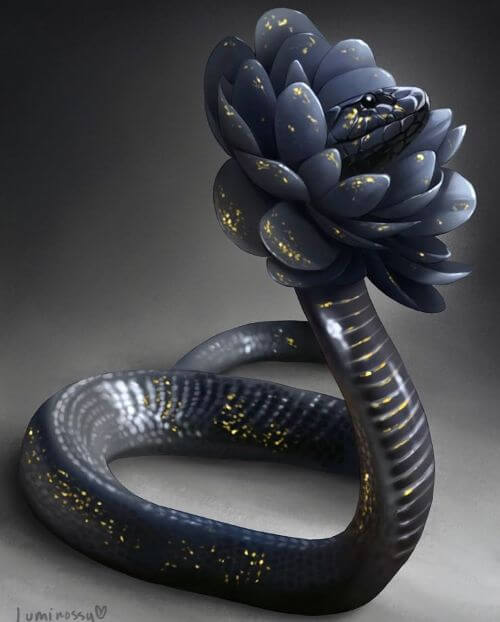
Fantasy allows for awe-inspiring interpretations of venom, where it doesn’t just cause physical harm, it may curse, transform, or alter fate.
Creatures with Venom
Basilisks, wyverns, shadow hounds
Giant spiders or serpents with mystical origins
Curse-bound familiars or enchanted beasts
Demons whose venom affects the soul, not just the body
Depiction Focus
Mythic symptoms: hallucinations, slow magical decay, memory loss
Unique cures: rare herbs, sacred rituals, blood oaths, divine intervention
World-specific logic: venom that only works on certain bloodlines or magical creatures
Plot consequences: a venomous wound might prevent the character from wielding magic or fulfilling a prophecy
Example: A dream serpent bites a rogue. Instead of dying, he loses the ability to dream, cut off from prophetic visions needed to save his realm. The cure lies with an ancient seer who charges a deadly price.
Science Fiction
In science fiction, venom can be biological, chemical, or technological. It might come from alien ecosystems, genetically modified organisms, or bio-weapons designed to bypass standard defenses.
Sources of Venom
Alien insects or reptiles
Cybernetic organisms with injector systems
Nanobot-delivered toxins
Bio-engineered hybrids (e.g., military experiments, terraforming accidents)
Depiction Focus
Complex reactions: venom that disrupts neural implants, hacks immune systems, or mutates cells
High-tech treatment: nanobots, AI diagnostic tools, gene therapy, cryostasis
Ethical questions: using venom in warfare, animal rights, or cross-species infection
Plot layers: a bite reveals the character’s biology is not what they thought
Example: An insect stings a colonist on a terraformed planet. It doesn’t kill her, but it rewrites her DNA, allowing her to breathe the alien atmosphere while severing her connection to Earth-based medicine.
Treating Venom Through the Ages
The treatment of venomous bites and stings has changed drastically over the centuries, evolving from herbal guesses and bloodletting to targeted antivenoms. In fiction, writers should match the treatment of venom to the period, culture, and genre, whether writing a medieval forest encounter, a modern survival thriller, or a futuristic bioengineered battlefield.
This section explores typical venom treatments from ancient times through modern medicine, with additional ideas for how fantasy and science fiction can expand or reinvent these methods in your story.
Ancient and Classical World
In early history, venom treatment was a mix of trial, error, ritual, and folklore. Snakebite and scorpion sting remedies were often based more on superstition than science.
Treatments
Suction and cutting the wound: A common but dangerous practice thought to “draw out” the venom
Burning or cauterizing the site
Herbal poultices and pastes made from garlic, onions, clay, or crushed insects
Incantations and amulets: Prayers, spells, or sacred texts placed on the wound
Venom stones (mythical “snake stones”) believed to absorb toxins
Consuming parts of the creature (e.g., powdered snake fang) to build immunity
Limitations
No understanding of how venom spreads through the bloodstream or lymphatic system
Most treatments were ineffective or harmful
Death was common, especially from neurotoxic or hemotoxic venom
In fiction: These treatments can introduce themes of desperation, folklore, or cultural belief systems, and create tension between healers and skeptics.

Medieval and Renaissance Treatments
By the Middle Ages, medical knowledge was still limited, though more structured thanks to translations of Greek and Roman texts. Some viewed venom as punishment for sin or a consequence of curses.
Typical Treatments
Bloodletting to “release bad humors”
Application of poultices made from herbs (yarrow, plantain, rue, wormwood)
Use of animals: Live chickens or pigeons were applied to bites to “draw out” the venom
Stone or mineral talismans believed to neutralize toxins when worn
Sweating therapies: Placing victims near fire to “sweat out” venom
Mystical remedies: People treated snakebites using relics, prayers, or pilgrimages
Limitations
No understanding of venom’s biological mechanism
Herbal treatments may have had mild antiseptic effects, but not venom-specific efficacy
Very few people survived serious bites from venomous animals without a strong immune response
In fiction: Use medieval treatments to emphasize the unknown. Let the healer succeed through instinct or experience rather than education, or explore the societal consequences of superstition and misdiagnosis.
Modern Medicine
Today, venom treatment is scientifically driven and highly effective when available. The challenge now is access, especially in remote or low-resource areas.
Standard Modern Treatments
Antivenom: Produced by injecting animals (usually horses or sheep) with small amounts of venom. Scientists harvest and purify the animal’s antibodies into injectable serum. Must be specific to the type of venom (e.g., rattlesnake vs. cobra). Works best when given within 4–6 hours.
Supportive Care: IV fluids, oxygen, and pain relief. Wound cleaning and antibiotics to prevent secondary infection. Surgical debridement if tissue necrosis occurs. Respiratory support for neurotoxic envenomation.
First Aid (Field Settings): Immobilize the limb. Keep the victim calm to slow venom spread. Do not cut or suck the wound. Get to medical care immediately.
Limitations
Antivenoms are expensive, have short shelf lives, and require cold storage
Not every country produces antivenoms for all species
Anaphylactic reactions to antivenom can complicate treatment
In fiction: Use modern treatments for survival thrillers, forensic investigations, or to add tension in remote settings where the cure is far away or expired.

Fantasy Treatments
In fantasy, venom can be mundane, magical, or cursed and the treatment should reflect the world’s logic and lore.
Common Fantasy Treatment Approaches
Alchemy and Potion Craft: Antidotes made from rare herbs, magical ingredients, or monster parts. Brews that only work if prepared under certain moons or rituals.
Healing Magic: Spells that purge toxins, but may require strength, sacrifice, or rare materials. Magical healing may work on wounds but not curses, or fail on enchanted venom.
Traditional or Forbidden Remedies: Old hedge-witch knowledge passed through generations. Cure tied to a trial or pilgrimage – a flower blooming on a cliffside, a beast’s venom used as its own cure.
Venom as a Curse or Trial
The venom doesn’t kill, but changes the victim – turns them to stone, steals memory, binds them to the creature
In fiction: Let the cure be part of the journey or character arc, something earned, not administered.
Science Fiction Treatments
In science fiction, venom can be biological, synthetic, or even programmable and treatments are often just as imaginative.
Advanced Sci-Fi Approaches
Nanobot Antidotes: Injected or activated to target and break down venom molecules. May fail against mutated or alien toxins.
Genetic Immunity: Engineered immunity for soldiers or explorers. A character discovers they’re immune or uniquely vulnerable based on ancestry or enhancements.
Neural Interface Diagnostics: Smart tech in suits or implants detects venom and deploys treatment instantly. May create tension if malfunctioning or hacked.
Alien Cures: Symbiotic organisms that absorb toxins. Venom must be treated with biologically incompatible medicine (e.g., from another species or environment).
In fiction: Use venom treatment to explore medical ethics, biotech dependence, or alien understanding of biology.
Plot and Character Ideas
Venom is more than just a toxin – it’s a symbol of stealth, power, danger, and transformation. Whether delivered by fangs, stingers, syringes, or enchanted blades, venom is visceral and intimate. It creates tension, limits time, and often leaves permanent consequences, making it a potent narrative tool across genres.
Below are plot and character ideas centered on venom, including twists for contemporary, historical, fantasy, and science fiction settings.
The Immunity Gambit
Genre: Fantasy / Historical
A noble house raises its heir on small doses of venom to build immunity in case of assassination. But when someone uses a rare venom against them, it doesn’t kill; instead, it causes hallucinations and compulsive truth-telling, threatening to expose the family’s darkest secret.
Character Angle: The heir must keep secrets while unable to lie. The venom’s effects grow stronger with each passing hour. The only cure lies in the hands of a rival house.
Twist: They developed the venom using the heir’s own blood; only the heir can survive a full dose.
The Venom Heist
Genre: Contemporary / Thriller
A pharmaceutical company is secretly harvesting rare venom from endangered species for an experimental drug. An eco-activist breaks in to expose them but gets stung and has hours to live unless she cooperates with the people she’s trying to stop.
Character Angle: A battle between survival, principles, and trust. The venom affects cognition. Was she hallucinating the evidence? Her only hope may be the scientist who created the drug.
Twist: The venom has a cognitive enhancement effect, and she realizes she’s not dying but changing.
The Crown of Fangs
Genre: Epic Fantasy
A ceremonial crown, once worn by a god-king, is encrusted with fanged serpents carved from obsidian. The new ruler dons the crown, and the serpents bite them, infecting them with divine venom. This venom slowly turns their blood to gold and their soul to madness.
Character Angle: The ruler’s decisions become more violent, visionary, or divine. A loyal guard or court healer must decide whether to cure, kill, or crown themselves. The venom allows glimpses into the minds of their enemies, but at what cost?
Twist: The venom was never meant to kill, it was meant to awaken a slumbering god.
The Entomologist’s Revenge
Genre: Mystery / Crime Drama
A reclusive entomologist creates a new breed of insect with engineered venom. When his daughter is murdered, the killer dies days later from a bite that leaves no trace. Now, a detective must solve a murder, searching for a murder weapon while wondering who the next victim will be.
Character Angle: The entomologist is both victim and suspect. The detective finds insect bites on themselves. Unless the antidote is administered in time, the venom mimics a natural death.
Twist: The killer recorded their confession but encoded in the insects’ behavior.
The Alien Bond
Genre: Science Fiction
An alien creature stings a space explorer on a newly colonized world. The venom begins to rewrite their DNA, adapting them to the planet. Now the explorer must decide: return to human form or fully bond with the new world?
Character Angle: The explorer gains heightened senses but loses language and identity. Their crew sees them as a threat or a miracle. They’re drawn to the alien ecosystem and something inside it is calling them back.
Twist: The planet uses venom to choose its guardians, and it has chosen them.
The Venom Oracle
Genre: Dark Fantasy
A secretive sect uses venomous creatures in their rituals. The sect claims that survivors of the creatures’ stings gain prophetic visions, but most victims die or go mad. A desperate character seeks the oracle’s guidance to save someone they love, knowing they may not survive the venom.
Character Angle: After the sting, they see possible futures but can’t control what they reveal. Each vision weakens their grip on the present. Others now seek them out for knowledge they never asked to bear.
Twist: They realize that they cannot change the future they saw unless they get stung again.
The Cure is Worse
Genre: Contemporary / Biopunk
A megacorporation unveils a miracle antivenom that works for every bite. But survivors show neurological side effects, including visions, rage, and in rare cases homicidal tendencies. A former EMT stumbles on the truth and must decide whether to expose the cure or protect the public trust.
Character Angle: The EMT was saved by the cure and is now seeing things that shouldn’t be real. The “venom” may not be from Earth. Trust in medicine, government, and self all unravel.
Twist: The antivenom’s purpose was never to cure, but to test compatibility with something to come.
The Dragon’s Pact
Genre: Mythic Fantasy
A dying land makes a pact with a venomous dragon whose bite grants supernatural endurance. To survive the journey through cursed territory, the dragon must bite a chosen champion; however, the venom alters them daily.
Character Angle: The champion struggles to maintain humanity and control. The venom grants visions of the dragon’s thoughts and memories. Companions grow fearful as their friend becomes something else.
Twist: The dragon didn’t choose them randomly. It’s preparing them as its successor.
The Synthetic Soldier
Genre: Sci-Fi / Military
Researchers injected genetically enhanced soldiers with controlled venom to boost their performance, but they abandoned the project after side effects spiraled out of control. Now one former soldier is being hunted by the corporation that created him and by the venom itself.
Character Angle: The venom amplifies instincts, aggression, and memory. Flashbacks blur past and present. He must track down the original scientist before the final mutation sets in.
Twist: The only antidote is inside a surviving test subject who wants to keep the venom’s power.

Venom isn’t just a monster’s bite. It’s a tool for tension, transformation, and consequences. When used right, it can slow a story down in the best way, letting readers sit with dread, pain, or desperation. Whether you’re writing fantasy, horror, or survival drama, venom can leave wounds that change characters forever.
Let your venom do more than harm. Let it shape the story.
I hope this was helpful. Let me know if you have questions or suggestions by using the Contact Me form on my website or by writing a comment. I post every Friday and would be grateful if you would share my content.
If you want my blog delivered straight to your inbox every month along with exclusive content and giveaways, please sign up for my email list here.
Let’s get writing!
Copyright © 2025 Rebecca Shedd. All rights reserved.
The Writer’s Guide to Poisoning
Posted on August 1, 2025 1 Comment

From Shakespearean tragedies to spy thrillers to medieval murder plots, poisoning has long been a favorite tool for fiction writers. It’s stealthy, dramatic, symbolic and, when done well, devastating. But writing poisoning realistically requires more than tossing a mysterious powder into a goblet. Readers today are savvy, and sloppy depictions can break immersion fast.
This article will help you write poisoning with accuracy, impact, and tension, while also clearing up one of the most common misconceptions in fiction: the difference between poison and venom.
Poison vs. Venom
Writers often confuse poison and venom, but understanding the distinction not only makes your writing more accurate, it opens up unique plot opportunities based on how each works.
Poison
A toxin that causes harm when ingested, inhaled, or absorbed
You eat it, drink it, breathe it, or touch it
Examples: arsenic, cyanide, hemlock, mercury, carbon monoxide
Venom
A toxin that causes harm when injected through a bite, sting, or specialized body part
It bites, stings, or stabs you
Examples: cobra venom, black widow venom, bee stings, cone snail harpoons
Simple Rule for Writers
If you bite it and die, it’s poison.
If it bites you and you die, it’s venom.
Understanding Real-World Poisons
People have used poison throughout history as a weapon of stealth, power, and fear. It’s a favorite of both assassins and storytellers because of its wide variety, subtlety, and dramatic potential. To write a realistic and compelling poisoning scene, it helps to understand the major categories of real poisons, how they’re administered, the symptoms they cause, and what determines a person’s survival or long-term prognosis.
Let’s break down the main poisons, their typical use or delivery, physiological impact, and a real historical case that shows just how powerful and insidious poison can be.
Neurotoxins
Effect: Attack the nervous system, disrupting signals between the brain, spinal cord, and muscles.
Common Examples: Botulinum toxin (Botox in small doses), sarin gas (nerve agent), tetrodotoxin (found in pufferfish), organophosphates (used in pesticides and chemical warfare)
Administration: Inhalation (nerve gases), ingestion (contaminated food, fish), injection (bio-weapons, animal venom)
Symptoms: Muscle weakness or paralysis, slurred speech, seizures, respiratory failure, loss of coordination or consciousness
Survival Odds: Low without immediate treatment, especially for nerve agents. Doctors may need to provide artificial ventilation until the body metabolizes the toxin.
Long-Term Effects: Neurological damage, chronic fatigue, reduced motor function
Ideal for stories involving: Political assassinations, bio-engineered weapons, elite toxin-based assassins.
Hemotoxins
Effect: Disrupt blood clotting, destroy red blood cells, or damage vascular tissue.
Common Examples: Ricin (from castor beans), arsenic, viper venom (in nature), warfarin (a blood thinner that can be toxic in large amounts)
Administration: Ingestion, injection (snakebite or weapon tip), inhalation (powdered toxins like ricin)
Symptoms: Internal bleeding, bruising, blood in stool or urine, organ failure due to lack of oxygen, circulatory collapse
Survival Odds: Moderate to low, depending on dosage and medical response time.
Long-Term Effects: Kidney or liver damage, anemia, impaired clotting or vascular issues
Great for stories involving: Sabotage, slow political assassination, long-term suffering masked as illness.
Cytotoxins
Effect: Kill or damage living cells directly.
Common Examples: Mustard gas, certain snake and spider venoms, chemotherapy agents in high doses
Administration: Skin contact, inhalation (airborne agents), injection (venoms)
Symptoms: Blistering skin, cell necrosis, organ failure, fever and fatigue
Survival Odds: Depends on exposure level, can range from full recovery to fatality.
Long-Term Effects: Scarring or disfigurement, increased cancer risk, autoimmune complications
Useful in fiction for: Visibly damaging poisons, dramatic transformations, magical or cursed toxins.

Gastrointestinal Poisons
Effect: Primarily attack the digestive system but may also cause systemic toxicity.
Common Examples: Strychnine, food-borne toxins (e.g., from spoiled mushrooms or seafood), ethylene glycol (antifreeze), cyanide (can also be classified as a metabolic toxin)
Administration: Ingested—commonly slipped into food or drink
Symptoms: Vomiting, diarrhea, severe abdominal pain, convulsions, difficulty breathing, collapse
Survival Odds: Higher if vomiting is induced early or if activated charcoal is administered. Some poisons (e.g., cyanide) can kill in minutes.
Long-Term Effects: Organ damage, nutrient malabsorption, ongoing GI disorders
Best for scenes involving: Tainted feasts, deceptive hosts, or suicide attempts with tragic consequences.
Metabolic Poisons
Effect: Disrupt cellular respiration and energy production.
Common Examples: Cyanide, carbon monoxide, fluoroacetate (a pesticide), methanol (in poorly made alcohol)
Administration: Inhalation (gas), ingestion (contaminated drink, pills), injection (less common)
Symptoms: Headache and confusion, seizures, cherry-red skin (cyanide), death because of cellular oxygen deprivation
Survival Odds: Very low without immediate treatment (e.g., antidotes, oxygen therapy)
Long-Term Effects: Cognitive impairment, memory loss, chronic fatigue
Great for science fiction, dystopias, or historical accidents involving gas exposure.
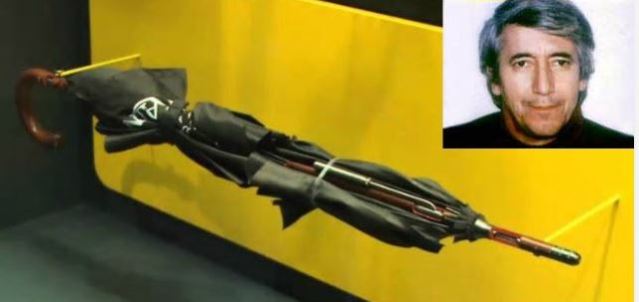
Historical Case Study: The Death of Georgi Markov (1978)
Who: Bulgarian dissident journalist living in London.
What Happened: While waiting at a bus stop, Markov felt a sharp sting in his leg. A man behind him dropped an umbrella and apologized before walking away. Markov later fell ill and died in the hospital.
The Cause: A tiny pellet filled with ricin had been injected into his leg via a modified umbrella gun, a KGB-linked assassination method.
Symptoms: Fever, vomiting, organ failure, death within days
Why It’s Notable: No antidote exists for ricin. It was deliberate, undetectable, and politically motivated.
This case remains one of the most infamous modern poisonings, illustrating how chillingly efficient the weaponisation of toxins can be.
In Fiction: Markov’s story shows how a minor encounter can carry fatal consequences and how poisons can instill fear and eliminate threats without a trace.
Consider creative setups: a poisoned letter sealed with a toxic powder, or a ceremonial dagger coated with plant extract that acts days later.
Detection and Treatment
In contemporary fiction, consider how forensic teams or toxicologists might uncover the truth. In historical settings, people might overlook poisoning, or blame it on curses, illness, or divine wrath.
Realistic Consequences
Antidotes may not exist (especially for rare or custom-made poisons)
Activated charcoal may help if caught early
Symptoms often linger, leaving survivors with lasting damage
Using Poison for Plot and Character Development
Poison is a weapon of choice of characters who are:
Cunning (a clever courtier who fakes her own death)
Desperate (a servant trying to end an abusive master)
Calculated (a ruler quietly eliminating threats)
Moral gray (a rebel leader debating whether to poison a tyrant)
You can also use poisoning to:
Frame someone
Create mystery (”Who drank from which goblet?”)
Provoke a race against time for the antidote
Symbolize betrayal (poison as the weapon of traitors and cowards)
Writing Poison Realistically
Do your research: Choose real poisons with plausible symptoms and timelines.
Use restraint: Poisons work best when they’re slow, suspenseful, and layered with character tension.
Don’t overcomplicate: A simple poison with realistic symptoms can be far more chilling than a magical instant-kill toxin.
Be consistent: If your world has magical or futuristic poisons, define the rules, how they work, who has access, and how they’re cured (or not).

Symptom Progression Matters
Most poisons don’t kill instantly. Even the deadliest, like cyanide or ricin, often take minutes to hours. Many (like arsenic or digitalis) act slowly over days, mimicking illness. That gives you time to:
Build tension (“Why is he sweating? Why can’t he speak?”)
Insert clues (“She didn’t drink the wine, did she?”)
Use delayed effects as a plot twist
Bad Example: The villain sips wine and drops dead in seconds.
Better Example: The villain begins to sweat, loses control of speech, and dies while gasping for air—just as the dinner host slowly backs away.
Poisoning in Fiction: How Genre Shapes Its Depiction
Poisoning is one of the most versatile tools a writer can use – stealthy, symbolic, and deeply personal. But how it’s used, perceived, and treated varies across genres. In contemporary and historical fiction, realism and accuracy take center stage. In fantasy and science fiction, the rules change, opening doors to creative concoctions, magical afflictions, and bio-engineered toxins that push the boundaries of imagination.
Let’s explore how the depiction of poisoning shifts by genre, with special attention to contemporary, historical, fantasy, and science fiction settings.
Contemporary Fiction: Forensics, Medicine, and Motive
In modern settings, poisoning must be scientifically plausible. Audiences expect realistic symptoms, timelines, and investigations. This often means:
Common Uses
Murder mystery or thriller: Poison chosen for being tasteless, slow-acting, or hard to trace.
Medical drama: Accidental overdoses, toxic exposure, or drug interactions.
Domestic or psychological thrillers: Slow poisoning by a caregiver, spouse, or parent.
Poison Types
Pharmaceuticals (e.g., opioids, insulin, antidepressants)
Household chemicals (e.g., antifreeze, cleaning agents)
Plant toxins (e.g., belladonna, hemlock)
Designer or synthetic poisons
Depiction Focus
Realistic symptoms and progression
Autopsy reports and toxicology
Access to medical intervention or delay thereof
Legal and ethical implications
Example: A cozy mystery where the killer slips digitalis into herbal tea. The sleuth uncovers it via symptoms (nausea, vision disturbances) and the victim’s medical history.
Historical Fiction: Secrecy, Symbolism, and Slow Death
In a pre-modern world, poisoning is often more feared than understood. With limited medical knowledge and rudimentary treatments, poisons can feel like superstition or divine punishment, which adds emotional and narrative tension.
Common Uses
Court intrigue and succession plots: Nobles and monarchs are poisoned at banquets or in their sleep.
Political assassinations: Cups, rings, or meals laced with toxins.
Folk remedies gone wrong: Accidental poisonings through herbal misuse.
Poison Types
Natural toxins (e.g., hemlock, aconite, arsenic)
Animal-based (e.g., snake venom applied to a blade)
Metallic poisons (e.g., mercury, lead, antimony)
Depiction Focus
Slow, agonizing deaths misdiagnosed as natural illness
Superstition and suspicion; characters may fear curses or witchcraft
Lack of antidotes, reliance on ritual, prayer, or herbal “cures”
Social consequences: Accusations of treason or witchcraft
Example: A medieval queen accused of witchcraft when a noble dies after a feast. The only evidence is his vomiting and convulsions but in a world with no autopsies, suspicion is all it takes.

Fantasy: Magical Toxins, Curses, and Symbolic Deaths
Fantasy allows you to break the rules of chemistry and biology. Poisons may not just kill, they may transform, curse, or corrupt.
Common Uses
Assassin guilds with signature toxins
Magical plagues tied to dark spells or forbidden herbs
Trial by poison, rituals where victims must survive ingestion to prove innocence
Poison Types
Cursed daggers that deliver soul-sickness
Enchanted venoms from mythical creatures (basilisks, wyverns, shadow hounds)
Alchemical elixirs that blur the line between poison and potion
Plants that only grow under moonlight, harvested by witches
Depiction Focus
Physical + mystical symptoms (visions, magical scarring, spiritual poisoning)
Cures require rare ingredients, sacred sites, or divine intervention
Dual-purpose poisons: may grant temporary powers before they kill
Cultural lore around the poison’s origin and moral weight
Example: A thief is poisoned by a ritual-bound relic. The poison won’t kill immediately, but each time he lies, the toxin spreads deeper into his body.
Science Fiction: Futuristic Toxins and Bioengineering
In science fiction, poisons become tools of precision warfare, genetic sabotage, or alien biology. Technology expands the concept beyond simple toxicity.
Common Uses
Targeted gene poisons: kill only individuals with certain DNA
Cyber-toxins: introduced via neural interfaces or implants
Atmospheric poisons: used for planetary control or terrorism
Alien biotoxins: immune to human treatment
Poison Types
Nanobot toxins: microscopic machines programmed to destroy cells or disrupt neural pathways
Engineered viruses: deliver lethal effects via infection rather than traditional poisoning
Synthetic molecules: bypass immune responses, only activated under certain conditions
Depiction Focus
Advanced delivery systems (aerosol, cybernetic implant, stealth drone)
AI medical scans and futuristic antidotes
Legal or moral questions: Was it a weapon or a medical experiment?
Delayed effects, sleeper agents, or memory-triggered activation
Example: A diplomatic envoy is poisoned via handshake. The nanopoison only activates after 48 hours, giving the assassin time to escape the system.

Poisoning Through the Ages: Treatments in History, Fantasy, and Science Fiction
Realistic poisoning isn’t just about the toxin, it’s about what happens after the poison is discovered. Who notices the symptoms? Is there a known cure? Does the character live with lasting damage, or are they doomed? Your genre and setting will significantly affect the answer.
In this section, we’ll explore typical treatments for poisoning from ancient times through modern medicine, then delve into how fantasy and science fiction can expand or complicate the possibilities.
Ancient and Classical Treatments
In the ancient world, people often misunderstood poisonings, feared them, and sometimes used them deliberately for executions or political purposes. Treatments were crude and based more on theory and superstition than science.
Typical Methods
Induced vomiting (using salt water, mustard, or herbs like ipecac)
Charcoal or clay ingestion (to “absorb” the toxin)
Bloodletting (to release the “bad humors”)
Herbal remedies believed to counteract poisons (e.g., rue, garlic, yarrow)
Theriacs: complex antidote mixtures, sometimes containing dozens of ingredients
Religious rituals: prayer, offerings, or exorcisms to “cast out” the poison
Limitations
No knowledge of dosage, absorption, or systemic effects
Treatments often did more harm than good
Death was common, even if the poison wasn’t particularly lethal
Great for fiction, where a character’s survival is a matter of superstition, desperation, or divine intervention.

Medieval and Renaissance Treatments
In the Middle Ages, treatments were still mostly guesswork but slightly more organized. Poisoning was a feared tool of assassins and nobles alike, and healers turned to herbology, alchemy, and early medical texts.
Typical Methods
Purgatives and emetics (to induce vomiting and diarrhea)
Poultices applied to the stomach
Amulets or talismans to ward off “bad air” or toxins
Antidotes made from animal parts, minerals, and plants
Testing for poison by feeding the food to animals or using silver to detect arsenic (a myth, but common)
Limitations
Most antidotes were broad-spectrum theriacs with little actual effect
Knowledge was often closely guarded or lost
Antidotes were prestigious, something only the wealthy could access
In your story, the rarity of a known cure could spark a quest, a bribe, or a betrayal.
Modern Medicine
Today, we understand poisons and how they work. Treatments have become targeted, rapid, and life-saving (when help is available in time).
Typical Treatments
Activated charcoal: Absorbs poison in the GI tract if administered early
Gastric lavage (stomach pumping): Less common now, used only in severe cases
Specific antidotes (e.g., naloxone for opioids, atropine for nerve agents, antivenoms)
Supportive care: IV fluids, oxygen, breathing assistance, medications to stabilize heart rate or blood pressure
Chelation therapy: For heavy metal poisoning (e.g., lead, mercury)
Dialysis: For cases of kidney failure or to filter toxins in the blood
Outcomes
High survival rate with timely intervention
Long-term effects vary depending on the poison and duration before treatment
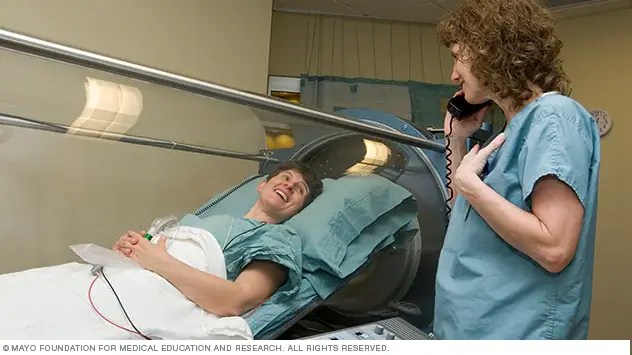
For a mystery or thriller, modern medicine allows for dramatic near-misses, forensic tracing, and tense ICU scenes.
Fantasy Treatments
In fantasy, treatments for poison can be as imaginative and symbolic as the toxin itself. The cure may be magical, mythic, or tied to a prophecy or ritual.
Treatment Concepts
Healing magic: Spells that purge or neutralize toxins but may fail on cursed or magical poisons
Alchemical antidotes: Brewed with rare or magical ingredients (e.g., phoenix feather, bloodroot, shadowbloom)
Sacred rituals: Only a priestess, shaman, or oracle can cleanse the body or soul
Herbalism + lore: A village herbalist or hermit may hold knowledge passed through oral tradition
Poison immunity: Characters may build resistance through exposure (a trope seen in assassins or royals)
Fantasy poisons often resist normal healing, requiring the character to go on a journey or make a sacrifice to be cured, perfect for quest arcs.
Science Fiction Treatments
In sci-fi, treatments may be technologically advanced, highly precise, and potentially morally questionable.
Possible Approaches
Nanobots: Injected to locate and neutralize the toxin at the cellular level
Genetic editing: Rewrites affected DNA to repair damage or build resistance
Smart meds: Pills or patches that detect specific poisons and release tailored countermeasures
Bio-scans: AI-assisted diagnosis and chemical balancing in real time
Stasis chambers: Freeze the body until treatment is found
Alien cures: Extraterrestrial plants, symbiotes, or organisms that absorb or metabolize toxins
For speculative fiction, you can use poisoning to explore themes of biological warfare, genetic manipulation, or technological dependence.
Plot and Character Ideas
Poison is one of fiction’s most versatile tools. It can strike silently, act slowly, frame the innocent, or force the guilty to confess. Whether used in murder, mystery, betrayal, or healing, poison always carries weight, both literal and symbolic. It’s not just about death, it’s about intent, secrecy, and consequence.
Below is a range of plot and character ideas centered on poisoning, across genres like historical fiction, fantasy, science fiction, thrillers, and drama.
The Silent Assassin
Genre: Historical, Spy Thriller, Fantasy
A renowned poisoner-for-hire has never been seen, only their victims, who die with no trace of toxins. A desperate noble hires them, but the assassin’s moral code forbids targeting children and the client has lied about the intended victim.
Character Angle: The assassin has built immunity to dozens of poisons, but not to guilt. The target might be their own estranged relative. They’re being hunted by a rival who uses antidotes as blackmail.
Twist: The poisoner is already dying from a rare, slow poison they failed to detect in time.
The Experimental Cure
Genre: Science Fiction, Medical Thriller
A brilliant but disgraced scientist develops a synthetic poison that only kills cancer cells. When a corrupt biotech company steals her formula to create a targeted assassination tool, she must race to stop them before the first death.
Character Angle: Once labeled a “madwoman,” she’s now the only one who can stop a wave of invisible murders. She’s forced to team up with the test subject she accidentally poisoned.
Twist: The poison mutates and becomes airborne.
The Dinner Party Game
Genre: Contemporary, Mystery, Dark Comedy
A murder-mystery dinner party turns deadly when someone actually poisons a guest. With no way to leave, the guests must figure out who brought real poison to a pretend murder game.
Character Angle: The host is a failed mystery novelist trying to stage a comeback. One guest has immunity to the toxin and is using the chaos to exact revenge.
Twist: The wrong person dies and the actual target knows it.
The Taster’s Dilemma
Genre: Fantasy, Court Intrigue
A newly appointed royal taster discovers a slow poison in the queen’s food, but the queen already knows and has been building immunity. She plans to expose her enemies by surviving their plots. But the taster has their own agenda.
Character Angle: Torn between loyalty, survival, and ambition. Must taste-test all meals but isn’t immune like the queen.
Twist: The taster is the last living heir to a rival throne.
Genetic Poison
Genre: Science Fiction, Dystopia
A totalitarian regime uses a “clean poison” that only affects people with certain DNA markers. The girl’s survival of the targeted purge reveals that someone altered her genetics as a child, and she may not be who she thought she was.
Character Angle: Raised in ignorance of her origins, she becomes the key to overthrowing the regime. The resistance wants to use her blood as a universal antidote, but it will kill her.
Twist: Her own mother designed the poison to protect her from worse.
The Healer Who Kills
Genre: Historical, Folk Horror, Dark Fantasy
A village herbalist is accused of witchcraft after multiple nobles die of illness. She insists she gave them medicine, not poison, but someone else tampered with the herbs, and her reputation hides a deeper secret.
Character Angle: She was once a royal court alchemist, exiled for refusing to create a deadly toxin. Her knowledge of plants could save or destroy the kingdom.
Twist: She has a forbidden garden of “deadly cures” – plants that heal but at a steep cost.
The Poison Pact
Genre: Contemporary, Psychological Drama
Two terminally ill friends make a suicide pact using poison. One survives. As guilt sets in, they discover the poison wasn’t real, and now someone is manipulating them through staged “symptoms” and fear.
Character Angle: One of them questions their memory and sanity. The survivor must uncover who replaced the poison and why.
Twist: It was never about death, it was a test of loyalty and identity.
The Cursed Ink
Genre: Fantasy
A rare ink made from the venom of a dream serpent allows users to write living stories, but the ink is also toxic to anyone who tries to alter what’s been written. Someone blackmailed a scribe into forging a deadly prophecy.
Character Angle: Their hands tremble from constant exposure. They alone know how to create an antidote but revealing it would destroy centuries of lore.
Twist: The scribe’s own name has appeared in the poisoned script.
Accidental Killer
Genre: Contemporary, Legal Thriller
A food safety chemist discovers that a new preservative has become toxic under certain conditions. But when she tries to blow the whistle, her lab partner dies, and she’s framed for the murder.
Character Angle: She must prove her innocence while avoiding both the police and the real culprit. She has 72 hours before the product hits supermarket shelves.
Twist: Someone intentionally sabotaged the preservative to trigger a product recall war.
Poisoned Memories
Genre: Gothic Horror, Supernatural
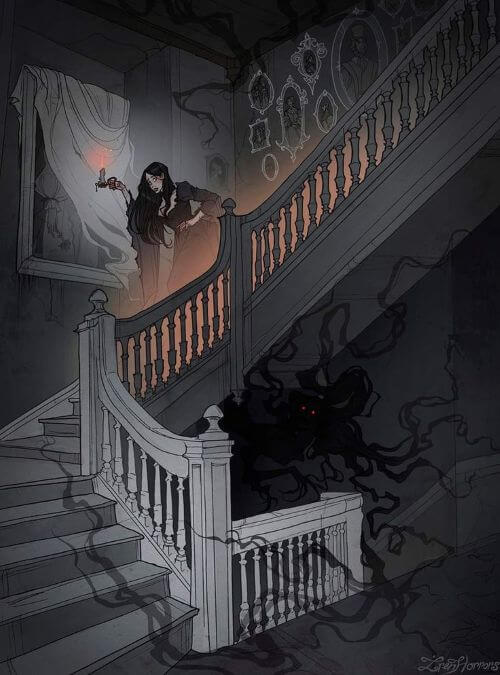
A woman returns to her ancestral manor after her brother’s mysterious death. She begins to suffer hallucinations, memory loss, and physical symptoms, all pointing to poisoning. But the house has secrets and the toxin may haunt her mind as much as her body.
Character Angle: She uncovers a hidden lab used by their alchemist ancestor. The poison might not be physical, it might be etched into the house itself.
Twist: Her own bloodline was cursed with inherited sensitivity to the manor’s ancient fumes.
Poisoning is never just a way to kill, it’s a way to change the story. It can launch a mystery, deepen a betrayal, reveal secrets, or redefine identity. Whether your poison is brewed in a lab, stirred into a cup, written in a book, or whispered into a vial of magic, let it leave a mark that goes far beyond death.
In the best stories, poison lingers – on the lips, in the blood, and in the soul.
I hope this was helpful. Let me know if you have questions or suggestions by using the Contact Me form on my website or by writing a comment. I post every Friday and would be grateful if you would share my content.
If you want my blog delivered straight to your inbox every month along with exclusive content and giveaways, please sign up for my email list here.
Let’s get writing!
Copyright © 2025 Rebecca Shedd. All rights reserved.
The Writer’s Guide to Bites and Claws
Posted on July 18, 2025 2 Comments

Whether it’s a feral animal, a brutal hand-to-hand fight, or a supernatural creature sinking its teeth in, bites and claw wounds are savage, intimate, and dangerous. More than just blood and pain, these injuries carry high infection risks, complicated healing, and long-lasting trauma. In fiction, they’re often used to escalate tension, signal a character’s descent into danger, or mark the beginning of a supernatural transformation.
In this article, I’ll explore how writers can realistically portray bite and claw wounds, covering injury types based on the attacker, the location and depth, infection risks, and the survival odds and long-term consequences for your characters.
What Makes Bite and Claw Wounds Unique
Unlike clean cuts or bullet wounds, bites and claws are jagged, tearing injuries. They often:
Rip flesh rather than slice it.
Leave irregular, hard-to-stitch wounds.
Introduce bacteria, venom, or disease.
Cause deep puncture wounds that trap pathogens inside.
These aren’t surgical injuries, they’re primal.
Types of Bite and Claw Wounds by Attacker
Human Bites
Type: Blunt-force bite; tearing and crushing.
Severity: Often deep punctures with bruising.
Risk: Extremely high infection risk because of human mouth bacteria (Eikenella, Streptococcus, Staph).
Use in fiction: Prison fights, domestic violence, combat desperation.
Realism Note: Human bites to the hand or face are especially dangerous due to infection and nerve damage.
Dogs
Injury: Crushing wounds, torn muscles, punctures.
Common locations: Arms, legs, neck (especially with children).
Complications: Rabies risk, nerve damage, infection.
Cats
Injury: Sharp puncture wounds, usually deeper than they appear.
Risk: Extremely high for infection, especially Pasteurella multocida.
Locations: Hands and arms in defensive situations.
Rodents and Small Mammals
Injury: Small punctures, but higher risk of disease.
Risk: Hantavirus, rat-bite fever.
Snakes
Injury: Sharp puncture wounds with or without venom.
Risk: Extremely high, especially if venom was injected.
Large Predators (Bears, Wolves, Big Cats)
Bite: Bone-crushing force, often targeting the throat, abdomen, or limbs.
Claws: Long lacerations, deep gashes, often breaking through muscle.
Survival: Rare without immediate aid; limb loss and disfigurement are likely.
Example: A wolf’s bite can exert over 400 psi of pressure, enough to crush bones or sever arteries.
Supernatural or Fictional Creatures
Vampires, werewolves, or alien beasts may inflict both physical and magical or infectious damage. The bite may transform the character, trigger visions, or resist healing.
Tip: Ground these wounds in real-world trauma, then layer in the fantasy or sci-fi twist to keep it visceral and believable.

Location, Depth, and Weapon
Location Matters
Neck/Throat: Rapid blood loss, airway damage, extremely high fatality.
Hands/Fingers : High infection risk, nerve and tendon damage, loss of function.
Face: Disfigurement, psychological trauma, sensory loss (vision, hearing).
Legs/Arms: Arterial damage (femoral, brachial), limited movement, potential amputation.
Abdomen/Chest: Organ damage, internal bleeding, high infection risk, difficult recovery.
Depth and Nature of the Wound
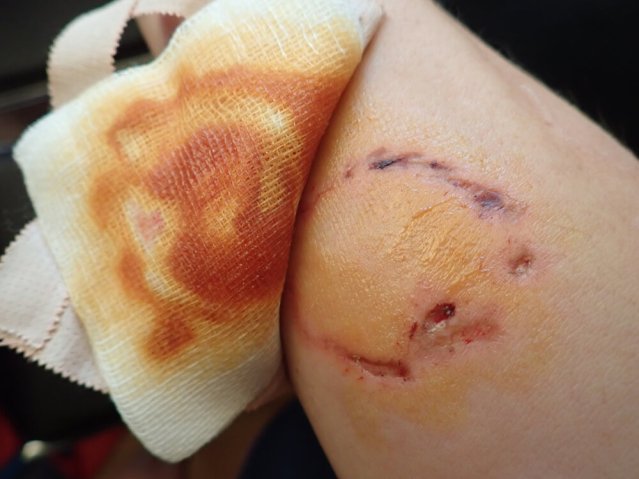
Puncture wounds (fangs, claws) may look small but hide deep tissue damage.
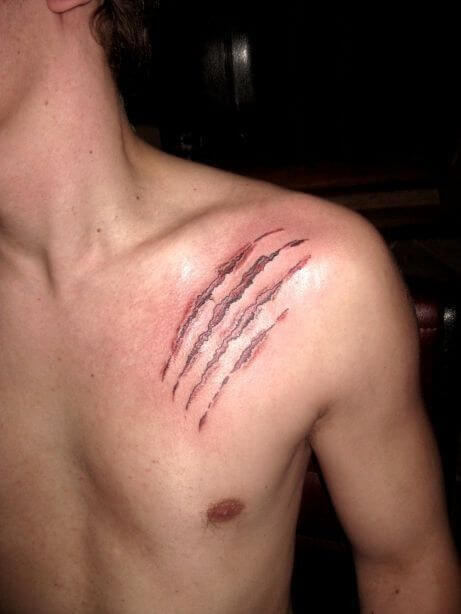
Lacerations (swipes from claws) cause open wounds, muscle exposure, and severe bleeding.
Avulsions (skin torn away) are highly traumatic, requiring reconstructive surgery.
Type of Teeth or Claw
Flattened human teeth crush and tear.
Sharp feline claws slice clean but deep.
Canine teeth puncture and grip.
Raking claws from bears or reptiles can break bones and flay flesh.
Infection and Disease Risks
Bite and claw wounds are notorious for infection, especially when untreated or inflicted in dirty environments.
Common Complications
Cellulitis: Painful, spreading skin infection.
Abscesses: Pockets of pus needing drainage.
Sepsis: Life-threatening systemic infection.
Rabies: Fatal without post-exposure treatment.
Tetanus: Especially dangerous in deep, puncture-style wounds.
In low-tech or historical settings, infection is often the actual killer, not the wound itself.
Survival Odds and Long-Term Effects
Survival odds depend on:
Speed of treatment (especially with arterial or organ damage).
Cleanliness of wound care.
Access to antibiotics or magical/technological healing.
Strength and location of the bite/claw.
Long-Term Effects
Nerve or tendon damage leading to limited mobility or paralysis.
Disfigurement or scarring, especially from facial or neck wounds.
Psychological trauma, including PTSD, nightmares, or phobias.
Amputations in severe limb injuries.
Chronic pain and vulnerability to re-injury.
In fantasy and science fiction, surviving a bite might also mean being hunted, infected, or transformed.
Writing Tips for Realistic Bite and Claw Scenes
Show the aftermath, not just the wound. Pain, fear, fever, and emotional toll matter.
Don’t forget the mess: bites and claws are bloody, chaotic, and hard to treat.
Use medical logic even in magical or futuristic settings. Infection, tissue damage, and blood loss still apply.
Involve the senses: the warmth of blood, the rasp of breath, the jagged edge of a broken claw still in the skin.
Let scars have meaning, both physical and emotional.
Depicting Bites and Claw Wounds Across Genres
Bites and claw wounds are some of the most visceral injuries you can write, but how they’re depicted varies widely by genre. A modern dog attack, a medieval bear mauling, a vampire’s bite, or a cybernetic panther slash all demand different levels of realism, emotional tone, and narrative consequence.
This article explores how the portrayal of these wounds changes based on genre and how the creature inflicting the wound dramatically shapes the scene.
Contemporary
In contemporary fiction, accuracy is key. Readers expect depictions grounded in real-world biology, first aid, and emotional realism.
Common Causes
Dog attacks (domestic or wild).
Cat or rodent bites, especially in domestic abuse or self-defense situations.
Human bites in bar fights, riots, or desperate situations.
Wild animal encounters during camping, hunting, or disaster survival.
Depiction Focus
Wound detail: location, depth, shape (e.g., crescent-shaped human bite).
Medical response: bleeding control, tetanus shots, rabies treatments, antibiotics.
Psychological impact: fear, trauma, anxiety, PTSD.
Legal/Social implications: dog euthanasia, quarantine, lawsuits, assault charges.
Example: A loose pit bull attacked a jogger. The story may follow the victim’s hospitalization, the investigation into the dog’s owner, and emotional consequences like fear of going outside again.
In historical fiction, the same bite that’s survivable today might be fatal because of lack of sanitation, medicine, and understanding of disease.
Common Causes
Hunting accidents with wolves, bears, boars.
Battle injuries from war dogs or cavalry horses.
Punishment bites (e.g., gladiator pits, bear baiting).
Plague rats and wild animals in urban slums or during sieges.
Depiction Focus
Primitive wound care: cauterization, herbal poultices, or “bleeding the bad humors.”
Superstition: belief that an animal bite is a curse or divine punishment.
Slow deaths from sepsis, fever, or tetanus.
Scarring or amputation: long-term disfigurement as a social and physical consequence.
Example: A bear clawed a hunter. The village healer packs the wound with herbs, but fever sets in. The real tension lies in whether the character will live and what he’ll lose if he does.

Fantasy
In fantasy, bite and claw wounds often signal a deeper transformation or curse. The creature doing the damage may be mythical, cursed, divine, or undead.
Common Causes
Dragons, gryphons, wyverns: large-scale, devastating wounds.
Werewolves, vampires: transformative or infectious bites.
Demons or cursed beasts: magical wounds that resist healing.
Fey or spirit animals: claw wounds that mark the soul or alter fate.
Depiction Focus
Supernatural infection: wounds that burn with dark magic, mutate the victim, or pass along a curse.
Resistance to healing: traditional medicine or even magic fails unless special conditions are met.
Symbolism: the wound marks the character as chosen, doomed, or hunted.
Creature anatomy: enchanted talons, venomous saliva, or jaws that tear through steel.
Example: A rogue is clawed by a shadowbeast. The wound doesn’t bleed, but it spreads like smoke under the skin. No healer can stop it until he finds the ancient stag whose breath can cleanse all corruption.
Science Fiction
In science fiction, bite and claw wounds often come from alien organisms, genetically modified animals, or cybernetic creatures. These wounds may be biologically hazardous, weaponized, or biomechanically enhanced.
Common Causes
Xenomorphs or alien fauna with acidic saliva or infectious venom.
Cybernetic beasts with retractable claws, saw-toothed mouths, or energy-infused jaws.
Genetically engineered attack animals for security or warfare.
Bio-mech hybrids bred for stealth and assassination.
Depiction Focus
Futuristic medical intervention: nanobots, med-gel, auto-sutures.
Complex infections: alien pathogens, cyber viruses, mutagens.
Data disruption: in cybernetic characters, a claw slash may damage internal tech or wipe memory.
AI analysis of wounds: smart armor detecting and triaging injuries.
Example: An alien predator slashed a scout. The wound won’t clot because the creature’s enzymes keep it open. If left untreated, the enzymes will digest the surrounding tissue, turning the host into a breeding ground for larval implants.

Treating Bites and Claw Wounds Through History and Genre
Bite and claw wounds are more than traumatic injuries. They’re breeding grounds for infection, often jagged, dirty, and resistant to clean healing. Treatment has evolved dramatically over the centuries, shaped by the available tools, medical understanding, and cultural beliefs of the time. In fantasy and science fiction, the rules shift again, with access to magic or technology altering the outcome of what might otherwise be a deadly encounter. In every genre, from the battlefield tents of medieval wars to sleek medical pods aboard a starship, treatment is not just a step in the healing process. It’s a reflection of the world, its values, and its limitations.
This guide walks you through typical treatments for bite and claw wounds from ancient history through modern trauma care, and then explores what healing might look like in fantasy and science fiction worlds.
Ancient World Treatments
In ancient times, healing was a blend of observation, ritual, and limited herbal knowledge.
Typical Treatments
Cleaning the wound with wine, vinegar, or honey, substances known even then to slow infection.
Herbal poultices: crushed garlic, myrrh, or yarrow applied to promote healing or prevent rot.
Cauterization: burning the wound shut to stop bleeding and “purify” it.
Animal-based medicine: using fat, milk, or animal dung as poultices (sometimes worsening infection).
Ritual purification: chants, offerings, or talismans to ward off “spiritual poison” from animal bites.
Challenges
No antiseptics or antibiotics besides alcohol.
High rate of sepsis, tetanus, and gangrene.
Bites, especially from rabid animals, were often a death sentence.
Example: A Roman soldier bitten by a jackal has his wound washed in wine, bandaged in linen, and blessed by a priest, but fever sets in days later, and the question becomes whether to treat or amputate.
Medieval Treatments
While slightly more advanced than ancient methods, medieval medicine still relied heavily on theory over evidence, especially humoral balance and spiritual causes.
Typical Treatments
Wound irrigation with herbal infusions: sage, lavender, rosemary.
Bleeding and leeching: used to “draw out the bad humors” introduced by the bite.
Honey and silver: both natural antimicrobials, sometimes applied topically.
Tying with moss or cobwebs: thought to stop bleeding and help to clot.
Cauterization or branding: common for animal bites, believed to “burn out disease.”
Challenges
Poor hygiene in surgery and wound care.
No knowledge of germ theory. Healers treated most wounds based on appearance, not cause.
Superstition-based medicine. If the wound resisted healing, people might blame it on curses or demons.
Example: After being clawed by a wolf, a peasant’s wound is bound with moss and wrapped tight. The village healer chants prayers while leeches draw blood, but infection still sets in, leading to fever and hallucinations.

Contemporary Treatments
Today, doctors treat animal and human bite wounds as serious medical events, especially because of the infection risk.
Typical Treatments
Wound cleaning and debridement: removing damaged or infected tissue.
Antibiotics: first line defense against infection (e.g., amoxicillin-clavulanate).
Tetanus booster: especially for dirty, deep, or claw-inflicted wounds.
Rabies post-exposure prophylaxis (PEP): if the animal is unknown or rabid.
Surgical repair: if tendons, nerves, or organs are damaged.
Pain management and wound monitoring: long-term healing often requires follow-up care.
Doctors treat human bites especially cautiously because of high bacterial load and common infections like Eikenella, Staph, and Strep.
Example: A bear mauled a hiker. In the ER, medical staff irrigated their wounds with saline, x-rayed them for debris, and stitched them up. They’re given IV antibiotics, a rabies shot, and scheduled for plastic surgery.
Fantasy Treatments
Fantasy worlds can treat wounds in wildly creative ways, but they’re often shaped by historical parallels or deliberately defy them.
Treatment Options
Healing magic: Simple spells may close flesh but cannot repair internal trauma or remove infection. Powerful healing might require rare reagents (phoenix ash, dragon’s blood, etc.) or religious authority.
Alchemical salves and elixirs: Potions might speed healing or sterilize a wound, but could have side effects like fatigue, hallucination, or magical scarring.
Cursed or magical wounds: Claw marks from a demon may resist healing entirely or slowly turn the victim into something else unless a specific curse is lifted.
Herbalists and hedge witches: May rely on folk remedies and ancient forest knowledge, treating wounds with enchanted poultices or ceremonial cleansing.
Healing Limitations as Plot Devices
Healing may not work on wounds from enchanted creatures.
A wound may require a specific ritual, place, or object to be healed.
A prophecy or curse linked to the wound might consume the healer’s life force or cause magical healing to fail.
Example: A ranger clawed by a corrupted warg finds his wound festering with dark magic. Traditional healing fails. Only a moonlit ritual performed in a sacred glade can draw the rot from his flesh.
Science Fiction Treatments
In a sci-fi setting, technology can dramatically reduce the danger of bites and claw wounds or introduce entirely new complications.
Treatment Options
Nanobot repair systems: Microscopic machines clean, close, and rebuild tissue from within. May malfunction or become infected by biomechanical contaminants.
Auto-sealing synthetic skin: Medical patches that bind to damaged tissue and stimulate rapid regrowth. Used in field kits by soldiers or colonists.
Gene-repair therapy: In cases of venom or biological degradation, therapy may recode damaged cells. May trigger mutation or unexpected gene expression.
AI-guided surgery or injectables: Smart needles that find arteries or track infection in real-time. Injectable meds that stabilize, numb, and disinfect all in one.
Immuno-suppression or rejection risk: Hybrid wounds (from alien organisms or synthetic beasts) may resist treatment or confuse the immune system.
Example: A bounty hunter slashed by a genetically engineered predator uses a medkit to seal the wound with biofoam but later learns that the creature’s claw carried a neural toxin and only advanced neurosurgery on the outer rim can save him.

Plot and Character Ideas
Bites and claw wounds are primal, painful, and deeply symbolic. Whether inflicted by animals, monsters, or people, they’re not just injuries. They’re turning points. These wounds can leave lasting scars, both physical and emotional, and serve as potent metaphors for betrayal, transformation, trauma, or survival. In speculative fiction, they may also carry magic, curses, or infection, altering the very nature of the character.
Here are a variety of plot and character ideas centered on bite and claw wounds across contemporary, historical, fantasy, and science fiction genres.
The Infection That Isn’t Bacterial
Genre: Contemporary, Medical Thriller, Horror
Plot Idea: After being bitten by a seemingly normal animal, a character shows neurological or behavioral changes. Tests show no rabies, no infection, but something is wrong.
Character Angle: The wound becomes the center of a mystery. Was it a bio-engineered animal, or something supernatural? The character experiences hallucinations, memory loss, or strange compulsions. Their team/partner suspects that forces beyond scientific understanding have altered them.
Twist: The bite transmits a dormant ancestral memory, not a disease, one that awakens something long forgotten in human evolution.
The Beast Within
Genre: Fantasy, Dark Urban Fantasy
Plot Idea: A were-creature or demon clawed a character, and the wound doesn’t heal. As the moon cycles, they shift but not into a typical werewolf. Something older and stranger is stirring.
Character Angle: They seek a cure but find those who know the truth want them dead. The claw wound acts like a tether to the creature that marked them. Each transformation becomes harder to reverse, risking their identity and humanity.
Twist: The original creature wasn’t trying to infect them but to pass on a curse they could no longer carry.
The Healer’s Curse
Genre: Fantasy
Plot Idea: A cursed beast bites a magical healer while the healer is saving it, and the wound absorbs the curse. Now their magic only heals others at a substantial cost to themselves and the wound grows worse each time.
Character Angle: They must choose when and for whom they’ll sacrifice themselves. Others view their wound as a mark of sainthood or a death sentence. They begin to lose control of their healing powers, spreading decay instead.
Twist: The only way to heal themselves is to wound someone else with the same bite, forcing a moral reckoning.
Survivor or Monster?
Genre: Science Fiction, Military
Plot Idea: An alien creature mauled a soldier but survives. In the aftermath, their body begins to adapt – new senses, reflexes, even claws. But are they evolving… or being replaced?
Character Angle: They become a weapon, faster and stronger than before, but unpredictable. Their squad fears them; their command wants to weaponize or terminate them. They must decide: stay human or embrace the mutation?
Twist: Someone sent the alien to spread a symbiotic species, and the character may now hold the key to humanity’s survival or destruction.
The Bite That Started It All
Genre: Historical, Horror
Plot Idea: Investigators traced a plague ravaging a medieval village back to a single mysterious bite wound on a woman a strange creature attacked in the woods. The wound never closed and her presence spreads sickness.
Character Angle: She is both victim and potential cause of the plague. Her family hides her, believing she’s cursed but redeemable. Priests want her executed. A traveling doctor wants to study her.
Twist: The creature was not evil but divine, punishing the village for a hidden crime. The bite is not a disease, but a judgment.
The Price of Survival
Genre: Contemporary, Adventure
Plot Idea: After a plane crash or wilderness accident, a wild animal bit or clawed a character who was trying to protect someone else. They survive, but the wound changes how others see them.
Character Angle: They’re hailed as a hero, but suffer from trauma and disfigurement. Survivor’s guilt and media attention push them to the edge. The person they saved grows closer or more distant because of the wound.
Twist: The animal was defending its young, and the character realizes they weren’t the hero they thought they were.
The Ritual Scar
Genre: Epic Fantasy, Coming-of-Age
Plot Idea: A sacred rite of passage in a tribal or warrior society involves being clawed by a bonded beast. The wound creates a magical link, but only if the wound heals without corruption.
Character Angle: The character’s wound festers, meaning they’re either unworthy or cursed. Their bond with the beast is incomplete, causing dangerous side effects. They must prove themselves in another way, or risk exile.
Twist: The failed bond wasn’t their fault. The beast is dying, and the character must save it to heal themselves.
The Predator’s Mark
Genre: Urban Fantasy, Detective Noir
Plot Idea: A private investigator finds a victim with a distinctive claw wound, a pattern he recognizes from his own past. He suffered an attack years ago, but no one believed him.
Character Angle: He has a partial immunity or sensitivity to the creature because of his wound. The attacker is still out there, possibly watching him. Every new case brings him closer to finishing the hunt or becoming prey again.
Twist: He’s been unknowingly tracked for years. The original wound was a tag, not a mauling.
The Bite That Can’t Be Hidden
Genre: Romance, Suspense, Contemporary
Plot Idea: In a violent domestic altercation, someone bites a character. They escape and start a new life, but the scar becomes a flash point for intimacy and trust with a new partner.
Character Angle: They flinch at touch, avoid mirrors, and hide their wound. Their new partner notices, and the slow reveal becomes central to healing and connection. The past resurfaces when the abuser reappears.
Twist: The bite scar matches another recent case, revealing the abuser isn’t just a monster to them, but to others too.
The Self-Inflicted Claw
Genre: Psychological Horror, Supernatural
Plot Idea: A character wakes with deep claw marks on their own body with no memory of what caused them. The wounds keep reappearing, growing deeper, more intricate, and more ritualistic.
Character Angle: They suspect sleepwalking, possession, or something worse. No one believes them until others suffer similar marks. They begin to see things, fragments of other lives, creatures just out of view.
Twist: They are the vessel of an ancient predator and the claw wounds are its way of preparing the body for its final form.

Bite and claw wounds can be raw, personal, and terrifying, making them excellent narrative tools. Whether your character is battling a wild animal, an unhinged enemy, or a beast from another world, depicting the injury with realism and consequence will elevate your storytelling.
From infection to impairment, pain to psychological scars, these injuries mark characters – literally and metaphorically. Use them not just to hurt your characters, but to shape who they become after the bleeding stops.
I hope this was helpful. Let me know if you have questions or suggestions by using the Contact Me form on my website or by writing a comment. I post every Friday and would be grateful if you would share my content.
If you want my blog delivered straight to your inbox every month along with exclusive content and giveaways, please sign up for my email list here.
Let’s get writing!
Copyright © 2025 Rebecca Shedd. All rights reserved.
The Writer’s Guide to Stab Wounds
Posted on July 4, 2025 Leave a Comment
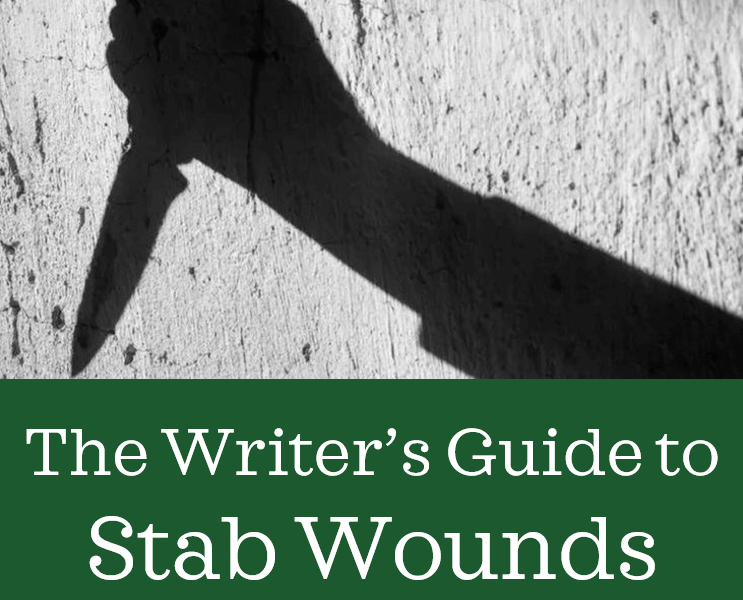
Stab wounds can be quick and deadly, slow and painful, or messy and traumatic depending on location, depth, weapon type, and the world your story inhabits. However, a well-written stabbing scene isn’t just about blood – realistic portrayal involves anatomy, physics, psychology, and consequences.
This guide will help you realistically depict stab wounds, explaining how injury severity, weapon characteristics, survival odds, and long-term effects should shape the narrative. I’ll also cover the important distinction between a puncture wound and a stab wound.
What’s the Difference Between a Puncture and a Stab?
Puncture Wound
A puncture wound is caused by a narrow, pointed object penetrating the skin (e.g., needles, nails, spikes). Minimal external bleeding, but high risk of deep internal damage or infection because the wound seals over quickly. Often small in surface area but deep, with a higher chance of invisible internal injuries.
Stab Wound
A stab wound is a deeper-than-wide injury caused by a bladed weapon, like a knife, dagger, or sword. Significant external and internal damage, depending on blade size and force. Typically, longer entry wounds than punctures, and often involve cutting and penetrating.
Quick Tip: A knife thrust into the belly? Stab wound.Stepping on a rusty nail? Puncture wound.
Key Factors That Determine Stab Wound Severity
Location on the Body
Where the character is stabbed dramatically influences their survival odds and consequences.
Chest: May puncture lungs, heart, or major arteries. Low odds if heart/lung is hit without immediate aid.
Abdomen: Risk of damage to intestines, liver, kidneys. Moderate odds; depends on internal bleeding or infection.
Neck: Risk to jugular veins, carotid artery, windpipe. Very low survival without immediate help.
Back: Can damage lungs, kidneys, spine. Moderate to low odds depending on area hit.
Arm/Leg: May hit muscles, arteries (like brachial or femoral). High odds, unless a major artery is cut.
Shoulder: Often survivable but can involve nerve damage. High odds with proper care.
Depth of the Wound
Shallow stabs (skin and fatty tissue): Painful but survivable with basic treatment.
Medium depth (muscle layer): More serious, impairing movement and strength; risks bleeding and infection.
Deep stabs (organs, arteries, bones): Life-threatening. Risk of shock, massive internal bleeding, or organ failure.
Penetrating stabs (full thrusts): Especially dangerous if the weapon passes through to vital organs or major vessels.
Quick Tip: A deep abdominal stab can lead to sepsis if the character survives the initial injury.

Type of Weapon
Straight Blades (e.g., dagger, stiletto, sword point): Designed for deep, clean thrusts. May cause narrow but deadly wounds, ideal for reaching vital organs quickly.
Serrated Blades (e.g., survival knives, combat knives): Tear tissue when entering or being pulled out. Harder to close surgically, leading to longer healing times and worse scars. Extraction often causes more damage than the stab itself.
Small Blades (e.g., kitchen knives, daggers): Penetration depends on force applied and target’s clothing/armor. Less likely to reach deep organs without significant force.
Large Blades (e.g., swords, bayonets, long knives): Greater range and potential for massive trauma, often causing gaping wounds rather than clean holes.
Quick Tip: A rapier thrust might cause a deep, fatal organ puncture. A serrated combat knife slash might cause a horrific, bleeding flesh wound with lasting nerve damage.
Immediate Effects of a Stab Wound
Sharp, immediate pain at the site of injury.
Bleeding, profuse if arteries or veins are hit.
Shock, the body’s response to trauma, can set in within minutes.
Difficulty breathing (if lungs are involved).
Paralysis or weakness (if spinal cord or major nerves are damaged).
Internal bleeding which may not be immediately visible.
Collapse, especially with chest, neck, or major abdominal wounds.
Quick Tip: Pain isn’t always instant. Shock and adrenaline can delay the pain for several minutes.
Survival Odds and Long-Term Effects
Survival Odds
High for limb wounds (unless major arteries are severed).
Moderate for abdominal wounds if medical treatment is rapid.
Low for chest or neck wounds involving vital organs.
Long-Term Effects
Chronic Pain: Nerve damage may cause lifelong issues.
Reduced Mobility: Shoulder, knee, or abdominal stabs may limit physical abilities.
Infection: Pre-modern settings or dirty environments increase risk dramatically.
Scarring: Deep stab wounds almost always leave scars.
Psychological Trauma: Fear of crowds, knives, or touch may follow.
Plot Implications for Stab Wounds
Survival doesn’t mean unscathed.
Mobility may be limited—especially after chest, abdomen, or joint stabs.
Recovery can take weeks to months, even with modern medical care.
Risk of internal bleeding or infection can keep tension high even after the initial injury.
Emotional impact (e.g., PTSD, vengeance, guilt) can shape character arcs.

Quick Realism Tips for Writing Stab Wounds
Force matters: A shallow, half-hearted thrust won’t kill a healthy adult unless it hits a major artery or organ.
Withdrawal of the blade can cause more bleeding—especially with serrated edges.
Shock is silent: A character may slump, confused or pale, without screaming.
In real-world fatal attacks, multiple stab wounds are often necessary – not the single, perfect Hollywood kill.
Vital areas are small: Hitting the heart or aorta requires precision and luck.
Armor or thick clothing matters: Leather armor, chain-mail, or heavy coats can significantly reduce penetration.
Depicting Stab Wounds Across Genres
Stab wounds can feel very different depending on the genre you’re writing in. Whether it’s a modern mugging, a medieval duel, a magical battle, or a space-age assassination, the way you describe a stab wound and the consequences that follow should reflect your story’s setting, technology, and tone.
In this guide, I’ll break down how writers portray stab wounds differently across contemporary, historical, fantasy, and science fiction genres, and how time period and cultural inspirations influence the type of blades used.
Contemporary
In modern fiction, readers expect a realistic, medically accurate portrayal. Stab wounds are ugly, chaotic injuries, not clean surgical strikes.
Weapons Used
Common weapons include kitchen knives, hunting knives, folding knives, and sometimes improvised weapons (screwdrivers, scissors). Blades are shorter and easier to conceal.
Fight Dynamics
Stabbings are usually fast, messy, and fueled by fear, adrenaline, or rage. Characters may be stabbed multiple times. Single-stab kills are rare unless the heart, neck, or brain is struck precisely.
Medical Consequences
Survival depends on the location, depth, and speed of medical intervention. Psychological trauma (PTSD, hypervigilance) often follows surviving an assault. Even “minor” wounds can become deadly because of organ damage or infection.
Example: A mugging victim stabbed in the abdomen might collapse from internal bleeding minutes later, not instantly—and even if they survive, they might never feel completely safe again.
Historical
The type of blade and the nature of stab wounds depend heavily on the era, region, and social class depicted.
Blades by Era and Culture
Ancient (Greece, Rome) – Short swords like the gladius, xiphos – Designed for thrusting into vital areas during tight combat.
Medieval Europe – Daggers, arming swords, longswords – Daggers used in close quarters, swords often for slashing and thrusting.
Renaissance- Rapiers, main gauche (parrying dagger) – Emphasis on dueling, precision stabbing, targeting vitals.
Feudal Japan – Tanto, wakizashi, katana – Tanto used for stabbing, katana capable of thrusting and slashing.
Middle East/North Africa – Jambiya, khanjar (curved daggers) – Curved blades created deep, ripping wounds.
Depiction Differences
Medical Care Was Rudimentary: Stab wounds to the chest or abdomen were almost always fatal without magical or extraordinary intervention. Infection from dirty blades was common and deadly.
Armor Matters: Chain-mail could deflect or absorb thrusts, making stabbing difficult without aiming at gaps (like armpits, groin, or neck).
Honor Duels and Assassinations: Many historical societies viewed stabbing in duels as less honorable than slashing, but it was more effective. Silent assassinations with poisoned daggers or concealed blades were common.
Example: A knight wounded by a dagger thrust under his mail at the armpit would face death not just from the blade itself, but from fever and infection in the days following.

Fantasy
Many fantasy worlds borrow heavily from medieval, renaissance, or ancient cultures to shape their weaponry.
Weapons Used
Daggers and short swords for assassins and rogues. Longswords, spears, and polearms for soldiers. Fantasy-specific blades like enchanted daggers, cursed swords, or living weapons.
Stabbing in Fantasy Battles
In formation battles (phalanx, shield wall), short stabbing weapons dominate—easier to use in tight spaces. Assassins and thieves in fantasy worlds often rely on stabbing unseen targets quickly and quietly.
Magical Considerations
A magical blade might prevent healing, cause additional magical damage (e.g., ice forming around the wound), or resist removal. Healing magic could close a stab wound externally but cannot fix internal organ damage unless very powerful. Armor enchantments might nullify or redirect a stab altogether.
Fantasy Genre Tips
Make wounds costly: Even in a world with magic, survival shouldn’t feel cheap or easy. Historical realism like armor vulnerabilities or battlefield tactics can ground even fantastical settings.
Example: A rogue wields an enchanted stiletto that prevents magical healing for 24 hours, causing a poisoned wound to fester unless the victim finds a rare cure.
Science Fiction
Even in worlds with blasters and plasma rifles, knives and swords often survive—because they are silent, efficient, and hard to defend against at close range.
Weapons Used
Monomolecular blades: Cut through most materials at the atomic level.
Vibroknives: Ultrasonic vibrating knives that inflict horrific wounds with minimal force.
Energy swords: Plasma or laser-based melee weapons that cauterize while cutting.
Stabbing Effects in Sci-Fi
Wounds may seal immediately (if cauterized) but cause severe internal organ trauma. Nano-augmented bodies may resist or adapt to stabbing injuries differently. Armor or synthetic clothing could deflect normal blades, requiring specialized weapons.
Medical Advances
Nanobots, regen-chambers, or biotech enhancements might heal wounds rapidly, but at a cost (e.g., reduced lifespan, increased mutation risks).
Example: A mercenary assassin uses a monomolecular dagger to sever a political target’s cybernetic spine – lethal, silent, and leaving barely a scratch visible on the surface.
Genre, historical context, and setting should heavily influence how you portray stab wounds in your story.
In a modern thriller, expect messy street fights and EMT rescues.
In a medieval war epic, armor and battlefield medicine (or lack thereof) dictate survival.
In fantasy, blending real-world weaponry and magical consequences enriches the world.
In science fiction, technology evolves the blade and how characters survive it.
Always ask:
What kind of blade would exist in this world?
How would armor, medicine, or magic change survival odds?
What emotional and physical scars would the wound leave behind?
Stab wounds can be the beginning of a story, the climax of a betrayal, or the mark of a character’s resilience.
Write them not just as injuries—but as turning points.
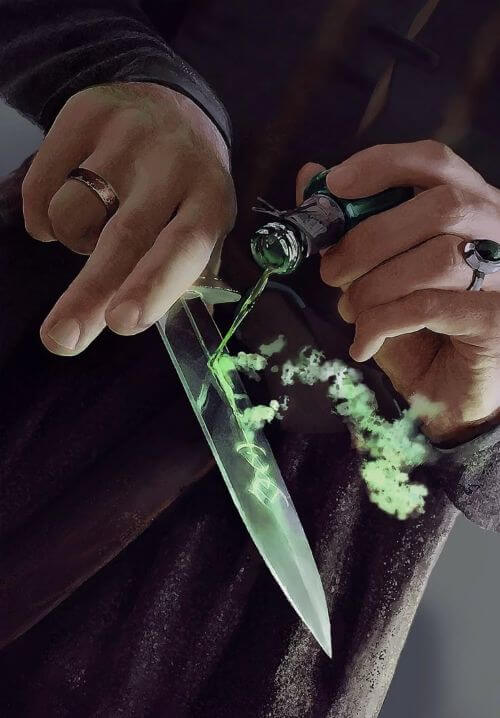
Treating Stab Wounds Across History (and Beyond)
Stab wounds have been a common battlefield and street injury for thousands of years, but how they’re treated depends on the era, location, and technology available. Across history, the treatment of stabbing injuries often meant a slow, painful, and uncertain recovery if survival was even possible. Meanwhile, fantasy and science fiction worlds open the door to magical or technological advances that dramatically reshape how a stab wound affects a story.
Whether it’s a Roman soldier packed with honey-soaked bandages, a modern-day survivor in an ER, a magical knight seeking a healing shrine, or a cyborg stitched back together by nanobots, a stab wound can define a moment of vulnerability, resilience, and transformation.
Make your characters bleed and heal in ways that deepen their journey. Because sometimes, surviving the wound is only the beginning of the story.
This guide walks you through typical treatments for stab wounds from ancient times through the Middle Ages to modern medicine and imagines how futuristic and fantasy worlds might handle these injuries.
Ancient World: Prayer, Poultices, and Hope
Typical Treatments
Basic Wound Cleaning: Wounds were often rinsed with wine, vinegar, or honey, substances believed to prevent infection (honey was actually effective).
Binding and Compression: Wounds were wrapped tightly with linen or wool strips soaked in oils or herbal mixtures.
Crude Surgery: Physicians might probe wounds with fingers or rudimentary tools to remove debris or clots. Stab wounds to the abdomen were often left open to drain. Sewing internal wounds was rare and largely unsuccessful.
Herbal Medicines: Plants like myrrh, garlic, and comfrey were used for pain relief and infection control.
Cauterization: Some wounds were burned shut with hot irons if bleeding couldn’t be stopped.
Spiritual Healing: Prayers and rituals were performed alongside physical treatments, especially in cultures that associate wounds with divine punishment.
Challenges
High infection rates.
Little understanding of internal injuries.
Pain management was extremely limited.
Example: An ancient warrior stabbed in battle might survive the initial wound but die days later of fever and sepsis despite the best treatment.
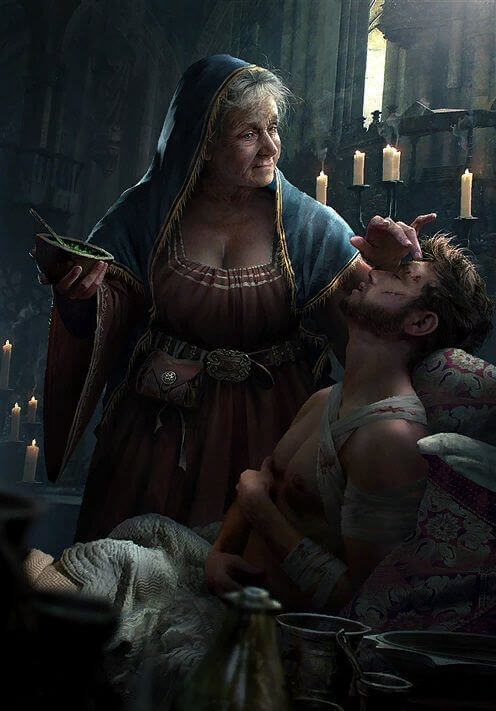
Medieval Times: Bloodletting, Amputation, and Battlefield Surgery
Typical Treatments
Immediate Field Dressing: Bleeding was stopped using cloths soaked in wine, vinegar, or even pitch (tar).
Bloodletting and “Balancing Humors”: Doctors often believed that purging “bad blood” could help to heal, sometimes making injuries worse.
Suturing: In some cases, larger wounds were stitched closed with linen thread and bone or bronze needles.
Poultices and Herbal Salves: Wounds might be packed with honey, crushed herbs (like yarrow), or moss to fight infection.
Amputation (in Severe Cases): If the wound became infected or gangrenous, amputation without anesthesia was a brutal but sometimes life-saving option.
Religious Interventions: People often saw healing prayers, relics, and pilgrimages as vital complements to physical treatment.
Challenges
Surgery was often deadlier than the wound.
No real antibiotics.
No understanding of sterility (surgeons reused bloody tools and did not wash hands).
Example: After a dagger wound during a medieval brawl, a knight might undergo a crude surgery by candlelight—with only mead for pain relief—then survive or die based on luck, not skill.
Contemporary Medicine: Trauma Care and Surgical Precision
Typical Treatments
Emergency Response: Pressure is immediately applied to stop bleeding. EMTs stabilize the patient for rapid transport to a hospital.
Hospital Treatment: Imaging (X-rays, CT scans) to assess internal damage. Surgical repair of blood vessels, organs, or muscle tissue. Sutures and stapling to close external and internal wounds.
Blood Transfusions: Rapid replacement of lost blood to prevent shock.
Antibiotics and Sterile Techniques: Preventing infection is a critical part of modern care.
Rehabilitation: After survival, patients often need physical therapy to regain strength and mobility.
Survival Rates
High for limb wounds and non-vital torso injuries with fast treatment.
Moderate to Low for deep chest, neck, or abdominal injuries without immediate surgery.
Example: A character stabbed in a mugging in a modern city might survive if someone applies pressure and calls 911 immediately, but they’ll still need surgery and weeks of recovery.
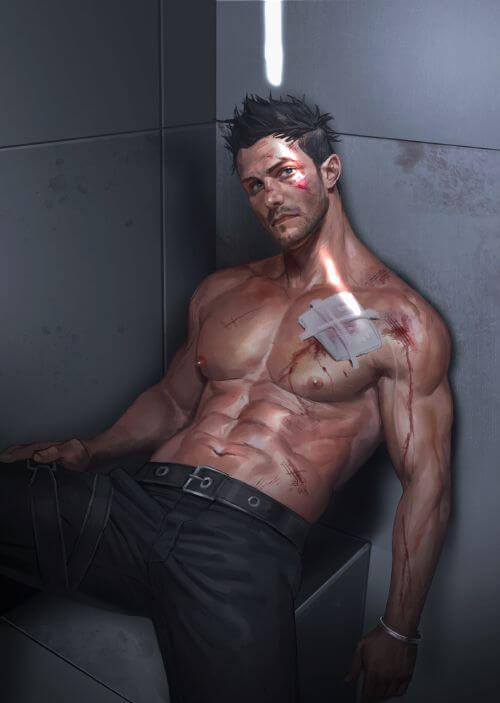
Science Fiction Treatments: Healing in the Future
Potential Treatments
Nanotechnology: Swarm bots enter the wound, seal blood vessels, rebuild tissue, and remove foreign bodies at the molecular level.
Regeneration Chambers: Stabbed characters are placed in bio-regenerative tanks that speed up natural healing – days of recovery in minutes.
Medical AI: Autonomous robots might diagnose and repair injuries faster and more accurately than human doctors.
Smart Bandages: Bandages embedded with biotech sensors and antibiotic dispensers manage wounds automatically and adjust pressure as needed.
Synthetic Clotting Agents: Injectable “liquid skin” or foam expands to fill and seal wounds internally.
Narrative Tensions Despite Technology
Healing may be expensive, unavailable to the poor, or restricted by politics.
Over-reliance on biotech might cause mutations, scarring, or psychological effects.
Medical treatment might be available—but only after the character survives long enough to reach it.
Example: A wounded bounty hunter staggers into a medbay. Nanofoam floods the stab wound, halting bleeding and regrowing torn muscle, but the memory of the attack stays with them.
Fantasy Treatments: Magic, Alchemy, and Healing Hands
Potential Treatments
Healing Magic: Spells might close the external wound instantly but cannot repair internal bleeding unless cast at a high level. Healing magic could require rare materials, such as phoenix feathers, holy water, or dragonroot.
Alchemical Salves: Potions and poultices that speed clotting or promote cellular regeneration but with side effects like fever, delirium, or magical scarring.
Clerical/Divine Healing: Priests and healers might invoke gods or spirits to heal wounds, but the patient must pay a spiritual price or perform a vow afterward.
Traditional Medicine: In low-magic settings, fantasy characters rely on herbal compresses, surgical stitching, cautery, and luck, much like historical counterparts.
Fantasy Complications
Cursed blades may leave wounds that refuse to heal.
Healing magic could fail if the wound was caused by dark magic or enchanted weapons.
Exotic anatomy (elves, dwarves, dragonkin) might require specialized healing knowledge.
Example: A ranger stumbles into a druid’s grove, stabbed by a cursed dagger. Ordinary healing spells cannot close the wound, forcing a desperate quest for an ancient elixir before infection or dark magic claims them.
Plot and Character Ideas
Stab wounds aren’t just dramatic, they’re deeply personal. Unlike gunshots, stabbings are usually close, violent, and intimate, meaning they often carry powerful emotional and psychological consequences for both attacker and victim. Whether it’s an act of betrayal, survival, or revenge, stab wounds can serve as pivotal plot points and character-defining moments.
Here’s a collection of plot and character ideas that use stab wounds as key drivers of story and character development.
The Survivor’s Guilt
Genre: Contemporary, Thriller
Plot Idea: A character survives a stabbing that kills a friend, family member, or teammate who tried to defend them.
Character Angle: They wrestle with survivor’s guilt, feeling they weren’t worth saving. They seek revenge against the attacker, despite being physically and emotionally scarred. They avoid relationships, convinced they are cursed and dangerous to others.
Twist: The deceased friend left a hidden message before dying, one the survivor only uncovers after grappling with their grief.
The Hidden Betrayal
Genre: Historical, Fantasy
Plot Idea: A character is stabbed by someone they trusted (a sibling, a friend, a fellow knight) during a political conspiracy or power struggle.
Character Angle: They must pretend not to know the truth to protect themselves and plot their revenge. The stab wound never properly heals, becoming a constant reminder of the betrayal. Trust becomes nearly impossible and future alliances are fraught with danger.
Example: A wounded prince wears his scar proudly, even as he plots the downfall of the courtier who tried to kill him.

The Stab That Wasn’t Supposed to Kill
Genre: Crime Drama, Urban Fantasy
Plot Idea: A young, inexperienced criminal stabs someone in a robbery gone wrong, only to discover the victim was critical to a bigger conspiracy.
Character Angle: They must decide whether to run, confess, or investigate the fallout. Their guilt and fear change them permanently, creating a redemptive arc or a descent into hardened criminality. They form an unlikely bond with someone tied to the victim (a sibling, a partner, an enemy).
Twist: The “victim” survives—but now wants revenge or blackmail instead of justice.
The Impossible Healer
Genre: Science Fiction, High Fantasy
Plot Idea: In a world where healing technology or magic is common, a character is stabbed by a weapon that prevents healing leaving them to slowly bleed out unless they find a rare, forbidden cure.
Character Angle: They must hide their injury while seeking a cure before time runs out. Every action becomes more desperate as their strength, sanity, or control slip away. They grow to understand the wider implications of the forbidden magic or tech that wounded them.
Example: A cybernetic knight stabbed by a monomolecular blade loses control of their body, turning them into a weapon against their own allies unless the wound is treated in time.
The Scar That Hides a Secret
Genre: Mystery, Urban Fantasy, Historical Fiction
Plot Idea: A character bears a stab wound scar from an attack they don’t remember. When the scar reacts (burns, aches, or glows), it triggers a mystery tied to their forgotten past.
Character Angle: They must investigate who they really are and why they were targeted. The scar acts as a map, a curse, or a key. Others recognize the scar, some as a sign of loyalty, others as a target.
Twist: The character was supposed to die in the original attack but was saved by an unknown benefactor with their own hidden motives.
The Trial by Blade
Genre: Fantasy, Historical Adventure
Plot Idea: A warrior culture has a tradition: young fighters must survive a ritual stabbing (non-lethal but painful) to prove their bravery or loyalty.
Character Angle: A character questions the tradition after being gravely injured or watching a friend die during the trial. They must decide whether to challenge the system or uphold it to earn their place. Their refusal (or survival) changes the culture’s future or sparks a rebellion.
Example: A princess disguises herself as a commoner to pass the trial, but the wound she receives threatens to expose her identity.
The Silent Assassin
Genre: Espionage, Science Fiction, Fantasy
Plot Idea: A professional assassin uses stabbing instead of guns because it’s silent and personal. Their latest assignment, however, goes wrong when the target survives.
Character Angle: The one who got away now hunts the assassin, forcing them to question their loyalty to their employers. They must choose whether to finish the job or switch sides. Memories of past kills resurface, tying them emotionally to their current prey.
Twist: The target and assassin were childhood friends or former comrades before fate set them against each other.
The Misjudged Hero
Genre: War Story, Post-Apocalyptic, Science Fiction
Plot Idea: People celebrate a wounded character as a hero for surviving a famous stabbing, but they fled, froze, or were accidentally stabbed.
Character Angle: They struggle under the weight of unearned glory. Someone from their past knows the truth and threatens to expose them. They must truly earn their title when a new threat arises.
Example: A soldier who accidentally survived a stabbing during a doomed battle must now lead survivors through an even deadlier conflict.
The Healing That Shouldn’t Have Worked
Genre: Dark Fantasy, Supernatural Horror
Plot Idea: After a mortal stabbing, a character is saved by mysterious magic or an ancient ritual but the healing changes them into something inhuman.
Character Angle: They struggle with physical mutations or uncontrollable powers born from the unnatural healing. They search for a cure while hiding the growing darkness inside. Their former allies either hunt them or use them as a weapon.
Twist: The only way to fully recover is to stab someone else in the same way, passing the curse onward.
The Family Blade
Genre: Fantasy, Historical Fiction
Plot Idea: A character inherits a sacred or legendary dagger only to be stabbed with it during a betrayal within their own family.
Character Angle: They must decide whether to forgive, avenge, or exile the betrayer. The blade’s lore and powers are connected to blood spilled within the family. Using the blade now comes at a terrible personal cost.
Example: The wound connects them to the spirits of past ancestors, some offering guidance, others demanding vengeance.

Stab wounds offer raw, visceral drama but they demand realistic handling to truly resonate. By considering anatomy, weapon physics, injury severity, and emotional aftermath, you’ll craft scenes that feel authentic and memorable. Stab wounds, not just injuries; they are story catalysts that can forge, fracture, or redefine a character’s destiny.
Remember: A knife changes a fight. A wound changes a life. Use stab wounds not just to injure your characters but to redefine them.
I hope this was helpful. Let me know if you have questions or suggestions by using the Contact Me form on my website or by writing a comment. I post every Friday and would be grateful if you would share my content.
If you want my blog delivered straight to your inbox every month along with exclusive content and giveaways, please sign up for my email list here.
Let’s get writing!
Copyright © 2025 Rebecca Shedd. All rights reserved.

The Writer’s Guide to Gunshot Wounds
Posted on June 20, 2025 3 Comments

Gunshot wounds are high-stakes injuries often used to raise tension, shift plot direction, or force characters into survival situations. But in fiction, they’re also frequently misrepresented. A character shrugs off a bullet to the shoulder and runs a mile. Another takes a shot to the gut and delivers a rousing speech while bleeding out. While creative license has its place, writing gunshot wounds with accuracy and thoughtfulness can add realism, drama, and depth to your story.
This guide breaks down how you can realistically portray gunshot injuries, exploring how factors like location, distance, firearm type, caliber, and long-term effects affect the outcome—and how your characters deal with it.
The Big Four Factors That Determine Severity
Location of the Wound
Where the bullet hits is arguably the most important factor in determining severity, pain, survivability, and consequences.
Head: Nearly always fatal unless the bullet grazes or misses vital brain structures. Survivors may suffer permanent cognitive or motor impairments.
Neck: High risk because of arteries, airways, and spinal cord. Can cause death by bleeding, asphyxiation, or paralysis.
Chest/Thorax: May puncture lungs, heart, or major arteries. A collapsed lung (pneumothorax) may be survivable with immediate care. Heart shots are nearly always fatal.
Abdomen: Damage to organs like the liver, intestines, or kidneys can be survivable—but painful, with a risk of sepsis or long recovery.
Arms: Often survivable unless major arteries or nerves are hit.
Legs: Femoral artery injuries bleed out fast. Joint damage can lead to disability.
Shoulder: While common in fiction as a “safe” shot, the shoulder contains nerves, arteries, and the brachial plexus—a hit here is not minor.
There are very few places on the human body where a bullet can go through “cleanly” without serious consequences.
Distance to Target
Distance affects bullet speed, trajectory, and penetration:
Close range: High velocity, massive tissue damage, often with an exit wound. May include burns or stippling (tiny burns from gunpowder).
Medium range: Still deadly, especially with rifles or handguns.
Long range: Less velocity, but high-caliber weapons (e.g., sniper rifles) still deliver lethal damage.
Point-blank: Devastating. Can cause hydrostatic shock (shockwave trauma) or completely shatter bone. A point-blank shotgun blast will not be survivable unless it’s a glancing hit or a specialty shell.
Type of Firearm and Ammunition
Different weapons produce vastly different wounds.
Handguns (e.g., 9mm, .45 ACP): Lower velocity, less tissue destruction than rifles. Good for close-range injuries.
Rifles (e.g., AR-15, AK-47): High-velocity rounds. Bullets can tumble or fragment, causing greater internal damage.
Shotguns: Buckshot is devastating at close range; multiple projectiles spread out. Slugs are large, single projectiles—massive impact, potentially fatal.
Hollow point bullets: Expand on impact, causing large wound channels but usually staying inside the body.
Full metal jacket bullets: May pass through (creating entry and exit wounds), potentially hitting bystanders or walls behind.
Survival doesn’t just depend on the gun—it depends on the bullet.
Caliber and Ballistics
Caliber affects penetration, trauma, and internal injury.
Small calibers (e.g., .22): Less fatal, but can still kill, especially if they ricochet inside the skull or strike vital organs.
Medium calibers (e.g., 9mm, .40): Standard for law enforcement; deadly with proper shot placement.
High calibers (e.g., .50 BMG): Overkill for human targets—more often used in military or sci-fi contexts. Can dismember or explode tissue.

What Happens After the Shot
Immediate Effects
Shock and Pain: Most people go into shock before they even process the pain.
Bleeding: Arterial bleeding spurts. Venous bleeding oozes. Tourniquets and pressure matter.
Adrenaline: May delay the onset of pain or symptoms temporarily.
Mobility: A character can still move after being shot in the leg or shoulder—but they’ll experience slowness, pain, and may leave a blood trail.
Blood Loss: Even minor-sounding injuries (like a hit to the thigh) can cause death in under five minutes if they strike a major artery.
Medical Treatment
First Aid: Pressure, elevation, tourniquet, or chest seals for sucking wounds.
Emergency Care: IV fluids, surgery to repair organs, blood transfusions.
Infection Risk: Especially in gut wounds or if the bullet brings debris with it.
Recovery Time
Minor limb injury: Weeks to months.
Chest or abdominal wound: Months of rehab, possible surgeries.
Major organ damage: Could be lifelong or fatal.
Survival Odds by Location (Generalized)
Head (brain) – < 10% – Usually fatal unless it’s a grazing or peripheral hit
Neck – 10–40% – High risk of bleeding, airway obstruction, or paralysis
Chest – 15–60% – Depends on lung vs heart and access to trauma care
Abdomen – 50–70% – Survival possible with rapid surgical intervention
Arm (upper/lower) – 80–95% – Risks: nerve damage, brachial artery, long-term weakness
Leg (upper/lower) – 70–90% – Femoral artery is the biggest danger
Shoulder – 60–85% – Often survivable but not “minor”
Long-Term Effects
Surviving a gunshot wound often comes with permanent consequences.
Chronic Pain or Disability: Especially from damaged joints or nerves.
Mobility Issues: A leg wound might lead to a limp. A shot arm may never regain full strength.
Mental Trauma: PTSD, survivor’s guilt, fear of enclosed spaces or loud sounds.
Scarring: Exit wounds are often uglier than entry wounds. Characters may carry visible or emotional scars.
Addiction or Dependency: Long recoveries might lead to opioid dependence or depression.
Reputation or Legend: In some genres, surviving a gunshot can turn a character into a symbol, legend, or target.

Depicting Gunshot Wounds Across Genres
Gunshot wounds are a powerful tool in fiction—dramatic, painful, and potentially life-altering. But how you portray a gunshot injury should reflect your story’s genre, setting, and technology level. A gritty crime thriller will handle a bullet wound differently from a space opera or a historical drama. I will examine how genre and time period affect the portrayal of gunshot wounds, ranging from modern realism to speculative fiction, and even show how firearms can be thoughtfully integrated into fantasy settings.
Contemporary
In contemporary fiction—especially in crime, thrillers, or military fiction—realistic detail is key. Readers expect authentic depictions of ballistics, injury severity, emergency response, and long-term recovery.
How Gunshot Wounds Are Depicted
Immediate Pain and Shock: Gunshot victims rarely stay cool and coherent unless they’re heavily trained or in shock.
Medical Intervention Is Essential: A character doesn’t “walk off” a bullet to the chest. Even limb shots may involve arterial bleeding, nerve damage, or bone fractures.
Legal and Procedural Fallout: In contemporary settings, being shot—or shooting someone—comes with police reports, trauma, investigations, and sometimes lawsuits or revenge plots.
Type of Firearm Matters: A .22 caliber handgun causes very different wounds from a shotgun or rifle.
Example: A detective shot in the leg during a raid may survive, but with weeks of rehab and a permanent limp that complicates their return to duty.
Science Fiction
Science fiction opens the door to creative reinterpretations of what a gunshot even is. You’re no longer limited to metal bullets—you might be dealing with plasma rifles, energy blasts, sonic disruptors, or magnetically accelerated projectiles (railguns).
How Gunshot Wounds Are Depicted
High-Energy Trauma: Sci-fi weapons may vaporize tissue, cauterize wounds instantly, or disrupt internal organs without breaking the skin.
Armor and Shields: Characters may wear powered armor or have personal shields that absorb or deflect shots. Injuries might result from concussive force or internal damage despite lack of penetration.
Medical Advancements
Regeneration chambers, nanobots, or synthetic tissue may allow for near-instant healing—or horrifying complications.
Survival may be easier, but psychological trauma and cybernetic replacement arcs still add stakes.
Example: A bounty hunter shot by a plasma bolt survives, but the wound fuses nerves unnaturally. Now they feel heat when it rains—and hear voices that weren’t there before.
Historical
The setting of your historical novel determines the firearms available, as well as their lethality, reliability, and wound profile. A gunshot in 1750 looks—and behaves—differently from one in 1944.
A Brief History of Firearms
15th–16th centuries – Matchlocks and hand cannons – Inaccurate, slow to reload. Large lead balls cause massive blunt trauma.
17th–18th centuries – Flintlock pistols and muskets – Smoothbore weapons with poor accuracy. Lead balls crush tissue, often lodging inside.
19th century – Percussion cap firearms, revolvers, early rifles – More reliable. Wounds still messy; high risk of infection.
Mid-20th century (WWI/II) – Bolt-action and semi-automatic rifles, machine guns, pistols – Faster fire, high-velocity rounds with through-and-through wounds.
Modern day – Assault rifles, sniper rifles, handguns, shotguns – Wide variation. Modern bullets cause cavitation and fragmentation.
Medical Limitations in Historical Settings
Lack of Sterility: Even a survivable wound might become infected or gangrenous.
Slow Evacuation: A soldier shot on the battlefield might wait hours or days for medical attention.
Crude Surgery: Amputation was common for limb wounds because of shattered bone and infection.
No Anesthesia (Pre-1840s): Treatment was often as traumatic as the wound.
Example: A Revolutionary War soldier shot in the gut is unlikely to survive—not because of the bullet, but because peritonitis (infection of the abdominal lining) sets in.

Fantasy
Though traditional fantasy leans toward swords, bows, and spells, guns can absolutely work in a fantasy setting, especially if the Renaissance, flintlock era, or steampunk aesthetics inspired the world.
Fantasy Gun Concepts
Arcane-Fused Firearms: Guns powered by crystals, runes, or enchanted powder.
Spellshots: Firearms that fire magically infused rounds, such as bullets that explode into flames or frost.
Gunmages: Spellcasters who channel their magic through a firearm, controlling its accuracy, power, or elemental effects.
Dwarven Engineering or Steampunk Invention: Guns as rare, volatile tools available only to skilled inventors or secretive guilds.
Depicting Gunshot Wounds in Fantasy
Magical Medicine vs. Mundane Damage: Does healing magic work on gunshots? Is it treated like any other wound, or do bullets resist spells?
Supernatural Ammunition: Silver bullets for werewolves. Obsidian rounds that curse rather than kill. Bullets that explode with magical energy, damaging both body and spirit.
Example: A rogue fires a single-shot rune-etched pistol at a charging ogre. The bullet strikes true—but the ogre doesn’t fall. The wound glows purple. It was a binding shot, not a killing one.
Treating Gunshot Wounds Through History (and Beyond): From Muskets to Medbays
Gunshot wounds have evolved alongside the weapons that cause them. A lead musket ball from the 1600s causes a very different injury—and demands a very different response—than a modern rifle round or a sci-fi plasma bolt. As firearms developed in power, speed, and availability, so did the medical practices used to treat the wounds they inflicted.
I will walk you through typical gunshot wound treatments across historical eras, then explore how science fiction and fantasy settings might handle firearm injuries within the logic of their worlds.
Early Firearms (15th–17th Centuries): Matchlocks, Muskets, and Mutilation
Early weapons fired slow, heavy lead balls with poor accuracy and low velocity. Rather than piercing cleanly, these flattened on impact, crushing bone and tearing soft tissue. Wounds were messy, blunt-force traumas, often with embedded lead and fabric debris.
Treatments
No understanding of infection or bacteria. People considered gunshot wounds “poisoned” and often cauterized them with boiling oil or hot irons. Amputation was common—especially for limb wounds involving shattered bones. Surgeons would use bone saws, clamps, and alcohol as crude anesthesia (or none). Surgeons applied herbal poultices and salves to “draw out” the damage.
Tip: Characters might fear the surgeon more than the gunshot. Treatment was often as traumatic as the injury itself, and survival depended as much on luck and constitution as care.
18th–19th Centuries: Flintlocks, Revolvers, and Field Medicine
Still using lead balls and black powder, but with improved loading and firing rates. Introduction of rifled barrels increased accuracy and force, leading to deeper penetration. In the Civil War and Napoleonic Wars, limb wounds were overwhelmingly common, but abdominal or chest wounds were usually fatal.
Treatments
Amputation remained the go-to solution for limb wounds, especially in war. Surgeons understood some basic wound cleanliness, but they did not widely use antiseptics until late in that era. By the mid-1800s, surgeons used ether and chloroform as anesthesia. Triage and battlefield hospitals became better organized. They attempted bullet extraction, but it could cause more harm than good.
Tip: A character wounded in battle might survive with a stump, a cane, or lifelong pain. Emotional trauma was often overlooked, but writers can explore the psychological cost of survival.
Early 20th Century: World Wars and Surgical Breakthroughs
Introduction of machine guns, high-velocity rifles, and shrapnel changed the battlefield. Wounds became more complex, involving multiple entry/exit points, fragmentation, and internal damage. Trench warfare led to chronic infections, gangrene, and delayed treatment because of battlefield conditions.
Treatments
Antiseptics and sterilization became standard. Blood transfusions and IV fluids improved survival rates. Field surgery and mobile hospitals advanced. Alexander Fleming discovered penicillin in 1928, revolutionizing infection treatment. Psychological care began to address shell shock, a precursor to PTSD care.
Tip: A soldier wounded in WWII might receive battlefield stabilization, evacuation, and multiple surgeries. Long-term effects could include nerve damage, reduced mobility, or mental health challenges.
Late 20th to 21st Century: Modern Firearms and Advanced Trauma Care
Use of hollow point, jacketed, and high-velocity rounds increased the complexity of wounds. Greater understanding of cavitation effects (tissue disruption caused by bullet shockwaves). More gunshot wounds involve multiple bullets, high blood loss, and shattered bones.
Treatments
Rapid-response EMS systems: Stabilization within minutes of injury.
Advanced trauma centers: CT scans, surgical teams, ICU care.
Wound management: Debridement, antibiotics, internal fixation (plates, rods), skin grafts.
Rehabilitation: Physical therapy, prosthetics, and psychological counseling.
Ballistics forensics can determine bullet type, distance, and angle for investigative plots.
Tip: A modern character shot in a major city has a solid survival chance if they receive treatment quickly. Characters may still face months of recovery, complications, or chronic pain.
Science Fiction: Healing Beyond the Bullet
Weapons may include plasma bolts, railguns, lasers, or sonic disruptors. Wounds may cauterize instantly, vaporize tissue, or cause internal organ failure without surface damage.
Treatments
Nanotechnology: Microscopic bots that repair tissue, clean wounds, stop bleeding, and even rebuild organs.
Regeneration chambers: Tanks or beds that stimulate rapid healing using biotechnology.
Artificial implants or cybernetic limbs: Tech can replace destroyed tissue.
Gene therapy: Activate the body’s latent regenerative abilities—at a cost (mutation, fatigue, etc.).
AI-guided medbots: Machines perform surgery or stabilize wounds with precision.
Tip: Even if treatment is instant, consequences matter. Psychological scars, debt from medical services, or technology gone wrong can add rich narrative layers.

Fantasy: When Magic Meets Musket Fire
Though firearms are uncommon in traditional fantasy, they can exist in Renaissance, steampunk, or magic-infused worlds. Whether primitive or enchanted, bullets still break flesh—and characters still bleed.
Fantasy Firearm Types
Runed pistols or flintlock muskets used by arcane rebels. Alchemical guns that shoot elemental bullets. Dwarven-engineered rifles or spellguns used by gunmages.
Treatments
Healing Magic: Basic spells may stop bleeding or close wounds but not regenerate lost blood or organs. High-level magic might regrow tissue, but requires rare ingredients, time, or sacrifice. Some bullets (e.g., cursed, silver, or chaos-infused) might resist healing altogether.
Alchemical Potions and Salves: Quick-healing draughts may numb pain or speed up clotting, but overuse might cause side effects (e.g., addiction, corruption).
Clerics or Priests: Healing tied to divine power or ritual may come with moral or spiritual cost—healing a killer might anger their god.
Traditional Methods: In lower-magic settings, healers treat a gunshot like any wound: with surgery, herbal compresses, cauterization, and hope.
Tip: Treat gunshot wounds as rare and terrifying in low-magic settings, and as manageable but still dramatic in high-magic ones. Either way, make healing cost something.
Plot and Character Ideas
Gunshot wounds offer more than just physical damage—they can change the trajectory of a story, test a character’s morality, resilience, or relationships, and act as a catalyst for revenge, redemption, or transformation. Whether the gunshot is a mistake, a deliberate act, or a consequence of a larger conflict, these moments often carry emotional and narrative weight.
Below are plot and character ideas centered on gunshot wounds, including options for contemporary, historical, fantasy, and science fiction settings.
The Survivor with a Bullet Lodged Inside
Genre: Contemporary, Crime, Thriller
Plot Idea: A character survives a gunshot wound—but the bullet was never removed. Over time, it causes complications, physically and mentally.
Character Angle: The bullet becomes a constant reminder of the trauma. The character develops chronic pain or PTSD, making daily life difficult. They keep the bullet a secret—perhaps it could link them to a crime or reveal their true identity.
The Healer Who Can’t Save Everyone
Genre: Historical, Medical Drama, Fantasy
Plot Idea: A battlefield surgeon, medic, or healer cannot save a wounded soldier because of a gunshot wound they can’t treat in time.
Character Angle: Wracked with guilt, the character becomes obsessed with mastering their craft. They question whether they let the person die on purpose (e.g., a traitor, enemy, or friend). Later, they meet someone else with a similar injury and must face the trauma all over again.
A Case of Mistaken Gunfire
Genre: Detective, Noir, Contemporary Thriller
Plot Idea: A character accidentally shoots someone they thought was a threat, only to realize the victim was innocent.
Character Angle: They spiral into self-loathing or become obsessed with atonement. Someone witnessed the shooting and used it for blackmail or revenge. The wound didn’t kill the victim—but the person is now paralyzed or changed forever.
The Ghost Bullet
Genre: Science Fiction, Mystery
Plot Idea: A gunshot injures a character—but investigators find no shooter and recover no bullet.
Character Angle: They suspect advanced or alien tech targeted them. They experience strange symptoms, like enhanced senses, hallucinations, or embedded nanotech. As they investigate, they uncover a government experiment or secret war.
The Magic That Can’t Heal a Bullet
Genre: Fantasy
Plot Idea: A gun is a rare, magical artifact in a high-fantasy setting. Someone shot a character, but the wound did not respond to magical healing.
Character Angle: A curse, enchantment, or otherworldly power might affect the bullet. The wounded character must undertake a quest to find a magical remedy—or die slowly. The wound grants visions or abilities—but only if they survive long enough to understand them.
The Assassin’s Doubt
Genre: Thriller, Espionage
Plot Idea: A professional hitman shoots their target—but the victim survives against all odds and disappears.
Character Angle: The assassin becomes obsessed with finishing the job—or figuring out why they couldn’t. The survivor may now have a personal vendetta, becoming the hunter. Was the miss intentional? Subconscious doubt, a misfire, or a planted distraction?
The Soldier’s Second Life
Genre: Historical, Military, Contemporary
Plot Idea: A soldier is presumed dead after being shot and left on the battlefield but survives against all odds.
Upon returning home, they find authorities declared them dead, their spouse remarried, or someone sold their home. They struggle with identity, PTSD, and reintegration, while their survival story becomes legend or political controversy. They later discover the person who shot them was a friend—or an ally turned traitor.
The Scapegoat
Genre: Mystery, Legal Drama, Crime
Plot Idea: During a high-profile crime—a robbery, protest, or riot—someone shoots a character, then frames another person for it.
Character Angle: The victim can’t remember who shot them but slowly regains memory. The shooter was someone they trusted—or were ordered to protect. The character must choose between protecting someone they love or revealing the truth.
The Clean Shot That Should’ve Killed
Genre: Science Fiction, Supernatural
Plot Idea: Someone shot a character point-blank, but miraculously, the character survived—not through luck, but because something unnatural intervened.
Character Angle: The character heals too quickly and questions their humanity. They experience visions, altered perceptions, or unexplainable abilities. Was the shooter part of a secret group testing superhuman resilience?
A Wound Shared Across Worlds
Genre: Fantasy, Portal Fantasy
Plot Idea: A character, shot in our world, wakes up in a fantasy realm; magical healing cannot stop the bleeding wound.
Character Angle: The injury links them to another version of themselves who is being hunted in the other world. The wound is the key to traveling between realms. Every time it bleeds, they shift realities or uncover part of a prophecy.
The Keepsake Bullet
Genre: Romance, Historical, Thriller
Plot Idea: A character carries a bullet that was removed from their body—a reminder of something (or someone) they can’t forget.
Character Angle: The bullet is from a lover, a betrayal, or a war. They wear it as a necklace, charm, or hidden in their clothing. When confronted by the past, they must choose to seek revenge, closure, or peace.
The Legendary Survivor
Genre: Western, War Story, Urban Myth
Plot Idea: A character survives a nearly fatal gunshot and becomes a local legend—but the truth behind the wound is more complicated.
Character Angle: People exaggerate the story, and the character must live up to (or dismantle) the myth. The injury gave them a second chance at life, and now they seek justice, not vengeance. Their own child, best friend, or former student fired the bullet—and no one else knows.
Contextualize firearms and the wounds they inflict within your genre and setting. A shot that instantly kills in one world might merely disorient in another. Consider not just what the gun does, but how it fits into the world, and how your character deals with the consequences.
Gunshot wounds can be more than just a plot point. They can be the heart of a story, shaping everything from character motivation to thematic tone. Whether you’re writing about revenge, survival, transformation, or redemption, using a gunshot wound as a catalyst gives you an opportunity to explore pain, resilience, and choice at their most visceral.
A bullet wound leaves a scar. Make sure the story does too.
I hope this was helpful. Let me know if you have questions or suggestions by using the Contact Me form on my website or by writing a comment. I post every Friday and would be grateful if you would share my content.
If you want my blog delivered straight to your inbox every month along with exclusive content and giveaways, please sign up for my email list here.
Let’s get writing!
Copyright © 2025 Rebecca Shedd. All rights reserved.

 Rebecca Shedd - Author